Data Centre Business News and Industry Trends

Ryze develops brand for data centre newcomer, Latos
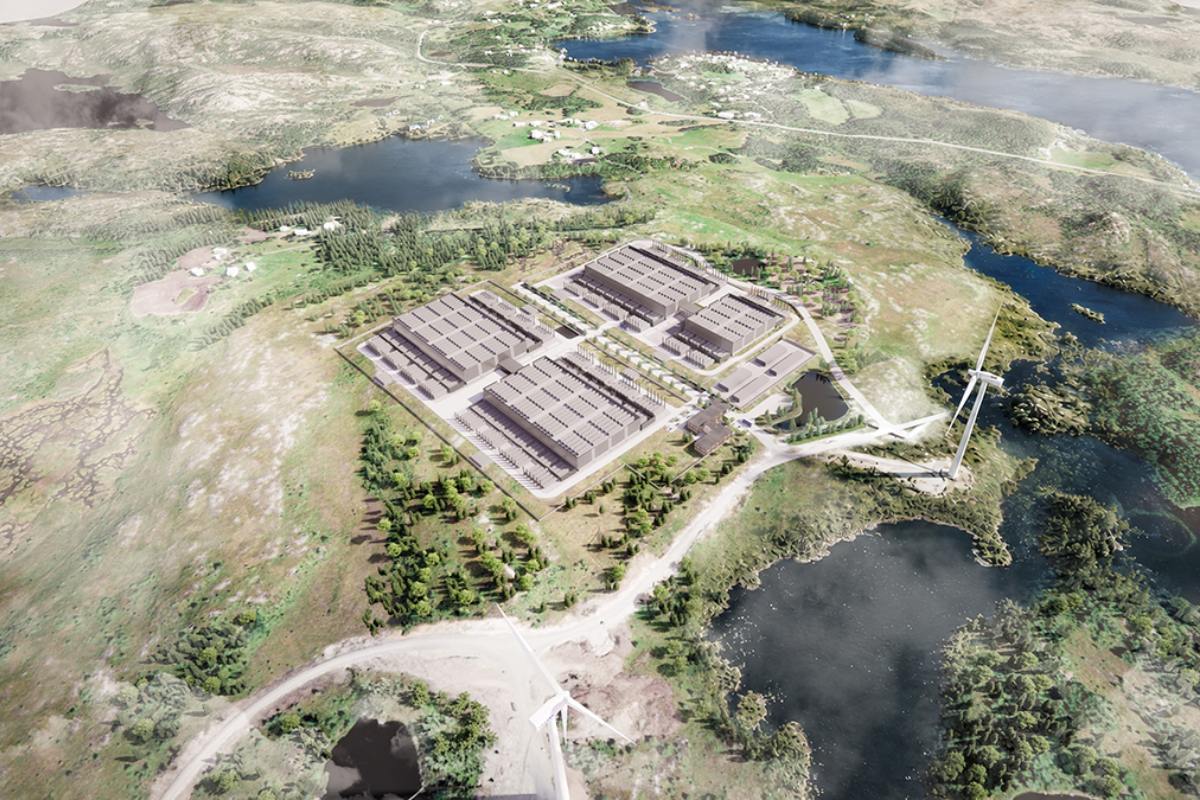
UK creative agency Ryze has delivered a full brand identity for Latos, a fast-growing data centre developer building a UK-wide network of AI-ready facilities to support the country’s digital infrastructure. From strategic positioning through to messaging, identity, and digital design, Ryze has developed the Latos brand from the ground up. With a focus on fast-scaling technology and SaaS firms, the agency says it aimed to deliver a brand that communicates Latos’ ambition to build smarter, more sustainable infrastructure without the use of technical jargon. The project arrives at a time of rising demand for UK data centres, driven by increased AI adoption and government infrastructure investment. Chipmaker NVIDIA recently identified the UK as a “critical node” in its global expansion strategy. David Smith, Founder of Ryze, comments, “The Latos brand evokes ambition, energy, and a sense of clarity. "Visually, we avoided the conventional clichés of the sector and instead built a brand that moves – a timeless, modern foundation with a dynamic, confident colour palette and a distinctive icon set that adapts to different platforms and partners. "It’s a future-facing brand for a future-building company.” Peter Wilcock, Board Member at Latos, adds, “We’re not interested in doing what everyone else does. The market’s already full of that. "Our vision is about scale and creating smarter, more agile builds that fit the needs of today’s digital infrastructure. "Having a brand that reflects that disruption isn’t just useful, it’s essential. It’s how we connect with the right partners and show the market who we are.” Latos is currently developing 11 UK sites, with plans to establish 40 facilities by 2030. The company’s standardised designs are intended to enable faster rollout and regional deployment, with all sites built for high-performance computing and real-time AI. “This wasn’t just about giving Latos a logo but about shaping a brand that could open doors, attract capital, and be bold in a sector where most look and sound the same,” David concludes. “That thinking runs through all of our work, whether it’s for a SaaS platform or data centre developer, because strong branding isn't defined by sector or subject matter, but by ethos and purpose.”

Riello UPS Ireland appoints new Managing Director
Critical power protection specialist Riello UPS Ireland has announced the appointment of Ian Jackson as its new Managing Director. With more than 25 years of commercial, technical, and management experience in the critical power industry, Ian takes on overall day-to-day responsibilities for leading the company, which is now based in a facility in H2 Baldonnell Business Park, Dublin 22, after recently relocating from its original premises in Ballycoolin, Dublin 11. Ian has a long history in the power protection industry, including nearly 20 years managing Pure Power Systems, an independent UPS distributor he founded and scaled until its acquisition by a US multinational company in 2017. He holds a degree in Electrical Engineering from TU Dublin, a Postgraduate Certificate in Energy Systems and Decarbonisation from Dublin City University, and an MBA from Dublin City University Business School. His appointment signals a renewed push to increase brand awareness of Riello UPS in the data centre, pharmaceutical, food and beverage, medtech, aviation, fintech, and telecoms markets. Riello UPS Ireland launched in November 2022, becoming the seventeenth subsidiary of the Italian headquartered RPS, the second-largest manufacturer of uninterruptible power supplies (UPS) in Europe. Ian comments, “I was very fortunate to be the first Irish distributor of Riello UPS systems when I formed Pure Power Systems back in 2003 and am now privileged to directly represent this wonderful company in Ireland. “I’m really looking forward to reconnecting with my many colleagues throughout the industry and leading our fantastic team to offer the very best in critical power products and services.” Ian will work closely with Leo Craig, the long-standing Managing Director of Riello UPS in the UK, who, until this appointment, had previously combined overseeing both the UK and Irish subsidiaries. Leo says, “We are thrilled to welcome Ian to the team. He brings incredible commercial, technical, and management experience, as well as a huge passion for leadership and customer service. “Riello UPS is already a well-established brand in Ireland with strong links through several resellers and distributors. But we still have huge untapped potential for growth, and we believe under Ian’s stewardship we are now well-placed to fully capitalise on this expanding market for us.” An uninterruptible power supply (UPS) provides protection against electrical power outages and disturbances. It offers instantaneous battery backup that enables critical equipment like computers, IT systems, and machinery to keep running until the power returns or a standby generator kicks in. For more from Riello UPS, click here.

W Denis launches insurance offering for data centres
W Denis, a UK-based, independent insurance broker, has launched a new specialist division focused exclusively on insuring data centres and their integrated power generation infrastructure. W Denis’ new division is unique in the insurance market by offering dedicated cover not only for the data centre buildings, plant, and technology, but also for the electricity generation assets, such as traditional CHP through to modern clean/green tech power, solar, wind, and hybrid systems, which provide resilience and independence from grid failures. Capacity in the billions (£/€/$) is available through either direct insurance or facultative reinsurance structures, arranged with global insurers and reinsurers. This enables support for single-site, multi-site, and portfolio programmes across diverse geographies. The offering includes a range of risk and insurance solutions for all phases of a data centre’s lifecycle: • Construction all risks (CAR), including delay in start-up• Operational property damage and machinery breakdown• Business interruption, including utility failure triggers• On-site power generation asset insurance• Third-party legal liabilities• Legal indemnities (e.g. planning, easements)• Cyber, data breach, and E&O exposures• Specialist claims support and advocacy In addition to insurance placement, W Denis says it provides clients with risk management consultation during pre-design, construction, and operational stages. This includes engineering risk reviews, loss prevention advice, and support with resilience planning. Mark Dutton, Chief Commercial Officer at W Denis, comments, “Data centres are among the most critical and energy-intensive assets in the modern economy. Our new division recognises that effective insurance must cover both the data and the power that keeps it alive. Our clients benefit from deep technical expertise, strong capacity, and joined-up coverage from build to operation.”

Data centres could generate €26bn for Portuguese economy
Portugal is establishing itself as one of Europe’s main digital and AI ready hubs, and further growth in data centre development in the country could contribute up to €26 billion (£22.5 billion) to the national GDP between 2025 and 2030 - an average of €4.4 billion (£3.8 billion) per year - according to a study conducted this year by Start Campus, a Portuguese data centre development company, and economics consultancy Copenhagen Economics. Direct and indirect socio-economic impact The study, Assessment of the Socio-Economic Benefits of the Data Centre Sector in Portugal, released this Monday estimates that the sector could support up to 50,000 full-time jobs every year, including direct, indirect, and induced employment, provided favourable investment and regulatory conditions are in place. Between 2022 and 2024, data centres already added €311 million to Portugal’s GDP, sustaining around 1,700 jobs annually - drawing and retaining skilled professionals and strengthening regional cohesion whilst opening up new education pathways. The report highlights Portugal’s bench of qualified talent in data-centre-relevant fields - a sentiment echoed by digital ecosystem stakeholders - and notes a solid tech base of roughly 230,000 ICT specialists alongside a high proportion of STEM graduates. Artificial intelligence as a driving force The study also points out that by 2030, around 70% of computing capacity will be dedicated to AI applications, underscoring the need for modern, resilient, and sustainable infrastructure. Demand for this capacity is expected to grow at a rate of 33% per year through the end of the decade. The widespread adoption of cloud computing, big data, and AI solutions by companies and public entities depends on the existence of efficient and scalable data centres capable of ensuring low-latency connectivity. Without this foundation, the full potential of digital technologies for businesses, public services, and users could be compromised. Portugal’s competitive advantages The analysis indicates that Portugal is well-positioned to become a key hub in AI and digital infrastructure in Europe. This is underpinned by a competitive electricity cost – approximately 30% below the European average – and a large supply of electricity from renewable sources – namely 87.5% of total net generation. Portugal’s Atlantic coast also provides conditions for resource-efficient cooling solutions that contribute to reducing freshwater consumption, energy consumption, and operational costs, such as the use of seawater. Portugal benefits from a robust connectivity infrastructure, with approximately 25% of the world’s submarine cables passing through the country. It also offers 92% fibre optic coverage, ranking as the third-best network in the European Union (EU). “Portugal has all the right conditions to establish itself as a leading digital and AI hub in Europe: strategic connectivity, clean energy, and a highly skilled workforce. This study confirms that, with the right public policies, data centres can become a driver of economic growth and territorial cohesion,” says Robert Dunn, CEO of Start Campus. "Portugal is emerging as a key European destination for data centre investments, yet achieving its fullest potential cannot be taken for granted given intense international competition to host digital infrastructures. There are already significant economic benefits from existing data centres alone, which represent a fraction of future opportunities,” comments Bruno Basalisco, Director at Copenhagen Economics. Policy conditions will shape future investments and corresponding socio-economic benefits To ensure the full development of the sector and to make the most of this industry’s potential, the study outlines some areas of action where policymakers could consider fostering investments: 1. Ensure predictability and access to the electrical grid and components such as chips; 2. Streamline licensing processes for both technological and energy infrastructures; 3. Develop targeted measures for data centre investment; 4. Promote digitalisation and AI adoption across the business sector and public administration. The Copenhagen Economics report is based on an input-output macroeconomic model, using data from Eurostat, the OECD, and national operators. It also includes interviews with more than 15 stakeholders from the digital ecosystem, including AICEP, ANACOM, FCT, international technology companies, and local authorities. For more from Start Campus, click here.

CityFibre agrees £2.3 billion in major new financing round
CityFibre, an independent UK full fibre platform, has reached an agreement with its shareholders and existing lenders on a £2.3 billion financing round, aiming to accelerate its next phase of growth. The financing includes £500 million in new equity secured from CityFibre shareholders, Infrastructure at Goldman Sachs Alternatives, Antin Infrastructure Partners, Mubadala Investment Company, and Interogo Holding. CityFibre has also agreed a committed £960 million expansion of its existing debt facilities, supported by lenders including ABN AMRO, BBVA, Crédit Agricole CIB, ING, Intesa Sanpaolo IMI CIB, Lloyds, the National Wealth Fund, NatWest, SEB, and Société Générale. The facility will support CityFibre’s continued network investment and should enable it to connect hundreds of thousands of new customers across its nationwide network. An accordion facility of £800 million is also being made available to help drive CityFibre’s expansion through the acquisition of full fibre network assets. This facility will be used to finance the company’s M&A pipeline. Greg Mesch, CEO of CityFibre, comments, “This round of financing will supercharge CityFibre’s next phase of growth as we consolidate the altnet sector, accelerate the pace of customer connections, and unleash the full power of our market-leading 10Gb XGS-PON network for the benefit of all our partners, their customers, and for the UK economy. “There is huge opportunity ahead for CityFibre and it is [a] testament to the success of the company that we have such strong backing from our lenders and shareholders. This multi-billion-pound investment into critical digital infrastructure will deliver significant benefits across the UK, helping to realise potential and unlocking economic growth.” This investment marks a significant moment in upgrading the UK’s digital infrastructure. It will deliver world-class infrastructure and services to millions of consumers and businesses and provide the digital foundations for the UK’s economic growth for decades to come. Rachel Reeves, Chancellor of the Exchequer, says, “Today’s announcement shows Britain is attracting billions of pounds of investment, including through the National Wealth Fund, driving growth across British businesses. “Investing in our digital infrastructure is key to ensuring our economy is fit for the future. Through our Plan for Change we’re growing the economy by boosting investment in Britain and working hand in hand with businesses to create jobs, to put more money in working people’s pockets.” Peter Kyle, Secretary of State for Technology, adds, "This investment in CityFibre is welcome news. It's proof our telecoms industry is driving investment into the UK as well as building the digital foundations that will serve generations to come. “The success of the UK's network providers will help accelerate the rollout of gigabit-capable broadband to millions of homes and businesses across the country. I hope to see even more success stories like this one because this sector is critical not just to improving internet speeds, but to transforming quality of life for communities and creating opportunities in every part of the country as part of our Plan for Change." Over the past 12 months, CityFibre has announced its first full year of profitability, launched Sky’s full fibre and Gigafast+ services across CityFibre’s nationwide network, completed the integration of Lit Fibre, announced the acquisition of Connexin’s full fibre infrastructure, and reached more than 4.5 million premises with its full fibre network, over half way to CityFibre’s milestone. For more from CityFibre, click here.

Panattoni launches into data centres with senior hires
Panattoni, a logistics real estate developer in Europe, has launched a new initiative to develop data centres across Europe, the UK, India, and the Middle East with the appointment of four senior specialists. Panattoni’s new dedicated data centres team will be led by Richard Wellbrock, who joins as Managing Director, Data Centres. He brings more than 25 years of real estate experience, including almost 20 years focused on the development of data centres - most recently, as Chief Commercial Officer at Colt Data Centre Services (DCS), a global data centre operator. Richard played a role in delivering large-scale data centre campuses across Europe and Asia, driving growth from 100MW to 1GW, including supporting a $1.5 billion (£1.1 billion) joint venture with Mitsui. Joining Richard Wellbrock at Panattoni are Nick Parker, Head of Capital Deployment; John Belton, Head of Development; and Paul Terry, Infrastructure Director. Nick Parker, who was previously Global Senior Director of Asset Management at Colt DCS, where he led more than €5 billion (£3.67 billion) in capital deployment strategies, supported transactions of around 250MW with hyperscale customers and played a role in structuring international joint ventures and investment strategy across India, Japan, and Europe. John Belton, who served as Global Senior Director of Development at Colt DCS, has around 40 years’ experience in engineering and data centre development. He managed Colt DCS’s global development portfolio, creating a pipeline capable of delivering more than 1GW of IT load across multiple countries. Paul Terry, who was Colt DCS’s Global Director of Development Infrastructure, led infrastructure design and delivery from land acquisition through to handover, managing major utility and technology programmes. All four will be based in London and report to Robert Dobrzycki, CEO and Co-owner of Panattoni Europe, UK, Middle East, and India. Robert Dobrzycki, CEO, comments, “This is a significant new chapter for Panattoni. Data centres are essential infrastructure for the modern economy and we are now building a world-class platform to deliver them. Richard and his team bring exceptional experience and insight.” Richard Wellbrock, Managing Director, Data Centres, adds, “Panattoni has an outstanding track record of development at scale and pace. With our team now in place, we’re looking forward to growing the business across Europe, the UK, India, and the Middle East, supporting hyperscalers, cloud providers, and enterprise customers with high-quality data centre solutions.” Panattoni’s expansion into data centres builds on its existing experience in large-scale industrial and logistics development, which has seen it deliver more than 23 million m² across Europe.

Debunking the myth: The world is not running out of data centres
Concerns about resource depletion are not new to economists. From fears of "peak oil" to anxieties over food shortages, history has shown that as demand surges, supply mechanisms adapt accordingly. Today, a similar narrative is emerging around data centres. A closer examination, however, reveals that, despite burgeoning demands, the industry is not approaching a resource-constrained peak. Instead, data centre infrastructure is evolving dynamically to meet increasing needs, driven by advancements in artificial intelligence (AI), cloud computing, and the expansion strategies of hyperscale companies. Daniele Viappiani, Portfolio Manager at GC1 Ventures, explores this further: The evolution of data centres: Scaling to meet demand Data centres are intricate ecosystems requiring stable electricity, advanced cooling systems, robust connectivity, and stringent security measures. While, theoretically, they can be constructed anywhere, optimal locations are chosen based on factors such as minimal natural disaster risk, proximity to essential infrastructure, and favourable environmental conditions. The industry is witnessing the emergence of massive, highly sophisticated data centres alongside smaller, modular facilities. These two complementary approaches combine to suitably address growing demand. Modular data centres are prefabricated units that offer rapid deployment and scalability, addressing the need for swift expansion. According to reports, the global market for modular data centres is projected to grow significantly, reaching $93.3 billion (£68.6 billion) by 2030, driven by the demand for plug-and-play solutions that can be deployed quickly to meet immediate needs. Addressing challenges: Labour, construction, and utilisation The complexity of data centres requires highly specialised labour, including engineers, electricians, and network experts, who are currently in high demand. Constructing large-scale data centres is a capital-intensive endeavour with lengthy lead times. While smaller facilities may take months, large centres can require up to three years to become operational.​ Despite this, existing data centres often operate below full capacity, allowing for short-term scaling. Many facilities are intentionally over-provisioned to manage utilisation peaks and accommodate growth, often running at under 50% utilisation. This design allows for the addition of servers or workloads within hours or days, provided the physical infrastructure supports it. Upgrading older servers to more efficient models can further enhance capacity, though limitations are primarily dictated by electrical and cooling infrastructures. Power constraints and regulatory hurdles Rapid expansion faces obstacles such as power grid limitations and zoning regulations, particularly in urban areas. The surge in electricity demand from data centres has led utilities to grapple with unprecedented power requests. For instance, Oncor Electric in Texas, USA, received requests totalling 119 gigawatts, far exceeding its current capacity. Utilities are responding by increasing capital spending and exploring infrastructure expansions, though challenges like overbuilding and rising construction costs persist. Zoning regulations also pose challenges, as finding suitable locations near physical infrastructure without overwhelming existing systems requires careful planning. In response, the industry is adopting innovative strategies, including the repurposing existing real estate such as old malls and factories, and expanding into emerging markets in Southeast Asia, Africa, and Latin America. Sustainability initiatives: Embracing renewable and nuclear energy With high energy consumption, sustainability becomes a priority, so investments in renewable energy, passive cooling, and nuclear power to overcome grid limitations are key. In 2024, renewable sources like wind, hydro, and solar provided a record 32% of global electricity, surpassing the 30% share in 2023. This growth aligns with the data centre industry's shift towards greener operations. Some companies are exploring nuclear power as a solution to provide massive, always-on power, free of carbon emissions. The US Department of Energy has identified federal sites, including major national laboratories, as potential locations for data centres aimed at accelerating AI development, leveraging existing energy infrastructure and the potential for expedited permitting, especially for nuclear energy projects. The AI boom: Assessing future demand The proliferation of AI has exacerbated concerns over increases in data centre demand. Training large models requires substantial computational power, contributing to a significant rise in electricity consumption. However, it's also possible that we may see diminishing marginal returns from using more data centres for AI and, eventually, demand growth could slow down. Emerging AI models requiring fewer processing chips may reduce future power needs, indicating that while current demand is high, future growth may stabilise. While concerns about data centre shortages are understandable given the rapid advancements in technology and increasing digital demands, the industry is demonstrating resilience and adaptability. Through the development of both massive and modular data centres, strategic location planning, investment in sustainable energy sources, and continuous innovation, the data centre sector is well-equipped to scale efficiently. The challenges remain significant, but with proactive strategies and technological advancements, the industry is poised to meet the demands of the digital era without approaching a resource-constrained peak.

nLighten appoints Andreas Herden as MD for Germany
nLighten, a European edge data centre platform, has appointed Andreas Herden as Managing Director for Germany. In his new role, Andreas will lead the strategic development of the German market and drive the expansion of the local data centre network. Andreas brings decades of experience in the data centre and digital infrastructure sector. Prior to joining nLighten, he served as Senior Vice President of Sales for Continental Europe at Green Mountain. His career also includes acting as Chief Sales Officer at Lefdal Mine Data Centers and various positions at Equinix, including Sales Director for the automotive, finance, and manufacturing sectors. This background, the company believes, has solidified his reputation as a recognised industry expert. At nLighten, Andreas will focus on strengthening the company’s presence in Germany’s industrial and metropolitan regions to support its mission to deliver sustainable, high-performance edge infrastructure. Commenting on his appointment, Andreas says, “nLighten’s data centres are not only state-of-the-art from a technological perspective, but also follow a holistic approach that balances customer needs and environmental requirements. This is exactly what the market needs and where I want to make an impact. By creating an ecosystem that combines connectivity, performance, and sustainability at a new standard, nLighten is truly ahead of the pack.” Harro Beusker, CEO and Co-Founder of nLighten, adds, “We are delighted to welcome Andreas to our leadership team. His extensive experience and strategic vision will allow him to play a key role in expanding our presence in Germany and realising our vision of a sustainable, sovereign digital infrastructure.” For more from nLighten, click here.

DigitalBridge and La Caisse complete acquisition of Yondr
DigitalBridge and La Caisse (formerly CDPQ) have announced the successful completion of the acquisition of Yondr Group, a global developer, owner, and operator of hyperscale data centers, from Cathexis Holdings. This investment furthers DigitalBridge and La Caisse’s history of partnership in digital infrastructure investing, positioning Yondr to accelerate its expansion in strategic markets and attempt to meet the surging demand for hyperscale and AI-driven data centres. La Caisse is investing alongside DigitalBridge-managed investment vehicles and has assumed joint control of Yondr. In connection with the completion of the acquisition, Aaron Wangenheim has been appointed as Chief Executive Officer, and Sandip Mahajan as Chief Financial Officer, effective immediately. Yondr develops and operates data centres to address data centre capacity demands of large technology companies. The operator has more than 420MW of capacity committed to hyperscalers and additional land to support a total potential capacity of over 1GW. The company believes it is well-positioned to capitalise on the growing demand for advanced data processing capabilities driven by ongoing digital transformation, the expansion of cloud solutions, and the rise of AI.​ “We’re thrilled to finalise our acquisition of Yondr alongside La Caisse,” announces Jon Mauck, Senior Managing Director and Head of Data Centers at DigitalBridge. “With a diverse global portfolio of campuses, Yondr further strengthens DigitalBridge’s world-class data centre portfolio and reinforces our focus on being a global partner to the leading hyperscale, technology, and AI companies that are driving the digital economy. We look forward to working alongside Aaron and Sandip, who bring extensive leadership experience, as we support Yondr’s strategy of developing and operating scaled capacity to meet the demands of AI and cloud computing. We are also very pleased to partner again with La Caisse, who shares our partnership-orientated approach to long-term value creation.” “Over the past few years, we have explored various direct investment opportunities in the data centre space and Yondr has stood out as a compelling platform to capitalise on the growth of the sector. At the end of 2024, we joined forces with DigitalBridge – a trusted partner – to invest in Yondr’s next development phase under renewed leadership and ownership,” adds Emmanuel Jaclot, Executive Vice President and Head of Infrastructure at La Caisse. “This investment reflects our conviction in the value of digital infrastructure and our confidence in Yondr’s ability to scale with agility, innovate, and deliver AI-ready data solutions at pace.” DigitalBridge and La Caisse have a longstanding track record of partnership in the digital infrastructure sector. In 2019, La Caisse acquired a 30% stake in Vertical Bridge, a private owner and operator of communications infrastructure in the United States and a DigitalBridge portfolio company. In 2024, DigitalBridge and La Caisse supported Vertical Bridge's $3.3 billion (£2.4 billion) tower transaction with Verizon. "I am proud to have supported Yondr on its journey since its formation in 2018. Yondr has become a vital infrastructure partner to many of the world's largest technology companies, and I believe DigitalBridge and La Caisse are the right partners to support Yondr through its next stage of growth. I look forward to seeing what the business will achieve," says William Harrison, CEO of Cathexis. Aaron, who joins Yondr as Chief Executive Officer, brings over two decades of data centre leadership and extensive experience overseeing the development and operations of data centre campuses around the world. He spent over a decade at T5 Data Centers in roles of increasing responsibility, including eight years as Chief Operating Officer. Most recently, he served as an advisor and developer of customised data centre solutions, where he worked with numerous investors evaluating both the property and operating aspects of the evolving data centre industry. Sandip, who joins Yondr as Chief Financial Officer, brings over three decades of financial leadership and infrastructure investment experience, including expertise in leveraged finance, equity and debt raising, and financial transformation. He has served as Chief Financial Officer at Mitie Group, a publicly-listed, UK-based support services business, and was earlier at Balfour Beatty, a publicly-listed construction services business in a number of roles, including as a project finance leader specialising in infrastructure equity investments. “Yondr has an impressive track record as a leading developer, owner, and operator of hyperscale data centres, and I’m excited to be joining the company as Chief Executive Officer at such a pivotal time for the business and the industry,” comments Aaron. “I look forward to leading Yondr through its next phase of growth with the backing of two world-class investors that appreciate the critical role we play in supporting our clients.” Aaron succeeds Paul Cossell, who is retiring from the Chief Executive Officer role after two and a half years at Yondr and a nearly three-decade career in the construction and infrastructure industry. Sandip succeeds Chester Reid, who is stepping down from the Chief Financial Officer role after more than two years at Yondr to pursue other business interests. For more from Yondr, click here.

PoliCloud raises €7.5 million
PoliCloud, a provider and developer of high performance computing (HPC) cloud infrastructure, has announced its €7.5 million (£6.42 million) seed fundraise. The funding was led by Global Ventures, a VC firm in MENA, with participation from MI8 Limited, a Hong Kong multi-family office; OneRagtime, a Paris-based venture capital firm; Inria, France’s National Institute for Research in Digital Science and Technology; and other private investors. The proceeds will be used to hire the operating team and grow the business globally with a focus on public entities in Europe. PoliCloud says it is responding to demand following global cloud growth (~20% annually). Accelerated demand for AI requires affordable and scalable computing power, and the market is ripe for a Europe-led solution to lessen dependence on US cloud providers, who currently dominate the $800 billion (£583.9 billion) market. David Gurlé, Founder of PoliCloud, claims, “PoliCloud is meeting a critical market demand for sovereign cloud infrastructure that is not only secure and abundant, but also eco-responsible. Our unique edge computing capabilities deliver significant benefits to both public and private sector users. “The time is right for a new, European solution that reduces reliance on US cloud providers and offers affordable, scalable computing power, especially as AI adoption accelerates. We are grateful to Global Ventures and all our investors for their support as we enter this exciting phase of expansion.” Current cloud expansion suffers from high usage costs and dependence on hyperscalers - such as Google or Amazon - whose models use massive, centralised data facilities with high implementation costs and challenging environmental conditions. In this respect, PoliCloud claims it has the following competitive advantages: ● 'Unlimited and flexible computing power,' provided by federating with the grid. By y/e 2025, it says it will have >1,000+ GPUs and by y/e 2026 >20,000+ GPUs;● Computing resources are delivered to where they are needed and 'empower local communities;'● Small footprint and energy needs;● Rapid time to market, with flexibility and adaptability;● Capex and Opex offset by sharing unused capacity; and● 'More resilient, higher performance, and more scalable by design.' PoliCloud’s operating model combines its hardware and infrastructure with Hivenet’s distributed storage and computing software. PoliCloud designs, builds, and operates its own computers and micro-data centres. It was launched in February 2025 at the World Artificial Intelligence Cannes Festival (WAICF) with support from the five cities of the Alpes-Maritimes. Simon Sharp, Senior Partner of Global Ventures, comments, “Global Ventures is delighted to lead PoliCloud’s seed fund raise and work again with David and his talented management team, following their track record of successful delivery in Hivenet. [...] Their distributed data centres have multiple competitive advantages: delivering next-gen, sovereign computing resources where they are needed; with more resilience; faster performance; greater security; while being cheaper to build and maintain. The exponential growth in AI demand and the need for reliable, scalable computing power means the company’s future is a very bright one.” Stephanie Hospital, Founder & CEO of OneRagtime, adds, “As an early investor and believer in David and Hivenet, [...] OneRagtime is excited to invest in PoliCloud. The company is uniquely positioned to provide decentralised, unlimited computing power affordably, securely, and in an eco-responsible way – for which substantial demand exists.” Bruno Sportisse, CEO of Inria, says, "Inria Participations is delighted to become an investor in PoliCloud as it is a logical extension of Inria's existing strategic partnership with Hivenet. Inria and PoliCloud share the same philosophy of a decentralised path to the cloud and for secure, distributed computing, but where resources can also be shared according to need. Achieving this goal is of strategic importance for France and its digital sovereignty." Guillaume Dhamelincourt, Managing Director of Mi8, concludes, “The opportunity to invest in PoliCloud was compelling for Mi8 as the world embraces AI and rapidly adjusts its demand for computing power. The multiple use cases for PoliClouds, such as SMEs - but also public enterprises who want to stay mindful of their IT strategy's impact - is an attractive market environment and we look forward to PoliCloud’s future growth with great confidence.”


Translate »