Data Centre Business News and Industry Trends
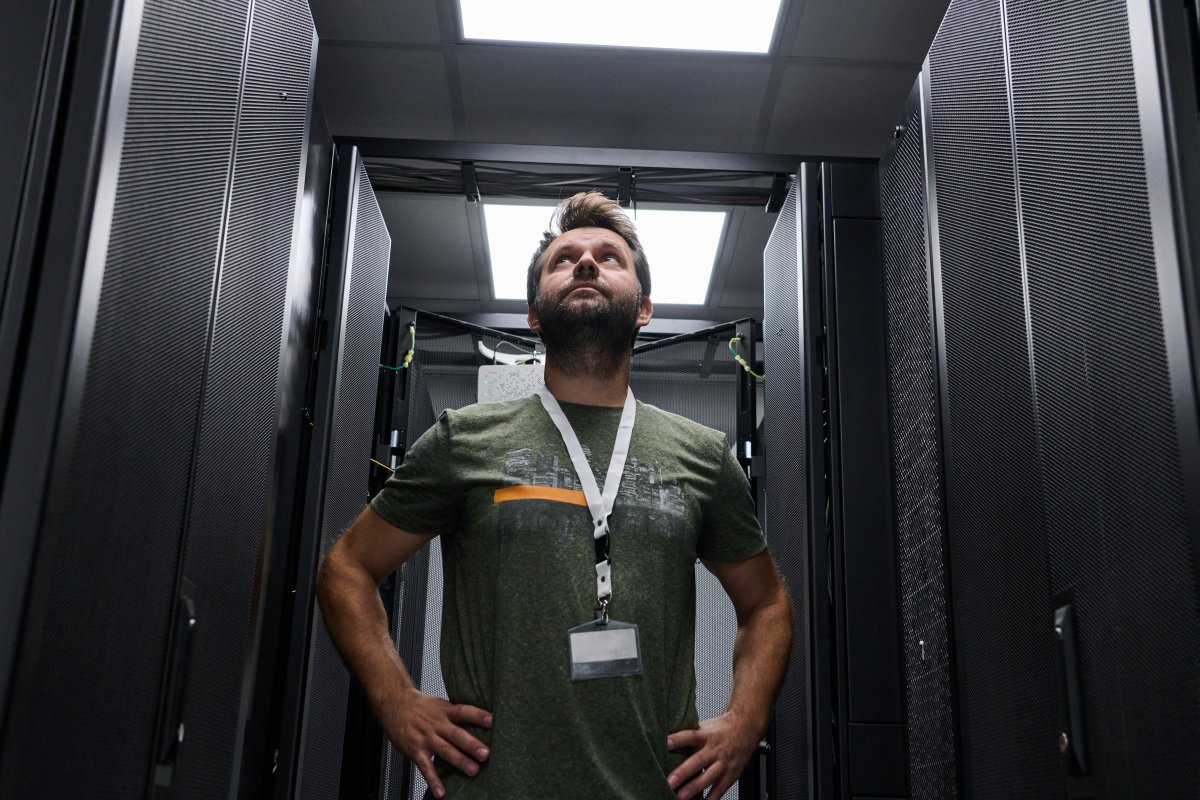

CEL Critical Power opens $40m US manufacturing facility
CEL Critical Power, an Ireland-based manufacturer of switchgear and power equipment for the global data centre industry, has opened its first large-scale manufacturing facility in Williamsburg, Virginia, USA. The new 400,000-square-foot (37,161-square-metre) plant, operational since June, represents a $40 million (£30.3 million) investment and a major step in CEL Critical Power’s international expansion. The facility increases the company’s manufacturing footprint in the United States - the world’s largest and fastest-growing market for AI and cloud infrastructure - while strengthening its ability to serve key data centre clients. Strengthening US presence and creating skilled jobs The Virginia expansion is intended to generate more than 250 skilled roles within the next year, rising to 500 by 2030 across engineering, manufacturing, quality assurance, logistics, and site services. The facility forms part of CEL Critical Power’s strategy to reach $500 million (£379.5 million) in annual revenue by 2030, supported by its existing operations in Ireland. Together, its global production capacity now exceeds 500,000 square feet (46,451 square metres). A key component of the project is CEL Critical Power’s collaboration with the Virginia Economic Development Partnership (VEDP) and its registration with the US Department of Defense 'SkillBridge' programme. Through partnerships with Naval Station Norfolk and regional alliances, the initiative offers active-duty service members and military veterans opportunities to transition into civilian technical careers. Manufacturing data centre power CEL Critical Power designs and manufactures power distribution units (PDUs), remote power panels (RPPs), and switchgear systems for data centre environments. The company says its engineering approach emphasises reliability, efficiency, and short production cycles, developed through close collaboration with customers from concept through to deployment. Niall McFadden, Group CEO of CEL Critical Power, comments, “The opening of our first US manufacturing facility marks an important step in CEL Critical Power’s growth strategy. "We have listened closely to our customers and recognise their need for trusted partners who can scale alongside them in the United States. This $40 million investment reflects our long-term commitment to supporting those customers in a rapidly expanding market. “Thanks to the support of the Virginia Economic Development Partnership, and our collaboration with the Department of Defense SkillBridge programme and Naval Station Norfolk, we plan to create up to 500 skilled jobs in Virginia by 2030." Alan McCartney, Chief Sales Officer at CEL Critical Power, adds, “As a manufacturer of custom power systems for the global data centre industry, we are expanding our capacity to meet growing demand from customers investing in AI and cloud infrastructure. “Our design-for-manufacture approach allows us to address specific technical and scheduling requirements and to deliver custom-built systems at scale. Our products are designed to support the next generation of AI workloads and the emerging Neo-Cloud sector.” Graham Carr, Vice President of Sales, North America, CEL Critical Power, says, “CEL Critical Power is proud to invest in Virginia, working with VEDP, the DoD SkillBridge programme, and Naval Station Norfolk to create meaningful career pathways for veterans while supporting the state’s growing technology sector. "Virginia offers a strong supply chain, excellent infrastructure, and a deep pool of technical talent.”

Mission Critical Group acquires Leman Engineering
Mission Critical Group (MCG), a critical power infrastructure company, has announced the acquisition of Leman Engineering and Consulting (LEC), a US manufacturer of switchgear, control systems, and power distribution equipment. The acquisition aims to strengthen MCG’s US Midwest manufacturing presence, expand its engineering capabilities, and establish LEC as MCG’s R&D hub for power generation engineering. The company says this hub focuses on switchgear innovation for onsite generation, prime power, generator paralleling, behind-the-meter systems, and microgrids. An electric collaboration With experience in prime power distribution design, precision manufacturing, and engineering, MCG hopes LEC will strengthen its unified power and energy infrastructure platform, delivering high-performance electrical systems across data centre, healthcare, industrial, oil and gas, and other critical markets. Its capabilities in UL 891 switchboards, UL 1558 switchgear, and medium-voltage equipment should expand MCG’s technical depth and manufacturing reach. The establishment of MCG’s R&D hub is also intended to align with strategic university partnerships specialising in power engineering and advance innovation and workforce development across the electrical manufacturing sector. “We’re proud to join MCG and contribute to its continued growth and innovation,” comments Randy Leman, President of Leman Engineering and Consulting. Randy will now serve as Vice President of Engineering and Product Management for Electrical Equipment at MCG. The Indiana team will continue operating under existing leadership, maintaining its local presence and customer focus. The addition of LEC marks MCG’s second acquisition in 2025 and sixth in the past 24 months. With more than one million square feet (93,000 square metres) of US manufacturing space, MCG says it continues to expand its capacity to design, build, deliver, and service resilient power infrastructure US-wide. For more from Mission Critical Group, click here.

HUMAIN, AirTrunk to build DCs in Saudi Arabia
AI company HUMAIN and hyperscale data centre operator AirTrunk have agreed a strategic partnership to develop data centres in Saudi Arabia, including an initial project valued at around $3 billion (£2.2 billion) for a new campus in the country. HUMAIN is headquartered in Saudi Arabia and focuses on artificial intelligence capability development, while AirTrunk operates hyperscale data centre platforms across Asia Pacific. HUMAIN is owned by the Public Investment Fund, and AirTrunk is backed by Blackstone and the Canada Pension Plan Investment Board. The companies say the partnership is intended to support Saudi Arabia’s ambitions to expand its digital infrastructure and position itself as a regional technology hub. According to the organisations, the joint initiative aims to combine local AI and infrastructure expertise with international hyperscale data centre deployment experience. Industry comments Tareq Amin, Chief Executive Officer of HUMAIN, says, “Together with AirTrunk and Blackstone, HUMAIN is strengthening the technological infrastructure that underpins the Kingdom’s digital economy. "This partnership marks a pivotal moment in creating scalable, secure, and sustainable data centre capacity to support the rapid growth of AI and cloud computing. This initiative not only accelerates Saudi Arabia’s technological advancement, but also establishes a platform for long-term economic diversification and global competitiveness.” Robin Khuda, founder and Chief Executive Officer of AirTrunk, says, “Our strategic partnership with HUMAIN, a key player in the region, will support Saudi Arabia to realise its vision of being a data- and AI-driven economy. "We’re bringing together the whole digital ecosystem, combining HUMAIN’s end-to-end AI capabilities, from infrastructure to models, with AirTrunk’s hyperscale data centre capabilities. This announcement strengthens the AirTrunk data centre platform as we deliver world-class digital infrastructure for the cloud and AI across the Asia Pacific and now the Middle East, which is one of the fastest growing regions in the world.” Stephen A Schwarzman, Chair, Chief Executive Officer, and co-founder of Blackstone, says, “We are thrilled to help power this next era of innovation in the Middle East and enable AirTrunk’s expansion in this important region. "The AI revolution continues to be one of Blackstone’s highest conviction themes, and we bring scale and expertise across the ecosystem as the largest provider of data centres globally and a significant investor in related services and infrastructure." Long-term development and investment focus The partnership is expected to cover the design, construction, financing, and operation of large-scale facilities in Saudi Arabia. HUMAIN says it will lead national efforts to deliver AI-ready infrastructure, while AirTrunk and Blackstone will focus on development and investment. Areas of collaboration include attracting cloud service providers and enterprise customers to the sites. A talent development focus is also planned, with training and capability-building programmes intended to support local workforce growth in the sector. According to the companies, the partnership aligns with the Kingdom’s plans to build a digital economy, expand local skills, and accelerate AI infrastructure deployment. For more from AirTrunk, click here.

Equinix announces £3.9 billion UK data centre investment
Digital infrastructure company Equinix has acquired an 85-acre site in Hertfordshire, where it plans to develop a large-scale data centre campus. The company says it intends to invest £3.9 billion in the project, which is expected to deliver more than 250 MW of compute capacity. According to Equinix, the campus will support both domestic and international organisations across sectors including healthcare, life sciences, public services, financial services, manufacturing, and entertainment. The development is also referenced by the company as part of broader ambitions around sovereign AI capability in the UK. The site, previously known as DC01UK, is expected to create around 2,500 construction jobs and, once operational, more than 200 permanent roles. KPMG estimates that direct and indirect employment could generate roughly £120 million in wages. KPMG analysis also suggests the project could contribute up to £3 billion in annual Gross Value Added during construction, and up to £260 million once operational, reflecting supply-chain activity and wage spending. DC01UK, commenting on the sale of its site to Equinix, states, "The deal represents one of the largest infrastructure and real estate transactions in the world in recent years. This milestone transaction marks a defining moment for UK digital infrastructure. "With a projected total investment value in the region of £3.9 billion, the deal lays the foundation for one of Europe’s largest and most advanced data centre campuses - a project of unprecedented scale and ambition that will drive the next wave of cloud and AI innovation." Economic and community impact Equinix says it intends to work with local organisations on education, skills, and environmental programmes linked to the development. The company notes it has operated data centres for 27 years and currently runs more than 270 facilities across six continents. In the UK, Equinix supports over 1,300 customers and employs more than 1,200 people. James Tyler, UK Managing Director at Equinix, says, “The UK is a cornerstone of the global economy and is a natural home for our most substantial investment in Europe to date. This development brings a significant amount of data centre capacity to Britain, contributing to the government’s AI growth ambition. "But this investment goes far beyond building the infrastructure needed to unlock the UK’s digital potential; it’s the evolution of an ongoing partnership with the local and national community.” Liz Kendall, Secretary of State for Science, Innovation, and Technology, comments, “This £3.9 billion investment is a huge win for Britain. It will give businesses - from life sciences to high street banks - the ability to connect to thousands of other businesses across the world in an instant, powering our AI ambitions, boosting growth and creating hundreds of well-paid jobs. "This is about making sure the UK is at the forefront of the digital revolution and ensuring that every community benefits from the opportunities this new technology brings.” Luisa Cardani, Head of Data Centres at techUK, adds, “This announcement reflects the scale of opportunity the UK has to strengthen its digital foundations. "As highlighted in our Foundations for the Future report, data centres are the backbone of our economy: they enable innovation, productivity, and growth across every sector. "Continued investment in sustainable, resilient digital infrastructure will be critical to delivering on the UK’s ambitions for AI and long-term economic prosperity.” Sustainability measures and site plans The company states that all its sites in Europe, including the UK, are powered by 100% renewable energy, and it is targeting global coverage by 2030. At the Hertfordshire campus, Equinix plans to use dry-cooling technology, to retain more than half the land as open space, and to create ecological habitats to achieve at least a 10% biodiversity net gain. Equinix also says the campus will be designed to enable heat reuse for local benefit in the future. The company’s existing UK presence includes 14 data centres, which support UK-based and global customers, and heat export capability across sites. For more from Equinix, click here.

Data centre spending to quadruple by 2029 across UK
Spending on new data centres across Britain is set to reach an incredible £10 billion per year by 2029, according to new analysis by construction data experts Barbour ABI. That is more than four times as much as the current £1.75 billion being spent per annum. Atop this, the report states that, as investors seek cheaper land costs and cooler climates, the data centre drive will spread north - away from just London - and into Wales. Nearly 100 data centres are currently in planning, with strong growth driven by demand from AI technologies and the internet of things (IoT). The impact of this rapid growth “With exponential growth of this kind, sustainability must be at the forefront of industry strategy if we are to avoid an environmental disaster,” notes Ed Griffiths, Head of Business and Client Analytics at Barbour ABI. “Data centres are now recognised as Critical National Infrastructure (CNI). However, given the immense power they consume, operators will come under growing pressure to adopt greener practices. “While many firms are pledging to use 100% renewable energy and implement energy-efficient technologies, there is currently no requirement to report energy usage publicly, so it will be difficult to hold them to account.” As the need for data processing accelerates, the market is forecast to attract over £25 billion in inward investment over the next five years, according to Barbour’s latest data centre construction market report. This surge in capital is reshaping the data centre construction landscape, with a rapid pipeline of new developments already underway. Hyperscale facilities outside of urban areas Growth is being supported by government initiatives such as 'AI Growth Zones', which aim to streamline the planning process and support the delivery of new infrastructure. “The impact of AI is one of the most significant trends shaping the future of the data centre industry,” continues Ed. “As AI technologies become integrated into daily operations, the need for high-performance data centres is becoming critical. "Operators are investing in hyperscale facilities outside of urban areas, designed to manage immense computing workloads.” While London and the Southeast have traditionally dominated the sector, data centre development is now expanding nationwide. Barbour ABI found that regions such as the Northeast, East of England, and Wales are becoming increasingly attractive for new projects. This shift is being driven by greater land availability, lower costs, cooler climates, access to renewable energy, and targeted regional growth policies. The UK’s largest planned data centre project is located at Northumberland Energy Park in Blyth. Backed by US asset management firm Blackstone, the development is expected to be worth £10 billion. Whilst the sector seems ripe for investors looking for big wins in the next few years, Ed does add a note of caution, stating, “While the headline story for data centres is one of growth and innovation, the industry faces real challenges. "Rising energy costs, constraints on supply and land, planning barriers, and a shortage of skilled labour could all affect the pace of expansion.”

Stellanor acquires eight DCs from Redcentric
Data centre operator Stellanor Datacenters, backed by a fund managed by global investment manager DWS, has announced the acquisition of eight strategic data centre sites from Redcentric, currently serving approximately 450 clients. The move marks a milestone in Stellanor’s broader strategy to be a major platform of regional data centres serving national and international enterprises as well as service providers with a need for wholesale and AI inference data centre capacity. Stellanor says it is creating a new generation of regional data centres, designed for proximity, performance, sustainability, and accessibility. As digital services become increasingly critical to business operations, the demand for secure, scalable, and locally hosted infrastructure is accelerating. Enterprise adoption of generative AI and real-time analytics will significantly accelerate this trend, particularly at the edge. Stellanor believes its growing network of urban and near-urban facilities are well positioned to meet the requirements of enterprise and AI-driven workloads of customers across the country. Steve Scott, CEO at Stellanor, argues, “We’re building infrastructure for the future, where data is generated, processed, and protected at the edge. Our goal is to set a new benchmark for high-performance, community-conscious data centres in Northern Europe. "Our focus is always on our customers, who will receive the highest standard of service. We look forward to growing our business alongside them and serving their future colocation needs.” Strategic UK expansion The newly acquired sites are strategically located in London, Reading, Cambridge, Woking, Gatwick, Byfleet, and West Yorkshire. The sites are seen as attractive given their high-density colocation capabilities, security standards, and sustainable operations powered by 100% renewable energy. Aparna Narain, Partner at DWS, comments, “The acquisition of RDC by Stellanor represents a transformative step in expanding our UK footprint to ten, high-quality, strategically located assets with 36MW of secured grid capacity and a blue-chip customer base. “We see significant long-term value in building resilient, scalable, and sustainable infrastructure that supports the UK’s digital economy.” With this acquisition, Stellanor will operate ten data centres across the UK, with plans for continued expansion across the UK and Nordics, focusing on service quality.

London's data centres could heat 500,000 homes
According to a new report from global infrastructure company AECOM, London’s data centres are releasing enough waste heat to warm up to half a million homes each year, yet much of this potential energy is being lost to the atmosphere. Commissioned by the Greater London Authority (GLA) and conducted in partnership with asset management and commercial consultants HermeticaBlack, the study reveals that up to 1.6 terawatt-hours of heat could be recovered each year from the capital’s data centre estate - equivalent to meeting all the heating and hot water needs for all homes in Ealing. The report - Optimising Data Centres in London: Heat Reuse - identifies opportunities to adjust planning and infrastructure policy to unlock this potential for London and sets out recommendations including updated planning guidance, targeted infrastructure incentives, and a standardised framework for activating heat offtake from data centre operators. This includes making sure the designs for all future data centres optimise the ability to re-use waste heat. The potential of heat recovery The uptake of heat recovery in London is currently limited, but AECOM’s report identified cities around the world, including Geneva, that are utilising as much as 95% of the heat recovered from a data centre. The infrastructure consultant says that UK cities, including London, have an opportunity to heat new homes with clean, affordable energy. The report estimates, based on the quantum of heat being currently lost, there is the potential to heat up to half a million homes. When this model was tested across London’s data centre dataset, it evidenced the network could provide enough heat to supply around 350,000 homes. With more than one in eight London households in fuel poverty, and the UK still heavily reliant on gas boilers for home heating, the report highlights the social as well as environmental case for change. Data centres - often located in densely populated parts of East and West London - offer a local, low-carbon source of heat for nearby homes, schools, and public buildings. The added value of data centres Data centres are critical to catering for the increasing demand for AI and high-performance computing. The computing power required generates higher server temperatures, creating higher-grade waste heat more viable for reuse. Asad Kwaja, Associate Director, Sustainability & Decarbonisation Advisory at AECOM, says, “The UK needs complex digital infrastructure to enable its ambitions to become a leader in AI. "Data centres lie at the heart of this conversation, but we must consider their wider use if they are going to play an integral part of the UK’s infrastructure landscape. Data centres should no longer be considered as just an energy consumer; they can become a part of the whole energy ecosystem. “London is one of the biggest data centre hubs across Europe, the Middle East, and Africa, and hosts 80% of the UK’s capacity. With the right planning, coordination, and investment, London’s data centres could play a pivotal role in decarbonising the heat needed to power the influx of new homes the capital needs to build to address the housing crisis, while also cutting bills for existing residents and improving local energy resilience.” A scheme to capture the waste heat from data centres is already underway in North West London. In 2023, the Old Oak and Park Royal Development Corporation (OPDC) secured £36 million in funding from the government to deliver a heat network, developed by AECOM, to serve 95 gigawatt-hours annually, recovering heat from up to three data centres.

Planera secures $8m to support data centre expansion
Planera, a US provider of construction scheduling and planning software, has announced an additional $8 million (£6 million) in funding to expand its work within the data centre construction sector. The company, which develops collaborative scheduling software for construction projects, says the funding will support wider adoption among contractors and subcontractors involved in complex data centre builds. The latest investment follows the company’s 2024 Series A round and brings total funding to $26.5 million (£19.9 million). According to Planera, the new capital will be used to enhance its platform and deepen engagement with data centre clients. Supporting large-scale construction projects Planera says it has developed tailored services for data centre contractors, supported by a dedicated team with experience in mission-critical construction. The company has also introduced new AI tools designed to identify potential schedule risks earlier and improve project delivery timelines. Current customers include: • HITT Contracting, which uses Planera to improve visibility on data centre project progress and accelerate delivery. • Ralph L. Wadsworth (RLW), which employs Planera to coordinate complex builds for major technology clients, helping to improve collaboration and reduce schedule compression. • Ryan Companies US, which uses the platform for collaborative scheduling, subcontractor resource analysis, and integration with master schedules. Industry research highlights the scale of the sector’s growth, as Grand View Research estimates the global data centre market at around $347.6 billion (£261.7 billion) in 2024, rising to $652 billion (£490.9 billion) by 2030. Arizton reports that data centre construction will grow from $91.9 billion (£69.1 billion) in 2024 to more than $214 billion (£161.1 billion) by 2030, driven by investment in hyperscale and AI infrastructure. Nitin Bhandari, CEO of Planera, comments, “With data centre demand increasing worldwide, our customers need modern, collaborative scheduling tools that can match the scale and complexity of these projects. "This new funding will help us focus further on mission-critical work while continuing to support customers across other segments.” The funding round includes participation from Sorenson Capital, Sierra Ventures, Prudence, Brick and Mortar Ventures, Zachry Construction Corporation, and other industry investors. Ken Elefant, Managing Director of Sorenson Capital, suggests, “The adoption of AI is driving intense demand for new data centre capacity. Delays on large-scale projects can have significant financial implications and Planera is well positioned to help contractors deliver on time.” Ranjeet Gadhoke, Vice President of Project Controls at Zachry Construction Corporation, adds, “We use Planera across all our projects and have seen the value it brings to planning and scheduling. This investment reflects our confidence in the platform and its contribution to greater efficiency.” Todd Von Krosigk, Senior Superintendent at HITT Contracting, concludes, “To meet growing data centre demand, we require modern scheduling technology that can keep pace. Planera has become a key partner, giving our teams improved visibility and control.”

365 Data Centers appoints new CEO and President
365 Data Centers (365), a provider of network-centric colocation, network, cloud, and other managed services, has announced the appointment of Derek Gillespie as Chief Executive Officer (CEO) and Steve Amelio as President. This leadership transition follows the planned retirement of co-founder and CEO Bob DeSantis, who will continue to serve as a Board Member and strategic advisor to the company. Who's who Derek Gillespie brings over two decades of experience across the data centre and telecommunications industries. The company says that since joining 365 as CRO in 2024, Derek has played a role in expanding the company’s market reach, strengthening customer relationships, and executing strategic acquisitions. He will continue to act as CRO in addition to taking on the new role of CEO. Steve Amelio, who has been with 365 since 2019, has reportedly helped build the company’s operational and financial foundation. As well as becoming President, he will continue to serve as CFO, overseeing finance and administration while leading day-to-day operations to ensure continued customer satisfaction and scalable growth. Bob DeSantis, co-founder and Board Member of 365 Data Centers, comments, “Derek and Steve have been central to 365’s success and are ideally suited to lead the company into its next phase of growth. “Their leadership, deep industry expertise, and shared vision will ensure continuity while propelling the company forward as a trusted infrastructure-as-a-service and managed services provider.” During Bob’s tenure, 365 has transformed from a collection of eight standalone data centres into a US-wide, interconnected platform with 20 facilities, 80MW of capacity, 1,200 customers, and a network spanning key edge markets. “We are honoured to carry forward the incredible momentum that Bob and the team have built,” says Derek Gillespie, CEO at 365 Data Centers. “Our focus remains on delivering reliable, high-performance infrastructure solutions that empower our customers to grow and innovate.” “This is an exciting time for 365,” adds Steve Amelio, President of 365 Data Centers. “We look forward to building upon our strong operational backbone and customer-first culture as we continue to scale and strengthen our network-centric platform.” For more from 365 Data Centers, click here.

Saudi Arabia’s first integrated data science and AI diploma
DataVolt, a Saudi Arabian developer and operator of sustainable data centres, has partnered with the Energy & Water Academy (EWA) and Innovatics to launch the Kingdom of Saudi Arabia’s first fully industry-integrated Diploma in Data Science and Artificial Intelligence (AI). The new programme is designed to blend academic learning with practical, real-world experience, helping to prepare Saudi talent for the digital economy. Announced at the LEARN event in Riyadh, the Diploma is approved by the Technical and Vocational Training Corporation (TVTC) and College of Excellence (CoE), and endorsed by the Ministry of Communications and Information Technology (MCIT). It is also supported by the Human Resources Development Fund (HRDF). Unlike traditional academic pathways, the programme combines classroom study with applied projects. Students will work with sponsoring companies, including DataVolt, on live industry challenges, developing proof-of-concept AI applications and gaining hands-on experience that directly aligns with workforce needs. As part of its commitment, DataVolt will sponsor five students from the first cohort and guarantee them employment after graduation. They will join the company’s operations supporting high-power-density workloads at its data centres, including its planned AI campus in Oxagon, NEOM. DataVolt is inviting other organisations to co-sponsor the inaugural class of 100 students, with a target of 50% female participation. The first intake is scheduled to begin in November 2025. Industry-led learning for the digital future Rajit Nanda, CEO at DataVolt, says, “DataVolt is not only building the Kingdom’s next-generation data centres, but also the local Saudi talent to power them, ensuring the country is prepared to lead the global AI economy in the long term. "Our investment in this first-of-its-kind Diploma demonstrates our commitment to Vision 2030 and we encourage our partners across the industry to join us in sponsoring the programme and future-proofing the local workforce.” With AI expected to contribute around US$320 billion (£239.1 billion) to the Middle East economy by 2030, and Saudi Arabia set to see the greatest share of that value, the initiative supports the country’s Vision 2030 and the National Strategy for Data and AI (NSDAI). The programme aims to help bridge the national skills gap and contribute to the target of training 20,000 AI professionals over the next five years. Salwa Smaoui, CEO of Innovatics, comments, “This Diploma is not just education; it is a strategic workforce initiative. Our mission is to ensure every graduate is ready to contribute from day one to the Kingdom’s most ambitious AI projects.” Tariq Alshamrani, CEO of EWA, adds, “EWA is proud to partner with DataVolt and Innovatics to deliver this programme. Together, we are developing the next generation of data scientists and AI professionals who will power the Kingdom’s digital future.” DataVolt continues to expand its data centre footprint across Saudi Arabia. Earlier this year, the company signed an agreement with NEOM to design and develop the region’s first sustainable, net-zero AI campus in Oxagon. The first phase of the 1.5 GW development, backed by an initial investment of US$5 billion (£3.7 billion), is expected to begin operations in 2028. For more from DataVolt, click here.


Translate »