Data Centre Business News and Industry Trends

CPP Investments, Equinix to acquire atNorth
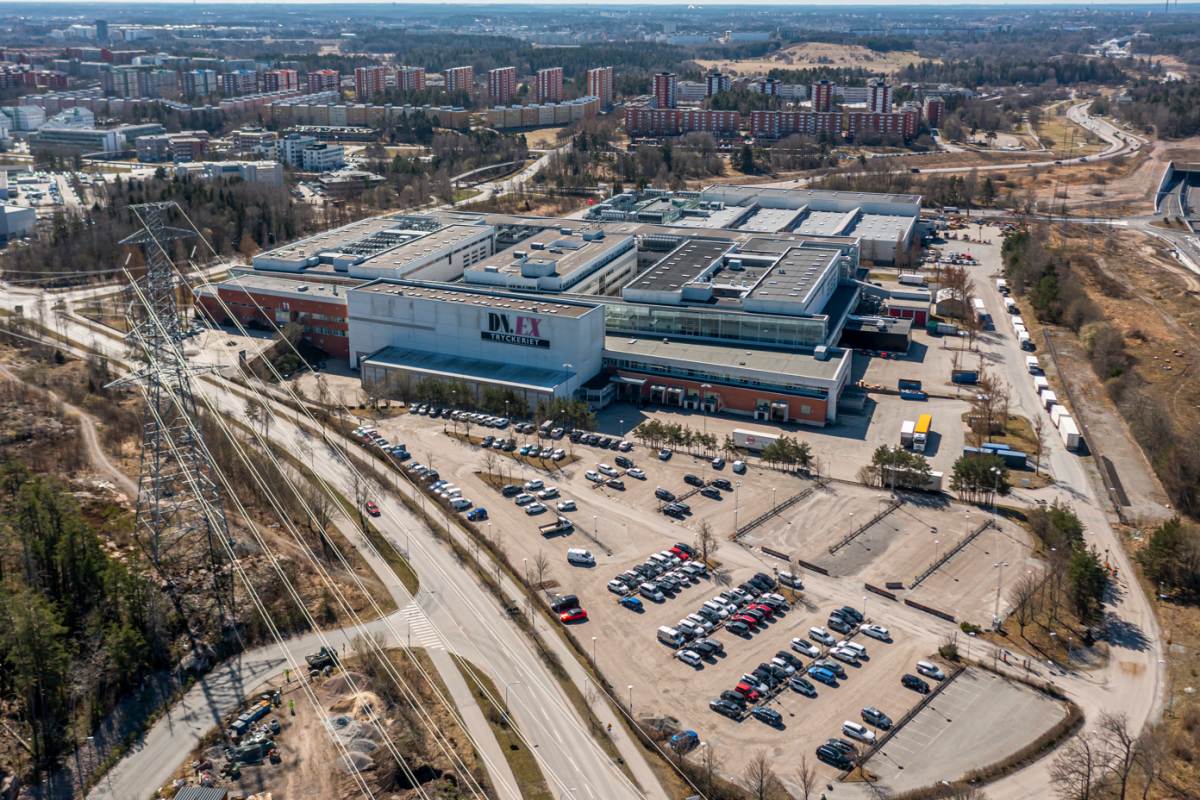
Canada Pension Plan Investment Board (CPP Investments), a Canadian pension fund manager, and Equinix, a US global data centre and interconnection services provider, have agreed to acquire Nordic data centre operator atNorth from Partners Group in a $4 billion (£2.9 billion) enterprise value transaction. The deal is subject to customary closing conditions, including regulatory approvals. CPP Investments will invest approximately $1.6 billion (£1.18 billion) for a 60% controlling interest, while Equinix will hold a 40% stake. The companies have also provisionally agreed a $4.2 billion (£3.1 billion) financing package, underwritten by European and Canadian lenders, to fund the acquisition and future expansion. atNorth currently operates eight data centres across Denmark, Finland, Iceland, Norway, and Sweden, with additional sites under development. The company has around 800MW in its installed and active development pipeline due online over the next five years, alongside 1GW of secured power for further expansion. Nordic data centre expansion plans Several atNorth facilities are designed to support AI and high-performance computing workloads, including liquid cooling capability. The portfolio incorporates renewable energy sourcing, heat reuse, and modular design principles. Equinix currently operates eight data centres in the Nordics, five in Helsinki and three in Stockholm, as part of a wider European footprint of more than 100 facilities across 20 countries. Eyjólfur Magnús Kristinsson, CEO of atNorth, says, “This acquisition is a powerful validation of atNorth’s journey and its market position as the leading Nordics data centre platform. It further illustrates the strategic importance of the region as Europe’s rising AI powerhouse. "I’m extremely proud to announce the next step in our chapter, welcoming this investment from CPP Investments and Equinix, which will enable access to capital, global enterprise, and hyperscale relationships, and supply chain strength required to scale at pace. "Our strategy remains firmly rooted in the Nordics, and we will continue to operate independently under the atNorth brand, preserving our dedication to the communities where we operate and the culture and values that have defined our success to date.” Maximilian Biagosch, Senior Managing Director & Global Head of Real Assets at CPP Investments, comments, “This transaction builds on our long-standing and highly productive relationship with Equinix. It demonstrates our conviction and commitment to the data centre sector, where demand continues to accelerate, fuelled by continued strong enterprise demand as well as cloud and AI adoption. "The Nordics are an attractive market for data centre growth, and the opportunity to partner with Equinix on this acquisition allows us to deploy capital at scale into a high-quality platform, helping us deliver attractive, risk-adjusted returns for CPP contributors and beneficiaries.” Bruce Owen, President, EMEA at Equinix, adds, “The scalable sites of atNorth are very complementary to Equinix’s connectivity services and global footprint. Combined with our joint focus on sustainability, this acquisition is expected to enhance our ability to help customers unlock the full potential of the Nordics’ expanding digital landscape." For more from Equinix, click here.

Norton advises on €210m data centre financing for Berlin
Global law firm Norton Rose Fulbright has advised British multinational bank Standard Chartered and French international banking group Crédit Agricole on a €210 million (£183 million) development facility for Virtus Data Centres, a UK data centre owner-operator providing colocation services across the region. The facility will finance the development of a 19,000m² data centre campus in Marienpark, Berlin. Once fully operational, the campus will deliver 57.6MW of IT capacity to meet the needs of hyperscale, government, and enterprise customers. Investment in Germany's infrastructure market The multi-disciplinary Norton Rose Fulbright team was led by London-based partners Jennie Dorsaint and Jonathan Crookes, and included partners Veit Sahlfeld (Hamburg), Holger Wolf (Frankfurt), Simon Weppner (Düsseldorf), Head of Real Estate Finance EMEA Sarah Cullen (London), counsels Michael-Alexander Volks (Hamburg) and Tobias Block (Hamburg), Senior Associate Anne-Sophie Wilhelmy (Frankfurt), and associates Symone Malcolm (London) and Jakob Kramer (Hamburg). Jonathan Crookes comments, “This financing is a landmark transaction, representing a significant investment in Germany’s rapidly growing digital infrastructure market. The deal showcases not only the breadth of our cross-border network but also the depth of our capability in the sector.”

Echelon secures €1.7bn loan financing for European expansion
Echelon Data Centres, an Irish-headquartered developer and operator of large-scale data centre infrastructure, has announced the successful closing of an initial €1.7 billion (£1.4 billion) in loan financing provided by investment bank and financial services company Morgan Stanley. The data centre operator says the financing "further strengthens [its] capital base to continue its planned expansion across Europe." Echelon now has eight campuses across Europe, totalling 1.2 GW of capacity, of which 400MW is operational or under development. The company notes that this "new multi-billion-euro financing facility enhances [its] ability to scale [its] development pipeline, invest in enabling power infrastructure, and grow [its] campus portfolio across Ireland, the UK, Spain, and Italy." David Smith, Deputy CEO of Echelon Data Centres, comments, “Ireland is one of Europe’s most important and supply-constrained data centre markets, and we have established the leading position in the Irish market through the delivery of large-scale campus developments supported by innovative power solutions developed in partnership with customers, regulators, and grid stakeholders. “Over the past 15 months, we have expanded into Spain - in joint venture with Europe’s largest utility, Iberdrola - and into Italy, extending our development model into new strategic markets. “We are incredibly proud of the growth Echelon has achieved over the past several years and [we are] excited for the opportunity ahead. "Demand for digital infrastructure across Europe is substantial and long term, and our ambition is to continue expanding our platform to support the growth of our customers in key strategic markets.” Continuing growth Charlie Etheridge, Head of Investments at Echelon Data Centres, adds, “This €1.7 billion financing strengthens our capital position and provides the flexibility to execute on our pipeline at scale and at pace. “It reflects the quality of our platform and the strong institutional support behind our strategy. We are pleased to continue our valued partnership with Morgan Stanley as we advance the next phase of our European expansion.” Echelon was advised by A&O Shearman and Arthur Cox. For more from Echelon, click here.

AECOM calls for sovereign UK data centre framework
AECOM, a US multinational infrastructure consulting firm, is advocating for the establishment of a sovereign data centre framework to protect critical digital infrastructure and ensure the UK benefits from the rapid growth of AI. As AI becomes embedded across public services and regulated sectors, questions of where sensitive data is hosted and who controls the infrastructure that underpins it are becoming more critical. In a new report, Data centres, energy and regional growth: a road map to success, AECOM cautions that while global investment in data centres is accelerating, the UK risks losing strategic control and economic value unless growth is guided by clearer national priorities, coordinated planning, and stronger alignment between energy, infrastructure, and regional development. The report makes the case that delivering secure, UK-based infrastructure for sensitive AI and public-sector workloads will require clearer long-term signals and greater coordination between government and industry, alongside continued private investment. “Data centres are now critical national infrastructure in every meaningful sense”, says Mary-Ann Clarke, UK and Europe Data Centre Lead at AECOM. “A clear sovereign framework would give developers and investors greater certainty, strengthen resilience, and help ensure the UK retains control over a critical layer of its digital economy.” The report’s key recommendations include: • Establishing a sovereign data centre infrastructure framework for sensitive public-sector and regulated workloads, supported by clear demand signals and long-term contracting models • Actively steering where digital demand is located, directing high-intensity computing towards locations that support the energy system, unlock powered land, and enable regional growth • Incentivising system-positive data centres that strengthen the energy system through flexible demand, waste heat reuse, and on-site generation • Positioning data centres as anchors for regional growth, aligning major developments with skills, energy, and regeneration strategies “The UK has made important progress in recognising the strategic role of data centres and AI-enabled infrastructure, particularly through recent planning and energy reforms,” notes Adrian Del Maestro, Vice President, Global Energy Advisory at AECOM. “The next step is to build on that momentum by providing clearer long-term signals on where critical digital infrastructure should be located, how it is powered, and how sensitive workloads are secured.” For more from AECOM, click here.

Data Centre Alliance, Clear Decisions launch Regulatory Radar
The Data Centre Alliance (DCA), a UK trade association for the data centre sector, and Clear Decisions, a regulatory compliance and sustainability reporting platform for data centre operators, have launched Regulatory Radar, a regulatory intelligence platform developed specifically for the data centre sector. The platform is designed to provide structured, real-time updates on policy and regulatory developments across the UK and EU, including energy reform, planning policy, sustainability regulation, and AI infrastructure strategy. Regulatory Radar combines AI-based analysis with expert review. The organisations state this approach is intended to ensure updates are interpreted in context and linked to potential operational and commercial impact. Tracking policy change across UK and EU The platform includes forward-looking analysis of planning, energy, and sustainability reform, alongside monitoring of digital and AI policy developments. It also identifies emerging compliance and reporting requirements. According to the DCA and Clear Decisions, the aim is to consolidate regulatory developments into a single source and provide greater visibility of potential risks and strategic considerations for data centre operators and investors. Steve Hone, Chief Executive of the Data Centre Alliance, says, “The regulatory landscape for digital infrastructure is evolving faster than ever. Our sector cannot afford to operate on partial information or delayed insight. "Regulatory Radar combines AI-driven intelligence with expert oversight to give operators and investors the foresight required to anticipate change, shape engagement, and protect long-term value. This collaboration sets a new benchmark for industry intelligence.” Regulatory Radar is available to DCA corporate members and Clear Decisions subscribers. For more from the DCA, click here.

Johnson Controls to acquire Alloy Enterprises
Johnson Controls, a global provider of smart building technologies, has signed an agreement to acquire Alloy Enterprises, a developer of liquid cooling technology for high performance data centres and industrial facilities. Founded in 2020 and based in Boston, USA, Alloy Enterprises develops direct liquid cooling components designed to improve heat removal and reduce pressure drop in cooling loops. The company states the approach can improve thermal efficiency by up to 35% while lowering cooling system energy use. The acquisition is intended to expand Johnson Controls’ data centre cooling portfolio, which already includes chillers, coolant distribution units, and waste heat recovery systems. Liquid cooling capability expansion Johnson Controls says Alloy’s manufacturing and materials engineering capabilities will complement its existing cooling equipment, including chillers and liquid cooling distribution platforms. The technology is designed to support cooling of GPUs, CPUs, memory, and network interfaces in high density computing environments. Lei Schlitz, President, Global Products & Solutions at Johnson Controls, says, “This acquisition is about enabling our customers to stay ahead of fast-changing compute demands by adding another core technology that enables us to optimise the overall thermal management architecture of a data centre. "It will also strengthen our core technology capabilities that can scale across the Johnson Controls portfolio and reinforces our long-term commitment to lead more broadly in advanced thermal management solutions for mission critical applications.” Alison Forsyth, co-founder and CEO of Alloy Enterprises, says, “We’ll continue to work closely to solve the industry's most urgent challenges in data centres and other mission-critical environments. "We look forward to this new chapter and continuing to scale with one of the world's most respected and experienced leaders in thermal management innovation.” The transaction is expected to complete in the company’s fiscal third quarter, subject to regulatory approvals. Financial terms were not disclosed. For more from Johnson Controls, click here.

New hyperscaler capacity to outpace colocation in Europe
Data centre capacity owned and operated exclusively by hyperscalers, also known as 'self-builds', in Europe is expected to outpace the growth of colocation supply in 2026, according to new research from real estate services company CBRE. The latest research shows that hyperscaler self-build capacity across Europe is expected to reach 4.2GW this year, representing 24% year-on-year growth compared to 2025. This new supply will be delivered across nine European countries, marking the seventeenth consecutive year of double-digit expansion for the segment. Hyperscalers are set to deliver a record level of self-build capacity this year as they expand cloud regions and support increasing volumes of equipment dedicated to artificial intelligence workloads. As of Q4 2025, approximately 60% of Europe's operational hyperscaler self-build capacity is located in Ireland, the Netherlands, Sweden, and Belgium. By comparison, the top 15 European colocation data centre markets are expected to grow 19% year-on-year. Despite slower growth relative to new hyperscaler self-builds, the European colocation segment will remain significantly larger. Strong demand endures CBRE notes that demand for colocation facilities remains robust across Europe. Hyperscalers and neocloud providers continue to rely on developer-operators for rapid delivery, flexible design options, and the ability to secure capacity on shorter timelines. Andrew Jay, Head of Data Centre Solutions, Europe at CBRE, says, "The hyperscaler self-build segment is growing as hyperscalers are looking to build facilities at scale and control more of the supply chain, the design of the facility, and ensure they have the power necessary." Kevin Restivo, Director, European Data Centre Research at CBRE, adds, "Traditionally, the fastest route to market for hyperscalers in need of data centre capacity delivered are the developer-operators. We expect this to remain true for the foreseeable future. Hyperscalers will, in some instances, build their own facilities though." For more from CBRE, click here.

Data Centre Alliance appoints new advisory board
The Data Centre Alliance (DCA), the UK trade association for the data centre sector, has appointed a new Advisory Board to lead its expanded Advisory Council. Liam Round has been named Chair, alongside board members Jonathon Freegard, Scott Cunningham, Astrid Wynne, Phil Beale, and John Booth. The appointments reflect experience across different areas of the data centre industry. The board will oversee the Advisory Council’s work in identifying key industry priorities and developing initiatives aimed at informing end users, policymakers, media, and the wider public. Focus on policy, energy, and standards Previous DCA initiatives include: • The DCA UK Data Centre Legislation Horizon Scan report• The Drowning in Data report on data centre water usage• The Data Centre Anti Contamination, Filtration, and Cleaning guide• The Data Centre Planning Policy, Sustainability, and Resilience Initiative guide• EU Code of Conduct for data centres energy efficiency updates• DCA data centre standards whitepapers Liam Round, Managing Director of Teksan UK and now Chair of the Advisory Council at the DCA, comments, “It is an honour to take on the role of Chair of the Advisory Board and Council at The Data Centre Alliance at such an important time for our sector. "Digital infrastructure underpins economic growth, national resilience, and AI development. I look forward to working with the DCA’s leadership and Partners to provide clear guidance, strong governance, and strategic focus as the industry navigates rapid change.” Over the next year, the Advisory Board and Council says it will focus on planning reform, energy market integration, grid access, sustainability, water resilience, AI infrastructure readiness, and industry standards development.

'UK cannot delay action on power and infrastructure'
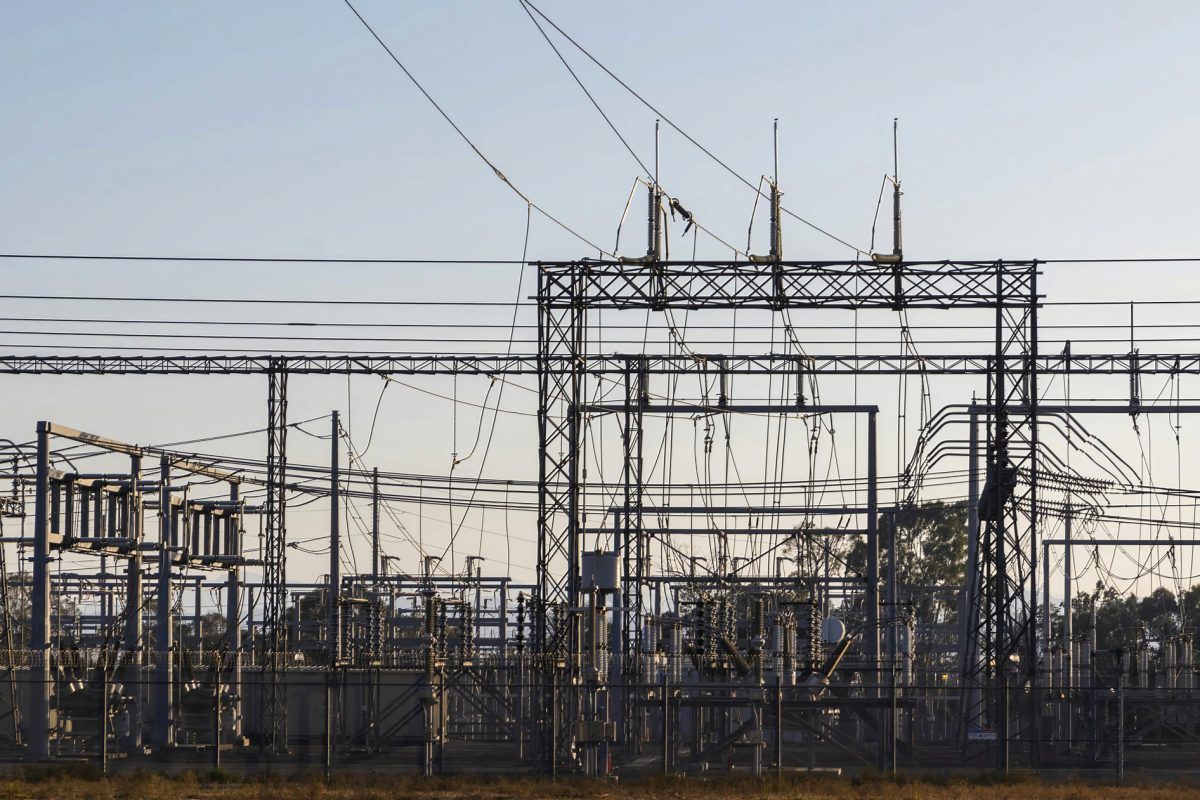
The UK must take urgent action to fix systemic issues in energy and infrastructure to sustain its ambition to lead the global digital economy and become an AI superpower, according to a new report published by trade association techUK. The report, Powering Digital Infrastructure, warns that while demand for data centres and compute infrastructure is accelerating rapidly - driven by AI, cloud, and edge computing - the UK’s energy system is struggling to keep pace. Without reform, rising electricity costs, grid connection delays, and fragmented policy could force investment overseas, undermining economic growth, innovation, and national resilience. The current problems Data centres are now critical national infrastructure (CNI), underpinning everything from financial services and healthcare to research, manufacturing, and public services, all while supporting the Clean Power 2030 Action Plan through Power Purchase Agreements (PPAs) and decarbonised heat. techUK's 2024 report highlights that the UK data centre sector already contributes billions to the economy and supports tens of thousands of jobs, with the potential to add an additional £44 billion in Gross Value Added between 2025 and 2035, if growth accelerates. The UK aims to triple compute capacity to around 6GW by 2030; however, this is colliding with structural constraints. Electricity prices for UK data centres are among the highest in the developed world - roughly four times those in the United States and about 46% above the median of 31 International Energy Agency (IEA) countries - while grid connection delays of up to eight years are becoming commonplace. As a result, techUK’s report identifies several interconnected risks for the UK if the situation remains unchanged, including loss of global competitiveness, grid bottlenecks and delays, and risks to the country's energy security and resilience, which could be compounded by growing geopolitical shocks and tensions. If left unaddressed, the report warns that the UK will struggle to meet its ambition of being an “AI maker”, weakening sovereignty and long-term economic control. The proposed solutions The report sets out a clear programme of solutions to minimise these risks: • Reform the grid connections process to prioritise committed, non-speculative projects; provide greater transparency over the queue; and offer phased connection agreements that reflect how data centres are actually built. • Reduce electricity costs for digital infrastructure through levy reform, targeted exemptions, and improved access to long-term power contracts, restoring international competitiveness. • Accelerate planning and delivery by enabling nationally significant data centre projects to move faster through the planning system and clarifying eligibility for prioritisation schemes. • Unlock private investment in networks by allowing the private sector to help build and finance grid infrastructure where it can reduce delays and costs. • Align digital growth with clean power by supporting renewable PPAs, co-location with generation, energy storage, and, where appropriate, nuclear and small modular reactors (SMRs). • Maximise local benefits by embedding data centres into regional growth strategies, supporting skills development, waste-heat reuse, and supply-chain expansion. Data centres can be part of the solution, acting as anchor customers for new renewable generation, supporting grid investment, and helping spread fixed system costs across a larger base of electricity demand. Matthew Evans, COO and Director of Markets for techUK, says, “Economic growth is directly linked to power and our country’s ability to digitise. If the UK is serious about unlocking economic growth, it needs to move decisively to fix energy costs, grid access, and regulatory fragmentation. "The results will unlock new cycles of investment and support the country’s decarbonisation efforts, as well as both national and regional growth. If we don’t, the UK risks falling behind at the very moment global competition is accelerating.”

Mistral AI and EcoDataCenter to build data centre in Sweden
Mistral AI and EcoDataCenter today announced a strategic, long-term investment of €1.2 billion (£1 billion) in Sweden’s digital infrastructure through a partnership to build an AI-focused data centre at EcoDataCenter’s Borlänge site. The collaboration includes AI-specialised data centres, advanced compute capacity and localised AI capabilities, and marks a significant step toward strengthening Europe’s technological autonomy in artificial intelligence. Under the partnership, Mistral AI will deploy large-scale AI compute at EcoDataCenter’s facilities in Sweden, marking the company’s first AI infrastructure investment outside France. Scheduled to open in 2027, the facility will support the development and operation of Mistral’s next-generation AI models at scale. By combining Mistral AI’s leading European foundation models with EcoDataCenter’s high-performance, sustainable data centre infrastructure, the partnership aims to deliver a fully European AI stack – designed, built and operated across the entire AI value chain, with data processed and stored locally in Europe. “This investment is a concrete step toward building independent capabilities in Europe, dedicated to AI,” says Arthur Mensch, CEO and Co-Founder of Mistral AI (pictured above, left). “By delivering a fully vertical offer with locally processed and stored data, we are reinforcing Europe’s strategic autonomy and competitiveness. This lays the foundation for a European AI cloud that can serve industries, public institutions, and researchers at scale.” EcoDataCenter will design, build and operate the underlying infrastructure in Sweden, leveraging renewable energy, advanced cooling technologies and deep expertise in high-density AI data centres. The Borlänge site offers significant scalability and is designed to support the most demanding AI workloads. The data centre will host NVIDIA’s latest-generation Vera Rubin GPUs, bringing cutting-edge AI compute capacity to Sweden. “AI is critical infrastructure for Europe’s competitiveness, security and economic growth,” notes Peter Michelson, CEO of EcoDataCenter (pictured above, right). “Together with Mistral AI, we are building high-performance AI infrastructure on Swedish soil – with sustainability, resilience and European strategic autonomy at its core. This investment strengthens Sweden’s position as a leading hub for advanced AI and digital infrastructure in Europe.” The initiative is part of wider efforts to strengthen Europe’s technological autonomy in AI and to secure long-term competitiveness and resilience in the digital economy. For more from EcoDataCenter, click here.


Translate »