Edge Computing in Modern Data Centre Operations
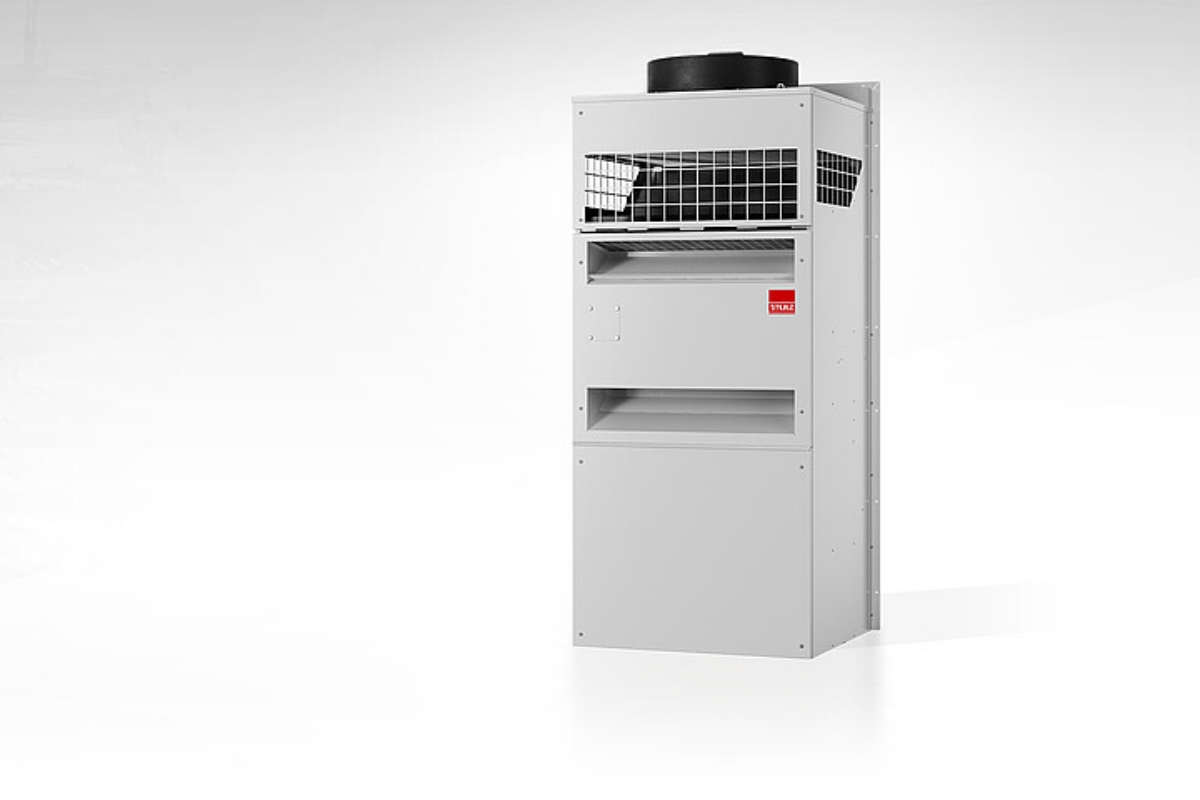

STULZ introduces fourth-generation cooling units
STULZ, a manufacturer of mission-critical air conditioning technology, has introduced the fourth generation of its TelAir and WallAir cooling series for edge, 5G, and critical infrastructure applications. The TelAir 4 and WallAir 4 units use R454C refrigerant, integrated free cooling, and an EN 378-compliant safety architecture. They are designed for edge data centres, telecommunications containers, shelters, and radio stations. The units are available with two installation concepts: TelAir 4 is designed for indoor installation, whilst WallAir 4 can be mounted externally on a container wall. Anika Do, Global Product Manager at STULZ, explains that, "Both are available in two standard enclosure sizes and four cooling capacity classes, ranging from 6–17kW." The units are designed to address increasing thermal densities and the requirements of the amended European F-Gas Regulation (EU) 2024/573. Free cooling cuts energy use STULZ says the units can reduce operating costs by up to 80% when using combined free cooling and mixed-mode operation. The electronically commutated (EC) fans also comply with the requirements of the upcoming ErP 2027 Ecodesign Directive. Both models operate from -20°C to +54°C, while an optional winter kit can extend operation down to -40°C. Customers can choose between on/off systems with a thermostatic expansion valve, or continuously modulating EC inverter compressors paired with an electronic expansion valve. Both configurations have hermetically sealed refrigeration circuits. The units also feature a multi-stage safety architecture designed for A2L refrigerants such as R454C. In the event of a refrigerant leak, the evaporator fan can increase to maximum speed to dilute and extract refrigerant gases. A two-stage sensor system activates maximum fan speed and shuts down other power consumers at 10% of the lower flammability limit (LFL). At 20% LFL, the unit is fully disconnected from the power supply. Meanwhile, an enclosed IP54 control cabinet is designed to eliminate potential ignition sources. TelAir 4 supports downflow and displacement airflow concepts, with optional adjustable outlet grilles for horizontal or vertical air distribution. WallAir 4 uses displacement cooling to provide direct cold air stratification within the room. Additionally, TelAir 4 specifically can be installed within a wall, providing protection against weather and vandalism, whilst also reducing noise emissions for use in residential and mixed-use areas. Both units use the E² BASIC controller, which includes an ethernet interface, Modbus, and multiple inputs and outputs for integration with building management and data centre infrastructure management (DCIM) systems. Password-protected access levels are included, alongside inputs for monitoring fire, smoke, and intrusion alarms. Anika continues, "For the fourth generation of the TelAir and WallAir cooling series, we set out to create two distinct cooling solutions that deliver outstanding flexibility across a wide range of edge, 5G, and critical infrastructure applications. "By combining cutting edge technology with modern design, ease of use, energy efficiency and reliability, we have achieved that goal. The new units are available to order immediately, with STULZ account managers able to provide further information and tailored advice." For more from STULZ, click here.

Telxius boosts Caribbean connectivity with Cancun facility
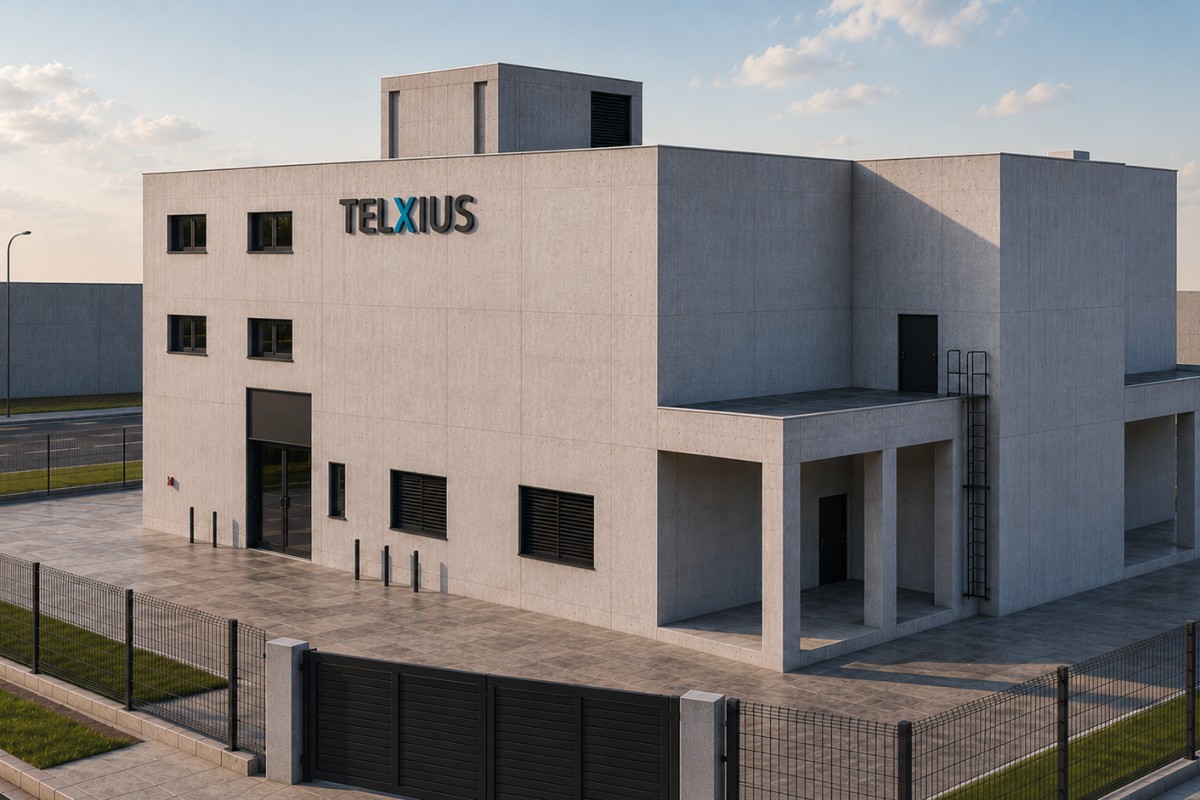
Telxius, a Spanish operator of submarine cable networks and telecommunications infrastructure, has opened a carrier-neutral landing gateway and edge data centre in Cancun, Mexico, strengthening connectivity between the Caribbean, USA, Latin America, and Europe. The facility serves as a landing point for Tikal, a submarine cable connecting Puerto Barrios in Guatemala with Boca Raton in the US. Due to launch in the first half of 2027, Tikal is expected to provide an initial capacity of 380Tbps on its main trunk. Integrated into Telxius’s global network, the Cancun facility combines subsea connectivity, terrestrial networks, and edge computing. It is designed to support data-intensive and latency-sensitive workloads, including cloud, content, AI, and CDN deployments. Edge facility adds network resilience The Tier III facility incorporates N+1 and 2N redundancy across critical power and cooling systems, alongside physical and network security measures. Its carrier-neutral design allows customers to interconnect with multiple networks, cloud providers, and digital platforms. The facility also provides an alternative route to Santiago de Querétaro, expanding Telxius’s network presence in Mexico and adding route diversity for customers. Mónica Martínez, CMO at Telxius, says, “We’re excited to expand our network footprint in Mexico with our new facility in Cancun. It truly reflects the convergence of subsea connectivity, terrestrial networks, and edge infrastructure to create a unique digital hub for the Caribbean and the Americas. “By bringing connectivity and computing resources closer to where demand is growing, we enable lower latency, greater resilience, and faster access to cloud, content, and AI-driven services for customers across the region.” The Cancun development follows Telxius’s recent network expansion in Santo Domingo in the Dominican Republic and adds to its existing infrastructure in the Caribbean and Mexico. For more from Telxius, click here.

FIOR, Multiverse partner on sovereign edge AI environments
FIOR Group, a UK-based cybersecurity firm providing identity and enforcement gateways for AI agents, and Multiverse Computing, a Spanish company specialising in compressing large language models, have agreed to integrate their technologies for AI deployments in edge, on-premises, and sovereign environments. The partnership combines FIOR’s cryptographic agent identity, policy enforcement, revocation, and audit technology with Multiverse Computing’s model compression, optimisation, and edge deployment capabilities. The companies intend to support organisations that want to run AI within infrastructure they control, including private and sovereign cloud environments, telecom networks, industrial sites, and air-gapped systems. The combined technologies are intended to provide local AI execution alongside controls for identity, access, policy compliance, auditability, and data sovereignty. Under the agreement, FIOR and Multiverse will integrate FIOR’s agent identity gateway, policy enforcement, tamper-evident audit trail, mobile protection, and voice authentication with Multiverse-enabled AI deployments. Multiverse will support the deployment and optimisation of AI models within FIOR-enabled environments, including in-perimeter model execution, anomaly detection, content and policy analysis, and lifecycle support for edge and sovereign AI systems. The companies expect the work to cover applications in sovereign AI infrastructure, regulated enterprise AI, defence and public-sector deployments, telecom and edge AI, industrial automation, financial services, and healthcare. AI deployment within controlled environments Enrique Lizaso Olmos, CEO of Multiverse Computing, says, “Multiverse Computing is focused on making advanced AI models more efficient, deployable, and useful in real-world environments. "Partnering with FIOR strengthens the governance and security layer around AI deployments, particularly for customers requiring sovereign, on-premises, and high-assurance AI infrastructure. "Together, we can support a new generation of AI products designed for security, efficiency, and operational control. It is clear, as IDC recently noted, that FIOR has unique advantages in its ability to identify, secure, and govern every single agent, and that is an important differentiator for our clients." David Williams, Founder of FIOR, adds, "AI will not be trusted at scale unless organisations can control which agents act, what they are authorised to do, how authority is delegated, and how those actions are evidenced. FIOR was built to provide that control layer. "By working with Multiverse, we can combine cryptographic agent governance with efficient edge and in-perimeter AI deployment, which is exactly where many governments and regulated enterprises now need AI to operate. Multiverse's ability to collapse the cost of operating AI, combined with sovereignty, creates significant opportunities." The partnership will initially focus on identified customer opportunities and selected integrations where Multiverse already has customer relationships. The companies also plan to work on technical integration, customer deployment patterns, certification, international market activity, and further product development. FIOR and Multiverse expect locally deployable AI models and cryptographically governed agent infrastructure to become increasingly relevant as governments and enterprises seek to reduce their reliance on external AI services and run AI within infrastructure under their own control.

nLighten launches rapid colocation deployment service
European data centre operator nLighten has launched ReadyCabinet, a standardised colocation offering designed to reduce deployment times for organisations requiring edge infrastructure across Europe. The service provides customers with a pre-built, fixed-price colocation cabinet and is designed to enable deployments within three working days of an order being placed. According to nLighten, ReadyCabinet is intended to simplify the process of procuring colocation capacity by replacing bespoke design and engineering processes with a standardised offering. Customers can choose a full or partial cabinet configuration, including up to 5kW of power and access to nConnect, the company's connectivity platform. Joachim van Collenburg, Vice President of Enabling Services at nLighten, says, "We are moving colocation away from bespoke engineering and turning it into a scalable product. "ReadyCabinet reflects that reality. It's a deliberately simple product, built to be the entry point to a much longer journey with our customers." The deployment process consists of a quotation with real-time availability, a service order agreement, and cabinet handover within three working days. Standardised approach targets edge infrastructure growth nLighten says the service has been developed in response to increasing demand for rapid, repeatable infrastructure deployments across multiple locations. The company cites the growth of AI inference, low-latency applications, and edge computing as drivers behind the need for faster provisioning and more standardised colocation services. ReadyCabinet forms part of nLighten's wider colocation platform, which allows customers to expand from a single cabinet deployment to higher-density and liquid-cooled environments across its European data centre portfolio. All ReadyCabinet deployments operate across nLighten's European edge platform and include metered power billing. The service is currently available at selected nLighten facilities, with further expansion planned throughout 2026. For more from nLighten, click here.

EDGE Modular launches containerised data centres
EDGE Modular has launched globally, expanding its containerised data centre offering for edge computing, telecoms, and remote infrastructure deployments. The New Zealand-based company, a division of Edge Defence, designs and manufactures modular data centre systems intended for rapid deployment in locations where traditional construction may be impractical or time-consuming. According to EDGE Modular, the systems are aimed at organisations requiring scalable infrastructure for edge computing and localised data processing. The company says its modular approach allows systems to be manufactured, tested, and deployed more quickly than conventional brick-and-mortar facilities, while also supporting future expansion through scalable designs. John Gell, General Manager at EDGE Modular, explains, “Our mission is to provide innovative, containerised data centre solutions tailored to the unique needs of each client. "We ensure efficiency, quality, and flexibility for future growth in every project we undertake.” Modular infrastructure for edge computing EDGE Modular’s portfolio includes containerised data centres in 10ft, 20ft, and 40ft formats, alongside telecom exchange units, command and control rooms, battery storage systems, and specialist workshop environments. The company states that its infrastructure is designed for deployment in remote and challenging environments, with systems transportable via road, rail, or sea using standard shipping container logistics. EDGE Modular also says its systems are designed for concurrent maintainability, allowing maintenance work to be carried out without interrupting critical operations. In addition to manufacturing, the company provides infrastructure consultancy, system design services, and maintenance support for deployed installations.

Techno Digital commissions Mumbai edge data centre
Indian data centre developer Techno Digital has announced the completion of its Mumbai Edge Data Center (EDC) in Mahalakshmi, South Mumbai, India. Developed in partnership with RailTel Corporation of India, the facility is built to Rated-3 infrastructure standards and is now fully operational. The site has been designed to support enterprise workloads through a smaller infrastructure footprint focused on low latency and connectivity. The Mumbai EDC is positioned to support businesses operating in Mumbai’s financial districts, providing a reported latency of less than 150 microseconds from the Bombay Stock Exchange in Nariman Point and less than 250 microseconds from the National Stock Exchange of India in Bandra Kurla Complex (BKC). The facility is located near business districts including BKC, Nariman Point, Worli, Lower Parel, Mahalakshmi, and Fort, allowing organisations to deploy infrastructure closer to operational sites. A focus on low-latency connectivity Key features of the facility include: • Low-latency connectivity across Mumbai business districts• Access to RailTel’s nationwide fibre network, spanning more than 63,000km• Infrastructure designed to support sovereign and compliance-focused workloads Its proximity to Mumbai’s cable landing stations is also intended to support international connectivity while maintaining low-latency domestic performance. The Mumbai facility forms part of Techno Digital’s wider edge data centre expansion strategy in partnership with RailTel. The company plans to launch five additional edge locations, with a longer-term target of expanding to 102 sites across India over the next three to four years. Ankit Saraiya, Director & CEO of Techno Digital, comments, “As India’s digital economy scales, infrastructure requirements are evolving beyond capacity to include proximity and performance. "The Mumbai EDC is designed to align infrastructure with demand centres, particularly in high-performance environments such as financial services and real-time platforms. "At Techno Digital, our mission is to build a leading distributed network of interconnected edge infrastructure that matches the concentration of economic and digital activity. The Mumbai facility represents a key milestone in that journey.” Amit Agrawal, President of Techno Digital, adds, “In a city like Mumbai, where milliseconds can impact outcomes, infrastructure placement becomes critical. "This facility combines low-latency architecture, strong connectivity, and sovereign infrastructure to support performance-critical workloads ranging from trading and fintech platforms to real-time AI inferencing and enterprise applications. "It is designed to deliver the reliability and responsiveness required in latency-sensitive environments.” For more from Techno Digital, click here.

Duos Edge AI expands Amarillo data centre footprint
Duos Technologies Group, through its subsidiary, Duos Edge AI, a provider of edge data centre (EDC) systems, has deployed a second EDC in the Amarillo, Texas market. The carrier-neutral facility is located on land in Potter County, adjacent to a major colocation site in the Texas Panhandle. It is designed to support regional demand for low-latency computing, including AI applications, enterprise workloads, and public sector services. The deployment builds on the company’s initial Amarillo site and forms part of a wider expansion across Texas, with additional locations in Lubbock, Waco, Victoria, Abilene, and Corpus Christi. The facility is designed to provide local processing capacity, reducing reliance on data centres in larger metropolitan areas and supporting improved network performance. Regional expansion and edge infrastructure strategy Duos Edge AI says the site will deliver high-density computing, increased bandwidth availability, and secure data processing capabilities for organisations operating in the region. The expansion reflects a broader strategy to develop edge infrastructure in underserved and high-growth markets. Dave Irek, Chief Operations Officer at Duos Edge AI, says, “This expansion enhances capacity and capability in the region. We are creating a robust, carrier-neutral ecosystem designed to support innovation, attract investment, and drive long-term economic growth.” Potter County Judge Nancy Tanner adds, “This collaboration with Duos Edge AI represents a significant investment in our community's future. [It] will attract new businesses, improve connectivity for our residents and schools, and position Potter County as a leader in digital infrastructure.” The new facility is expected to become operational in the coming months. For more from Duos Edge AI, click here.

Nokia, Telefónica to expand edge networking in Spain
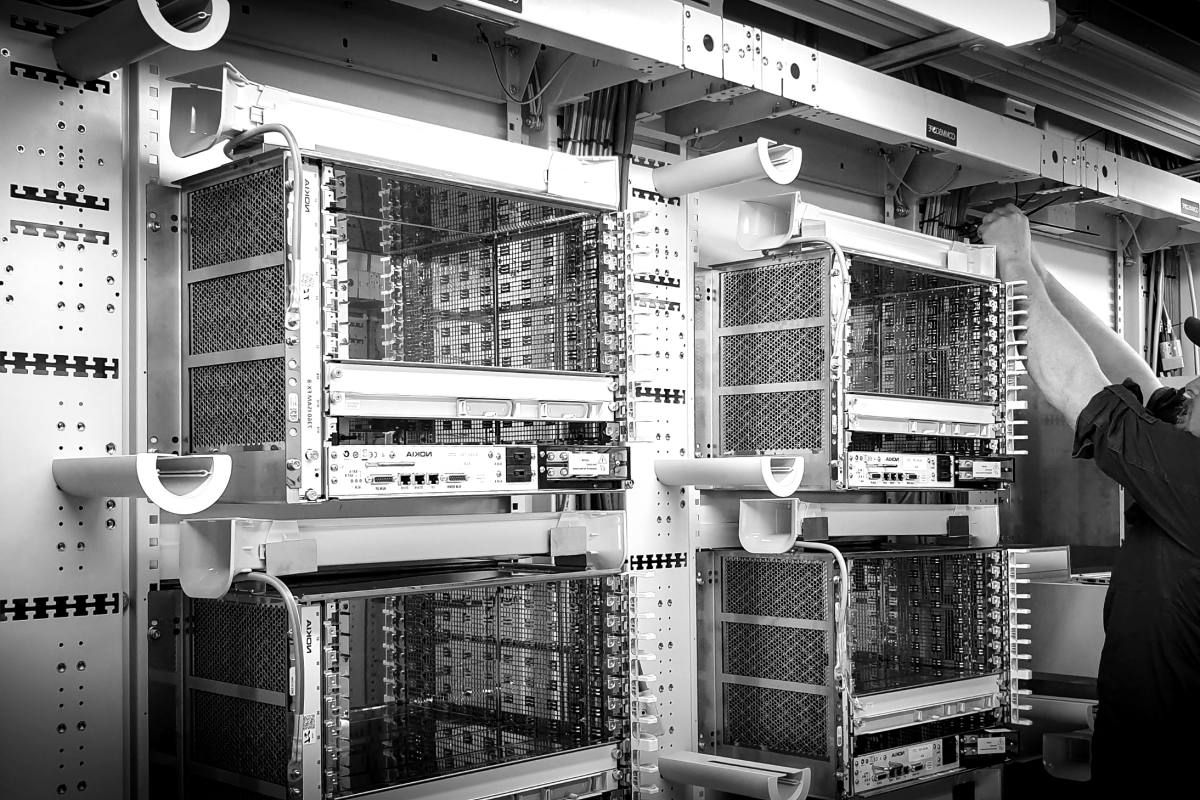
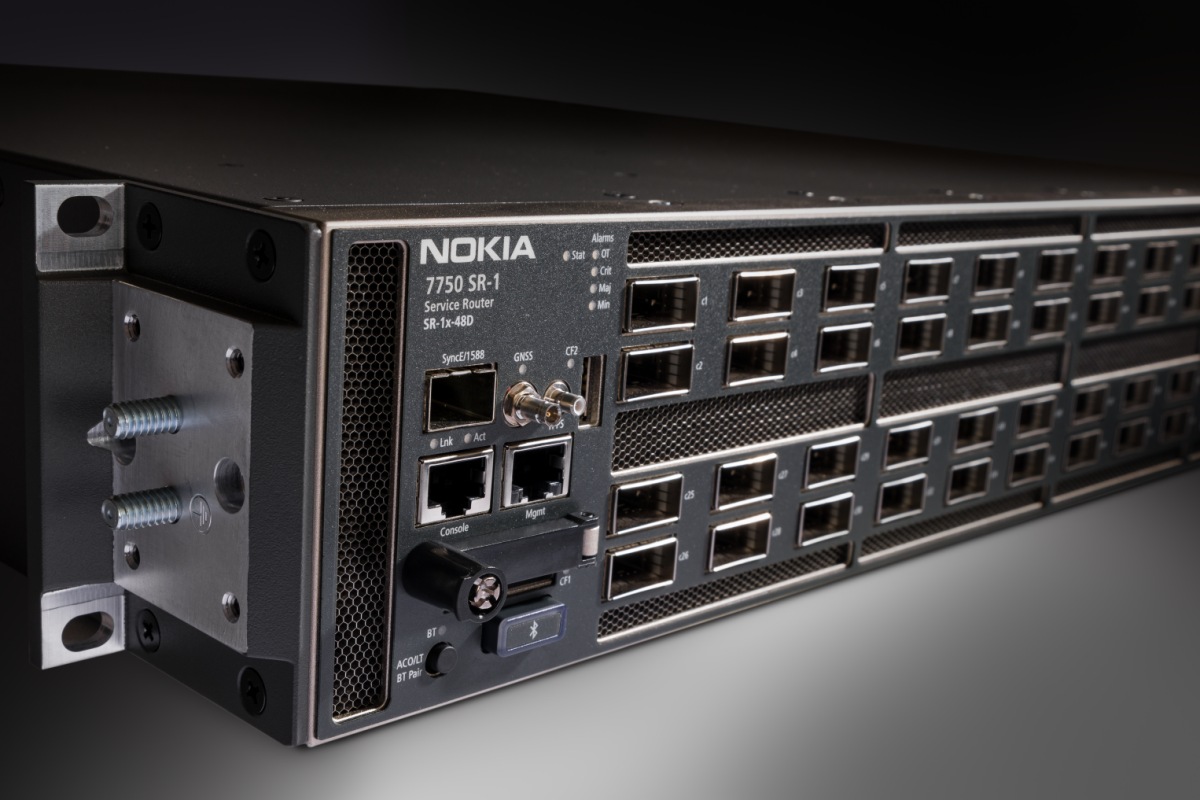
Finnish telecommunications company Nokia has been selected by Telefónica, a Spanish multinational telecommunications company, to deploy networking technology across 17 new edge data centre nodes in Spain. The rollout forms part of Telefónica’s expansion of distributed edge infrastructure, supporting AI, B2B, and telco cloud services for residential, enterprise, and public sector users. Nokia will provide connectivity for compute and storage within each edge facility, as well as links between the sites and external networks. The infrastructure is designed to support AI training and inferencing closer to end users, alongside digital services in healthcare, education, industry, and government. Under the multi-year agreement, Nokia has exclusive responsibility for networking across the 17 nodes. 12 have already been deployed, including at Telefónica’s Tecno-Alcalá site. Multi-year agreement covers 17 edge nodes The latest phase follows a pilot deployment of three edge data centres in 2024. Nokia now acts as sole networking technology partner for the programme, with the companies stating that a single-vendor approach is intended to simplify operations and standardise architecture. Sergio Sánchez, CTIO at Telefónica España, comments, “This initiative fully aligns with our strategy to make edge cloud and artificial intelligence main cornerstones of Telefónica’s growth. "Nokia has proven to be a trusted connectivity partner in this mission, and they are playing a critical role in building secure, reliable data centre networks for our ambitious edge node project. "Through this effort, we are not only enhancing our digital infrastructure but also reinforcing Spain’s technological sovereignty and enabling a more dynamic, user-centric digital ecosystem.” David Heard, President, Network Infrastructure at Nokia, adds, “We are proud to collaborate with Telefónica for this landmark project that supports our customer’s shift to a nationwide distributed edge architecture. "This win underscores our long-term strategic relationship and Nokia’s leadership in building AI-ready, high-performance data centre networking solutions. Together, we’re creating the foundation for Spain’s digital future, bringing intelligence and services closer to where people and businesses need them most.” For more from Nokia, click here.

Duos Edge AI deploys edge DC in Abilene, Texas
Duos Technologies Group, through its subsidiary Duos Edge AI, a provider of edge data centre (EDC) systems, has deployed a new edge data centre in Abilene, Texas, in partnership with Region 14 Education Service Center. The facility forms part of the company’s ongoing rollout of carrier neutral edge data centres across Texas and is intended to support education, healthcare, workforce development, and local businesses. Expanding regional edge infrastructure Located at Region 14 ESC, the data centre will act as a local colocation site and computing hub for more than 40 school districts and charter schools spanning 11 counties. The company says the installation provides secure processing, increased bandwidth, and low-latency compute closer to users. According to Duos Edge AI, the deployment is designed to reduce reliance on remote data centres and improve access to digital services, including AI-based applications and cloud platforms, particularly for schools in rural and underserved areas. The Abilene installation follows earlier deployments in Amarillo, Waco, and Victoria, and is aligned with the company’s strategy to develop distributed edge capacity for education, healthcare, and enterprise use cases. Doug Recker, President of Duos and founder of Duos Edge AI, comments, “We are excited to partner with Region 14 ESC to bring cutting-edge technology to Abilene and West Texas, bringing a carrier neutral colocation facility to the market while empowering educators and communities with the tools they need to thrive in a digital world.” Region 14 ESC Executive Director Chris Wigington adds, “Collaborating with Duos Edge AI allows us to elevate the technological capabilities of our schools and partners, ensuring equitable access to high-speed computing and AI resources.” The facility is scheduled to become operational in early 2026, with a launch event planned. For more from Duos Edge AI, click here.

Duos Edge AI expands US edge data centres
Duos Technologies Group, through its subsidiary Duos Edge AI, a provider of edge data centre (EDC) systems, has expanded its EDC footprint in Texas and entered the Illinois market, serving the Greater Chicago area. The company reports continued deployments across several Texas locations and that the Illinois site represents its first installation in the Midwest. Duos Edge AI says further sites are planned as part of a broader geographic expansion. Texas and Midwest deployments In Texas, Duos Edge AI has added two edge data centres in Lubbock to support carrier neutral requirements. The company has also deployed sites supporting education, healthcare, and service providers in Amarillo, Victoria, Waco, Dumas, and Corpus Christi. The Illinois deployment is located in the Greater Chicagoland area and is described as the first of multiple planned installations in the Midwest. According to the company, the Lubbock sites are intended to address service provider demand, while the broader Texas portfolio supports a range of public and private sector use cases. Duos Edge AI’s modular edge data centres include security controls aligned with SOC 2 Type II certification under AICPA standards. The company also references its patented modular data centre entryway design, which is intended to protect equipment in controlled environments. Commenting on the expansion, Doug Recker, President of Duos and founder of Duos Edge AI, says, “Expanding within Texas and into the Illinois market is a meaningful milestone that reflects both execution discipline and rising demand for our Edge Data Center. "We are building a scalable, repeatable deployment model that supports education, carriers, and enterprises with secure, low-latency infrastructure. "These expansions align with our growth strategy and reinforce our confidence in continued momentum as we execute against our long-term guidance.” Duos Edge AI states that it plans to expand into additional US states, focusing on carrier neutral facilities that support localised compute and edge infrastructure requirements in a range of markets. For more from Duos Edge AI, click here.


Translate »