Data Centre Business News and Industry Trends


Schneider calls for collaboration on London data centres
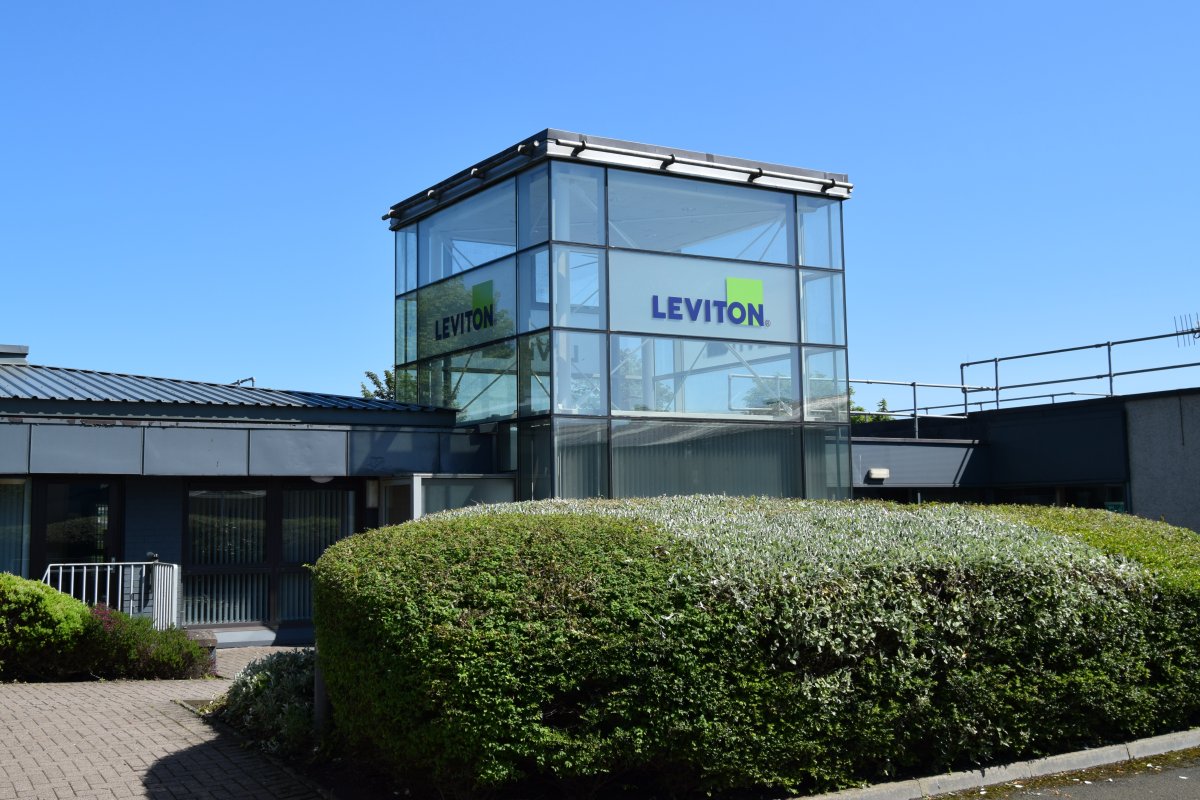
Global energy technology company Schneider Electric has brought together organisations from across the public and private sectors to discuss the infrastructure challenges facing London's data centre market and the collaboration needed to support future AI growth. Held in partnership with Opportunity London and SEGRO, the roundtable explored how London can maintain its position as Europe's largest data centre hub while addressing growing demand for digital infrastructure. The event, chaired by Laura Citron, Chief Executive of London & Partners, included representatives from government, local authorities, energy companies, data centre operators, real estate, and the wider technology sector. Participants discussed the need for greater coordination around planning, electricity infrastructure, land availability, water use, and emerging technologies such as liquid cooling. The discussions also highlighted the importance of improving understanding of data centre requirements among policymakers as demand for AI and cloud infrastructure continues to grow. The roundtable also examined the role of data centres as critical national infrastructure (CNI) and their contribution to economic growth and AI development. Industry highlights need for coordinated infrastructure planning Matthew Baynes (pictured above), Vice President, Secure Power UK & Ireland at Schneider Electric, says, "Today, there remains a fundamental gap between how policymakers perceive and understand data centres [and] how the industry actually operates. "Decisions around planning, land allocation, and power provision are being made without a complete picture of what's required to meet the AI opportunity, and the UK now risks losing ground to markets where that understanding is far more mature. "As the UK's largest data centre hub, and its default AIGZ, London offers all the advantages needed to lead, but closing the gap between ambition and action is not optional; it is the prerequisite for success." Jace Tyrrell, Chief Executive of Opportunity London, adds, "Data centres are no longer a niche; they are foundational to London’s future economic growth, AI ambitions, and global competitiveness." Maria Jose Rivas-Duarte, Director of Sustainability at Pure Data Centres, also says the discussions demonstrated the importance of collaboration between industry, policymakers, and local communities to support responsible digital infrastructure development, while Luisa Cardani, Head of the Data Centres Programme at techUK, notes the UK's data centre sector has significant potential to contribute to economic growth, but that achieving this will require coordinated action between government and industry. For more from Schneider Electric, click here.

Power equipment shortages threaten Scotland DC growth
A shortage of critical power equipment could become one of the biggest barriers to delivering Scotland's planned data centre expansion, according to Opna, a London-based critical power supply market infrastructure company. The comments follow reports that an £8.2 billion AI data centre project in Lanarkshire, led by CoreWeave and DataVita, is unlikely to meet its original target of being operational by 2030. While discussion around Scotland's data centre growth has largely focused on renewable energy generation and grid connections, Opna argues that shortages of transformers, switchgear, cables, and other electrical equipment present an equally significant challenge. According to Montel's curtailment report, Scottish wind farms received around £343 million in payments to switch off in 2025. At the same time, Wood Mackenzie reports average transformer lead times have reached 128 weeks, with some orders extending beyond four years, while prices have increased by 77% since 2019. Grid upgrades and data centres compete for equipment Shilpika Gautam, founder and CEO of Opna, says, "The massive investment in grid upgrades to support Scotland’s data centres is being hindered by a shortage of critical power equipment: transformers, cables, switchgear, etc. Network operators, who buy in bulk and have long-term agreements with manufacturers, get priority for these supplies. "As a result, when a data centre orders equipment, it’s pushed to the back of a four-year waitlist. Grid expansion and data centre development compete for the same resources, while only network operators have reliable access to manufacturers. "Connecting to the grid is the bottleneck, but procuring critical power equipment is the bottleneck of the bottleneck; few are addressing it." Opna points to the scale of electricity network investment already under way in Scotland. SP Energy Networks began a £12 billion programme of grid upgrades across central and southern Scotland in April, including 12 new substations and a supply chain framework worth up to £5.4 billion over 10 years. Meanwhile, SSEN Transmission is investing at least £22 billion in northern Scotland by 2031 and recently announced a further £7.4 billion supply chain framework. Shilpika continues, "The tens of billions of pounds of grid upgrades meant to unblock Scotland’s data centres are being bought from the same transformer and switchgear order books those data centres need. Network operators are bulk buyers with multi-year framework agreements; manufacturers allocate scarce production slots to them first. "A single data centre project arriving with a one-off order goes to the back of a four-year book. [As mentioned,] grid expansion and data centre growth are now competing for the same equipment, and only one side of that competition has a standing seat at the manufacturers’ table." For more from Opna, click here.

Verne agrees Arcus acquisition of Volta Data Centres
Arcus Infrastructure Partners, a London-based specialist infrastructure fund manager, has entered into an agreement to acquire Volta Data Centres from data centre provider Verne, adding a 6MW carrier-neutral colocation facility in central London to its digital infrastructure portfolio. The transaction, expected to complete in July 2026, will see Arcus acquire 100% of Volta Data Centres, which is currently operated as Verne's UK data centre. The facility provides colocation and interconnection services to customers in the financial services, telecommunications, IT, and enterprise sectors. Located near the City of London, the site offers 6MW of capacity and features connectivity through more than 40 on-site carriers and over 1,200 cross-connects. Acquisition strengthens UK data centre presence The acquisition expands Arcus's presence in the colocation market, building on its existing investment in Portus Data Centres. According to the company, the UK market was identified as offering strong long-term potential due to growing demand and constrained supply. Charlie Scott, Senior Investment Director at Arcus, comments, "Volta is an excellent fit with our AEIF4 investment strategy, providing critical digital infrastructure at the heart of one of Europe's premier colocation markets. "The business stood out as a high-quality investment combining stable contracted revenues, an entrenched position in London's connectivity ecosystem, and a clear pathway for growth and commercial improvements, supported by an experienced site team. "Colocation has been a strategic focus for Arcus since 2024. We look forward to partnering with the Volta team to support the next phase of the business's growth and building on this entry point with further acquisitions." For Verne, the sale forms part of a broader strategy to focus investment on low-carbon, high-density data centre infrastructure across Northern Europe. Dominic Ward (pictured above), CEO of Verne, suggests, "This agreement is the right next step for the London data centre, its customers, and its team. Arcus has deep infrastructure experience and is well placed to support the site's next phase of growth. "For Verne, this is a strategic portfolio decision that allows us to focus our investment and expertise on low-carbon, high-density data centre infrastructure in the locations best suited to AI, high-performance computing, and other demanding workloads. We will work closely with Arcus to support a smooth transition." The transaction remains subject to the fulfilment of contractual requirements and is expected to complete during July 2026. For more from Verne, click here.

Barings extends Stockholm data centre lease
Alternative investment manager Barings has secured a 10-year lease extension with a global data centre operator at its Vanda 3 site in Kista, Stockholm, Sweden, while also obtaining an additional 30MW of power capacity to support future expansion. The agreement strengthens occupancy at the Vanda 3 asset and supports further data centre development as demand for power capacity continues to grow. Infrastructure work is already underway to connect the additional capacity to the site. Vanda 3 is a mixed-use site within Stockholm's established data centre cluster in Kista. Covering approximately 65,000m², it currently includes data centre, logistics, storage, and industrial space, with the unnamed global data centre operator occupying around 15,000m². Additional power supports future expansion The additional 30MW of capacity, secured through Ellevio, will enable the conversion of existing buildings for further data centre use, including space expected to become available in the future. It will also support additional development across the site. Barings is also seeking planning approval for a further 25,000m² of building rights in 2027, increasing the site's long-term development potential. Olli Forsman, Director, Transactions & Asset Management Nordics at Barings, comments, "The lease extension with the global data centre operator is a strong endorsement of Vanda 3's quality and long-term relevance as a data centre location. "Alongside this, securing additional power capacity is a pivotal milestone that significantly enhances the asset's ability to support further expansion. In a market where access to power remains a key constraint, this puts us in a strong position to support both existing and new operators looking to scale in Stockholm." Kristina Johnson, Senior Director, Nordics Asset Management at Barings, adds, "The combination of secured power, existing infrastructure, and development flexibility creates a compelling proposition for data centre operators and positions the asset well to capture future demand. "The Nordics is one of our preferred markets across a range of asset classes and capital profiles, and we will continue to explore all opportunities where we can create value on behalf of our partners."

VIRTUS expands Slough data centre campus
VIRTUS Data Centres, a UK data centre owner-operator and part of ST Telemedia Global Data Centres (STT GDC), has announced plans to expand its presence at the Slough Trading Estate with a new AI-ready data centre that will provide 32.5MW of IT capacity, increasing the company's UK data centre estate to more than 300MW of operational and committed capacity. The new facility, known as LONDON19, is intended to provide additional capacity to meet growing demand for AI, cloud, and digital infrastructure. The data centre will incorporate advanced cooling systems, sustainable construction materials, and provision for the future export of waste heat for use within the local community. New facility planned for Slough campus Planning permission for LONDON19 has already been secured through the Slough Trading Estate Simplified Planning Zone. SEGRO will develop the powered shell, with construction expected to begin following design approval. The development will include a roof-level plant deck and is expected to achieve a BREEAM 'Excellent' rating. Once completed, LONDON19 will become the latest addition to VIRTUS's UK portfolio, bringing the company's operational and committed capacity to more than 300MW. Adam Eaton, CEO of VIRTUS Data Centres, says, "We are delighted to expand our Slough campus with the addition of LONDON19, further strengthening our ability to support customers seeking scalable, resilient, and sustainable data centre capacity in London's western corridor. "This development builds on our long-standing relationship with SEGRO and enables us to deliver critical power and IT capacity aligned with customer demand. "By embedding sustainability considerations from the outset, including provision for future waste heat utilisation, LONDON19 reflects our focus on delivering flexible, future-ready infrastructure that supports the UK's digital economy while minimising environmental impact." Andrew Pilsworth, Managing Director of Data Centres and Strategic Partnerships at SEGRO, adds, "VIRTUS is one of Europe's leading data centre operators and we are pleased to be extending our long-standing relationship through the delivery of this new facility at the Slough Trading Estate. "The Trading Estate has been at the centre of the UK's data centre market for more than 20 years, and the scale of infrastructure, power availability, and planning certainty we have established there, alongside a strong focus on sustainability and positive engagement with the local community, continues to support customers like VIRTUS as they expand in a highly constrained environment." VIRTUS says it will continue its engagement with the local community as development progresses at the Slough Trading Estate. For more from VIRTUS, click here.

AI infrastructure is booming beyond the bubble
In this exclusive article for DCNN, Damir Špoljarič (pictured above), founder of Gi21 Capital, challenges the idea of an AI bubble, suggesting that long-term investment in data centre infrastructure reflects enduring demand rather than short-term market speculation: The distinction between applications and infrastructure Every conversation about the economics of AI inevitably arrives at the subject of the dreaded AI bubble. Artificial intelligence, we’re told, is a bubble that is just moments from bursting. When the MIT Sloan Management Review compiled its list of the biggest trends in AI and data science for 2026, the deflation of said bubble topped the list. With the IPO race between OpenAI and Anthropic heating up, The Telegraph worried aloud about “history repeating itself” with the “dotcom bubble 2.0”. But these conversations are conflating two distinct categories: AI infrastructure and AI applications. The bubble-indicating hype exists predominantly at the application layer, consisting of AI startups, software platforms, and emerging business models. Infrastructure, by contrast, is driven by non-cyclical demand and is still in the early stages, so it’s more stable than the application layer. The entire AI ecosystem isn’t a single market; therefore, there is no single bubble that can burst. The physical foundation that makes AI possible (data centres, power systems, networking equipment, cooling technologies, and compute capacity) and the investment appear increasingly structural and long-term. Valuation vs demand vs implementation Many AI companies are without a doubt overvalued, lacking strong fundamentals for such valuation, and those company-sized bubbles may indeed burst. However, there is no industry-sized bubble, and it’s a mistake to conflate the failure of individual companies with the long-term trajectory of AI adoption itself. No bubble changes the reality that AI is still in the early stages of implementation across all industries globally, and that it will have a profound effect on the social contract in the coming years. This is real, transformative technology that will create far more winners than failed companies. The models are getting more efficient by the day, but this does not mean that it will soon outpace demand. The world is likely using only a minuscule fraction of the AI that will eventually be deployed. A McKinsey report released last November found that nearly two thirds of organisations are still in their AI pilot and experimentation stages, and have not yet begun proper scaling across their enterprises. As AI progressively penetrates every industry, the need for infrastructure will appear increasingly sensible and structural as opposed to speculative. Efficiency gains don’t change the fact that AI adoption remains at a very early stage, with untold demand yet to be realised. Not-so-peak investment The validity of any argument about an AI bubble rests on the idea that the industry is at, or near, peak investment. At best, we’ve only just finished the warm-up. There are indeed exorbitant amounts of capital flowing into foundation models, but that’s to be expected when building the base infrastructure layer of a technology as transformative as this. It’s also necessary. We’re building the infrastructure required for future growth, not responding to already realised demand. Data centres, power grids, transmission networks, and compute clusters are years-long projects from planning to construction. Entire economies would struggle with capacity shortages if we waited until demand fully materialised. Consider it the opening phase of a much longer infrastructure buildout. The cash flow is justified when viewed as front-loading the infrastructure of the biggest industrial shift of the century. Although AI is mostly limited to software, its next phase will be real-world, physical integration, particularly through robotics. Once that occurs, an even bigger (and more obviously justified) explosion in capital volume is likely to occur. Autonomous, AI-driven robotics will become central to manufacturing, logistics, and daily life, and require a capital expenditure that makes today’s spending look tiny. Real demand and imagined bubbles Supply constraints are good evidence that infrastructure demand remains strong, but it’s also more complex than that. Global project delays often come down to the limited availability of critical data centre infrastructure components such as transformers and UPS batteries. Lead times for both typically exceed a year. GPU supply is under hard pricing pressure due to high demand. Such realities are wholly inconsistent with the concept of a market suffering from excess capacity. The likelihood of overbuilding is low. Genuine long-term demand exists behind current infrastructure development. Decade-long contracts are now commonplace in this market. Speculative projects haven’t disappeared, but overall financing conditions remain relatively disciplined. To that end, banks and infrastructure investors remain relatively conservative when it comes to financing, insofar as they still want to see meaningful long-term customer commitments before backing new AI data centre developments. Infrastructure is always built ahead of demand - only with AI has this fact inspired such panic. The gap between current end-user consumption and projected future demand is fairly standard in the tech world. Less bubble, more well-laid plans Rather than view AI infrastructure as a bubble, we should view it as akin to city planning. Roads and water pipelines are built before they’re demanded en masse, and demand follows their construction. Construction and deployment take time. AI infrastructure, like any other kind of infrastructure, must be planned years in advance. The bubble is not about to burst, because the bubble doesn’t exist. This is only the beginning of development, implementation, and investment. However it looks in a decade, it is not cause for frantic concern today.

Opna named World Economic Forum 'Technology Pioneer'
London-based Opna has been named a 2026 Technology Pioneer by the World Economic Forum (WEF), joining the organisation's annual list of 100 companies recognised for developing technologies with the potential to influence industries and markets. The company, which focuses on the procurement and financing of critical power equipment, will participate in the Technology Pioneers programme, with the first meeting of the 2026 cohort scheduled to take place in China later this month. Opna works with data centre operators, renewable energy developers, and industrial organisations across Europe, helping them source and finance equipment including transformers, switchgear, high-voltage cables, and generators. According to the company, its platform combines equipment verification, supplier matching, and financing through a single data platform designed to improve visibility of manufacturing capacity and procurement options. Focus on power equipment supply chains The announcement coincides with the publication of a new industry blueprint from Opna founder and CEO Shilpika Gautam, which examines challenges affecting the supply of critical power infrastructure across Europe. The report argues that growing demand from sectors including data centres, renewable energy, and grid infrastructure is placing increasing pressure on power equipment supply chains. Opna identifies four key challenges affecting project delivery: differences between manufacturing and project timelines, payment structures that require significant upfront deposits, mismatches between available manufacturing capacity and changing demand patterns, and repeated verification processes for equipment suppliers. The company argues that improved coordination between manufacturers, developers, financiers, and infrastructure operators could help address these issues. Shilpika says, “More factories are coming, and that is a good thing, but they will not start delivering in time to close the power equipment supply squeeze that everyone from data centres to renewable developers and critical facilities [...] are facing. “We face a very real and worsening risk of funded projects stalling, clean energy generation not making it onto the grid, and the window to ramp off fossil fuels, electrify our economies, and create growth, resilience, and security across Europe narrowing. “I see a clear solution: we need a coordination layer for the industry, not just new physical supply - a foundational backbone that holds verification, matching, and financing on the same data, built with the visibility, financing depth, and platform capability that can turn this industry into a healthy market.” The blueprint includes commentary from a number of energy and infrastructure specialists, including representatives from Ember, Ørsted, Power System Partners, and other organisations involved in energy systems and grid infrastructure. Growing demand for grid infrastructure Opna says increasing demand for electricity infrastructure is being driven by data centre growth, electrification projects, renewable energy deployment, and wider grid modernisation efforts. The company cites long lead times for high-voltage power equipment and increasing pressure on manufacturing capacity as key challenges facing developers and infrastructure operators. According to Opna, its platform is designed to help organisations access qualified suppliers, secure manufacturing capacity, and align financing arrangements with project delivery schedules. The company says regulatory developments in the UK, EU (including Ireland), and the United States are placing greater emphasis on demonstrating access to equipment supply as part of infrastructure development and grid connection processes.

Datum supports Manchester STEM code club
UK data centre provider Datum Datacentres has partnered with a STEM code club in Wythenshawe, Manchester, donating eight iPad Air tablets to support technology education for local children. Based in the IT suite at Forum Library, the club helps children aged nine to 12 develop computer science and digital skills through a range of coding activities and projects. The programme introduces participants to programming concepts and wider STEM subjects, while also exploring areas such as artificial intelligence and machine learning. Sessions are designed to accommodate different learning styles, with both drop-in activities and longer-term projects available. Datum says the initiative forms part of its ongoing commitment to supporting the communities surrounding its data centre campuses. The company operates facilities in Farnborough and Manchester, including the MCR1 and MCR2 data centres located in Wythenshawe itself. Investment in future technology skills According to Datum, supporting grassroots technology education can help encourage future participation in the region's growing technology sector. The donated devices will be used to support coding activities and improve access to digital learning resources for young attendees. Code club tutor Liam Cookson comments, "We’re pleased to have the support of an important local player in the tech industry." Kerry Quinn, Manager of People & Office Operations at Datum Datacentres, adds, "We value our role within the local community in Wythenshawe and are pleased to be supporting such a worthwhile project. "Technical digital skills are becoming increasingly important, so it’s excellent to see that a cohort of potential new talent is being shaped so young." Datum says the partnership reflects its wider focus on creating educational opportunities and supporting local initiatives in the communities where it operates. For more from Datum Datacentres, click here.

Experts urge sustainable requirements for new developments
Industry experts are calling on the UK Government to introduce stronger sustainability requirements for new data centre developments, following reports that the sector's future energy demand could exceed previous forecasts. The comments follow a report by The Times suggesting that growing demand from data centres could significantly increase national electricity consumption, driven in part by the rapid expansion of AI infrastructure. Concerns have also been raised over proposals for some large-scale developments to build dedicated gas-fired power generation to overcome grid capacity constraints. David Woon, Head of Net Zero Engineering and Operations at Ennovus Solutions, says, “The figures for the expected energy demand of data centres are staggering, but immediately pivoting to new gas power stations is incredibly disappointing. "The space and resources required to build a new gas power plant could almost certainly be used instead for significant renewable generation development - ideally utilising wind turbines to better match the consistent, 24/7 energy demand of these facilities. “While on-site renewables may not provide 100% of the baseline power required by these data centres, a forward-thinking country aiming for energy independence and climate mitigation should jump at the chance to integrate green generation directly into planning permissions. "We already mandate solar panels on new-build homes; why are we not implementing similar, strict sustainable development mandates for industrial-scale data centres? “Furthermore, as the Government considers mandating grid ‘flexibility’ from operators, we must look beyond standard battery technologies like lithium-ion. Long-standing, energy-hungry data centres need a technology that matches their requirements, like Vanadium Flow batteries. They are suited to large energy demand projects, provide up to double the lifespan of lithium-ion, experience no degradation, and avoid environmentally hazardous, scarce materials like cobalt and lithium. "If battery storage is on the table to support the National Grid, it is nonsensical not to bring on-site renewable generation into the exact same conversation.” Grid constraints remain a major challenge Lee Ackerman, Utilities General Manager at Connectus Utilities, adds that while infrastructure upgrades are possible, they are likely to require significant investment and lengthy delivery timescales. He says, “The reality is that, while resolving these infrastructure bottlenecks is physically possible, it carries massive cost and time implications. "The National Energy System Operator (NESO) and Ofgem have transitioned the grid from a ‘first come, first served’ model to a ‘first ready and needed, first connected’ approach. "While major structural upgrades, new on-shore power lines, and smart grid sensors are scheduled for rollout between 2026 and 2028, there is an immense amount of work to do before we see true grid relief by 2030. “Every utility connection faces identical hurdles: cable lengths, land access, and complex legal processes. It’s not just an electricity problem either; data centres require major water capacity for cooling. “Developers could and should be targeting the Environmental Discounts offered in Water Charging Statements, aiming for Tier 2 or Tier 3 water neutrality incentives through advanced rainwater harvesting and greywater recycling. "Some might argue that technology will naturally become more efficient over time, but history shows that as components shrink, developers simply pack more technology into the same footprint. The energy demand isn’t going to drop on its own; we must build [in] sustainability from day one.” The comments highlight growing debate around how future AI and data centre infrastructure should be powered, with industry figures calling for greater emphasis on renewable energy generation, long-duration energy storage, water efficiency, and sustainable design principles during the planning process.

AMD commits £2bn to UK AI infrastructure
AMD, an American multinational semiconductor company, has announced plans to invest up to £2 billion in the UK over the next five years to support computing infrastructure, AI research, and technology development. The investment, announced during London Tech Week, includes collaborations with government, academia, and industry aimed at expanding access to high-performance computing (HPC) resources and supporting the UK's AI ambitions. AMD says the initiative aligns with the Government's AI Opportunities Action Plan and AI Hardware Strategy, which seek to strengthen the country's AI infrastructure, skills base, and adoption of AI technologies. Lisa Su, Chair and CEO of AMD, explains, "The United Kingdom has the talent, research excellence, and ambition to help lead the next era of AI. "AMD is proud to deepen our commitment to the UK and work with partners across government, academia, and industry to expand access to the compute infrastructure needed to advance sovereign AI, accelerate discovery, and drive long-term economic growth." The announcement was welcomed by government ministers, who highlighted the potential impact on AI research, skills development, and economic growth. Rachel Reeves, Chancellor of the Exchequer, says, "This investment is a major vote of confidence in Britain’s place as a global AI superpower. We’ve got the talent, the world-class universities, and the ambition to lead, and partnerships like this help turn that potential into real progress. "It will drive more cutting-edge research here in the UK, open up opportunities for people to build the skills they need for the jobs of the future, and speed up breakthroughs that can improve people’s lives and grow our economy." New partnerships to support AI research As part of the investment programme, AMD has announced a collaboration with Imperial College London focused on computational science and research areas that require large-scale computing resources, including healthcare and climate modelling. The organisations also plan to explore ways to optimise AI models, scientific workflows, and data-intensive applications using AMD hardware and its ROCm software platform. AMD is also working with Oriole Networks as part of the UK Advanced Research and Invention Agency's (ARIA) Scaling Inference Lab initiative. The project will combine Oriole's photonic networking technology with AMD GPUs and processors to investigate new approaches for scaling AI inference workloads while improving performance and energy efficiency. According to AMD, the initiative could contribute to the development of what is expected to be the world's first large-scale AI system built on a pure photonic network. Expanding UK AI supercomputing capacity AMD and Dell Technologies are also supporting the University of Cambridge's growing AI infrastructure programme, including the Zenith AI supercomputer and the Sunrise fusion AI system being developed with the UK Atomic Energy Authority (UKAEA). Zenith is funded by the Department for Science, Innovation and Technology and UK Research and Innovation, while Sunrise is funded by the Department for Energy Security and Net Zero and will support fusion energy research. The systems will be used across a range of 'AI-for-science' applications, including healthcare research, climate modelling, materials science, engineering simulation, fusion research, and AI model development. Liz Kendall, Technology Secretary, says, "This investment reflects the strength of Britain’s talent, research, and ambition in AI, but also the infrastructure we are putting in place to match it. "With world-class chip designers, leading universities, and partners such as AMD choosing to invest here, we are building the compute capability needed to power innovation, drive growth, create jobs, and ensure the most advanced AI technologies are developed in the UK." AMD says it will continue working with partners across government, academia, and industry to expand computing capacity and support future scientific and technological research in the UK. For more from AMD, click here.


Translate »