Events
Events
Features
News in Cloud Computing & Data Storage
Sponsored
Huawei sets out its vision for intelligent data infrastructure
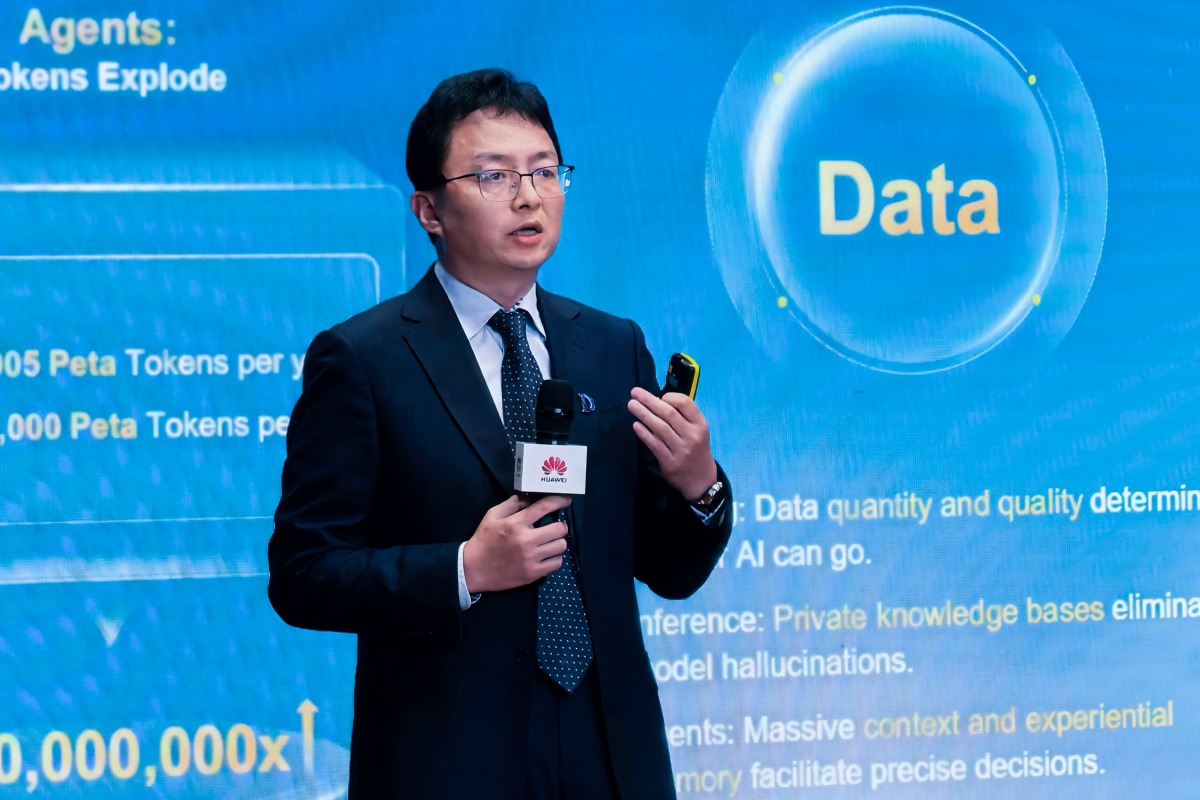
Speaking at Huawei Connect 2026 in Florence, Huawei's Data Storage leadership made the case that the AI race has entered a new phase, one where data quality and architecture - not raw compute - will determine which enterprises succeed.
Florence, Italy, played host to Huawei Connect 2026 on 16 October, with the company's Data Storage Summit drawing together enterprise leaders, technology partners, and industry experts to examine how data infrastructure must evolve to serve the demands of the AI era. The central argument, articulated most clearly by Yuan Yuan, President of Huawei's Data Storage Product Line, was deceptively simple: computing power and model development have had their moment, and AI has now entered a stage where data is the decisive factor.
"The next chapter of AI is data," Yuan says. His case rests on a structural argument: deploying AI successfully at enterprise scale is no longer primarily a question of accessing sufficient compute or choosing the right foundation model. The bottleneck has shifted to data - its quality, its accessibility, and the infrastructure built to manage it. Enterprises that fail to address this will find their AI investments underperforming, regardless of how much they spend on GPUs.
A platform built for AI inference
The headline product announcement at Florence was Huawei's 3+1 AI Data Platform Solution - the company's claim to be the first in the industry to integrate a knowledge base, key-value (KV) cache store, memory bank, and Unified Cache Manager into a single platform. The solution has already been deployed across more than 20 service scenarios, and the customer cases presented at the summit illustrate the practical impact.
A leading hospital used the platform to address a persistent problem with large-model AI in clinical settings: limited understanding of specialist medical terminology and a tendency towards hallucinations. By integrating multimodal medical data and applying knowledge parsing, vectorisation, and knowledge graph construction, the hospital developed a clinical-grade agent for diagnosis and treatment, lifting the adoption rate of AI-assisted diagnosis reports from 50% to 90%.
In a different context, a major internet company was struggling with the storage demands of multi-turn, long-sequence inference tasks for AI coding workflows. Huawei's platform improved inference throughput by a factor of 2.2 - measured in tokens per second - by replacing repeated computation with associative search, using multi-level cache scheduling and prefix cache techniques. Meanwhile, a large bank applied the platform to its customer service operations, automatically extracting historical conversation data and enabling memory recall in seconds, resulting in a 16% increase in customer satisfaction.
Infrastructure that keeps pace with AI
Lucio Ceruti, CTO of Huawei Data Storage Italy, outlined the product-level upgrades underpinning the broader platform story. Performance improvements centre on FlashLink intelligent algorithms, built on a data and control plane separation architecture, which deliver a 50% performance uplift. On resilience, an integrated ransomware protection system with network-storage collaboration achieves 99.99% ransomware identification accuracy, supported by intelligent health inspection and automatic diagnosis capabilities. Energy efficiency gains come from hardware-based offloading of deduplication and compression, combined with dynamic CPU frequency reduction, reducing overall power consumption without compromising throughput.
Yuan also highlighted an upgraded AI Data Lake Solution, built on higher-density green hardware, with global data visibility, multi-dimensional vector retrieval, and the ability to deliver data in seconds - designed to act as a one-stop supply of high-quality data for AI training and inference pipelines.
European deployments in practice
Two European customer cases grounded the summit's broader narrative in concrete infrastructure terms. Daniele Cesarini, Head of AI/HPC Architecture at Cineca - Italy's national supercomputing centre - described how the organisation adopted Huawei OceanStor Pacific scale-out storage to build an exabyte-scale scientific research data lake with tiered storage for hot, warm, and cold data. The deployment supports the Square Kilometre Array project, among other large-scale scientific programmes, and has significantly reduced both system complexity and total cost of ownership.
Marco Frontini, Chief Information and Digital Officer of Cerba HealthCare Italia, described a different challenge: consolidating a legacy IT architecture spread across 50 labs and five central nodes into a single full-stack platform. The company, which operates 400 medical centres, serves more than 1.2 million patients, and conducts over 50 million examinations each year, achieved a 23% reduction in five-year TCO while adding ransomware protection and zero data loss capabilities.
Building for what comes next
Adley Zhang, Director of Huawei's European Data Centre Marketing and Solution Sales Department, contextualised the product and customer announcements within Huawei's broader European trajectory. The company has been expanding its presence across finance, healthcare, education and research, and retail, and Zhang emphasised Huawei's commitment to an open and innovative ecosystem as the foundation for continued growth in the region.
For data centre and infrastructure professionals, Huawei believes its Florence summit's message is worth taking seriously. The shift Yuan describes - from compute-centric to data-centric AI infrastructure - has real architectural implications. It demands storage systems capable of supporting high-throughput inference, low-latency retrieval, long-term memory, and seamless data governance at scale. Huawei's argument is that these requirements call for a purpose-built platform, not a collection of upgraded legacy components. The customer deployments on show in Florence suggest that argument is beginning to find traction across European enterprises.
For more from Huawei, click here.
This article is sponsored by Huawei

Joe Peck - 21 October 2026

Data Centre Infrastructure News & Trends
Enterprise Network Infrastructure: Design, Performance & Security
Events
News
ECOC Exhibition honours optical connectivity innovation
Eight companies have been recognised at the ECOC Exhibition Industry Awards 2026 for innovations in optical connectivity.
The awards, presented in Málaga, Spain, recognise developments across optical modules, test and measurement, fibre infrastructure, and access networks, including technologies for photonics, quantum computing, and AI data centres.
The winners are Avencia Tech, China Telecom, Ciena, Corning Optical Communications, Furukawa Electric, Keysight Technologies, Lumentum, and Semtech Corporation.
Michael Lebby, Awards Committee Chairman at the ECOC Exhibition, says, “Congratulations to this year’s winners of the ECOC Exhibition Industry Awards 2026 for their contributions and innovations to the optical communications industry.
“It is great to see such strong momentum across the industry as new challenges and opportunities emerge from the sectors of photonics, quantum computing, fibre infrastructure, and AI data centres.”
Optical connectivity award winners
The award categories and winning products are:
• Best Optical Module: Ciena’s Vesta 200 6.4T CPX• Best Optical Test & Measurement Process: Keysight Technologies’ N4378A Lightwave Component Analyzer (LCA) – 220GHz• Fibre Infrastructure Innovation: Furukawa Electric’s Snap-Beam Connector: Compact, Detachable Optical Connector for PIC Integration• Optical Access Innovation: China Telecom’s Industrial Network All-Optical Intelligent Connectivity (Industrial PON)• Optical Communication Innovation: Corning Optical Communications’ CPO FlexConnect fibre• Optical Component (Chip/Wafer) Innovation: Semtech Corporation’s 224Gbps per lane TIA family for linear pluggable optics• Optical Component (Package/OSA/Fibre) Innovation: Lumentum’s VCSEL-based FOWLP optical engine for AI scale-up networks
Two further awards were presented as part of the Post Deadline Awards:
• Higher optical communications value chain technology & products: China Telecom’s Optical Access Network 'Network-Compute-Intelligence' Integrated Intelligent Interconnection• Lower optical communications value chain technology & products: Avicena Tech’s LightBundle eKit: 1Tbps evaluation kit for microLED-based interconnects
The ECOC Exhibition Industry Awards recognise technologies and companies in the optical communications sector. The 2026 awards covered developments intended to address requirements for AI, cloud, and high-capacity connectivity.
Joe Peck - 25 September 2026

Data Centre Build News & Insights
Events
Sponsored
Sustainable Infrastructure: Building Resilient, Low-Carbon Projects
Sustainable Data Center Summit arrives in Dubai
The Sustainable Data Center Summit is a focused industry platform bringing together data centre operators, developers, infrastructure specialists, technology providers, consultants, government stakeholders, and other key decision-makers to examine the evolving requirements of sustainable digital infrastructure.
As demand for cloud services, AI, high-performance computing, and digital connectivity continues to accelerate, data centres are facing increasing pressure to expand capacity whilst managing energy consumption, cooling requirements, power resilience, water use, and environmental impact. The summit provides a platform to address these challenges and explore practical approaches to developing more efficient, resilient, and sustainable facilities.
The summit will explore key areas including energy efficiency and optimisation, advanced cooling and thermal management, resilient power infrastructure, renewable energy integration, sustainable data centre design and operations, water efficiency, carbon reduction, AI-ready infrastructure, and high-density computing.
Through expert presentations, panel discussions, and industry networking, the event will bring together professionals from across the data centre ecosystem to exchange knowledge, examine emerging technologies, and discuss the strategies required to support the industry's next phase of growth.
Taking place on 13 October 2026 at Millennium Airport Hotel Dubai, the Sustainable Data Center Summit will provide a dedicated platform for meaningful conversations around how the industry can meet rising digital demand whilst moving towards more efficient, resilient, and sustainable data centre infrastructure.
Joe Peck - 23 September 2026
Events
Sponsored
Advancing the agentic world
In this article, Chinese multinational technology company Huawei tells us about this year's Huawei Connect 2026:
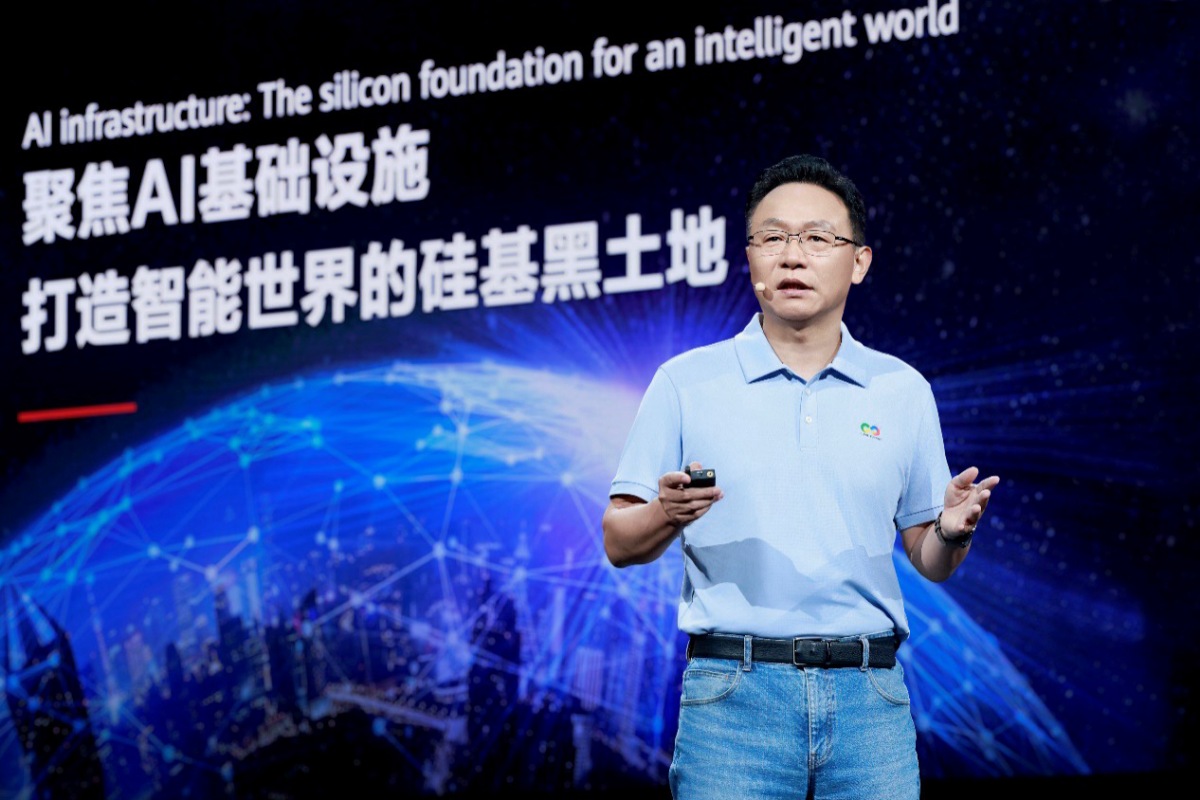
Huawei Connect 2026 kicked off recently in Shanghai. The first keynote of the date was by David Wang, the Deputy Chair of the Board and Rotating Chair at Huawei. In his speech (Advancing the Agentic World, Building a Solid Silicon Foundation), David highlighted the work the company is doing alongside industry stakeholders to build powerful AI infrastructure, lay a solid computing foundation, and address the challenges and opportunities in the intelligent world to come.
AI is sweeping the world faster than any previous technological revolution. Today, foundation model parameters are rapidly approaching 10 trillion, and are projected to exceed 100 trillion by 2030. AI agents can now work on the same task continuously, for hours on end. By 2030, they will be able to handle tasks that span months.
In China alone, the average number of inference tokens consumed every day has surged to around 500 trillion, and is expected to reach quintillions (10¹⁸) by 2030.
On-device AI is also advancing rapidly. On-device models for smartphones have expanded from three billion parameters in 2024 to 30 billion today, and will push toward hundreds of billions in the near future.
These trends will set a much higher bar for the scale, performance, and reliability of underlying technical systems. Only by building powerful AI infrastructure can the industry lay a solid foundation for the future intelligent world.
An intelligent world is approaching – and faster than ever. To lead the charge into this new world, Huawei is laser-focused on building out AI infrastructure – the silicon foundation for the future to come.
In particular, Huawei's AI strategy is centred on computing power, with a focus on monetising hardware. The company is also sharpening its competitive edge through systems and architectural innovation. Centring these efforts on SuperPoDs and SuperClusters, the company aims to build a solid computing foundation and offer a new option for the world.
Huawei is a major contributor to open computing ecosystems, and will continue to support native training for mainstream foundation models on its systems, as well as supporting a vast range of models and applications.
For customers, Huawei provides flexible on-premises and cloud compute solutions for its customers to accelerate intelligent transformation across industries.
With diverse forms of compute, including solutions for micro-, low-tier, mid-range, and massive computing power – Huawei is driving the expansion of on-device and in-vehicle AI, making intelligence truly ubiquitous.
Additionally, Huawei is dedicated to building next-generation communications networks to bring readily available compute and intelligence to every person, home, and organisation.
SuperPoDs gain broad consensus, with adoption growing in industries, academia, and research institutes
To date, over 1,000 Atlas 900 A3 SuperPoDs have been deployed, and Atlas 950 SuperPoD is seeing large-scale commercial use. While adoption continues to grow, SuperPoDs have gained broad acceptance across industry, academia, and research institutions as a key direction for AI infrastructure. Currently, a SuperPoD is explicitly defined as a computing system in which multiple computing nodes are tightly coupled through high-speed interconnect protocols, featuring unified memory addressing across physical nodes — functioning like a single logical computer.
SuperPoDs are the go-to choice for AI infrastructure buildout. Right now, 100k-NPU computing clusters have become the baseline for training SOTA models. However, traditional server architectures result in intra-cluster communications that account for over 40% of total training time, severely constraining Model FLOPs Utilisation (MFU). Simulation results from Huawei's Markov Lab show that a 100k-NPU cluster built with 4k-NPU SuperPoDs can deliver a 2.75x increase in MFU compared to a 100k-NPU cluster composed of 8-NPU servers.
11-chip UnifiedBus-powered portfolio for SuperPoDs and SuperClusters; the Atlas 960E SuperPoD – the industry's first to use NPO
The Ascend series of chips is the most critical component in Huawei's 11-chip UnifiedBus-powered portfolio for SuperPoDs and SuperClusters. Development on Ascend 960 has exceeded the company's expectations, with performance doubling as planned. Ascend 960DT will be available in Q1 2027, three quarters ahead of the company's original roadmap. And the Ascend 960PR will be ready in Q3 2027, one quarter ahead of schedule.
"We're evolving our Ascend chip series on a one-generation-a-year cycle," says David in his keynote. "In 2028 and 2029, we will roll out the Ascend 970 and 980 chips, respectively. Thanks to the Tau (τ) Scaling Law, not only will their compute specifications continue to double, but you can also expect to see huge improvements across the board in terms of memory bandwidth, memory capacity, interconnect bandwidth, and more."
In addition to Ascend chips, Huawei has also developed a complete portfolio of chips for AI infrastructure, based on UnifiedBus, delivering key capabilities that cover computing, interconnect, storage, and management.
"SuperPoDs are designed to coordinate multiple NPUs through interconnect," continues David. "We have developed a next-generation optical interconnect product based on near-packaged optics (NPO): the High-density Optical-interconnect-Node Engine (Hi-ONE). Built on Huawei's proprietary technologies, Hi-ONE has a multi-physics design for balancing optical, mechanical, electrical, electromagnetic, and thermal performance, realising a transmission capacity of 7.2 Tbit/s per single engine.
"This is the industry's first NPO product ready for mass production, delivering the largest transmission capacity. It is also the industry's first NPO product with a built-in light source."
This product combines high bandwidth and high reliability with low latency and low power consumption. This, coupled with UnifiedBus, will make it far easier to scale up SuperPoD interconnect systems.
Recently, Huawei submitted an implementation agreement (IA) on NPO to the Optical Internetworking Forum (OIF), a standards organisation. The response from numerous industry partners has been widely positive. Huawei will continue its efforts to further refine the NPO industry ecosystem.
Using Ascend 960 chips and Hi-ONE, Huawei has developed the industry's first NPO-based SuperPoDs: the Atlas 960E SuperPoDs. A single Atlas 960E SuperPoD can scale up to 4,096 NPUs, delivering 8EFLOPS of FP8 compute performance, with up to 1PB of HBM capacity. With 5,500 Hi-ONE units, this SuperPoD doesn't need the 48,000 800G optical modules that would traditionally be required to connect all the NPUs. This cuts power consumption by over 550kW, while doubling the system's fault-free operating time, achieving 99.8% system availability.
Combining the upgraded TaiShan 950 SuperPoD and context memory storage to power an ultrascale cluster with one million NPUs
As SOTA models scale to 10 trillion parameters, training and inference can no longer rely on a single AI server or AI SuperPoD – they require a more complex computing system. This system includes AI SuperPoDs, general-purpose SuperPoDs, and an interconnect system that features peer-to-peer interconnect and zero protocol conversion. For inference, including a petabyte-scale KV cache cluster is also a must.
To meet these demands, Huawei has fully upgraded its TaiShan 950 SuperPoD. Powered by UnifiedBus all-optical networking, this new SuperPoD supports up to 4,096 nodes with a unified memory pool of up to 256TB. This setup significantly improves agent performance. For sandbox-intensive workloads, startup speeds for 100,000 sandboxes are 30 times faster than traditional servers, and sandbox density can be improved by an additional 25%. For vector search across 10 billion x 1,000-dimensional vectors, this SuperPoD delivers twice the search efficiency of traditional servers.
Huawei has also launched OceanStor M900 – a UnifiedBus-powered context memory storage cluster that delivers multi-tier KV caching for agent-heavy and longer-context workloads. Designed for agentic inference, this cluster supports one-hop direct access and provides a petabyte-scale KV cache for the L3.5 layer. OceanStor M900 also uses hybrid media and an optimised retention algorithm, extending SSD read/write lifespan by 16-fold. This ensures a higher KV cache hit rate alongside long-term stability and reliability from the ground up.
Combining its strengths in computing and communications, Huawei has built a brand-new agentic SuperCluster to accelerate training and inference for 10-trillion-parameter models. This SuperCluster uses UnifiedBus to consolidate multiple interconnect protocols into a single unified protocol, significantly reducing protocol conversion overhead. This delivers peer-to-peer interconnect between subsystems like Ascend SuperPoDs, Kunpeng SuperPoDs, and KV cache clusters. The SuperCluster also comes with a multi-tier, high-bandwidth, and large-capacity storage system that enables direct single-hop access for all KV cache tiers.
With a two-tier, four-plane Clos architecture, the SuperCluster can interconnect up to 512,000 NPUs. When combined with a multi-rail topology, this cluster can support up to one million NPUs.
One of Huawei's core strategies: Going open source and open system to build out computing ecosystems
The Kunpeng ecosystem is driving digital and intelligent innovation across a wide range of industries. To date, the Kunpeng ecosystem has attracted over 4.16 million developers and more than 7,200 ecosystem partners from around the globe. The community currently supports over 560 open-source projects worldwide. openEuler has seen more than 20 million installations, securing the largest share in China's server OS market.
The Ascend ecosystem has reached a new inflection point. The Compute Architecture for Neural Networks (CANN) is the foundation of the Ascend ecosystem. Today, CANN has moved to sustained, community-driven open-source development, which has brought the platform from usable to user-friendly.
External CANN developers now comprise 61% of all CANN developers, outnumbering internal developers for the first time. With over 5,200 monthly active developers, the CANN community has become the most vibrant open-source community in China. What's more, over 40 models have been natively pre-trained on Ascend and CANN, making it the only proven domestic stack capable of model pre-training.
Ascend now supports over 90 leading third-party open-source projects, including PyTorch, Triton, vLLM, and veRL. With strong support from the Linux Foundation, Ascend is the first official Chinese compute platform on PyTorch's website. This gives developers around the world ready access to new innovations in the Ascend ecosystem.
Diverse forms of compute for ubiquitous on-device and in-vehicle AI
AI is expanding faster into all kinds of devices. To deliver an unparalleled AI experience across all scenarios, Huawei will continue to strengthen capabilities in four key areas:
First, Huawei will combine Kirin and Ascend chips to drive self-reliance and autonomy in on-device compute.
Second, Huawei will bring together Pangu models and third-party models to make on-device intelligence better and easier to use.
Third, HarmonyOS, as an Agent OS for ubiquitous intelligence, will be completely redefined from the ground up – spanning system architecture, how it operates, and interaction logic – to enable human-agent collaboration.
Fourth, Huawei will keep cultivating a diverse AI ecosystem, which is the foundation for its system agent Celia to thrive.
Huawei plans to build four on-device computing platforms: for AI phones, AI PCs, vehicles, and homes. Through cross-device and device-cloud compute synergy, Huawei will be able to provide distributed swarm intelligence, delivering integrated and continuous intelligent services across personal mobile, office, vehicle, and home spaces, ultimately bringing intelligence to every person and every space.
Building next-generation communications that prioritise readily available compute, because without networks, all compute is siloed
Next-generation communications networks are crucial for fully unleashing the value of AI compute. We are driving the upgrade to networks that, in addition to connecting people, will prioritise delivering readily available compute. These networks will be underpinned by 5G-A/6G, 10-gigabit optical networks, and multi-tier, low-latency bearer networks, delivering intelligent connectivity across data centres, the edge, and devices.
Concluding his keynote, David expresses that AI "may well be the final technological revolution in human history," noting that its impact is deeper and broader, and coming faster than anyone could have ever imagined. "No single company," he says, "can build an intelligent world alone."
He stresses Huawei's ongoing commitments moving forward:
• Huawei will remain committed to building a solid silicon foundation to make computing power readily accessible to all.• The company will continue to open source its software, helping developers unleash their full potential.• It will continue to embrace a wide range of models and applications, unlocking value in every form.
"And we will continue to work together to drive shared success, growing together with our customers and partners around the world," David concludes. "Let's work together to build a fully connected, intelligent world."
Themed Advancing the Agentic World, Huawei Connect 2026 delved into AI across three dimensions: strategy, technology, and ecosystems. You can read about an in-depth look at our latest strategic initiatives, and we'll also be unveiling our all-new digital and intelligent infrastructure products, scenario-specific solutions for industries, and development tools. The event ran from 17 to 19 September at the Shanghai World Expo Exhibition & Convention Center and Shanghai Expo Center. For more information, please visit Huawei Connect 2026 online by clicking here.
For more from Huawei, click here.
Joe Peck - 22 September 2026
Data Centre Build News & Insights
Data Centre Business News and Industry Trends
Events
Exploring Modern Data Centre Design
Insights into Data Centre Investment & Market Growth
Schneider calls for collaboration on London data centres
Global energy technology company Schneider Electric has brought together organisations from across the public and private sectors to discuss the infrastructure challenges facing London's data centre market and the collaboration needed to support future AI growth.
Held in partnership with Opportunity London and SEGRO, the roundtable explored how London can maintain its position as Europe's largest data centre hub while addressing growing demand for digital infrastructure.
The event, chaired by Laura Citron, Chief Executive of London & Partners, included representatives from government, local authorities, energy companies, data centre operators, real estate, and the wider technology sector.
Participants discussed the need for greater coordination around planning, electricity infrastructure, land availability, water use, and emerging technologies such as liquid cooling. The discussions also highlighted the importance of improving understanding of data centre requirements among policymakers as demand for AI and cloud infrastructure continues to grow.
The roundtable also examined the role of data centres as critical national infrastructure (CNI) and their contribution to economic growth and AI development.
Industry highlights need for coordinated infrastructure planning
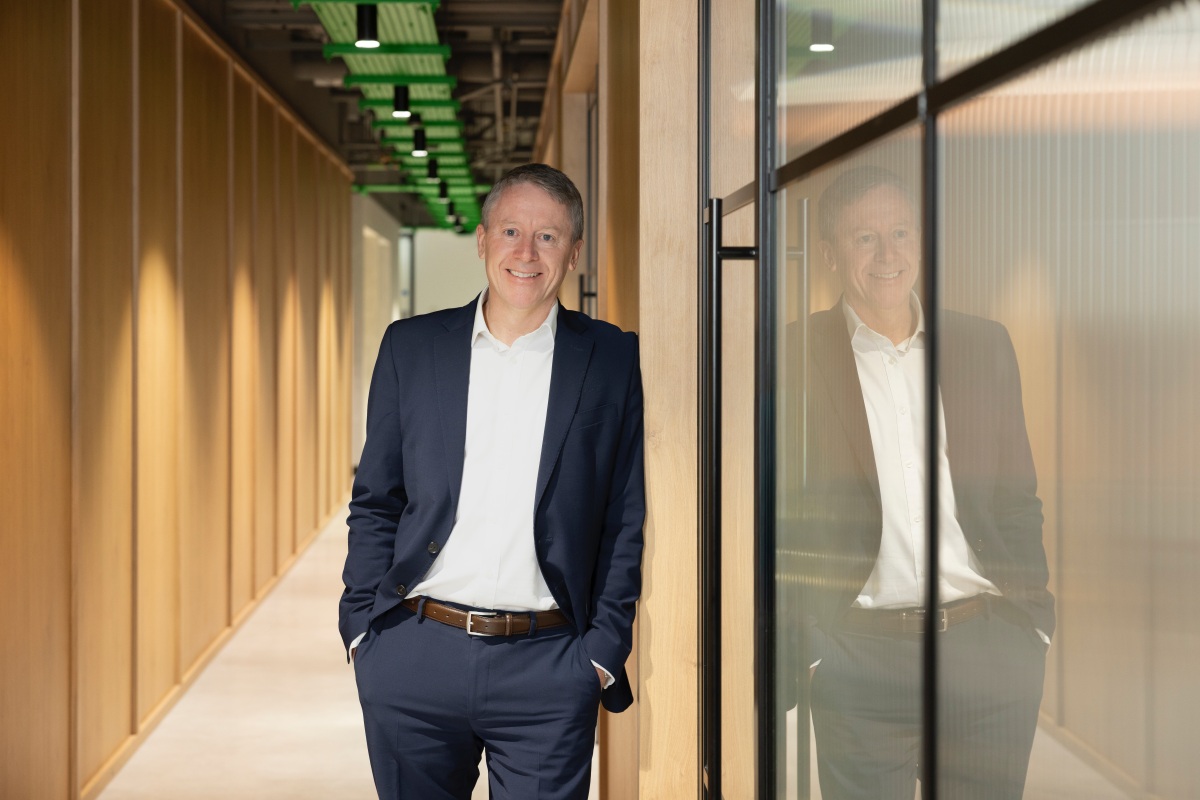
Matthew Baynes (pictured above), Vice President, Secure Power UK & Ireland at Schneider Electric, says, "Today, there remains a fundamental gap between how policymakers perceive and understand data centres [and] how the industry actually operates.
"Decisions around planning, land allocation, and power provision are being made without a complete picture of what's required to meet the AI opportunity, and the UK now risks losing ground to markets where that understanding is far more mature.
"As the UK's largest data centre hub, and its default AIGZ, London offers all the advantages needed to lead, but closing the gap between ambition and action is not optional; it is the prerequisite for success."
Jace Tyrrell, Chief Executive of Opportunity London, adds, "Data centres are no longer a niche; they are foundational to London’s future economic growth, AI ambitions, and global competitiveness."
Maria Jose Rivas-Duarte, Director of Sustainability at Pure Data Centres, also says the discussions demonstrated the importance of collaboration between industry, policymakers, and local communities to support responsible digital infrastructure development, while Luisa Cardani, Head of the Data Centres Programme at techUK, notes the UK's data centre sector has significant potential to contribute to economic growth, but that achieving this will require coordinated action between government and industry.
For more from Schneider Electric, click here.
Joe Peck - 8 July 2026
Events
Exclusive
Products
DCNN reports from Johnson Controls' 'Innovation Studio'
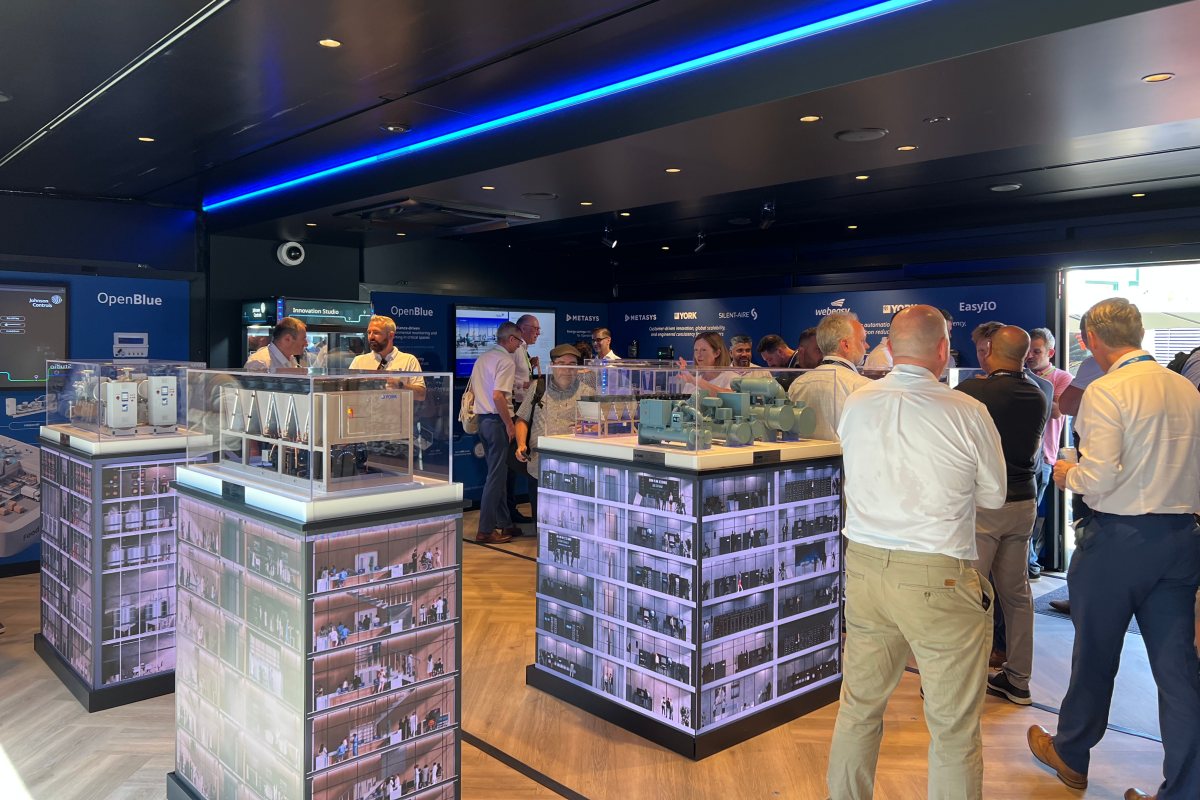
Johnson Controls, a global provider of smart building technologies, brought its travelling Innovation Studio to London between 23 and 26 June, one stop on a 44-city tour taking the company's building technologies portfolio directly to customers, partners, and media across Europe.
DCNN was invited along to step inside the mobile showcase and sit down with John Foley, General Manager, North West Europe at Johnson Controls, whose day job involves leading the company's HVAC team, but whose knowledge stretches across every industry the business serves.
The Innovation Studio itself is the physical expression of an idea Johnson Controls has been mulling for some time: how do you take the collective expertise scattered across the business's European operations and put it in front of every market at once?
John told us, "All of this information, intellectual property, and, more importantly, the experts that come with it are so diffused all around Europe."
The tour, he explains, grew out of conversations between the company's EMEA marketing leadership about how to concentrate that firepower and take it on the road. It is, by his own admission, a fairly bold departure for a company of Johnson Controls' size, but the early results have surprised even the team behind it.
"The engagement with our customers so far has been unbelievable," he continued, adding that appetite has varied (sometimes counterintuitively) from city to city, but has been strong across the board.
Three pillars, one thermal chain
To understand why a HVAC and controls business is investing so heavily in this kind of outreach now, John points to a set of strategic priorities set out by Johnson Controls' chief executive in November 2025: decarbonising the existing built environment, winning in critical environments such as pharmaceutical and biologics production, and enabling what he calls "the future AI economy". It is that third pillar that explains the data centre focus of the London leg.
Johnson Controls has served data centres in one form or another for decades, spanning fire and security, heating and cooling, and building automation. What has changed, John says, is the scale of capital and engineering attention now being directed at the sector as a result of AI-driven growth. The company's pitch to the market has also shifted.
"Our right to win in a data centre, it's not just about cooling; it's actually about our ability to own and also command the entire thermal management chain," he suggested. That means everything from extracting heat at the chip via liquid cooling plates, through rejection and plant-level cooling, all orchestrated through building automation systems.
Heat that does not go to waste
One strand of the conversation that stood out was waste heat reuse, an area in which John argues Johnson Controls' combined HVACR capability (he is careful to stress the "R" for refrigeration) gives it an edge over cooling specialists.
The company's heat pumps, manufactured at its Sabroe facility in Aarhus, Denmark, are already being used across parts of Europe to funnel heat recovered from data centres into district heating networks serving tens of thousands of homes, a practice some Scandinavian countries now effectively mandate for new data centre developments.
John, who lived in Norway for four years, is candid that the UK lags behind on this front. "It's quite frustrating… it's embarrassing," he remarked, though adding that he also sees plenty of opportunity ahead as the conversation matures.
What was on show
That thermal chain philosophy was reflected in the technology on display inside the studio. On the digital side, OpenBlue, Johnson Controls' AI-powered smart building platform, was positioned as the connective layer tying data, insight, and outcomes together across a building's systems, built on the Metasys building automation and controls backbone, alongside the EasyIO Neo controller range and the Webeasy front end.
On the mechanical side, the YORK YVAM air-cooled magnetic bearing chiller was a centrepiece, aimed squarely at hyperscale and colocation cooling loads and built to run efficiently across a wide ambient range without relying on free-cooling coils, alongside the YCPB heat pump range for lower-carbon heating and cooling.
Representing the industrial refrigeration side of the business, the Sabroe DualPAC combines the company's ChillPAC and HeatPAC units into a single modular heat pump, aimed at applications needing both cooling and high-temperature heat output efficiently.
Bringing it to the UK
Wrapping up, John returned to the purpose of the tour itself: getting Johnson Controls' engineers and technology in front of customers who might otherwise only encounter the brand through a single product line.
Given the scale of change facing UK data centre operators, from AI-driven density increases to mounting pressure on energy and water use, it is a conversation that feels timely, and one that DCNN expects to keep returning to as the Innovation Studio continues its European run.
For more from Johnson Controls, click here.
Joe Peck - 2 July 2026
Data Centres
Events
News
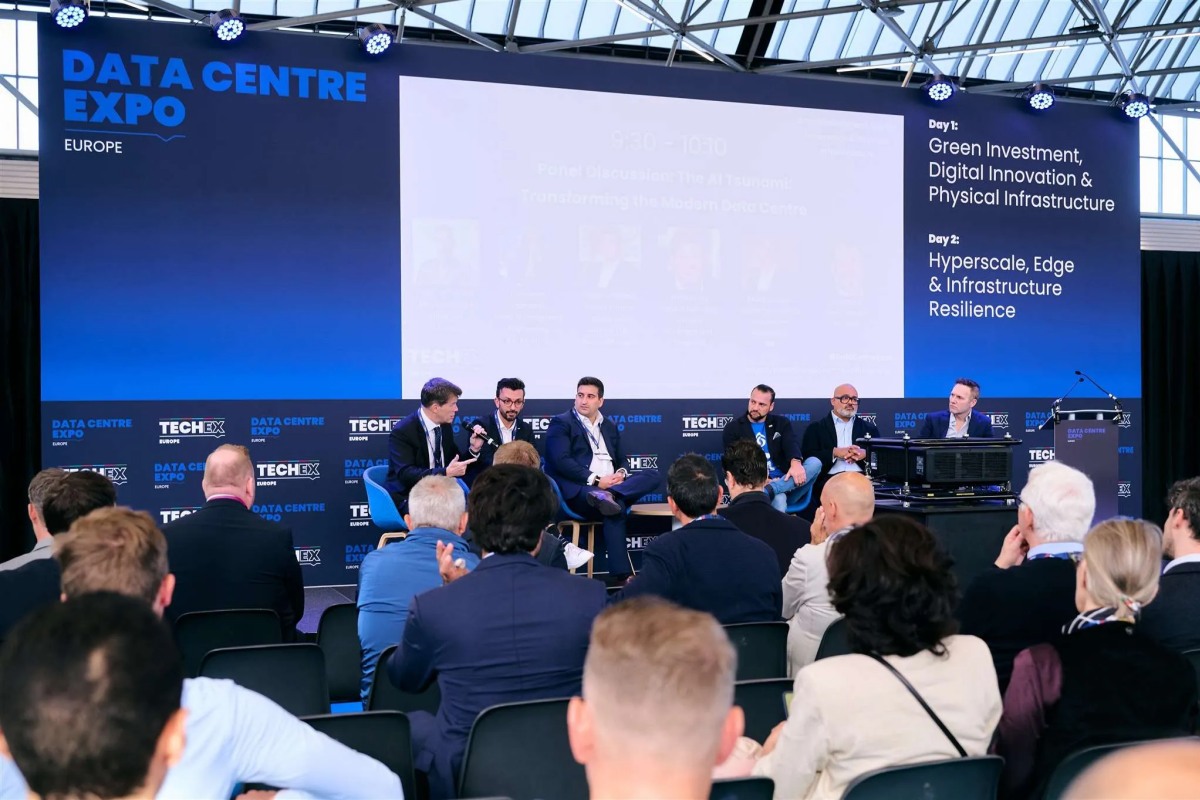
Data Centre Expo Europe to address infrastructure challenges
Data Centre Expo Europe will take place on 19–20 October 2026 at the RAI Amsterdam in the Netherlands as part of TechEx Europe 2026, bringing together data centre directors, infrastructure leaders, and cloud and colocation specialists from across Europe.
The event forms part of a wider programme of enterprise technology conferences and exhibitions, focusing on the challenges and opportunities facing digital infrastructure operators as demand for data centre capacity continues to grow.
As organisations respond to the requirements of artificial intelligence, sustainability targets, and increasing energy demands, the event will examine the strategies shaping the next generation of data centre infrastructure.
Infrastructure planning amid growing demand
Data centre operators across Europe are facing increasing pressure to expand capacity while managing energy availability, efficiency requirements, and evolving regulatory obligations.
Topics expected to be discussed during the event include scaling infrastructure for AI and high-density computing workloads, improving energy efficiency, strengthening operational resilience, and developing facilities capable of adapting to future demand.
The first day of the conference will focus on the relationship between infrastructure investment, sustainability, and digital innovation.
Sessions are expected to explore how organisations are balancing capacity growth with environmental objectives, alongside discussions on energy strategy, power availability, cooling requirements, and infrastructure planning.
The programme will also examine the role of automation and intelligent operational practices in improving performance and reducing operational risk.
In addition, speakers will consider how growing demand for AI and cloud services is influencing infrastructure planning, project delivery, and long-term investment decisions.
The second day will shift its focus towards data centre services, commercial models, and ecosystem development.
Discussions will explore how providers are responding to changing enterprise requirements through partnerships, integrated platforms, and service-based offerings.
Topics include consumption-based commercial models, hybrid and edge infrastructure deployments, ecosystem development, recurring revenue strategies, and customer onboarding practices.
The programme will also consider how AI-driven demand is affecting capacity planning, pricing structures, and service delivery across the sector.
Operational insight from across the sector
The event aims to provide infrastructure leaders with practical insight into challenges affecting the European market.
Areas of focus include managing energy constraints, balancing cloud, colocation, and on-premise infrastructure, long-term capacity planning, and aligning infrastructure strategies with wider digital transformation initiatives.
More than 250 speakers are expected to contribute to the programme, sharing experiences from large-scale infrastructure projects, AI deployment initiatives, and operational improvement programmes.
Sessions will also examine approaches to resilience, uptime, risk management, and cost control, with an emphasis on lessons learned from real-world deployments.
Data Centre Expo Europe is positioned as a forum for organisations assessing how infrastructure, investment, and operational strategies must evolve to support future growth across the European data centre sector.
Registration is open via the event website.
Joe Peck - 24 June 2026
Data Centre Infrastructure News & Trends
Events
Innovations in Data Center Power and Cooling Solutions
A-Gas to attend DCN Toronto as sponsor
A-Gas, a company specialising in lifecycle refrigerant management (LRM), will attend Data Center Nation (DCN) Toronto in Canada on 9 June as an official sponsor, following its participation as a Gold Sponsor at DCN Milan earlier this year.
The company is increasing its engagement with the data centre sector as demand for digital infrastructure continues to grow and cooling efficiency remains a key consideration for operators.
A-Gas specialises in LRM, providing services focused on the recovery, reclamation, reuse, and disposal of refrigerants. While the company has traditionally operated in sectors including HVAC, automotive, and cold chain logistics, it is expanding its focus on data centres and their cooling requirements.
Operating in 15 countries, A-Gas provides refrigerant supply services alongside refrigerant recovery and management programmes for facilities undergoing equipment replacement or decommissioning.
Refrigerant management remains key cooling consideration
As data centre operators deploy higher-density infrastructure and adopt new cooling technologies, refrigerant management is becoming an increasingly important aspect of sustainability and operational planning.
A-Gas says its offering includes on-site refrigerant recovery services, reclaimed refrigerant supply, and the destruction of refrigerants that cannot be processed for future reuse.
The company notes it will use the event to meet with industry stakeholders and discuss approaches to cooling infrastructure management within data centre environments.
For more from A-Gas, click here.
Joe Peck - 5 June 2026
Data Centre Infrastructure News & Trends
Events
Innovations in Data Center Power and Cooling Solutions
Liquid Cooling Technologies Driving Data Centre Efficiency
Schneider to showcase AI infrastructure at Datacloud
Global energy technology company Schneider Electric has announced it will present its latest AI-ready data centre technologies during the Datacloud Global Congress 2026 in Cannes, France, from 1–4 June 2026.
The company says it will showcase technologies designed to address increasing demands around power delivery, cooling, resiliency, and high-density compute as AI workloads continue to scale.
According to Schneider Electric, the event will focus on infrastructure designed for AI deployments, including power architectures, liquid cooling systems, software platforms, and digital services for data centre environments.
The company cites forecasts from Morgan Stanley and Gartner predicting significant growth in AI-related infrastructure investment and global AI spending over the coming years.
Industry discussions to focus on AI growth challenges
On 2 June, Frédéric Godemel, EVP of Energy Management Business at Schneider Electric, will join representatives from Oracle, DATA4, QTS Data Centers, and CBRE for a keynote panel examining AI infrastructure demand and the development of neocloud deployments.
Later that same day, Thierry Chamayou, Vice President of Cloud and Service Providers in EMEA at Schneider Electric, will participate in a separate panel discussing energy investment strategies and utility collaboration for AI infrastructure projects. Participants include representatives from GreenScale, Trench Group, Kao Data, JSM Group, and Solar Turbines.
Marc Garner, Global President of Schneider Electric’s Cloud and Service Provider Segment, says, “AI is fundamentally reshaping the future of digital infrastructure, creating new demands around power, cooling, and resiliency at unprecedented scale.
“At Datacloud Global Congress, we will demonstrate how collaboration across the ecosystem is enabling the next generation of AI factories and helping organisations build scalable, resilient, and sustainable infrastructure built for the AI era.”
Liquid cooling and AI data centre technologies on display
Schneider Electric will also present technologies including its 800VDC architecture, liquid cooling systems from Motivair, high-density racks, and digital modelling platforms.
The company says demonstrations will include NVIDIA Omniverse integrations, digital twin technologies, and NVIDIA reference designs for the GB300 NVL72 platform.
Visitors to Stand 122 will also be able to view the company’s EcoStruxure IT DCIM and EcoStruxure Foresight software platforms, alongside its microgrid and data centre services portfolio.
For more from Schneider Electric, click here.
Joe Peck - 28 May 2026

Data Centres
Events
News
Data centre cycling event returns to Cannes
The Data Center Cycling Club (DC.CC) will return to the French Riviera ahead of the Datacloud Global Congress 2026, bringing together riders from across the global data centre sector for a charity cycling challenge in Cannes.
Now in its fourth year, the event will see 17 riders from nine companies complete a three-day route across the French Riviera between 29 May and 31 May 2026. Organisers say the event is intended to promote wellbeing, industry networking, and fundraising for charity.
Founded by Tom Babbington, DC.CC has expanded each year since launching, with support from businesses across the data centre industry.
This year’s routes begin in Cannes and include climbs and coastal roads across the region, including Col de la Madone, Gorges du Loup, the Mediterranean coastline, and Mont Vinaigre. Riders are expected to cover approximately 500km and 7,644m of elevation across the three days.
The event will again be led by Marcus Cram, event manager and cyclist, alongside UK National Hill Climb Champion Rachel Galler, who will act as guide for the tour.
Tom Babbington, Founder of DC.CC, says, “When I founded the Data Center Cycling Club, I believed our industry was full of people who love a challenge, love a cause, and love the opportunity to come together through cycling.
“This event is about much more than the kilometres we ride; it’s about building connections across the industry and supporting a charity carrying out life-changing work for children and families.”
DC.CC supports children’s medical research charity
Funds raised through the 2026 event will go to Action Medical Research, a UK charity that funds medical research focused on children and babies.
According to the charity, its research funding has contributed to developments including polio vaccines, meningitis treatment, and ultrasound scanning during pregnancy.
Lucy Holloway, Corporate Partnerships & Events Management Executive at Action Medical Research, comments, “Support from initiatives like DC.CC helps us to continue funding the next generation of medical breakthroughs for babies, children, and families across the UK.”
DC.CC first launched with the Tour of Europe ride from Amsterdam to Monaco, timed to coincide with the opening of Datacloud Global Congress. Organisers say participation has continued to grow since the inaugural event.
This year’s event is supported by companies from across the data centre sector, including Adaptive MDC, Pentagon Technical Services, EAE Group, Ridge & Partners, Spa Communications, GagaMuller, Kolo DC, Zauner Group, and B + R Architects.
Joe Peck - 27 May 2026

Head office & Accounts:
Suite 14, 6-8 Revenge Road, Lordswood
Kent ME5 8UD
T: +44 (0)1634 673163
F: +44 (0)1634 673173