Sponsored


Reuters Energy LIVE is fast approaching
Reuters Events: Energy LIVE is heading to the heart of the energy capital in Houston, Texas, USA, this 9-10 December. Momentum is building with more than 1,500 energy professionals - including bp, Constellation, Entergy, ENGIE, Next Decade, and more - already registered. Register now to explore solutions from: • Digital transformation leaders and AI innovators• Infrastructure developers and data centre operators• Project developers across renewables, hydrogen, and LNG• SMR and advanced reactor specialists• Energy storage providers and grid modernisation experts Your free expo pass gives you access to: • Startup pitches judged by top VCs, with live audience voting• Roundtable discussions on industry-critical topics• Structured networking including 1:1 meetings, community meetups, and speed dating sessions• Themed exhibition tours spotlighting AI, digital, and emerging tech There will also be live podcasts and expo stage sessions featuring senior leaders from Dominion Energy, Sempra Infrastructure, Petrobras America, Woodside Energy, POET, J.P Morgan, Siemens, Halliburton, Mitsubishi Power, and Breakthrough Energy. Join a community of over 3,000 attendees and more than 100 exhibitors, innovators, investors, solution providers, venture capitalists, energy producers, and project developers for two days of high-impact networking, discovery, and insight. Register for your free pass and start your Energy LIVE journey today. For more from Reuters, click here.

Uncover the hidden risks in data centre resilience
In July 2024, a lightning arrester failure in Northern Virginia, USA, triggered a massive 1,500MW load transfer across 70 data centres - handling over 70% of global internet traffic. The result? No customer outages, but a cascade of grid instability and unexpected generator behaviour that exposed critical vulnerabilities in power resilience. Powerside’s latest whitepaper - entitled Data Centre Load Transfer Event – Critical Insights from Power Quality Monitoring - delivers a technical case study from this unprecedented event, revealing: • Why identical voltage disturbances led to vastly different data centre responses • How power quality monitoring helped decode complex grid interactions • What this means for future-proofing infrastructure in 'Data Centre Alley' and beyond Whether you are managing mission-critical infrastructure or advising on grid stability, this is essential reading. You can download the full whitepaper by registering below: [ninja_form id=5]

The shift from standby to strategic energy management
In this article, Laura Maciosek, Director Key Accounts at Cat Electric Power Division, talks about why shifting backup assets into primary power is becoming essential as grid constraints intensify: It’s safe to say the energy landscape is changing, with many prominent and significant changes having taken place in the last 24 months. The data-driven society we live in, from streaming devices and smart appliances to AI processing, continues to move demand for data centres in just one direction: up. As data centres experience this growth, utility power is no longer a given. Today, there’s no guarantee the local electrical grid can meet these increased power needs. In fact, many utilities I’ve talked with say it’ll be three to five years (or longer) before they can bring the required amount of power online. That puts data centre customers in a tricky position. How can they continue to expand and grow if there isn’t enough power and moving sites isn’t an option? The answer includes rethinking power options, and that means considering the transition from using power assets for largely backup purposes to employing them as a primary power source. That’s a big change from the status quo. If you’re in a similar position, you can read our advice on how to navigate the transition on our blog. Whether you’re ready to make the switch from standby to prime power at your data centre today – or simply weighing options for your next development or expansion – we’re here to help. We’ll work with you to find the right combination of assets and asset management software that fulfils your power requirements reliably and cost-effectively. Connect with one of our experts to get the process started. For more from Caterpillar, click here.

Paving the way for efficient high-density AI at 400G & 800G
AI workloads are reshaping the data centre. As back-end traffic scales and racks densify, the interconnect choices you make today will determine the performance, efficiency, and scalability of tomorrow’s AI infrastructure. In this fast, focused 30-minute live tech talk, Siemon’s experts will share a practical, cabling-led view to help you plan smarter and deploy faster. Drawing on field experience and expectations from large-scale AI deployments, the session will give you clear context and actionable guidance before your next design, upgrade, or AI back-end project begins. Discover: • AI market overview & nomenclature: A clear look at scale-up vs scale-out networks and where each fit in AI planning. • Reference designs & deployment sizes: Common GPU pod approaches (including air-cooled and liquid-to-chip) and what they mean for density and footprint. • AI network connection points: Critical interconnect considerations for high-performance AI back-end networks. • AI network cabling considerations: What to evaluate when selecting cables for demanding 400G/800G workloads. • Cabling options that improve efficiency: Real-world examples of how architecture choices affect deployment efficiency, including a 1024-GPU comparison. Walk away with: • A clear understanding of high-density interconnect options. • Insight into proven deployment strategies and the trade-offs that matter. • Confidence to make informed decisions that scale with AI workloads. Speaker: Ryan Harris, Director, Systems Engineering (High-Speed Interconnect), SiemonDate: Thursday, 2 October 2025Time: 2:00–2:30 PM BST | 3:00–3:30 PM CET This is the must-see tech talk for anyone planning, designing, or deploying high-density AI data centres. Don’t miss your chance to get the insight that can accelerate your next project and keep your infrastructure ready for the demands ahead. Register now via this link to secure your spot. For more from Siemon, click here.

Data centres in the fast lane
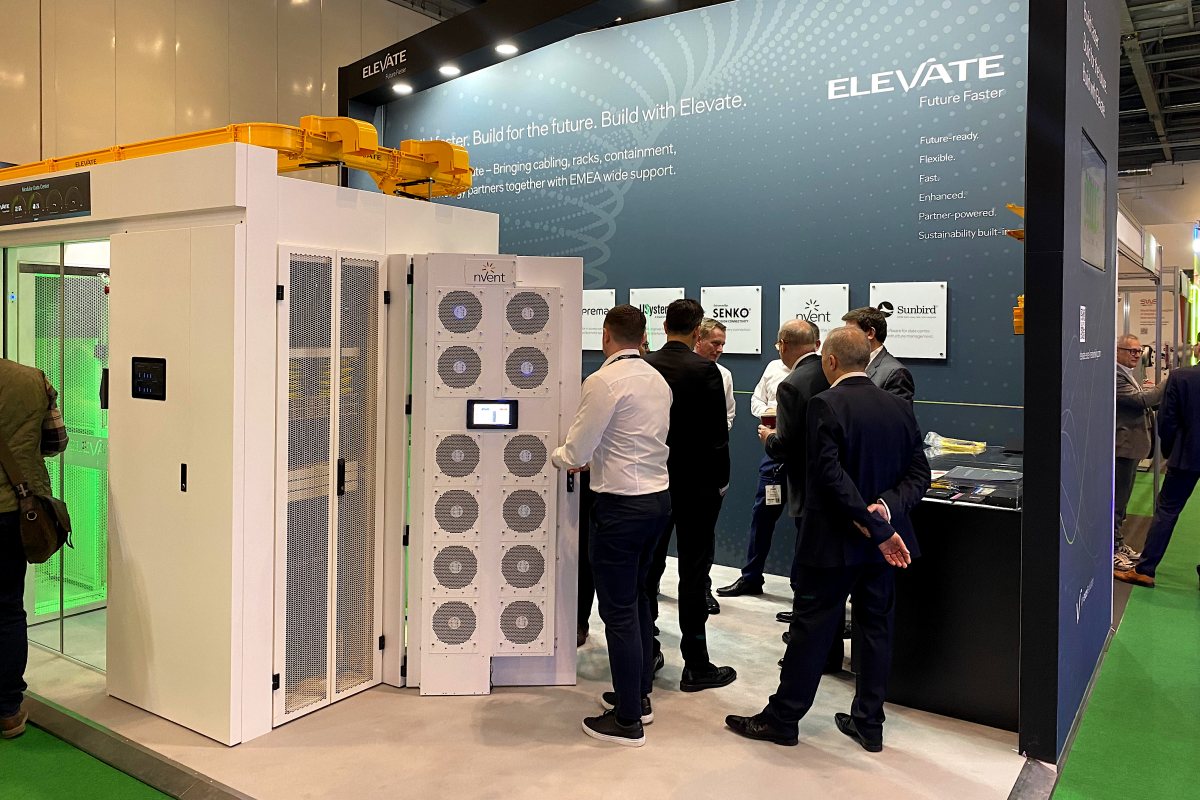
Elevate – Future Faster is inviting industry professionals to join 'Data Centres in the Fast Lane', an afternoon of high-octane insight and networking at the F1 Arcade, St Paul’s, London. Beginning with lunch at 12:00 and running through to prize giving at 18:00, the event marries technical depth with experiential energy. Over five keynote sessions, speakers from Elevate, nVent, Sunbird, Senko, Axis, and RED Engineering will address critical challenges in modern data centre design. Highlights include: • Cutting-edge rear-door and direct-to-chip cooling by nVent• DCIM strategies for ESG and operational reporting by Sunbird• High-performance fibre connectivity from Senko• Secure surveillance from perimeter to rack via Axis• Hybrid, future-ready infrastructure design by RED Engineering After the presentations, attendees can compete in F1 racing simulators, with prizes for top performers and teams. Spaces are limited and securing your spot ensures access to both technical discourse and an immersive experience. If you want to take part, you can register by clicking this link. For more from Elevate – Future Faster, click here.

TBM's Excellence Forum returns to Washington
TBM Group, a US business event organiser, has announced the return of the Excellence in Data Center Construction, Design, and Engineering Forum for its second edition, taking place on 27–28 January 2026 in Washington D.C., USA. This premier event will bring together leading data centre operators, cloud service providers, construction and engineering firms, technology innovators, and regulatory representatives to address the challenges and opportunities shaping the next generation of data centres. Through expert presentations, panel discussions, and real-world case studies, attendees will explore innovative design strategies, energy efficiency, sustainability solutions, and compliance with evolving US regulations. As AI, cloud computing, and edge technologies accelerate demand, this forum provides a vital platform to share knowledge, exchange best practices, and foster collaboration for future-ready digital infrastructure.

International Cyber Expo 2025 returns
The International Cyber Expo is fast approaching, taking place 30 September - 1 October 2025 at the Olympia London. Start planning your visit now by exploring the 2025 Event Preview and securing your free pass today. Get ready for: • Mind-blowing content — Three action-packed stages featuring the brightest minds in cyber security.• Next-level networking — Meet industry leaders, innovators, and peers ready to collaborate.• Innovative new features — Be the first to see what’s shaping the future of cyber security.• A packed exhibition floor — Discover ground-breaking solutions, products, and ideas, all in one place. Be part of the most dynamic and interactive showcase in the cyber security calendar. Register for free here. For more from the International Cyber Expo, click here.

Powering data centres sustainably in an AI world
Data centres are getting bigger, denser, and more power-hungry than ever. Artificial intelligence's (AI) rapid emergence and growth only accelerates this process. However, AI could also be an enormously powerful tool to improve the energy efficiency of data centres, enabling them to operate far more sustainably than they do today. This creates a kind of AI energy infrastructure paradox, with Hitachi Energy posing the question: Is AI a friend or foe of data centres' sustainability? In its technical brief, the company explores: • The factors that are driving the rapid growth in data centre energy demand, • The steps taken to mitigate fast-growing power consumption trends, and • The role that AI could play in the future evolution of both data centre management and the clean energy transition. Register below to download the whitepaper now: [ninja_form id='4']

AI is reshaping the grid — is your data centre ready?
As Hitachi Energy explains, AI is driving explosive demand—and volatility—in data centre power needs. Today’s 'AI factories' require flexibility, speed, and sustainability. Traditional baseload planning won’t cut it. Digitalisation enables real-time load shifting, renewable alignment, and grid responsiveness. Energy availability is now the top constraint, making early collaboration with utilities and infrastructure partners essential. Capabilities like storage, on-site generation, and load shaping—once optional—are now critical. And no single player can solve this alone. Deep cross-sector collaboration is the key to building resilient, scalable systems. We’ve seen it work: when energy and IT teams align early, results are faster, cleaner, and more adaptable. AI is changing the grid and data centres must evolve. Flexibility isn’t an option for data centres: it’s the foundation. Read the full article to discover how to power data centres smarter, faster, and more sustainably. For more from Hitachi, click here.

Whitepaper: Can AI solve the data centre energy paradox?
As the global demand for data continues to surge, data centres are rapidly scaling up, driven in large part by artificial intelligence (AI) and machine learning. Yet, whilst AI is accelerating innovation, it is also intensifying the energy challenge facing operators and infrastructure providers worldwide. In a new whitepaper from Hitachi Energy, the company explores this very paradox: can AI help to solve the sustainability and efficiency issues that it, in part, is responsible for creating? The technical brief, entitled Powering data centres sustainably in an AI world, delves into AI’s growing influence across the digital infrastructure sector, its impact on energy demand, and how it could enable a more efficient, sustainable future. In particular, it examines AI’s potential to optimise power consumption, streamline cooling strategies, and support smarter energy distribution across increasingly complex data centre estates. It also considers how AI can contribute to the broader clean energy transition, including integration with renewable energy sources and smarter grid interactions, among other key issues which are essential as the industry faces mounting pressure to align with global net zero goals. For data centre owners, operators, and energy stakeholders alike, the whitepaper offers timely insights into a future where AI could become both the driver and the solution for sustainable digital growth. You can read the full whitepaper here. For more from Hitachi, click here.


Translate »