Data Centre Operations: Optimising Infrastructure for Performance and Reliability


Schneider upgrades NHS Trust's critical infrastructure
Northumbria Healthcare NHS Foundation Trust has completed a power infrastructure modernisation project using Schneider Electric technology to improve monitoring, visibility, and management of critical systems across its estate. The project was delivered with Schneider Electric, alongside EcoXpert partner RMD and technology provider XMA, and included the deployment of EcoStruxure monitoring software and uninterruptible power supply (UPS) equipment across multiple sites. The Trust provides healthcare services to more than 500,000 people across Northumberland and North Tyneside in the UK, with its IT infrastructure supporting electronic patient records, clinical systems, administration, access control, and CCTV. According to the Trust, a mix of legacy UPS systems from different manufacturers had created challenges around maintenance, monitoring, and service continuity. Mathew Burns, Operational Infrastructure Manager at Northumbria Healthcare NHS Foundation Trust, says, "With the UPS and network infrastructure, our ultimate goal is to improve service as it underpins everything the hospital does. "It's not only about looking at new technologies and different ways of working, but extracting more value from what we already have. In terms of meeting Service Level Agreements (SLAs), the key challenge is achieving 100% uptime, ensuring systems are always available across multiple sites over a very large geographical area." Creating a unified view across multiple sites To address these challenges, the Trust implemented EcoStruxure to provide centralised monitoring of UPS infrastructure across its facilities. The deployment includes Smart-UPS systems, network management cards, NetBotz cameras and sensors, and EcoStruxure IT Expert software for monitoring and reporting across 175 nodes. Ross Higgins, Senior Technical Specialist at RMD, explains, "We discussed the Trust's key issues such as the runtime needed for its data centres. It was clear that a centralised monitoring system was needed for its infrastructure." Bob Beckwith, Infrastructure Innovation and Transformation Manager at Northumbria Healthcare NHS Foundation Trust, notes, "Adoption of EcoStruxure is developing well. It provides reassurance that our UPS equipment on each site is reliable and 'fit for purpose'. "The Trust views its digital infrastructure as a pyramid, with power as the foundation and maintenance support at the top. We placed RMD, XMA, and Schneider Electric solutions at the base to create a really solid foundation." Supporting future infrastructure planning Following the deployment, the Trust reports complete visibility across its UPS infrastructure, alongside improved benchmarking of energy efficiency and equipment lifecycle status. The organisation says the data generated through EcoStruxure supports budgeting, maintenance forecasting, replacement planning, and future data centre consolidation projects. Mathew Burns continues, "Today, in terms of operations, our UPS estate state is healthy, with a reassuring healthy report from EcoStruxure. "This is a significant investment for the Trust, and we didn't want to put all the new equipment in without having the confidence to know that everything underpinning it was okay. EcoStruxure gives us that confidence." The project represents an investment of approximately £1 million. Under a five-year agreement, the Trust plans to continue upgrading UPS infrastructure, consolidate data centre operations, and maintain ongoing support services through RMD and Schneider Electric. Matthew Baynes, Vice President, Secure Power and Data Centre division at Schneider Electric UK & Ireland, concludes, "Projects like this demonstrate how resilient, connected power infrastructure underpins critical public services. "By modernising and standardising its UPS infrastructure, Northumbria Healthcare NHS Foundation Trust has created a highly resilient digital foundation that supports operational continuity, enhances visibility across its estate, and ensures healthcare teams can continue delivering outstanding patient care with confidence." For more from Schneider Electric, click here.

1.5GW Utah data centre receives planning approval
Pronghorn Development, a Utah-headquartered infrastructure firm, has secured a conditional use permit (CUP) to develop the 1.5GW Antelope Data Campus in Iron County, Utah. The approval allows the infrastructure developer to move forward with plans for the large-scale data centre campus, which the company says is intended to support future technology infrastructure requirements while contributing to local economic development. According to Pronghorn Development, the project has been shaped through consultation with residents, landowners, agricultural stakeholders, and community representatives over the past year. The company says feedback gathered during the engagement process has influenced elements of the project's operational plans and development approach. Project expected to deliver jobs and investment Pronghorn Development states that the multi-phase development is expected to generate significant economic activity within Iron County, including construction employment, permanent operational roles, and additional tax revenue. The company has worked in the region for two decades through the development of energy infrastructure projects and says its local experience has informed the planning of the Antelope Data Campus. Scott Cuthbertson, a spokesperson for Pronghorn Development, comments, "Securing this permit validates the trust we’ve built with our neighbors in Iron County. We are incredibly grateful for the open dialogue and collaborative spirit that has shaped the Antelope Data Campus. "Moving forward, we remain committed to listening to the community, acting as responsible environmental stewards, and driving economic prosperity here for decades to come." The company says the campus will incorporate water-efficient technologies and sustainable design measures intended to minimise environmental impact and align with local ecosystem preservation objectives. With the conditional use permit now secured, Pronghorn Development is expected to begin the next phase of the project and prepare the site for construction.

EUDCA welcomes European cloud and AI plans
The European Data Centre Association (EUDCA) has welcomed the publication of the proposed Cloud and AI Development Act (CADA), introduced by the European Commission as part of its Tech Sovereignty Package. The association says the proposal is an important step towards expanding Europe's compute capacity and creating conditions that support continued investment in digital infrastructure across the EU. According to EUDCA, access to scalable digital infrastructure will play a key role in Europe's ability to compete in artificial intelligence and other emerging technology sectors. The organisation argues that meeting growing demand for AI and cloud services will require further deployment of compute capacity alongside investment in skills and technology adoption. Permitting, investment, and infrastructure EUDCA highlighted several elements of the proposed legislation that it believes could help support future data centre development. These include requirements for EU Member States to develop national cloud and AI strategies, the creation of designated development zones with access to essential resources, and streamlined permitting processes intended to reduce barriers to infrastructure deployment. The association also welcomed proposals for a strategic project designation for data centres, which could help attract investment and support projects that demonstrate strong integration with energy systems and digital infrastructure. In addition, EUDCA noted the proposed alignment between the legislation and the Energy Efficiency Directive, arguing that existing reporting frameworks could help identify projects that meet high environmental and efficiency standards while avoiding additional administrative burdens. Michael Winterson, Secretary General of EUDCA, says, "The Cloud and AI Development Act marks an important step for Europe’s digital infrastructure ambitions. Our industry stands ready to support the growth of Europe’s compute capacity and is committed to contributing to the development of sustainable and resilient data centre capacity in Europe. "This initiative reflects several of the key enabling conditions we have long advocated for, including more efficient permitting, access to resources, and clearer strategic direction. We look forward to engaging with policymakers and Member States to support effective implementation." Calls for further action Whilst welcoming the proposal, EUDCA says several areas will remain important as the legislation progresses. The association is calling for a consistent application of definitions across EU Member States, continued investment in electricity grid infrastructure, measures to address skills shortages, and greater access to sustainable resources, including renewable energy and non-potable water for cooling. EUDCA says these factors will be essential in ensuring that Europe can develop the digital infrastructure required to support future AI growth while meeting sustainability objectives. For more from the EUDCA, click here.

NetApp helps Aston Martin accelerate data-driven operations
Modern Formula One teams are increasingly reliant on data to drive performance, with engineers processing vast quantities of information from cars, simulations, and trackside operations in real time. As the volume and complexity of this data continues to grow, the ability to move, manage, and analyse information efficiently has become a critical competitive advantage. For the Aston Martin Aramco Formula One Team, this challenge extends far beyond the race circuit. Data generated during a race weekend must be shared seamlessly between trackside engineers, the team's technology campus in Silverstone, and cloud-based environments used for analysis, simulation, and development. Supporting this infrastructure is NetApp, a US provider of data storage and cloud infrastructure management, which serves as the team's Global Data Infrastructure Partner. Formula One is widely regarded as one of the most technologically advanced environments in sport. Each car carries more than 300 sensors and can generate up to 1.5TB of raw data during a race weekend, with total data volumes rising to as much as 4TB when pre- and post-event processing is included. This information spans a wide range of operational and engineering disciplines, including telemetry, aerodynamics, power unit performance, tyre behaviour, and driver inputs. Teams also run thousands of simulations, including computational fluid dynamics (CFD) and digital twin modelling, to optimise car design and race strategy. As AI and machine learning become increasingly important within motorsport, teams are also using advanced analytics to support predictive modelling, performance optimisation, and energy management. Turning data into competitive advantage The challenge facing Formula One teams is not simply collecting data but extracting actionable insights quickly enough to influence performance. Engineers must often analyse live telemetry and historical performance information simultaneously, whilst also coordinating decisions between personnel at the circuit and specialists based remotely at headquarters. To support these requirements, NetApp has helped create a unified data environment connecting trackside operations, Aston Martin's Silverstone facility, and cloud platforms used for compute-intensive workloads. The infrastructure enables data to move between environments while maintaining consistent access, governance, and operational performance. This allows engineering teams to support high-performance computing applications, analytics platforms, and AI workloads from a common data foundation. The approach reflects a broader shift occurring across many industries as organisations seek to manage growing data volumes across distributed environments while supporting increasingly sophisticated AI and analytics initiatives. Lessons beyond the racetrack While Formula One represents an extreme use case, many of the technology challenges faced by racing teams mirror those confronting enterprises, cloud providers, and data centre operators. Organisations are increasingly required to process large datasets in real time, integrate on-premises infrastructure with cloud services, and ensure data remains available across multiple locations. At the same time, the adoption of AI is placing additional demands on storage, networking, and compute resources. Security and resilience also remain critical considerations. Formula One teams depend on the availability of highly valuable intellectual property and operational systems, creating a need for robust cyber resilience and data governance capabilities across hybrid and multi-cloud environments. For NetApp, the partnership demonstrates how intelligent data infrastructure can help organisations manage complex workloads, accelerate decision-making, and support innovation in high-pressure operational environments. As AI adoption continues to expand across industries, the ability to connect data sources, analytics platforms, and cloud resources through a unified infrastructure is becoming increasingly important. Aston Martin's data architecture provides a high-profile example of how organisations can use data as a strategic asset, transforming information into operational insight at speed and scale. For more from NetApp, click here.

nLighten launches rapid colocation deployment service
European data centre operator nLighten has launched ReadyCabinet, a standardised colocation offering designed to reduce deployment times for organisations requiring edge infrastructure across Europe. The service provides customers with a pre-built, fixed-price colocation cabinet and is designed to enable deployments within three working days of an order being placed. According to nLighten, ReadyCabinet is intended to simplify the process of procuring colocation capacity by replacing bespoke design and engineering processes with a standardised offering. Customers can choose a full or partial cabinet configuration, including up to 5kW of power and access to nConnect, the company's connectivity platform. Joachim van Collenburg, Vice President of Enabling Services at nLighten, says, "We are moving colocation away from bespoke engineering and turning it into a scalable product. "ReadyCabinet reflects that reality. It's a deliberately simple product, built to be the entry point to a much longer journey with our customers." The deployment process consists of a quotation with real-time availability, a service order agreement, and cabinet handover within three working days. Standardised approach targets edge infrastructure growth nLighten says the service has been developed in response to increasing demand for rapid, repeatable infrastructure deployments across multiple locations. The company cites the growth of AI inference, low-latency applications, and edge computing as drivers behind the need for faster provisioning and more standardised colocation services. ReadyCabinet forms part of nLighten's wider colocation platform, which allows customers to expand from a single cabinet deployment to higher-density and liquid-cooled environments across its European data centre portfolio. All ReadyCabinet deployments operate across nLighten's European edge platform and include metered power billing. The service is currently available at selected nLighten facilities, with further expansion planned throughout 2026. For more from nLighten, click here.

MPs warn grid failures could cost Britain the AI race
The All-Party Parliamentary Group (APPG) for Data Centres has published its Insights Paper, summarising findings from its inaugural 'Call for Evidence'. The group is a cross‑party group of UK MPs and Peers that fosters parliamentary understanding of data centre development, examines sector challenges (particularly planning, energy, resilience, and sustainability) and makes evidence‑based policy recommendations to support UK digital infrastructure and economic growth. Notably, respondents to its Call for Evidence signalled a substantial appetite to invest in UK data centre infrastructure. Operators including Ark Data Centres, Nebius, Pure DC, and VIRTUS collectively identified £11–12 billion in specific investment plans, while Microsoft's submission committed a further £22 billion to UK AI infrastructure. Despite this intent, respondents consistently described a set of interconnected structural barriers constraining the pace and location of development: • Grid access and energy supply ranked as the sector's top priority, with 52% of respondents placing it first. • Planning was placed in the top three by nearly four in five respondents (79%), while energy costs, sustainability, water use, and skills also featured prominently across submissions. • The APPG is particularly keen to hear further evidence from community representatives, local authorities, and organisations with experience of data centre development outside London and the South East. Parliamentary comments Chris Curtis MP, Chair of the Data Centres APPG, notes, "This Call for Evidence shows that while significant investment is ready to support the UK's expanding AI and digital economy, it remains constrained by grid access, energy costs, and planning inconsistencies. “The APPG will use this evidence over the coming year to work constructively with stakeholders and the Government to ensure that there is a well-informed view on how data centre infrastructure drives our national economic growth." Alison Griffiths MP, Vice-Chair of the Data Centres APPG, adds, “The submissions to this Call for Evidence make clear that the barriers to data centre development are not insurmountable. "They highlight gaps in the consistent application of planning policy by local authorities, as well as the need to ensure electricity cost competitiveness is felt across every part of the country. "It is clear there are practical steps the Government can take to strengthen the UK’s leadership in digital infrastructure [and] I look forward to exploring these issues further in our upcoming evidence sessions.” David Reed MP, Officer of the Data Centres APPG, highlights, "The submissions from academic institutions such as Exeter, Durham, and Oxford remind us that research computing infrastructure is increasingly cost-prohibitive for academia. This gap risks undermining the UK's long-term international scientific competitiveness. “As the APPG deepens its work, I look forward to hearing from a broad range of stakeholders in this vital debate and developing practical solutions that support a thriving data centre ecosystem.” The Rt Hon. the Lord (Philip) Hunt of King’s Heath OBE, Officer of the Data Centres APPG, concludes, "Sustainability is not a secondary consideration for this sector; it is central to its long-term viability and its licence to operate in communities across the UK. “The evidence on waste heat recovery is particularly striking: the UK is currently capturing just 3–5% of the heat generated by data centres, against a backdrop of a national housing and energy challenge that demands innovative solutions. The APPG will be pressing hard on what policy levers can unlock this opportunity."

HSCALE expands Milan hyperscale data centre plans
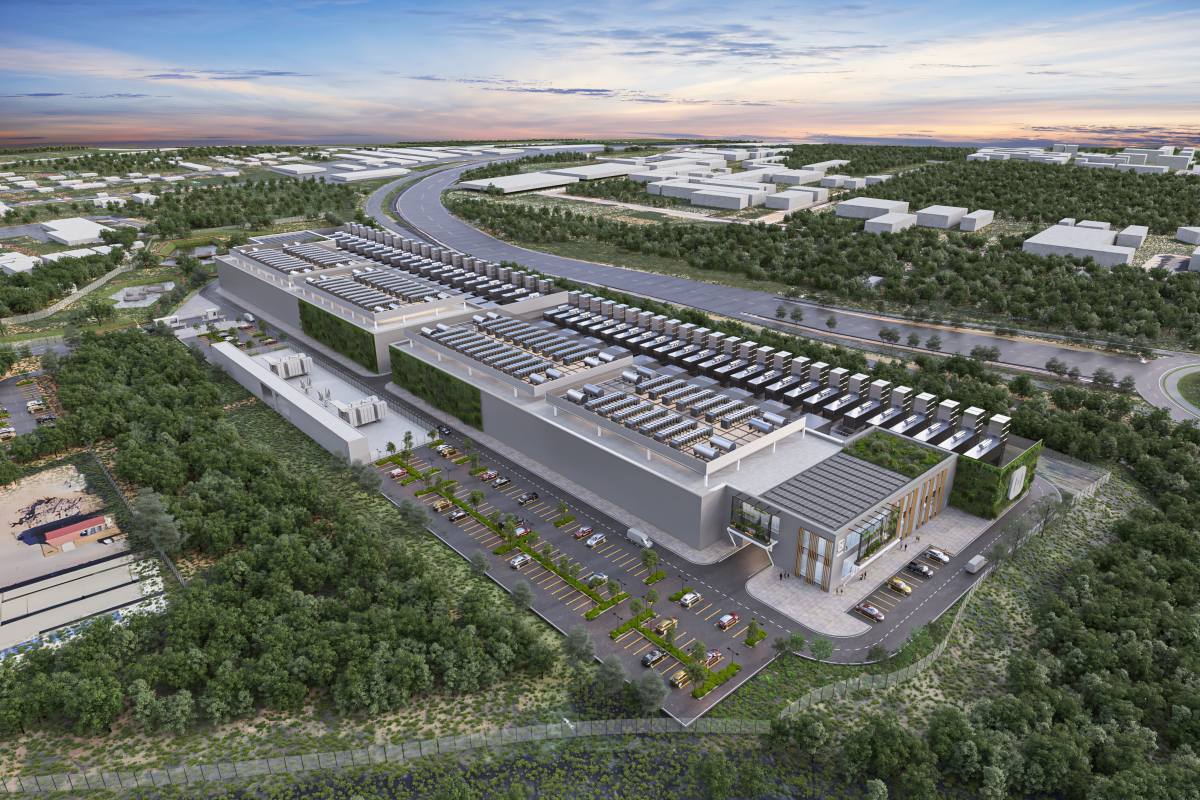
HSCALE, a London-based pan-European hyperscale data centre developer, has completed the acquisition of a second hyperscale data centre campus in northwest Milan, Italy, bringing its total planned power capacity in the region to 250MW. The company, which is backed by Bain Capital, says the combined investment across both Milan campuses will exceed €2 billion (£1.7 billion), with facilities expected to be ready for service in 2028. Both campuses are located in Settimo, northwest Milan, an area the company describes as one of the region’s most established hyperscale infrastructure locations. HSCALE says the sites are fully owned, with power capacity secured and pre-construction work already underway. According to the company, the projects are intended to support growing demand for hyperscale cloud and AI infrastructure across Southern Europe. Oliver Schiebel, CEO of HSCALE, explains, “We designed HSCALE's Milan campuses around a simple principle: the building should never be the bottleneck. "Our base design is liquid-cooled first, built for the most demanding hyperscale and AI workloads, and can pivot to air-cooled traditional deployments in the same physical structure. No redesign, no additional capex. "We design and build like this because we understand the long-term commitments our customers must make.” Flexible cooling designs target AI workloads HSCALE says the campuses have been designed to support multiple cooling approaches, including air cooling, direct liquid cooling, and hybrid configurations. The company states that this flexibility is intended to support both traditional cloud infrastructure and higher-density AI workloads without requiring major facility redesigns. Paul Berry-Selwood, CCO at HSCALE, says, “Milan is one of the strongest hyperscale markets in Europe and we are committing around €2 billion to this region because we understand what the market needs and are serious about its growth potential. "Our team closed the second site, secured the power, and is already progressing through pre-construction, ensuring we deliver real capacity as fast as possible.” The announcement also highlights Milan’s growing role as a connectivity hub, supported by the Milan Internet Exchange and increasing hyperscale investment outside traditional FLAP-D markets. Renewable energy and regional investment plans HSCALE says its Milan energy strategy currently targets an electricity mix with approximately 50% renewable generation, including solar, wind, and hydroelectric sources. The company also states that it is working with Aquila Clean Energy as part of a wider clean energy partnership. In addition to infrastructure investment, HSCALE says the developments are expected to create jobs across construction, engineering, IT, and data centre operations within the Milan region. The company is also supporting local initiatives including the Festival di Villa Arconati cultural event.

EDGE Modular launches containerised data centres
EDGE Modular has launched globally, expanding its containerised data centre offering for edge computing, telecoms, and remote infrastructure deployments. The New Zealand-based company, a division of Edge Defence, designs and manufactures modular data centre systems intended for rapid deployment in locations where traditional construction may be impractical or time-consuming. According to EDGE Modular, the systems are aimed at organisations requiring scalable infrastructure for edge computing and localised data processing. The company says its modular approach allows systems to be manufactured, tested, and deployed more quickly than conventional brick-and-mortar facilities, while also supporting future expansion through scalable designs. John Gell, General Manager at EDGE Modular, explains, “Our mission is to provide innovative, containerised data centre solutions tailored to the unique needs of each client. "We ensure efficiency, quality, and flexibility for future growth in every project we undertake.” Modular infrastructure for edge computing EDGE Modular’s portfolio includes containerised data centres in 10ft, 20ft, and 40ft formats, alongside telecom exchange units, command and control rooms, battery storage systems, and specialist workshop environments. The company states that its infrastructure is designed for deployment in remote and challenging environments, with systems transportable via road, rail, or sea using standard shipping container logistics. EDGE Modular also says its systems are designed for concurrent maintainability, allowing maintenance work to be carried out without interrupting critical operations. In addition to manufacturing, the company provides infrastructure consultancy, system design services, and maintenance support for deployed installations.

Techno Digital commissions Mumbai edge data centre
Indian data centre developer Techno Digital has announced the completion of its Mumbai Edge Data Center (EDC) in Mahalakshmi, South Mumbai, India. Developed in partnership with RailTel Corporation of India, the facility is built to Rated-3 infrastructure standards and is now fully operational. The site has been designed to support enterprise workloads through a smaller infrastructure footprint focused on low latency and connectivity. The Mumbai EDC is positioned to support businesses operating in Mumbai’s financial districts, providing a reported latency of less than 150 microseconds from the Bombay Stock Exchange in Nariman Point and less than 250 microseconds from the National Stock Exchange of India in Bandra Kurla Complex (BKC). The facility is located near business districts including BKC, Nariman Point, Worli, Lower Parel, Mahalakshmi, and Fort, allowing organisations to deploy infrastructure closer to operational sites. A focus on low-latency connectivity Key features of the facility include: • Low-latency connectivity across Mumbai business districts• Access to RailTel’s nationwide fibre network, spanning more than 63,000km• Infrastructure designed to support sovereign and compliance-focused workloads Its proximity to Mumbai’s cable landing stations is also intended to support international connectivity while maintaining low-latency domestic performance. The Mumbai facility forms part of Techno Digital’s wider edge data centre expansion strategy in partnership with RailTel. The company plans to launch five additional edge locations, with a longer-term target of expanding to 102 sites across India over the next three to four years. Ankit Saraiya, Director & CEO of Techno Digital, comments, “As India’s digital economy scales, infrastructure requirements are evolving beyond capacity to include proximity and performance. "The Mumbai EDC is designed to align infrastructure with demand centres, particularly in high-performance environments such as financial services and real-time platforms. "At Techno Digital, our mission is to build a leading distributed network of interconnected edge infrastructure that matches the concentration of economic and digital activity. The Mumbai facility represents a key milestone in that journey.” Amit Agrawal, President of Techno Digital, adds, “In a city like Mumbai, where milliseconds can impact outcomes, infrastructure placement becomes critical. "This facility combines low-latency architecture, strong connectivity, and sovereign infrastructure to support performance-critical workloads ranging from trading and fintech platforms to real-time AI inferencing and enterprise applications. "It is designed to deliver the reliability and responsiveness required in latency-sensitive environments.” For more from Techno Digital, click here.

Russelectric expands microgrid controls offering
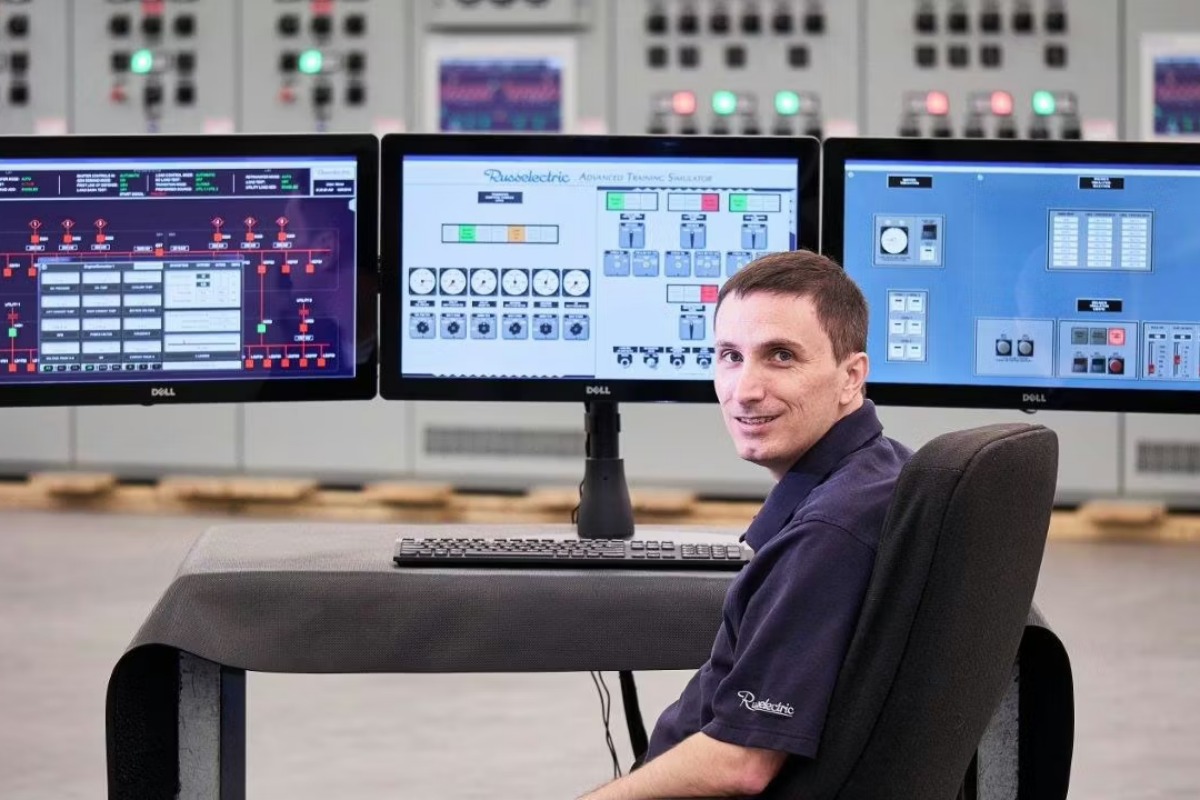
US power control manufacturer Russelectric, a Siemens business, has highlighted its Advanced Microgrid Controls platform, designed to support power resiliency and energy management across critical infrastructure environments including data centres. The system combines hardware and software for managing onsite generation assets and facility power infrastructure, including generators, battery storage systems, photovoltaic arrays, and electrical loads. According to Russelectric, the platform integrates with transfer switches, switchgear, and power controllers to support facility-wide monitoring and optimisation of distributed energy resources. The company says the system is designed to support operational continuity during grid outages through functions including dynamic islanding, automatic generator black start capability, and grid resynchronisation. Microgrid platform targets critical infrastructure Russelectric states that the platform is intended to help facilities improve power quality, reduce energy consumption, and lower operational emissions through more efficient management of onsite power assets. The company also offers engineering, commissioning, manufacturing, and maintenance support for microgrid deployments, alongside integrated switchgear and turnkey infrastructure options. Russelectric says it has more than 50 years of experience delivering microgrid control installations across critical infrastructure sectors. Siemens acquired Russelectric in 2011, with the business continuing to focus on power control and transfer systems for mission-critical facilities. For more from Siemens, click here.


Translate »