Products


Supermicro reveals Arm-based AI infrastructure
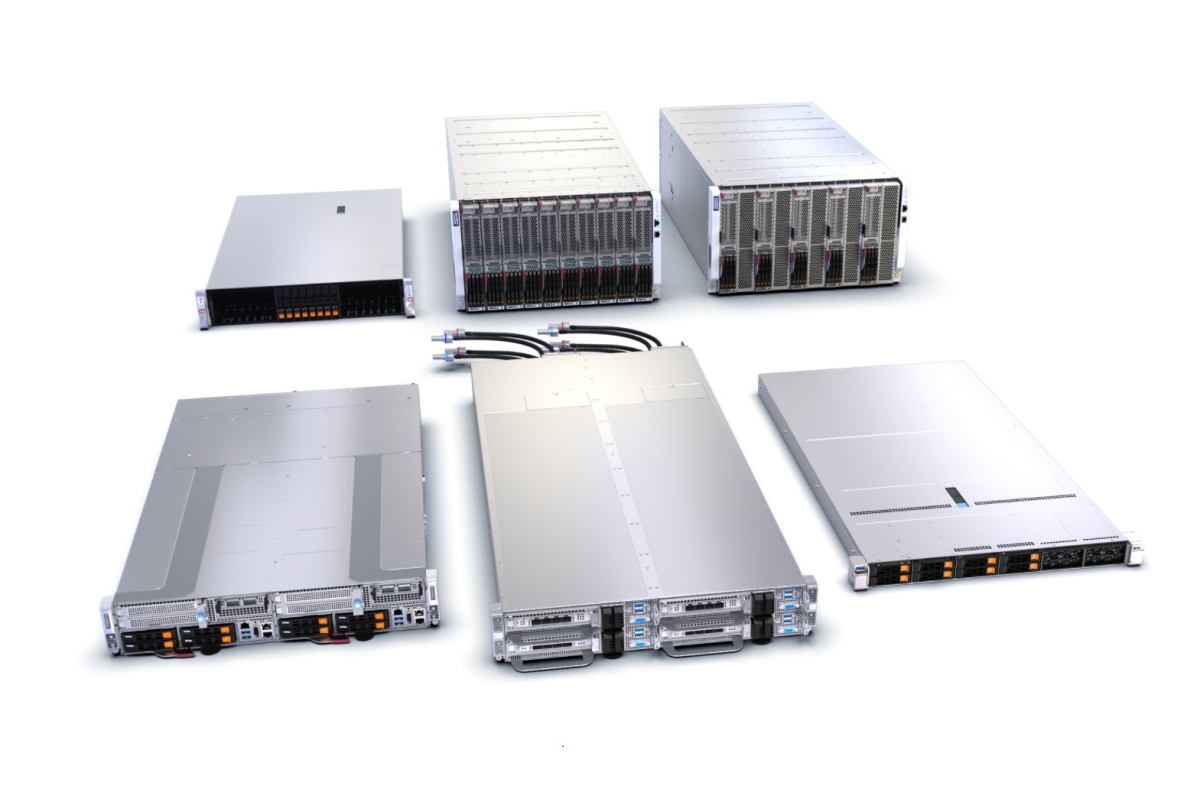
Supermicro, a provider of application-optimised IT systems, has announced a new portfolio of rack-scale infrastructure platforms based on Arm AGI CPUs, targeting enterprise AI and agentic AI workloads. The company says the systems have been designed to address increasing demand for compute capacity while improving energy efficiency and rack density within existing data centre environments. The new platforms combine Arm's Neoverse CSS V3-based CPU architecture with Supermicro's Data Center Building Block Solutions (DCBBS) approach, which integrates servers, storage, networking, cooling, and rack infrastructure. Charles Liang, President and CEO of Supermicro, says, "Supermicro continues to lead the industry when it comes to deploying new and innovative rack-scale solutions that maximise performance and efficiency. "Our DCBBS technology stack delivers end-to-end data centre solutions of any size, which, combined with the new density and efficient, performance-optimised Arm AGI CPU microarchitecture, helps enterprises realise significant TCO savings on their agentic AI infrastructure investments." The launch includes air-cooled and liquid-cooled server platforms designed for AI inference, AI training, cloud computing, and high-density enterprise workloads. Among the systems announced are a dual-socket 2U server for compute-intensive applications, a 5U GPU server supporting up to eight double-width GPUs, a liquid-cooled multi-node platform for rack-scale deployments, and a single-socket edge-focused server design. Focus on rack density and energy efficiency According to Supermicro and Arm, the infrastructure has been developed to maximise performance per watt and increase compute density for AI environments. Arm says its AGI CPU architecture features up to 136 cores per processor and is designed to support large-scale AI orchestration workloads through increased memory bandwidth, expanded memory capacity, and scalable I/O capabilities. The companies state that deployments can exceed 6,000 CPU cores within a single air-cooled rack, while larger Open Compute Project-based configurations can support significantly higher densities. Mohamed Awad, Executive Vice President, Cloud AI Business Unit at Arm, says, "Agentic AI is driving a fundamental shift in infrastructure requirements, where efficiency, scalability, and orchestration performance are becoming just as critical as raw compute. "By combining Arm AGI CPUs with Supermicro's rack-scale system expertise, we're enabling infrastructure designed to deliver higher AI throughput, maximum compute density, and improved data centre economics at scale." Supermicro says the platforms are intended to help organisations deploy AI infrastructure while making more efficient use of available data centre space, power, and cooling resources. The announcement expands Supermicro's portfolio of AI-focused infrastructure as demand continues to grow for high-density computing environments capable of supporting increasingly complex AI workloads. For more from Supermicro, click here.

Vertiv unveils high-capacity rack platform
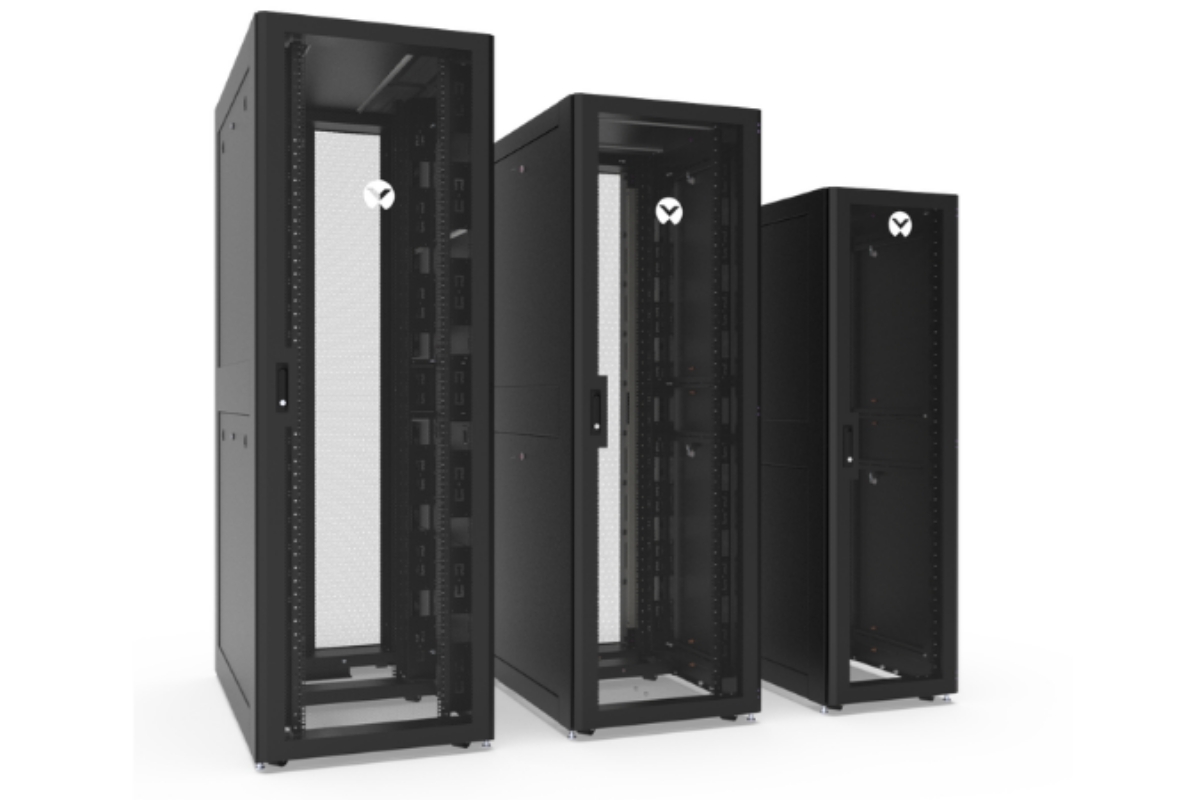
Vertiv, a global provider of critical digital infrastructure, has introduced the Rack Extreme, a rack platform designed to support high-density computing, AI workloads, and next-generation IT deployments. The new rack has been developed to accommodate increasingly large and heavy computing equipment while supporting airflow management, cable organisation, and deployment flexibility within data centre environments. According to Vertiv, the platform is intended to address growing infrastructure requirements driven by higher compute densities and the adoption of AI applications. Giuseppe Leto, Senior Director, IT Systems at Vertiv, says, "The Vertiv Rack Extreme reflects our expanded capabilities in rack and enclosure designs for high-density and AI-driven deployments. "The platform also draws on Vertiv’s long-standing rack engineering expertise, including solutions historically developed under the Knürr brand, to support scalable next-generation IT infrastructure." The Rack Extreme is available in multiple sizes and configurations, allowing operators to tailor deployments to specific application requirements. The units are shipped fully assembled and are designed to integrate with a range of compatible cable management and airflow optimisation accessories. Designed for high-density deployments Vertiv says the Rack Extreme offers both static and dynamic load ratings of up to 2,045kg, enabling it to support high-density equipment installations while maintaining the same load capacity when being moved or when stationary. The company states that this provides greater flexibility during deployment and infrastructure changes, particularly in environments where heavy equipment must be repositioned after installation. The rack features a welded frame construction, integrated cable management options, high open-area mesh doors, flexible mounting rails, vertical cable bars, and corner mounting bars for rack power distribution units. Vertiv has also incorporated shipping features designed to simplify installation, including shock-absorbing pallets and reusable ramps intended to reduce the risk of equipment damage during transportation and deployment. The Rack Extreme has been designed to integrate with Vertiv's wider portfolio of data centre infrastructure products, including uninterruptible power supplies (UPS), rack PDUs, rear-door heat exchanger systems, coolant distribution units, and KVM management platforms. For more from Vertiv, click here.

Arista launches 1.6T networking platforms for AI fabrics
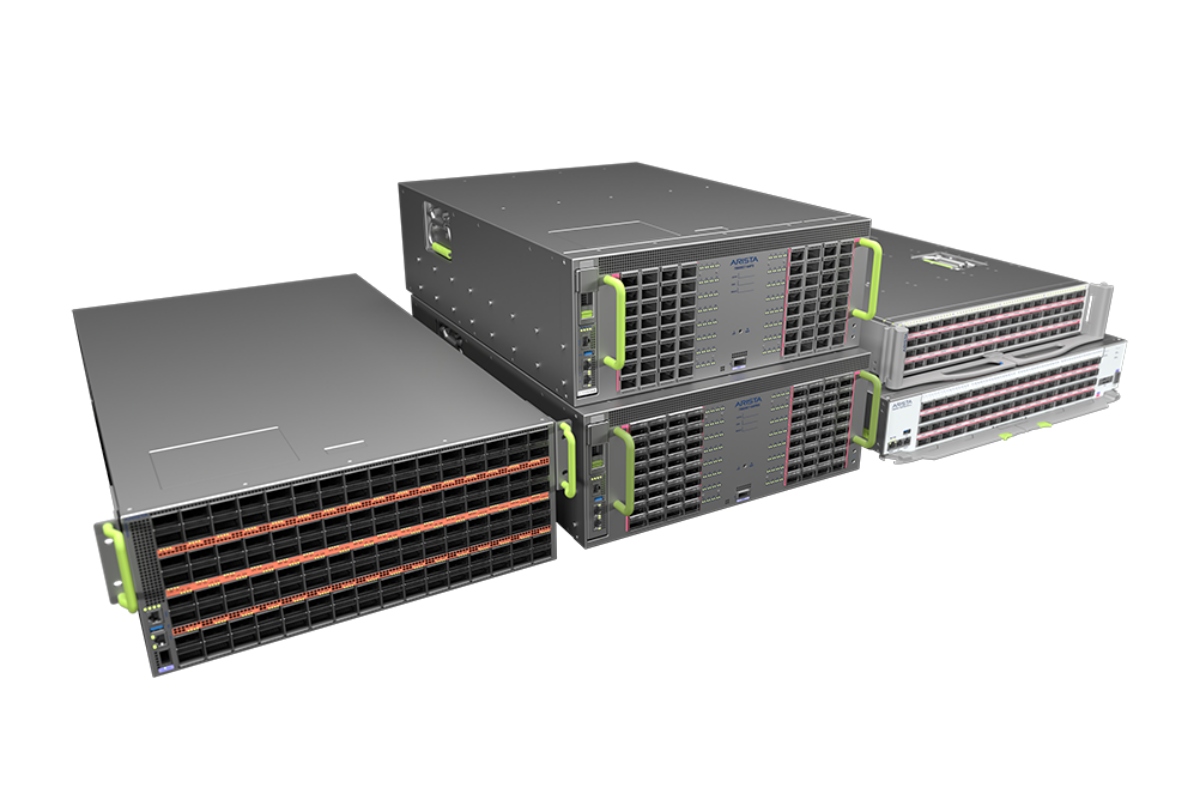
Arista Networks, a provider of cloud and AI networking systems, has introduced the 7060XE7 Series, a new portfolio of 1.6T networking platforms designed for rack-scale AI infrastructure. The launch reflects growing demand for networking architectures capable of supporting increasingly large AI deployments, as training and inference environments scale from thousands to hundreds of thousands of accelerators. According to Arista, the new platforms are designed to support both scale-up and scale-out AI fabrics across air-cooled, liquid-cooled, and hybrid environments. The company says the 7060XE7 Series is intended to address the density, power, and thermal requirements associated with large AI clusters, whilst also enabling greater compute density within a given power envelope. Tyson Lamoreaux, Senior Vice President, Cloud and AI Networking at Arista Networks, comments, "The AI era requires a shift in how we think about the network. It is no longer a standalone layer of infrastructure, but a tightly integrated component of the AI supersystem. "With the 7060XE7 Series, we are delivering massive-scale 1.6T systems that combine world-class reliability and the differentiation of EOS with liquid cooling and low-power optics to help our customers build AI fabrics designed for maximum performance and power efficiency." Designed for large-scale AI deployments The 7060XE7 Series includes fixed-switch platforms and configurable rack-scale systems designed to support a range of AI workloads and infrastructure requirements. According to Arista, the systems provide low-latency connectivity and intelligent packet buffering to manage the traffic patterns associated with AI training and inference workloads. The platforms also support a range of EOS features aimed at improving resilience, congestion management, and operational visibility within AI environments. The portfolio comprises three main configurations: • 7060XE7-64PS and 7060XE7-64PRS rack switches, offering 64 1.6T ports in an air-cooled 4RU design• 7060XE7-64PRS-RV3-L, a liquid-cooled 2OU platform designed for high-density AI clusters• 7060XE7-128PE, providing 128 800G ports in an air-cooled 4RU form factor The systems use 224G and 100G SerDes technologies, depending on configuration, and support Linear Pluggable Optics (LPO), which Arista says can reduce interconnect power consumption by around 60%. Industry support for 1.6T ethernet Several major cloud providers have provided statements supporting the development of higher-capacity ethernet infrastructure for AI environments. Gaya Nagarajan, Vice President of Infrastructure at Meta, says, "Arista’s 1.6T platforms and liquid-cooled designs align with our focus on open, scalable AI fabrics that meet the requirements of next-generation training and inference." Rani Borkar, President, Azure Hardware Systems and Infrastructure at Microsoft, notes, "Our collaboration with Arista on the 1.6T ethernet interface helps enable the next generation of AI clusters with greater interconnect capacity for Azure Maia, Microsoft's AI accelerator, and Fairwater, Microsoft's extreme-scale AI data centres, while preserving operational simplicity across our infrastructure." Mahesh Thiagarajan, Executive Vice President, Oracle Cloud Infrastructure, adds, "Arista Networks’ 1.6T platforms provide the throughput, determinism, and stability needed for our RDMA-based AI fabrics, while Arista EOS delivers operational consistency and performance at scale across our global AI infrastructure." The 7060XE7 Series is also supported through collaborations with AMD and Broadcom, with the platforms utilising Broadcom's Tomahawk 6 ethernet switching silicon. Arista expects the first systems in the portfolio to become available during Q4 2026, with additional models scheduled for release during Q1 2027. For more from Arista, click here.

Raltron launches compact OCXOs for DC timing
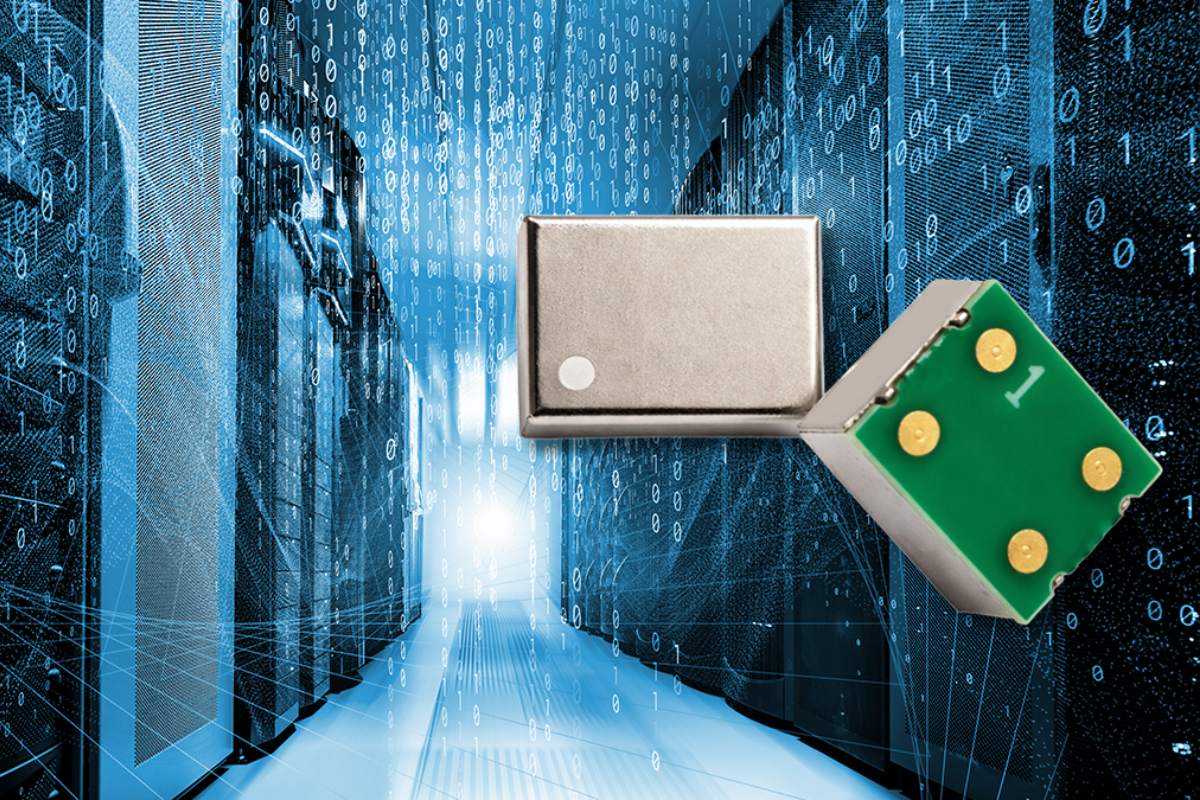
Raltron, a manufacturer of frequency control components, has announced the OX7000 Series of oven-controlled crystal oscillators (OCXOs), developed to provide a timing option for network interface cards (NICs) and other space-constrained data centre hardware. The OX7000 Series is designed to support networking applications requiring stable, low-phase-noise reference clocks while maintaining a compact footprint. The devices are housed in a 9mm x 7mm surface-mount package, making them suitable for use in NIC cards, servers, storage systems, and network switching platforms. The company says the oscillators are intended to help designers address challenges around board space, power consumption, and system cost as networking and data centre infrastructure continues to scale. Designed for networking and data centre hardware The OX7000 Series operates from a single 3.3V supply and consumes between 0.35W and 0.5W during steady-state operation. During warm-up at 25°C, power consumption ranges from 0.8W to 0.9W. According to Raltron, the devices combine OCXO stability with low phase noise in a package aimed at high-volume networking applications. Sasha Wolloch, President of Raltron, says, "Network and data centre designers need timing products that balance performance, size, and cost. With the OX7000 Series, we're providing a compact, lower-cost OCXO that is especially well suited for NIC cards and other high-volume networking platforms." The OX7000 Series has also been qualified for environmental testing, including vibration, mechanical shock, and thermal cycling, which are common requirements for continuously operating infrastructure equipment.

ABB launches grid stability package for data centres
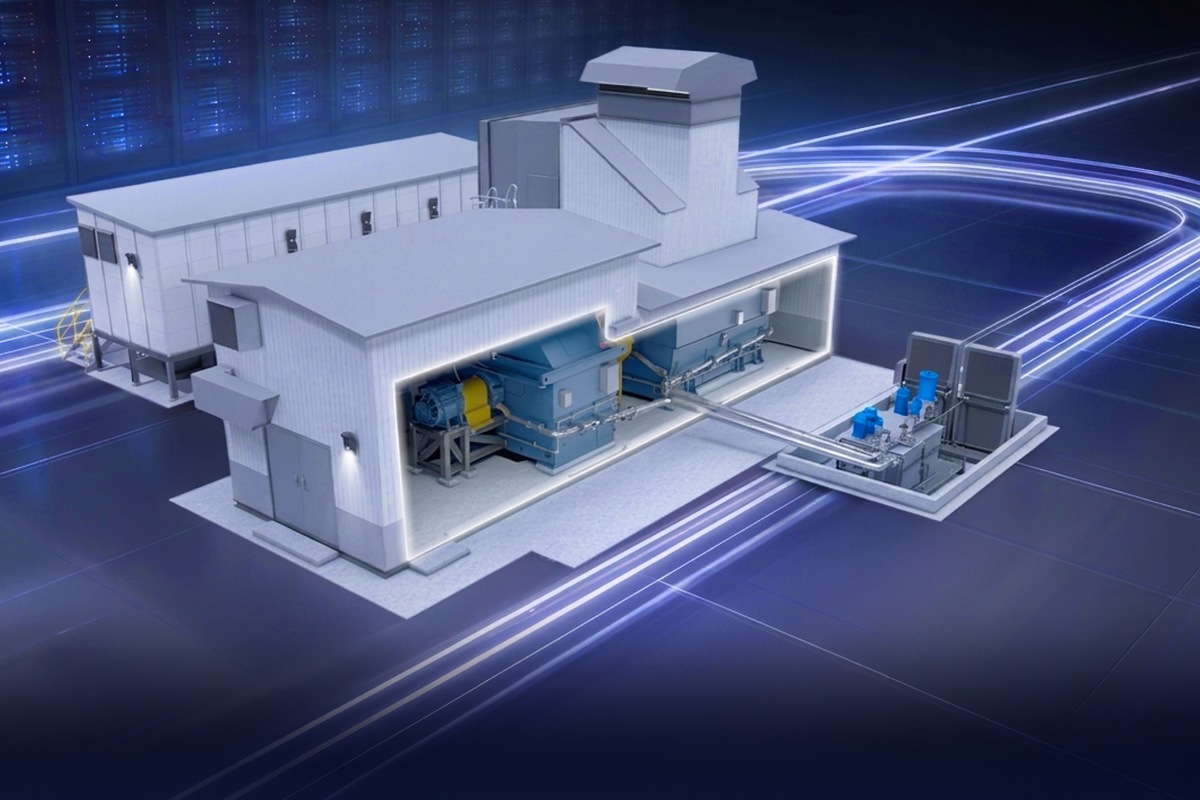
ABB, a multinational corporation specialising in industrial automation and electrification products, has introduced a pre-engineered synchronous condenser package designed to help data centre operators address grid stability challenges associated with growing AI workloads and increasing power demand. The company says the modular system is intended to support power network stability at grid connection points, helping operators connect new capacity while maintaining reliable power system performance. As AI adoption increases, data centres are placing greater demands on electricity networks. Large and rapidly changing power loads can affect voltage and frequency stability, creating challenges for both grid operators and data centre developers seeking new connections. ABB's synchronous condenser package is designed to provide instantaneous inertia and dynamic reactive power, helping to stabilise voltage and frequency during sudden changes in demand. According to ABB, the pre-engineered design is intended to simplify deployment by reducing engineering requirements, installation complexity, and project delivery times. The package combines a synchronous condenser, flywheel, starting system, lubrication system, cooling infrastructure, auxiliary equipment, e-house, and optional noise enclosure within a standardised design. The flywheel includes an integrated safety enclosure and is designed specifically to support electrical network stabilisation. Supporting AI-driven power demands ABB says the solution can help operators address grid stability requirements earlier in the development process, potentially simplifying approvals and supporting future capacity expansion without significant changes to core power infrastructure. The company also states that providing mechanical, electrical, and control systems through a single supplier can reduce on-site integration requirements and streamline project delivery. David Bjerharg, Business Line Manager, High Speed Synchronous at ABB, notes, "As data centres become increasingly widespread and AI-driven demand increases, grid stability is becoming a fundamental requirement for ongoing expansion. "This solution enables operators to connect faster, operate reliably from day one, and scale with confidence." The launch reflects growing industry focus on power infrastructure capable of supporting AI-driven facilities, where high-density computing workloads can create significant fluctuations in electricity demand. ABB says the synchronous condenser package is intended to support long-term infrastructure performance while helping operators deploy new data centre capacity more efficiently. For more from ABB, click here.

Siemens, Infineon partner on data centre circuit protection
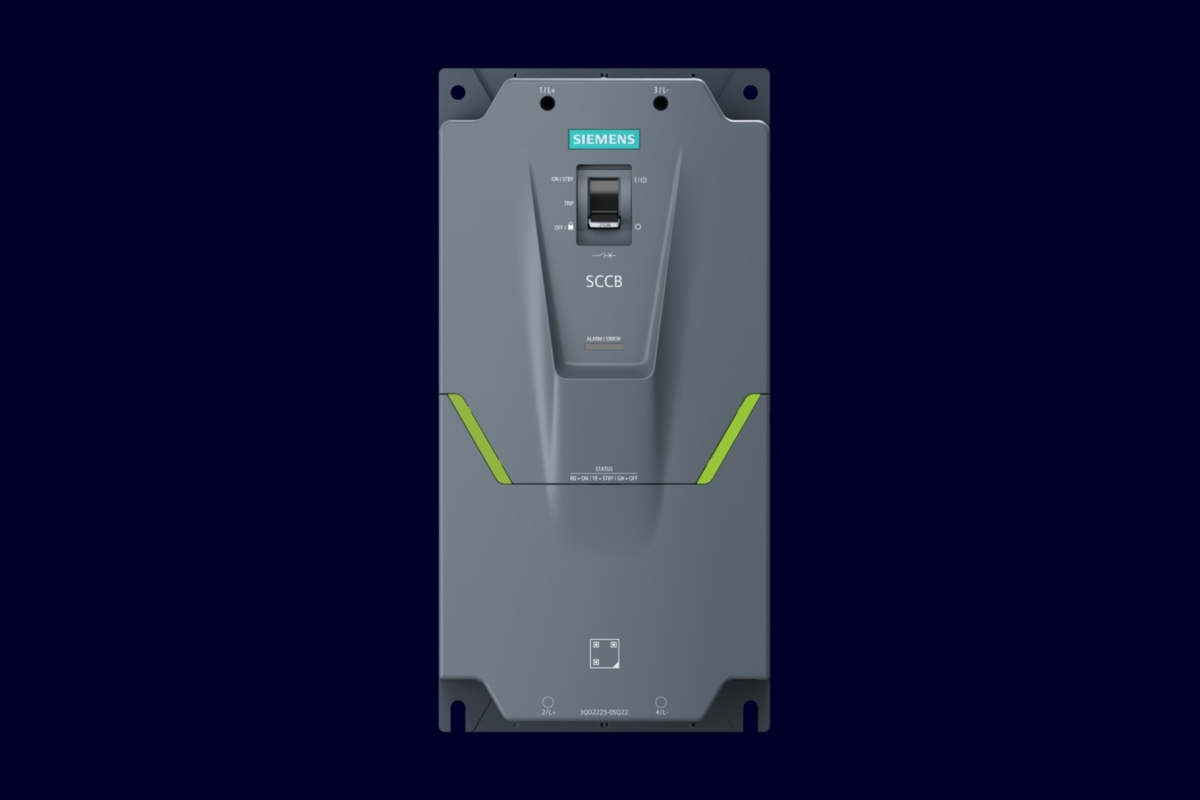
German multinational technology company Siemens and German semiconductor manufacturing company Infineon Technologies have partnered to develop electrical protection technology for data centres, industrial facilities, and battery energy storage systems (BESS). Under the agreement, Infineon will supply silicon carbide (SiC) power modules for use in Siemens's SENTRON 3QD2 semiconductor circuit breakers, designed to improve efficiency, power density, and reliability in power distribution systems. According to the companies, growing electrification and the increasing complexity of AI data centres and industrial operations are driving demand for faster and more reliable electrical protection. A semiconductor circuit breaker, also known as a solid-state circuit breaker, is designed to protect electrical circuits from excessive current caused by faults such as short circuits and overloads. Unlike conventional electromechanical breakers, which use mechanical components to interrupt current flow, semiconductor-based devices use electronic components and control algorithms to react significantly faster. Siemens says the SENTRON 3QD2 can interrupt current in the microsecond range, making it suitable for direct current (DC) power systems where rapid fault isolation is required to minimise downtime and equipment damage. Andreas Weisl, Executive Vice President and Chief Sales Officer of Industrial and Infrastructure at Infineon, notes, "AI data centres and factories are becoming increasingly electrified and complex. "This increases vulnerability to electrical failures and drives the demand for more sustainable, efficient, and reliable power distribution systems. "By combining our advanced silicon carbide technology with Siemens's expertise in power distribution, we are addressing this demand to ensure fast, safe, and reliable operations in power-critical environments." Growing interest in DC power systems The collaboration centres on Infineon's CoolSiC MOSFET power module, which has been integrated into Siemens's semiconductor circuit breaker platform. The companies say the technology supports the wider adoption of DC power distribution systems, which are gaining attention in industrial environments and data centres because of their potential efficiency benefits and ability to integrate more effectively with battery storage systems. Markus Grabmeier, CEO Electrical Products at Siemens Smart Infrastructure, comments, "Our new direct current portfolio offers innovative solutions that not only improve energy efficiency but also enable the development of resilient, future-proof infrastructure. "Direct current applications can decrease energy consumption and substantially cut material usage. By integrating batteries, peak power can also be significantly reduced. "With this approach, we are making a decisive contribution to the decarbonisation of our industries, while reinforcing our commitment to developing technologies that deliver tangible value to our customers and society." The companies state that the partnership is intended to support the growing requirements of power-critical environments where electrical protection systems must operate quickly and reliably to maintain availability and reduce the risk of service disruption. A demonstration of the SENTRON 3QD2 semiconductor circuit breaker will be showcased at PCIM Europe 2026 in Nuremberg, Germany, from 9–11 June. For more from Siemens, click here.

nLighten launches rapid colocation deployment service
European data centre operator nLighten has launched ReadyCabinet, a standardised colocation offering designed to reduce deployment times for organisations requiring edge infrastructure across Europe. The service provides customers with a pre-built, fixed-price colocation cabinet and is designed to enable deployments within three working days of an order being placed. According to nLighten, ReadyCabinet is intended to simplify the process of procuring colocation capacity by replacing bespoke design and engineering processes with a standardised offering. Customers can choose a full or partial cabinet configuration, including up to 5kW of power and access to nConnect, the company's connectivity platform. Joachim van Collenburg, Vice President of Enabling Services at nLighten, says, "We are moving colocation away from bespoke engineering and turning it into a scalable product. "ReadyCabinet reflects that reality. It's a deliberately simple product, built to be the entry point to a much longer journey with our customers." The deployment process consists of a quotation with real-time availability, a service order agreement, and cabinet handover within three working days. Standardised approach targets edge infrastructure growth nLighten says the service has been developed in response to increasing demand for rapid, repeatable infrastructure deployments across multiple locations. The company cites the growth of AI inference, low-latency applications, and edge computing as drivers behind the need for faster provisioning and more standardised colocation services. ReadyCabinet forms part of nLighten's wider colocation platform, which allows customers to expand from a single cabinet deployment to higher-density and liquid-cooled environments across its European data centre portfolio. All ReadyCabinet deployments operate across nLighten's European edge platform and include metered power billing. The service is currently available at selected nLighten facilities, with further expansion planned throughout 2026. For more from nLighten, click here.

Schneider Electric unveils Uniflair XCA chillers
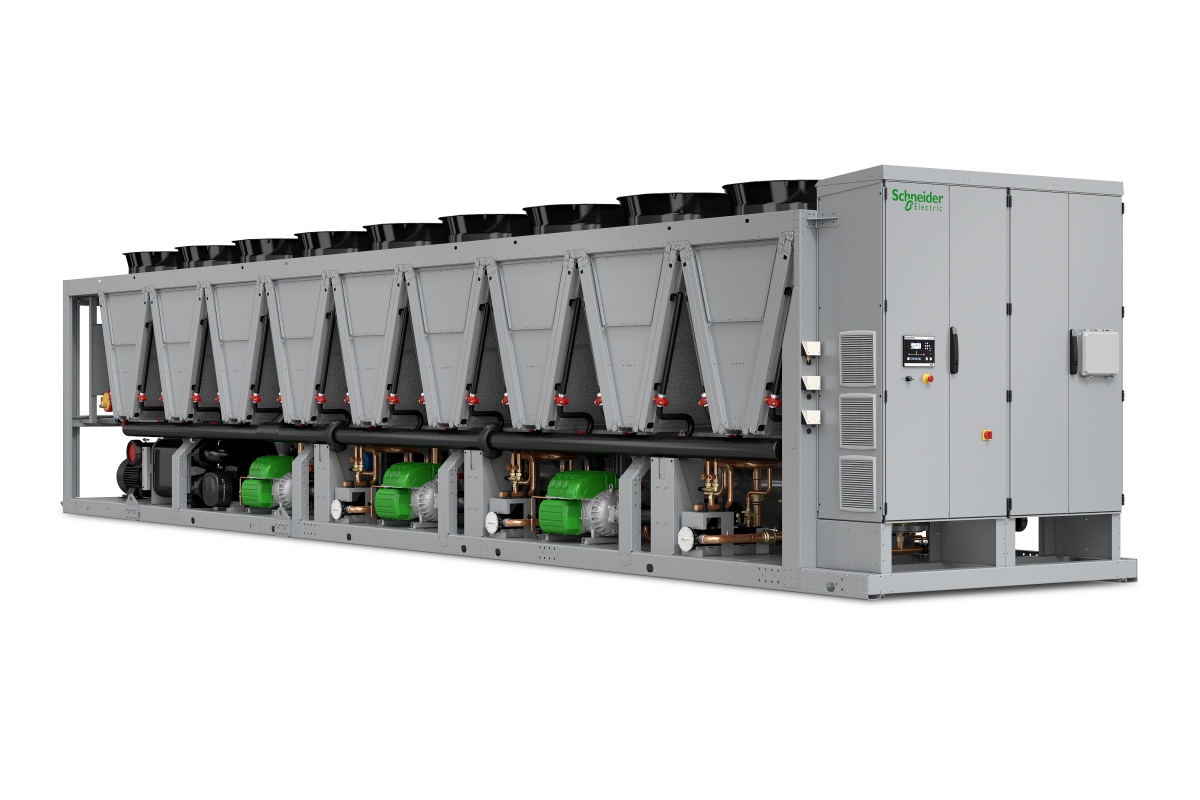
Global energy technology company Schneider Electric has introduced the Uniflair XCA range of air-cooled and free-cooling chillers, designed for high-density, liquid-cooled data centres supporting AI workloads. The new portfolio comprises the Uniflair XCAC air-cooled series and the Uniflair XCAF free-cooling series. Both incorporate oil-free centrifugal compressors with magnetic bearing technology and variable-speed drives to support operation across varying thermal loads and environmental conditions. The chillers are available in six sizes, ranging from 1,200kW to 2,500kW, and utilise low global warming potential (GWP) refrigerants. Schneider Electric says the systems are designed to support elevated water temperatures commonly associated with liquid cooling deployments in AI data centres. Andrew Bradner, Senior Vice President, Cooling Business at Schneider Electric, notes, "Energy efficiency, adaptability, and reliability are essential components of liquid cooling systems for AI-optimised data centres, and we’ve designed the Uniflair XCA line with these most important design features at the forefront. "With adaptable water operating temperatures and versatile deployment options, the XCA line features a system-level approach that gives operators scalability, enhanced performance, and long-term peace of mind as data centre complexity continues to rise." Cooling infrastructure adapts to rising AI power densities As AI applications, GPU clusters, and liquid cooling deployments increase data centre power densities, cooling infrastructure is becoming an increasingly important factor in facility efficiency and reliability. The Uniflair XCA platform incorporates oil-free magnetic bearing centrifugal compressors, which remove the need for lubrication systems and are intended to reduce maintenance requirements and mechanical losses. The chillers also feature a spray evaporator combined with V-shaped microchannel coils, designed to improve heat exchange performance while reducing refrigerant volume and material usage. For free-cooling deployments, the XCAF models support water outlet temperatures of up to 33°C and are designed to operate in ambient temperatures ranging from -20°C to 52°C. Schneider Electric states that, in suitable climates, the free-cooling configuration can reduce energy consumption compared with mechanical cooling systems by extending free-cooling operating periods. The range can also be configured with a variety of electrical, hydraulic, acoustic, and performance options to suit different deployment requirements. Additionally, a quick restart capability is included, enabling systems to reportedly return to full operating capacity within three minutes of a power outage. New control features target operational efficiency The XCA range also introduces new firmware and control functions designed to optimise cooling performance. These include variable-speed pump algorithms supporting constant flow, constant temperature differential, and constant head pressure operation, alongside advanced fan control modes that can be adjusted according to temperature, load conditions, or scheduled operating periods. Additional monitoring capabilities include energy metering and real-time water flow measurement to provide greater visibility into system performance. According to Schneider Electric, these features are designed to reduce compressor cycling and improve long-term operational stability. The first Uniflair XCA chiller units are scheduled to begin shipping globally in June 2026. For more from Schneider Electric, click here.

Panduit expands fault managed power portfolio
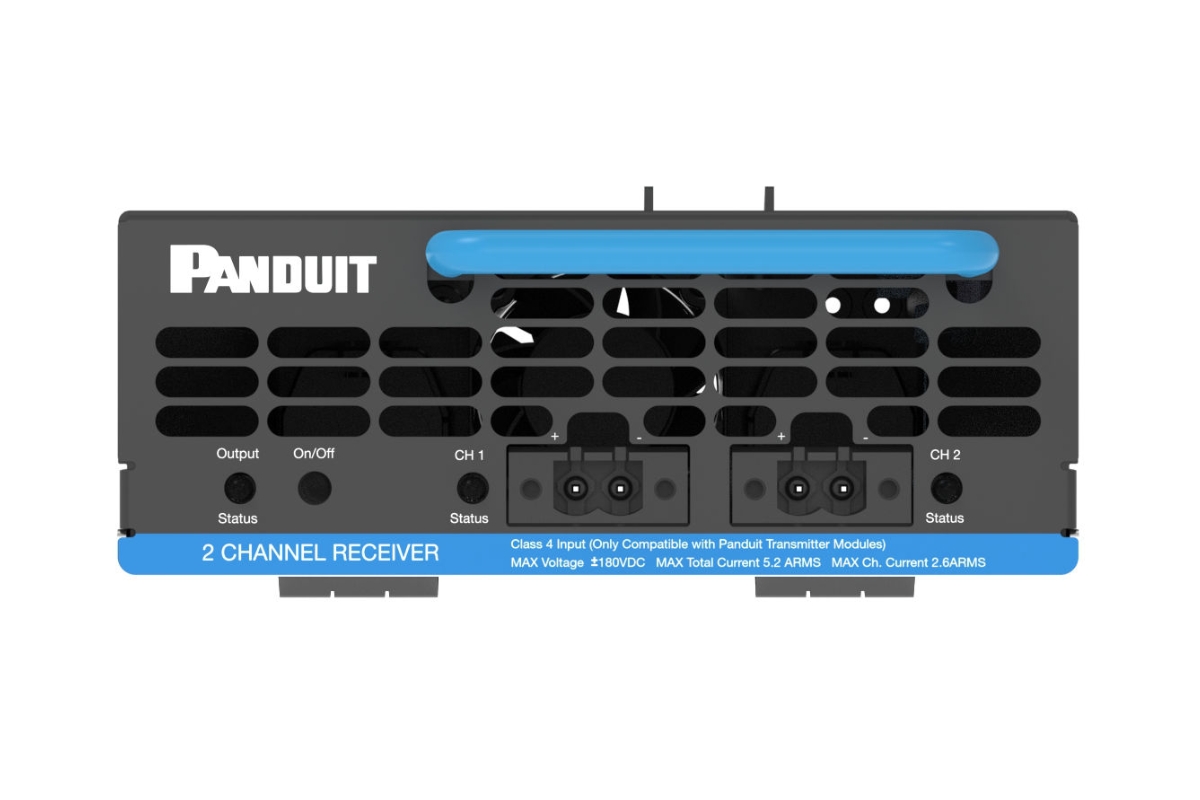
Panduit, a manufacturer of electrical and network infrastructure hardware, has launched the second generation of its Fault Managed Power System (FMPS), introducing higher power density and additional deployment options for enterprise environments. Designed for centralised power distribution, the FMPS Gen 2 platform is intended for use across campuses, warehouses, and large distributed facilities. The system uses Class 4 fault managed power technology, which allows power to be delivered over longer distances using low-voltage installation methods. According to Panduit, the platform is UL 1400 listed and SIL 3 rated, enabling organisations to distribute power while reducing electrical hazards and simplifying installation requirements. The company also states that the system uses less copper than traditional power distribution methods and remains backward compatible with existing FMPS deployments, allowing infrastructure upgrades without replacing existing installations. A key feature of the platform is the consolidation of backup power systems. By centralising UPS infrastructure rather than deploying units within individual intermediate distribution frames (IDFs), organisations can reduce equipment requirements, maintenance demands, and space utilisation. New hardware targets enterprise and edge deployments The FMPS Gen 2 portfolio includes a new 2kW system comprising a 1kW transmitter, a 2kW power supply, and a 2kW receiver. The range also includes a 600W single-channel receiver designed for applications such as lighting and security systems. Additional updates include higher-density power delivery within the same footprint, expanded receiver options, and support for both PoE++ and DC-powered devices. The platform is designed to support a range of applications including enterprise networking equipment, security and surveillance systems, wireless and in-building cellular infrastructure, lighting, and smart building technologies. Mahmoud Ibrahim, Senior Business Development Manager at Panduit Ventures, says, "FMPS Gen 2 reinforces our commitment to making enterprise power safer, simpler, and more efficient. "By increasing power density and enabling true UPS consolidation, customers can place power where it’s needed, remove complexity from IDFs, and confidently support the growing demands of modern networks - all without introducing new risk." The platform also incorporates monitoring and management capabilities intended to provide centralised visibility of connected infrastructure and support future expansion. Tom Kelly, Chief Technology Officer at Panduit, explains, "FMPS is engineered and designed by Panduit as a complete power platform, integrating power, cabling, and physical infrastructure into a single, coordinated solution. "Drawing on the expertise that developed the first generation of UL-listed Class 4 power distribution products, Panduit has engineered a second-generation system that aligns with where the market is going while also meeting requests from customers and partners in the space. "We’re excited to see the market transformation taking shape, as Class 4 power distribution adoption grows." For more from Panduit, click here.

LiquidStack expands GigaModular CDU capacity
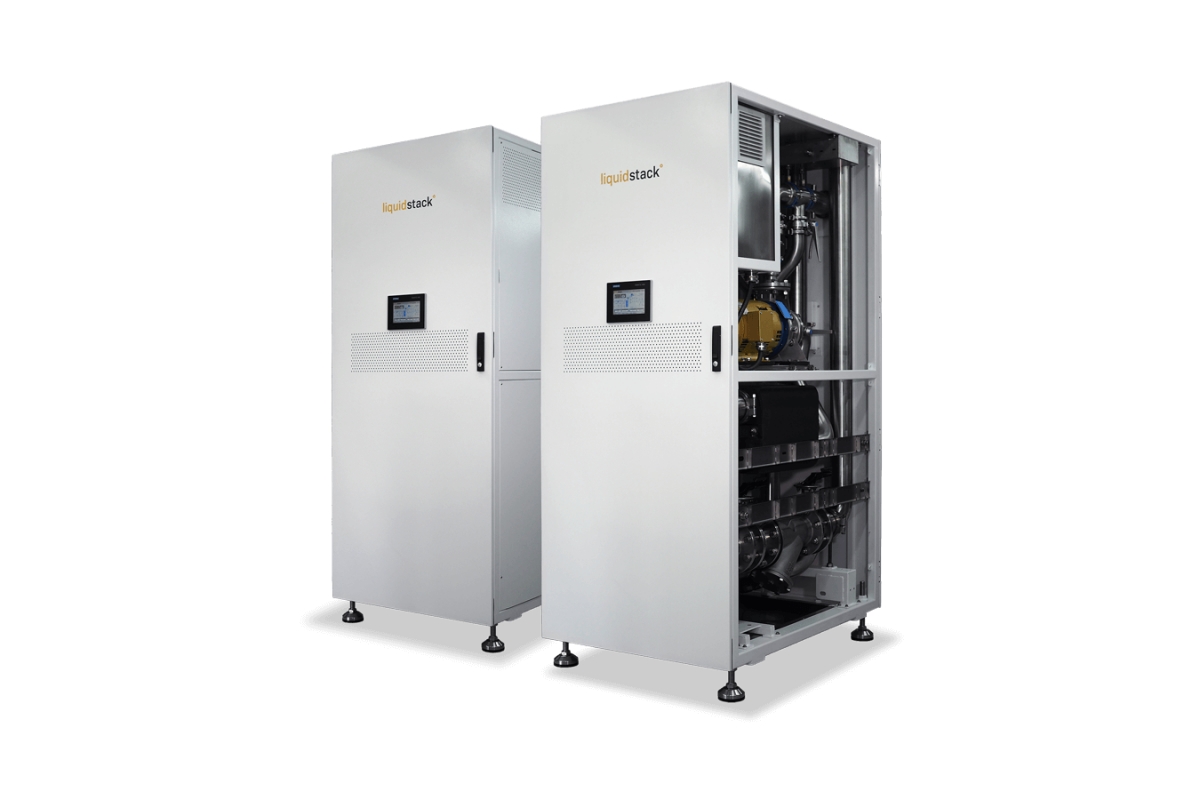
LiquidStack, a US-based provider of liquid cooling technology for data centres, has expanded the scaling capabilities of its GigaModular CDU platform, with the system now validated for deployments of up to 14MW. The modular liquid cooling platform is designed for AI and high-density data centre environments, including infrastructure aligned with NVIDIA Vera Rubin specifications. LiquidStack says the architecture is intended to allow operators to expand cooling capacity incrementally without large-scale infrastructure redesigns. First introduced in June 2025, the GigaModular platform has now completed multi-module system integration and full-load testing. The company says the system has achieved ETL certification and has been released to manufacturing. The announcement comes amid continued growth in AI infrastructure demand and increasing pressure on data centre capacity. According to CBRE, the global weighted average data centre vacancy rate reached 6.6% during the first quarter of 2025. Modular cooling aimed at AI infrastructure growth LiquidStack says the platform has been designed to support phased AI infrastructure expansion through modular deployment and centralised controls. Key features of the GigaModular CDU platform include: • Centralised system controls intended to simplify operations and reduce infrastructure redundancy• Modular scaling designed to support phased AI deployment growth• Flexible cooling distribution architecture for changing rack densities and facility layouts• Support for high-density GPU environments and large-scale AI deployments• Global service support through Trane Technologies, LiquidStack's parent company Joe Capes, Vice President at Trane Technologies and General Manager of LiquidStack, says, “The challenge for AI infrastructure today is the ability to scale quickly and efficiently enough to keep pace with demand. "GigaModular was designed to remove the infrastructure constraints limiting AI growth through a centrally controlled, modular architecture built for system-level scalability, flexible deployment, and hyperscale AI expansion.” LiquidStack has also announced it will demonstrate the GigaModular platform at Datacloud Global Congress 2026, taking place from 2–4 June in Cannes, France. For more from LiquidStack, click here.


Translate »