Products


Trane adds CRAH units to DC cooling portfolio
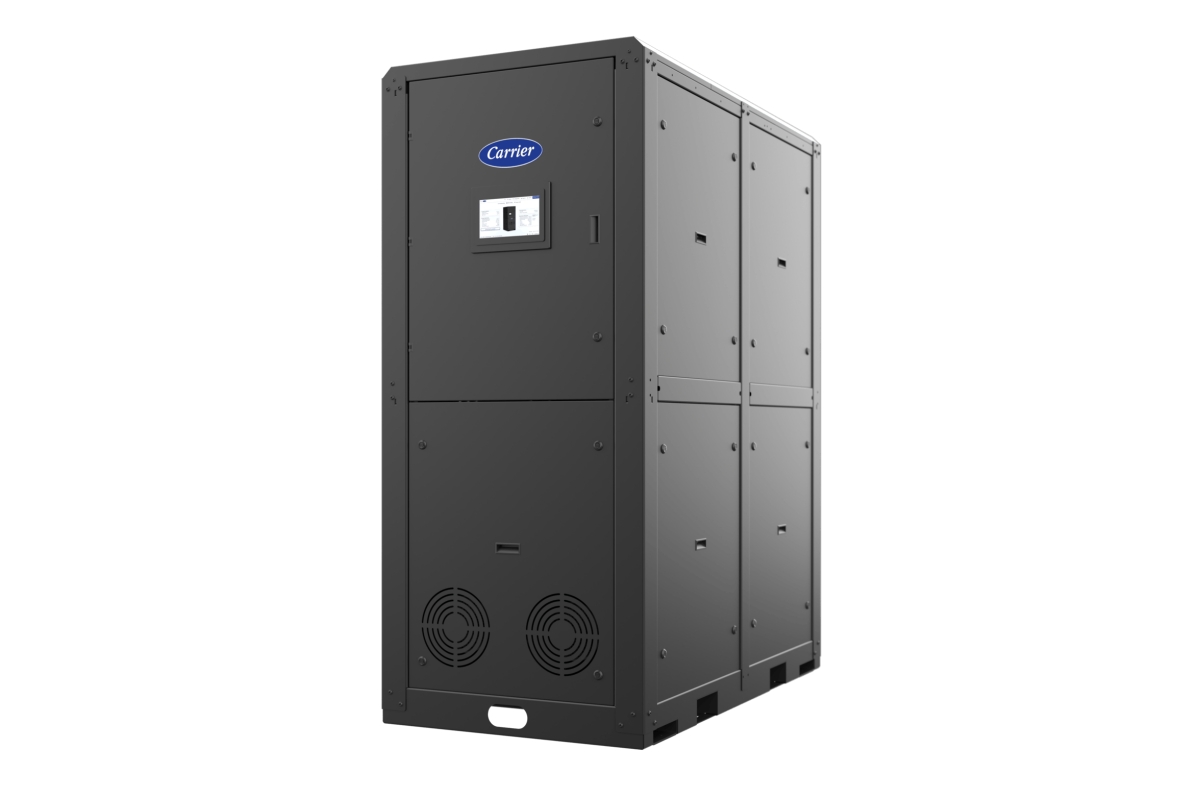
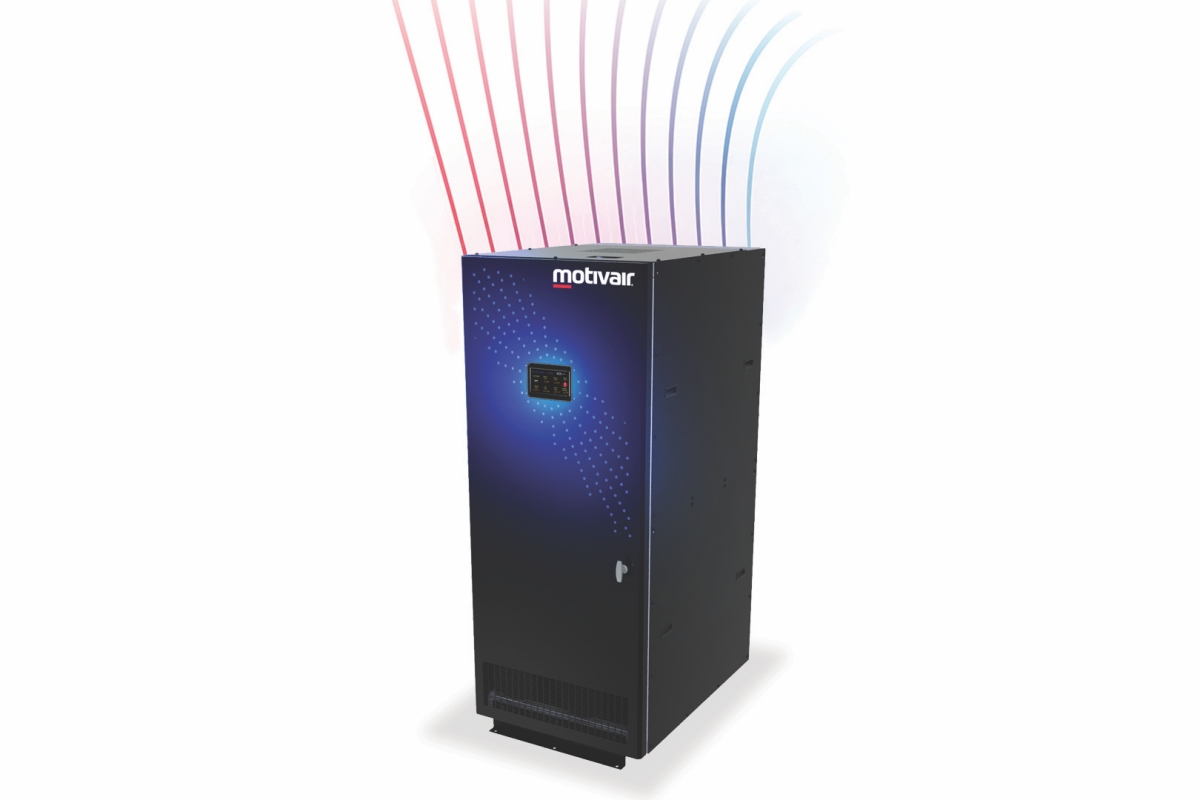
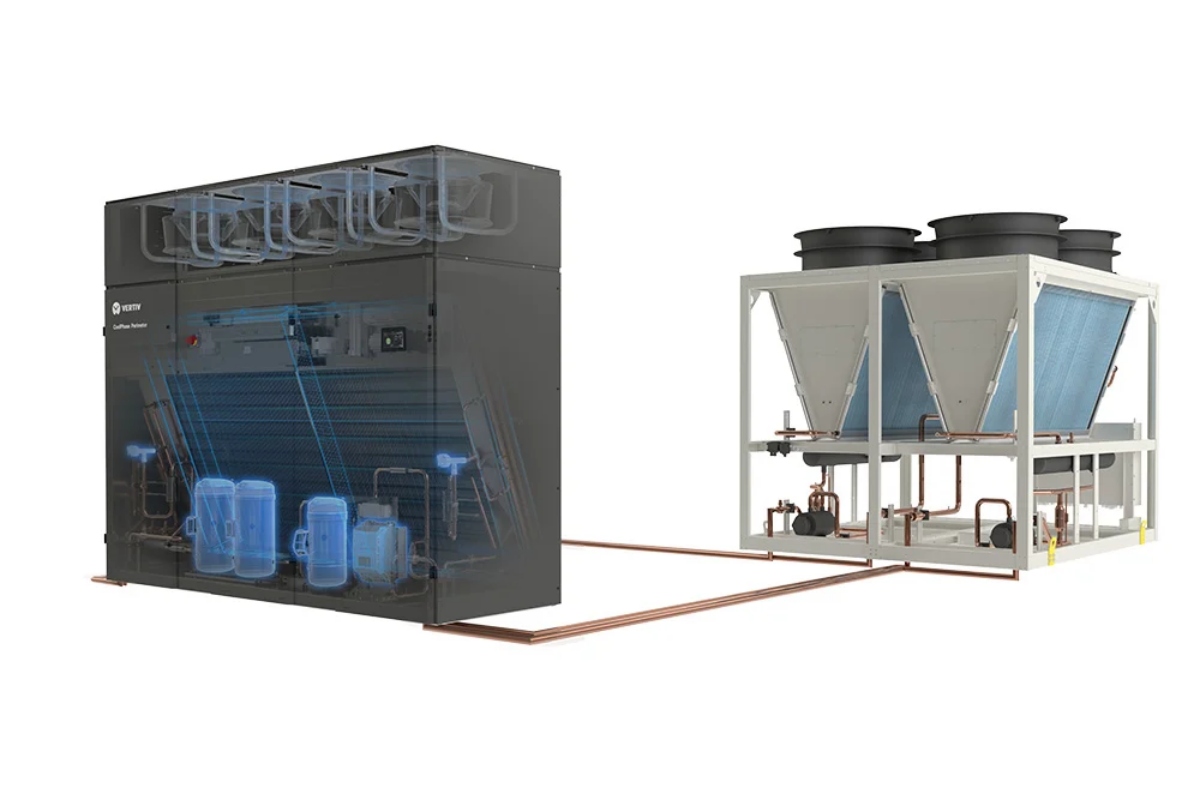
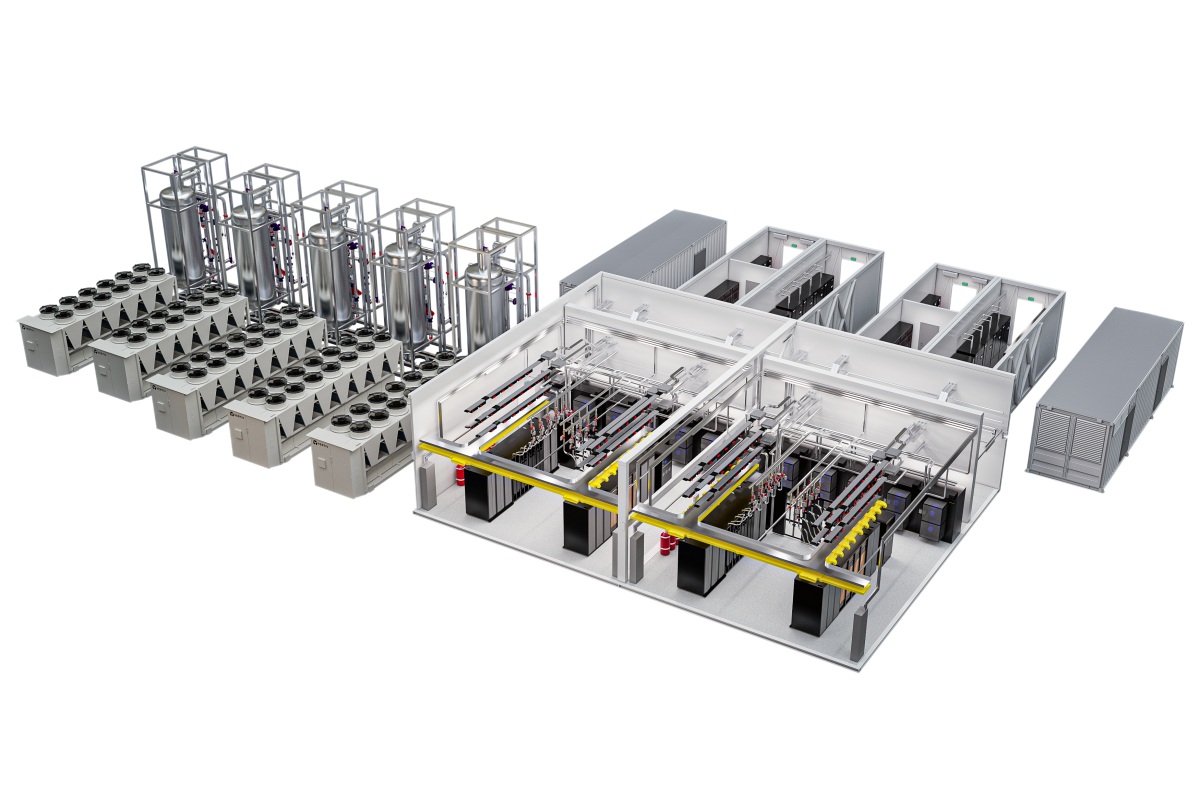
Trane, an American manufacturer of heating, ventilation, and air conditioning (HVAC) systems, has expanded its data centre thermal management range with the addition of a Computer Room Air Handler (CRAH) system. The unit is designed to maintain airflow and temperature conditions for servers and other electronic equipment, aiming to support operational uptime while reducing energy use. The CRAH system is equipped with Trane’s Symbio controller, which provides a broad capacity range and customisable configurations. The controller enables leader designation and dynamic reassignment for up to 32 units, allowing continuous operation and access to digital tools for lifecycle management. According to Trane, the new airside system is intended for both colocation and hyperscale data centre operators seeking flexible integration into existing or new-build facilities. Steve Obstein, Vice President and General Manager, Data Centres, Trane Technologies, says, “Expansion of our airside offer gives our colo and hyperscale customers greater flexibility for configuring custom systems and addresses the growing trend toward a single-source solutions provider.” Integration and lifecycle support The CRAH addition is part of Trane’s wider approach to unifying and integrating thermal management systems through smart controls. The company offers local service teams across North America and remote monitoring capabilities for predictive maintenance and operational oversight. Recent updates to Trane’s thermal management portfolio include: • Scalable liquid cooling platforms• A fan coil wall platform• Larger capacity and higher ambient temperature air-cooled chillers The CRAH system has been developed to operate alongside these technologies as part of a consolidated data centre cooling strategy, with the aim of improving efficiency, reliability, and sustainability. For more from Trane, click here.

Cloudera is bringing Private AI to data centres
Cloudera, a hybrid platform for data, analytics, and AI, today announced the latest release of Cloudera Data Services, bringing Private AI on premises and aiming to give enterprises secure, GPU-accelerated generative AI capabilities behind their firewall. With built-in governance and hybrid portability, Cloudera says organisations can now build and scale their own sovereign data cloud in their own data centre, "eliminating security concerns." The company claims it is the only vendor that delivers the full data lifecycle with the same cloud-native services on premises and in the public cloud. Concerns about keeping sensitive data and intellectual property secure is a key factor in what holds back AI adoption for enterprises across industries. According to Accenture, 77% of organisations lack the foundational data and AI security practices needed to safeguard critical models, data pipelines, and cloud infrastructure. Cloudera argues that it directly addresses the biggest security and intellectual property risks of enterprise AI, allowing customers to "accelerate their journey from prototype to production from months to weeks." Through this release, the company claims users could reduce infrastructure costs and streamline data lifecycles, boosting data team productivity, as well as accelerating workload deployment, enhancing security by automating complex tasks, and achieving faster time-to-value for AI deployment. As part of this release, both Cloudera AI Inference Service and AI Studios are now available in data centres. Both of these tools are designed to tackle the barriers to enterprise AI adoption and have previously been available in cloud only. Details of the products • Cloudera AI Inference services, accelerated by NVIDIA: The company says this is one of the industry’s first AI inference services to provide embedded NVIDIA NIM microservice capabilities and it is streamlining the deployment and management of large-scale AI models to data centres. It continues to suggest the engine helps deploy and manage the AI production lifecycle, right in the data centre, where data already securely resides. • Cloudera AI Studios: The company claims this offering democratises the entire AI application lifecycle, offering "low-code templates that empower teams to build and deploy GenAI applications and agents." Data and comments According to an independent Total Economic Impact (TEI) study - conducted by Forrester Consulting and commissioned by Cloudera - a composite organisation representative of interviewed customers who adopted Cloudera Data Services on premises saw: • An 80% faster time-to-value for workload deployment• A 20% increase in productivity for data practitioners and platform teams• Overall savings of 35% from the modern cloud-native architecture The study also highlighted operational efficiency gains, with some organisations improving hardware utilisation from 30% to 70% and reporting they needed between 25% to 50% less capacity after modernising. “Historically, enterprises have been forced to cobble together complex, fragile DIY solutions to run their AI on premises,” comments Sanjeev Mohan, an industry analyst. “Today, the urgency to adopt AI is undeniable, but so are the concerns around data security. What enterprises need are solutions that streamline AI adoption, boost productivity, and do so without compromising on security.” Leo Brunnick, Cloudera’s Chief Product Officer, claims, “Cloudera Data Services On-Premises delivers a true cloud-native experience, providing agility and efficiency without sacrificing security or control. “This release is a significant step forward in data modernisation, moving from monolithic clusters to a suite of agile, containerised applications.” Toto Prasetio, Chief Information Officer of BNI, states, "BNI is proud to be an early adopter of Cloudera’s AI Inference service. "This technology provides the essential infrastructure to securely and efficiently expand our generative AI initiatives, all while adhering to Indonesia's dynamic regulatory environment. "It marks a significant advancement in our mission to offer smarter, quicker, and more dependable digital banking solutions to the people of Indonesia." This product is being demonstrated at Cloudera’s annual series of data and AI conferences, EVOLVE25, starting this week in Singapore.

Comnet releases 720W industrial PoE switch
Comnet, a manufacturer of mission-critical industrial networking systems, has just announced the release of an "ultra-resilient," high-power PoE switch. As the first in Comnet’s new line of IEEE802.3bt-compliant ethernet switches, the CNGE10FX2TX8MSBT switch has been designed to power next-generation devices in extreme environments. With 8 RJ45 ports delivering 90W simultaneously and a total PoE budget of 720W, plus 2 SFP ports supporting up to 2.5 Gbps, the new system has been engineered for high-capacity, high-performance applications like advanced IP cameras, edge sensors, digital signage, and intelligence-driven systems. The switch’s power architecture allows users to install a smaller power supply today and scale up later, aiming to eliminate the need for costly hardware replacements as demands grow. Built for resilience and bandwidth intensive applications, the switch maintains full power output across a -40°C to +70°C temperature range, while ruggedised housing and redundant power inputs intend to ensure maximum uptime. It is designed for mission-critical sectors, including transportation, security, energy, and manufacturing, and features Comnet’s Port Guardian technology, which automatically locks down ports in case of tampering to guard against unauthorised access. “We are proud to introduce our latest product innovation, designed and built in the United States, for harsh environments with high bandwidth and high-power requirements,” says Sergio Resendiz, President, Comnet. “We built this new switch to deliver full 90W power on every port, even in harsh conditions. "Whether you need that level of power today or are planning for tomorrow, the new switch provides the flexibility to scale without compromising reliability or security. It’s built to keep your network connected, no matter the circumstances.” Designed, manufactured, and supported in the United States, the switch meets BABA, NDAA, and TAA compliance standards.

Microchip launches Adaptec SmartRAID 4300 accelerators
Semiconductor manufacturer Microchip Technology has introduced the Adaptec SmartRAID 4300 series, a new family of NVMe RAID storage accelerators designed for use in server OEM platforms, storage systems, data centres, and enterprise environments. The series aims to support scalable, software-defined storage (SDS) solutions, particularly for high-performance workloads in AI-focused data centres. The SmartRAID 4300 series uses a disaggregated architecture, separating software and hardware elements to improve efficiency. The accelerators integrate with Microchip’s PCIe-based storage controllers to offload key RAID processes from the host CPU, while the main storage software stack runs directly on the host system. This approach allows data to flow at native PCIe speeds, while offloading parity-based functions such as XOR to dedicated accelerator hardware. According to internal testing by Microchip, the new architecture has delivered input/output (I/O) performance gains of up to seven times compared with the company’s previous generation products. Architecture and capabilities The SmartRAID 4300 accelerators are designed to work with Gen 4 and Gen 5 PCIe host CPUs and can support up to 32 CPU-attached x4 NVMe devices and 64 logical drives or RAID arrays. This is intended to help address data bottlenecks common in conventional in-line storage solutions by taking advantage of expanded host PCIe infrastructure. By removing the reliance on a single PCIe slot for all data traffic, Microchip aims to deliver greater performance and system scalability. Storage operations such as writes now occur directly between the host CPU and the NVMe endpoints, while the accelerator handles redundancy tasks. Brian McCarson, Corporate Vice President of Microchip’s Data Centre Solutions Business Unit, says, “Our innovative solution with separate software and hardware addresses the limitations of traditional architectures that rely on a PCIe host interface slot for all data flows. "The SmartRAID 4300 series allows us to enhance performance, efficiency, and adaptability to better support modern enterprise infrastructure systems.” Power efficiency and security Power optimisation features include automatic idling of processor cores and autonomous power reduction mechanisms. To help maintain data integrity and system security, the SmartRAID 4300 series incorporates features such as secure boot and update, hardware root of trust, attestation, and Self-Encrypting Drive (SED) support. Management tools and compatibility The series is supported by Microchip’s Adaptec maxView management software, which includes an HTML5-based web interface, the ARCCONF command line tool, and plug-ins for both local and remote management. The tools are accessible through standard desktop and mobile browsers and are designed to remain compatible with existing Adaptec SmartRAID utilities. For out-of-band management via Baseboard Management Controllers (BMCs), the series supports Distributed Management Task Force (DMTF) standards, including Platform-Level Data Model (PLDM) and Redfish Device Enablement (RDE), using MCTP protocol. For more from Microchip, click here.

Riverbed launches new network observability tools
Riverbed, a US-based provider of network performance monitoring, application management, and WAN optimisation software and hardware, has launched a new range of AI-powered network observability tools, aimed at helping enterprise IT teams manage increasingly complex environments. The latest updates include new hardware, enhanced software, and a more flexible licensing model, designed to support high-performance, AI-ready infrastructure. The new release features the Riverbed xx90 appliance family, reportedly delivering up to three times the performance of previous systems for AppResponse, NetProfiler, and Flow Gateway. The appliances are built for high-throughput packet and flow capture across distributed networks, supporting monitoring at over 50Gbps and offering scalable storage beyond 2.4PB. AppResponse 11.21 now enables real-time analysis of encrypted IPSec ESP tunnel traffic and cipher hygiene, while the new version of NetProfiler (10.29), according to the company, brings faster reporting, dynamic flow balancing, and support for Versa SD-WAN. The release also introduces the Riverbed Intelligent Network Observability Essentials bundle, combining key tools for hybrid environments: • Riverbed IQ – AI-powered diagnostics for issue detection and resolution • Workspaces – Role-based dashboards integrating packet, flow, and endpoint data • Grafana plug-in – Allows Riverbed data to be displayed in existing Grafana dashboards • Topology Viewer – Map-based visualisation of networks, applications, and user experience These features are available through the company's Riverbed Flex Subscription. The model, they claim, is intended to improve licensing flexibility, reduce total cost of ownership, and simplify long-term planning. “With today’s launch, we’re introducing next-generation observability systems that align with what our customers need: streamlined toolsets, automation, and cost-efficient performance,” says Dave Donatelli, CEO of Riverbed. “We’re delivering these capabilities with faster appliances, smarter software, and greater flexibility.” Riverbed reports 92% year-on-year growth in observability bookings for the first half of 2025. “As organisations prepare their infrastructure for AI and data-heavy applications, they need monitoring systems that are intelligent and built to scale,” adds Shamus McGillicuddy, Research Vice President at EMA.

Scolmore introduces IEC Lock C21 Locking Connector
Scolmore, a UK-based manufacturer of electrical wiring accessories, circuit protection products, and lighting equipment, has expanded its IEC Lock range with the addition of a new C21 locking connector, compatible with both C20 and C22 inlets.Featuring a side button release, the IEC Lock C21’s design aims to offer extra protection against accidental disconnection, making it an appropriate choice for applications where reliability is essential.Designed to handle the heat, the company says the C21 is a durable, lockable connector built to protect appliances that are sensitive to vibration against power loss. The product is particularly suited to data centres, servers, and other industrial equipment where maintaining the proper device temperature is critical to operational success.

Chatsworth launches new eConnect PDUs
Chatsworth Products (CPI), a US-based manufacturer of IT infrastructure equipment, has launched a new addition to its eConnect Power Distribution Unit (PDU) portfolio, introducing a QuadLock outlet design that the company says provides improved outlet compatibility and power reliability for high-density, high-performance data centres. The new eConnect PDUs with QuadLock outlets aim to support a range of infrastructure requirements, including AI- and GPU-based computing environments, as well as liquid-cooled systems. The units are designed to enhance adaptability, reduce operational risk, and streamline deployment by integrating four outlet types - C13, C15, C19, and C21 - within a single chassis. CPI’s new offering supports all four outlet types with built-in locking mechanisms, without the need for proprietary power cords. “With data centres facing rapid technological advancements, including the proliferation of GPU and AI workloads, infrastructure flexibility and power reliability are more critical than ever,” argues Ashish Moondra, Senior Director of Electronics and Software at CPI. “eConnect PDUs with QuadLock Outlets empower our customers to quickly adapt to changing equipment requirements without sacrificing performance or uptime.” Key features of the eConnect PDU with QuadLock Outlets include: • Four-outlet compatibility — One unit supports C13, C15, C19, and C21 outlet types, increasing equipment compatibility and reducing the need for multiple PDU models. • Secure locking mechanism — Each outlet includes integrated locking to prevent accidental disconnections, including in high-vibration or high-traffic environments. • High-power support — Systems can deliver up to 57.5kW per cabinet with 100A input capacity, supporting intensive workloads. • Colour-coded outlets — Aids in load balancing and troubleshooting by making outlet identification easier. • Flexible integration — Compatible with all six CPI eConnect PDU models - Basic, Metered, Monitored, Monitored Pro, Switched, and Switched Pro - and can be pre-installed into CPI cabinets for quicker deployment. The modular design is intended to reduce PDU redundancy, simplify inventory management, and support a scalable approach to data centre infrastructure. CPI also highlights the product’s contribution to sustainability goals by reducing waste through long-term compatibility and reusability. The new PDUs will be available from 7 July 2025 through CPI’s global network of distribution partners.

Kioxia announces 245.76TB SSD for enterprise AI
Memory manufacturer Kioxia Europe has expanded its LC9 Series of enterprise solid-state drives (SSDs) with the launch of a 245.76TB model, available in both 2.5-inch and Enterprise and Datacentre Standard Form Factor (EDSFF) E3.L formats. According to the company, it is the first NVMe SSD of this capacity to be offered in these form factors. The new model adds to the previously announced 122.88TB SSD and is aimed at enterprise environments, particularly those handling generative AI workloads. These workloads require large-scale, high-speed storage with high energy efficiency to support training large language models (LLMs), creating embeddings and building vector databases used in retrieval-augmented generation (RAG). The LC9 Series is based on a 32-die stack of 2Tb BiCS FLASH QLC 3D flash memory, using Kioxia’s CBA (CMOS directly bonded to array) technology. This combination enables 8TB in a compact 154-ball grid array (BGA) package. The design leverages advancements in wafer processing, materials science, and wire bonding. The new drives are intended for use in data lakes and other large-scale data environments where high performance and storage density are essential. In such use cases, traditional hard disk drives (HDDs) can limit throughput and underutilise GPUs. By comparison, Kioxia says that each LC9 drive can deliver up to 245.76TB while reducing the need for multiple HDDs, lowering power consumption, improving cooling efficiency, and ultimately reducing total cost of ownership (TCO). Key specifications of the LC9 Series SSDs include: • Capacity up to 245.76TB in 2.5-inch and E3.L form factors • 122.88TB models also available in 2.5-inch and E3.S form factors • Designed to PCIe 5.0 (up to 128GT/s Gen5 single x4 or dual x2), NVMe 2.0, and NVMe-MI 1.2c specifications • Support for the Open Compute Project (OCP) Datacentre NVMe SSD specification v2.5 (partial compliance) • Flexible Data Placement (FDP) support to reduce write amplification and extend drive lifespan • Security options including SIE, SED, and FIPS SED • CNSA 2.0 signing algorithm, intended for future quantum security standards “We continue to drive innovation with the new Kioxia LC9 Series, providing cutting-edge technology that enables our data centre and hyperscaler customers to stay ahead,” claims Paul Rowan, Vice President and Chief Marketing Officer at Kioxia Europe. “The 32-die stack of 2Tb BiCS FLASH QLC 3D flash memory, coupled with our innovative CBA technology and the E3.L form factor within the LC9 Series SSDs, address their unique requirements of generative AI applications for speed, scale, and efficiency.” The LC9 Series SSDs are currently sampling to select customers and will be showcased at the Future of Memory and Storage 2025 conference, taking place from 5 to 7 August in Santa Clara, USA. For more from Kioxia, click here.

Netscout expands cybersecurity systems
Netscout Systems, a provider of observability, AIOps, cybersecurity, and DDoS attack protection systems, has just announced Adaptive Threat Analytics, a new enhancement to its Omnis Cyber Intelligence Network Detection and Response (NDR) solution, designed to improve incident response and reduce risk. The aim with the offering is to "enable security teams to investigate, hunt, and respond to cyber threats more rapidly." Cybersecurity professionals face a challenge in the race against time to detect and respond appropriately to cyber threats before it's too late. Alert fatigue, increasing alert volume, fragmented visibility from siloed tools, and cunning AI-enabled adversaries create a compelling need for a faster and more effective response plan. McKinsey & Company noted last year that despite a decline in response time to cyber-related risks in recent years, organisations still take an average of 73 days to contain an incident. In the threat detection and incident response process, comprehensive north-south and east-west network visibility plays a critical role in all phases, but none more so than the ‘Analyse’ phase between ’Detection’ and ‘Response.’ Adaptive Threat Analytics utilises continuous network packet capture and local storage of metadata and packets independent of detections, built-in packet decodes, and an ad hoc querying language, seeking to enable more rapid threat investigation and proactive hunting. “Network environments continue to become more disparate and complex," says John Grady, Principal Analyst, Cybersecurity, Enterprise Strategy Group. "Bad actors exploit this broadened attack surface, making it difficult for security teams to respond quickly and accurately." "Due to this, continuous, unified, packet-based visibility into north-south and east-west traffic has become essential for effective and efficient threat detection and incident response.” “Security teams often lack the specific knowledge to understand exactly what happened to be able to choose the best response,” claims Jerry Mancini, Senior Director, Office of the CTO, Netscout. “Omnis Cyber Intelligence with Adaptive Threat Analytics provides ‘big picture’ data before, during, and after an event that helps teams and organisations move from triage uncertainty and tuning to specific knowledge essential for reducing the mean time to resolution.” For more from Netscout, click here.

Arista expands AI-driven campus and branch networking offerings
Arista Networks, a provider of cloud and artificial intelligence (AI) networking systems, has announced several AI-driven enterprise products that deliver an expanded set of switching, Wi-Fi 7 access point, and WAN capabilities. In conjunction, Arista has acquired the VeloCloud SD-WAN portfolio from Broadcom. This combination hopes to bring operational ease through zero touch operations, proactive monitoring, and automated troubleshooting across the broad set of client-to-cloud networking domains. As organisations seek real-world business value from generative and agentic AI, they are adopting centres of data strategy that connect the algorithms and models to key, distributed data stores across the enterprise - from the data centres to the campus, the branches, and remote offices. Reliable networks that are always on, easy to operate, and with built-in security are, therefore, more important than ever. Arista says it continues to embrace this challenge with "an expanding set of hardware and software solutions optimised for various customer needs." VeloCloud offers cloud-delivered SD-WAN solutions with integrated security. It comprises of a range of edge hardware platforms, featuring integrated firewalling and application-optimised SD-WAN, available with a choice of integrated Wi-Fi and/or 5G mobile connectivity. This portfolio intends to provide expanded choice and to enable global WAN services to interconnect data centres and distributed campus offices, whilst adding to Arista's existing CloudEOS routing stack and 7000-series WAN routers. “We have been using Arista and VeloCloud in production environments,” states Alan Davidson, CIO of Broadcom. “The addition of the VeloCloud edge strengthens and scales the enterprise WAN network.” Arista is also introducing the AWE-7220R WAN router with regional connectivity. Together with the previously announced AWE-7230R and AWE-7250R systems, the company suggests customers can build a hub-spine and VeloCloud micro-edge ​​WAN topology. Arista's new campus portfolio features PoE capabilities in a compact form factor switch, along with a wider range of Wi-Fi 7 indoor and outdoor access points for branch deployments, enabling newer IoT applications, such as ESL (Electronic Shelf Label). "We’re thrilled with Arista's access point integration with VusionGroup's Electronic Shelf Labels,” comments Dean Penebacker, IT Director, Pan Pacific Retail Management (PPRM) Hawaii. “This seamless integration with our existing systems means we can manage pricing dynamically and reduce labour costs, all while ensuring accuracy at the shelf edge. It’s the innovative technology we need to stay competitive in today’s retail landscape." Key additions to the switching and wireless portfolio include:• A new, compact, fanless 12-port PoE switch that is also 60W capable in the 710 family of access switches, designed for remote office and branch deployments.• A new, ruggedised outdoor Wi-Fi 7 access point, the O-435, designed for harsh industrial and outdoor environments, featuring a 2x2 tri-radio and a fourth dedicated tri-band multi-function radio.• A new, entry-level 2x2 tri-radio Wi-Fi 7 indoor access point, the C-400, targeted for high-volume service provider-managed (MSP) branch environments, including SMBs, multi-dwelling units, and small remote offices. “Arista Networks’ new, compact, fanless switch platform and entry-level Wi-Fi 7 access point are a perfect fit for our clients with small distributed offices and branches,” claims Neil Dearman, CTO EMEA, High Point Solutions. “As a channel partner, we can address the unique needs of our clients with enterprise-grade technology that’s easy to deploy and manage, all while keeping costs in check. It’s a win-win for us and our customers." Arista CloudVision AGNI (CV AGNI) now supports a fully on-premises deployment model, seeking to enable customers with strict regulatory and data compliance requirements to benefit from scalable AI-driven network access control from large campuses to distributed locations - while the new 1G and 10G virtual ZTX platforms extend Arista MSS identity-based micro-segmentation to remote branches and small campuses. "For years, we searched for a solution to secure our network and district resources without adding complexity, financial strain, or management challenges,” notes Najeeb Qasimi, Director of IT, Oak Grove School District. “Arista CV AGNI allows us to effortlessly implement and maintain policies, while its secure client connectivity ensures every student, teacher, and device - whether on district-provided or personal equipment - remains protected. This powerful, hassle-free tool has revolutionised how we safeguard and operate our network." The availability of the products are currently as follows: • O-435 and C-400 will ship in Q2 2025.• 710XP will ship early Q3 2025.• The AWE-7220R WAN router is shipping now.• On-premises CloudVision AGNI is shipping now.• Arista MSS virtual ZTX appliances are shipping now. For more from Arista Networks, click here.


Translate »