Siemens, Infineon partner on data centre circuit protection
Author: Joe Peck
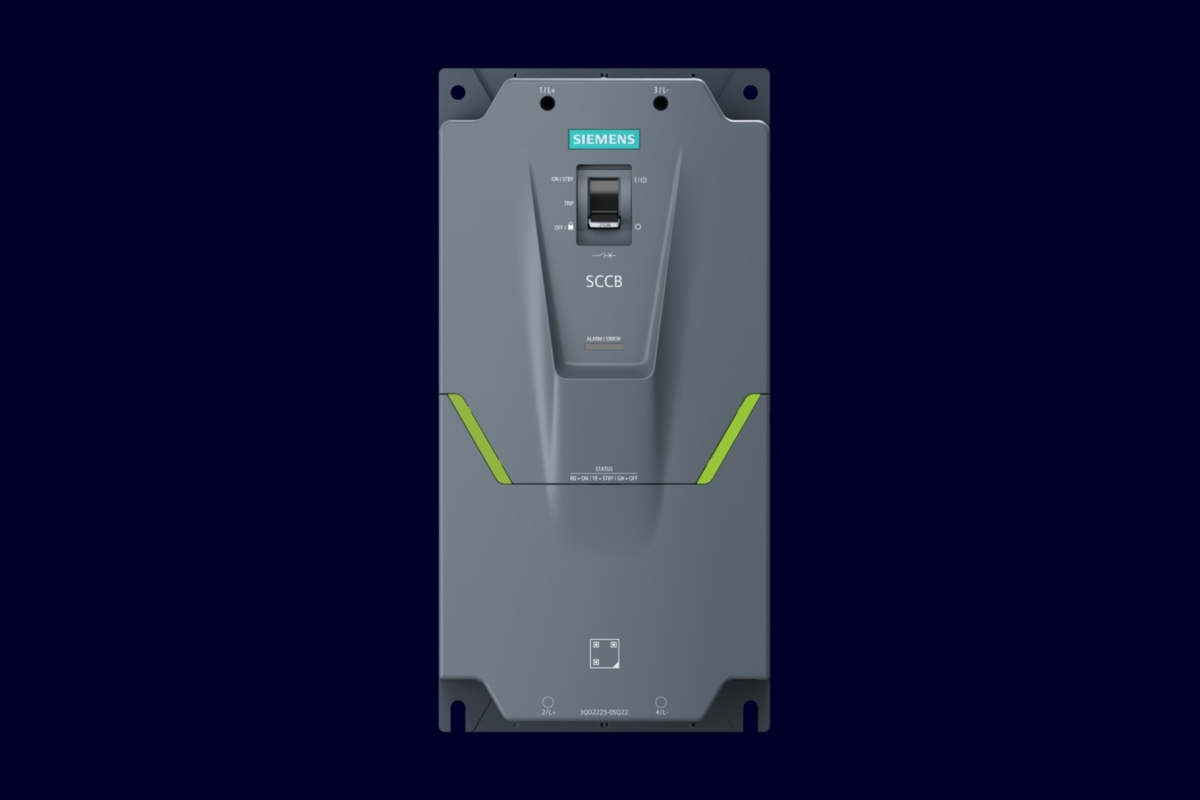
German multinational technology company Siemens and German semiconductor manufacturing company Infineon Technologies have partnered to develop electrical protection technology for data centres, industrial facilities, and battery energy storage systems (BESS).
Under the agreement, Infineon will supply silicon carbide (SiC) power modules for use in Siemens’s SENTRON 3QD2 semiconductor circuit breakers, designed to improve efficiency, power density, and reliability in power distribution systems.
According to the companies, growing electrification and the increasing complexity of AI data centres and industrial operations are driving demand for faster and more reliable electrical protection.
A semiconductor circuit breaker, also known as a solid-state circuit breaker, is designed to protect electrical circuits from excessive current caused by faults such as short circuits and overloads.
Unlike conventional electromechanical breakers, which use mechanical components to interrupt current flow, semiconductor-based devices use electronic components and control algorithms to react significantly faster.
Siemens says the SENTRON 3QD2 can interrupt current in the microsecond range, making it suitable for direct current (DC) power systems where rapid fault isolation is required to minimise downtime and equipment damage.
Andreas Weisl, Executive Vice President and Chief Sales Officer of Industrial and Infrastructure at Infineon, notes, “AI data centres and factories are becoming increasingly electrified and complex.
“This increases vulnerability to electrical failures and drives the demand for more sustainable, efficient, and reliable power distribution systems.
“By combining our advanced silicon carbide technology with Siemens’s expertise in power distribution, we are addressing this demand to ensure fast, safe, and reliable operations in power-critical environments.”
Growing interest in DC power systems
The collaboration centres on Infineon’s CoolSiC MOSFET power module, which has been integrated into Siemens’s semiconductor circuit breaker platform.
The companies say the technology supports the wider adoption of DC power distribution systems, which are gaining attention in industrial environments and data centres because of their potential efficiency benefits and ability to integrate more effectively with battery storage systems.
Markus Grabmeier, CEO Electrical Products at Siemens Smart Infrastructure, comments, “Our new direct current portfolio offers innovative solutions that not only improve energy efficiency but also enable the development of resilient, future-proof infrastructure.
“Direct current applications can decrease energy consumption and substantially cut material usage. By integrating batteries, peak power can also be significantly reduced.
“With this approach, we are making a decisive contribution to the decarbonisation of our industries, while reinforcing our commitment to developing technologies that deliver tangible value to our customers and society.”
The companies state that the partnership is intended to support the growing requirements of power-critical environments where electrical protection systems must operate quickly and reliably to maintain availability and reduce the risk of service disruption.
A demonstration of the SENTRON 3QD2 semiconductor circuit breaker will be showcased at PCIM Europe 2026 in Nuremberg, Germany, from 9–11 June.
For more from Siemens, click here.