News


'One in four DC operators fails to track energy usage'
A late‑2025 451 Research study, commissioned by Janitza, a German manufacturer of energy measurement and power quality monitoring equipment, reveals that nearly one in four data centre operators does not monitor the power consumption of their primary sites, even as AI workloads drive unprecedented pressure on electrical and cooling infrastructure. Without precise, real‑time energy data, Janitza argues, operators cannot safely scale AI‑ready capacity or protect their investments. Energy consumption without control 451 Research, the technology market intelligence unit of S&P Global, surveyed 208 data centre professionals to assess how efficiently business‑critical facilities operate today, using power usage effectiveness (PUE) as a key metric. Just over half of respondents reported a PUE between 1.5 and 2.0, while 23% admitted they are not tracking this fundamental performance indicator at all. The study highlights a structural business risk: power has become the limiting factor in building, scaling, and monetising AI‑capable infrastructure. Highly dynamic AI workloads drive power fluctuations of up to 40–70% within milliseconds, creating new challenges for power quality and increasing the risk of outages and equipment damage. The report notes, “In an environment where milliseconds matter, flexibility and data expertise are the critical differentiators.” The findings suggest that reliable, high‑resolution energy data now underpins predictive maintenance, capacity planning, and revenue optimisation in modern data centres. Janitza says operators who capture and analyse detailed power and power‑quality data can detect emerging faults earlier, extend the lifetime of critical components, and avoid unplanned downtime. As rack power densities rise towards 40–120 kW and AI models continue to grow, the study finds that comprehensive monitoring across the entire power chain, from grid connection to individual racks, is becoming a decisive competitive factor. For more from Janitza, cick here.

Why DC-powered lighting matters for modern data centres
In this exclusive article for DCNN, Ton van de Wiel, Global Segment Manager, Intelligent Buildings at Signify, outlines why DC-powered LED lighting is emerging as a key consideration in making data centre infrastructure more efficient and resilient: Building resilience from the ground up The digital services that underpin modern economies – from media streaming to cloud computing – depend on a rapidly expanding global network of data centres. These facilities are not only critical to digital connectivity; they represent significant sources of employment, infrastructure investment, and tax revenue through construction and long-term operation. Today, data centre operators face a convergence of challenges. Capacity requirements are accelerating due to AI-driven workloads, energy prices are rising, and expectations around sustainability and carbon reduction are becoming more stringent. In response, the industry is re-examining its electrical infrastructure. Direct current (DC) power architectures, once limited to niche applications, are gaining traction as a foundation for higher efficiency and greater operational resilience. Within this shift, lighting – often treated as a peripheral system – can play a strategic role. DC-powered LED lighting combines high energy efficiency with relatively low implementation risk, making it an effective starting point for broader DC adoption. Beyond energy savings, lighting can also function as an intelligent layer within next-generation data centre infrastructure. How power architectures are changing Operating a data centre requires tight coordination between IT equipment, networking, cooling, security, and electrical distribution. Historically, alternating current (AC) has been the default for power distribution. However, as facilities' scale and power densities increase, electrical efficiency has become a primary design concern. Early facilities relied on 48V DC for backup systems – safe but capacity-constrained. This gave way to 230/277V AC distribution, followed by 380V DC for internal systems. Today, the extreme power demands of AI servers are driving another transition towards 650V DC and even 800V DC architectures. According to the Open Direct Current Alliance (ODCA), 650V DC represents the optimal level for building-wide distribution, balancing efficiency with safety, while organisations such as NVIDIA and the Open Compute Project are investigating 800V DC. Despite promising high-power IT loads, these higher voltages do not yet deliver the same system-wide efficiency benefits as a facility-level 650V DC approach. Outside the data centre sector, industrial sites are already deploying 650V DC systems to improve energy efficiency and resilience. One key advantage is the ability to capture regenerative energy from motor drives and robotics – energy that would otherwise be dissipated as heat. Because lighting is a continuous base load, it can readily absorb this recovered energy, reducing grid dependency and operating costs. Integrating lighting, motors, renewables, and storage on a shared DC grid reduces conversion losses, cuts copper usage through fewer conductors, and lowers transmission losses compared with 400V AC systems. When paired with solar PV and batteries, DC grids also improve self-consumption, backup capability, and flexible energy management. What’s driving the move? The momentum behind DC power in data centres is rooted in both engineering logic and economics: • Lower conversion losses — Conventional AC systems require multiple conversion steps, resulting in energy losses of up to 18%. • Alignment with IT equipment — Servers and GPUs operate natively on DC power. • Simpler renewable integration — Solar panels and battery systems produce DC, enabling more efficient connections. • Reduced system complexity — Fewer transformers and rectifiers mean simpler installation and improved reliability. • Preparedness for AI growth — Rising AI workloads are accelerating the shift towards DC-based power systems. DC power is therefore not just an alternative distribution method, but a pathway to smarter, more resilient infrastructure. Lighting as the first step Among all building systems, lighting is often the most practical candidate for early DC adoption. Connected LED lighting allows operators to pilot DC distribution with limited risk before extending it to mission-critical IT loads. The benefits are tangible: • Capital expenditure savings — DC lighting cables reduce copper use by 40%. Three-conductor DC cables (L+, L-, PE) can transmit the same power as five-conductor 400V three-phase AC cables. • Operational cost reductions — With only two current-carrying conductors, DC lighting avoids approximately 33% of cable losses compared with three-phase AC at the same current. • Improved resilience — DC lighting can operate directly from on-site solar generation or battery storage, strengthening microgrid performance during outages. DC-compatible luminaires and components are already commercially available. For example, Signify offers a 100W Xitanium LED driver designed for 620–750V DC operation, integrated into the Pacific LED Gen5 and Maxos Fusion luminaire families. These solutions achieve up to 165lm/W efficacy and can be paired with systems such as Signify Interact and Philips Dynalite. Driver-level efficiency can exceed 95%, with future potential to reach 200lm/W through ultra-high-efficiency LED modules. Sustainability and ESG outcomes DC-powered lighting supports measurable sustainability objectives: • Lower carbon emissions through reduced conversion losses and material usage • Support for certifications such as LEED Zero and BREEAM • Energy optimisation with connected lighting systems, cutting lighting energy use by up to 75% For hyperscalers like Amazon Web Services and Microsoft Azure, as well as colocation providers, these outcomes translate directly into stronger ESG reporting and progress towards carbon neutrality. DC lighting can also be implemented incrementally. Some facilities deploy rack-level DC lighting while retaining an AC backbone. Others adopt facility-wide DC grids that integrate lighting, renewables, storage, and IT infrastructure. In larger deployments, centralised emergency lighting connected to the DC backbone ensures continuous illumination during outages, reinforcing safety in mission-critical spaces. A strategic role for lighting As operators prepare for the next phase of digital expansion, DC-powered lighting offers a practical, high-impact entry point into efficient, renewable-ready DC infrastructure. Modern connected lighting systems extend far beyond illumination. With embedded sensors measuring occupancy, daylight, temperature, humidity, and air quality, luminaires form a dense, facility-wide sensing network without the need for additional hardware. Using open protocols such as DALI, BACnet, and MQTT, DC lighting networks integrate with building management systems and DCIM platforms, enabling predictive maintenance, enhanced operational intelligence, and optimised cooling and space utilisation. By simplifying cabling, reducing losses, and enabling intelligent energy management, DC lighting transforms illumination from a passive load into an active contributor to resilient, sustainable data centre operations.

DSE delivers data centre energy resilience
Deep Sea Electronics (DSE), a UK-based manufacturer with over 50 years of engineering expertise, delivers advanced paralleling and ATS controllers ideally suited to the demanding requirements of modern data centre environments. In facilities where uptime is critical and resilience is non-negotiable, DSE solutions provide precise control, seamless synchronisation, and dependable automatic transfer between mains and standby power sources. Designed and manufactured in the UK, DSE’s advanced paralleling controllers enable reliable load sharing, complex multi set configurations, and fast, stable response to load changes. Complementing this, its ATS controllers ensure smooth and accurate mains failure detection and transfer, minimising risk and protecting critical infrastructure. With robust monitoring, clear diagnostics, and flexible communications integration, DSE systems support full visibility and control across standby power architectures. Backed by global technical support and long-term product availability, DSE provides data centre operators with trusted technology that strengthens energy resilience and safeguards operational continuity.

Keysight expands validation for 1.6T AI DC interconnects
Keysight Technologies, a manufacturer of electronic test and measurement equipment and software, has introduced the Functional Interconnect Test Solutions (FITS) portfolio, alongside the first product in the range, FITS-8CH, designed to validate digital-layer error performance for high-speed optical and copper interconnects used in network infrastructure. The platform provides bit error ratio (BER) and forward error correction (FEC) validation for interconnect technologies supporting modern ethernet architectures, including 400GE, 800GE, and emerging 1.6T deployments. As interconnect speeds increase and designs become more complex, manufacturers of chips, interconnects, and networking equipment face greater pressure to ensure reliability before mass production and during manufacturing. While traditional physical-layer test tools validate electrical lanes against industry specifications, system-level testing provides additional insight into how fully integrated interconnect assemblies perform under operational conditions. Digital-layer testing for high-speed interconnects The FITS-8CH platform provides multi-lane error performance validation at the digital layer, supporting PAM4 signalling speeds from 53Gb/s to 212.5Gb/s. The system enables simultaneous bi-directional testing across eight transmit and eight receive channels, allowing complete optical or copper interconnect assemblies to be validated during development, manufacturing, and system-level qualification. The platform also integrates with Keysight’s physical-layer testing systems, enabling validation across a broader range of network configurations and topologies. According to the company, the platform includes automated lane-by-lane tuning to optimise PAM4 signal output and improve measurement consistency. This capability can help identify potential manufacturing or configuration issues earlier in the process, including mechanical misalignment, thermal failures, or incorrect digital signal processor settings. Keysight says the FITS portfolio is intended to support testing requirements across the full product lifecycle, from research and development through to production and deployment in large-scale network environments. For more from Keysight, click here.

Legrand's UPS wins Data Centre World award
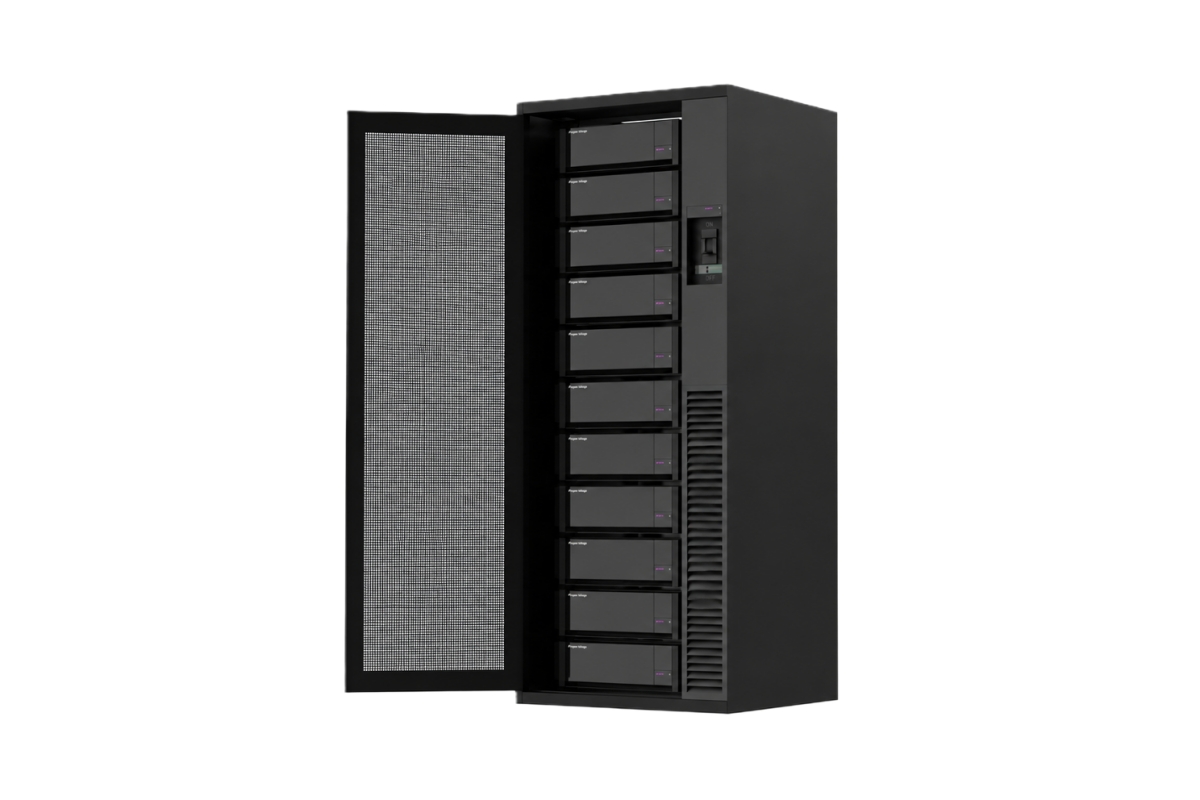
French multinational infrastructure products manufacturer Legrand’s Keor FLEX modular uninterruptible power supply (UPS) has won the Best Reuse or Recycling of Products, Energy, or Data Centre Infrastructure category at the Data Centre World Awards 2026. The award was presented during Data Centre World London, held on 4–5 March at ExCel London, and recognises projects and technologies that support resource reuse, waste reduction, and improved sustainability across the data centre sector. Keor FLEX was recognised for its modular architecture and design approach aimed at extending the operational lifespan of critical power infrastructure. Modular design focused on lifecycle extension Unlike traditional UPS systems that require replacement of the entire unit at the end of its lifecycle, the Keor FLEX system allows individual power or bypass modules to be replaced or refurbished independently. The system uses a hot-swappable modular design, allowing capacity to be expanded or maintained without taking the entire system offline. According to Legrand, the system achieves 98.6% efficiency in online double conversion mode and more than 99% efficiency in ECO mode. It also has an 85% recyclability rate under IEC/TR 62635, with more than 69% recyclable metal content and packaging that includes 50% recycled material. The UPS integrates silicon carbide technology and a low-impedance internal busbar architecture, designed to reduce thermal stress on components and extend the lifespan of power modules. Keor FLEX also supports a universal battery interface that allows existing VRLA, lithium-ion, or nickel-zinc battery systems to be retained during upgrades. Marc Marazzi, Vice President at Legrand Data Center Solutions Europe, says, “Data centres are under pressure to deliver more compute power while reducing environmental impact. “Keor FLEX proves that sustainability and performance are not mutually exclusive. By designing circularity into the core architecture, we’ve created a UPS platform that extends asset life, reduces waste, lowers energy consumption, and supports evolving AI workloads - all while improving total cost of ownership. This reflects Legrand’s broader sustainability commitments, including being awarded an ‘A’ rating by CDP for the second consecutive year.” The system is designed to scale from 100kW to 1.2MW per frame, with up to 4.8MW available in parallel configurations for larger data centre environments. For more from Legrand, click here.

'Agentic core networks shape 6G, unlocking new business'
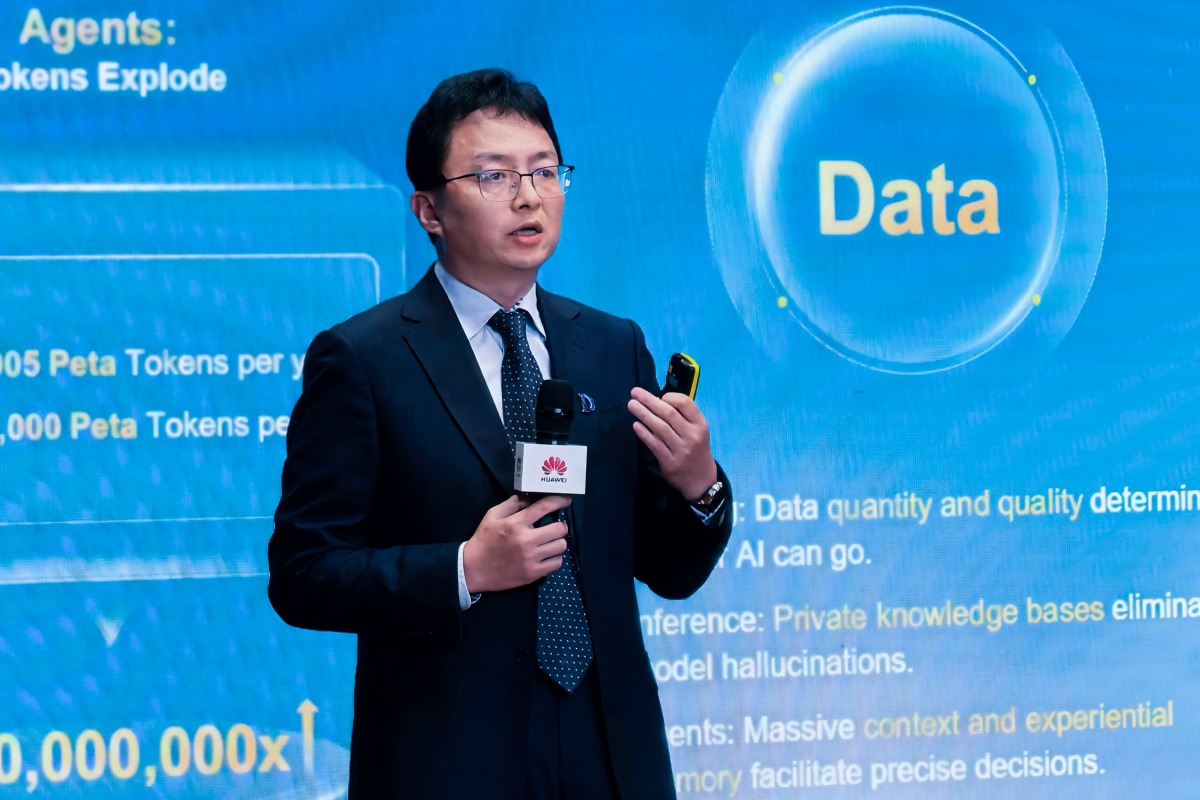
At MWC Barcelona 26, Dr Wen Tong, Huawei Wireless CTO, delivered a keynote speech on 6G core network. He introduced Agentic Core Networks as the revolutionary 6G-orientated AI core network driven by agentic AI and explained that the architecture seamlessly integrates application creation with network customisation to deliver intent-as-a-service, empowering operators to explore new business models and drive growth in the 6G era. The agentic AI technology is rapidly redefining applications and services from human-centric to agent-centric. This transition is already fuelling an explosion in data traffic, with global token consumption surging by over 100 times in the past year and traffic from AI-training web crawlers increasing 21-fold. At the same time, AI agents have seen rapid adoption in enterprise scenarios, with 80% of Fortune 500 companies now integrating them into their operations. AI will be a pivotal enabler of 6G. From AI-enabled terminals to AI-powered wireless networks and AI core networks, the industry is exploring ways to integrate AI into end-to-end 6G systems to improve spectral and energy efficiency, as well as to establish a robust foundation for the rapid growth of AI applications. In this transformation, the role of the AI core network is particularly critical. It will align with the advancing trends in AI technologies, reshaping the 6G core network by incorporating agentic AI. This transformation will unlock new service models and monetisation avenues, as well as expanding business opportunities for operators. The introduction of Agentic Core Networks Agentic Core Networks architecture brings a fundamental shift to service processes. Traditionally, all operations were carried out based on predefined procedures. However, the AI core network utilises Agentic NAS to proactively detect user needs, predict user intent ahead of OTT applications, and autonomously generate, execute, and continuously optimise personalised services through multi-agent collaboration. This transition enables fully automated operations, reduces TCO, ensures a superior user experience, shifting from fixed connections to intent-driven services. Agentic Core Networks will become integrated platforms of network functions, operator services, and third-party tools. This architecture enables service applications to be dynamically onboarded and iterated like plug-ins, cutting service rollout time from weeks down to minutes. More than a technological advancement, this marks a strategic shift in operators' business models: from providing connectivity to delivering intelligent services, from passively meeting user needs to proactively enabling service scenarios, and from relatively closed network systems to open ecosystems. Closed-loop capabilities spanning intent recognition, AI-driven generation, and ecosystem monetisation will be essential for operators seeking to capture value in the 6G era. Agentic Core Networks capabilities will allow 6G to deliver precise services in high-value scenarios. For example, in dynamic hotspots such as stadiums or disaster recovery sites, 6G can be deployed on demand and reclaimed once the need subsides. In the short term, high-value applications - like autonomous taxi dispatch or remote assistance by humanoid robots and AI-driven orchestration - will unlock new business opportunities. Ultimately, it will help 6G strike the optimal balance between deployment costs and business value. In his address, Wen concluded that the strategic priorities of Agentic Core Networks are becoming increasingly clear. He called for accelerating exploration in the 5G-A era to build a solid connectivity foundation for AI terminals and applications, powered by multi-dimensional network capabilities. This, he noted, represents the first step for the evolution of the entire industry ecosystem. Looking ahead, Wen emphasised that with the advancement of 6G standards and technologies, Agentic Core Networks will enable collaboration between terminals and networks, foster scenario-specific applications, and cultivate a robust industry chain ecosystem. These efforts, he added, will infuse the entire mobile industry with new vitality and unlock new growth opportunities. MWC Barcelona 2026 was held between 2–5 March in Barcelona, Spain. During the event, Huawei showcased its latest products and solutions at Stand 1H50 in Fira Gran Via Hall 1. The era of agentic networks is now approaching fast, and the commercial adoption of 5G-A at scale is gaining speed. Huawei says it is actively working with carriers and partners around the world to unleash the full potential of 5G-A and pave the way for the evolution to 6G. It adds that it is also creating AI-Centric Network solutions to enable intelligent services, networks, and network elements (NEs), speeding up the large-scale deployment of level-4 autonomous networks (AN L4), and using AI to upgrade its core business. Together with other industry players, it says it will create leading value-driven networks and AI computing backbones for a fully intelligent future. For more information, you can visit Huawei’s website by clicking here. For more from Huawei, click here.

STMicroelectronics begins silicon photonics production for AI
STMicroelectronics (ST), a Swiss-Italian semiconductor manufacturer, has begun high-volume production of its silicon photonics platform designed for optical interconnects in data centres and artificial intelligence infrastructure. The company’s PIC100 platform is used in optical transceivers deployed by hyperscale operators to support high-speed connectivity within data centres and AI clusters. The 800G and 1.6T transceivers are intended to support increasing bandwidth requirements while reducing latency and energy consumption. Production is being carried out on 300mm semiconductor manufacturing lines, which the company says allow the platform to be produced at scale as demand for AI infrastructure grows. Fabio Gualandris, President of Quality, Manufacturing and Technology at STMicroelectronics, says, “Following the announcement of its new silicon photonics technology in February 2025, ST is now entering high-volume production for leading hyperscalers. "The combination of our technology platform and the superior scale of our 300mm manufacturing lines gives us a unique competitive advantage to support the AI infrastructure super-cycle. “Looking ahead, we are planning and executing on capacity expansions to enable more than quadrupling of production by 2027. This fast expansion is fully underpinned by customers’ long-term capacity reservation commitments.” Silicon photonics technology for optical interconnects Silicon photonics technology combines optical and electronic components to enable high-speed data transmission between servers, switches, and other computing infrastructure. According to market research firm LightCounting, the data centre pluggable optics market reached $15.5 billion (£11.5 billion) in 2025 and is expected to grow at a compound annual growth rate of 17% between 2025 and 2030. Vladimir Kozlov, CEO and Chief Analyst at LightCounting, says, “The data centre pluggable optics market continues to expand strongly, reaching $15.5 billion (£11.5 billion) in 2025. We expect the market to grow at a compound annual growth rate (CAGR) of 17% from 2025 through 2030, surpassing $34 billion (£25.3 billion) by the end of the forecast period. In addition, co-packaged optics (CPO) will emerge as a rapidly growing segment, contributing more than $9 billion (£6.7 billion) in revenue by 2030. Over the same period, the share of transceivers incorporating silicon photonics modulators is projected to increase from 43% in 2025 to 76% by 2030. “ST’s leading silicon photonics platform coupled with its aggressive capacity expansion plan illustrates its capabilities to provide hyperscalers with secure, long-term supply, predictable quality, and manufacturing resilience.” STMicroelectronics is also developing the next stage of its silicon photonics roadmap with the PIC100 TSV platform. This technology will integrate through-silicon via connections to increase optical connectivity density, improve module integration, and support system-level thermal efficiency. The platform is designed to support emerging architectures such as near packaged optics and co-packaged optics, which aim to bring optical connectivity closer to processing hardware within large-scale computing systems. The company will present further updates on its silicon photonics technology at the Optical Fiber Communication Conference in Los Angeles, USA, between 15 and 19 March 2026.

Huawei: Accelerating towards the agentic internet era
At MWC Barcelona 2026, Li Peng, Huawei's Senior Vice President and President of ICT Sales & Service, delivered a keynote on how carriers can maximise the value of 5G-A and AI to accelerate towards the agentic internet era. Li proposed that, as networks converge with AI, carriers have the opportunity to redefine the value of connectivity by upgrading to "5G-A x AI". He says this will allow them to not only monetise traffic and experience, but also AI services. Leap in industry value: Entering a 10-trillion-dollar agentic internet era Over the past few years, the mobile industry has steadily evolved from 4G to 5G, and some carriers have begun deploying 5G-A. As networks are stronger than ever, they are bringing intelligent applications to all kinds of devices. Li said, "This year, we're entering the agentic internet era. Networks will not only connect people; they will also connect hundreds of billions of agents." The rise of agent applications over the next decade, however, will increase connectivity demands, as networks will not simply facilitate human communication but also communication between agents. This will drive carriers to shift from offering traffic to offering high-value services and open up a new market worth $10 trillion (£7.4 trillion). Business model upgrade: Elevating brands and offerings to unlock new revenue streams The evolution of network capabilities will also result in changes to carrier business models. In the seven years since the commercialisation of 5G, more than 300 carriers around the world have launched new packages to monetise traffic, and this has helped them grow both their revenue and user-base. As 5G networks continue to mature, experience monetisation will be more essential to carriers' success. 5G SA and 5G-A provide more diverse network resources that more than 30 leading carriers have used to launch experience-based packages to monetise speeds, latency, and more. By dynamically scheduling resources, carriers can go beyond "best-effort" service to deterministic experience. This helps them strengthen brand reputation and users' willingness to spend on premium services. By offering services like custom logo displays and multi-level speed boosts, carriers are able to guarantee network performance at critical moments and enhance users' perception of network quality. Connectivity and AI service convergence: Unleashing new growth potential with AI-powered consumer, home, and enterprise services Li also explained how carriers will be able to transform their main services and improve consumer satisfaction by applying AI models: ● AI for consumers: First, AI can be integrated into traditional calling services. There are currently 5.4 billion calling service users around the world, and AI can be used to unlock features like transcription, translation, and AI assistants. Many of these features have already entered large-scale commercial use in China and South Korea. In addition, more and more carriers are launching AI phones to act as portals for the agentic era. They are using these phones to upgrade their B2C services - the largest source of revenue for most carriers. ● AI for homes: In addition to the recent initiatives by carriers to upgrade home broadband towards ultra-gigabit, AI is also being implemented to enable smart home services. For example, acceleration assistants can guarantee deterministic speeds for key services like gaming and livestreaming. Network assistants can help people optimise their Wi-Fi and resolve network faults via voice commands. AI lifestyle assistants are also a promising avenue for carriers looking to unlock new value from traditional services. By integrating AI with video and storage services, they do things like automatically generating cloud-based family albums that can be shared between devices. ● AI for business: In industrial scenarios, the convergence of 5G-A and AI can be used to transform core workflows and significantly improve production efficiency. For example, in flexible manufacturing, AI-enabled factories will be able to respond to demand in seconds, schedule new production runs in minutes, and deliver new products in hours. New vision: Helping carriers upgrade their portfolio with AI services "Looking ahead, there are still many opportunities just waiting to be unlocked with 5G-A and AI, and carriers are in the best position to explore future applications like massive IoT and embodied AI," said Li at the event. He also recommended three courses of action for carriers to seize these opportunities: First, carriers should evolve all services, devices, and frequency bands to 5G-A to create a thriving network ecosystem. Second, carriers should introduce AI into B.O.M. (business, operations, management) domains; this will provide a foundation for diversified O&M services. Third, carriers should bring intelligence to infrastructure to support the evolution of future network architecture. "Huawei is ready to work closely with carriers to make the most of 5G-A and AI and help them evolve into AI service providers," concluded Li. "We can work with carriers to upgrade their main services through the multi-agent collaboration platform. We can also help them build AI-centric networks for more efficient operations. Together, we can unlock a world of new opportunities and lay a strong foundation for future networks." MWC Barcelona 2026 was held between 2–5 March in Barcelona, Spain. During the event, Huawei showcased its latest products and solutions at Stand 1H50 in Fira Gran Via Hall 1. The era of agentic networks is now approaching fast, and the commercial adoption of 5G-A at scale is gaining speed. Huawei says it is actively working with carriers and partners around the world to unleash the full potential of 5G-A and pave the way for the evolution to 6G. It adds that it is also creating AI-Centric Network solutions to enable intelligent services, networks, and network elements (NEs), speeding up the large-scale deployment of level-4 autonomous networks (AN L4), and using AI to upgrade its core business. Together with other industry players, it says it will create leading value-driven networks and AI computing backbones for a fully intelligent future. For more information, you can visit Huawei's website by clicking here. For more from Huawei, click here.

Tecnair launches new CDUs for data centre cooling
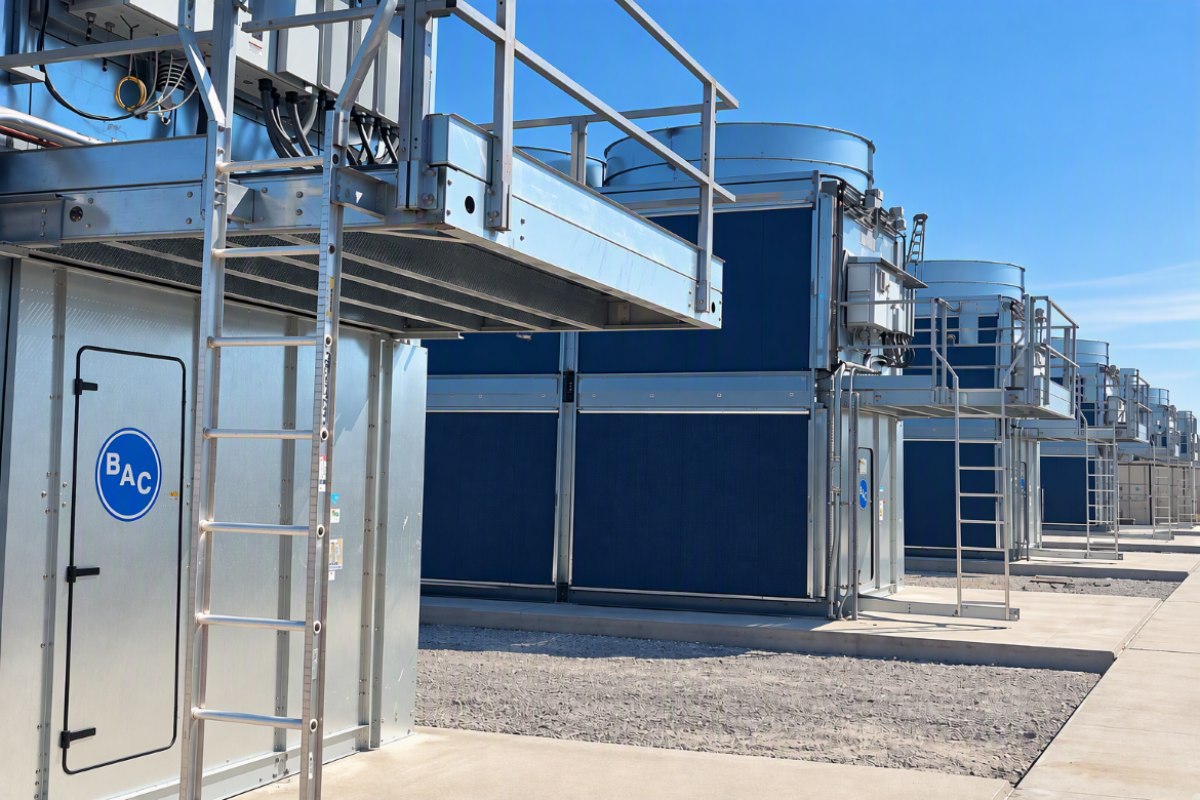
Tecnair, a manufacturer of close control air conditioning units for data centres and a Panasonic company, has introduced a new range of coolant distribution units (CDUs) designed for high-density artificial intelligence and high-performance computing (HPC) data centres. The systems were presented at Data Centre World London 2026, held on 4–5 March, and are intended to support liquid cooling deployments as computing densities increase. Rising AI workloads are pushing rack densities beyond levels typically supported by traditional air cooling. The CDU range has been developed to support liquid cooling architectures, including direct-to-chip and immersion cooling, helping data centre operators manage higher thermal loads. The units are designed for environments where rack densities regularly exceed 50kW and are approaching 100kW. Liquid cooling for high-density infrastructure The CDU range is available in capacities of 400kW and 800kW and can be deployed across a range of environments, from edge facilities to hyperscale data centres. The systems include redundant components such as pumps, power supplies, and sensors to support continuous operation in mission-critical environments. A failover capability is also included to maintain cooling during maintenance or component failure. According to Tecnair, the units can achieve partial power usage effectiveness (pPUE) values as low as 1.02 through the use of free-cooling coils and micro-channel heat exchanger technology. Monitoring functions are integrated through Modbus building management system connectivity, enabling real-time visibility of parameters including temperature, pressure, flow rate, water level, and leak detection. The CDU range is designed to integrate with Panasonic cooling systems, including free-cooling chillers using R1234ze refrigerant with a low global warming potential. These chillers use outside air temperatures, down to -10°C, to generate chilled water through a free-cooling function, supporting improved energy efficiency in suitable climates. For more from Tecnair, click here.

Pure DC appoints new Chairman and Interim CEO
Pure Data Centres Group (Pure DC), a designer, developer, and operator of hyperscale data centres, has appointed Gary Wojtaszek as Executive Chairman and Interim CEO as the company enters a new phase of expansion across Europe and the Middle East. Gary previously led data centre operator CyrusOne through a period of growth that culminated in its $15 billion (£11 billion) acquisition by KKR and Global Infrastructure Partners. The appointment comes as demand for data centre capacity continues to grow, driven by cloud services and artificial intelligence workloads, with Pure DC saying it is expanding its presence in established European cloud markets and developing large-scale AI-focused campuses across the region. Gary comments, “Pure DC has built a strong, differentiated platform across Europe and the Middle East. The AI wave that transformed the US market is now emerging across Europe, and the opportunity to scale a focused, high-quality platform at this moment is compelling. "Our objective is clear: expand in supply-constrained core markets, deliver for hyperscale and AI customers at the highest standards, and develop the next generation of large-scale AI campuses across the region.” Leadership transition at a time of expansion As part of the leadership change, Dame Dawn Childs will move from CEO to the role of President of Pure DC. She has led the company since May 2023. She notes, “Gary’s appointment is a significant milestone for Pure DC. His global leadership experience and proven ability to scale complex infrastructure platforms make him uniquely suited to lead our next chapter of growth. "We have strong momentum and a world-class team, and this leadership transition positions us to accelerate further.” Pure DC says it currently has more than 1GW of data centre capacity either operational or under development, with several projects underway across Europe and the Middle East. For more from Pure DC, click here.


Translate »