Enterprise Network Infrastructure: Design, Performance & Security


GNM launches new PoP in Paris
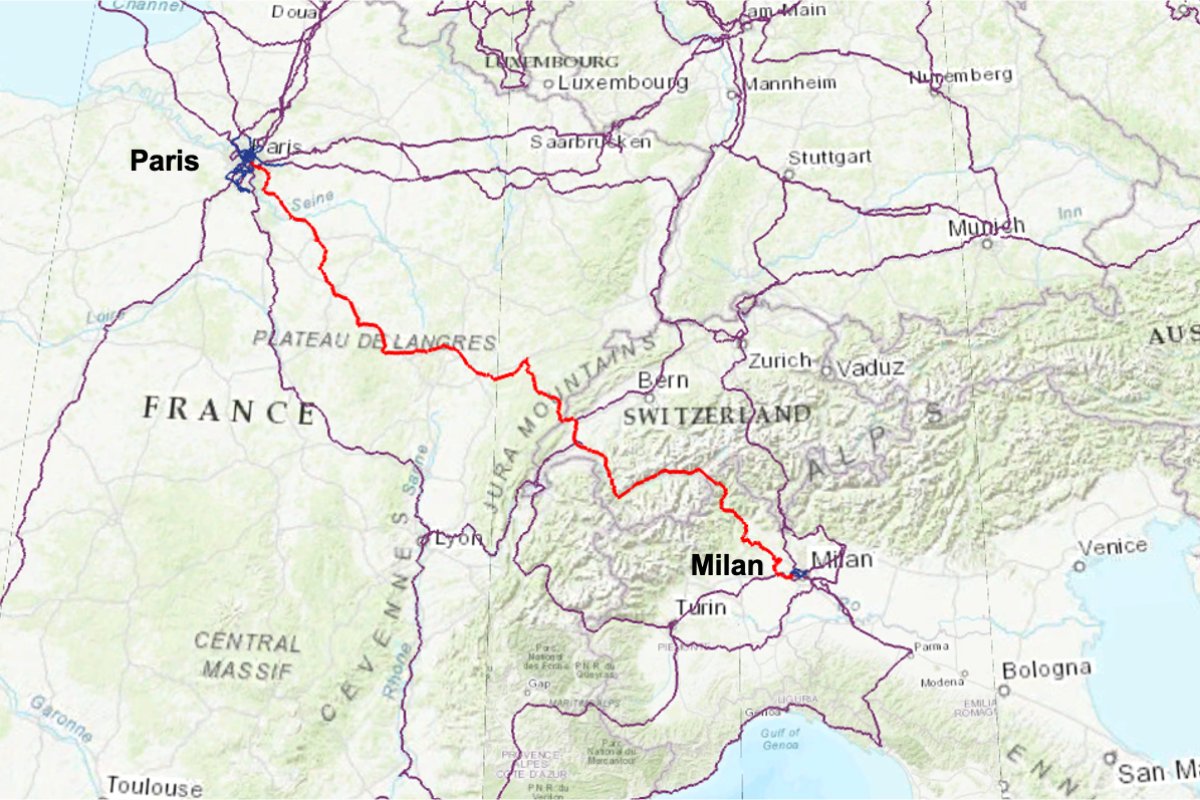
GNM, a backbone internet provider and telecom operator, has launched a new Point of Presence (PoP) at 137 Boulevard Voltaire in Paris, expanding its Western European footprint and giving French operators direct access to its backbone and interconnection services. The company says that strong growth in France over the past year drove the decision to expand into the capital. The Paris site connects regional operators with lower-latency routes to Frankfurt, Amsterdam, London, and Central Europe, integrated with GNM’s 20,000 km backbone and 80+ PoPs in 21 countries. From Paris, GNM says it offers services including IP Transit with Tier-1 upstreams and advanced BGP community control; GNM-IX peering, with more than 650 connected networks; Ethernet / L2VPN with SLAs and end-to-end traffic control; and Remote IX for access to European Internet Exchanges without physical presence. Ahmed Eidarous, International Development Manager at GNM, comments, “Paris is a natural step in our European expansion. “By launching a PoP here, we are bringing French operators closer to our backbone and service portfolio, enabling them to exchange traffic more efficiently and access international hubs with minimal latency.” With the Paris PoP online, GNM says it has both expanded its presence in Western Europe and strengthened connectivity for regional and global customers. For more from GNM, click here.

LINX achieves 25 x 400GE port count milestone
The London Internet Exchange (LINX), an internet exchange point (IXP) operator, has successfully deployed their 25th 400GE port across their global network, a major milestone within the wider industry's growth. The first 400GE port was provisioned in 2021, with demand for ultra-high bandwidth connectivity surging since then, driven by the exponential growth in cloud services, video streaming, gaming, and AI workloads. A single 400GE connection delivers four times the capacity of a standard 1000GE port, enabling networks to consolidate traffic, reduce operational complexity, and build in resilience, future-proofing their infrastructure. Investing in the future LINX has invested heavily in Nokia’s next-generation hardware and optical technologies to enable 400GE delivery across its interconnection ecosystems in London and Manchester. This investment aims to ensure members can scale quickly and efficiently while maintaining the resilience and reliability that underpin the global internet. Jennifer Holmes, CEO of LINX, comments, “Reaching 25 active 400GE ports is a testament to the evolving needs of our members and the strength of our technical infrastructure. "We’ve seen a clear shift towards high-capacity services, with our larger delivery networks upgrading first to 400GE. "In the last 12 months UK ISPs are now seeing the demand for the service and are upgrading in London and Manchester, a positive sign of effective network traffic management or regional peering. "This evolution demonstrates how network operators of all sizes are adapting to keep pace with the demands of modern digital services.” As digital transformation accelerates globally, LINX says it continues to extend its reach beyond the UK, also supporting interconnection platforms in the US and Africa. For more from LINX, click here.

CommScope expands SYSTIMAX Constellation platform
CommScope, a US manufacturer of network infrastructure products, has announced the global availability of its evolved SYSTIMAX Constellation platform, an edge-based system for power and data connectivity designed for large-scale enterprise networks. Now compliant with international power and data transmission standards, the Constellation platform combines fault-managed power with hybrid power and data fibre cabling in a simplified star topology. The design enables hundreds or thousands of connected devices to be powered and linked efficiently across buildings or campuses. Simplified architecture for modern infrastructure The platform’s modular, technology-agnostic design supports both AC and DC power applications and multiple IT and operational technology (OT) standards. The company says unlike traditional structured cabling, Constellation removes the need for a telecoms room or wiring closet on every floor, allowing centralised uninterruptible power supply (UPS) management. Constellation Points (CPs) can be installed in ceilings, walls, or equipment racks, reducing space requirements and component use. The system delivers higher power and faster data speeds over longer distances, supporting 10G and above bandwidth and up to 1kW of fault-managed power. According to CommScope, the platform can reduce installation labour by more than 50% compared with conventional cabling, while also lowering material use and the network’s overall carbon footprint through reductions in copper and plastic. Luc Adriaenssens, Vice President of Building and Campus, CommScope Connectivity Solutions, comments, “The Constellation platform enables our customers to support denser urban environments and the growing number of connected devices in their buildings. "By offering a modular, technology-agnostic solution, we’re providing greater flexibility for network design - allowing scalability, sustainability, and cost efficiency.” Technical and sustainability features Part of CommScope’s SYSTIMAX cabling and connectivity range, the Constellation system includes Propel fibre panels, power transmitters, and transition panels connected to CPs via hybrid fibre trunks. End devices are linked through pre-terminated Cat 6A patch cords and cable assemblies. Key performance and sustainability metrics include: • Up to 1,800W of power delivered at distances of 250m• Up to 1,000W at 500m• Up to 700W at 1,000m• Support for 10G and higher data rates• Up to 50 connected devices per CP• 57% reduction in skilled installation labour hours• 59% less copper and 65% less plastic compared with traditional LAN systems• Up to 40% lower embodied network carbon footprint The Constellation platform is now available worldwide. For more from CommScope, click here.

Building AI-ready networks: Smart cabling for the edge era
In this exclusive article for DCNN, Rachid Ait Ben Ali, Product & Solutions Manager, Smart Building & Data Center at Aginode, explores how next-generation fibre and automated management systems are redefining infrastructure for AI and edge computing: Cabling for the future As artificial intelligence and edge computing rapidly reshape data centre architectures, network infrastructure has to evolve to keep up. Critical applications such as autonomous systems, real-time analytics, and GPU-to-GPU communication for AI model training are highly sensitive to latency, signal degradation, and disruptions caused by excessive hops or amplification points. To meet fast-moving, rigorous requirements, cutting-edge cabling solutions - including ultra-dense fibre panels and the latest generation of Automated Infrastructure Management (AIM) systems - are essential. A closer look at the requirements AI-driven infrastructure is unforgiving of downtime and demands built-in redundancy. Workloads are often unpredictable and heavily overloaded, which means they need optical cabling that can absorb traffic spikes without performance degradation. Architectures supporting AI are non-linear and bandwidth-intensive, requiring designs with optimised physical pathways. Fibre networks in these settings must be capable of supporting transmission rates of 400G, 800G, and beyond. At the same time, edge computing introduces a new level of complexity. Its highly distributed nature requires fibre connectivity that is not only robust and high-performing, but also low maintenance and compact enough to function within physical and power-constrained environments. As AI workloads - from training to inference - generate immense volumes of east-west traffic across dense GPU clusters, managing connectivity and thermal performance becomes critical. These clusters produce extreme heat, making thermally optimised cabling and carefully considered airflow vital. Addressing challenges from a technical perspective Everything starts with the right cabling. Pre-terminated fibre links support rapid and reliable deployment at hyperscale and edge sites. High CPR-rated solutions help ensure compliance with stringent fire safety standards. As organisations plan for upgrades to 800G or even 1.6 Tbps networks, deploying a future-ready cabling plant is essential. Smart labelling systems simplify identification, reduce downtime, and help teams operate more efficiently. Ultra-polished UPC and APC connectors minimise reflection and insertion loss - crucial for extremely latency-sensitive AI applications. High-density fibre-optic cabling, such as MPO/MTP for parallel optics, enables scalable bandwidth in compact footprints. OM5 multimode fibre is well-suited for dense AI clusters and edge deployments. Supporting multiple wavelengths over short distances and offering tighter loss budgets, OM5 delivers high bandwidth without dramatically increasing cable volume. Modern cable designs enhance performance through quality shielding, precise construction, shorter channel lengths, and cleaner signal paths that reduce hops and signal loss. The network architecture itself also plays a key role. Ethernet backbones operating at 400G and 800G, combined with direct-connect models like leaf-spine or fully meshed fabrics, reduce latency and support AI’s massive east-west traffic patterns. Minimising patching and interconnection points cuts down on signal attenuation and interference, further improving efficiency. Innovations such as ultra-dense fibre panels and MPO connectors help scale operations without overloading valuable rack space and enable rapid deployment while avoiding costly rewiring. AIM systems are becoming indispensable, offering real-time visibility into port status, topology, and usage, and integrating with Data Centre Infrastructure Management (DCIM) and orchestration tools. By leveraging AI-powered tracking and analytics, AIM systems enable real-time monitoring and automate management tasks. This reduces mean time to repair (MTTR), minimises human error, and supports large-scale, AI-driven operations. In environments where model training may take months, cabling with embedded diagnostics ensures uninterrupted operation and transparency. Different types of fibre can be tracked, diagnosed, and reconfigured with minimal manual intervention. That’s essential for mission-critical systems. Further considerations Smooth integration of high-performance fibre into AI and edge-ready environments demands careful attention to detail. As GPU-dense racks fill with fibre, insertion and connection loss must be minimised, which increases the importance of ultra-low-loss multimode solutions. Thermal and spatial constraints in AI deployments necessitate slim, compact cabling designs that do not compromise on performance. Adhering to industry standards such as ISO/IEC OM5 and MPO ensures compatibility across hardware ecosystems and simplifies deployment at geographically distributed edge sites. Looking ahead, future-proofing and sustainability are equally important. Investing in OM5 fibre today helps avoid the cost and disruption of replacement as bandwidth demands continue to grow. Automated cabling systems reduce operational expenditures but also enable agile provisioning, even in edge locations where power is constrained. Low-loss fibre reduces the need for signal amplification, conserving energy, while structured, durable panels minimise long-term maintenance waste. To accommodate the demanding requirements of AI and edge computing, data centre design must transition from legacy copper and basic point-to-point fibre models to high-density, automated multimode fibre ecosystems. Smart cabling, ultra-dense panels, and intelligent management solutions form the backbone of this transformation. These technologies empower both hyperscale and edge operations with high bandwidth, low latency, and operational agility. Meeting the needs of AI-ready infrastructure doesn’t just require speed; it demands ultra-high bandwidth, minimal latency, granular insights, simplified manageability, and flexible (re)configuration. With the right infrastructure, it’s possible to build networks that are powerful enough for AI at scale and flexible enough enough for edge deployment.

DE-CIX Malaysia extends reach with NTT DATA partnership
Internet exchange (IX) operator DE-CIX Malaysia has announced the launch of its full suite of interconnection services at NTT DATA’s CBJ1 data centre in Cyberjaya, marking a further expansion of Malaysia’s digital infrastructure and the country’s role as a regional connectivity hub. The partnership represents the first local collaboration between DE-CIX Malaysia and NTT Global Data Centres, following successful projects in other international markets. It aims to enhance interconnection options for enterprises, internet service providers (ISPs), cloud providers, and content delivery networks (CDNs) across Southeast Asia. Expanding interconnection capacity in Cyberjaya The collaboration enables customers at NTT DATA’s Cyberjaya facility to access DE-CIX’s peering, cloud exchange, and virtual private network interconnection (VPNI) services. These include premium peering through GlobePEER, direct cloud connectivity via DirectCLOUD, and Blackholing for DDoS mitigation. Weng-Yew Wong, Member of the Board of Management at DE-CIX Malaysia, comments, “This partnership is a strategic move to bring DE-CIX’s interconnection services closer to Malaysia’s enterprises. "By enabling our platform at NTT Global Data Centres’ Cyberjaya site, we are expanding the region’s digital ecosystem and offering greater reach, security, and reliability.” The collaboration will also allow NTT Global Data Centres to attract additional network-focused tenants, including enterprise and hyperscale operators. Yasuo Suzuki, Managing Director, APAC, NTT Global Data Centres, says, “This collaboration reflects our ongoing efforts to bring strategic partners such as DE-CIX into our facilities to enhance connectivity and performance for our clients. "The presence of DE-CIX in our Cyberjaya campus offers improved access to cloud platforms and digital services with minimal latency.” Strengthening Malaysia’s digital ecosystem Cyberjaya has become one of Malaysia’s leading technology hubs, offering high-capacity power, fibre connectivity, and a growing community of network-based enterprises. DE-CIX’s presence at NTT DATA’s CBJ1 data centre provides immediate access to its global interconnection platform via secure ethernet cross-connects and VLAN tagging, supporting low-latency connectivity to international networks. The companies say the collaboration will contribute to the development of resilient, scalable digital infrastructure across Malaysia and strengthen interconnection routes between Asia, Europe, and the United States. For more from DE-CIX, click here.

GNM launches new PoP in Warsaw
GNM (Global Network Management), a backbone internet provider and telecom operator, has launched a new Point of Presence (PoP) at LIM DC in Warsaw, Poland. The new site joins the company’s existing PoPs at Equinix WA1 in Warsaw and 4DC in Katowice, expanding GNM’s footprint in Central Europe. Together, these sites position Poland as a key hub in GNM’s network, directly connected with Germany, Czechia, Ukraine, and other markets in the region. The Warsaw PoP delivers GNM’s full service portfolio, including IP Transit with Tier-1 upstreams, DWDM up to 400G, peering with over 650 ASNs via GNM-IX, ethernet and L2VPN transport, and Remote IX for access to major European exchanges. Krzysztof Krasuski, Head of Region at GNM, comments, “With the launch of our node in LIM DC, Poland is becoming the heart of our Central European network and we are committed to expanding services and connectivity options for all operators in the region.” GNM’s backbone interconnects more than 80 PoPs in 21 countries over 20,000km of optical infrastructure, supporting resilient, low-latency connectivity for carriers, ISPs, and content providers across Europe. For more from GNM, click here.

Nokia, Keysight complete UET test for AI data centres
Finnish telecommunications company Nokia, in collaboration with Keysight Technologies, a US manufacturer of electronic test and measurement equipment and software, has completed end-to-end testing of ultra ethernet (UET) traffic across its data centre switching platforms, including the 7220 and 7250 Interconnect Routers (IXR). The test demonstrates Nokia’s integration of Ultra Ethernet Consortium (UEC) Specification 1.0 features into its networking portfolio, designed to support high-performance computing (HPC) and AI workloads. It marks a step towards lossless, low-latency, large-scale data centre networks built for the demands of AI infrastructure. Testing UET for next-generation network performance The UEC Specification 1.0 defines a new ethernet layer optimised for HPC and AI environments, aiming to reduce latency and packet loss while maintaining interoperability across network architectures. The joint test between Nokia and Keysight used 800 Gigabit ethernet interfaces with UET traffic generated via Keysight’s AresONE 800GE platform. The network spanned Nokia’s 7220 IXR-H5 and 7250 IXR-10e systems, operating with the SR Linux network operating system. According to Nokia, the test also validated coexistence with Remote Direct Memory Access over Converged Ethernet (RoCEv2) and Data Centre Quantised Congestion Notification (DCQCN) technologies, both already supported in its switching platforms. Ram Periakaruppan, Vice President and General Manager of Network Applications and Security at Keysight Technologies, comments, “Networking technologies are evolving rapidly to meet the demands of large-scale AI clusters. "Ultra ethernet is one of the approaches under active development, enabling the next generation of scale-out fabrics. "Our collaboration with Nokia represents a key milestone in validating interoperability and accelerating adoption across the AI networking ecosystem.” Rudy Hoebeke, Vice President of Software Product Management at Nokia, adds, “AI is redefining expectations for data centre network performance. "This successful demonstration with Keysight of UET traffic over Nokia’s switching platforms underlines our commitment to the UEC initiative and reinforces our role in shaping the future of HPC and AI networking.” For more from Nokia, click here.

Ooredoo, DE-CIX launch Qatar’s first commercial IX
Qatari telecommunications company Ooredoo, in partnership with internet exchange (IX) operator DE-CIX, has launched Doha IX, Qatar’s first commercial IX. The new exchange, hosted in Ooredoo’s data centre, is now live with its first connected networks. Doha IX is designed to serve as a secure interconnection hub, enabling traffic exchange between regional and global cloud providers, content networks, internet service providers, and hyperscale platforms. By facilitating direct interconnection, the exchange aims to improve network performance through lower latency while reducing costs for operators. Connectivity and cloud integration The platform offers a data-centre-neutral environment, allowing customers to connect to multiple internet service providers (ISPs), content delivery networks, and cloud platforms via a single port. It also provides direct access to DE-CIX’s global interconnection ecosystem. As part of its service offering, Doha IX enables direct connections to Microsoft Azure Peering Service, giving government and enterprise users in Qatar private access to Microsoft services such as Teams and Outlook. The exchange is also a Verified Peering Provider for Google Cloud and Workspace, supporting secure connectivity to Google’s enterprise applications. Through this ecosystem, businesses and service providers can deliver content more efficiently to Qatar’s user base, while international networks gain a direct path to serve the local market. Thani Ali I A Al-Malki, Chief Business Officer at Ooredoo Qatar, comments, “We are proud to launch Doha IX in collaboration with DE-CIX - a milestone that redefines Qatar’s digital landscape. "Doha IX delivers world-class interconnection, empowering businesses, ISPs, and content providers with faster, smarter, and more secure access to global content. "This initiative marks a significant step in driving Qatar’s digital transformation and strengthening its role as a regional connectivity hub.” Ivo Ivanov, CEO of DE-CIX, adds, “With Doha IX powered by DE-CIX, we are bringing DE-CIX’s global expertise to Qatar, enabling businesses and networks to benefit from superior interconnection services. "Doha IX is the ideal place for international networks interested in reaching this important Middle Eastern market. "The new IX will unleash the potential of the country’s digital economy by providing better performance and user experience of content and applications, and affordable and high-quality internet access for enterprises and individuals.” Doha IX forms part of Qatar’s wider digital development goals under National Vision 2030, aiming to position the country as a regional connectivity hub. Alongside Ooredoo’s wider service portfolio - including IP Transit, Multi-Cloud Connect, hosting, co-location, and international connectivity - the new exchange is expected to play a role in supporting business innovation and economic growth. For more from DE-CIX, click here.

IOEMA subsea cable to land in the Netherlands
The IOEMA Project, which plans to lay subsea fibre optic cables in Northern Europe, has selected Greenhouse Datacenters as an additional landing partner for the landing of the IOEMA subsea cable in Scheveningen (Rotterdam / The Hague area). This marks the seventh landing point in Northern Europe and the second in the Netherlands for the IOEMA cable. The first Dutch landing will be at Eemshaven, in the country’s northern region. The project The IOEMA project is establishing an AI-ready, high-capacity fibre optic connection between the five key Northern European markets. The Netherlands, Germany, the United Kingdom, Denmark, and Norway will be directly connected via a 1,600-kilometre repeatered subsea cable, with further connectivity to France under consideration. IOEMA is taking international tensions and security into account by fully armouring and protecting the subsea cable system over its entire length. IOEMA is also considering adding sensors to the system to make it the first SMART cable in Northern Europe. IOEMA is collaborating on this initiative with partners including Eurofiber, Arelion, Colt, EXA Infrastructure, Relined, Bulk, and EWE TEL. The latest collaboration with Greenhouse Datacenters is driven in part by its strategic South Holland location, just 12 kilometres from where the subsea cable from the North Sea comes ashore in Scheveningen (Rotterdam / The Hague). Eckhard Bruckschen, CTO of IOEMA Fibre, says, “We are pleased to announce an additional landing partner for the second Dutch landing point for the IOEMA fibre optic cable in the Netherlands, in the Rotterdam / The Hague area. "By partnering with Greenhouse Datacenters, IOEMA connects directly into a rich connectivity ecosystem, including an on-site AMS-IX PoP. This makes the IOEMA cable accessible to the broader market in South Holland and beyond. "Organisations in this area can benefit from ultra-fast, redundant, secure, and AI-ready connections to other internet hubs in Northern Europe via Greenhouse." A new digital hub Greenhouse Datacenters CEO Ruben van der Zwan says the selection of Greenhouse as landing partner for the IOEMA subsea cable highlights the strategic importance of its data centres for the Dutch South Holland region and the Netherlands as a whole. “The Axiom/Terabit report, Study on the development of the submarine cable market, which was recently on the agenda of the Dutch House of Representatives, extensively examined the strategic national importance of new submarine cables for the Netherlands,” comments Ruben. “The deployment of new submarine cables contributes significantly to stimulating the digital business climate in the Netherlands. Together with data centres and internet exchanges, submarine cables form the basis for further economic development of the Netherlands as an international digital hub." Rick Pijpers, who is involved in the project as a strategic advisor via PWDR.AI, adds, “The landing station for the subsea cable at Greenhouse is much more than a technical facility; it is a strategic digital hub. "A data centre that functions as a landing station becomes a gateway to international data traffic, attracting ecosystems of carriers, cloud providers, and enterprises, thereby strengthening the digital economy. "For Greenhouse and IOEMA, this not only strengthens their own position, but also boosts international connectivity between Norway, Denmark, the United Kingdom, the Netherlands, and Belgium. It creates a new sovereign AI corridor connecting the locations where AI factories will be established in the coming years." According to Peter van Burgel, CEO of AMS-IX, the landing of the subsea cable in Greenhouse’s data centres in the Rotterdam / The Hague area will strengthen the AMS-IX Point-of-Presence located there. He argues, “This makes Greenhouse a powerful digital hub and an important alternative to the Amsterdam data centre market. Enhanced by AI applications, the IOEMA subsea cable will bring huge amounts of international network traffic to Greenhouse, while the existing AMS-IX PoP will enable direct exchange with international and regional carrier, cloud, ISP, and content networks. "This will deliver speed, redundancy, and cost efficiency in digital traffic, reinforcing the South Holland region as a digital hub for AI-driven growth." For more from IOEMA, click here.

Macquarie, Netskope partner on network security in Australia
Macquarie Telecom, an Australian provider of data centres, cloud services, cybersecurity, and telecommunications, part of Macquarie Technology Group, has announced a partnership with Netskope to simplify how Australian organisations secure and manage data, cloud, and AI applications. The collaboration combines Netskope’s Security Service Edge (SSE) platform with Macquarie Telecom’s software-defined wide area network (SD-WAN). Together, these form a Secure Access Service Edge (SASE) framework, offering integrated networking and security functions for organisations adopting cloud services and AI. Addressing cybersecurity pressures Australian businesses have faced repeated data breaches in recent years, prompting tighter cybersecurity regulation and greater demands on IT teams. The partnership aims to provide unified security and network management, helping organisations protect users and data across different environments. Netskope’s platform consolidates web, data, cloud, and AI security into a single system, designed to reduce costs and balance protection with performance. It is IRAP-assessed at the PROTECTED level for use within Australian Government departments and critical industries. The combined service also supports compliance with the Security of Critical Infrastructure (SOCI) Act and the Essential Eight framework. Luke Clifton, Group Executive for Macquarie Telecom, says, “Organisations big and small are under immense pressure to strengthen their cyber defences while keeping operations simple and manageable. "By joining forces with Netskope, we’re giving customers a smarter, more resilient network backed by integrated, enterprise-grade security. They’re getting the best of both worlds.” Tony Burnside, Senior Vice President and Head of APAC at Netskope, adds, “Modern networks need to be both fast and secure, but many organisations are still having to accept trade-offs between performance and security. "Networking and security consolidation is now a cornerstone of the demands of modern business, and through this partnership with Macquarie Telecom, we will help more Australian organisations unlock enhanced levels of data security.” Netskope already works with Macquarie Government, Macquarie Telecom’s sister company, to deliver SASE technology to federal government customers. The new partnership expands that collaboration into the wider business sector. For more from Macquarie Telecom, click here.


Translate »