Enterprise Network Infrastructure: Design, Performance & Security


84% of businesses report rising network outages
Nearly nine in ten organisations have experienced an increase in network outages over the past two years, with more than a quarter reporting increases of 25% to 50%, according to new research from Opengear, a developer of remote infrastructure management systems and a Digi International company. The rise in outages has reportedly cost more than a third of businesses between $1 million (£744,000) and $5 million (£3.7 million) in the past year alone. Over half of organisations also noted a 10-24% increase in outages over the two-year timeframe. The survey, designed to identify critical pain points affecting data centre operations, polled over 1,000 CIOs, CSOs, and network engineers across the UK, US, France, Germany, and Australia. The survey highlights how network outages are causing significant disruptions across data centre operations, affecting everything from system availability to business continuity. What the research shows Network engineers identified the most common causes of these outages as device configuration changes (highlighted by 27%) and server hardware failures (referenced by 26%), both of which can severely impact the stability and performance of data centres. To mitigate these risks, nearly a third of organisations (32%) rank AI and machine learning technologies among the technologies they have primarily invested in to support data centre operations. At the same time, 30% expect to increase spending on Out-of-Band (OOB) management solutions over the next five years to meet this same goal. Patrick Quirk, President and General Manager, Opengear, says, “Outages are no longer isolated events; they are happening more often and the cost is hitting businesses hard. Complexity, ageing infrastructure, human error, and cyberattacks are all part of the problem. "Governments are starting to take notice too, putting policies in place to protect critical digital infrastructure. As organisations lean more heavily on data centres to power digital transformation, the stakes are higher than ever. An outage is not just downtime; it is lost revenue, lost productivity, and lost trust. “Forward-looking businesses are not standing still; they are rethinking their strategies to build resilience into every layer of their operations. One clear shift is towards decentralisation, pushing workloads closer to where data is generated and consumed. That move reduces risk from a single point of failure, but it also demands new approaches to management and security.” As businesses adopt decentralised data processing models, 28% of organisations view the shift to edge computing and distributed networks as a trend that will significantly impact network management within their data centres over the next five years. This move towards edge computing further reflects the broader trend of decentralisation in network architecture, which - while offering operational efficiencies - requires more sophisticated management systems to handle the increased complexity of data centre operations. According to Patrick, “Edge computing brings clear advantages in speed, security, and efficiency, but it does not make the job easier. Distributed environments create more moving parts, and that means more opportunity for failure if they are not managed properly. "The answer is a resilient foundation and secure remote management that keeps infrastructure reachable and under control, no matter where it is deployed.”

World's first AI internet exchange launched by DE-CIX
DE-CIX, an internet exchange (IX) operator, has announced the launch of what it calls the world’s first AI Internet Exchange (AI-IX), making its global network of internet exchanges “AI-ready.” The company has completed the first phase of the rollout, connecting more than 50 AI-related networks – including providers of AI inference and GPU services, alongside a range of cloud platforms – to its ecosystem. DE-CIX says it now operates over 160 cloud on-ramps globally, supported by its proprietary multi-AI routing system. The new exchange capabilities are available across all DE-CIX locations worldwide, including its flagship site in Frankfurt. Two-phase rollout The second phase of deployment will see DE-CIX AI-IX made Ultra Ethernet-ready, designed to support geographically distributed AI training as workloads move away from large centralised data centres. Once complete, the operator says it will be the first to offer an exchange capable of supporting both AI inference and AI training. AI inference – where trained models are applied in real-world use cases – depends on low-latency, high-security connections. According to DE-CIX CEO Ivo Ivanov, the growth of AI agents and AI-enabled devices is creating new demand for direct interconnection. “This is the core benefit of the DE-CIX AI-IX, which uses the unique DE-CIX AI router to enable seamless multi-agent inference for today’s complex use-cases and tomorrow’s innovation in all industry segments,” Ivo says. Ultra ethernet and AI training Phase two focuses on AI model training. DE-CIX CTO Thomas King says that Ultra Ethernet, a new networking protocol optimised for AI, will enable disaggregated computing across metropolitan areas. This could reduce reliance on centralised data centres and create more cost-effective, resilient private AI infrastructure. “Until now, huge, centralised data centres have been needed to quickly process AI computing loads on parallel clusters,” Thomas explains. “Ultra Ethernet is driving the trend towards disaggregated computing, enabling AI training to be carried out in a geographically distributed manner.” DE-CIX hardware is already compatible with Ultra Ethernet and the operator plans to introduce it once network equipment vendors make the necessary software features available. For more from DE-CIX, click here.

rConfig launches Version 8 of its network configuration platform
Irish software developer rConfig has announced the release of Version 8 of its network configuration and compliance management platform. The update introduces a new distributed architecture, enhanced security features, and broader vendor support. It has been designed to support large-scale environments, with capacity for more than 20,000 devices and faster search and compliance processes. Key Features in Version 8 • Vector architecture — Distributed collection and multi-tenant scalability for managed service providers and large enterprises • Security and compliance — Expanded policy frameworks, encrypted configuration storage, and reporting designed to meet regulatory requirements • Performance — Proven capability to manage 20,000+ devices with faster compliance execution • Vendor support — Broad compatibility without restrictions Positioning in the Market The company says the platform combines its open-source heritage with enterprise-level capability. Its distributed design, focus on compliance automation, and multi-vendor support aim to make it suitable for sectors including telecommunications, manufacturing, energy, and government. rConfig is also developing AI-driven features, including automated compliance baselines, anomaly detection, and predictive analytics to support proactive network management. Industry Collaboration The company will be a Platinum Partner at Zabbix Summit 2025 in Riga this October, where it will demonstrate how Version 8 integrates with Zabbix for real-time configuration monitoring and compliance. “With V8, we’ve set a new standard for the industry,” claims Stephen Stack, CTO of rConfig. “Our customers demanded speed, compliance, and distributed scale – we delivered. And with AI-driven innovation and our deepening partnership with Zabbix, we’re excited to lead the next chapter of network automation.”

DE-CIX becomes first in India to integrate Starlink
Internet exchange (IX) operator DE-CIX India has announced that Starlink has joined its interconnection platform, making it the first IX in the country to provide interconnection for Low-Earth Orbit (LEO) satellite services. The move follows Starlink’s approval of a commercial licence from India’s Department of Telecommunications, with final clearance expected by late 2025 or early 2026. The partnership is expected to play a role in supporting India’s digital infrastructure and extending broadband access to underserved areas. Expanding connectivity Starlink services are priced at around ₹33,000 ($376 / £276) for hardware, with monthly costs of ₹3,000–₹4,200 ($35–$50 / £25-£35). The service offers speeds of 25–220 Mbps, which can provide broadband-grade access in remote regions beyond the reach of fibre networks. DE-CIX says its infrastructure will provide the terrestrial backbone needed to support Starlink’s satellite connectivity, enabling reliable performance for applications such as streaming, video conferencing, and online gaming. Satellite and terrestrial integration Through its global Space-IX programme, DE-CIX provides interconnection for satellite operators by linking them with terrestrial networks and cloud services. The organisation says this integration is critical to maintaining low latency and high reliability. By joining DE-CIX India’s platform, Starlink is positioned to operate as an internet service provider in the country, complementing existing terrestrial and mobile networks. DE-CIX India operates across major metros including Mumbai, Delhi, Chennai, Kolkata, Hyderabad, and Bengaluru, and offers multiple 100GE ports for high-capacity connections. For more from DE-CIX, click here.

Community IX launches new internet exchange in Virginia
Community IX, the operator of the FL-IX (South Florida) and CIX-ATL (Atlanta) internet exchanges (IXs), has launched a new exchange in Northern Virginia called CIX-NoVA. The service is initially available through data centres in Ashburn and Reston, with additional sites under review. According to the organisation, the launch responds to customer demand for greater interconnection capacity in Northern Virginia, which is it regards as the world’s largest data centre and connectivity hub. Community IX says it has already secured participants to anchor the new platform and, across its existing exchanges, the organisation already operates more than 30Tbps of installed port capacity. Expanding interconnection services Randy Epstein, co-founder and Executive Director of Community IX, says, “Since beginning operations in 2015, we’ve focused on providing a cost-effective, community-driven service to our membership and have experienced tremendous growth in Florida and later in the Atlanta Metro market. "Over the years, we’ve been asked what other markets we can offer our service [to] and Northern Virginia has consistently come up in conversation.” CIX-NoVA allows ISPs, content providers, and enterprises to exchange IP traffic across multiple sites in the region. The exchange is open to networks operating in Ashburn and Reston. Community IX is offering new 10G and 100G port connections free for the first year (with a two-year agreement). 400G ports are also available, but the company says they are not included in this promotion.

Ocean Networks selects Prysmian and IT for Hawaiian fibre link
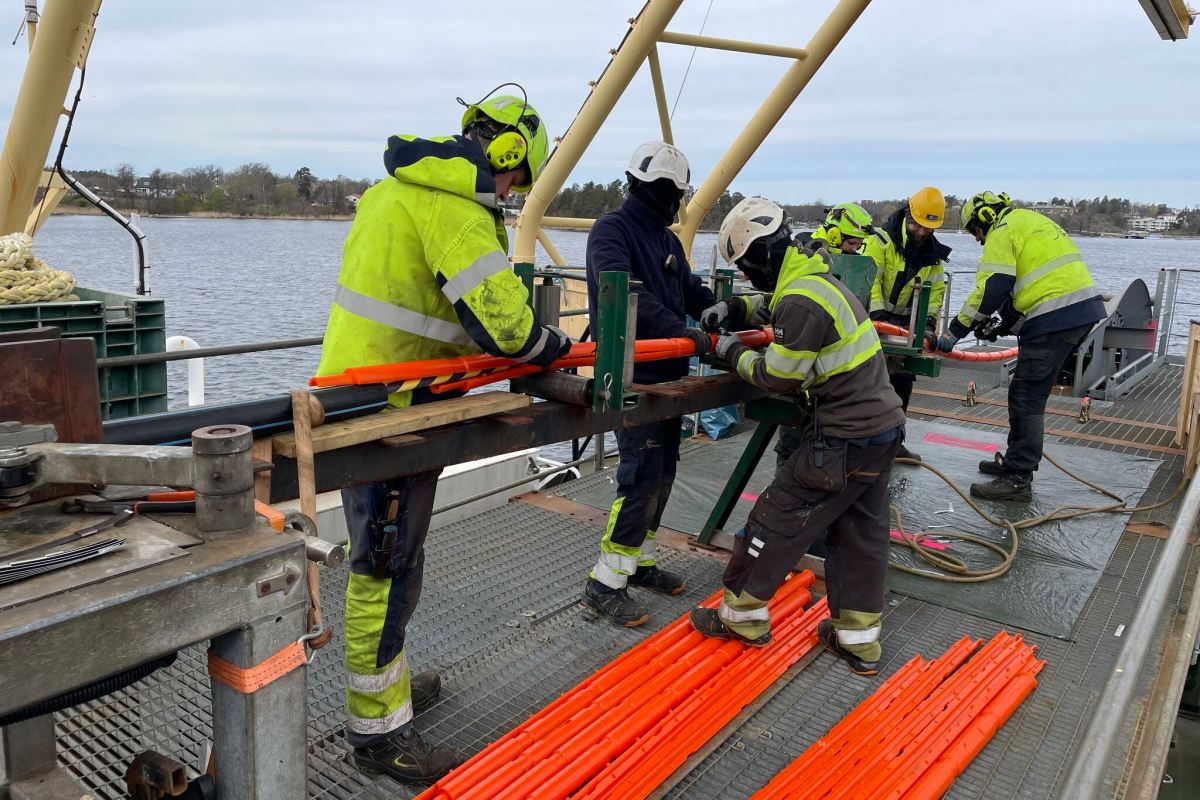
Ocean Networks, a telecom development and service company, has today announced cable manufacturer Prysmian and submarine cable engineering and installation specialist International Telecom (IT) as partners for the Hawaiian Islands Fiber Link (HIFL) submarine cable system. The agreement represents a key step in the development of Hawaii’s open-access, carrier-neutral inter-island fibre infrastructure, which is intended to improve high-speed broadband connectivity across the state. The HIFL project forms part of the US State of Hawaii’s 'Connect Kākou' broadband initiative. Prysmian will supply around 740km of submarine cable, while IT will provide engineering and installation services. Progress on Hawaii’s broadband initiative David Blau, Chief Operating Officer of Ocean Networks, says, “We are thrilled to be working with industry leaders like Prysmian and International Telecom, whose expertise is crucial to achieving our goal of enhancing high-speed broadband access across Hawaii. "Securing these contracts represents a major step forward in the construction timeline for the HIFL project, bringing us closer to fulfilling the promise of improved connectivity for all of Hawaii’s residents, businesses, education, and government entities.” Davide Taddei, Submarine Telecom Business Director at Prysmian, adds, “Prysmian is proud to have been selected by Ocean Networks and [to] contribute to such a vital infrastructure project that will bring affordable, high-speed internet and connectivity to all residents. "In today’s interconnected world, ensuring secure and resilient digital infrastructure is critical. Our systems are designed not only for performance and durability but also to support enhanced digital security and data integrity for the communities they serve. "The HIFL project is a key step in delivering robust infrastructure in the Pacific and builds on Prysmian’s strong track record in challenging submarine environments worldwide.” Steve Arsenault, Vice President of Sales and Marketing at IT, comments, “IT takes great pride in our long history of successful project delivery within the Hawaiian Islands. "Bringing this experience to bear on behalf of Ocean Networks for the HIFL project is an honour. We are pleased to contribute once again to the important work of strengthening Hawaii’s inter-island telecommunications infrastructure.” Ocean Networks is overseeing the supply, construction, operations, and maintenance of the HIFL system, with the aim of supporting a more advanced and equitable digital landscape for Hawaii. For more from Prysmian, click here.

Capacity Europe 2025 returns to London
Capacity Europe, an event for global digital infrastructure and connectivity, returns to the InterContinental London – The O2 from 21–23 October 2025, bringing together more than 3,500 decision-makers from across the global connectivity and digital infrastructure sectors. Now in its 24th year, the event has grown from a telecoms conference into a major platform for deal-making, partnerships, and thought leadership in data infrastructure, cloud, and AI. Across three days and four stages, 200+ speakers will discuss topics ranging from preparing networks for AI to improving interoperability, security, and resilience in an era of growing data demand and geopolitical uncertainty. Industry leaders on stage Confirmed speakers include Annette Murphy, Chief Commercial Officer at Colt Technology Services; Enrico Bagnasco, CEO at Sparkle; Petrina Steele, Global Lead – Emerging Technologies at Equinix; and Rebecca Stanic, Principal – Infrastructure Planning & Network Acquisition at Microsoft. Executives from Goldman Sachs, EdgeConneX, Deutsche Telekom, and Openmind Networks will also take part. Attendees at previous editions have praised the event for its networking and deal-making opportunities. Prabhu Abimannan, Manager International Data Business at e& Europe, comments, “Capacity Europe offers invaluable networking opportunities and brings together industry leaders to discuss the latest trends in international telecom. Each year, the event raises the bar.” Linda Shannon, Director at Hilco Streambank, adds, “Capacity Europe is a not-to-be-missed event. Fantastic networking opportunities, both formal and informal, alongside useful content. An invaluable opportunity to catch up with existing clients and make new connections in one location.” Building the future of connectivity Capacity Europe 2025 will gather leaders from connectivity, cloud, edge, investment, and software to exchange ideas, form partnerships, and define strategies for the next decade of digital infrastructure. “Celebrating the 24th year of Capacity Europe is a proud moment for us,” says Gabriela Cogorno, Head of Marketing-Events and Membership, Telecoms & Tech at techoraco. “This year’s event will be bigger and more impactful than ever, highlighting key themes and laying the foundation for innovation and transformation in the digital sector.” The event is once again supported by Spa Communications, which will lead global media engagement following a successful 2024 campaign. Why attend? • Connect with 3,500+ decision-makers from 100+ countries • Hear insights from 200+ speakers shaping the digital future • Forge deals across connectivity, cloud, edge, investment, and software • Be part of the conversations driving the future of networks and services Capacity Europe 2025 will take place at the InterContinental London – The O2, 21–23 October. Visit the event's website to find out more. For more on Capacity Europe, click here.

LINX announces major upgrades at IXP in Riyadh
The London Internet Exchange (LINX), an internet exchange point (IXP) operator of digital infrastructure, has upgraded its network at the interconnection hub it powers in Saudi Arabia for data centre and digital enabler center3, a subsidiary of the STC Group. Essential upgrades were carried out to increase the availability of 100GE ports following customer demand as well as to enable the interconnection point with 400GE connectivity services. These upgrades mark a milestone in the evolution of the IXP in Riyadh, which has reportedly become a cornerstone of Saudi Arabia’s digital infrastructure since its launch in 2024. Located at the Remal facility (RDC102), the exchange is now poised to meet the growing demand for high-capacity, low-latency interconnection services from global networks, content providers, and enterprises. “Demand for high-speed, resilient connectivity in the Kingdom continues to grow, and these upgrades ensure that the Riyadh IXP remains at the forefront of regional interconnection,” says Halil Kama, Director for the Middle East at LINX. “By enabling 400GE capabilities and expanding 100GE availability, we’re empowering networks to scale efficiently and deliver superior performance to end users." The enhancements align with the broader vision to support Saudi Arabia’s Vision 2030 agenda, which places digital transformation at the heart of national development. center3 also recently announced that they are accelerating their data centre expansion, targeting 1 GW of total capacity by 2030 to support the growth in the region’s broader digital transformation. With over $3 billion (£2.2 billion) already invested and an additional $10 billion (£7.38 billion) planned, the company says it is building a "next-generation, carrier-neutral data centre ecosystem." Since the inception of the LINX-powered IXP in Jeddah, which launched in 2019, the partnership between LINX and center3 has been playing a role in shaping the Kingdom’s interconnection landscape. For more from LINX, click here.

Gateway Fiber deploys Perle IOLAN Console Servers
Gateway Fiber, an internet service provider (ISP) serving communities in Missouri, Minnesota, Massachusetts, and North Dakota, USA, has strengthened its remote management capabilities by deploying Perle IOLAN Console Servers across its network. The company operates micro data centres, also known as points of presence (PoP) sites, which are essential for delivering high-speed internet. The IOLAN Console Servers provide out-of-band access, enabling administrators to remotely manage and troubleshoot equipment. This aims to reduce downtime and allow rapid response to service issues. According to Jeff Shilt, Senior Network Engineer at Gateway Fiber, the team had considered Cisco terminal servers with LTE routers but found the approach too costly. The IOLAN units, with integrated cellular connectivity, reportedly offered a more affordable option. “The IOLAN Console Server gives the ultimate back door connectivity,” says Jeff. “When we’ve had a fibre cut or we lose access, we come in via the LTE and use the serial console ports to get into our equipment.” The devices also support maintenance and upgrades. “When we must do firmware updates, we can access the equipment via an LTE interface, as if we were physically there. This makes the process easier and safer,” Jeff explains. They also allow engineers to guide field technicians remotely during hardware changes, intending to reduce travel requirements and associated costs. Gateway Fiber continues to expand its fibre-to-the-home network to meet growing data demands. “Any new cabinet we build is going to have an IOLAN in it for out-of-band access, and they’re awesome for that. I mean, they’re just perfect,” continues Jeff. John Feeney, Chief Operating Officer at Perle Systems, comments, “We are thrilled to support Gateway Fiber in [its] mission to provide reliable, high-speed internet to underserved communities. "Our IOLAN Console Servers are designed to offer robust and secure remote access, ensuring that Gateway Fiber can maintain their high standards of service and quickly address any network issues.”

New internet exchange in São Paulo
DE-CIX, an operator of internet exchanges (IXs), has started to operate its peering and interconnection services in São Paulo, Brazil. The new internet exchange, DE-CIX Sao Paulo, is distributed across three data centres: Equinix SP4, Elea SPO1, and Ascenty SP4. The company is already onboarding the first 20 customers in the region, including TBC Azion Technologies. With the start of operations, companies now have access to local peering, network interconnection, and remote peering, as well as cloud exchange and multi-cloud routing functionalities. Customers can gain direct and private access to cloud providers both locally and remotely, allowing cloud-to-cloud communication and facilitating their digital business with, what DE-CIX claims to be, "low-latency and high-performance connectivity." By joining the exchange, companies can connect directly to thousands of network operators (carriers), internet service providers (ISPs), cloud and content providers, and corporate networks from more than 100 countries worldwide. "With our high-performance, secure, and scalable interconnection services, we enhance local interconnection, creating a more resilient and globally integrated interconnection ecosystem in São Paulo," claims Ivo Ivanov, CEO of DE-CIX. "Being a part of the global DE-CIX ecosystem offers the potential of an enormous diversity of networks now accessible in the city. "The growing digital economy in Brazil requires state-of-the-art connectivity, ensuring that data exchange takes place fast, efficiently, and securely, as local as possible and as global as necessary. The new IX opens up a complementary offering that further enriches the country as the second largest market in the world in terms of number of networks." The new internet exchange is integrated into DE-CIX’s global ecosystem through connections to IXs in New York, Lisbon, Madrid, and Frankfurt (the largest IX in Europe). The connectivity takes advantage of several transatlantic routes via the Atlantic South-North and South-South connectivity corridors. This will allow connected Brazilian networks to reach thousands of local, regional, and international networks that together form the largest interconnection ecosystem in the world. Rafael Umann, CEO of Azion, comments, "Azion operates one of the most distributed and advanced infrastructures in the world, with a presence in over 100 data centres. Our platform ensures resilience, security, and performance for critical and AI workloads. "Through interconnection with DE-CIX, we guarantee our customers access to the best infrastructure on the market and further expand our global network to deliver low latency and high availability to our clients, regardless of user location." For more from DE-CIX, click here.


Translate »