News in Cloud Computing & Data Storage


Telehouse Canada, Megaport partner to expand cloud options
Telehouse Canada, an operator of colocation data centres, has announced a strategic partnership with Network-as-a-Service (NaaS) provider Megaport, expanding cloud connectivity capabilities across its Canadian data centre portfolio. The agreement enables Telehouse Canada customers to access Megaport’s global ecosystem, which includes more than 280 cloud on-ramps and over 300 service providers. Through the integration, organisations can establish scalable, private connections to leading cloud platforms and global IT services directly from Telehouse Canada facilities. Customers can access the Megaport Portal from all Telehouse Canada data centres, allowing them to design flexible, high-performance network architectures that support hybrid and multi-cloud workloads, as well as more traditional enterprise use cases. Simplified networking and AI-focused connectivity By leveraging Megaport’s global platform, organisations can scale connectivity on demand and streamline network operations. Services available include Megaport Cloud Router, which enables direct data transfer between multiple cloud environments, and API-based integration to automate deployment and ongoing management. Atsushi Kubo, President and CEO of Telehouse Canada, says the partnership enhances the value of its data centre ecosystem, stating, “This collaboration reflects our shared commitment to delivering high-quality, efficient connectivity. "Alongside colocation, we are providing customers with access to a highly interconnected environment that supports growth and reduces complexity through Megaport’s platform.” The partnership also provides access to Megaport’s AI Exchange (AIx), a connectivity ecosystem designed to support AI-driven workloads. AIx enables organisations to interconnect with GPU-as-a-Service providers, neocloud platforms, third-party AI models, and storage and compute resources, supporting the rapid delivery of AI services at a global scale. Michael Reid, CEO of Megaport, notes, “As organisations operate across increasingly complex environments, connectivity and compute must work seamlessly together. "Partnering with Telehouse Canada allows us to extend our capabilities into a strong local ecosystem, giving customers the foundations required to support advanced workloads today and adapt as their needs evolve.” Telehouse Canada and Megaport say they plan to continue developing the partnership, with a shared focus on strengthening secure, high-performance digital infrastructure to support Canadian organisations and international connectivity requirements. For more from Telehouse, click here.

Enecom upgrades data storage with Infinidat's InfiniBox
Infinidat, a provider of enterprise data storage systems, has announced that Enecom, a Japanese ICT services provider operating primarily in the Chugoku region, has upgraded its enterprise data infrastructure using multiple InfiniBox storage systems. Enecom has deployed five InfiniBox systems across its environment. Two systems support the company’s EneWings enterprise cloud service, two are used for internal virtual infrastructure, and one is dedicated to backup and verification. The deployment is intended to support service availability, scalability, and resilience as data volumes increase. According to Enecom, the investment was driven by customer requirements for high system reliability, concerns around cyber security, and the rising cost and operational impact of legacy storage platforms. Masayuki Chikaraishi, Solution Service Department, Solution Business Division at Enecom, says, “When we were choosing how to upgrade our storage infrastructure, our customers told us that system reliability was particularly important and that the threat of damage caused by cyberattacks was a major concern. "We also had to address the rising costs of the legacy systems and the fallout when hardware failures occurred. For the longer term, we needed to be proactive to be able to handle the expected future growth in cloud demand and to strengthen the appeal of our EneWings brand.” Availability and cyber resilience focus Enecom says it is using an active-active configuration across two InfiniBox systems to maintain service continuity during maintenance and software upgrades. Takashi Ueki, Solution Service Department, Solution Business Division at Enecom, notes, “Many of our customers are concerned that even the slightest outage will affect their business. "By using two InfiniBox systems in an active-active cluster configuration, we can continue to provide services with higher reliability and peace of mind without interruption, even when performing maintenance or software version upgrades.” Cyber resilience was also a key consideration. Enecom is using InfiniSafe features within the InfiniBox platform, including immutable snapshots and recovery capabilities, to support rapid restoration following cyber incidents. Masayuki continues, “InfiniBox provides high-speed, tamper-proof, immutable snapshots creation as a standard feature to enable rapid recovery from a future cyberattack. Keeping data within Japan for data security reasons will become more important in the future.” For more from Infinidat, click here.

Europe races to build its own AI backbone
Recent outages across global cloud infrastructure have once again served as a reminder of how deeply Europe depends on foreign hyperscalers. When platforms run on AWS or services protected by Cloudflare fail, European factories, logistics hubs, retailers, and public services can stall instantly. US-based cloud providers currently dominate Europe’s infrastructure landscape. According to market data, Amazon, Microsoft, and Google together control roughly 70% of Europe’s public cloud market. In contrast, all European providers combined account for only about 15%. This share has declined sharply over the past decade. For European enterprises, this means limited leverage over resilience, performance, data governance, and long-term sovereignty. This same structural dependency is now extending from cloud infrastructure directly into artificial intelligence and its underlying investments. Between 2018 and 2023, US companies attracted more than €120 billion (£104 billion) in private AI investment, while the European Union drew about €32.5 billion (£28 billion) over the same period. In 2024 alone, US-based AI firms raised roughly $109 billion (£81 billion), more than six times the total private AI investment in Europe that year. Europe is therefore trying to close the innovation gap while simultaneously tightening regulation, creating a paradox in which calls for digital sovereignty grow louder even as reliance on non-European infrastructure deepens. The European Union’s Apply AI Strategy is designed to move AI out of research environments and into real industrial use, backed by more than one billion euros in funding. However, most of the computing power, cloud platforms, and model infrastructure required to deploy these systems at scale still comes from outside Europe. This creates a structural risk: even as AI adoption accelerates inside European industry, much of the strategic control over its operation may remain in foreign hands. Why industrial AI is Europe’s real monitoring ground For any large-scale technology strategy to succeed, it must be tested and refined through real-world deployment, not only shaped at the policy level. The effectiveness of Europe’s AI push will ultimately depend on how quickly new rules, funding mechanisms, and technical standards translate into working systems, and how fast feedback from practice can inform the next iteration. This is where industrial environments become especially important. They produce large amounts of real-time data, and the results of AI use are quickly visible in productivity and cost. As a result, industrial AI is becoming one of the main testing grounds for Europe’s AI ambitions. The companies applying AI in practice will be the first to see what works, what does not, and what needs to be adjusted. According to Giedrė Rajuncė, CEO and co-founder of GREÏ, an AI-powered operational intelligence platform for industrial sites, this shift is already visible on the factory floor, where AI is changing how operations are monitored and optimised in real time. She notes, “AI can now monitor operations in real time, giving companies a new level of visibility into how their processes actually function. I call it a real-time revolution, and it is available at a cost no other technology can match. Instead of relying on expensive automation as the only path to higher effectiveness, companies can now plug AI-based software into existing cameras and instantly unlock 10–30% efficiency gains.” She adds that Apply AI reshapes competition beyond technology alone, stating, “Apply AI is reshaping competition for both talent and capital. European startups are now competing directly with US giants for engineers, researchers, and investors who are increasingly focused on industrial AI. From our experience, progress rarely starts with a sweeping transformation. It starts with solving one clear operational problem where real-time detection delivers visible impact, builds confidence, and proves return on investment.” The data confirms both movement and caution. According to Eurostat, 41% of large EU enterprises had adopted at least one AI-based technology in 2024. At the same time, a global survey by McKinsey & Company shows that 88% of organisations worldwide are already using AI in at least one business function. “Yes, the numbers show that Europe is still moving more slowly,” Giedrė concludes. “But they also show something even more important. The global market will leave us no choice but to accelerate. That means using the opportunities created by the EU’s push for AI adoption before the gap becomes structural.”

OpenNebula, Canonical partner on cloud security
OpenNebula Systems, a global open-source technology provider, has formed a new partnership with UK developer Canonical to offer Ubuntu Pro as a built-in, security-maintained operating system for hypervisor nodes running OpenNebula. The collaboration is intended to streamline installation, improve long-term maintenance, and reinforce security and compliance for enterprise cloud environments. OpenNebula is used for virtualisation, cloud deployment, and multi-cluster Kubernetes management. It integrates with a range of technology partners, including NetApp and Veeam, and is supported by relationships with NVIDIA, Dell Technologies, and Ampere. These partnerships support its use in high-performance and AI-focused environments. Beginning with the OpenNebula 7.0 release, Ubuntu Pro becomes an optional operating system for hypervisor nodes. Canonical’s long-term security maintenance, rapid patch delivery, and established update process are designed to help teams manage production systems where new vulnerabilities emerge frequently. Integrated security maintenance for hypervisor nodes With Ubuntu Pro embedded into OpenNebula workflows, users will gain access to extended security support, expedited patching, and coordinated lifecycle updates. The approach aims to reduce operational risk and maintain compliance across large-scale, distributed environments. Constantino Vázquez, VP of Engineering Services at OpenNebula Systems, explains, “Our mission is to provide a truly sovereign and secure multi-tenant cloud and edge platform for enterprises and public institutions. "Partnering with Canonical to integrate Ubuntu Pro into OpenNebula strengthens our customers’ confidence by combining open innovation with long-term stability, security, and compliance.” Mark Lewis, VP of Application Services at Canonical, adds, “Ubuntu Pro provides the secure foundation that modern cloud and AI infrastructures demand. "By embedding Ubuntu Pro into OpenNebula, we are providing enterprises [with] a robust and compliance-ready environment from the bare metal to the AI workload - making open source innovation ready for enterprise-grade operations.”

365, Robot Network unveil AI-enabled private cloud platform
365 Data Centers (365), a provider of network-centric colocation, network, cloud, and other managed services, has announced a partnership with Robot Network, a US provider of edge AI platforms, to deliver a new AI-enabled private cloud platform for enterprise customers. Hosted within 365’s cloud infrastructure, the platform supports small-language models, analytics, business intelligence, and cost optimisation, marking a shift in how colocation facilities can function as active layers in AI optimisation. Integrating AI capabilities into colocation environments Building on 365’s experience in colocation, network, and cloud services, the collaboration seeks to enable data processing and intelligent operations closer to the edge. The model allows more than 90% of workloads to be handled within the data centre, using high-density AI only where necessary. This creates a hybrid AI architecture that turns colocation from passive hosting into an active optimisation environment, lowering operational costs while allowing AI to run securely within compact, high-density footprints. Derek Gillespie, CEO of 365 Data Centers, says, “Our objective is to meet AI where colocation, connectivity, and cloud converge. "This platform will provide seamless integration and economies of scale for our customers and partners, giving them access to AI that is purpose-built for their business initiatives.” Initial enterprise use cases will be supported by a proprietary AI platform that integrates both small and large language models. Supporting AI adoption across enterprise operations Jacob Guedalia, CEO of Robot Network, comments, “We’re pleased to partner with 365 Data Centers to bring this unique offering to market. 365 is a forward-thinking partner with strong colocation capabilities and operational experience. "By combining our proprietary stack - optimised for AMD EPYC processors and NVIDIA GPUs - with their infrastructure, we’re providing a trusted platform that makes advanced AI accessible and affordable for enterprises. "Our system leverages small AI models from organisations such as Meta, OpenAI, and Grok to extend AI capabilities to a broader business audience.” 365 says the new platform underlines its strategy to evolve as an infrastructure-as-a-service provider, helping enterprises adopt AI-driven tools and improve efficiency through secure, flexible, and data-informed operations. The company notes it continues to focus on enabling digital transformation across colocation and cloud environments while maintaining reliability and scalability. For more from 365 Data Centers, click here.

ZainTECH launches Microsoft Azure ExpressRoute in Kuwait
ZainTECH, the digital solutions and cloud services arm of Kuwait-based Zain Group, in collaboration with Zain Kuwait and Zain Omantel International (ZOI), has announced the availability of Microsoft Azure ExpressRoute on the Azure Marketplace. The move enables government and enterprise customers in Kuwait to access secure and private connectivity to Microsoft Azure directly through the Azure Marketplace. The listing allows organisations with existing Azure agreements to purchase ExpressRoute using their existing Microsoft Azure consumption credits, designed to simplify procurement and integration with cloud infrastructure. Dedicated, compliant cloud connectivity ExpressRoute provides a dedicated, low-latency connection to Microsoft data centres in the UAE and Europe. According to ZainTECH, the service is aimed at supporting mission-critical workloads that require high performance, enhanced security, and compliance with Kuwait’s national data residency and regulatory standards. Andrew Hanna, CEO of ZainTECH, comments, “Helping governments and enterprises become more digital, intelligent, and resilient is what all Zain entities aim for. "The availability of ExpressRoute on the Azure Marketplace is a game-changer for customers in Kuwait. It removes friction from the procurement process and makes it easier than ever for entities to leverage Microsoft’s cloud, using their existing agreements and credits. "This is how we accelerate real transformation: by combining secure, high-speed connectivity with operational simplicity.” ZainTECH says that its collaboration with Zain Kuwait, ZOI, and Microsoft establishes a new framework for compliant and resilient cloud connectivity in Kuwait. The initiative also aligns with Kuwait’s Vision 2035 strategy, supporting national digital transformation efforts and enabling government and enterprise modernisation.

Object First launches 'ransomware-proof' storage
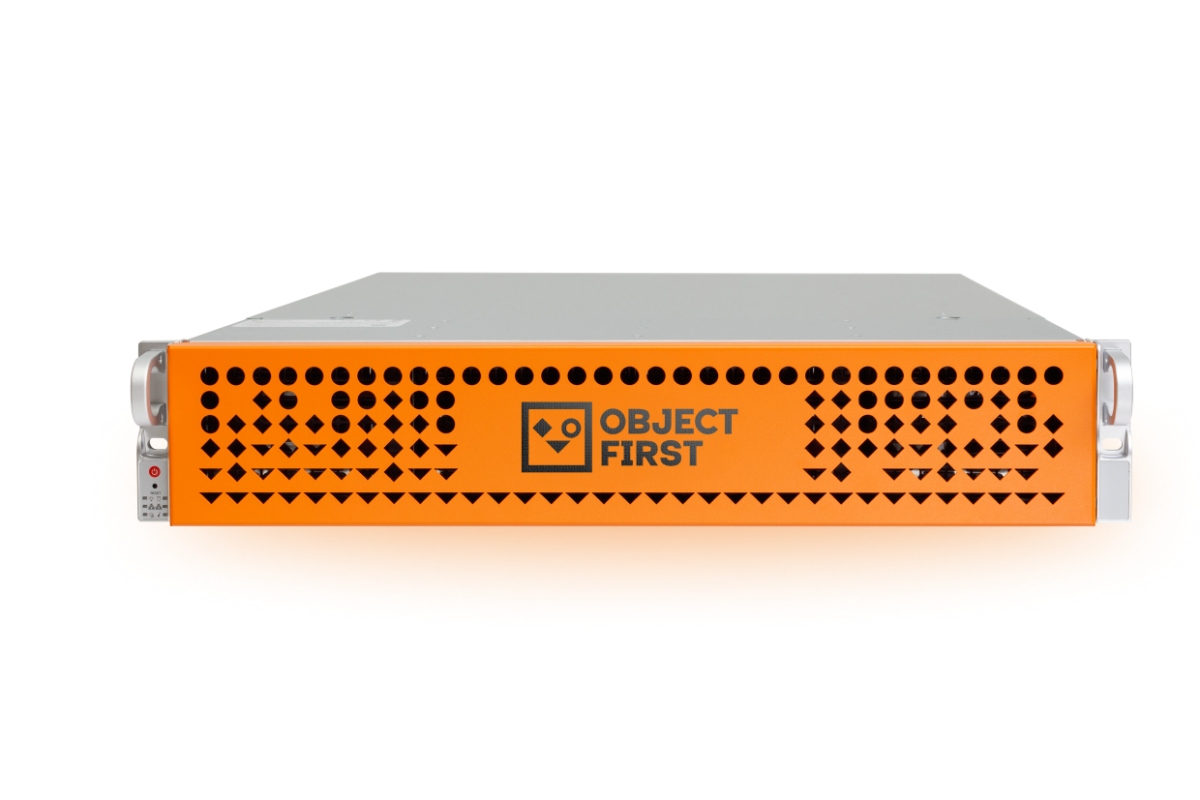
Object First, a US provider of storage appliances, has introduced Ootbi Mini, a compact immutable storage appliance designed for remote and branch offices, edge environments, and small businesses using Veeam for backup. The device is intended to protect local backup data against ransomware attacks without requiring a traditional data centre setup. Available in 8, 16, and 24 terabyte capacities, Ootbi Mini brings the company’s existing enterprise-level security to a smaller form factor. Built on 'zero trust' principles, it provides what the company describes as “absolute immutability”, meaning that no one - including administrators - can alter its firmware, operating system, storage layer, or backup data. The device offers the same data protection, user interface, and Veeam integration as Object First’s existing Ootbi systems, with minimal setup required. Ootbi Mini will be available for purchase or through a subscription model, with deliveries due to begin in January 2026. New additional features Alongside Ootbi Mini, Object First has announced several additional updates: The first, Ootbi Honeypot, introduces early warning protection against cyberthreats targeting Veeam Backup and Replication (VBR). The feature, available in version 1.7 at no additional cost to current customers, deploys a decoy VBR environment to detect suspicious activity. If a threat is detected, Honeypot immediately sends an alert via the customer’s chosen communication channel. The company has also launched a beta programme for Ootbi Fleet Manager, a cloud-based platform that allows customers to monitor and manage their entire Ootbi fleet from a single dashboard. The system provides granular monitoring, reporting, and hardware health insights, enabling customers to maintain visibility across distributed environments. Phil Goodwin, Research Vice President at IDC, comments, “Organisations running Veeam can benefit from storage technologies that combine immutability, simplicity, and resilience. "With Ootbi Mini, Honeypot, and Fleet Manager, Object First is expanding its ransomware-proof portfolio to meet the needs of businesses of all sizes.” David Bennett, CEO at Object First, adds, “Our mission is to make ransomware-proof backups simple, powerful, and accessible for every Veeam user. With Ootbi Mini, any organisation can achieve enterprise-grade immutability within a small footprint. "Honeypot strengthens cyber resilience by providing early threat detection, while Fleet Manager simplifies how customers monitor their deployments. Together, these innovations reinforce our commitment to secure, straightforward, and reliable backup for Veeam users.” For more from Object First, click here.

Crusoe expands partnership with atNorth at Iceland DC
Crusoe, a developer of AI cloud infrastructure, and Nordic data centre operator atNorth have announced a 24MW expansion of Crusoe Cloud capacity at atNorth’s ICE02 facility in Iceland. The development builds on the two companies’ original agreement from December 2023, which included 33MW of capacity, and forms part of Crusoe’s wider European growth strategy. The ICE02 site, located near Reykjavík, benefits from low-latency connectivity supported by multiple undersea fibre-optic cables linking international markets. The latest phase of development includes the deployment of NVIDIA GB200 NVL72 infrastructure, as well as NVIDIA Blackwell and Hopper GPUs. Renewable-powered expansion The data centre is powered by geothermal and hydroelectric energy and has been fitted with Direct Liquid to Chip (DLC) cooling systems. Both companies say this reflects their commitment to supporting high-performance computing while limiting carbon impact. Chase Lochmiller, co-founder and CEO of Crusoe, says, “Our partnership with atNorth allows us to leverage the abundant geothermal and hydroelectric power in Iceland to build energy-first AI infrastructure so that our customers can run their most demanding AI workloads on Crusoe Cloud.” Eyjólfur Magnús Kristinsson, CEO of atNorth, adds, “The expansion of our ICE02 site features cutting-edge infrastructure and highly energy-efficient Direct Liquid to Chip cooling technology. This aligns with both companies’ commitment to sustainability, and we are proud to support Crusoe on their path to decarbonise workloads while delivering AI-ready solutions in an environmentally responsible way.” Growing AI data centre demand atNorth says demand for AI-ready infrastructure continues to increase, with its modular campus design enabling flexible scaling. Recent partnerships, including projects with Nokia and 6G AI Sweden AB, reflect the company’s focus on balancing advanced computing with environmental responsibility. For more from atNorth, click here.

365 Data Centers collaborates with Liberty Center One
365 Data Centers (365), a provider of network-centric colocation, network, cloud, and other managed services, has announced a collaboration with Liberty Center One, an IT delivery solutions company focused on cloud services, data protection, and high-availability environments. The collaboration aims to expand the companies' combined cloud capabilities. Liberty Center One provides open-sourced-based public and private cloud services, disaster recovery resources, and colocation at two data centres which it operates. 365 currently operates 20 colocation data centres, and this relationship is set to enhance the company’s colocation, public cloud, multi-tenant, private cloud, and hybrid cloud offerings for enterprise clients, as well as its managed and dedicated services. "This collaboration will have big implications for 365 as we continue to expand our offerings to the market," believes Derek Gillespie, CRO of 365 Data Centers. "When it comes to solutions for enterprise, working with Liberty Center One will enable us to enhance our current suite of cloud capabilities and hosted services to give our customers what they need today to meet the demands of their business.” Tim Mullahy, Managing Director of Liberty Center One, adds, "We’re looking forward to working with 365 Data Centers to be able to truly bring the best out of one another’s services through this agreement. "Customer service has always been our number one priority, and this association will be instrumental in helping 365 reach its business goals.” For more from 365 Data Centers, click here.

Huawei named a leader for container management
Chinese multinational technology company Huawei has been positioned in the 'Leaders' quadrant of American IT research and advisory company Gartner's Magic Quadrant for Container Management 2025, recognising its capabilities in cloud-native infrastructure and container management. The company’s Huawei Cloud portfolio includes products such as CCE Turbo, CCE Autopilot, Cloud Container Instance (CCI), and the distributed cloud-native service UCS. These are designed to support large-scale containerised workloads across public, distributed, hybrid, and edge cloud environments. Huawei Cloud’s offerings cover a range of use cases, including new cloud-native applications, containerisation of existing applications, AI container deployments, edge computing, and hybrid cloud scenarios. Gartner’s assessment also highlighted Huawei Cloud’s position in the AI container domain. Huawei is an active contributor to the Cloud Native Computing Foundation (CNCF), having participated in 82 CNCF projects and holding more than 20 maintainer roles. It is currently the only Chinese cloud provider with a vice-chair position on the CNCF Technical Oversight Committee. The company says it has donated multiple projects to the CNCF, including KubeEdge, Karmada, Volcano, and Kuasar, and contributed other projects such as Kmesh, openGemini, and Sermant in 2024. Use cases and deployments Huawei Cloud container services are deployed globally in sectors such as finance, manufacturing, energy, transport, and e-commerce. Examples include: • Starzplay, an OTT platform in the Middle East and Central Asia, used Huawei Cloud CCI to transition to a serverless architecture, handling millions of access requests during the 2024 Cricket World Cup whilst reducing resource costs by 20%. • Ninja Van, a Singapore-based logistics provider, containerised its services using Huawei Cloud CCE, enabling uninterrupted operations during peak periods and improving order processing efficiency by 40%. • Chilquinta Energía, a Chilean energy provider, migrated its big data platform to Huawei Cloud CCE Turbo, achieving a 90% performance improvement. • Konga, a Nigerian e-commerce platform, adopted CCE Turbo to support millions of monthly active users. • Meitu, a Chinese visual creation platform, uses CCE and Ascend cloud services to manage AI computing resources for model training and deployment. Cloud Native 2.0 and AI integration Huawei Cloud has incorporated AI into its cloud-native strategy through three main areas: 1. Cloud for AI – CCE AI clusters form the infrastructure for CloudMatrix384 supernodes, offering topology-aware scheduling, workload-aware scaling, and faster container startup for AI workloads. 2. AI for Cloud – The CCE Doer feature integrates AI into container lifecycle management, offering diagnostics, recommendations, and Q&A capabilities. Huawei reports over 200 diagnosable exception scenarios with a root cause accuracy rate above 80%. 3. Serverless containers – Products include CCE Autopilot and CCI, designed to reduce operational overhead and improve scalability. New serverless container options aim to improve computing cost-effectiveness by up to 40%. Huawei Cloud states it will continue working with global operators to develop cloud-native technologies and broaden adoption across industries. For more from Huawei, click here.


Translate »