Insights into Data Centre Investment & Market Growth


ABB extends VoltaGrid data centre power deal
ABB, a multinational corporation specialising in industrial automation and electrification products, has secured additional orders from VoltaGrid, a Texas-based microgrid power generation company, to support data centre power infrastructure projects, linked to growing demand from AI workloads. The agreement was signed on 25 March 2026 at CERAWeek in Houston, USA, extending the companies’ existing collaboration. The orders are expected to be recorded in the second quarter of 2026. Financial terms were not disclosed. Under the agreement, ABB will supply 35 synchronous condensers with flywheel technology, alongside prefabricated eHouse units. These systems are used to support voltage stability in power networks, particularly for high-density data centre environments. The equipment will form part of VoltaGrid’s behind-the-meter power infrastructure, designed to provide stable and rapidly deployable energy for large-scale data centre operations. Supporting power stability for AI workloads Synchronous condensers help stabilise electricity networks by providing inertia, supporting short-circuit events, and managing reactive power. ABB’s scope also includes medium- and low-voltage distribution systems, as well as excitation systems intended to maintain reliability and uptime. Nathan Ough, CEO of VoltaGrid, says, “VoltaGrid’s power platform is purpose built to deliver large-scale power with exceptional dynamic performance and reliability for next-generation digital infrastructure. “By integrating ABB’s advanced grid stabilisation technologies with our AI-optimised power systems, we are able to meet increasingly stringent transient performance requirements while accelerating deployment at gigawatt scale.” Per Erik Holsten, President of ABB’s Energy Industries division, adds, “Extending our collaboration with VoltaGrid demonstrates the strength of ABB’s businesses working together combining automation, electrification, and motion expertise and technologies with innovative distributed power systems to create greater value for customers. “Together, we are enabling reliable, resilient, and scalable power infrastructure for data centres serving the rapidly growing AI economy.” Data centres accounted for around 1.5% of global electricity consumption in 2024, with the United States representing approximately 45% of that total. For more from ABB, click here.

Vertiv to acquire ThermoKey
Vertiv, a global provider of critical digital infrastructure, has announced an agreement to acquire ThermoKey, as part of its ongoing focus on data centre cooling technologies. The acquisition is expected to expand Vertiv’s thermal management portfolio and manufacturing capabilities, particularly across EMEA. It also aims to strengthen the company’s ability to support high-density data centres and AI workloads, where cooling performance and efficiency are increasingly important. ThermoKey develops heat rejection and heat exchange technologies, with established relationships across original equipment manufacturers and system integrators. Its range includes dry coolers and microchannel-based systems designed for data centre and industrial applications. Giordano Albertazzi, CEO at Vertiv, notes, “Heat rejection is becoming increasingly critical for data centres and AI factories as the industry seeks new ways to unlock capacity, improve energy efficiency, and scale with confidence. “Through our work with ThermoKey, we have come to value its differentiated heat-exchange technologies, engineering depth, and relationships across OEMs and system integrators. "This acquisition is expected to expand the options available to our customers as they adopt more efficient cooling strategies and build infrastructure designed to stay ahead of rapidly evolving compute demands.” Founded in 1991 and based in Italy, ThermoKey has more than three decades of experience in designing and manufacturing heat exchangers for data centre cooling and other applications. Expanding thermal capabilities for AI data centres The company’s portfolio includes heat exchangers, dry coolers, air cooled condensers, and liquid cooling systems. Its technologies are compatible with low global warming potential (GWP) and natural refrigerants, aligning with wider industry efforts to improve efficiency and reduce environmental impact. ThermoKey’s engineering and production capabilities are expected to complement Vertiv’s existing thermal portfolio, while also increasing manufacturing flexibility and available capacity. This is intended to help meet rising demand for cooling infrastructure in high-density computing environments. For data centre operators, the acquisition is expected to support more integrated thermal system design, allowing coordination between liquid cooling, air cooling, and heat rejection technologies. This approach can help optimise performance based on site conditions, efficiency targets, and future expansion requirements. The transaction remains subject to regulatory approvals and other customary conditions, with completion anticipated in the second quarter of 2026. For more from Vertiv, click here.

Pure DC appoints new CCO and CFO
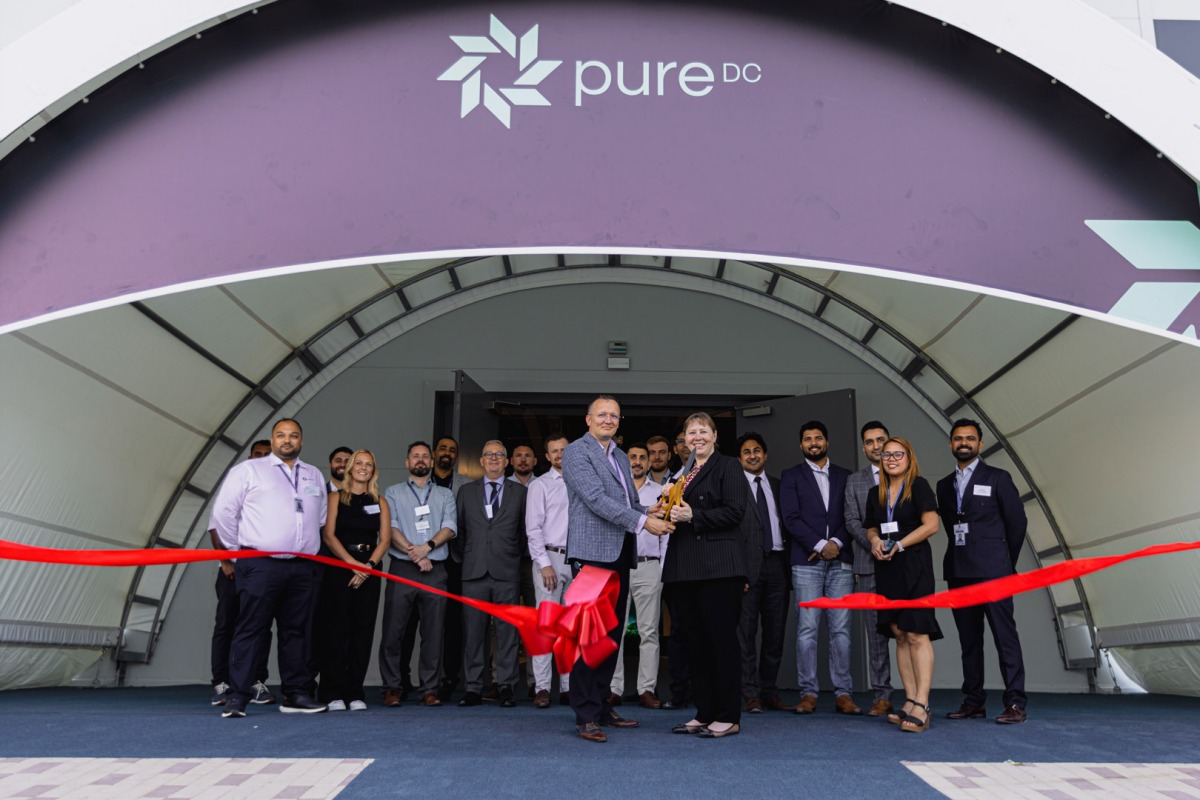
Pure Data Centres Group (Pure DC), a designer, developer, and operator of hyperscale data centres, has appointed Jeff Harrison as Chief Commercial Officer and Michael Schwartz as Chief Financial Officer, expanding its leadership team to support reported growth across Europe and the Middle East. The appointments follow the recent hiring of Gary Wojtaszek as Executive Chairman and Interim CEO. All three previously worked at CyrusOne, where they were involved in the company’s shift towards hyperscale cloud infrastructure. Pure DC is targeting increased demand for AI infrastructure, with plans to expand capacity in established European markets and develop larger-scale sites to support high-density compute. Expansion plans across Europe and Middle East markets Jeff Harrison joins from Stack Infrastructure, where he led North American sales, while Michael Schwartz previously held a finance leadership role at CyrusOne, overseeing planning and capital management during a period of expansion. Both executives are expected to relocate to London in spring 2026. Gary Wojtaszek says, “Jeff and Mike are joining an experienced leadership team with a strong track record in delivering infrastructure for hyperscale customers. Jeff played a key role in developing hyperscale sales at CyrusOne. Mike brings financial discipline to support platform growth.” Jeff Harrison comments, “Europe is expected to see increased demand linked to AI infrastructure. Pure DC has the leadership and development capability to expand across both urban cloud markets and larger-scale campuses.” Michael Schwartz adds, “The opportunity to scale a hyperscale platform across Europe and the Middle East while maintaining financial discipline is a key focus.” Pure DC currently has more than 1 GW of capacity live or under development and is evaluating additional large-scale campus opportunities across Europe. For more from Pure DC, click here.

Antin acquires NorthC
Antin Infrastructure Partners, a private equity firm specialising in infrastructure investments, has completed its acquisition of NorthC Datacenters, a data centre operator in Northwest Europe, from DWS and other minority shareholders. Headquartered in Amsterdam, NorthC operates 25 data centres across The Netherlands, Germany, and Switzerland, with more than 140 MW of secured gross grid capacity across existing and upcoming greenfield sites. The company plans to expand into new regions and begin construction of facilities in Frankfurt, Basel, and Geneva this year. Continuing regional expansion Alexandra Schless (pictured above), CEO of NorthC Datacenters, comments, “The finalisation of this acquisition marks a key milestone in the NorthC journey. "Now, with Antin Infrastructure Partners officially on board, we have gained a new strategic partner whose deep expertise in digital infrastructure perfectly aligns with our regional leadership and expansion goals. "We are ready to accelerate our growth across the Benelux and DACH regions, leveraging our 140 MW of secured capacity to meet the surging demand for AI inference workloads and enterprise digital transformation. "Our focus remains on delivering high-quality, regional colocation solutions with the scale and backing of a global infrastructure leader.” Stéphane Ifker and Maximilian Lindner, Managing Partner and Partner (respectively) at Antin Infrastructure Partners, add, “We are delighted to be working with NorthC as we jointly embark on the company’s next growth phase. "This closing signifies the start of an ambitious new chapter. We are fully committed to supporting Alexandra and her management team as they expand their footprint, modernise their facilities, and continue to serve as the backbone for Europe's most critical digital infrastructure sectors.” For more from NorthC, click here.

Siemens, Rittal partner on data centre power
German multinational technology company Siemens and Rittal, a German manufacturer of industrial enclosures, IT racks, and climate control systems, have formed a partnership to develop power distribution infrastructure for data centres, targeting increasing demands from AI workloads. The collaboration focuses on standardised systems designed to support higher rack power densities, improve deployment speed, and streamline data centre construction. Power demands in AI environments are continuing to rise, with rack densities already exceeding 100 kW and expected to increase further over the coming years. The companies aim to address these requirements through updated approaches to power distribution, cooling, and heat management. Focus on scalable power infrastructure One of the first developments from the partnership is a sidecar power system, installed within the white space of a data centre. The system uses a dedicated power rack to supply server racks, supporting a modular and scalable approach to power delivery. The design aligns with Open Compute Project standards and is intended to simplify deployment while maintaining operational reliability. “To enable the rapid growth of AI, we need smart, reliable, and scalable power supply solutions for data centres and we need them quickly,” comments Andreas Matthé, CEO Electrical Products at Siemens Smart Infrastructure. Further joint work includes the development of standardised low-voltage distribution systems for modular and containerised data centres, alongside measures aimed at improving operational and personnel safety. The partnership builds on existing collaboration between Siemens and the Friedhelm Loh Group, Rittal’s parent company, and is expected to expand into additional applications beyond data centres. For more from Siemens, click here.

Nscale, Microsoft partner on large-scale campus in West Virginia
Nscale, a UK developer of AI data centres and cloud infrastructure, has signed a letter of intent with Microsoft to deliver 1.35GW of AI compute capacity at the Monarch AI campus in West Virginia, in collaboration with NVIDIA and Caterpillar. The development will deploy NVIDIA’s next-generation Vera Rubin NVL72 GPU systems, based on the NVIDIA DSX AI Factory reference design, with the undertaking expected to begin in phases from late 2027. In addition to this news, Nscale has also announced the acquisition of American Intelligence & Power Corporation (AIPCorp), which includes the Monarch Compute Campus in Mason County. The site spans up to 2,250 acres (9.1 km²) and is designed as a state-certified AI microgrid, with the potential to scale beyond 8GW of power capacity. Hyperscale AI infrastructure and power integration Under the agreement, Nscale will construct and operate the data centre infrastructure, with Microsoft supporting long-term compute services and lease arrangements. The campus is intended to support large-scale AI training and inference workloads, with high-speed connectivity to major US data centre hubs, including Ashburn and Chicago. As part of the project, Caterpillar will supply G3500 series natural gas generator sets, with plans to deliver up to 2GW of on-site power generation by the first half of 2028. The microgrid design enables the facility to operate independently of the local grid, while also allowing for potential future grid integration. The development reflects increasing demand for AI-driven data centre capacity, with industry forecasts indicating significant growth in global power requirements over the coming years. The Monarch campus is expected to build on Nscale’s existing capacity and support expansion of large-scale AI infrastructure in the US. For more from Nscale, click here.

Pure DC appoints new Chairman and Interim CEO
Pure Data Centres Group (Pure DC), a designer, developer, and operator of hyperscale data centres, has appointed Gary Wojtaszek as Executive Chairman and Interim CEO as the company enters a new phase of expansion across Europe and the Middle East. Gary previously led data centre operator CyrusOne through a period of growth that culminated in its $15 billion (£11 billion) acquisition by KKR and Global Infrastructure Partners. The appointment comes as demand for data centre capacity continues to grow, driven by cloud services and artificial intelligence workloads, with Pure DC saying it is expanding its presence in established European cloud markets and developing large-scale AI-focused campuses across the region. Gary comments, “Pure DC has built a strong, differentiated platform across Europe and the Middle East. The AI wave that transformed the US market is now emerging across Europe, and the opportunity to scale a focused, high-quality platform at this moment is compelling. "Our objective is clear: expand in supply-constrained core markets, deliver for hyperscale and AI customers at the highest standards, and develop the next generation of large-scale AI campuses across the region.” Leadership transition at a time of expansion As part of the leadership change, Dame Dawn Childs will move from CEO to the role of President of Pure DC. She has led the company since May 2023. She notes, “Gary’s appointment is a significant milestone for Pure DC. His global leadership experience and proven ability to scale complex infrastructure platforms make him uniquely suited to lead our next chapter of growth. "We have strong momentum and a world-class team, and this leadership transition positions us to accelerate further.” Pure DC says it currently has more than 1GW of data centre capacity either operational or under development, with several projects underway across Europe and the Middle East. For more from Pure DC, click here.

AirTrunk secures $1.2bn Tokyo data centre loan
Australian data centre operator AirTrunk has secured a ¥191.6 billion ($1.24 billion; £903 million) green loan to refinance and expand its TOK1 hyperscale data centre campus in East Tokyo, Japan. The financing is reportedly the largest data centre loan completed in Japan to date and will support further development of the campus as demand for cloud and artificial intelligence infrastructure grows. The loan, structured under AirTrunk’s Green Financing Framework, will refinance existing facilities and fund new development phases at the TOK1 site. The campus is designed to scale to more than 300MW of capacity. The company also says it has recently started construction to add more than 100MW of IT load to meet near-term customer demand. The financing was led by SMBC, MUFG, Crédit Agricole CIB, and Société Générale as global coordinators. A total of 12 banks participated as mandated lead arrangers and bookrunners. Expansion of hyperscale infrastructure in Japan AirTrunk says the financing forms part of its wider investment in Japan’s digital infrastructure. Most notably, the operator recently announced OSK2, its second hyperscale data centre in Osaka, alongside the establishment of a new headquarters in Japan. At full build-out, AirTrunk’s four campuses in Japan - TOK1, TOK2, OSK1, and OSK2 - are expected to deliver around 530MW of capacity to support cloud and AI workloads. Robin Khuda, founder and CEO of AirTrunk, comments, “Japan is one of the world’s most important cloud and AI markets, and we’re committed to building the digital infrastructure that enables its long-term growth. "AirTrunk has been investing deeply in Japan for this reason: to build the hyperscale platform that will underpin the country’s digital future and connect it to the broader region. "This landmark financing enables us to accelerate the expansion of TOK1 and continue delivering the capacity our customers need today, while preparing Japan for the extraordinary compute demands ahead.” Masato Hori, Associate Vice President Treasury Japan at AirTrunk, adds, “This is the largest data centre financing ever completed in Japan and a testament to the deep collaboration between AirTrunk and our banking partners. We’re especially grateful for the strong support from Japan’s leading financial institutions including SMBC, MUFG, Chiba Bank and Mizuho Bank. "The structure of the facility reflects our commitment to transparency, sustainability, and innovation in capital markets, and further strengthens AirTrunk’s financing platform across the region.” The financing also includes margin incentives that will be directed to the AirTrunk Social Impact Fund, supporting community initiatives in Japan including STEM education, digital inclusion, biodiversity, and disaster relief. For more from AirTrunk, click here.

Verne appoints new COO
Verne, a provider of low-carbon, high-performance data centres across the Nordics, has appointed Wayne Louw as Chief Operating Officer (COO) - a development the business states strengthens its operational leadership as it enters a more complex, AI-intensive phase of growth and continues to scale its multi-site platform. The company says he brings extensive experience leading multi-site, mission-critical environments and will guide the next stage of Verne’s operational scale. Wayne most recently led large-scale, mission-critical operations across Europe and Africa for NTT Global Data Centers. As COO, he will oversee Verne’s operational strategy, performance and resilience across its multi-site infrastructure. Wider growth in Northern Europe His appointment comes as Verne supports increasingly power-intensive AI deployments across Northern Europe. The EUDCA State of European Data Centres 2025 identifies Northern Europe as one of Europe’s most active colocation markets, underpinned by renewable power availability and regulatory stability, with growth driven by hyperscalers, neoclouds, and enterprises seeking secure, scalable access to power. Wayne notes, “Verne operates in markets where access to secure, renewable power is a strategic advantage. That matters even more as AI workloads push density and cooling requirements higher. "I have spent my career operating complex, multi-country platforms at scale. What excites me about Verne is the opportunity to apply that operational discipline to a business entering a new level of technical intensity. That next stage demands disciplined execution at scale.” Praise from Verne With senior leadership experience at Gyron and NTT Global Data Centers, Wayne has managed large, distributed teams across multiple markets. He reportedly unified regional operations under a single model while supporting hyperscale customers through periods of significant capacity build-out. Commenting on the news, Dominic Ward, CEO of Verne, says, “Verne is entering a more technically demanding phase of growth, as our multi-site platform grows in both density and complexity. In this environment, operational discipline becomes a strategic differentiator. "Wayne brings experience leading multi-market, mission-critical platforms at scale. His appointment strengthens our ability to grow capacity while delivering the resilience, consistency, and performance our customers depend on.” Wayne has an electrical engineering background. He began his career in the banking sector, where he says he witnessed first hand the transition from enterprise-owned data centres to commercial colocation and hyperscale models. For more from Verne, click here.

'Rising power costs top data centre concern'
New research from UK colocation data centre provider Asanti shows that AI adoption, resilience pressures, and rising power costs are reshaping data centre strategies for UK organisations, with material implications for managed service providers (MSPs), cloud providers, and infrastructure partners. In a survey of 100 senior IT decision makers, nearly half (48%) said AI adoption will have a large influence on their IT infrastructure strategy over the next three years, ahead of regulatory change and hybrid or multi-cloud capabilities. IT leaders report average rack densities of 8kW per rack today, rising to 11kW within 12 months, as AI-heavy workloads and high-density compute drive up power and cooling requirements. Rising power costs are already the top concern regarding current data centre environments, cited by 52% of respondents, ahead of maintaining uptime (48%). Over the next three years, rising energy costs (34%) and sustainability commitments (33%) sit alongside AI, resilience, and regulatory change as core inputs to infrastructure strategy. Stewart Laing, CEO of Asanti, notes, “AI has moved from pilot projects to production workloads, and with it comes a step-change in rack density, power demand, and cooling requirements. Organisations are realising they need the right mix of facilities, partners, and architectures to deliver compute and storage requirements without compromising on resilience, sovereignty, or cost control.” Resilience and sovereignty drive hosting decisions Over the next 12 months, cybersecurity and resilience are the most common focus for infrastructure investment, cited by 51% of IT leaders. In response to cyberattacks and service disruptions in 2025, organisations are strengthening security controls (60%), creating backup strategies across multiple data centre providers/locations (50%), and reviewing business continuity planning (42%). A third (33%) plan to move more workloads into on-premise or colocation environments to strengthen their IT resilience. Location decisions are becoming more polarised, with 30% of organisations already using data centres outside the UK and a further 24% planning to do so, while 32% say they use only UK-based data centres. The research suggests a push‑pull between cost and sovereignty: high UK power costs draw some workloads overseas, but data protection obligations, regulatory exposure, and latency considerations keep others anchored in UK facilities. Stewart continues, “For MSPs and infrastructure partners, the opportunity is to help customers design architectures that balance the needs of today, sovereignty, compliance, and resilience with AI ambition. That increasingly means hybrid strategies that combine UK-based colocation for critical workloads with selective use of overseas capacity and public cloud where it makes sense.” Opportunity for MSPs and infrastructure partners The study shows strong and sustained demand for external expertise. More than half of organisations (54%) already use third parties for cybersecurity services, while around a third bring in external partners for infrastructure audits (35%), disaster recovery and business continuity planning (33%), and end-to-end solution deployment (35%). Looking ahead over the next 12 months, organisations expect to increase their use of external support for public cloud repatriation (32%) and technical scoping for new projects (31%), signalling a shift towards more intentional workload placement and right‑sizing. Stewart concludes, “As power, AI, and sovereignty concerns collide, few organisations can carry all the skills they need in‑house. MSPs, systems integrators, and specialist data centre providers have a critical role in helping enterprises architect for higher densities, navigate cross border data complexity, and build resilient, multi‑site infrastructure that can withstand disruption.” The full whitepaper, From Misconception to Momentum: 2026 Trends for the UK’s Data Centre Sector, is available by clicking here. For more from Asanti, click here.


Translate »