Data Centre Projects: Infrastructure Builds, Innovations & Updates

Meta commits $50bn to 5GW Louisiana data centre campus
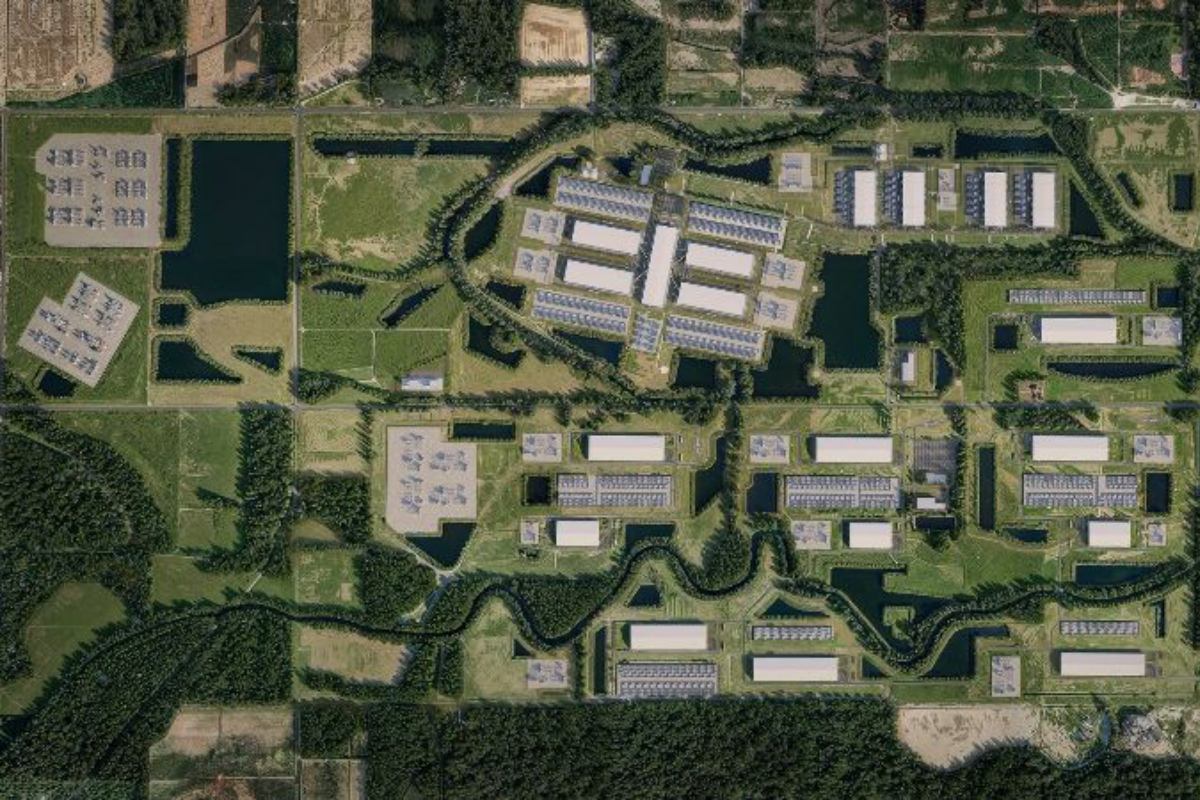
US technology company Meta has increased its investment in its Richland Parish data centre campus in Louisiana, USA, to more than $50 billion (£37.4 billion), expanding the site to almost 10 million square feet (929,030m²) with a planned IT capacity of 5GW. The facility will house Hyperion, Meta's largest AI training cluster, making it the company's biggest data centre campus and one of the largest data centres ever announced. The expansion comes as demand for AI infrastructure continues to increase, with the campus expected to play a significant role in supporting Meta's AI operations. Expansion brings jobs and energy investment The project is expected to support up to 7,500 construction jobs at peak activity, alongside approximately 1,000 operational roles. Louisiana Economic Development estimates the development will also generate around 1,900 indirect jobs across the region. Meta says it has already awarded more than $1.6 billion (£1.1 billion) in contracts to Louisiana businesses and has invested over $1 million (£748,000) in community projects across Richland Parish since construction began. The company has also established workforce partnerships with local colleges and training providers to support careers in skilled trades and data centre operations. The expansion is supported by an agreement with Entergy Louisiana, which includes investment in new electricity infrastructure comprising seven natural gas-fired power stations, three grid-scale battery projects, potential nuclear generation developments, and additional purchased power. Meta has also committed to funding up to 2.5GW of renewable energy and says it plans to return 100% of the site's water consumption to local watersheds through restoration and water infrastructure projects. Rachel Peterson, Vice President of Data Centers at Meta, comments, "From the beginning, this project has always been about more than building infrastructure; it's about building alongside the community. "The people, workforce, and partnership we've found in Louisiana have enabled this project to be a cornerstone of our global infrastructure. "With more than $1.6 billion already contracted with local companies and thousands of jobs being supported, we're delivering real economic impact alongside the AI infrastructure that will power the future." For more from Meta, click here.

DeepInfra opens its first international AI data centre
DeepInfra, a US cloud platform providing inference infrastructure for AI, has opened a new data centre in Toronto, Canada, marking the company's first facility outside the US as it expands its AI inference infrastructure. The 1.7MW site is DeepInfra's ninth data centre and will host more than 1,000 NVIDIA Blackwell GPUs. The company says the expansion increases its AI inference capacity whilst supporting lower-latency services for customers across North America and other international markets. Supporting growing AI inference demand According to research from McKinsey & Company, AI inference is expected to account for more than 40% of total data centre demand by 2030. The growth is being driven by organisations moving AI models into production, increasing demand for GPU infrastructure capable of supporting real-time applications, AI agents, and high-volume API traffic. DeepInfra says the Toronto deployment forms part of its wider infrastructure strategy as demand for AI inference continues to grow. Nikola Borisov, CEO and co-founder of DeepInfra, notes, "Enterprises are moving from experimentation to production at unprecedented speed, and that shift demands infrastructure that is both scalable and globally distributed. "This Toronto cluster is a foundational step in expanding our capacity beyond the US and ensuring customers can run AI workloads closer to where their users and data reside." The Toronto facility follows DeepInfra's 'Series B' funding round and forms part of the company's plans to increase AI inference capacity in strategically selected regions. Additional international deployments are also being evaluated as demand for GPU-intensive AI workloads continues to increase.

Pure DC, SEGRO to develop Paris data centre
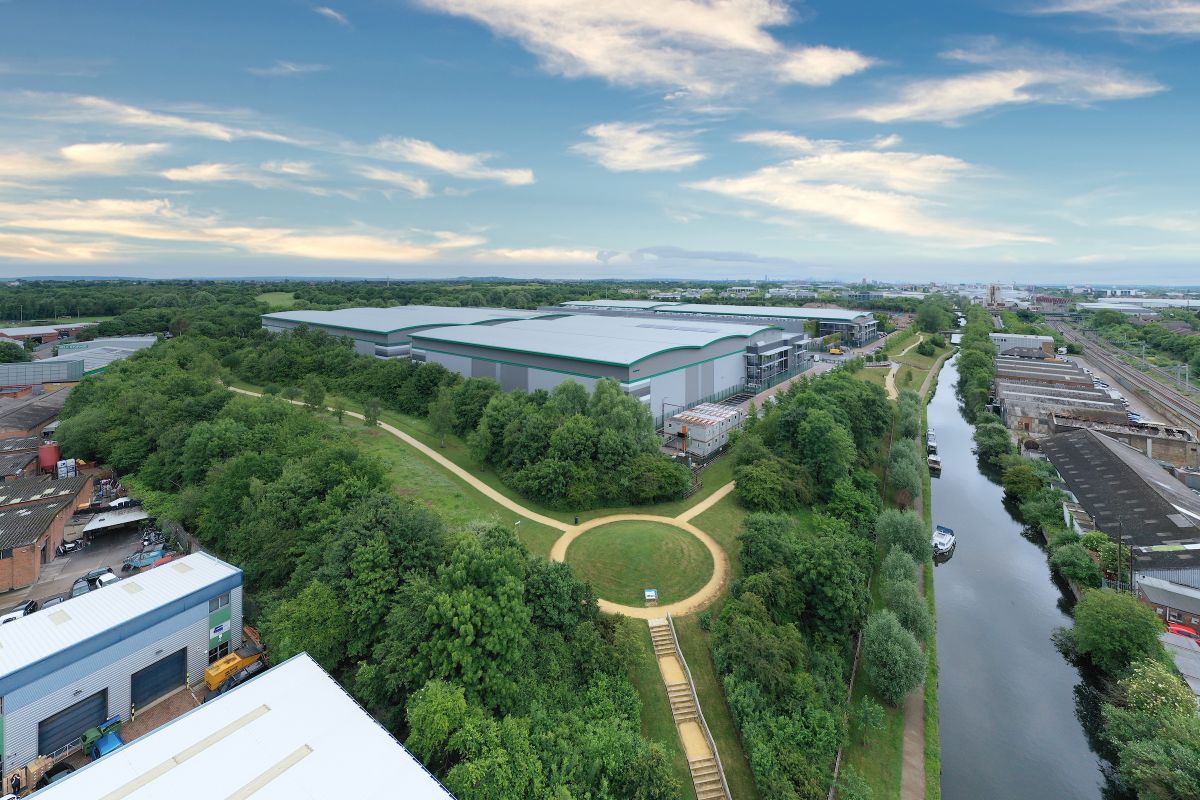
Pure Data Centres Group (Pure DC), a designer, developer, and operator of hyperscale data centres, and SEGRO, a UK-listed real estate investment trust (REIT), have formed a second joint venture to develop a 48MW fully fitted data centre in Paris, targeting a long-term lease with a global hyperscale operator. The proposed development will be built in a Paris Availability Zone on land contributed by SEGRO, alongside a pre-secured 75MVA power connection. The companies say the project represents their second collaboration following their joint venture at Premier Park in West London. The development is expected to require around £800 million of investment, including the value of the land contributed by SEGRO. SEGRO's cash equity contribution is expected to be approximately £60 million during construction, with the remaining equity provided by Pure DC. The facility will be delivered in phases, with construction due to begin once planning permission has been secured and a pre-let agreement has been signed. The first phase is expected to complete after around three years, with the remaining capacity delivered approximately one year later. Joint venture builds on London project The partners say the project combines SEGRO's land portfolio and development expertise from Pure DC's experience in designing, building, and operating hyperscale facilities. The data centre will include mechanical and electrical infrastructure, together with power distribution, cabling, and cooling systems. IT equipment, including servers and racks, will be supplied by the future occupier. David Sleath, Chief Executive of SEGRO, comments, "This second joint venture with Pure DC builds on the momentum across our European data centre platform and demonstrates how SEGRO can crystallise the significant value in its 3.0GVA power bank through a repeatable, capital-efficient model. "This project in Paris will be our first data centre development in Continental Europe, and [it's] another great example of how combining our carefully assembled, prime, power-secured sites with Pure DC’s technical expertise can accelerate the delivery of highly profitable, fully fitted facilities. "Our first project together at Premier Park is progressing well, with planning approval secured ahead of schedule and active discussions underway with two global hyperscalers." Gary Wojtaszek, Executive Chairman and Interim CEO of Pure DC, adds, "Large-scale, powered sites in Europe’s leading metropolitan markets have become one of the scarcest and most strategically valuable resources in digital infrastructure. "Demand for digital infrastructure across Europe is accelerating, but access to suitable sites with secured power and favourable planning positions in the FLAP-D markets remains the defining constraint." The announcement follows progress at the companies' first joint venture at Premier Park in West London, where planning permission was approved in March 2026. The partners say discussions are underway with two hyperscale operators interested in occupying the site's full capacity. For more from Pure DC, click here.

Barings extends Stockholm data centre lease
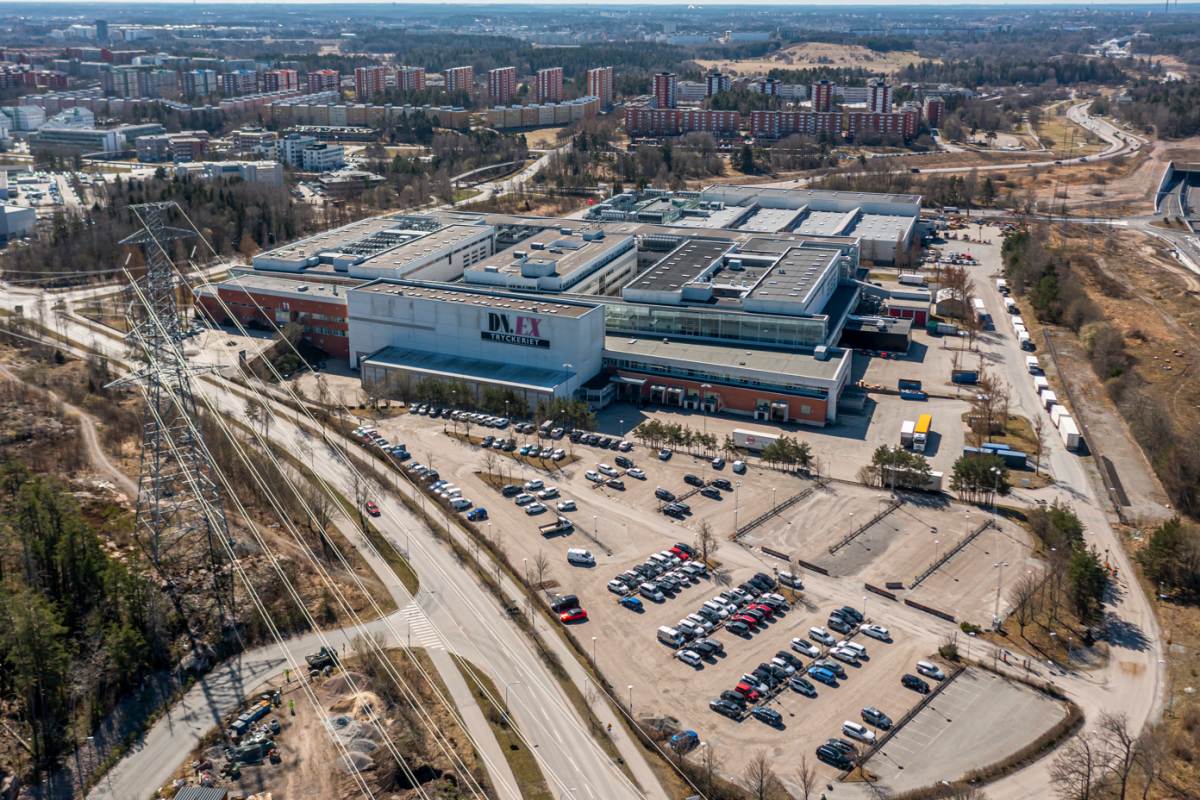
Alternative investment manager Barings has secured a 10-year lease extension with a global data centre operator at its Vanda 3 site in Kista, Stockholm, Sweden, while also obtaining an additional 30MW of power capacity to support future expansion. The agreement strengthens occupancy at the Vanda 3 asset and supports further data centre development as demand for power capacity continues to grow. Infrastructure work is already underway to connect the additional capacity to the site. Vanda 3 is a mixed-use site within Stockholm's established data centre cluster in Kista. Covering approximately 65,000m², it currently includes data centre, logistics, storage, and industrial space, with the unnamed global data centre operator occupying around 15,000m². Additional power supports future expansion The additional 30MW of capacity, secured through Ellevio, will enable the conversion of existing buildings for further data centre use, including space expected to become available in the future. It will also support additional development across the site. Barings is also seeking planning approval for a further 25,000m² of building rights in 2027, increasing the site's long-term development potential. Olli Forsman, Director, Transactions & Asset Management Nordics at Barings, comments, "The lease extension with the global data centre operator is a strong endorsement of Vanda 3's quality and long-term relevance as a data centre location. "Alongside this, securing additional power capacity is a pivotal milestone that significantly enhances the asset's ability to support further expansion. In a market where access to power remains a key constraint, this puts us in a strong position to support both existing and new operators looking to scale in Stockholm." Kristina Johnson, Senior Director, Nordics Asset Management at Barings, adds, "The combination of secured power, existing infrastructure, and development flexibility creates a compelling proposition for data centre operators and positions the asset well to capture future demand. "The Nordics is one of our preferred markets across a range of asset classes and capital profiles, and we will continue to explore all opportunities where we can create value on behalf of our partners."

Equinix, A2A to heat Milan via district heating
Equinix, a US global data centre and interconnection services provider, and A2A, Italy’s second-largest energy operator, have announced a partnership to recover waste heat from a data centre campus near Milan and use it to supply the city's district heating network. The project will recover heat generated by servers at Equinix's campus in Settimo Milanese and transfer it to a new energy centre developed by A2A. The recovered heat will then be used to provide heating across parts of Milan. Equinix will design and manage the system used to export heat from the campus, working with customers whose IT equipment generates the thermal energy. A2A's new energy centre will use four large-scale heat pumps with a combined capacity of 72MW, together with two thermal storage systems capable of storing 6,000m³ of water. The facility will connect to Milan's district heating network via dedicated heat transport infrastructure. Once fully operational, the project is expected to recover up to 225GWh of thermal energy each year. According to the companies, this will increase the amount of heat distributed through A2A's district heating network by around 20%, providing enough energy to heat more than 21,000 homes. The partners also estimate the scheme will avoid more than 345,000 tonnes of CO₂ emissions. Heat recovery supports district heating expansion As part of the project, A2A will expand Milan's district heating network, enabling recovered heat from the data centre to be supplied across a wider area of the city, including the Duomo and Palazzo Reale, which are already connected to the network. Adaire Fox-Martin, CEO and President of Equinix, comments, "Equinix has a long and proud history of aligning the needs of our business with the needs of the communities we call home. "Our collaboration with A2A is a clear example of how essential digital infrastructure and local sustainability goals can work in service of each other. By putting thermal energy from our operations to use for local homes and residents, we're eliminating waste and moving Milan towards a low-carbon future." Emanuela Grandi, Managing Director of Equinix Italy, adds, "Excess heat is a by-product of the processing power required for digital transformation and AI, but when we redistribute it to the areas surrounding our data centres, we can create tremendous value for our communities while reducing the overall energy needed to heat the area. "We are very proud of the efforts and achievements Equinix has done in blazing a trail for data centre heat export in Europe and we're applying learnings from our successes to our efforts in Italy. "By scale, this initiative in Italy is expected to become among the largest data centre heat export projects in Europe outside the Nordics." Renato Mazzoncini, CEO of A2A, concludes, "Data centres are strategic infrastructure for the competitiveness of the country and for supporting the digital transformation of the economy. "Their growth requires models capable of combining technological innovation, energy efficiency, and environmental sustainability. From this perspective, heat recovery is a key lever for maximising the value of digital hubs and accelerating the decarbonisation of cities. "The collaboration with Equinix is fully aligned with our strategy to develop an integrated ecosystem where energy, infrastructure, and innovation operate synergistically." The companies say the partnership forms part of wider efforts to support the decarbonisation of urban energy systems through the reuse of waste heat generated by digital infrastructure. For more from Equinix, click here.

AI data centre capacity to surge from 2.3GW to 150GW
Structure Research, an independent research and consulting firm focused on the global internet infrastructure market, has announced the release of its new AI Infrastructure Report, finding that AI-focused data centre capacity is projected to jump from roughly 2.3 gigawatts (GW) today to 150GW by 2030, a 66-fold increase that will reshape where capital, power, and workloads concentrate globally. The AI Infrastructure Report provides a bottom-up view of who is funding, building, and consuming AI infrastructure worldwide, combining 14 company-level trackers with a 38-operator ‘neocloud’ and sovereign infrastructure rollup to map how capacity and capital will flow through 2030. Built from Structure Research's proprietary dataset, every forecast is constructed using a bottom-up methodology and validated through a conservation framework that reconciles infrastructure ownership with compute consumption, aiming to create a consistent view of where capacity, capital, and workloads ultimately concentrate. Jabez Tan, Head of Research at Structure Research, notes, "As AI infrastructure investment accelerates globally, there is increasing confusion around who is actually building capacity, who is financing it, and who ultimately consumes the compute being created. "This report was designed to cut through the noise and provide a single, reconciled view of the AI infrastructure ecosystem. By examining both the supply and demand sides of the market simultaneously, we can better understand where capital is flowing, where bottlenecks are emerging, and how the competitive landscape is evolving." Key findings from the report The AI Infrastructure Report provides a comprehensive view of the organisations funding, building, and consuming AI infrastructure and examines how the market will evolve through 2030. Key findings include: · Power availability is emerging as one of the primary constraints to continued AI infrastructure expansion. · The report distinguishes between organisations that own AI infrastructure and those that ultimately consume AI compute capacity, providing a reconciled view of supply and demand. · Infrastructure and commercial models vary significantly in their ability to convert capital into compute, with a 45x range across different approaches. · Microsoft, leading AI labs, neocloud providers, and sovereign AI initiatives are pursuing increasingly divergent infrastructure strategies that will shape future capacity demand. · The report evaluates the long-term outlook for neocloud providers, sovereign AI programs, and custom silicon as competition and market maturity continue to reshape the ecosystem. The AI Infrastructure Report is intended for hyperscalers, AI infrastructure providers, cloud platforms, data centre operators, investors, policymakers, and enterprise technology leaders seeking a deeper understanding of the forces shaping the future of AI infrastructure deployment.

VIRTUS expands Slough data centre campus
VIRTUS Data Centres, a UK data centre owner-operator and part of ST Telemedia Global Data Centres (STT GDC), has announced plans to expand its presence at the Slough Trading Estate with a new AI-ready data centre that will provide 32.5MW of IT capacity, increasing the company's UK data centre estate to more than 300MW of operational and committed capacity. The new facility, known as LONDON19, is intended to provide additional capacity to meet growing demand for AI, cloud, and digital infrastructure. The data centre will incorporate advanced cooling systems, sustainable construction materials, and provision for the future export of waste heat for use within the local community. New facility planned for Slough campus Planning permission for LONDON19 has already been secured through the Slough Trading Estate Simplified Planning Zone. SEGRO will develop the powered shell, with construction expected to begin following design approval. The development will include a roof-level plant deck and is expected to achieve a BREEAM 'Excellent' rating. Once completed, LONDON19 will become the latest addition to VIRTUS's UK portfolio, bringing the company's operational and committed capacity to more than 300MW. Adam Eaton, CEO of VIRTUS Data Centres, says, "We are delighted to expand our Slough campus with the addition of LONDON19, further strengthening our ability to support customers seeking scalable, resilient, and sustainable data centre capacity in London's western corridor. "This development builds on our long-standing relationship with SEGRO and enables us to deliver critical power and IT capacity aligned with customer demand. "By embedding sustainability considerations from the outset, including provision for future waste heat utilisation, LONDON19 reflects our focus on delivering flexible, future-ready infrastructure that supports the UK's digital economy while minimising environmental impact." Andrew Pilsworth, Managing Director of Data Centres and Strategic Partnerships at SEGRO, adds, "VIRTUS is one of Europe's leading data centre operators and we are pleased to be extending our long-standing relationship through the delivery of this new facility at the Slough Trading Estate. "The Trading Estate has been at the centre of the UK's data centre market for more than 20 years, and the scale of infrastructure, power availability, and planning certainty we have established there, alongside a strong focus on sustainability and positive engagement with the local community, continues to support customers like VIRTUS as they expand in a highly constrained environment." VIRTUS says it will continue its engagement with the local community as development progresses at the Slough Trading Estate. For more from VIRTUS, click here.

EdgeMode signs MOU for 300MW Toledo data centre
EdgeMode, a digital infrastructure company specialising in developing high-performance computing (HPC) data centres, has signed a memorandum of understanding (MOU) with the City Council of Mora to support the development of the planned 300MW DC Malpica data centre campus in Toledo, Spain. The agreement establishes a framework for cooperation between the two during the development of the site, which is intended to support artificial intelligence (AI), HPC, and cloud workloads. The MOU was signed by Mora Mayor Emilio Bravo Peña and EdgeMode CEO Charlie Faulkner during a ceremony at the municipality's plenary hall. EdgeMode says DC Malpica forms part of its eight-site portfolio in Spain, representing more than 4.35GW of planned capacity. The site is also located near Madrid, a major European hub for AI and digital infrastructure. In addition to this, earlier this year, the company announced plans to deploy solid oxide fuel cell microgrid technology to supply power to the campus. Agreement sets out development priorities Under the agreement, the City Council of Mora will provide institutional support for the project, coordinate with administrative departments, and support efforts to secure Project of Strategic Interest status for the development. EdgeMode says it will work to integrate the campus into the local economy, with priorities including employment, collaboration with regional businesses, and skills development initiatives. According to the company, the project could create up to 5,000 jobs during the construction phase. The planned campus will also incorporate energy-efficient and low-emission technologies as part of its sustainability strategy. Emilio Bravo Peña comments, "With this data centre project, we will be a leading town not just in Spain, but in Europe. Furthermore, I am sure that the magnet effect will work, and companies from other sectors - some of which are necessary for this project - will also come to Mora." Charlie Faulkner, CEO of EdgeMode, adds, "This agreement marks a critical milestone in the development of one of Europe's prime locations for data centre capacity and our collaboration with the City of Mora. "By establishing this institutional framework, we can navigate the development process efficiently while ensuring that DC Malpica delivers lasting economic value, high-quality employment, and technological advancement to the local community without compromising on environmental standards." The memorandum has an initial term of 24 months and outlines commitments to regulatory compliance, transparent communication, and cooperation throughout the development process.

1.5GW Utah data centre receives planning approval
Pronghorn Development, a Utah-headquartered infrastructure firm, has secured a conditional use permit (CUP) to develop the 1.5GW Antelope Data Campus in Iron County, Utah. The approval allows the infrastructure developer to move forward with plans for the large-scale data centre campus, which the company says is intended to support future technology infrastructure requirements while contributing to local economic development. According to Pronghorn Development, the project has been shaped through consultation with residents, landowners, agricultural stakeholders, and community representatives over the past year. The company says feedback gathered during the engagement process has influenced elements of the project's operational plans and development approach. Project expected to deliver jobs and investment Pronghorn Development states that the multi-phase development is expected to generate significant economic activity within Iron County, including construction employment, permanent operational roles, and additional tax revenue. The company has worked in the region for two decades through the development of energy infrastructure projects and says its local experience has informed the planning of the Antelope Data Campus. Scott Cuthbertson, a spokesperson for Pronghorn Development, comments, "Securing this permit validates the trust we’ve built with our neighbors in Iron County. We are incredibly grateful for the open dialogue and collaborative spirit that has shaped the Antelope Data Campus. "Moving forward, we remain committed to listening to the community, acting as responsible environmental stewards, and driving economic prosperity here for decades to come." The company says the campus will incorporate water-efficient technologies and sustainable design measures intended to minimise environmental impact and align with local ecosystem preservation objectives. With the conditional use permit now secured, Pronghorn Development is expected to begin the next phase of the project and prepare the site for construction.

Global cities launch sustainable data centre pact
Cities from around the world have launched the Global Urban Data Centres Pact, a new initiative aimed at supporting sustainable data centre development in urban areas. Announced during London Climate Action Week, the pact brings together 38 cities across six continents, including London, Barcelona, Johannesburg, Miami, Melbourne, Phoenix, and Rio de Janeiro. The founding signatories represent a combined population of almost 90 million people. The agreement comes as demand for data centres continues to grow, driven in part by the expansion of artificial intelligence and digital services. City leaders say the pact is intended to help balance economic growth with concerns around energy use, water consumption, heat generation, and pressure on local infrastructure. The initiative sets out a framework for how cities, developers, investors, and operators can work together to support data centre growth whilst addressing environmental and community considerations. Cities seek sustainable approach to data centre growth Under the pact, signatories support data centres that are strategically integrated into cities, resource efficient, engaged with local communities, and capable of delivering wider economic benefits. The agreement also highlights examples of measures already being adopted in different regions, including heat reuse projects, water-conscious cooling systems, the use of renewable energy, and initiatives that direct investment towards local priorities. Kate Gallego, Mayor of Phoenix and Vice Chair of C40 Cities, says, "While data centres can power important advancements, rapid growth also brings important responsibilities. Residents expect local leaders to ensure development is planned carefully, infrastructure keeps pace, and surrounding communities share in the benefits." Nicholas Reece, Lord Mayor of Melbourne and Vice Chair of C40 Cities, adds, "Local communities should be involved in decisions that affect them, which means growth must be matched by responsible planning, sustainable resource use, and genuine community benefits." Sadiq Khan, Mayor of London and Co-Chair of C40 Cities, notes, "AI and digital infrastructure will play a major role in the future prosperity of cities around the world, but residents are right to expect growth to be managed responsibly." Additional support for the initiative has come from cities including Athens, Chicago, and Seattle, whose leaders highlighted the importance of managing the impacts of data centre development on energy systems, water resources, land use, and local communities. Framework developed ahead of continued sector growth According to the pact's organisers, global data centre capacity is expected to increase significantly over the coming decade, with much of that growth concentrated in urban areas. The agreement calls for greater collaboration between local authorities, national governments, and the private sector to ensure future data centre developments align with sustainability goals and community needs. Cristina Gamboa, CEO of the World Green Building Council, concludes, "Data centres are not just buildings; they are major, long-term consumers of critical urban resources, and the decisions being made today about these AI factories will shape local energy systems, water supplies, and communities for decades to come." Further city endorsements are expected ahead of COP31, as the initiative seeks to establish a shared approach to sustainable urban data centre development.


Translate »