27 July 2026
Croatia approves power infrastructure for 1GW AI data centre
 
27 July 2026
Indian data centre capacity forecast to reach 12GW
 
27 July 2026
ABB launches grid compliance solution for Irish data centres
 
24 July 2026
Schneider, AMD publish AI data centre reference design
 
23 July 2026
Arista Networks adds AI security to SD-WAN platform
 

Latest News

Sabey Data Centers marks construction milestone in Oregon
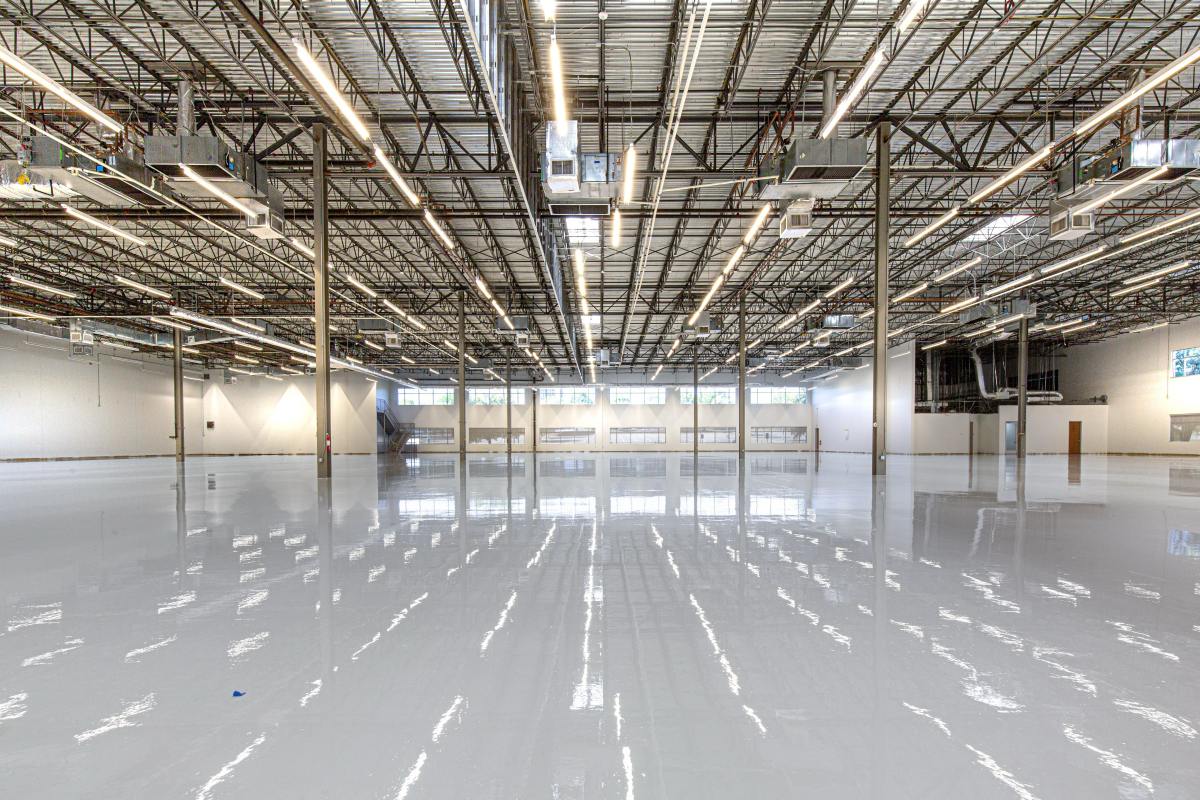
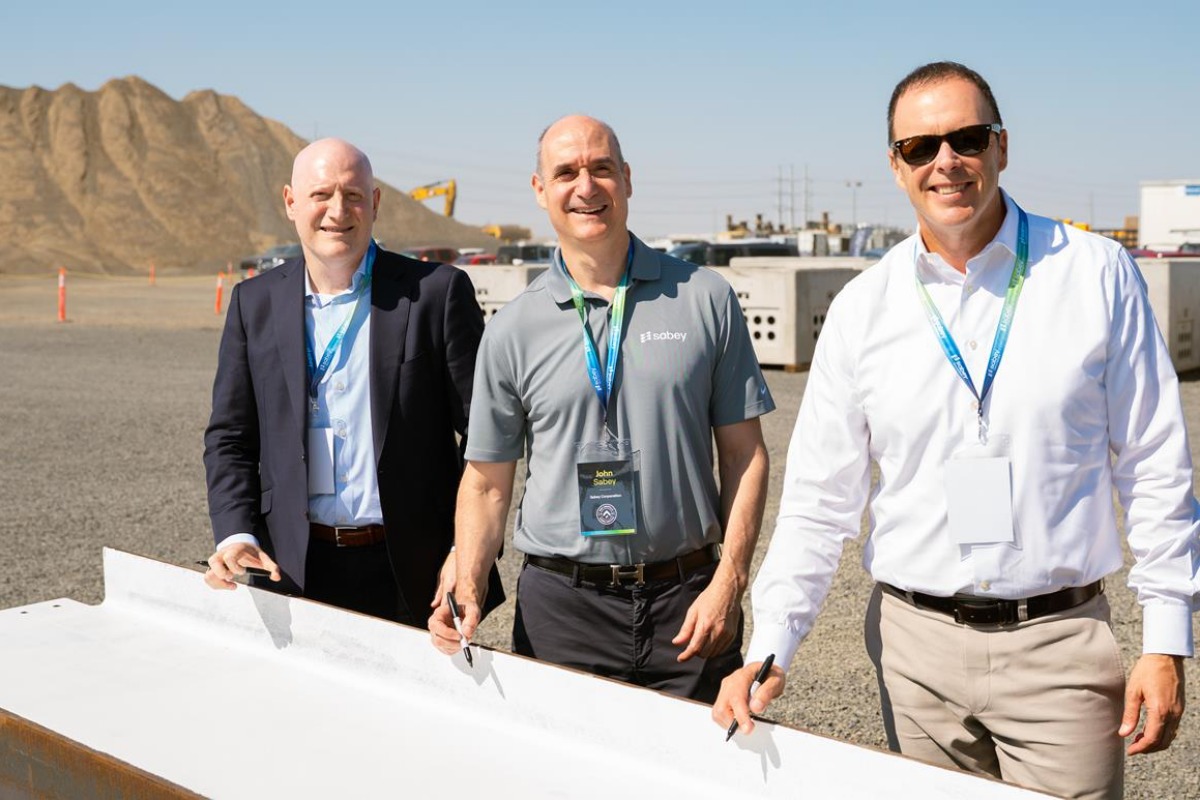
Sabey Data Centers, a data centre developer, owner, and operator, has marked a major construction milestone at its new SDC Umatilla campus in northeast Oregon, USA, holding a "Going Vertical" ceremony as the first structural steel was erected on site. The event, held on 15 July, brought together local and state representatives, community organisations, utility partners, contractors, and members of the project team to mark the next phase of construction. Located in the Columbia Cloud Corridor, the campus is being developed to support hyperscale, enterprise, and colocation customers as demand for cloud computing and AI infrastructure continues to grow. Construction enters next phase The ceremony signalled the transition from site preparation and engineering work to the vertical construction phase. Tim Mirick, President of Sabey Data Centers, says, "Watching the first steel go up is always a significant moment because it turns years of planning, engineering, and hard work into something you can finally see. "We are excited to build here, excited to become part of this community, and committed to serving our customers and this region for many years to come." State Representative Bobby Levy comments, "The construction of this new data centre is an exciting investment in northeast Oregon and a strong vote of confidence in our communities. Facilities like this keep our hospitals, schools, and small businesses connected while creating new economic opportunities. "I'm especially pleased that Sabey's use of a closed-loop cooling system demonstrates that innovation and responsible resource stewardship can go hand in hand. We're proud to welcome Sabey Data Centers to northeast Oregon." According to Sabey, the project is expected to create work for hundreds of skilled tradespeople during construction, supporting local businesses and contributing to the regional economy as development progresses. For more from Sabey Data Centers, click here.

Liberty Energy, PowerBridge form joint data centre venture
Liberty Energy, a Denver-based oilfield services company, and PowerBridge, a developer of power-integrated data centre campuses for hyperscale and AI, have formed a joint venture to support the development of powered data centre campuses, beginning with a planned 2GW site in West Texas, USA. The partnership combines PowerBridge's digital campus development experience with Liberty Power Innovations' power generation and energy management offerings to support large-scale AI and hyperscale data centre developments. The companies say the joint venture will provide an integrated approach to campus infrastructure and on-site power generation as demand for AI infrastructure continues to grow. Its initial focus is the proposed Alpha Digital Campus in West Texas, where the first phase is expected to include more than 300MW of generation capacity. Initial power delivery is targeted for the fourth quarter of 2027, with further deployment planned through the first half of 2028. Joint venture targets future AI infrastructure projects PowerBridge is responsible for developing the digital campus infrastructure, including pad-ready sites and a regional fibre conduit network, whilst Liberty Power Innovations will design, develop, and operate the modular power generation systems. The companies say the model is intended to support future gigawatt-scale data centre campuses serving hyperscale operators, AI workloads, and other large power users. Alex Hernandez, founder and Chief Executive Officer of PowerBridge, comments, "PowerBridge was founded on the premise of driving and solving the accelerating convergence between energy and digital infrastructure. Our mission is to serve our digital infrastructure customers with an integrated powered campus solution while building new power generation assets that strengthen grid reliability. "By aligning our powered campus development assets with Liberty's comprehensive power services and operational expertise, we are creating a model that can be scaled across future gigawatt-scale powered data centre campuses in West Texas." Ron Gusek, Chief Executive Officer of Liberty Energy, adds, "The most sophisticated customers are increasingly seeking partners that can simplify the delivery of large-scale digital infrastructure projects. As power availability becomes a defining factor in data centre development, customers need integrated solutions that align power generation, energy management, and campus infrastructure planning from the outset. "With PowerBridge, we are helping customers secure reliable power faster and more efficiently, supporting the accelerating growth of AI and digital infrastructure." The joint venture remains subject to the completion of commercial agreements and the required regulatory approvals.

Telxius expands Caribbean connectivity in Dominican Republic
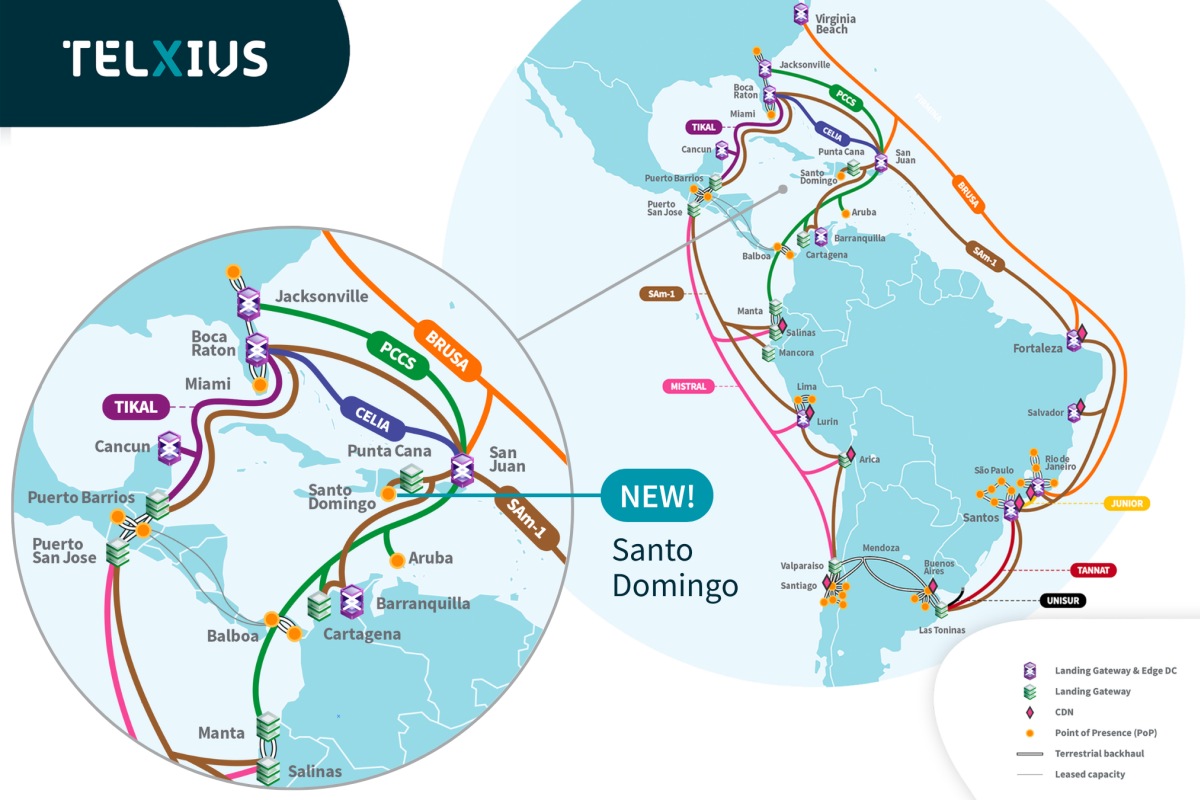
Telxius, a Spanish operator of submarine cable networks and telecommunications tower infrastructure, has opened a new point of presence (PoP) at the NAP Caribe data centre in Santo Domingo, expanding its network presence in the Caribbean and strengthening connectivity in the Dominican Republic. The new PoP complements the company's submarine cable landing gateway in Punta Cana, extending access to Telxius's network, transport, interconnection, and security services for carriers, content providers, and enterprises across the region. The expansion is intended to improve network availability, resilience, and performance whilst providing customers with greater access to Telxius's global infrastructure. According to DataReportal, the Dominican Republic had more than 10.2 million internet users in the first quarter of 2025, making it the largest internet market in the Caribbean. Telxius says the new facility is positioned to support growing demand for digital connectivity and internet services. Caribbean network growth continues Telxius operates more than 100,000km of submarine and terrestrial fibre infrastructure worldwide, including 25 carrier-neutral landing gateways and edge data centres. Carlos Casado, Northern Region Sales VP at Telxius, says, "Our new PoP in Santo Domingo reinforces our commitment to delivering world-class connectivity across some of the world’s most dynamic markets. "The Caribbean is home to a growing number of digital hubs, making it a key growth region for our customers and our network. Together with NAP Caribe, we are enabling faster, more secure, and more reliable connectivity across the Caribbean and wider Latin America." Maria Waleska Álvarez, CEO at NAP Caribe, adds, "We are proud to welcome Telxius to our data centre in the Dominican Republic, where its global connectivity footprint is anchored by our advanced technological capabilities, robust security standards, and a highly resilient, carrier-neutral digital infrastructure. "By aligning our visions and strengths, we are accelerating the development of a seamlessly interconnected regional ecosystem and enabling new opportunities for innovation, growth, and digital transformation across local and regional markets." The announcement follows Telxius's recent network expansion in Fortaleza and forms part of the company's continued investment in digital infrastructure across Latin America. For more from Telxius, click here.

DC BLOX joins 1GW AI data centre project
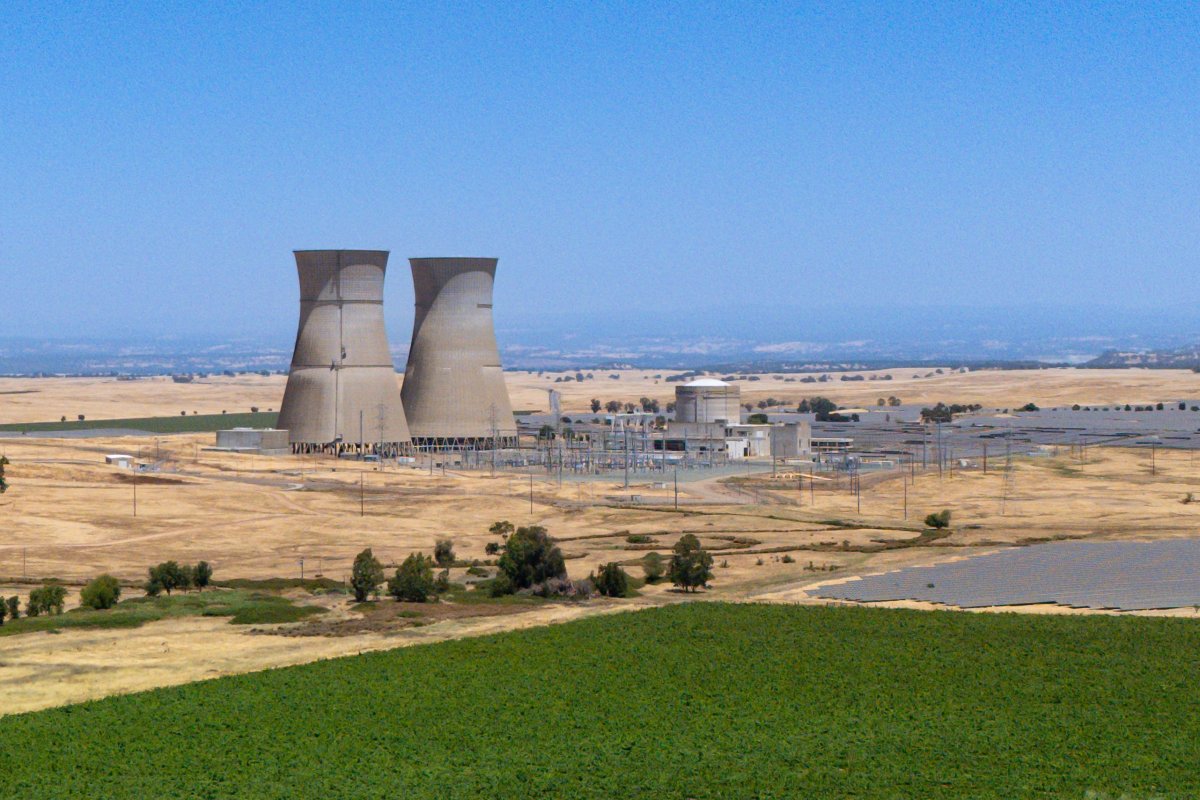
DC BLOX, a provider of connected data centres and fibre networks, has been selected as the digital infrastructure partner in a development consortium, led by Amentum, a US government services and engineering company, that has been chosen by the US Department of Energy's National Nuclear Security Administration (NNSA) to enter negotiations for a phased lease at the Savannah River Site in South Carolina. The proposed development includes a 1GW AI data centre campus alongside approximately 2GW of dedicated on-site energy generation. The project forms part of a federal initiative to use government-owned sites to support AI infrastructure development, increase power availability for the electricity grid, and advance nuclear reactor technologies. If negotiations are successful, the consortium will develop the project through a public-private partnership intended to accelerate the deployment of AI infrastructure and supporting energy capacity. AI infrastructure and energy development DC BLOX will provide expertise in the design, construction, and operation of digital infrastructure as part of the consortium. The company has previously invested in digital infrastructure across the region and is also a founding member of the Palmetto Nuclear Coalition. Jeff Uphues, CEO of DC BLOX, says, "DC BLOX is honoured to join Amentum and this visionary consortium to support a programme that accelerates our nation's economic growth through technology advancement. To lead, we must innovate not just in how we build data centres, but in how we power them." The Palmetto Nuclear Coalition brings together energy users, industry organisations, policymakers, and other stakeholders with the aim of supporting the future deployment of nuclear energy alongside digital infrastructure. The organisations say the approach is intended to provide reliable power for AI and cloud computing workloads. For more from DC BLOX, click here.

RETN unveils new London–Brussels network route
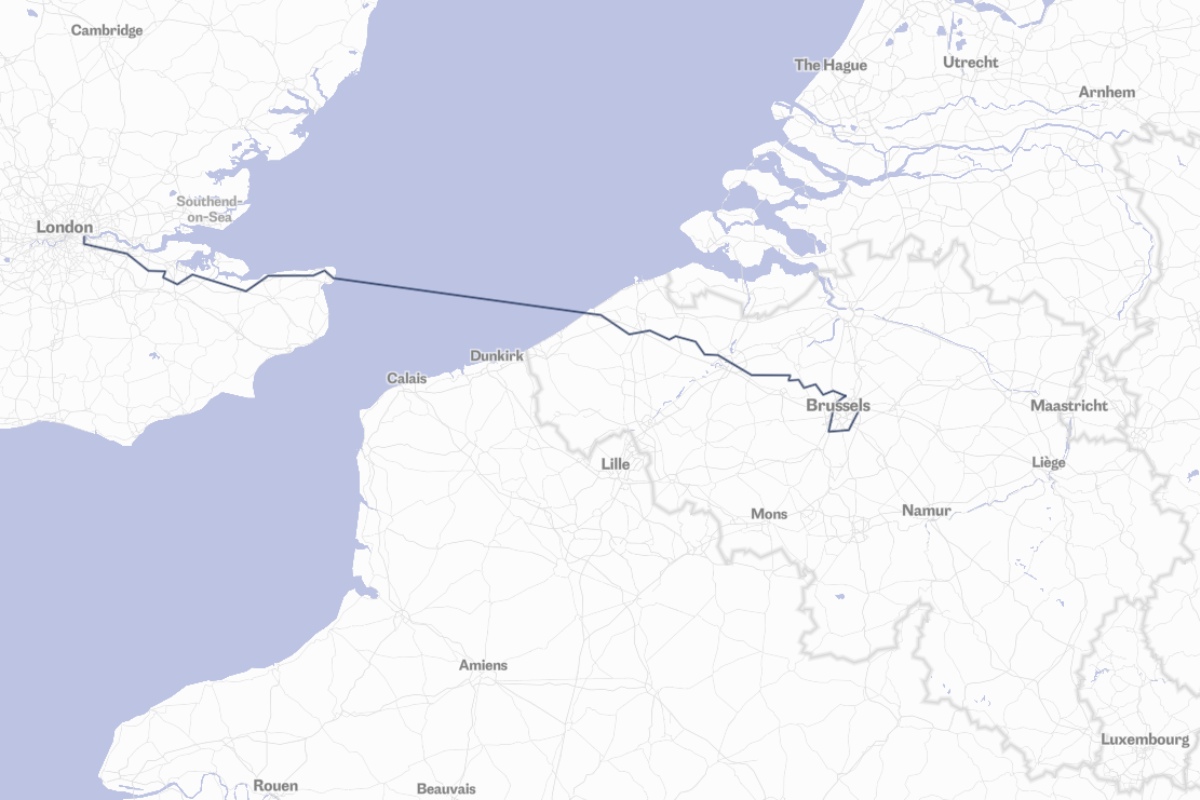
RETN, an independent global network service provider, has launched a new London–Brussels route designed to strengthen the resilience of its network between the UK and mainland Europe. The new route provides an additional connection into continental Europe, offering customers an alternative to more established paths through Amsterdam and Paris. According to the company, the investment is intended to improve route diversity and support business continuity as demand for resilient international connectivity continues to grow. RETN says the route is underpinned by newly constructed dark fibre between Rotterdam and Brussels, providing the foundation for its own DWDM network in Belgium and giving the company greater operational control over this section of the network. Alternative path adds physical network diversity The London–Brussels route also follows a geographically separate path out of London, avoiding the heavily used Docklands corridor, which carries a significant proportion of international traffic from East London's data centre campuses. It also uses a different landing station from RETN's existing CrossChannel UK–EU route via Slough, creating additional physical diversity for traffic entering and leaving the UK. As businesses place greater emphasis on network resilience, RETN says the new route reduces reliance on traditional transit hubs and established UK–Europe corridors. Tony O'Sullivan, CEO of RETN, comments, "Building resilient networks is no longer simply about adding capacity; it's about creating genuine physical diversity. "As international traffic becomes increasingly concentrated on a limited number of routes, customers need unique alternatives that strengthen business continuity. Our new London–Brussels route delivers exactly that." For more from RETN, click here.

Airbus selects Scaleway for sovereign cloud
European multinational aerospace company Airbus has selected French cloud computing provider Scaleway as a sovereign cloud provider to support parts of its cloud infrastructure, adding European-based cloud services to its existing multi-cloud strategy. Under the agreement, Scaleway will provide cloud infrastructure for selected enterprise applications operating in environments requiring high levels of governance, resilience, and legal protection. The platform is also intended to support AI-enabled workloads. Airbus says the appointment follows a competitive tender process that assessed cloud providers on technical capabilities, operational resilience, and legal and governance safeguards, including European jurisdiction and data protection. The sovereign cloud platform will be built on European infrastructure and integrated with Airbus's existing technology environment. According to the companies, it is designed to support business-critical applications across aircraft design, engineering, manufacturing, and enterprise operations. The agreement forms part of Airbus's wider digital sovereignty strategy, allowing different workloads to be hosted in environments that best meet their technical, operational, and regulatory requirements. Supporting critical applications with European cloud infrastructure Scaleway says the platform will provide interoperability with Airbus's existing cloud estate whilst enabling the company to retain operational control over sensitive applications and industrial data. Damien Lucas, Chief Executive Officer of Scaleway, comments, "Artificial intelligence is redefining how the world's most advanced industries design, manufacture, and operate. Unlocking its full potential requires digital infrastructure that combines world-class performance with trust, openness, and long-term control. "We're proud that Airbus has selected Scaleway to help build this next chapter of its cloud strategy and to demonstrate that Europe can deliver sovereign cloud capabilities at the highest international standards." Catherine Jestin, Executive Vice President Digital at Airbus, adds, "This collaboration marks a significant milestone in our broader commitment to European digital sovereignty. "By integrating a trusted, high-performance cloud environment that keeps our critical data assets shielded from foreign extraterritorial laws, we are ensuring that our digital infrastructure keeps pace with our aerospace innovation while maintaining control and resilience of our industrial operations." For more from Scaleway, click here.

Data centre batteries could cut peak grid demand by 15%
The rapid growth of artificial intelligence is increasing electricity demand from data centres and could encourage greater investment in energy storage and clean energy technologies, according to researchers from WU Vienna University of Economics and Business. The researchers argue that, with appropriate policy and market reforms, data centre operators could play a larger role in supporting electricity networks by investing in on-site energy infrastructure alongside new computing capacity. According to the International Energy Agency (IEA), global electricity demand from new data centres is expected to double by 2030. In the US, data centres could account for up to 17% of electricity consumption by the end of the decade. To assess the potential impact of on-site energy storage, the researchers analysed electricity consumption across 96 UK data centres using data from UK Power Networks. Their findings suggest that using on-site batteries to meet peak demand could reduce peak electricity imports from the grid by 10–15%. Research highlights role of batteries and grid flexibility The paper also proposes a series of policy reforms, including changes to grid connection rules, greater support for on-site battery storage and clean energy generation, incentives for flexible computing loads during periods of grid stress, and measures to encourage investment in next-generation energy storage technologies. The researchers argue that future data centre developments should be assessed not only by their electricity demand, but also by the flexibility, energy storage, and clean energy capacity they contribute to the wider electricity system. Lead author Behnam Zakeri, Assistant Professor and Deputy Head of the Institute for Data, Energy and Sustainability (IDEaS) at WU Vienna University of Economics and Business, says, "AI is creating an unprecedented race for electricity. The question is not just where to find clean power, but how quickly it can be delivered to meet AI’s growing compute demand. "Big tech companies are increasingly investing in energy storage as a solution to several of their power problems. What is now emerging is a ‘nexus’ where AI and energy storage reinforce one another. "AI is already helping to discover new materials, accelerate battery development, and optimise energy storage systems. At the same time, the growing demand for reliable, clean electricity for data centres is creating a powerful market for batteries, long-duration storage, and other flexibility technologies. "Under the right conditions, the digital infrastructure boom could help accelerate the clean energy transition beyond data centres themselves, creating spillover effects across other sectors."

Terra Innovatum targets Latin American data centres
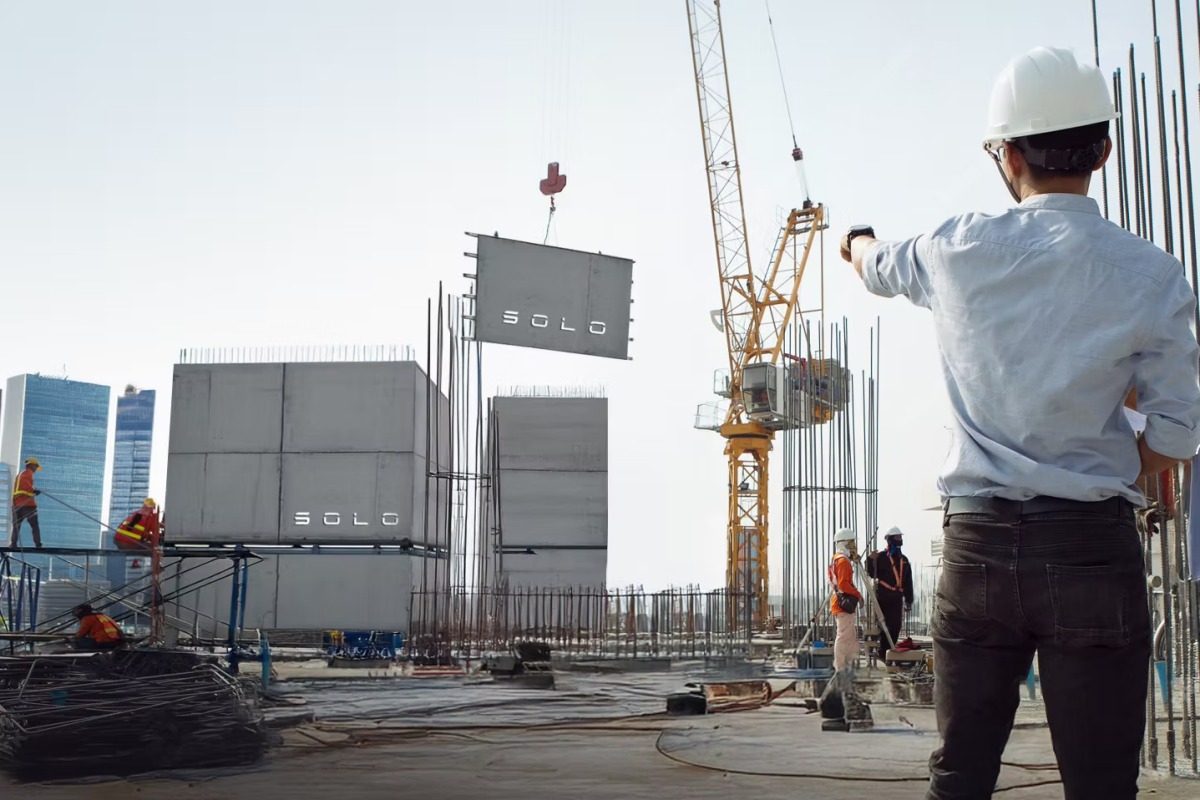
Terra Innovatum Global, a developer of micro-modular nuclear reactors, has signed a commercial letter of intent (LOI) with Waiken ILW to deploy its SOLO micro-modular nuclear reactor platform at data centre facilities operated by DIRECTV Latin America and SKY Brasil in Jaguariúna, Brazil. The agreement covers an initial deployment of up to 8MWe of behind-the-meter generating capacity, with the reactors intended to provide on-site power for the facilities. Alessandro Petruzzi, co-founder and CEO of Terra Innovatum Global, says, "This initiative aims to provide reliable, behind-the-meter clean energy solutions for Waiken ILW’s data centers while serving as a proof of concept for other long-term, energy-intensive operations within the Waiken ILW group of companies. "Critical communications infrastructure demands uninterrupted, resilient power. We believe this agreement demonstrates the growing commercial opportunity for behind-the-meter nuclear energy beyond AI data centres, extending into media, telecommunications, and other critical infrastructure sectors." First commercial deployment planned for the region The companies note that the project marks Terra Innovatum's first announced commercial deployment initiative in Latin America and reflects increasing interest in factory-built, micro-modular nuclear reactors for energy-intensive facilities. The SOLO platform is intended for use across a range of sectors, including telecommunications, cloud infrastructure, data centres, financial services, healthcare, and industrial facilities. Giordano Morichi, Founding Partner, Chief Business Development Officer, and Director of Investor Relations at Terra Innovatum Global, comments, "This strategic collaboration with Waiken ILW highlights the commercial strength of our global supply chain and the versatility of our SOLO technology. "The agreement demonstrates that SOLO is not designed for a single market; rather, it is a platform that can scale across multiple industries and geographies, including telecommunications, cloud infrastructure, and data centres, financial services, healthcare, industrial facilities, and other mission-critical operations." Carlos Magariños, Chief Global and Regulatory Strategy at Waiken ILW, adds, "We partner with Terra Innovatum Global to drive a forward-looking energy strategy that reinforces our long-standing commitment to innovation, sustainability, and technological excellence across all our companies and partners. "This alliance will strengthen our infrastructure by delivering reliable, behind-the-meter clean energy to DIRECTV’s and SKY’s broadcasting data centers, paving the way for a cleaner, more resilient, and self-sustaining energy future across Argentina, Brazil, and the broader region." For more from Terra Innovatum, click here.

Aon expands data centre insurance programme to $5bn
Aon, a London-headquartered global professional services firm, has expanded its Data Center Lifecycle Insurance Program (DCLP), increasing available insurance capacity to $5 billion (£3.7 billion) and broadening the range of risk management services available to support data centre developments from construction through to long-term operation. The programme is intended to provide insurance and advisory support for digital infrastructure projects as investment in artificial intelligence, cloud computing, and hyperscale data centres continues to grow. Joe Peiser, CEO of Risk Capital at Aon, says, "Digital infrastructure has become one of the most important and capital-intensive asset classes in the global economy. "As clients build larger and more complex data centre portfolios, they need access to greater insurance capacity alongside solutions that strengthen resilience throughout the asset lifecycle. "Expanding DCLP to $5 billion demonstrates our ability to help clients access capital, manage risk, and scale with confidence." Broader risk management throughout the asset lifecycle The enhanced programme provides up to $5 billion in Construction All Risks (CAR), Delay in Start-Up (DSU), Property Damage, and Business Interruption cover through a panel of A-rated insurers from Lloyd's and company markets, alongside other insurance facilities. It also includes expanded liability, cyber, and project cargo cover, offering up to $200 million (£148 million) in third-party liability outside the US, $100 million (£74 million) within the US, $400 million (£297 million) in cyber and technology errors and omissions cover, $500 million (£371 million) in project cargo cover, and up to $1 billion (£743 million) in terrorism cover through existing Aon facilities. In addition, Aon has expanded its advisory services through Aon Global Risk Consulting, including climate risk advice, environmental risk management, Owners Protective Professional Indemnity (OPPI), security risk consulting, risk engineering, and operational resilience expertise. The expansion builds on previous updates to the programme, which increased insurance capacity to $3.5 billion (£2.6 billion) and extended support for operational data centres.

BSRIA: 'Data centres dominate global cabling'
BSRIA, a UK-based research, testing, and consultancy organisation, has released its latest analysis of the global structured cabling sector. The Structured Cabling Worldwide 2026 report, covering 34 countries, points to a market driven by data centre investment. The global structured cabling market grew 21% in 2025 to $9.08 billion (£6.7 billion), adding $1.3 billion (£965 million) in a single year and building on almost 11% growth in 2024. The data centre segment was the main driver of that growth, increasing by 54% in 2025, as AI infrastructure investment continues to push cabling demand higher. Data centres now account for more than 41% of all cabling installed, almost double the 21% share they held in the 2015 to 2018 period. Markets including Denmark, Spain, Switzerland, Germany, and India recorded strong growth. Data centre growth across all segments The US delivered the strongest growth of any market, with sales up 44% year on year and the country accounting for almost nine in 10 dollars (89%) of the total global value increase in 2025. The US also holds more than two thirds (69%) of the global data centre cabling market, 14 times the size of second-placed China. Germany, the UK, Australia, and India follow as the next biggest data centre markets. While hyperscalers were the largest contributor to US growth, all data centre segments increased. Some of the US figures reflect products shipped from American hyperscalers into Canada, Latin America, and Europe, so the headline numbers slightly overstate domestic installation. Even allowing for that, the gap between the US and the rest of the world has widened. China is the exception, taking a separate path for reasons explored below. Suppliers dealing directly with hyperscalers have been amongst the main beneficiaries of the increase in US data centre revenues. China takes a different route in AI data centres China's AI data centres are following a different path. Direct Attach Cables (DACs) account for more than the majority (90–95%) of connections there, chosen for their lower cost and shorter lead times. Structured cabling plays a smaller role in those builds than it does in the US and other regions, with commercial implications for suppliers planning Asia Pacific strategies. The report as a whole covers the global structured cabling market across copper and fibre cable and connectivity, as well as associated components, with sales data, supplier shares, and forecasts for both data centre and LAN segments. For more from BSRIA, click here.


Translate »