Products


Motivair by Schneider Electric introduces new CDUs
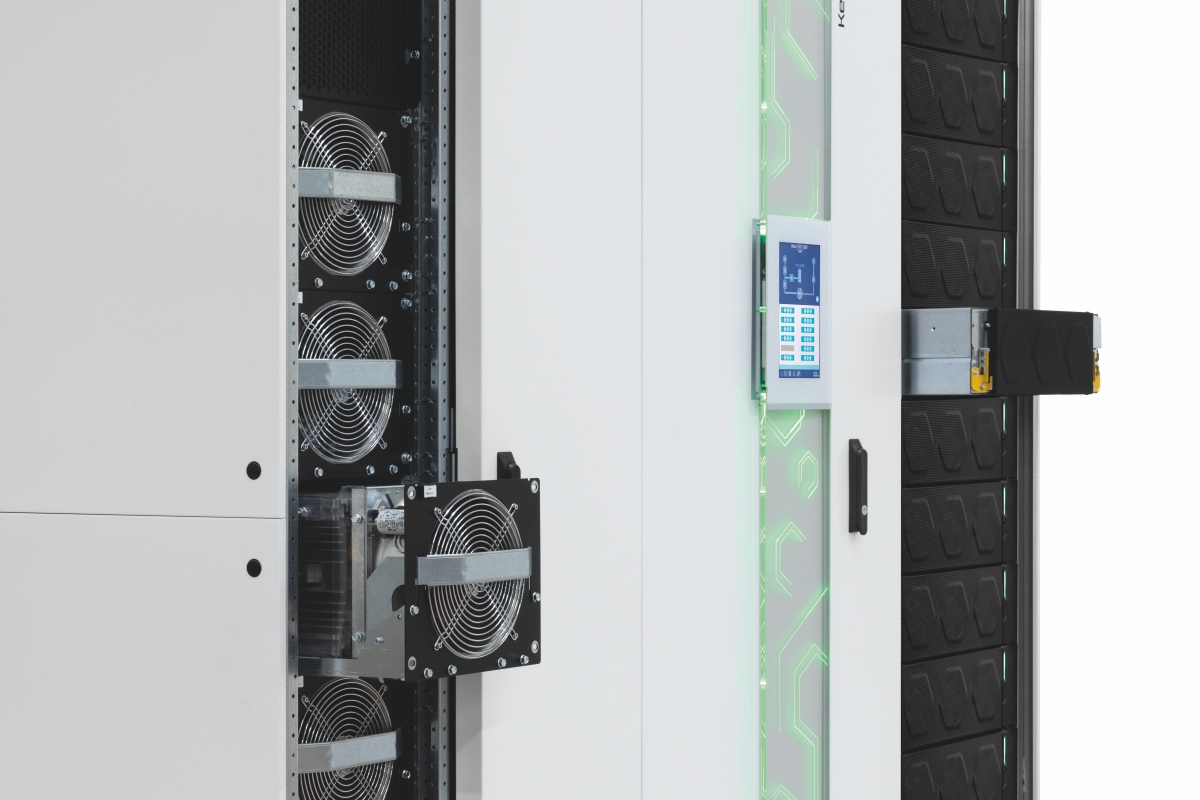
Motivair, a US provider of liquid cooling solutions for data centres and AI computing, owned by Schneider Electric, has introduced a new range of coolant distribution units (CDUs) designed to address the increasing thermal requirements of high performance computing and AI workloads. The new units are designed for installation in utility corridors rather than within the white space, reflecting changes in how liquid cooling infrastructure is being deployed in modern data centres. According to the company, this approach is intended to provide operators with greater flexibility when integrating cooling systems into different facility layouts. The CDUs will be available globally, with manufacturing scheduled to increase from early 2026. Motivair states that the range supports a broader set of operating conditions, allowing data centre operators to use a wider range of chilled water temperatures when planning and operating liquid cooled environments. The additions expand the company’s existing liquid cooling portfolio, which includes floor-mounted and in-rack units for use across hyperscale, colocation, edge, and retrofit sites. Cooling design flexibility for AI infrastructure Motivair says the new CDUs reflect changes in infrastructure design as compute densities increase and AI workloads become more prevalent. The company notes that operators are increasingly placing CDUs outside traditional IT spaces to improve layout flexibility and maintenance access, as having multiple CDU deployment options allows cooling approaches to be aligned more closely with specific data centre designs and workload requirements. The company highlights space efficiency, broader operating ranges, easier access for maintenance, and closer integration with chiller plant infrastructure as key considerations for operators planning liquid cooling systems. Andrew Bradner, Senior Vice President, Cooling Business at Schneider Electric, says, “When it comes to data centre liquid cooling, flexibility is the key with customers demanding a more diverse and larger portfolio of end-to-end solutions. "Our new CDUs allow customers to match deployment strategies to a wider range of accelerated computing applications while leveraging decades of specialised cooling experience to ensure optimal performance, reliability, and future-readiness.” The launch marks the first new product range from Motivair since Schneider Electric acquired the company in February 2025. Rich Whitmore, CEO of Motivair, comments, “Motivair is a trusted partner for advanced liquid cooling solutions and our new range of technologies enables data centre operators to navigate the AI era with confidence. "Together with Schneider Electric, our goal is to deliver next-generation cooling solutions that adapt to any HPC, AI, or advanced data centre deployment to deliver seamless scalability, performance, and reliability when it matters most.” For more from Schneider Electric, click here.

Supermicro launches liquid-cooled NVIDIA HGX B300 systems
Supermicro, a provider of application-optimised IT systems, has announced the expansion of its NVIDIA Blackwell architecture portfolio with new 4U and 2-OU liquid-cooled NVIDIA HGX B300 systems, now available for high-volume shipment. The systems form part of Supermicro's Data Centre Building Block approach, delivering GPU density and power efficiency for hyperscale data centres and AI factory deployments. Charles Liang, President and CEO of Supermicro, says, "With AI infrastructure demand accelerating globally, our new liquid-cooled NVIDIA HGX B300 systems deliver the performance density and energy efficiency that hyperscalers and AI factories need today. "We're now offering the industry's most compact NVIDIA HGX B300 options - achieving up to 144 GPUs in a single rack - whilst reducing power consumption and cooling costs through our proven direct liquid-cooling technology." System specifications and architecture The 2-OU liquid-cooled NVIDIA HGX B300 system, built to the 21-inch OCP Open Rack V3 specification, enables up to 144 GPUs per rack. The rack-scale design features blind-mate manifold connections, modular GPU and CPU tray architecture, and component liquid cooling. The system supports eight NVIDIA Blackwell Ultra GPUs at up to 1,100 watts thermal design power each. A single ORV3 rack supports up to 18 nodes with 144 GPUs total, scaling with NVIDIA Quantum-X800 InfiniBand switches and Supermicro's 1.8-megawatt in-row coolant distribution units. The 4U Front I/O HGX B300 Liquid-Cooled System offers the same compute performance in a traditional 19-inch EIA rack form factor for large-scale AI factory deployments. The 4U system uses Supermicro's DLC-2 technology to capture up to 98% of heat generated by the system through liquid cooling. Supermicro NVIDIA HGX B300 systems feature 2.1 terabytes of HBM3e GPU memory per system. Both the 2-OU and 4U platforms deliver performance gains at cluster level by doubling compute fabric network throughput up to 800 gigabits per second via integrated NVIDIA ConnectX-8 SuperNICs when used with NVIDIA Quantum-X800 InfiniBand or NVIDIA Spectrum-4 Ethernet. With the DLC-2 technology stack, data centres can reportedly achieve up to 40% power savings, reduce water consumption through 45°C warm water operation, and eliminate chilled water and compressors. Supermicro says it delivers the new systems as fully validated, tested racks before shipment. The systems expand Supermicro's portfolio of NVIDIA Blackwell platforms, including the NVIDIA GB300 NVL72, NVIDIA HGX B200, and NVIDIA RTX PRO 6000 Blackwell Server Edition. Each system is also NVIDIA-certified. For more from Supermicro, click here.

tde expands tML breakout module for 800GbE ethernet
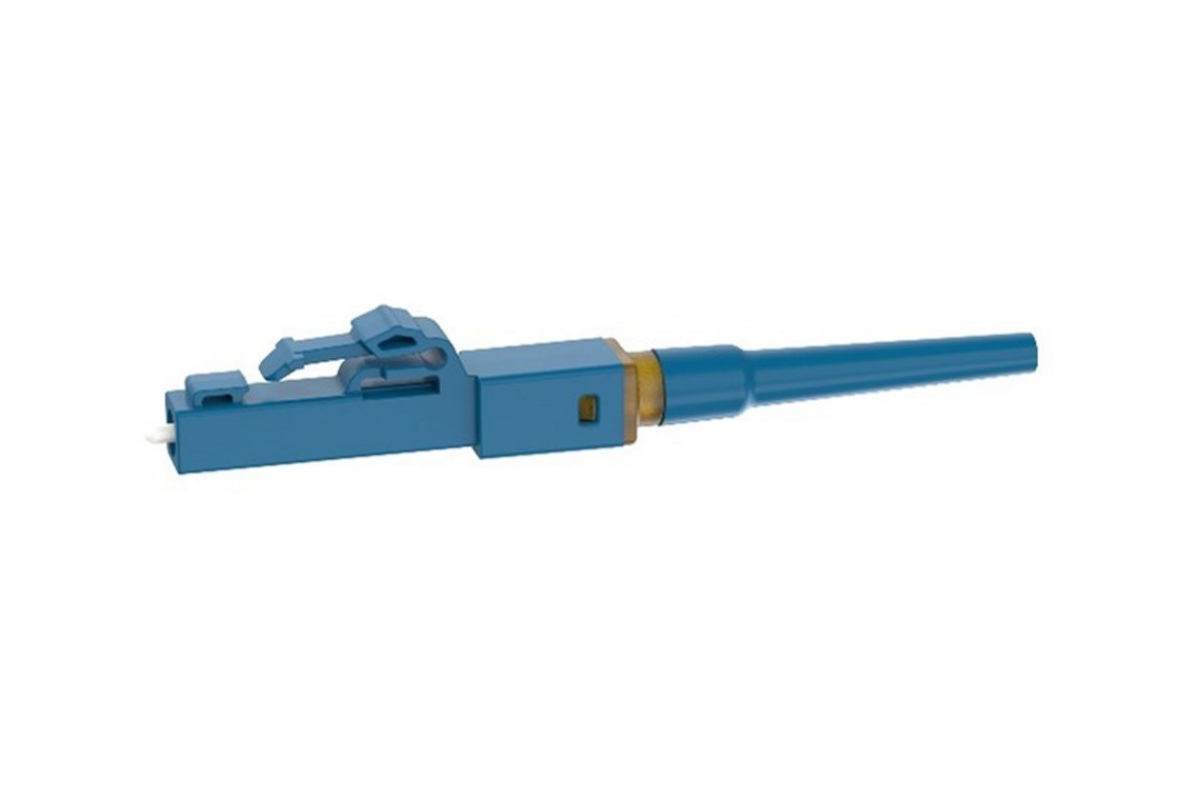
trans data elektronik (tde), a German manufacturer of fibre optic and copper cabling systems for data centres, has further developed its tML system and made it fit for increased network requirements, with the new breakout modules now supporting transceivers up to 800GbE. QSFP, QSFP-DD, and OSFP transceivers can now be used more efficiently and split into ports with lower data rates (4 x 100GbE or 8 x 100GbE). This allows data centre and network operators to increase the port density of their switch and router chassis and make better use of existing hardware. The company says the new breakout module is particularly suitable for use in high-speed data centres and modern telecommunications infrastructures. “Breakout applications have become firmly established in the high-speed sector,” explains André Engel, Managing Director of tde. "With our tML breakout modules, customers can now use transceivers up to 800GbE and still split them into smaller, clearly structured port speeds. "This allows them to combine maximum port density with very clear, structured cabling." Efficient use of MPO-based high-speed transceivers The current high-speed transceivers in the QSFP, QSFP-DD, and OSFP form factors have MPO connectors with 12, 16, or 24 fibres - in multimode (MM) or single-mode (SM). Typical applications such as SR4, DR4, and FR4 use eight fibres of the 12-fibre MPO, while SR8, DR8, and FR8 use sixteen fibres of a 16- or 24-fibre MPO. This is where tde says it comes in with its tML breakout modules. Depending on the application, the modules split the incoming transmission rate into, for example, four 100GbE or eight 100GbE channels with LC duplex connections. This allows multiple dedicated links with lower data rates to be provided from a single high-speed port - for switches, routers, or storage systems, for example. Alternatively, special versions with other connector faces such as MDC, SN, SC, or E2000 are available. Front MPO connectors and maximum packing density tde also relies on front-integrated MPO connectors for the latest generation of tML breakout modules. The MPO connections are plugged in directly from the front via patch cables. Compared to conventional solutions with rear MPO connectors, this aims to simplify structured patching, ensure clarity in the rack, and facilitate moves, adds, and changes during operation. A high port density can be achieved without the need for separate fanout cables. Eight tML breakout modules can be installed in the tML module carrier with one height unit. Future-proofing and investment protection tde says it has designed the tML breakout module for maximum ease of use. It can only be patched in the front patch panel level, seeking to support structured and clear cabling. Since the tML module carrier can be mixed and matched depending on the desired application and requirements, the breakout module should offer high packing density. Fibre-optic and copper modules can also be combined. André concludes, “With the addition of the tML breakout module, our tML system platform is well equipped for the future and will remain competitive in the long term.”

SPP Pumps brings fire and cooling experience to DCs
SPP Pumps, a manufacturer of centrifugal pumps and systems, and its subsidiary, SyncroFlo, have combined their fire protection and cooling capabilities to support the expanding data centre sector. The companies aim to offer an integrated approach to pumping, fire suppression, and liquid cooling as operators and contractors face rising demand for large-scale, high-density facilities. The combined portfolio draws on SPP’s nearly 150 years of engineering experience and SyncroFlo’s long history in pre-packaged pump system manufacturing. With modern co-location and hyperscale facilities requiring hundreds of pumps on a single site, the companies state that the joint approach is intended to streamline procurement and project coordination for contractors, consultants, developers, and OEMs. SPP’s offering spans pump equipment for liquid-cooled systems, cooling towers, chillers, CRAC and CRAH systems, water treatment, transformer cooling, heat recovery, and fire suppression. Its fire pump equipment is currently deployed across regulated markets, with SPP and SyncroFlo packages available to meet NFPA 20 requirements. Integrated pump systems for construction efficiency The company says its portfolio also includes pre-packaged pump systems that are modular and tailored to each project. These factory-tested units are designed to reduce installation time and simplify on-site coordination, helping to address construction schedules and cost pressures. Tom Salmon, Group Business Development Manager for Data Centres at SPP and SyncroFlo, comments, “Both organisations have established strong credentials independently, with over 75 data centre projects delivered for the world’s largest operators. "We’re now combining our group’s extensive fire suppression, HVAC, and cooling capabilities. By bringing together our complementary capabilities from SPP, SyncroFlo, and other companies in our group, we can now offer comprehensive solutions that cover an entire data centre's pumping requirements.” John Santi, Vice President of Commercial Sales at SyncroFlo, adds, “Design consultants and contractors tell us lead time is critical. They cannot afford schedule delays. Our pre-packaged systems are factory-tested and ready for immediate commissioning. "With our project delivery experience and expertise across fire suppression, cooling, and heat transfer combined under one roof, we eliminate the coordination headaches of managing multiple suppliers across different disciplines.” Tom continues, “In many growth markets, data centres are now classified as critical national infrastructure, and rightly so. These facilities cannot afford downtime, and our experience with critical infrastructure positions us to best serve this market."

R&M introduces radio-based access control for racks
R&M, a Swiss developer and provider of infrastructure for data and communications networks, is introducing radio-based access control for data centres. The core product is an electromechanical door handle for the racks of the BladeShelter and Freenet families from R&M. Technicians can only open the door handles with authorised transponder cards, while administrators can control them remotely via encrypted radio connections and data networks. R&M says it is thus integrating high-security digital protection into its "holistic infrastructure solutions" for data centres. Package details One installation comprises up to 1,200 door handles for server and network racks, as well as radio and control modules for computer rooms. The door handles do not require any wiring in the racks. Their electronics are powered by batteries whose power is sufficient for three years of operation or 30,000 locking cycles. The personalised transponder cards communicate with the door handles via RFID antennas. In addition, there is software to manage users, access rights, the transponder cards, and racks. The software creates protocols, visualises alarm states, and supports other functions. It can be operated remotely and integrated into superordinate systems such as data centre infrastructure management (DCIM). The new offer is the result of the collaboration with German manufacturer EMKA, being based on the company's 'Agent E', an intelligent locking system. The R&M offering aims to integrate complementary systems from selected manufacturers into infrastructure for data centres. In Europe, R&M notes it is already working with several independent partner companies that pursue comparable medium-sized business models and sustainability goals. For more from R&M, click here.

BAC releases upgraded immersion cooling tanks
Baltimore Aircoil Company (BAC), a provider of data centre cooling equipment, has introduced an updated immersion cooling tank for high-performance data centres, incorporating its CorTex technology to improve reliability, efficiency, and support for high-density computing environments. The company says the latest tank has been engineered to provide consistent performance with minimal maintenance, noting its sealed design has no penetrations below the fluid level, helping maintain fluid integrity and reduce leakage risks. Dual pumps are included for redundancy and the filter-free configuration removes the need for routine filter replacement. Design improvements for reliability and ease of operation The tanks are available in four sizes - 16RU, 32RU, 38RU, and 48RU - allowing operators to accommodate a range of immersion-ready servers. Air-cooled servers can also be adapted for immersion use. Each unit supports server widths of 19 and 21 inches (~48 cm and ~53 cm) and depths up to 1,200 mm, enabling higher rack densities within a smaller footprint than traditional air-cooled systems. BAC states that the design can support power usage effectiveness levels of up to 1.05, depending on the wider installation. The system uses dielectric fluid to transfer heat from servers to the internal heat exchanger, while external circuits can run on water or water-glycol mixtures. Cable entry points, the lid, and heat-exchanger connections are fluid-tight to help prevent contamination. The immersion tank forms the indoor component of BAC’s Cobalt system, which combines indoor and outdoor cooling technologies for high-density computing. The system can be paired with BAC’s evaporative, hybrid, adiabatic, or dry outdoor equipment to create a complete cooling configuration for data centres managing higher-powered servers and AI-driven workloads. For more from BAC, click here.

OPTEX introduces indoor LiDAR sensor for DC security
OPTEX, a manufacturer of intrusion detection sensors and security systems, has launched the REDSCAN Lite, a short-range indoor LiDAR sensor designed to provide precise and rapid detection for protecting critical infrastructure within data centres. Founded in Japan in 1979, OPTEX has developed a series of sensor innovations, including the use of LiDAR technology for security detection. The company says its REDSCAN range is recognised for improving the accuracy and reliability of intrusion detection in sensitive environments. Addressing physical security risks in critical environments As data centres across the UK and EU are now classified as critical infrastructure, operators face increasing pressure to meet strict security standards and mitigate both internal and external risks. Industry data indicates that nearly two thirds of data centres experienced a physical security breach in the past year. The REDSCAN Lite uses 2D LiDAR technology to detect intrusions within a 10 m x 10 m range, reportedly responding in as little as 100 milliseconds. The sensor can be positioned vertically to create invisible ‘laser walls’ around assets such as server racks, ventilation conduits, and access points, or horizontally to protect ceilings, skylights, and raised floors. Engineered for high-density environments, the REDSCAN Lite is capable of detecting small-scale activities such as the insertion of USB drives or LAN cables through server racks. It is designed to operate effectively despite temperature fluctuations, low light, or complete darkness, helping reduce false alarms common in traditional systems. Purpose-built for confined data centre spaces Mac Kokobo, Head of Global Security Business at OPTEX, says the product was developed in response to growing demand from data centre operators, noting, “In today’s modern environments, such as data centres, spaces are becoming tighter and tighter filling with racks and processors. "This latest REDSCAN Lite has been developed to meet the specific need for rapid detection in tight indoor spaces where high security is crucial. “Feedback from customers highlighted a clear need for enhanced protection in small, narrow areas and spaces, so the REDSCAN Lite sensor has been designed to fit into the narrow gaps and is engineered to provide highly accurate and fast detection in indoor spaces that other technologies simply cannot reach.” The REDSCAN Lite RS-1010L is now available for deployment.

Vertiv expands immersion liquid cooling portfolio
Vertiv, a global provider of critical digital infrastructure, has introduced the Vertiv CoolCenter Immersion cooling system, expanding its liquid cooling portfolio to support AI and high-performance computing (HPC) environments. The system is available now in Europe, the Middle East, and Africa (EMEA). Immersion cooling submerges entire servers in a dielectric liquid, providing efficient and uniform heat removal across all components. This is particularly effective for systems where power densities and thermal loads exceed the limits of traditional air-cooling methods. Vertiv has designed its CoolCenter Immersion product as a "complete liquid-cooling architecture", aiming to enable reliable heat removal for dense compute ranging from 25 kW to 240 kW per system. Sam Bainborough, EMEA Vice President of Thermal Business at Vertiv, explains, “Immersion cooling is playing an increasingly important role as AI and HPC deployments push thermal limits far beyond what conventional systems can handle. “With the Vertiv CoolCenter Immersion, we’re applying decades of liquid-cooling expertise to deliver fully engineered systems that handle extreme heat densities safely and efficiently, giving operators a practical path to scale AI infrastructure without compromising reliability or serviceability.” Product features The Vertiv CoolCenter Immersion is available in multiple configurations, including self-contained and multi-tank options, with cooling capacities from 25 kW to 240 kW. Each system includes an internal or external liquid tank, coolant distribution unit (CDU), temperature sensors, variable-speed pumps, and fluid piping, all intended to deliver precise temperature control and consistent thermal performance. Vertiv says that dual power supplies and redundant pumps provide high cooling availability, while integrated monitoring sensors, a nine-inch touchscreen, and building management system (BMS) connectivity simplify operation and system visibility. The system’s design also enables heat reuse opportunities, supporting more efficient thermal management strategies across facilities and aligning with broader energy-efficiency objectives. For more from Vertiv, click here.

ZincFive introduces battery system designed for AI DCs
ZincFive, a producer of nickel-zinc (NiZn) battery-based solutions for immediate power applications, has announced a new nickel-zinc battery cabinet designed for data centres deploying artificial intelligence workloads. The system, named BC AI, is positioned as an uninterruptible power supply (UPS) battery platform that can support both high-intensity AI power surges and conventional backup requirements. The company says the new system builds on its existing nickel-zinc battery range and is engineered for environments where GPU clusters and rapid power fluctuations are driving changes in electrical infrastructure requirements. The battery technology is intended to respond to fast transient loads associated with AI training and inference, while also providing backup during power interruptions. The system includes a battery management platform and nickel-zinc chemistry designed for frequent high-power discharge cycles. The company says this approach reduces reliance on upstream electrical capacity by managing dynamic loads at the UPS level. Nickel-zinc battery design for transient load handling As well as incorporating a new nickel-zinc battery cell designed for high-intensity usage and long service life, ZincFive highlights the product's compact footprint and field-upgradeable design. Nickel-zinc chemistry offers power density characteristics that allow the system to accommodate rapid load spikes without significant footprint expansion. ZincFive says competing approaches may require substantially more physical space to manage similar peak loads, particularly where AI applications can generate power demands above nominal UPS levels. The system is targeted at hyperscale operators, colocation facilities, and UPS manufacturers integrating AI-ready backup capacity. The company also points to potential benefits related to infrastructure design, including reduced UPS sizing requirements and support for power-management strategies aimed at improving grid interaction. Tod Higinbotham, Chief Executive Officer of ZincFive, says, “AI is transforming the very foundation of data centres, creating new challenges that legacy technologies cannot solve. "With BC 2 AI, we are delivering a safe, sustainable, and future-ready power solution designed to handle the most demanding AI workloads while continuing to support traditional IT backup. "This is a defining moment not just for ZincFive, but for the entire data centre industry as it adapts to the AI era.” For more from ZincFive, click here.

Wolong introduces efficient motors for DC cooling applications
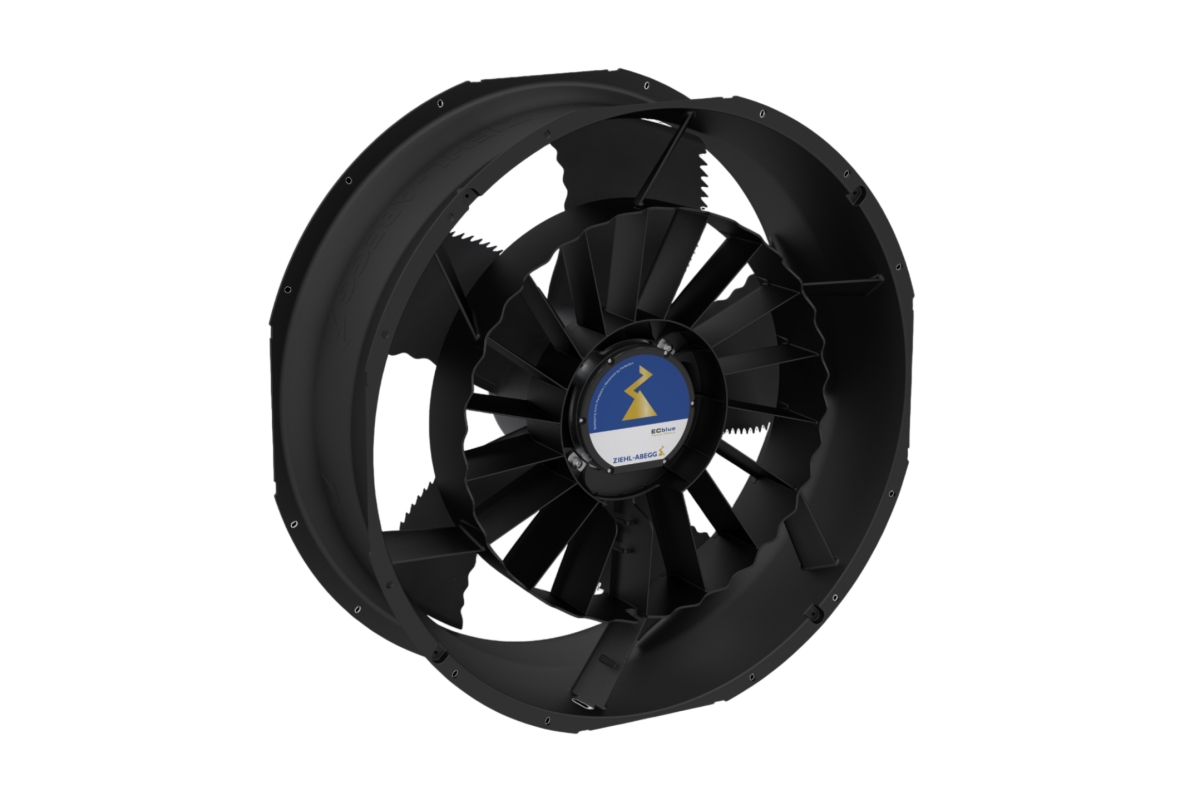
Wolong Electric America, a developer of industrial motor and drive technology, has introduced its Permanent Magnet Direct Drive (PMDD) motors, highlighting their ability to improve energy efficiency and reduce heat generation in high-demand environments such as data centres. Designed to operate without belts or sheaves, PMDD motors use a direct drive system that reduces mechanical complexity and common failure points, improving reliability and minimising maintenance requirements. The approach should also reduce mechanical stress and radial load on bearings, contributing to a longer service life. Lower heat output and energy use in data centres At the core of each motor is a rare earth magnet design that delivers stronger magnetic fields in a compact form factor. This aims to enable higher efficiency and cooler operation compared with traditional induction motors, which would be a key advantage in temperature-sensitive environments such as data centres, where controlling internal heat and power consumption are constant priorities. The motors are operated via a variable frequency drive (VFD), enabling precise speed control, smooth acceleration and deceleration, and reduced electrical strain on supporting systems. A 4:1 turndown ratio allows the motors to maintain torque and efficiency - including at low speeds - supporting variable airflow demands within cooling systems. Wolong Electric says its PMDD motors can be integrated directly into fan assemblies, reducing overall system losses and eliminating inrush current at startup. With reported efficiency improvements of around 20% over conventional induction motors, the design should contribute to measurable reductions in both energy use and waste heat. Flexible configurations for critical environments Wolong Electric says the PMDD motors can be tailored to specific applications, including data centre cooling systems, refineries, and OEM equipment such as heat exchangers. The motors are designed to operate at lower temperatures and with reduced maintenance demands, supporting long-term reliability and stable thermal management across facility operations. The company’s design approach hopes to enable easy integration with OEM and packaged system configurations, helping operators meet efficiency goals while aligning with evolving energy standards.


Translate »