Products


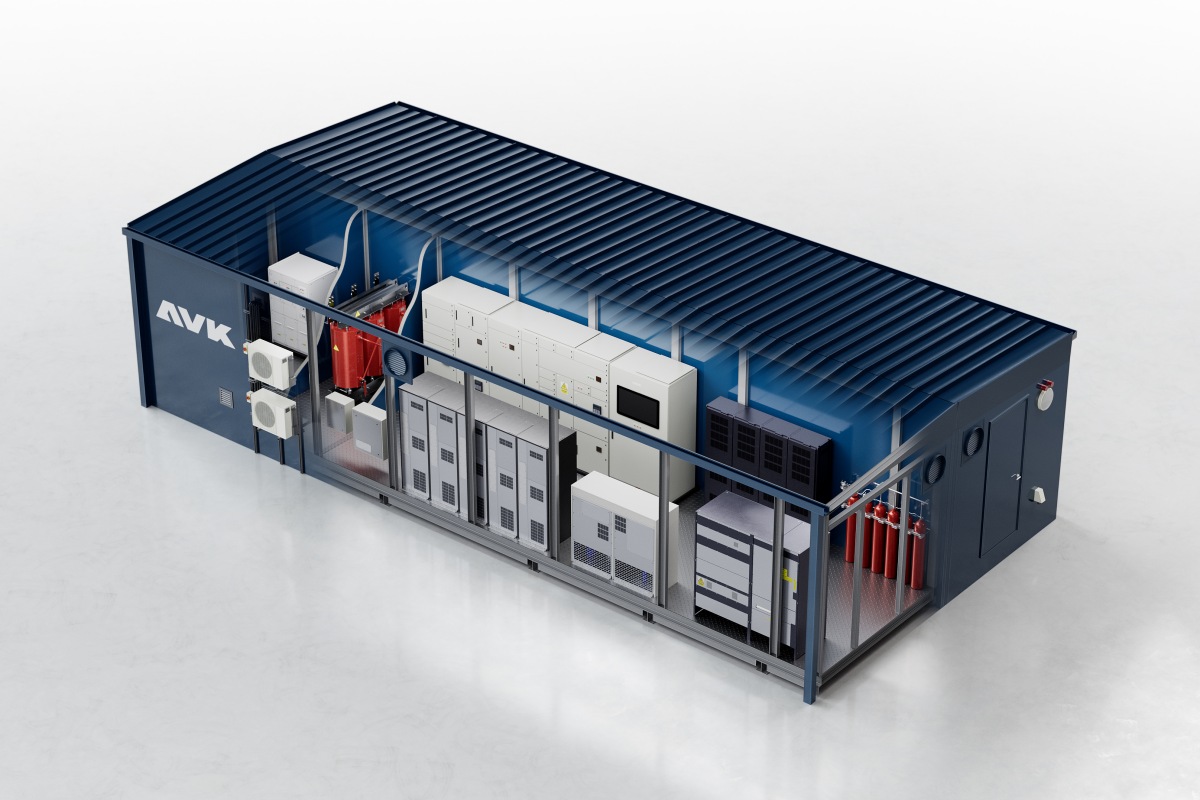
AVK launches modular PowerPods for data centres
AVK, a provider of power systems and electrical infrastructure for data centres, has introduced a new modular power system, PowerPods, designed to support energy infrastructure for hyperscale data centres and AI deployments. The units integrate key electrical components - including uninterruptible power supplies (UPS), engines, switchgear, controls, enclosures, and transformers - into a single, pre-engineered system. Each unit is delivered ready for connection and deployment on site. The launch reflects growing demand for scalable power infrastructure, as data centre operators seek to deploy capacity more quickly while maintaining resilience and operational continuity. PowerPods have been developed using AVK’s experience in critical power systems, including standby and prime power, as well as control and service capabilities. Modular approach to data centre power deployment The company highlights that the systems are designed to simplify installation by combining multiple elements of the power chain into a single unit. This approach aims to reduce complexity during deployment and support more flexible expansion as demand increases. PowerPods can be configured to meet specific project requirements and are designed to support a range of technologies, allowing operators to adapt systems over time. The modular design also enables use across both new developments and existing sites requiring additional capacity. The units are available for immediate deployment, with a focus on reducing lead times for projects where rapid delivery is required. Ben Pritchard, CEO at AVK, says, “The launch of the AVK PowerPods reinforces our position as one of the few businesses capable of designing, delivering, and supporting the entire data centre power ecosystem - at scale, with true flexibility, and with the engineering depth that critical infrastructure demands. "Large data centres need partners who genuinely understand the full energy picture and we now own the full power train. “PowerPods complete our proposition to the market. They bring together our extensive critical power expertise with our technology-agnostic model to deliver a complete power train solution that makes us a reliable, long-term energy partner for data centre operators. "With our ready-to-deploy PowerPods model, we are perfectly positioned to support the next wave of hyperscale data centres and AI infrastructure.” For more from AVK, click here.

Ellis unveils heavy-duty cable hanger, Hercules
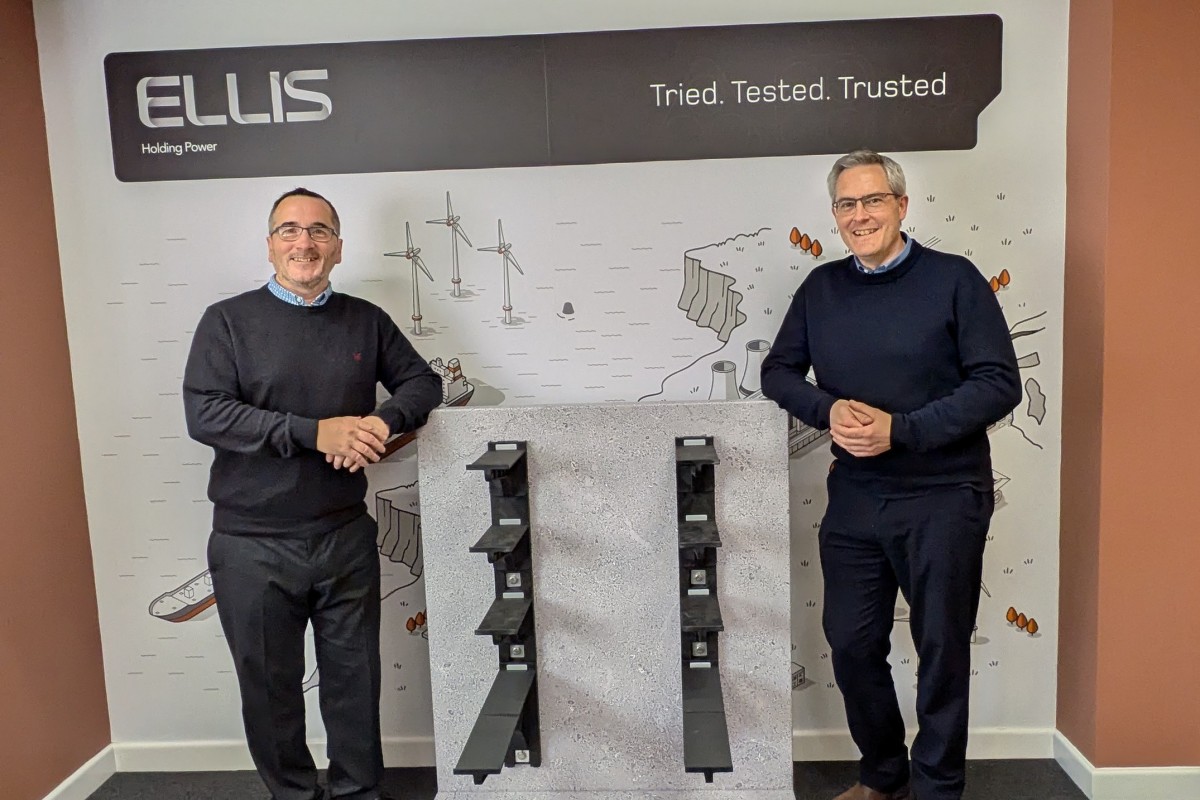
Ellis Patents, a UK manufacturer of cable cleats and cable management systems, has introduced a new heavy-duty cable hanger, Hercules, at Data Centre World Frankfurt, expanding its cable support range for high-capacity data centre infrastructure. The product has been developed to support heavier cable installations as facilities increase power density and cabling volumes. It is designed for use in environments where mechanical strength and cable integrity are critical. Hercules is available in sizes ranging from 6 inches to 25 inches, providing flexibility across different cable diameters and installation requirements. The hanger is also UV-resistant, making it suitable for installations where cable containment may be exposed to external conditions, such as perimeter runs or transition zones. Designed for high-capacity cable installations As data centre projects scale, contractors are required to manage larger power cables and higher electrical loads, often within tighter deployment schedules. Cable support systems play a key role in maintaining safety and reliability in these environments. Ellis says the Hercules cable hanger has been developed in consultation with industry stakeholders to address these installation challenges, supporting heavier cable runs while maintaining ease of installation. Kelly Brown, Sales Director at Ellis, explains, "As data centre infrastructure grows in scale and complexity, the need for dependable, heavy-duty cable support becomes increasingly important. "Hercules has been developed in partnership with industry experts to provide installers with a strong, practical solution that supports heavier cable runs while offering the flexibility, durability, and UV resistance along with the reliability customers need and have come to expect from Ellis." The product was presented to contractors, consultants, and specifiers at Data Centre World Frankfurt, where it is aimed at those involved in hyperscale, colocation, and enterprise data centre projects. Ellis states that the addition of Hercules also strengthens its wider cable management offering for data centre applications.

Daikin expands UK HVAC rental fleet
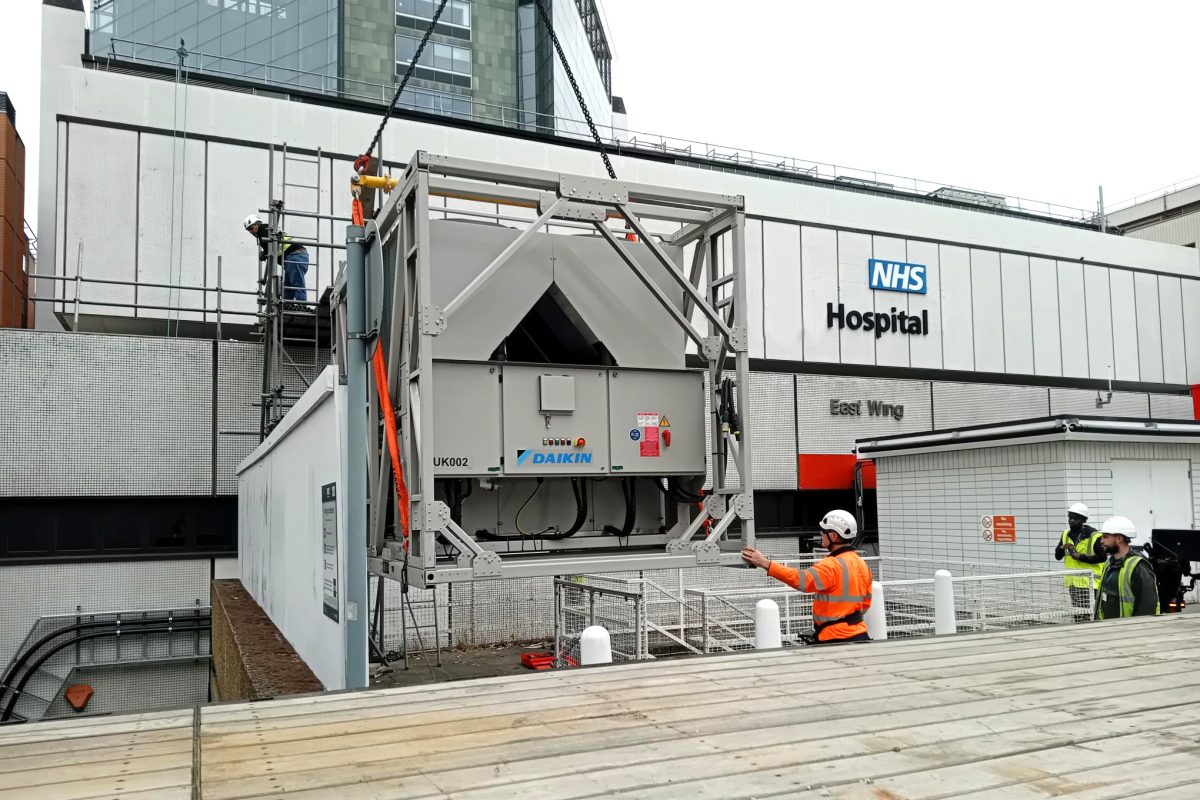
Daikin Rental Solutions, the dedicated temporary HVAC hire division of Daikin Applied UK, has expanded its UK rental fleet with additional cooling, heating, and air handling equipment, responding to growing demand for temporary HVAC systems. The investment reflects pressure on organisations to maintain operations while managing ageing infrastructure, higher temperatures, regulatory requirements, and the shift towards lower-carbon energy. The company has increased its range of high-capacity cooling systems, process cooling equipment, and heat pumps, alongside introducing UK-manufactured air handling units. Broader HVAC capability for UK industries Demand for temporary HVAC continues to rise across sectors such as data centres, healthcare, and manufacturing, where system downtime can have operational consequences. To support this, Daikin has added higher-capacity chiller units and an expanded range of heat pumps, offering scalable cooling and heating for larger or more complex environments. Additional dry air coolers have also been introduced to support process cooling requirements, including systems designed to improve energy performance under suitable conditions. The company has also expanded its airside equipment with a new range of air handling units manufactured in the UK. Produced at Daikin Applied UK’s facility in Cramlington, the units are designed for rental use, with a focus on ease of installation and suitability for environments such as cleanrooms and healthcare settings. Mike England, UK Rental Sales Manager at Daikin Applied UK, says, "In many of the sectors we support, downtime simply isn’t an option. Customers need solutions that are not only available quickly, but that perform reliably and integrate seamlessly into their existing systems." The company states that manufacturing air handling units within the UK is intended to improve equipment availability and reduce lead times, while maintaining consistent engineering standards across its rental fleet. Digital monitoring and control features are available on selected systems, supporting maintenance and operational oversight where required. For more from Daikin, click here.

Carrier launches AquaEdge chiller
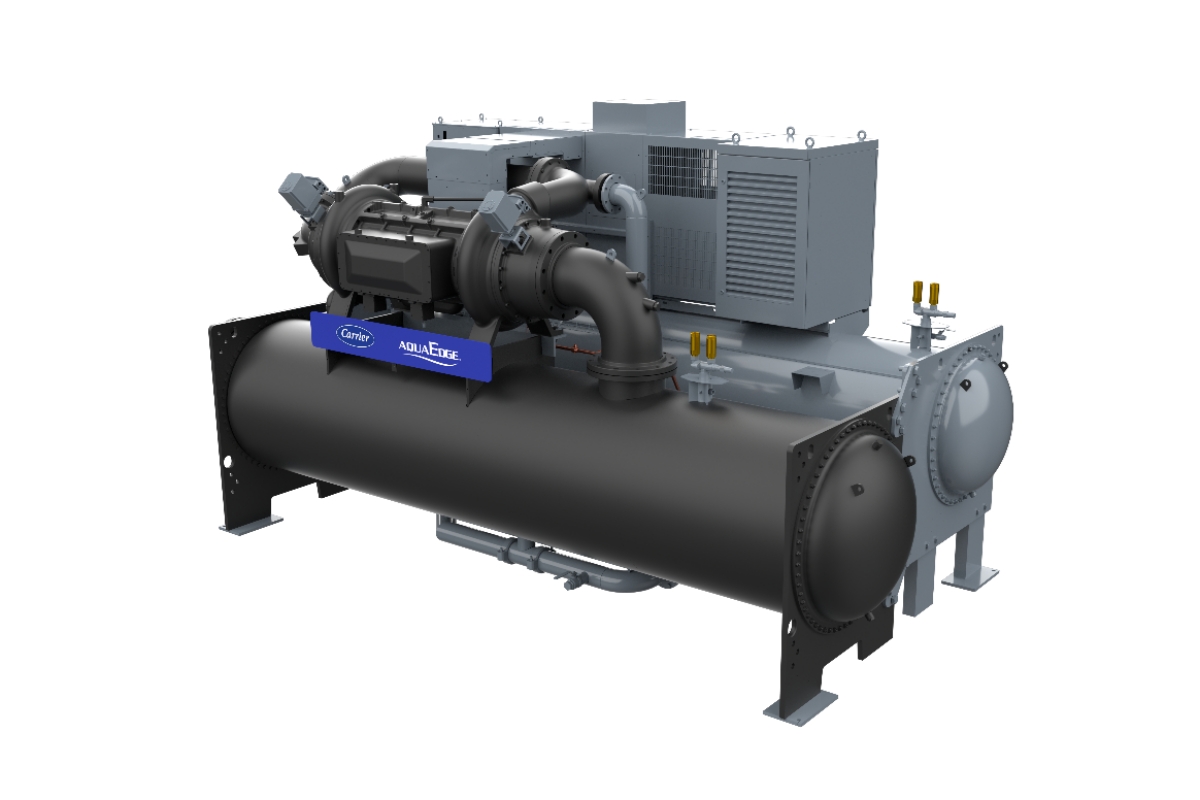
Carrier, a manufacturer of HVAC, refrigeration, and fire and security equipment, has introduced the AquaEdge 19MV4 centrifugal chiller, designed to support cooling requirements in high-density AI data centres. The system forms part of the company’s QuantumLeap portfolio and is intended for use in environments where increasing compute density and rising temperatures place pressure on existing cooling infrastructure. The chiller is designed to deliver between 2.1 MW and 3.3 MW of cooling capacity, supporting workloads driven by high-performance GPUs. It is also engineered to operate with chilled-water temperatures of up to 35°C and condensing temperatures up to 55°C, aligning with liquid cooling approaches such as direct-to-chip and rear-door heat exchangers. Designed for high-density cooling environments Carrier states that the system uses a variable-speed centrifugal compressor capable of operating between 10% and 100% load, allowing it to respond to fluctuating AI workloads without frequent cycling. Marti Urpinas, Senior Technical Manager, Vertical Markets EMEA, DC Applied at Carrier, comments, “AI workloads are reshaping data centre specifications, pushing our customers to seek greater thermal headroom without sacrificing power stability. "That sounds like a tall order, but the AquaEdge 19MV4 isn’t a ‘standard’ chiller; it’s a variable-speed centrifugal platform that delivers cooling continuity for high-density racks, even as operators push chilled-water temperatures higher to support direct-to-chip architectures.” The unit is designed to restart within 150 seconds following a power interruption, supporting thermal recovery and reducing the risk of overheating in high-density environments. It also incorporates harmonic filtering to limit electrical distortion and protect associated infrastructure, including uninterruptible power supplies (UPS). Carrier reports that the system can achieve a coefficient of performance (COP) of up to 6.75 and an integrated part load value (IPLV) of 11.4 under AHRI test conditions. The chiller is available with refrigerants including R-1234ze and R-515B, supporting compliance with EU F-Gas regulations. Additionally, noise levels are specified at below 80dBA under defined operating conditions. For more from Carrier, click here.

ZIEHL-ABEGG highlights ZAbluefin fan
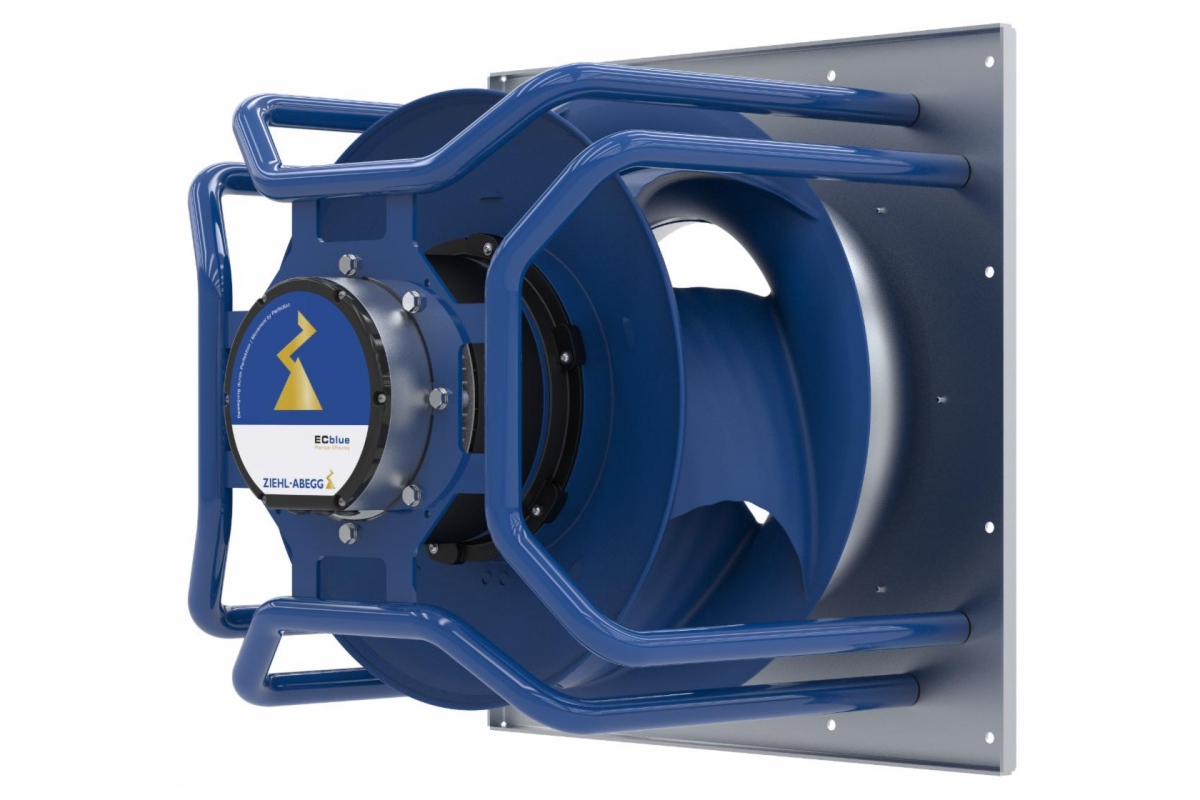
German ventilation manufacturer ZIEHL-ABEGG has outlined the performance characteristics of its ZAbluefin centrifugal fan, designed for HVAC and air handling unit applications. The fan uses a biomimetic blade design, including a corrugated leading edge and twisted geometry, to improve airflow efficiency. A serrated trailing edge is intended to reduce turbulence and noise while maintaining stable performance under varying airflow conditions. According to the company, the design supports energy efficiency at typical operating points, particularly in environments where airflow may be disrupted. Focus on efficiency and low-noise operation The ZAbluefin fan is designed to reduce sound output, with a focus on minimising tonal noise, making it suitable for noise-sensitive environments. Its performance curve allows for a wider operating range without flow separation, enabling system designers to meet different requirements without oversizing equipment. The fan is also intended to support compliance with current and future efficiency regulations. The product range covers diameters from 250mm to 1,120mm, with airflow capability of up to around 90,000m³/h and static pressure up to approximately 2,500Pa. This allows use across both compact and large-scale HVAC systems. ZIEHL-ABEGG has also developed a one-piece mounting system to support installation. The mount is designed for multiple orientations, including horizontal and vertical configurations, and is intended to simplify installation and reduce component variation. The company states that the combined fan and mounting design aims to improve efficiency, reduce noise, and simplify deployment across a range of HVAC applications. For more from ZIEHL-ABEGG, click here.

Nokia recognised in data centre switching report
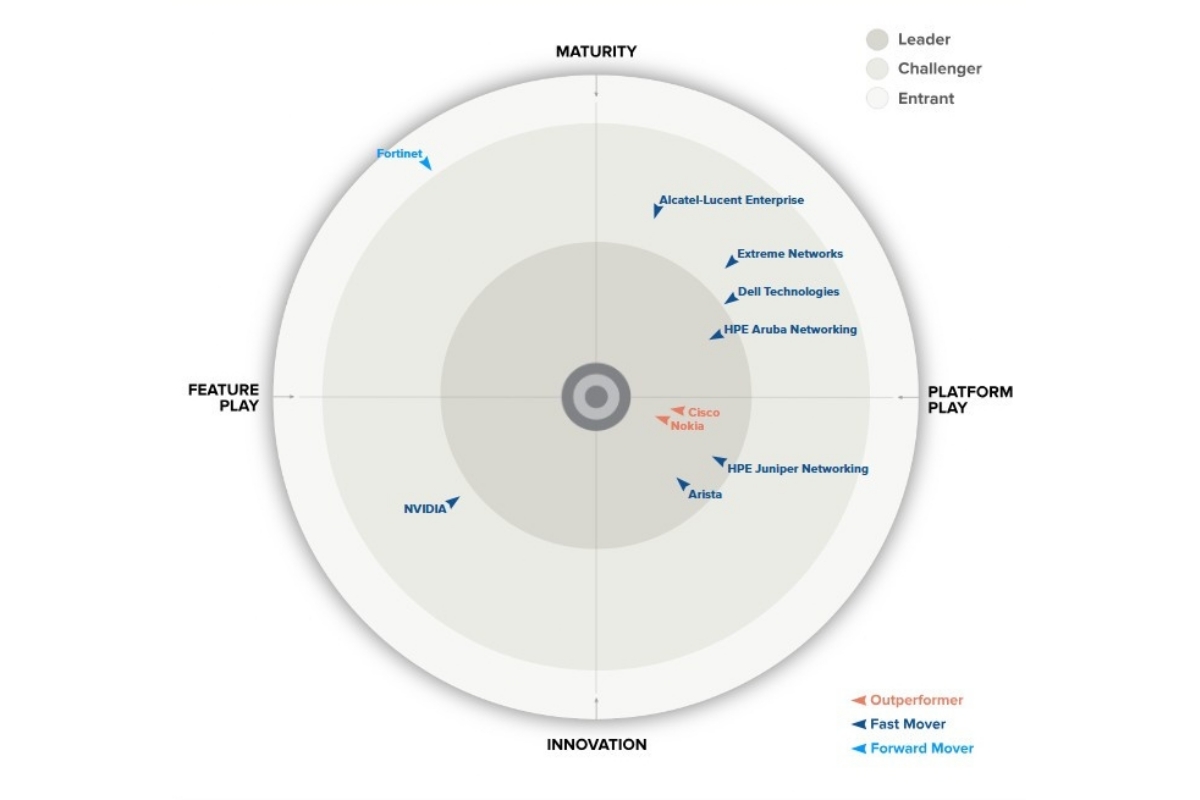
Finnish telecommunications company Nokia has been named a Leader and Outperformer in the 2026 data centre switching Radar Report by GigaOm, marking the fifth consecutive year it has received this recognition. The annual report evaluates data centre switching platforms based on technical capabilities, product development plans, and business criteria. In the 2026 edition, Nokia’s Data Center Fabric is positioned in the Innovation/Platform Play category and classified as an Outperformer. GigaOm assessed 10 vendors in the market, comparing their offerings against a range of operational and technical benchmarks. Nokia’s platform received five-star ratings across all key feature areas reviewed, including hardware, switching and routing functionality, operational management, NetDevOps alignment, and traffic security. Focus on automation and AI-ready networking The report also highlights Nokia’s capabilities in areas such as AI-focused networking features and its microservices-based network operating system architecture. Andrew Green, Analyst at GigaOm, says, “GigaOm’s analysis highlights Nokia’s consistent innovation in data centre switching and its strong feature delivery over the past year. "Its Data Center Fabric stands out for the depth of its hardware and software capabilities and strong support for automation that are designed to address the requirements of modern AI-driven data centre environments.” The recognition reflects broader trends in the data centre sector, where organisations are updating infrastructure to support data-intensive workloads and distributed cloud environments. Michael Bushong, Vice President Data Center at Nokia, comments, “Being named a GigaOM data centre switching Leader and Outperformer for the fifth year in a row is validation of two things: "First, we are doing the hard work of providing highly reliable data centre solutions for cloud, enterprise, and service provider customers tasked with building in this AI era. "And second, we are keeping pace with all the innovation being driven by AI. Openness, automation, scale, and reliability are more than buzzwords; they require constant care and feeding, and this recognition represents that.” Nokia’s Data Center Fabric combines switching platforms, the SR Linux network operating system, and an event-driven automation platform to support automated data centre environments. It is designed to be deployed in both new and existing infrastructure and to integrate with a range of network environments. For more from Nokia, click here.

NetAlly launches LinkRunner AT tester
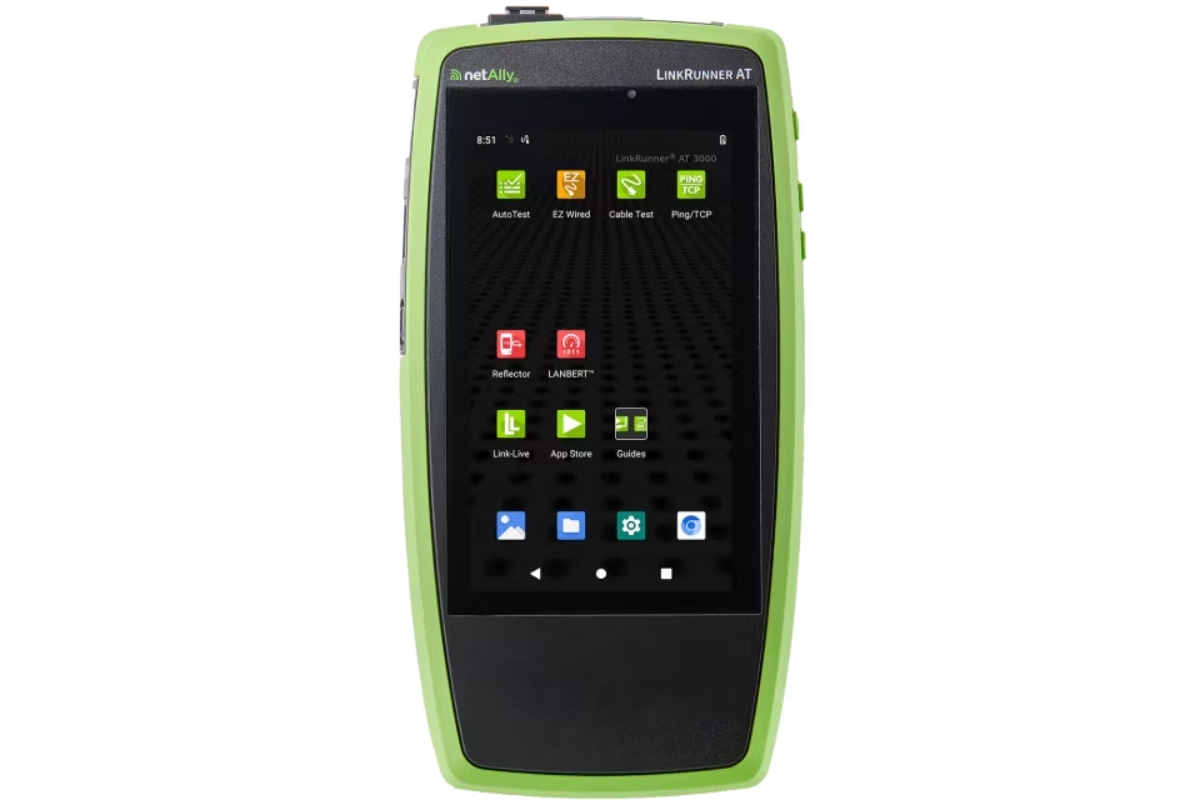
NetAlly, a manufacturer of portable network testing and analysis tools, has introduced a new handheld network link and cable tester, the LinkRunner AT 1500, expanding its LinkRunner range. The device is designed to validate copper network links and cables, supporting troubleshooting, moves, adds, and changes, as well as fault isolation. It is aimed at network technicians, IT teams, and managed service providers. According to NetAlly, the tester enables users to verify connectivity, link speed, VLAN configuration, and Power over Ethernet (PoE) through a single interface, without requiring a laptop. Test results and screenshots can then be uploaded to Link-Live, the company’s cloud-based reporting and analysis platform. Testing capabilities and deployment use The LinkRunner AT 1500 provides automated testing across multiple aspects of a network link. It can identify cable length, detect wiring faults, and indicate the distance to a fault. The device also identifies the nearest network switch and port, and verifies link speed and duplex up to 10 Gig. Additional functions include VLAN validation, connectivity checks to on-network and external devices, and PoE measurement. The tester can assess voltage, wattage, and active wire pairs to confirm power delivery before device installation. Dan Klimke, Director of Product Marketing at NetAlly, says, “The 1500 brings pro-level testing to frontline techs at just £1,140 MSRP. It draws on our 25-plus years of experience building innovative troubleshooting tools for network engineers and technicians. "The goal is simple: put fast, definitive answers in the hands of the technicians closest to the problem so issues get solved at the source, not escalated up the chain. "With Wi-Fi 7 access points, smart building systems, and modern IoT devices increasingly demanding higher power levels that only PoE++ can deliver, the LinkRunner AT 1500 validates full 90W PoE performance to ensure those devices are fully powered upon deployment.” NetAlly states that its products are available through authorised channel partners. The LinkRunner AT 1500 will be demonstrated at DTX 2026, taking place in the UK at Manchester Central on 29–30 April. Live demonstrations will be available at Stand E94 via its UK partner, Full Control Networks.

Brady: Make sure all tools are present. Always.
Have you ever arrived at an intervention without the necessary equipment? Ever lost tools during field interventions? How much time do you spend to make sure all equipment is accounted for and present in your vehicles? Thanks to Brady, now you can confirm vehicle inventories digitally and automatically, highlight any missing assets, and home in on misplaced items to quickly complete your vehicles. How much time could you save? Everything present Instantly see which tools are present in a vehicle and what is missing. Easily save substantial time per vehicle and intervention with automated equipment inventory checks that take only seconds. By labelling equipment with passive, battery-free UHF RFID labels, we can let an RFID reader in your vehicle detect which tools and items are present. The RFID reader can check detected tools versus a list of expected items to confirm a complete vehicle inventory or to highlight missing equipment on your phone. Be fully equipped before leaving for a field intervention. Avoid losing tools after interventions. Don’t waste time checking visually where every piece of equipment is. Just scan, get confirmation in seconds, and drive to your next destination. Click here to find out more. For more from Brady, click here.

STL launches 'India's first' hollow core fibre cable
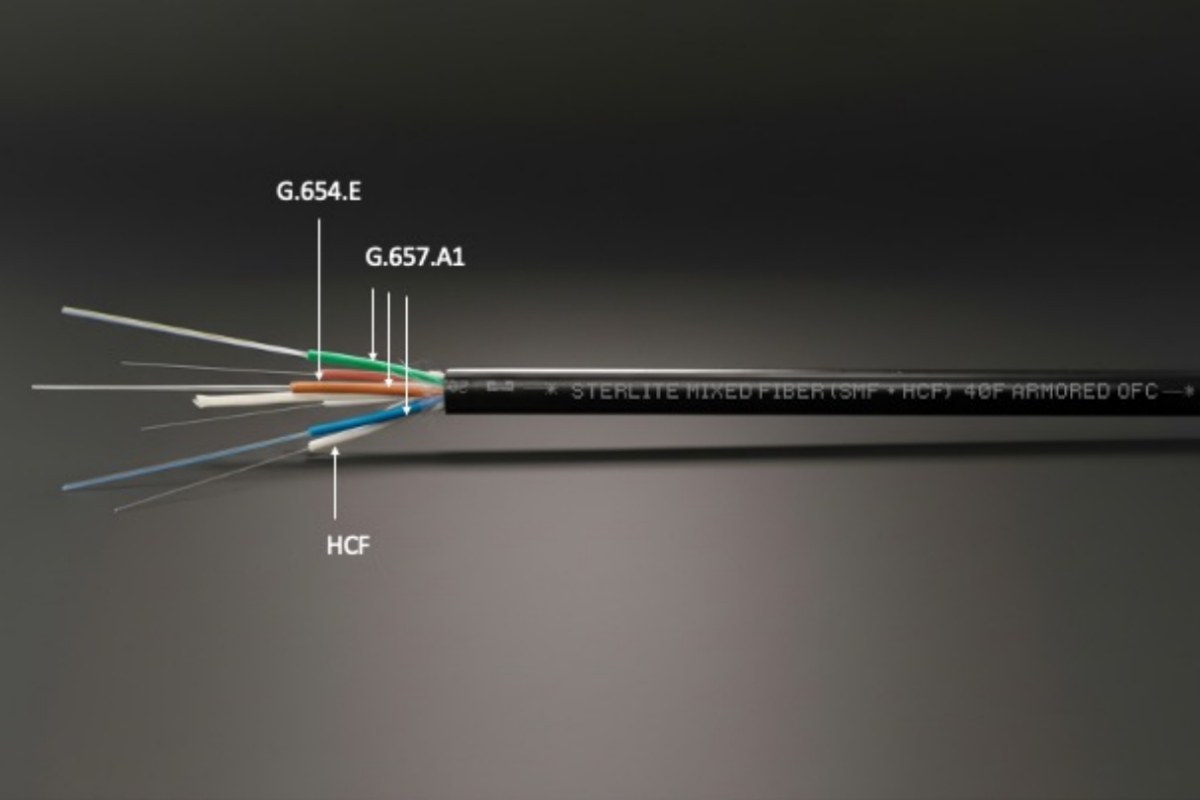
STL, an optical and digital systems company, has introduced a hollow core fibre (HCF) cable in India, designed for data centre networks and high-frequency transmission environments. The development focuses on reducing latency and supporting higher bandwidth demands in modern data centres, hyperscale facilities, and network infrastructure. Unlike conventional optical fibre, which transmits light through a solid glass core, hollow core fibre uses an air-filled core. This allows signals to travel at higher speeds, with STL stating performance improvements of around 46%, alongside reduced latency and signal loss. Noting that it is the first company to develop and manufacture this type of cable in India, STL says it is expanding its optical connectivity portfolio in response to increasing demand from AI-driven and high-performance computing environments. The cable also incorporates a hybrid design intended to support a range of network requirements. This includes hollow core fibre for low-latency transmission, G.654.E fibre for long-distance, low-loss performance, and G.657.A1 fibre to support flexible deployment across different network types. Hybrid design supports varied network needs The hybrid architecture reflects the growing complexity of data centre and telecoms infrastructure, where operators require a mix of performance characteristics within a single cable system. STL reports that the design supports both high-speed data transmission and broader network coverage, particularly in large-scale or distributed environments. The company also states that it holds more than 780 patents and continues to focus on optical technologies aimed at increasing network capacity and efficiency. Badri Gomatam, CTO at STL, says, "Our R&D focus has always been on solving the most complex challenges of the future. With the launch of [this] Hollow Core Fibre cable, we are providing the 'speed-of-light' infrastructure required for the AI revolution. "This is a defining moment that demonstrates our capability to innovate and empower hyperscalers and data centres on a global scale.” For more from STL, click here.

ZutaCore brings two-phase cooling to PCIe GPUs
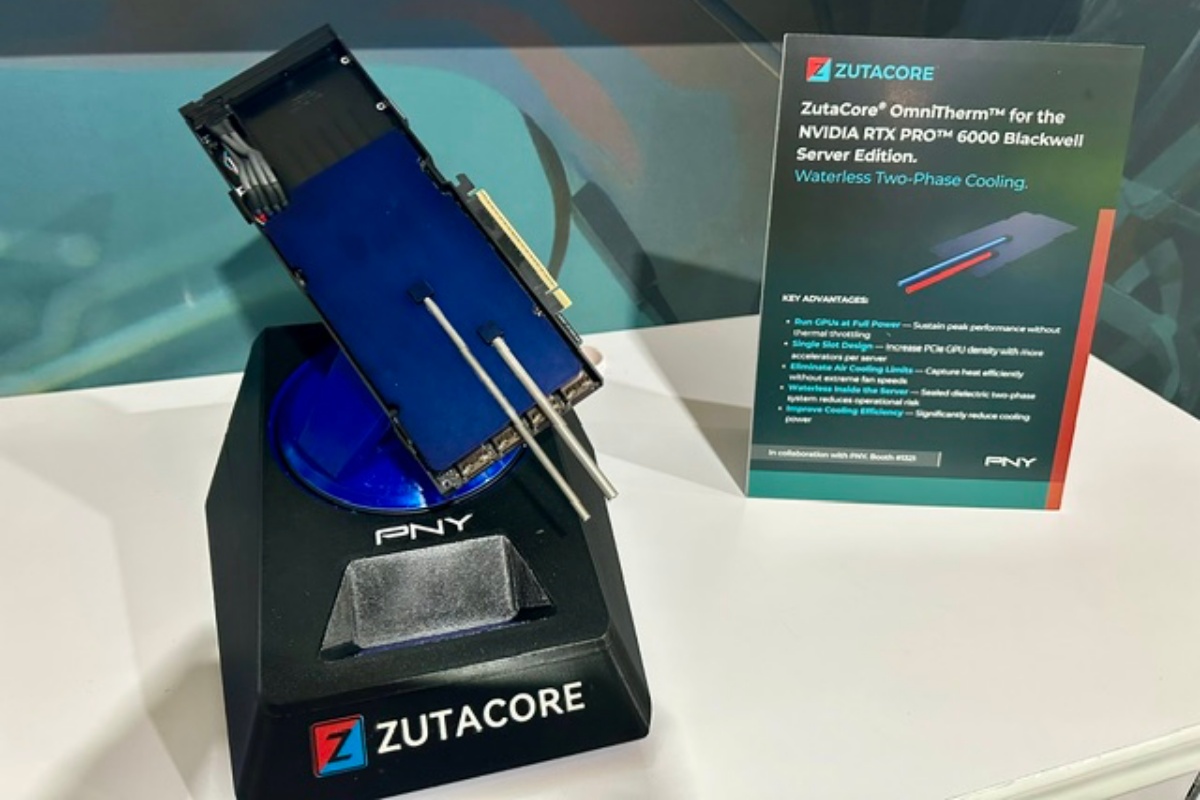
ZutaCore, a developer of liquid cooling technology, has announced that its OmniTherm cold plate now enables waterless, two-phase cooling for manufacturers building servers with the NVIDIA RTX PRO 6000 Blackwell Server Edition GPUs in a single-slot PCIe form factor, supporting full-power operation in standard enterprise and AI cloud server environments. As AI inference expands across enterprise and cloud environments, PCIe GPU servers have become a common platform due to their relative ease of deployment, scalability, and compatibility with existing infrastructure. However, as GPU power consumption rises, air cooling can become a limiting factor, restricting density, driving up fan power, and increasing the risk of thermal throttling during sustained workloads. The company says OmniTherm addresses this by enabling a transition to two-phase liquid cooling without introducing water inside the server. The single-slot design allows operators to increase accelerator density in standard server architectures while capturing heat into a liquid loop, reducing reliance on high fan speeds that can create excessive noise, waste power, and cause difficult operating conditions in the data centre. "Enterprise and cloud operators want the flexibility of PCIe GPUs, but they also need density and sustained performance as power levels rise," comments My D. Truong, CTO of ZutaCore. "OmniTherm delivers waterless, two-phase cooling in a single-slot form factor, helping data centres increase accelerator density while maintaining stable thermals for 24/7 AI workloads." Two-phase cooling for dynamic AI workloads Production AI workloads - particularly inference - are rarely steady, fluctuating constantly and creating thermal swings that can affect performance and reliability. ZutaCore says its two-phase approach is designed to respond to changing workloads, helping data centres maintain predictable performance under dynamic utilisation. As racks move into higher power levels, the operational cost of air cooling also rises, with increased fan energy consumption and growing acoustic and facility pressures. OmniTherm uses a sealed, non-conductive dielectric fluid system that captures heat without requiring facility water in the server, reducing cooling overhead and providing a path to scaling PCIe-based AI deployments. Alongside this announcement, ZutaCore has also introduced HyperCool Cloud, a cloud-native operations platform designed to help data centres manage liquid cooling infrastructure. The platform, the company says, provides "near-real-time" CDU telemetry, fleet-level monitoring, and alarm-to-resolution workflows, helping operators manage service response and uptime as deployments scale across sites and fleets. For more from ZutaCore, click here.


Translate »