Innovations in Data Center Power and Cooling Solutions

ChemTreat joins Dow coolant network for data centres
ChemTreat, a US provider of industrial water treatment chemicals and cooling system services, has joined materials science company Dow’s Coolant Care Network as a strategic US service provider for AI and liquid-cooled data centre environments. Under the agreement, ChemTreat becomes Dow’s only preferred service provider in Virginia, USA, and will provide national support for the company’s coolant management programme. According to Dow, the Coolant Care Network combines coolant supply, fluid testing, data analysis, and field support within a single framework for data centre operators. ChemTreat will provide on-site services including fluid sampling, mitigation, and coolant optimisation, working alongside Dow-qualified laboratories and technical specialists. The companies say the collaboration is intended to support data centres deploying liquid cooling systems for AI and high-density compute workloads. Ashour Khamis, President of ChemTreat, notes, “The data centre industry is under enormous pressure to scale liquid cooling environments to meet AI-driven workload demands. “Pairing ChemTreat’s proven service-focused approach with Dow’s decades of thermal fluid innovation and reliable global supply chain allows us to help customers quickly deploy mission-critical systems and maintain reliable cooling lifecycle performance.” Liquid cooling demand grows alongside AI workloads ChemTreat says its data centre offering includes water treatment technologies, monitoring systems, specialist chemistries, and support for direct-to-chip cooling loops and facility cooling infrastructure. Through the partnership, the company will also provide access to Dow’s DOWFROST LC and DOWFROST HD heat transfer fluids, alongside certified coolant testing services and technical support. Chuck Carn, Data Center Growth Platform Director at Dow, says, “This collaboration reflects Dow’s clear understanding of the operational complexity data centre operators face as cooling systems become more critical to performance and uptime. “Collaborating with experienced service providers like ChemTreat, who uphold rigorous technical and service standards, is key to helping customers run their operations smoothly and with confidence.” The companies say the partnership is designed to address increasing cooling requirements as AI infrastructure deployment continues to expand globally.

MPs warn grid failures could cost Britain the AI race
The All-Party Parliamentary Group (APPG) for Data Centres has published its Insights Paper, summarising findings from its inaugural 'Call for Evidence'. The group is a cross‑party group of UK MPs and Peers that fosters parliamentary understanding of data centre development, examines sector challenges (particularly planning, energy, resilience, and sustainability) and makes evidence‑based policy recommendations to support UK digital infrastructure and economic growth. Notably, respondents to its Call for Evidence signalled a substantial appetite to invest in UK data centre infrastructure. Operators including Ark Data Centres, Nebius, Pure DC, and VIRTUS collectively identified £11–12 billion in specific investment plans, while Microsoft's submission committed a further £22 billion to UK AI infrastructure. Despite this intent, respondents consistently described a set of interconnected structural barriers constraining the pace and location of development: • Grid access and energy supply ranked as the sector's top priority, with 52% of respondents placing it first. • Planning was placed in the top three by nearly four in five respondents (79%), while energy costs, sustainability, water use, and skills also featured prominently across submissions. • The APPG is particularly keen to hear further evidence from community representatives, local authorities, and organisations with experience of data centre development outside London and the South East. Parliamentary comments Chris Curtis MP, Chair of the Data Centres APPG, notes, "This Call for Evidence shows that while significant investment is ready to support the UK's expanding AI and digital economy, it remains constrained by grid access, energy costs, and planning inconsistencies. “The APPG will use this evidence over the coming year to work constructively with stakeholders and the Government to ensure that there is a well-informed view on how data centre infrastructure drives our national economic growth." Alison Griffiths MP, Vice-Chair of the Data Centres APPG, adds, “The submissions to this Call for Evidence make clear that the barriers to data centre development are not insurmountable. "They highlight gaps in the consistent application of planning policy by local authorities, as well as the need to ensure electricity cost competitiveness is felt across every part of the country. "It is clear there are practical steps the Government can take to strengthen the UK’s leadership in digital infrastructure [and] I look forward to exploring these issues further in our upcoming evidence sessions.” David Reed MP, Officer of the Data Centres APPG, highlights, "The submissions from academic institutions such as Exeter, Durham, and Oxford remind us that research computing infrastructure is increasingly cost-prohibitive for academia. This gap risks undermining the UK's long-term international scientific competitiveness. “As the APPG deepens its work, I look forward to hearing from a broad range of stakeholders in this vital debate and developing practical solutions that support a thriving data centre ecosystem.” The Rt Hon. the Lord (Philip) Hunt of King’s Heath OBE, Officer of the Data Centres APPG, concludes, "Sustainability is not a secondary consideration for this sector; it is central to its long-term viability and its licence to operate in communities across the UK. “The evidence on waste heat recovery is particularly striking: the UK is currently capturing just 3–5% of the heat generated by data centres, against a backdrop of a national housing and energy challenge that demands innovative solutions. The APPG will be pressing hard on what policy levers can unlock this opportunity."

Schneider to showcase AI infrastructure at Datacloud
Global energy technology company Schneider Electric has announced it will present its latest AI-ready data centre technologies during the Datacloud Global Congress 2026 in Cannes, France, from 1–4 June 2026. The company says it will showcase technologies designed to address increasing demands around power delivery, cooling, resiliency, and high-density compute as AI workloads continue to scale. According to Schneider Electric, the event will focus on infrastructure designed for AI deployments, including power architectures, liquid cooling systems, software platforms, and digital services for data centre environments. The company cites forecasts from Morgan Stanley and Gartner predicting significant growth in AI-related infrastructure investment and global AI spending over the coming years. Industry discussions to focus on AI growth challenges On 2 June, Frédéric Godemel, EVP of Energy Management Business at Schneider Electric, will join representatives from Oracle, DATA4, QTS Data Centers, and CBRE for a keynote panel examining AI infrastructure demand and the development of neocloud deployments. Later that same day, Thierry Chamayou, Vice President of Cloud and Service Providers in EMEA at Schneider Electric, will participate in a separate panel discussing energy investment strategies and utility collaboration for AI infrastructure projects. Participants include representatives from GreenScale, Trench Group, Kao Data, JSM Group, and Solar Turbines. Marc Garner, Global President of Schneider Electric’s Cloud and Service Provider Segment, says, “AI is fundamentally reshaping the future of digital infrastructure, creating new demands around power, cooling, and resiliency at unprecedented scale. “At Datacloud Global Congress, we will demonstrate how collaboration across the ecosystem is enabling the next generation of AI factories and helping organisations build scalable, resilient, and sustainable infrastructure built for the AI era.” Liquid cooling and AI data centre technologies on display Schneider Electric will also present technologies including its 800VDC architecture, liquid cooling systems from Motivair, high-density racks, and digital modelling platforms. The company says demonstrations will include NVIDIA Omniverse integrations, digital twin technologies, and NVIDIA reference designs for the GB300 NVL72 platform. Visitors to Stand 122 will also be able to view the company’s EcoStruxure IT DCIM and EcoStruxure Foresight software platforms, alongside its microgrid and data centre services portfolio. For more from Schneider Electric, click here.

Schneider supplies AI infrastructure for Lake Mariner campus
Global energy technology company Schneider Electric and Motivair, a provider of liquid cooling systems for data centres, owned by Schneider Electric, have completed phased delivery of more than $290 million (£215 million) in AI infrastructure systems for TeraWulf at its Lake Mariner data centre campus in New York, USA. The companies say the project is focused on supporting scalable AI and high-performance computing (HPC) infrastructure, with the Lake Mariner campus expected to support up to 750MW of power demand once fully developed. TeraWulf explains that the site is being redeveloped from a former industrial location into a data centre campus designed for AI, cloud, and HPC workloads, and that the project combines power infrastructure, cooling technologies, racks, monitoring systems, and engineering services from Schneider Electric and Motivair. The company adds that the campus benefits from access to existing power infrastructure and a regional electricity grid that is approximately 89% zero-carbon. Sean Farrell, Chief Operating Officer at TeraWulf, comments, “TeraWulf’s strategy is centred on delivering scalable, energy-efficient infrastructure capable of supporting the increasing intensity of AI and HPC workloads. "By working closely with industry leaders like Schneider Electric and Motivair, we are accelerating the development of AI-ready capacity at our Lake Mariner facilities while reinforcing the strong operational foundations needed to support long-term customer demand.” Project combines power, cooling, and monitoring systems Schneider Electric says the deployment included Galaxy VX UPS systems, lithium-ion battery systems, EcoStruxure IT Data Center Expert software, and NetShelter racks and enclosures. Meanwhile, Motivair supplied coolant distribution units (CDUs), in-rack manifolds, chilled door technologies, and associated support services. The companies state that the systems were delivered within a 12-month deployment timeframe as TeraWulf accelerated construction of its AI-ready data centre facilities. The Lake Mariner campus is also supported by long-term customer agreements with Core42 and Fluidstack, with the latter being backed by Google. Manish Kumar, Executive Vice President, Secure Power & Data Centers at Schneider Electric, notes, “As demand for AI infrastructure accelerates, ‘time to power’ has become a defining constraint on growth. "Operators need partners who can bring together advanced infrastructure, services, and expertise in energy technology to underpin large-scale AI data centre deployments at pace. “Our partnership with TeraWulf establishes a strategic blueprint for pairing on-site power, AI-enabled automation, advanced liquid cooling, and digital intelligence at a legacy industrial site. We are delivering resilient, efficient, and scalable data centre solutions at the speed and scale this AI era demands.” For more from Schneider Electric, click here.

LiquidStack expands GigaModular CDU capacity
LiquidStack, a US-based provider of liquid cooling technology for data centres, has expanded the scaling capabilities of its GigaModular CDU platform, with the system now validated for deployments of up to 14MW. The modular liquid cooling platform is designed for AI and high-density data centre environments, including infrastructure aligned with NVIDIA Vera Rubin specifications. LiquidStack says the architecture is intended to allow operators to expand cooling capacity incrementally without large-scale infrastructure redesigns. First introduced in June 2025, the GigaModular platform has now completed multi-module system integration and full-load testing. The company says the system has achieved ETL certification and has been released to manufacturing. The announcement comes amid continued growth in AI infrastructure demand and increasing pressure on data centre capacity. According to CBRE, the global weighted average data centre vacancy rate reached 6.6% during the first quarter of 2025. Modular cooling aimed at AI infrastructure growth LiquidStack says the platform has been designed to support phased AI infrastructure expansion through modular deployment and centralised controls. Key features of the GigaModular CDU platform include: • Centralised system controls intended to simplify operations and reduce infrastructure redundancy• Modular scaling designed to support phased AI deployment growth• Flexible cooling distribution architecture for changing rack densities and facility layouts• Support for high-density GPU environments and large-scale AI deployments• Global service support through Trane Technologies, LiquidStack's parent company Joe Capes, Vice President at Trane Technologies and General Manager of LiquidStack, says, “The challenge for AI infrastructure today is the ability to scale quickly and efficiently enough to keep pace with demand. "GigaModular was designed to remove the infrastructure constraints limiting AI growth through a centrally controlled, modular architecture built for system-level scalability, flexible deployment, and hyperscale AI expansion.” LiquidStack has also announced it will demonstrate the GigaModular platform at Datacloud Global Congress 2026, taking place from 2–4 June in Cannes, France. For more from LiquidStack, click here.

Bergen secures 500+ MW of orders from Liberty Energy
Bergen Engines, a Norwegian manufacturer of medium-speed gas and dual-fuel engines, has secured an order from Liberty Energy for more than 500MW of onsite power generation capacity to support AI data centre developments in the United States. The projects will use gas-powered generation systems capable of operating both independently from the grid and in parallel with utility infrastructure, supporting high-density AI computing environments. The developments are being delivered through Liberty Energy’s Liberty Power Innovations division, which focuses on distributed power infrastructure for AI-era data centres. Under the agreement, Bergen Engines will supply 45 gas generator sets, each rated at 11.2MWe, providing a combined installed capacity exceeding 500MW. The infrastructure combines Bergen Engines’ medium-speed engines with alternators from Marelli Motori and SHIELDX dynamic power stabilisation technology from Piller Power Systems. Power stability for AI workloads According to the companies, the SHIELDX platform is designed to manage rapid fluctuations in AI-related power demand by stabilising short-duration load variations. The flywheel-based system is intended to help maintain stable power delivery while reducing the need for oversized generation infrastructure. Ron Gusek, CEO of Liberty Energy, says, “AI data centres are fundamentally changing how power infrastructure can be designed and deployed, and this initial order with Bergen Engines reflects a shared commitment to providing reliable, high-efficiency power solutions to support critical data centre infrastructure growth. “Collaborating with Bergen Engines strengthens our power platform, serving as an important component of our broader integrated solution that includes LPI’s Forte modular power generation architecture and Tempo power quality system. "Together, we will be able to deliver essential power generation infrastructure to support the demanding requirements of next-generation computing.” Theo Lorentzos, Vice President Sales Americas at Bergen Engines, adds, “These environments require robust baseload generation and the ability to respond to rapid and significant load fluctuations. "By working in partnership with Liberty and integrating SHIELDX, we are delivering a solution that combines proven generation performance with the flexibility required for AI-driven demand profiles.” Dean Richards, CEO of Piller Power Systems, comments, “SHIELDX protects the generation assets from highly dynamic, sub-second load behaviour, enabling stable plant operation under extreme load fluctuations. This ensures optimal engine performance while delivering consistent, high-quality power to the data centre.” Deliveries for the projects are scheduled to begin during the second half of 2027.

Extreme weather prompts revision of cooling strategies
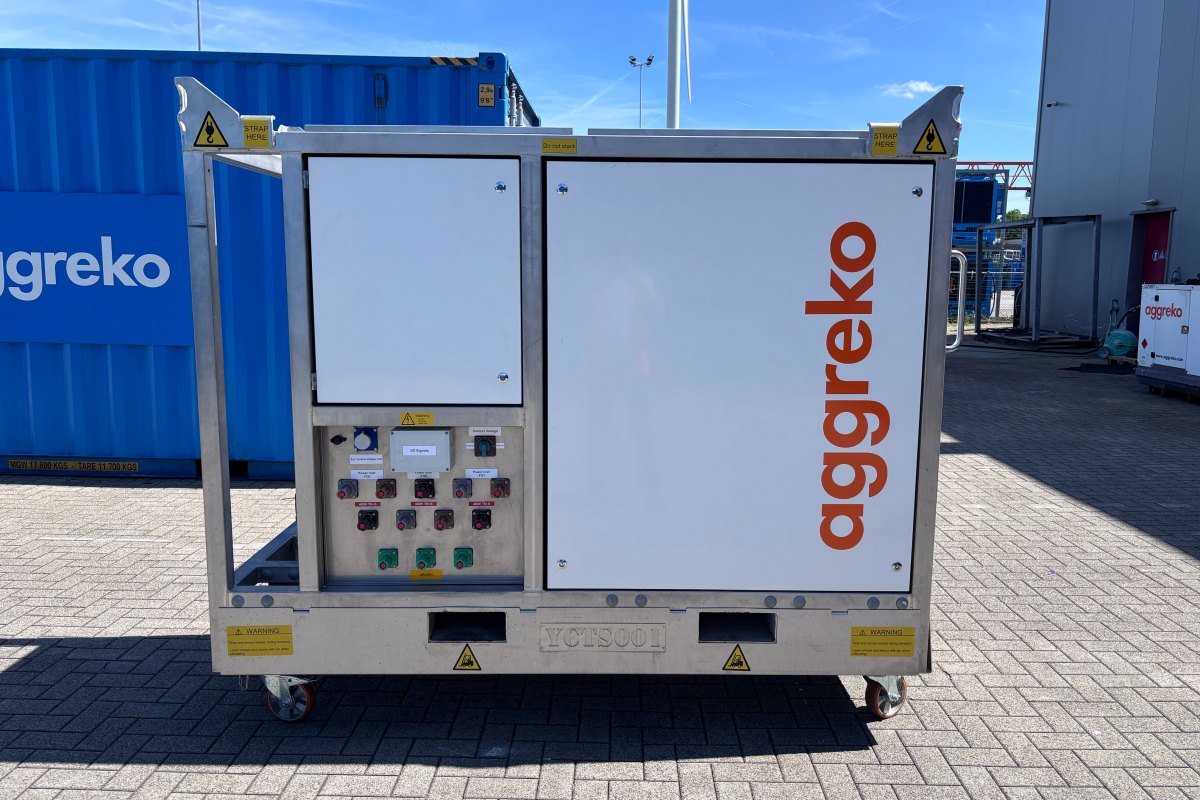
Following warnings from scientists that current climate conditions are brewing extreme weather in the months ahead, Aggreko, a British temporary power generation and temperature control company, says it is calling upon data centre managers to revise their cooling strategies ahead of time or face the consequences. Global sea temperatures of 21°C were reported last month - the second highest on record for the month of April - with scientists now pointing to another El Niño warming cycle that could significantly intensify extreme weather. These temperatures are marginally lower the 21.04°C recorded in April 2024 ahead of the last El Niño weather event, which ended up being the fourth warmest year on record for the UK. With a long, hot summer potentially in store, Chris Smith, Head of Temperature Control at Aggreko, says he is urging the data centre sector to review its cooling infrastructure before the heatwave arrives. He suggests, “We need only look back at 2024 to see what El Niño might have in store for us this year. Summer temperatures regularly exceeded 30°C, placing immense pressure on data centre cooling infrastructure and even leading to full-blown equipment failure in worst-case scenarios. “The reality is: current cooling strategies simply aren’t designed to deal with this kind of weather or to operate in these temperature ranges. For this reason, now is the time to start reviewing current cooling infrastructure to assess whether it’s still fit for purpose so the right measures can be brought in ahead of time. “The main thing to look out for is ageing assets, as these are at the greatest risk of lower efficiency, overheating, and failure. Engaging with a specialist temperature control partner can help implement temporary cooling and industrial HVAC solutions to bridge gaps during equipment failures, manage seasonal demand peaks, and provide N+1 redundancy for greater operational resilience.” Data centre cooling under pressure With rack densities on the rise, data centre cooling infrastructure is arguably under greater pressure than ever before, with the cost of outages reportedly becoming more expensive. In the Uptime Institute’s 2026 outage analysis, cooling accounted for 14% of all impactful outages - the second biggest contributor behind power - while one fifth of respondents stated that their most recent outage cost more than $1 million (£745,000). In the face of this challenge, Aggreko believes hybridised packages consisting of battery energy storage systems (BESS) and temporary chillers or cold storage units are becoming an increasingly popular option for the data centre industry. Here, the company notes, the chiller or cold storage unit can provide scalable, supplementary cooling capacity, with the BESS powering the package while enhancing efficiency, reducing costs, minimising environmental impact, and offering near-silent operation versus a standard generator. Chris continues, “While we’ll have to wait and see what the summer has planned for us, now is nonetheless a prime time to re-evaluate cooling strategies and identify where efficiency gains can be made. "Procuring temporary cooling from a third-party specialist not only allows access to the latest, high-efficiency technology, but also opens the door to a number of creative solutions, such a hybridisation, which just aren’t feasible in-house. “While cooling is just one of the challenges that data centre managers have to contend with at the moment, the gains this can deliver, alongside the resilience it provides against the threat of outages, mean that this is more than a worthwhile operational solution.” For more from Aggreko, click here.

Russelectric expands microgrid controls offering
US power control manufacturer Russelectric, a Siemens business, has highlighted its Advanced Microgrid Controls platform, designed to support power resiliency and energy management across critical infrastructure environments including data centres. The system combines hardware and software for managing onsite generation assets and facility power infrastructure, including generators, battery storage systems, photovoltaic arrays, and electrical loads. According to Russelectric, the platform integrates with transfer switches, switchgear, and power controllers to support facility-wide monitoring and optimisation of distributed energy resources. The company says the system is designed to support operational continuity during grid outages through functions including dynamic islanding, automatic generator black start capability, and grid resynchronisation. Microgrid platform targets critical infrastructure Russelectric states that the platform is intended to help facilities improve power quality, reduce energy consumption, and lower operational emissions through more efficient management of onsite power assets. The company also offers engineering, commissioning, manufacturing, and maintenance support for microgrid deployments, alongside integrated switchgear and turnkey infrastructure options. Russelectric says it has more than 50 years of experience delivering microgrid control installations across critical infrastructure sectors. Siemens acquired Russelectric in 2011, with the business continuing to focus on power control and transfer systems for mission-critical facilities. For more from Siemens, click here.

Socomec expands North American manufacturing
Socomec, a manufacturer of low voltage power management systems, has opened two new manufacturing facilities in North America to support growing demand from the data centre sector. The new sites, located in Suwanee, Georgia, near Atlanta, and Brampton, Ontario, near Toronto, form part of the company’s strategy to expand regional production capacity for power infrastructure equipment. According to Socomec, the facilities will support the manufacture of UPS systems, static transfer switches, transformers, and power distribution units for data centre operators across North America. The company says the data centre sector is now its largest and fastest-growing market segment globally, driven by increasing AI-related infrastructure demand. New facilities target data centre growth The Suwanee site spans 194,000ft² (18,023m²) and will manufacture UPS systems and static transfer switches. Socomec expects the facility to reach full production capacity in early 2027 and employ around 300 staff. Meanwhile, the Brampton facility covers more than 150,000ft² (13,935m²) and will focus on transformers and power distribution units. The site currently employs 170 people. Socomec says local manufacturing will help improve lead times, support compliance with North American regulatory standards, and strengthen supply chain resilience for regional customers. The company also confirmed that a dedicated North American development team has been established to support customer requirements within the data centre market. Ivan Steyert, CEO of Socomec Group, says, “Manufacturing where we sell is a decisive advantage in the current geopolitical context. "Our two new sites will significantly increase Socomec’s ability to serve North American data centre operators, ensuring a consistent level of quality, reduced lead times, and improved industrial agility, while allowing us to remain close to our customers.” Michele Putignano, CEO of North America at Socomec, adds, “In a demanding and highly regulated North American market, our ambition is to build sustainable local expertise, offer ever more innovative solutions, and strengthen our position as the leader in power conversion for data centres and other critical infrastructures. “The region is now a strategic driver for Socomec, having seen annual growth rates of over 20% in five consecutive years.” Socomec currently employs around 750 people across the US and Canada. For more from Socomec, click here.

Airsys opens global HQ campus in South Carolina
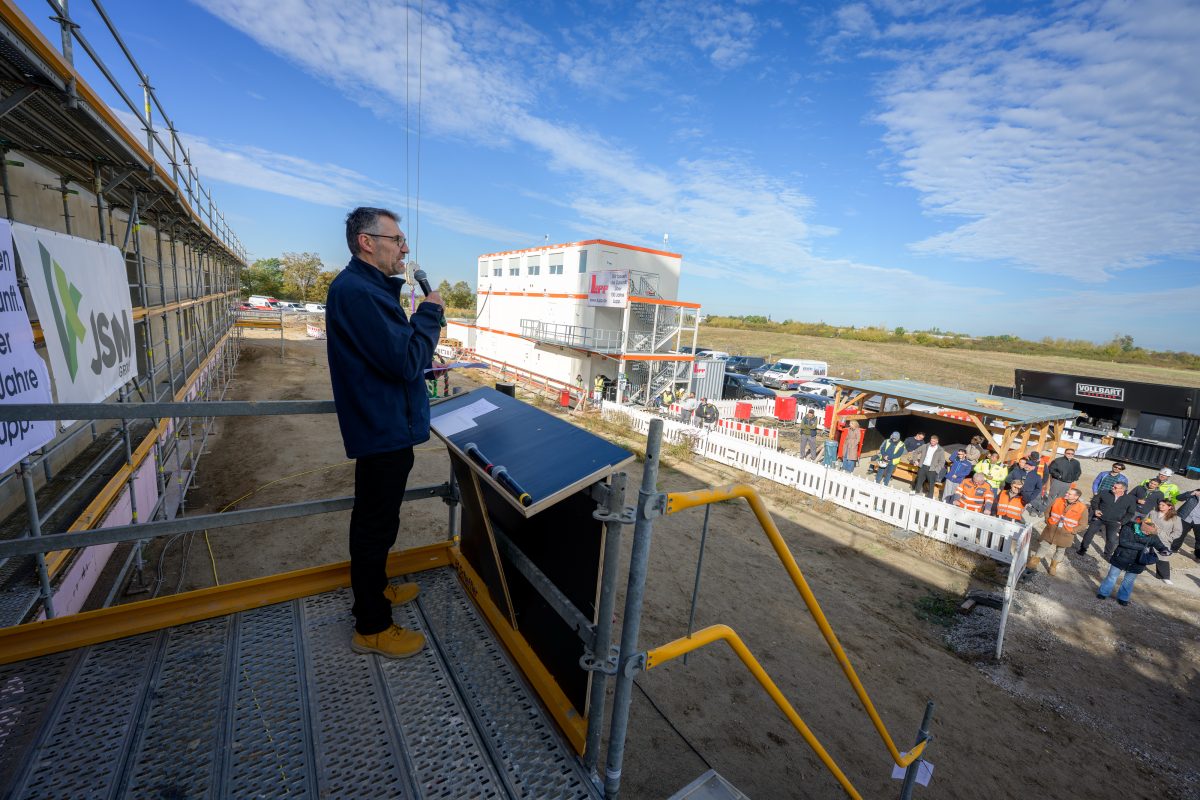
Airsys, a provider of data centre cooling systems, has today opened a new global headquarters campus in Woodruff, South Carolina, USA, to expand manufacturing and engineering capacity for AI and data centre cooling technologies. The 60-acre (24.28-hectare) site will act as the company’s global hub for high-efficiency cooling systems supporting AI, edge computing, and digital infrastructure applications. According to Airsys, the development represents a $60 million (£44 million) investment and is expected to create 215 jobs in the region. Manufacturing operations at the site are scheduled to begin during the first quarter of 2027. The company says the facility will support the production and development of air, liquid, and hybrid cooling technologies designed for high-density computing environments. Facility to support AI cooling demand Yunshui Chen, founder and CEO of Airsys, says, “Today marks a major milestone for Airsys as we establish our global headquarters here in Woodruff, South Carolina. “This investment reflects our commitment to advancing cooling innovation across the entire spectrum of mission-critical infrastructure.” The company states that the new campus has been designed to support growing demand for thermal management systems linked to AI infrastructure and large-scale data centre deployments. Airsys says the site will also support work related to Power Compute Effectiveness (PCE), a framework focused on maximising the proportion of data centre power available for IT workloads after cooling and electrical overheads are accounted for. The project team for the campus included Choate Construction as general contractor and LS3P as architect. According to the company, localising manufacturing and engineering operations in South Carolina is intended to improve supply chain resilience and support North American customers more directly. For more from Airsys, click here.


Translate »