Data Centre Infrastructure News & Trends
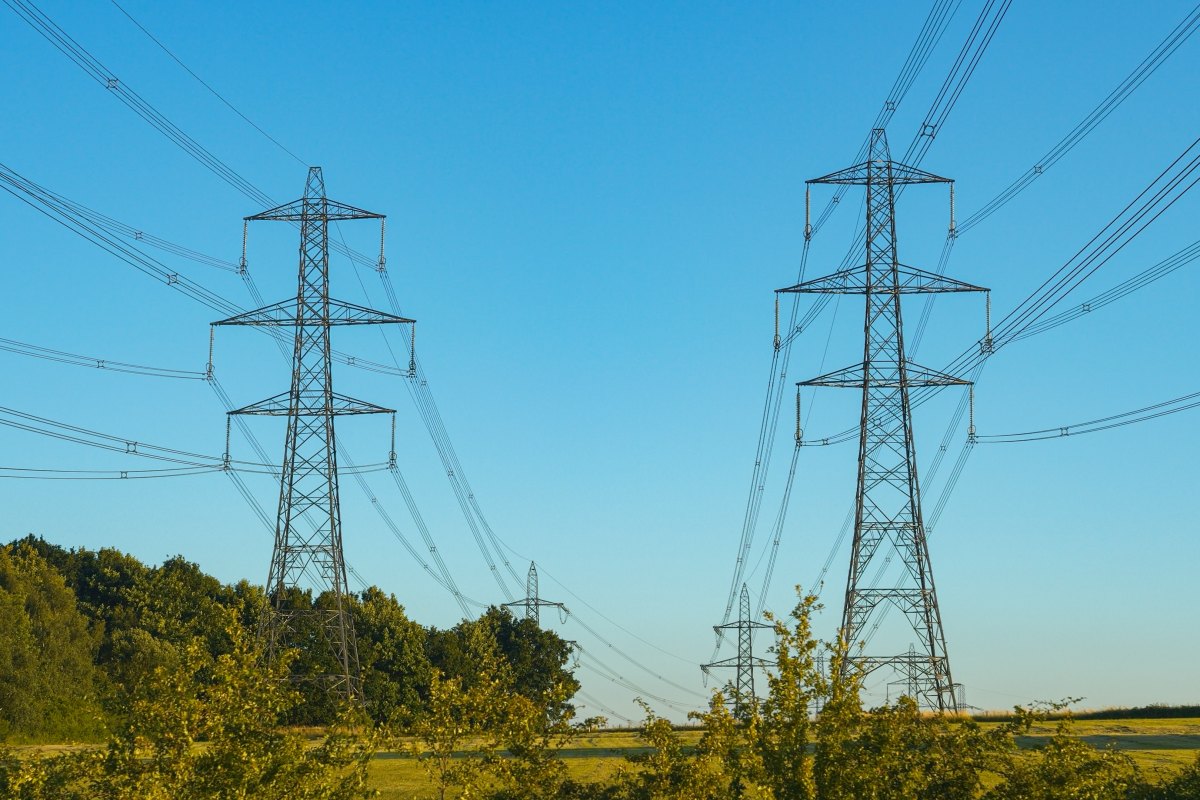

Power equipment shortages threaten Scotland DC growth
A shortage of critical power equipment could become one of the biggest barriers to delivering Scotland's planned data centre expansion, according to Opna, a London-based climate finance platform. The comments follow reports that an £8.2 billion AI data centre project in Lanarkshire, led by CoreWeave and DataVita, is unlikely to meet its original target of being operational by 2030. While discussion around Scotland's data centre growth has largely focused on renewable energy generation and grid connections, Opna argues that shortages of transformers, switchgear, cables, and other electrical equipment present an equally significant challenge. According to Montel's curtailment report, Scottish wind farms received around £343 million in payments to switch off in 2025. At the same time, Wood Mackenzie reports average transformer lead times have reached 128 weeks, with some orders extending beyond four years, while prices have increased by 77% since 2019. Grid upgrades and data centres compete for equipment Shilpika Gautam, founder and CEO of Opna, says, "The massive investment in grid upgrades to support Scotland’s data centres is being hindered by a shortage of critical power equipment: transformers, cables, switchgear, etc. Network operators, who buy in bulk and have long-term agreements with manufacturers, get priority for these supplies. "As a result, when a data centre orders equipment, it’s pushed to the back of a four-year waitlist. Grid expansion and data centre development compete for the same resources, while only network operators have reliable access to manufacturers. "Connecting to the grid is the bottleneck, but procuring critical power equipment is the bottleneck of the bottleneck; few are addressing it." Opna points to the scale of electricity network investment already under way in Scotland. SP Energy Networks began a £12 billion programme of grid upgrades across central and southern Scotland in April, including 12 new substations and a supply chain framework worth up to £5.4 billion over 10 years. Meanwhile, SSEN Transmission is investing at least £22 billion in northern Scotland by 2031 and recently announced a further £7.4 billion supply chain framework. Shilpika continues, "The tens of billions of pounds of grid upgrades meant to unblock Scotland’s data centres are being bought from the same transformer and switchgear order books those data centres need. Network operators are bulk buyers with multi-year framework agreements; manufacturers allocate scarce production slots to them first. "A single data centre project arriving with a one-off order goes to the back of a four-year book. [As mentioned,] grid expansion and data centre growth are now competing for the same equipment, and only one side of that competition has a standing seat at the manufacturers’ table." For more from Opna, click here.

AVK to open UK PowerPods manufacturing facility
AVK, a provider of power systems and electrical infrastructure for data centres, has announced plans to open its first standalone UK manufacturing facility in Haydock, supporting production of modular power systems for data centres and AI infrastructure. The site, located in the Liverpool City Region, will assemble the company's modular low- and medium-voltage (LV/MV) PowerPods, which provide pre-engineered power infrastructure for data centres. AVK says the facility represents an initial investment of £3 million and forms part of its UK manufacturing strategy. The company expects the facility to create a range of skilled jobs during its first year, with further recruitment planned as production increases. Roles will include electrical and mechanical installation engineers, plant movement operatives, warehousing staff, graduate positions, and apprenticeships. AVK has also partnered with St Helens College to deliver work placements and Level 3 engineering apprenticeships. The programme will include electrical and mechanical training, with progression routes into higher engineering qualifications. Haydock was selected for its engineering heritage and transport links, with the site located close to Junction 23 of the M6 to support distribution across the UK and Europe. Facility investment brings manufacturing and engineering roles AVK says the new facility reflects increasing investment in the infrastructure required to support AI and hyperscale data centres. Simon Davis, Head of Production Modular Services at AVK, notes, "PowerPods complete our proposition to the data centre market, and Haydock gives us the dedicated home to build them at scale. This is a British business investing in British manufacturing and British skills, in a region with a proud industrial heritage. "The facility will strengthen the UK's ability to power the AI economy while creating real opportunities for local people, apprentices, and graduates for years to come." Lord Stockwood, Minister for Investment, adds, "AVK-SEG’s investment in Haydock is a strong vote of confidence in UK advanced manufacturing and the Liverpool City Region, creating skilled jobs, boosting apprenticeships, and strengthening our role in powering the AI economy." George Woodward, Leader of St Helens Borough Council, similarly states that the investment demonstrates confidence in the borough's engineering heritage and will help create skilled employment while strengthening links between industry and education. For more from AVK, click here.

Durata launches modular power infrastructure system
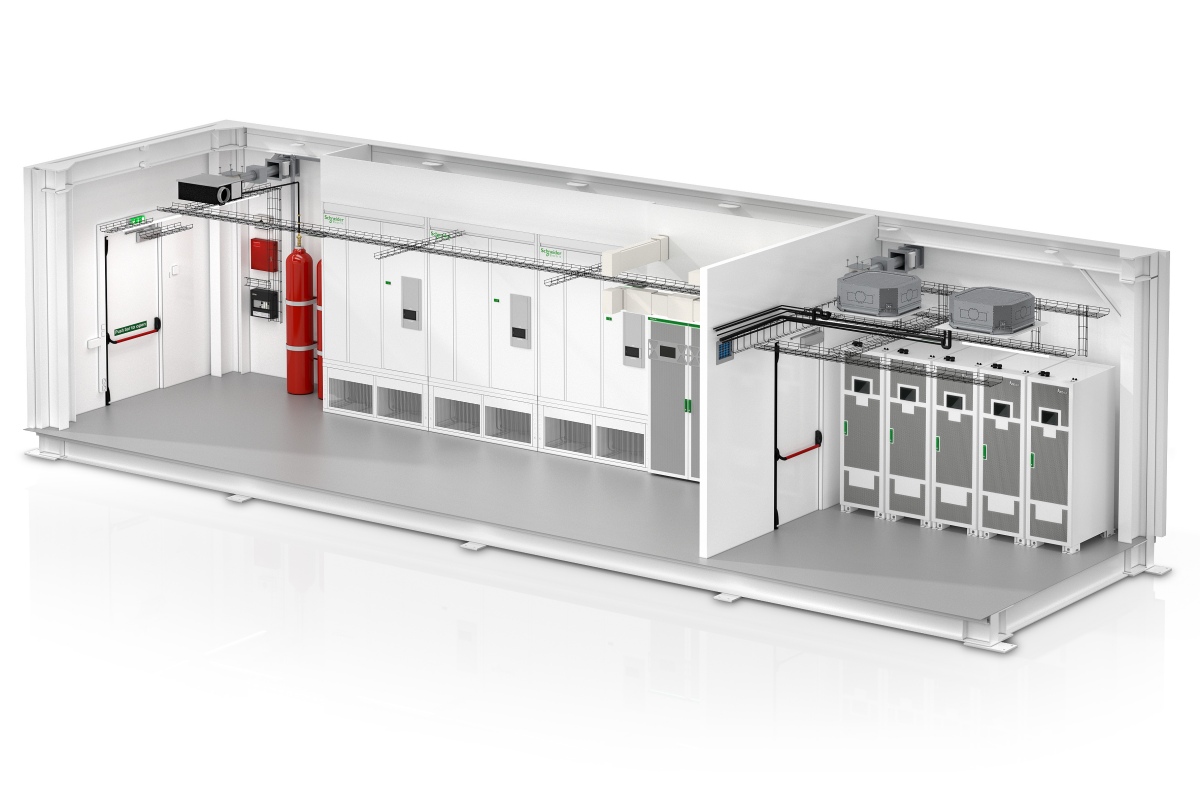
Durata, a critical power and modular data centre infrastructure provider, has introduced PowerCore, a factory-built power infrastructure system designed to simplify the deployment of data centres and other critical infrastructure projects. The modular system integrates power distribution equipment into a single factory-assembled unit, reducing the need to source and coordinate multiple suppliers before installation on site. According to Durata, the launch comes as demand for AI, cloud computing, and digital infrastructure continues to increase, placing greater pressure on operators to bring new capacity online more quickly. PowerCore combines ring main units (RMUs), transformers, switchgear, uninterruptible power supplies (UPS), and busbar infrastructure into a single integrated system manufactured at the company's 80,000ft² (7,432m²) facility in the North East of England. Factory-built approach targets faster deployment Durata says PowerCore is designed, fabricated, and assembled in-house before delivery, reducing on-site construction work and simplifying project management. The company estimates the approach can reduce deployment times by up to 60% while improving quality control and programme certainty. PowerCore is designed to work with equipment from a range of manufacturers, supporting UPS, generator, switchgear, and battery technologies. Durata says the platform can be configured in stacked, linear, or side-by-side layouts to suit individual site requirements and support future expansion. The system is intended for deployments ranging from 10kW to 150kW per rack, making it suitable for hyperscale, colocation, enterprise, edge, artificial intelligence, and high-performance computing environments. Lewis Cobb, Global Director of AI Factories and Modular Data Centres at Durata, comments, "The biggest challenge facing many critical infrastructure projects today is getting power infrastructure at scale delivered quickly enough. "Operators are often managing multiple suppliers, competing lead times, and complex on-site integration programmes. Our PowerCore solution removes that complexity by delivering the complete power stack as a single coordinated system, configured to the customer's requirements and ready for rapid deployment. "By designing, fabricating, and integrating the solution in-house, we can provide greater control over quality, delivery, and programme timelines while giving customers a faster route to deployment. "Data centre operators increasingly need a strategic delivery partner rather than a collection of individual suppliers. We take responsibility for the engineering, fabrication, integration, logistics, and delivery of the entire power infrastructure package. "That reduces project complexity, mitigates risk, and helps customers bring critical infrastructure online faster and with greater confidence." For more from Durata, click here.

Shell renews renewable energy supply deal with Kao Data
Shell Energy UK, a supplier of gas, electricity, and broadband services, has renewed its renewable electricity supply agreement with Kao Data, a data centre developer and operator, extending its partnership with the data centre developer as demand for AI infrastructure continues to grow. Since 2022, Shell Energy has supplied Kao Data with around 140GWh of electricity each year, matched with generation from UK renewable energy assets. From 2025, the agreement has also included electricity generated by the Dogger Bank offshore wind farm, from which Shell Energy Europe offtakes around 20% of the project's total output. According to the companies, the agreement is intended to support the continued development of AI and advanced computing infrastructure while matching electricity consumption with UK-based renewable generation. Kao Data says its data centres are designed for AI and high-performance computing (HPC) workloads, incorporating technologies including direct-to-chip liquid cooling. The company also states that it was the first data centre operator in Europe to transition its backup generators to hydrogenated vegetable oil (HVO), which can reduce lifecycle emissions compared with conventional diesel. Partnership continues focus on renewable energy James Lewis, Investment Director at Kao Data, comments, "At Kao Data, sustainability is embedded in everything we do, and developing strategic relationships remains critical to help us achieve our goals. "Our collaboration with Shell Energy has been instrumental in shaping our long-term energy management and decarbonisation strategy. Extending this relationship enables our customers' electricity demand to be matched with certified renewable generation from UK-based sources, reinforcing our commitment to become carbon neutral by 2030." Greg Kavanagh, Head of Industrial & Commercial Sales at Shell Energy, adds, "Shell Energy is delighted to strengthen our collaboration with Kao Data. Our long-standing relationship reflects the alignment between our teams and a shared focus on innovation and sustainability. "By supplying electricity backed by asset-specific renewable certificates, we're supporting Kao Data's pioneering AI infrastructure and its broader efforts to reduce emissions and progress towards net zero emissions. "Together, we're helping to set a benchmark for how energy and technology companies can enable a low-carbon digital future." For more from Kao Data, click here.

Ingeteam supplies BESS for Dublin data centre microgrid
Ingeteam, a Spanish manufacturer of power electronics, has supplied the battery energy storage system (BESS) for a microgrid at Pure Data Centres Group (Pure DC)'s Dublin campus, supporting what is described as Europe's first microgrid designed to power a data centre. The project forms part of the Orion Phase 1 development and includes a 10MW/20MWh BESS, alongside a power plant controller (PPC) and SCADA system. The battery system has been commissioned and integrated with the site's power stations and energy management system. The installation is Ingeteam's third energy storage project in Ireland since the company entered the market in 2020. During construction, the campus had been supported by a temporary 10MW energy centre. The project also incorporates Ingeteam's liquid-cooled INGECON SUN STORAGE C Series technology, creating a 10MVA grid-forming system without power derating. The permanent microgrid will combine three energy centres with on-site battery storage, increasing the campus's total installed capacity to 110MW. A microgrid designed to support future growth The system has been designed to operate independently of the national electricity grid while retaining the ability to connect once additional grid capacity becomes available. Located at the Pure DC campus in Dublin, the on-site energy infrastructure provides dispatchable capacity during the site's initial development phase. It is expected to eventually transition to a hybrid configuration that combines grid electricity with on-site energy generation and storage. As grid capacity becomes an increasing constraint on digital infrastructure projects, particularly those supporting AI and high-performance computing (HPC) workloads, microgrids are expected to play a growing role in enabling new data centre developments across Europe.

Fourth generation of the R&Mfreenet system released
Reichle & De-Massari (R&M), a Swiss manufacturer of cabling and connectivity infrastructure for data centres and networks, is introducing the fourth generation of its standard cabling system, R&Mfreenet. "With R&Mfreenet 4.0, we are beginning a new chapter in network technology," says Matthias Gerber, R&M Market Manager LAN Cabling. "R&Mfreenet 4.0 is more than a portfolio for structured cabling with connectivity, cables, distributors, and outlets; it sets new standards because it considerably simplifies and perfects the planning, installation, and operation of data networks." With the cabling system, R&M is offering a comprehensive modular system for the physical level of local data networks (LAN). The focus is on the renewed and harmonised range of RJ45 connection modules, and R&M is reducing the number of variants of the EL4.0 module generation to two per category. Small parts such as adaptors are no longer required or are now integrated into the module - such as tension relief, colour code, and protective flap. The self-explanatory "Easy Lock" assembly process has also been compressed into a single work step. The R&Mfreenet 4.0 system includes installation and patch cords that "meet the highest-quality requirements". R&M also says it is the only manufacturer to connect the copper wires of the patch cords with corrosion-resistant, strain- and vibration-proofed IDC technology. The plug contacts are coated with a layer of gold (of a specified thickness) "to ensure loss-free signal transmission under all conditions". The installation cables must pass the R&M endurance test before they are approved for use. R&M maintains its own supply chain and ensures that the installation cables are available worldwide at all times. R&M also offers the modular rack family, Freenet, as housing for distributors and equipment. Customers can freely configure the Freenet racks to suit their project. Infrastructure solutions for every commercial use With R&Mfreenet 4.0, customers can set up structured cabling as well as a complete passive infrastructure for modern ethernet/IP networks. The cabling system is suitable for a variety of commercial applications and environments. These include IT, offices and data centres, trade and industry, and WiFi and IP-aided building automation. With the Cat. 8.1 ISO products, networks can be installed that enable high-speed data traffic of up to 40 Gigabit/s. R&Mfreenet 4.0 contains fibre optic solutions for backbones, digital ceilings, Fibre to the Office, and extended and hybrid networks. The cabling system supports Power over Ethernet (PoE) "up to the highest performance level" for the remote power supply of terminal devices and equipment. R&M uses the PowerSafe seal to label specifically tested PoE-stable products. Customers receive lifetime application warranties on R&Mfreenet 4.0 installations. To this end, the network must be installed and tested by qualified specialists in accordance with R&M specifications. Matthias sums it up, stating, "We are proud to be introducing the fourth-generation R&Mfreenet system, which is equipped to meet the challenges of the digital era. "This strategic renewal reduces complexity and the risk of errors. R&Mfreenet 4.0 incorporates continuous innovation and in-depth knowledge of technologies, markets, and customer requirements. "Improved interaction of the components simplifies planning, ordering, storage, work preparation, and installation. We are making design, functions, installation, security, and logistics more user-friendly, coherent, and sustainable, without compromising on quality, technology, and cost-effectiveness." For more from R&M, click here.

Janitza marks 40 years of growth
Janitza, a German manufacturer of energy measurement and power quality monitoring equipment, is marking its 40th anniversary as demand for power quality and energy monitoring continues to grow across sectors including data centres, industry, and critical infrastructure. The company says it is continuing to expand its international operations, with investment in local subsidiaries and customer support capabilities in markets including the UK, North America, and Australia. Founded in Germany in 1986, Janitza now operates in more than 90 countries, supplying energy monitoring and power quality technologies for applications where resilient electrical infrastructure is essential. Markus Janitza, founder and CEO of Janitza, notes, "The requirements for modern energy infrastructure have changed dramatically over recent decades. "As power grids become more dynamic and energy systems more complex, transparency and power quality are becoming increasingly critical, particularly in sectors such as data centres, industry, and critical infrastructure. "This is exactly where we continue to support our customers globally with precise measurement and monitoring technologies." International expansion continues Janitza says it has grown from a regional manufacturer with around 30 employees into an international supplier serving customers across a range of industries. The company states that it will continue investing in engineering and manufacturing at its German headquarters while expanding its international sales and customer support network. Alexander Veidt, CEO at Janitza, comments, "Over the years, Janitza has always identified technological developments at an early stage and translated them into practical solutions for customers. We will continue to follow this path consistently in the years ahead." Janitza remains a family-owned business and says it expects demand for energy transparency, resilient electrical infrastructure, and power quality technologies to continue increasing as energy systems become more complex. The company also formally celebrated its 40th anniversary with an industry event at its headquarters in Germany on 19 June 2026. For more from Janitza, cick here.

Lenovo to supply HPC for research at Southampton Uni
Lenovo, a Chinese multinational technology company making servers and AI infrastructure systems, has signed a four-year agreement with the University of Southampton in the UK to supply high-performance computing (HPC) infrastructure, supporting the university's research programmes. Through and in addition to this, the company says it also plans to return to the 'Top500' ranking of the world's most powerful supercomputers. Under the agreement, Lenovo will become the university's preferred supplier of HPC infrastructure following a competitive tender process. The partnership builds on a relationship between the two organisations spanning more than a decade. The first order, valued at approximately £7 million, is scheduled for delivery during summer 2026. New systems to support AI and scientific research The initial deployment will include Lenovo ThinkSystem SR675 V3 servers equipped with NVIDIA H200 GPUs and NVLink technology, designed for artificial intelligence, simulation, and other compute-intensive workloads. A second phase is expected to introduce a cluster based on NVIDIA Grace Blackwell architecture using Lenovo ThinkSystem SC777 V4 Neptune servers, further increasing the university's computing capacity. According to Lenovo, the systems will support research across a range of scientific disciplines and help expand the university's computational capabilities. Andy Rhodes, Managing Director of Lenovo UK & Ireland, says, "As research demands continue to grow in scale and complexity, access to powerful, scalable computing is critical. "Lenovo's latest HPC solutions, including next-generation GPU-accelerated systems, will enable the University of Southampton to tackle data-intensive workloads and accelerate breakthrough research. We are proud to support their ambition to further elevate their global research standing." Partnership extends beyond infrastructure Alongside the deployment of HPC systems, the agreement includes opportunities for collaboration on end-user computing, researcher engagement, and the adoption of new technologies across the university. Professor Mark Spearing, Vice President Research and Enterprise at the University of Southampton, comments, "This partnership represents a major step forward in strengthening our research infrastructure. "These new HPC capabilities will play a vital role in enabling cutting-edge research and innovation, helping to raise the global profile of Southampton's research community and compete at the highest international level." The organisations also expect to work together on activities linked to the British Science Festival, which will be hosted by the University of Southampton in September 2026. For more from Lenovo, click here.

SUBCO activates Australian SMAP subsea cable
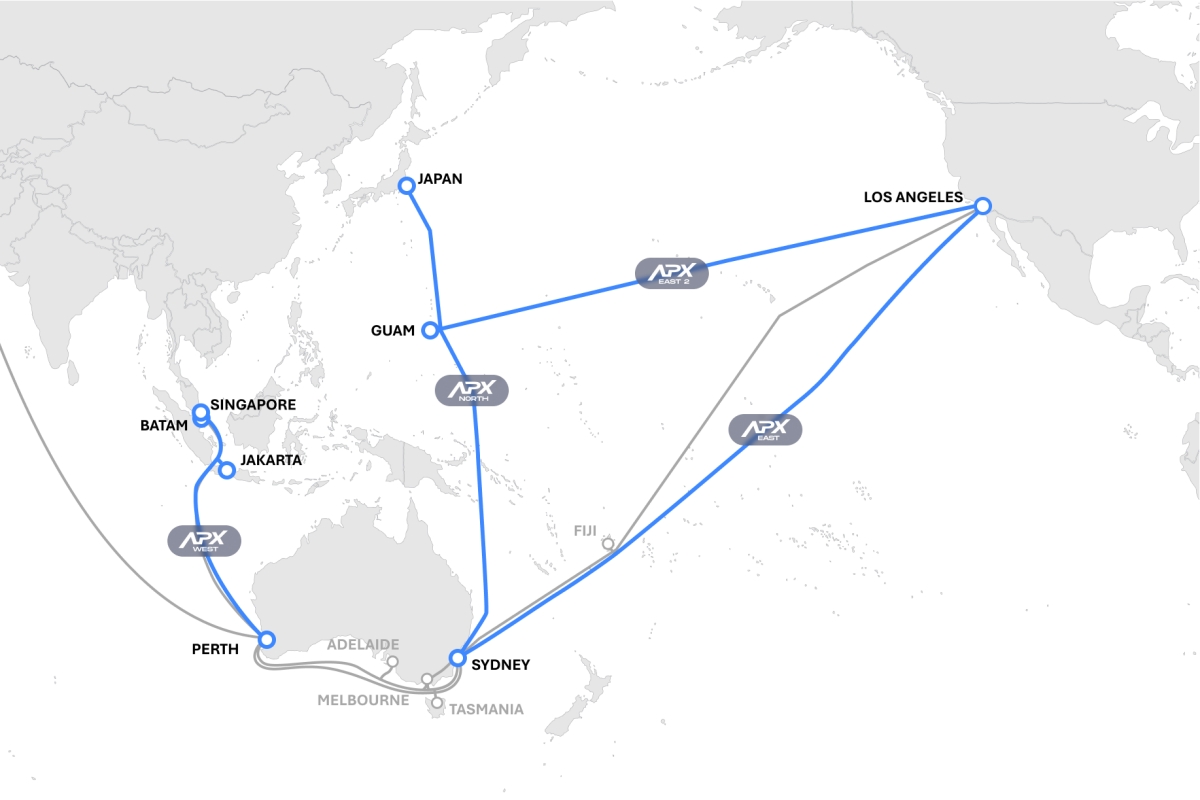
SUBCO, an Australian developer of undersea fibre optic cable networks, has announced that its 5,000km Sydney–Melbourne–Adelaide–Perth (SMAP) subsea cable system is now ready for service. The company says the system is the largest transcontinental capacity upgrade in Australia for almost 25 years, connecting the country's four largest cities through a single, fully armoured subsea cable. SMAP comprises 16 fibre pairs and uses space division multiplexing (SDM) technology to provide more than 400Tbps of capacity. According to SUBCO, it is Australia's first 'hypercable' and the first submarine cable system to land in both Melbourne and Adelaide, providing an additional route between Sydney and Perth. Bevan Slattery, founder and Co-CEO of SUBCO, comments, "SMAP going live is the culmination of more than three years of hard work, and a landmark moment for Australia's digital future. "For the first time, the nation's four major cities are connected by a single, fully armoured, high-capacity subsea system, delivering the resilience and scale that Australia's digital economy, and its role as a connectivity hub for the Indo-Pacific, demands." Foundation customers begin using new network The system's foundation customers include 5GN, Swoop, Aussie Broadband, Cloudflare, GSL, Host Universal, Kinetix, Leaptel, Megaport, Telair, and Virtutel. Brad Parker, CTO at Aussie Broadband, notes, "By coming on board early as a foundational customer of SMAP, we're locking in the capacity, performance, and resilience our customers will need for the next decade and beyond. "The hyperscale capacity and added redundancy allows us to move massive volumes of traffic between our capital city points of presence with lower latency, higher availability, and far more headroom for growth." Damian Matacz, Director, Network Strategy at Cloudflare, adds, "A better internet is built on resilient infrastructure. SMAP gives Cloudflare diverse new domestic paths across Australia, strengthening our network and elevating the experience for everyone our customers serve." Brendan Halley of Host Universal concludes, "SUBCO have always been forward thinking in how they design and operate their cable systems. SMAP is a standout example of that, delivering the resilient, sovereign infrastructure Australia needs. We're proud to continue our relationship as a foundation partner." For more from SUBCO, click here.

Schneider upgrades NHS Trust's critical infrastructure
Northumbria Healthcare NHS Foundation Trust has completed a power infrastructure modernisation project using Schneider Electric technology to improve monitoring, visibility, and management of critical systems across its estate. The project was delivered with Schneider Electric, alongside EcoXpert partner RMD and technology provider XMA, and included the deployment of EcoStruxure monitoring software and uninterruptible power supply (UPS) equipment across multiple sites. The Trust provides healthcare services to more than 500,000 people across Northumberland and North Tyneside in the UK, with its IT infrastructure supporting electronic patient records, clinical systems, administration, access control, and CCTV. According to the Trust, a mix of legacy UPS systems from different manufacturers had created challenges around maintenance, monitoring, and service continuity. Mathew Burns, Operational Infrastructure Manager at Northumbria Healthcare NHS Foundation Trust, says, "With the UPS and network infrastructure, our ultimate goal is to improve service as it underpins everything the hospital does. "It's not only about looking at new technologies and different ways of working, but extracting more value from what we already have. In terms of meeting Service Level Agreements (SLAs), the key challenge is achieving 100% uptime, ensuring systems are always available across multiple sites over a very large geographical area." Creating a unified view across multiple sites To address these challenges, the Trust implemented EcoStruxure to provide centralised monitoring of UPS infrastructure across its facilities. The deployment includes Smart-UPS systems, network management cards, NetBotz cameras and sensors, and EcoStruxure IT Expert software for monitoring and reporting across 175 nodes. Ross Higgins, Senior Technical Specialist at RMD, explains, "We discussed the Trust's key issues such as the runtime needed for its data centres. It was clear that a centralised monitoring system was needed for its infrastructure." Bob Beckwith, Infrastructure Innovation and Transformation Manager at Northumbria Healthcare NHS Foundation Trust, notes, "Adoption of EcoStruxure is developing well. It provides reassurance that our UPS equipment on each site is reliable and 'fit for purpose'. "The Trust views its digital infrastructure as a pyramid, with power as the foundation and maintenance support at the top. We placed RMD, XMA, and Schneider Electric solutions at the base to create a really solid foundation." Supporting future infrastructure planning Following the deployment, the Trust reports complete visibility across its UPS infrastructure, alongside improved benchmarking of energy efficiency and equipment lifecycle status. The organisation says the data generated through EcoStruxure supports budgeting, maintenance forecasting, replacement planning, and future data centre consolidation projects. Mathew Burns continues, "Today, in terms of operations, our UPS estate state is healthy, with a reassuring healthy report from EcoStruxure. "This is a significant investment for the Trust, and we didn't want to put all the new equipment in without having the confidence to know that everything underpinning it was okay. EcoStruxure gives us that confidence." The project represents an investment of approximately £1 million. Under a five-year agreement, the Trust plans to continue upgrading UPS infrastructure, consolidate data centre operations, and maintain ongoing support services through RMD and Schneider Electric. Matthew Baynes, Vice President, Secure Power and Data Centre division at Schneider Electric UK & Ireland, concludes, "Projects like this demonstrate how resilient, connected power infrastructure underpins critical public services. "By modernising and standardising its UPS infrastructure, Northumbria Healthcare NHS Foundation Trust has created a highly resilient digital foundation that supports operational continuity, enhances visibility across its estate, and ensures healthcare teams can continue delivering outstanding patient care with confidence." For more from Schneider Electric, click here.


Translate »