Renewables and Energy: Infrastructure Builds Driving Sustainable Power

GreenScale study examines data centre energy use
GreenScale, a developer of hyperscale data centre campuses, has published analysis examining how a proposed data centre development in Derry/Londonderry could support renewable energy use and reduce electricity system costs in Northern Ireland. The whitepaper analyses grid constraints, renewable energy curtailment, electricity demand, and infrastructure capacity across the region. According to the report, locating data centre infrastructure closer to renewable energy generation in Northern Ireland’s North West could improve grid utilisation and reduce renewable energy wastage. Northern Ireland is targeting 80% renewable electricity consumption by 2030, with the transition projected to deliver annual consumer savings of approximately £110 million. Brian Doherty, Managing Director of GreenScale Ireland, says, “This whitepaper highlights a growing mismatch between where renewable energy is generated and where demand is located. "Northern Ireland has made strong progress in expanding wind capacity, but transmission and system constraints mean a significant proportion of that clean energy is curtailed, which means it is effectively switched off, often during periods of high generation. "This increases system costs and reduces the value of existing infrastructure. A strategically located data centre campus in the North West could help absorb surplus power, reduce curtailment, and support lower overall electricity system costs.” Wind curtailment remains a major challenge The report states that 29.6% of wind generation in Northern Ireland was curtailed during 2024 because of transmission constraints and electricity system balancing requirements. According to the analysis, the strongest wind generation resources are concentrated in the North West, while the largest areas of electricity demand are located elsewhere. The report argues that this imbalance limits the effective use of renewable generation during periods of high wind output. GreenScale says flexible electricity demand from data centres could help absorb excess renewable generation that would otherwise be curtailed. The company also states that facilities capable of adjusting parts of their power demand in response to grid conditions could improve overall electricity system efficiency. Pressure grows on established data centre markets The whitepaper also highlights wider growth in global data centre electricity demand, which is projected to reach 945TWh by 2030. The report notes that established European data centre markets including Frankfurt, London, Amsterdam, Paris, and Dublin (FLAP-D) are facing increasing grid constraints and longer connection timelines, leading operators to consider alternative regions with greater power availability. GreenScale identifies Northern Ireland’s North West as a suitable location for future data centre infrastructure because of its wind generation resources, available land, and proximity to renewable energy supply. The report concludes that improving alignment between renewable generation and electricity demand could reduce energy wastage, improve grid efficiency, and support Northern Ireland’s clean energy targets. For more from GreenScale, click here.

Deep Green partners with Zendo on renewable data centres
British digital infrastructure company Deep Green has partnered with Zendo Energy, a London-based startup building an AI-powered energy management platform, to support a "new generation" of AI-ready data centres powered by renewable energy and energy management technology. The partnership begins at Deep Green’s 400kW site in Urmston, Greater Manchester, where Zendo has secured a renewable energy supply contract for the facility. Designed for high-performance computing and AI workloads, the Urmston site supports rack densities of up to 150kW. Waste heat generated by the servers is captured and reused to heat the swimming pool at Trafford Leisure Centre. According to Deep Green, the heat reuse system is expected to save the leisure centre around £80,000 annually while reducing carbon emissions. The company’s approach centres on deploying modular data centres close to facilities that can use recovered heat, including swimming pools, district heating networks, and public buildings. Renewable energy aiding modular data centre expansion Deep Green says demand for AI infrastructure continues to increase, while grid limitations and planning delays remain challenges for UK data centre developments. The company says its modular deployment model allows new capacity to be brought online more quickly than traditional developments. Through the partnership, Zendo will provide energy monitoring, forecasting, and capacity optimisation using its Energy OS platform. Renewable power for the Urmston facility, in particular, will be supplied by ENGIE. Hazel Lim, Chief Financial Officer at Deep Green, says, “Zendo has been a strong partner in shaping our power procurement strategy for our data centres. "We are excited to draw on their expertise to develop a highly efficient, cost-effective approach that maximises value for our colocation clients by fully capturing the advantages of heat reuse.” Drew Barrett, COO and co-founder of Zendo Energy, adds, “Deep Green has an ambitious vision to accelerate data centre deployments at pace, and we're proud to be the energy technology partner making sure energy is never the bottleneck. “The flexibility we've built into this contract is designed to grow alongside their trajectory, and we see this as a blueprint for what the next generation of data centres should look like: flexible, sustainable, and built for scale.” For more from Deep Green, click here.

Data centres 2026: Energy efficiency and sustainability
Prospero Events Group says it is proud to present the 3rd Energy Efficiency & Sustainability in Data Centers 2026 conference, taking place on 26–27 May 2026 in Amsterdam, the Netherlands. The event will bring together senior decision-makers, technology innovators, and sustainability leaders to explore how data centres can become more energy efficient, resilient, and environmentally responsible. Event presentation topics and speaker panel As AI adoption, hyperscale growth, and electrification continue to increase power demand, the conference will focus on the strategies needed to balance performance with sustainability. Key discussion areas include: • Renewable energy integration• Cooling efficiency and uptime• Waste heat reuse and district heating• On-site energy generation and energy resilience• ESG integration across the data centre lifecycle• Grid constraints and power availability• AI-driven optimisation and future-ready infrastructure The conference will feature expert insights from leading organisations, including: • Günter Eggers, Director Public, NTT Global Data Centers• Vladimir Prodanovic, Principal Program Manager, NVIDIA• Pedro Filipe Barreiros, Data Center Operations, Google• Stijn Grove, Managing Director, Dutch Data Center Association• Martijn Van Wijngaarden, Global Energy Transaction Manager, Iron Mountain• Simon Muskett and Olalekan Salami, Digital Realty The event offers a valuable platform for collaboration amongst operators, investors, technology providers, and sustainability experts committed to building the next generation of low-impact, high-performance data centres. Explore the complete speaker lineup, session topics, and key discussion points shaping the future of sustainable data centres. To register and download the event agenda, click here.

'AI growth doesn’t have to break the grid'
A UK high‑performance computing (HPC) data centre has reportedly cut its carbon emissions by three quarters while easing pressure on the electricity system, offering a blueprint for how the fast‑growing AI sector can expand without overwhelming the grid. Stellium Datacenters, which operates one the UK's largest purpose-built data centre campuses near Newcastle, has switched to a new way of sourcing electricity. This matches its power use with renewable generation hour by hour, rather than relying on annual averages. The move comes as data centres face mounting scrutiny over their energy use, with concerns growing that AI and cloud computing could strain local grids and push up energy costs. That scrutiny has intensified in recent months, with MPs launching an inquiry through the Environmental Audit Committee into the environmental impact of data centres, including their growing electricity and water use and the pressure they place on local grids. Working with renewable energy supplier Good Energy, Stellium now runs its site on a 100% renewable, hourly‑matched electricity supply, linking consumption directly to power generated by more than 3,300 independent UK renewable generators. This approach allows the company to show exactly when its electricity demand is met by renewable sources, achieving an hourly matching score of 95.4%, more than double the current market average of around 43%. Planned additions, including large-scale battery storage, are expected to lift this to 97–98% while being able to show exactly which UK renewable assets powered the data centre and when. 'Hourly matching' as an improved metric Traditionally, many data centres rely on renewable certificates that show clean electricity was generated somewhere on the grid over a year, even if fossil fuels were used at the time power was actually consumed. Some “100% renewable” tariffs relying on this system mask continued reliance on fossil-fuelled power at precisely the moments when the grid is most constrained. By contrast, hourly matching provides a much clearer picture of real‑world impact, demonstrating which users are sourcing clean, homegrown power versus relying on fossil‑fuelled generation at peak times. Stellium says the change has transformed conversations with customers, regulators, and auditors, particularly global AI and technology firms with strict net zero and reporting requirements. The company says it can now demonstrate, in detail, which renewable assets powered its operations, when they did so, and where they are located. Paul Mellon, Operations Director at Stellium, notes, “Data centres often get bad press for their high, inflexible energy use. But this shows that AI and high‑performance computing don’t have to come at the expense of the grid or the climate. "By switching to hourly‑matched renewable power, we’ve been able to cut emissions dramatically while giving customers the transparency they increasingly demand.” Nigel Pocklington, CEO of Good Energy, adds, “By matching electricity use with renewable generation hour by hour, Stellium can show when clean power is actually being used. "That kind of transparency cuts carbon emissions, reduces reliance on fossil fuels at peak times, and proves that digital growth and a resilient energy system can go hand in hand.” Explosive data centre growth in the UK The case comes as the UK prepares for a major expansion in data centre capacity to support AI, cloud computing, and data‑driven industries. As planners, communities, and policymakers look more closely at how new developments will affect local infrastructure, Stellium’s experience suggests that data centres can respond by sourcing and reporting their energy responsibly, rather than relying on offsetting or misleading annualised accounting. With pressure growing on the sector to prove its environmental credentials, the model demonstrates that practical solutions may already exist, and that AI‑driven growth can be aligned with a cleaner, more resilient electricity system. For more from Stellium Datacenters, click here.

Echelon launches Ireland’s first Green Energy Park
Echelon Data Centres, a developer and operator of large-scale data centre infrastructure, has announced that its DUB20 campus in Arklow, Co Wicklow, will become Ireland’s first Green Energy Park, aligned with the Irish Government’s Large Energy Users Action Plan (LEAP). Green Energy Parks are defined by the Department of Enterprise Trade and Employment as developments that co-locate energy-intensive facilities, such as data centres, with renewable energy generation. They are designed to operate primarily on renewable power, supported by energy storage or backup generation, while reducing reliance on the national grid. Darragh O'Brien, Minister for Climate, Energy, and the Environment, comments, “The Large Energy Users Action Plan sets out a clear pathway for how energy-intensive industries can develop in a way that strengthens Ireland’s grid, accelerates renewable deployment, and supports our climate ambitions. “The Green Energy Park being developed at DUB20 is an important example of that model in action: co-locating data infrastructure with offshore wind, onsite solar, battery storage, and grid-supporting capacity. This is exactly the kind of forward-planned, sustainable development we want to see delivered under LEAP.” Integrating renewables with data centre infrastructure The DUB20 campus is being developed in line with the LEAP framework and will integrate several energy systems. Plans include a 220kV substation developed with SSE Renewables, enabling access to offshore wind energy from the Arklow Bank Wind Park Phase 2 project. Onsite solar PV is also planned, with expected generation exceeding 6,000MWh per year. The site will incorporate battery energy storage systems (BESS) and energy centres, including infrastructure capable of exporting power back to the grid during periods of low renewable output. Hydrotreated vegetable oil will be used to reduce emissions from onsite generation. The DUB20 campus forms part of Echelon’s wider investment in data centre developments in Wicklow and is located on a former industrial site at the Avoca River Business Park. Construction is underway, with completion expected by 2028. An economic impact assessment by KPMG indicates that the DUB20 and DUB30 developments could generate up to €7.5 billion (£6.4 billion) in economic output during construction, and €801 million (£693 million) annually once operational. Graeme McWilliams, Co-Founder of Echelon Data Centres, says, “The establishment of Ireland’s first Green Energy Park at DUB20 demonstrates how large-scale digital infrastructure can be developed responsibly and in lockstep with national climate and energy policy. “By co-locating data centre capacity with offshore wind, onsite solar, and grid-supporting infrastructure, we are delivering the exact model envisioned under the Government’s LEAP framework - cutting emissions, reinforcing energy security, and supporting regional economic growth.” For more from Echelon, click here.

atNorth confirms 'mega' 300MW data centre in Sweden
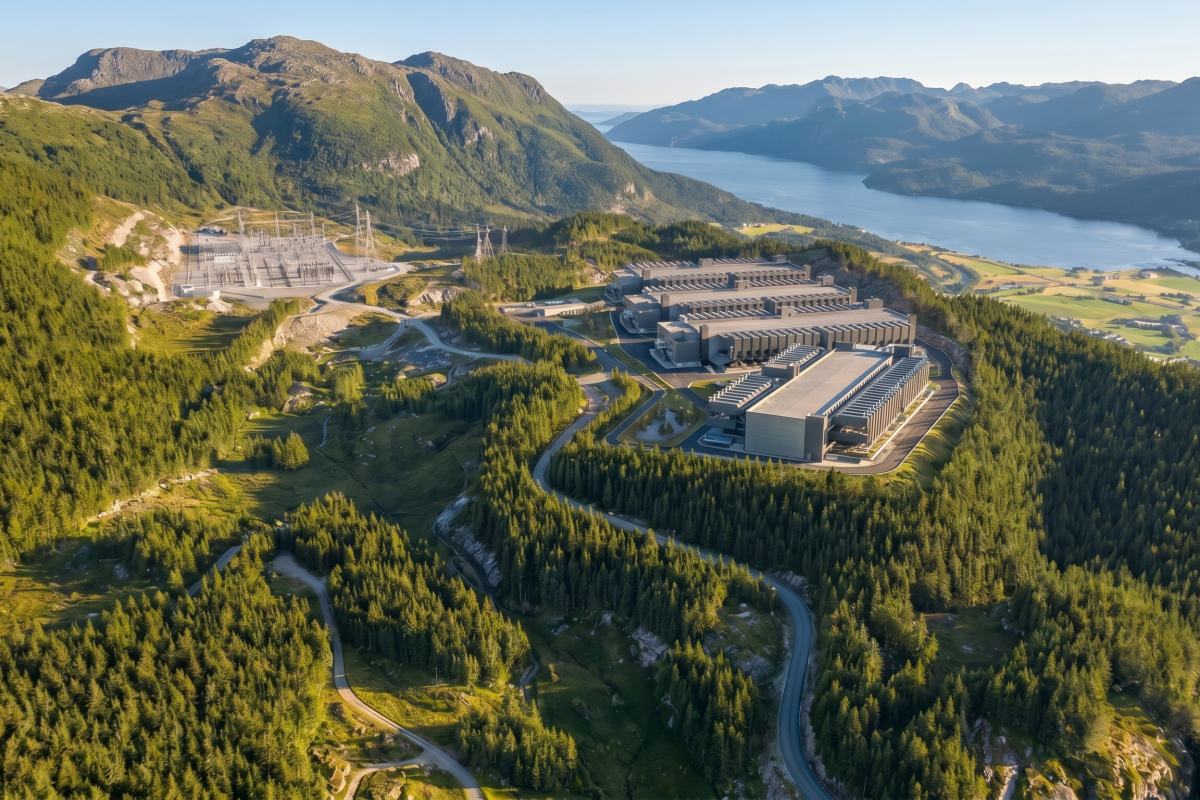
atNorth, a Nordic high-density data centre provider, has confirmed plans to develop a 300MW data centre in Sollefteå Municipality, Sweden. Located at Hamre Industrial Park in Långsele, the new site will be developed on a 50-hectare (202km²) plot (Hamre 1) and is expected to be operational in the first half of 2028. The industrial park is fully zoned for development, which the company says supports a shorter construction timeline as demand grows for AI and high-performance computing infrastructure. Renewable energy and heat reuse The site was selected for its grid capacity and access to renewable energy. The campus will follow atNorth’s modular design approach and is intended to support both colocation and built-to-suit deployments. The company states it will pursue heat reuse partnerships so that excess heat from the facility can be redirected for local use. Eyjólfur Magnús Kristinsson, CEO at atNorth, says, “We face a critical point in time right now, where we must balance unprecedented growth in high-density workloads with an increasingly urgent need for sustainable, scalable digital infrastructure. "Our Sollefteå campus represents a significant milestone for the company and demonstrates our commitment to building data centre ecosystems that deliver both technical excellence and long-term value for local communities.” The announcement follows recent expansion projects in Iceland and Stockholm. For more from atNorth, click here.

Power supply options for data centres
In this exclusive article for DCNN, Tania Arora and James Wyatt, Partners at Baker McKenzie (London), examine the evolving landscape of data centre power supply, highlighting why a tailored approach - blending grid connections, on-site generation, microgrids, and emerging technologies such as SMRs and battery energy storage - is increasingly essential for resilience, sustainability, and commercial optimisation: No universal solution Data centres presently require considerable energy resources, with projections indicating a marked increase in their consumption in the coming years. Securing a steady, sufficient, reliable, and scalable power supply is crucial for the financing, operational success, and long-term resilience of any data centre. A universal strategy does not exist for procuring power for data centres; each project requires a tailored approach. The market offers a wide range of power supply options and these are frequently combined to address the specific requirements of each project. The exact power procurement strategy for each project is determined by several factors, most notably the location of the data centre, local regulatory frameworks, its current and future operational needs, and the strategy of the developer (particularly considering other assets / other electricity supply arrangements they own). This article considers power procurement options available in the market and how these could be combined to achieve a successful power supply strategy. The key power supply options available at present include grid power, on-site or adjacent-site power generation, and microgrids (renewable or conventional), supported by backup generators, battery energy storage systems (BESS), and fuel cells. On-site or adjacent-site nuclear power is increasingly viewed as a panacea solution for data centre energy needs, although there are still considerable political, technological, and risk-allocation problems to solve. Data centres usually connect to public electricity grids, but most grids were not designed for their high load. Upgrades and expansions are often needed, which can be time-consuming and expensive. Sometimes, users must pay for these improvements, and further upgrades may be required if the data centre expands. Furthermore, securing a grid connection is rarely guaranteed; capacity reservations may be needed and are often subject to legal conditions. In some cases, installing on-site generation and microgrids can help address grid challenges. This could involve constructing solar and wind power plants (supported by BESS), gas-fired power stations, and/or combined heat and power (CHP) units adjacent to the data centre and supplying electricity directly without relying on the public grid. Furthermore, fuel cell and linear generator systems - as well as small modular reactors (SMRs) - are emerging as low-carbon, scalable power solutions for data centres. While the ongoing costs for self-generated energy are generally much lower, building such a dedicated energy infrastructure typically entails significantly higher upfront costs compared to connecting to the public grid. Furthermore, on-site projects are often constrained by space and planning restrictions, particularly in urban or suburban markets where demand is highest. Sustainable options Sustainability is a key consideration for a number of data centre market participants. Even if on-site wind or solar energy is economically viable for a project, these renewables alone cannot provide a stable base load due to their intermittency. To ensure base-load coverage, additional infrastructure such as energy storage systems, fuel cells, and conventional backup generators are required. SMRs and advanced nuclear technologies are emerging as promising solutions for the rising power needs of data centres. They offer reliable, consistent base-load power, load-following capability, scalable output, low carbon emissions, and a small physical footprint. They can operate independently of the grid or alongside renewables and are designed to be more cost-effective and quicker to deploy than traditional large-scale nuclear plants due to modular construction and established supply chains. SMRs are becoming a tangible reality for data centres. For example, the UK Government recently provided a considerable amount of support for SMRs for data centres through planning reforms, regulatory acceleration, funding, and explicit policy direction encouraging SMR–data‑centre colocation. However, SMRs face challenges: they are largely unproven and most jurisdictions still lack regulatory frameworks tailored to their unique characteristics. Key considerations for deploying SMRs include understanding local nuclear regulations, licensing and approval processes, decommissioning requirements, nuclear waste management, fuel supply security, and site suitability. Addressing these legal and regulatory issues is essential before SMRs can be widely adopted for data centres. BESS has become a key part of data centre power strategies, serving not only as resilience infrastructure but also helping to unlock commercial opportunities. It provides load shifting and peak shaving, thus reducing exposure to volatile wholesale prices and network charges by charging during low-cost or high-renewable periods and discharging power at peak demand. BESS also delivers instant backup power during outages and enables participation in grid services for additional revenue. Key issues include permitting and safety (especially for large-scale systems near nuclear or high-voltage facilities), complex grid connection agreements, and risk allocation where BESS is delivered via third-party energy-as-a-service contracts. Final considerations The near to mid-term future of data centre power lies in combined strategies. Every option in the combination presents its own distinct legal and commercial considerations. Consequently, as strategies become more complex, market participants should anticipate navigating a greater number of legal issues within the context of rapidly evolving regulatory frameworks.

GCRE extends Energy and Data Centre Partner opportunity
The Global Centre of Rail Excellence (GCRE) has extended its competition to secure an Energy and Data Centre Partner (EDCP) for its 700-hectare site. GCRE is a new, purpose-built facility being developed in South West Wales for international rail research, testing, and net zero technology development. The GCRE site has the potential to become Europe’s leading cluster for rail innovation. In September last year, the company began its search for a partner to develop Renewable Energy Sources (RES) and a data centre (DC) on the site, a former open cast mine equivalent to the size of Gatwick Airport. The plan is for the partner to develop the assets alongside the rail project. Chief Executive Simon Jones notes that ‘significant’ interest had been expressed in the site from developers in the energy and data centre sectors, but confirmed that bidders had requested more time to develop comprehensive proposals for the site. GCRE has therefore decided to extend its search for a partner into 2026, with a revised EDCP Invitation to Tender (ITT) available on the Sell to Wales platform. Potential bidders can register their interest in the opportunity, by completing a ‘Conditions of Participation’ document, which runs from now until 12 noon on 10th March 2026. Opportunities in an emerging data centre region The site is only 30km from Bridgend and 50km from Cardiff, where data centre clusters are already forming. GCRE Chief Executive Simon Jones explains, “The last few weeks have been very encouraging as we have seen the significant interest there is from the commercial market in the GCRE site as a location for high-quality renewable energy and data centre infrastructure. “What’s clear, however, is that more time is needed for bidders to develop their proposals. It has meant that we have taken the decision as a company to extend our partner search and give everyone in the market more time to put forward proposals. “That is why we have issued a new ITT with an extended timeline to allow that interest to crystalise into firm proposals. We had originally hoped to appoint a partner by the end of the current Senedd term, but that has not been possible and so we have extended the time available into 2026. “The opportunity for a long-term partnership with GCRE is a unique one. The GCRE site’s size, power grid, and telecoms connectivity make it very appealing for the development of renewable energy assets and data centre infrastructure. 132kV and 400kV power lines cross over the GCRE site, with high-quality fibre connectivity being progressed for the area. “It’s right that we take time to find the correct partner. Energy and data centre infrastructure at GCRE will help raise the economic profile of the site, something that is very important as we continue our search for private investment for the rail project.” The EDCP competition is being developed in parallel with GCRE’s separate search for private investment for the railway. Simon continues, “We have seen in recent months the important ways in which the energy and AI policy landscape is developing fast. The UK is seeking to harness the opportunities of net zero transition and AI by developing the infrastructure needed to support it. "This region is at the forefront of that change. Just recently, South Wales was designated as a new AI Growth Zone by the UK Government. “GCRE and the modern energy and data infrastructure we can build on the site is one of those opportunities and it’s something we believe we can use as a platform for new green jobs around an international rail cluster.”

RWE sustainably powers Global Switch’s London DC
RWE, a German renewable energy company, has signed an eight-year power purchase agreement (PPA) with Global Switch, an owner, operator, and developer of data centres in Europe and Asia-Pacific. Under the terms of the agreement, Global Switch will source electricity produced from RWE’s Brechfa Forest West onshore wind farm to power its data centre in the heart of London’s Docklands. From January 2026 until 2033, RWE will supply a total of 70 gigawatt hours of clean electricity per year. The Brechfa Forest West onshore wind farm is located in southwest Wales and was commissioned in 2018. It comprises 28 turbines and has a generation capacity of 57.4 megawatts. Ulf Kerstin, Chief Commercial Officer at RWE Supply & Trading, notes, “In view of the ongoing digitalisation and the increasing use of artificial intelligence in almost all areas of life, the number of data centres and their energy requirements are growing. "Some data centre operators are already relying on the use of low-carbon electricity from RWE, and we are delighted to have gained Global Switch as another partner.” Peter Domeney, COO at Global Switch, comments, “Our agreement with RWE is a critical next step on our journey to purchasing 100% renewable energy by 2030 and to the setting of new standards for what a sustainable, environmentally-conscious data centre can look like. "It’s an agreement that brings together the forests of Wales and the most powerful, most advanced AI and high-performance compute deployments in the world.” Wind power from Wales to London Global Switch’s London data centre, set to benefit from this agreement, is located in the heart of the city’s business district, with access to 224 Mega Volt Ampere (MVA) - or approximately 224 MW - of secured power and currently undergoing a programme of densification and expansion. Last year, it was selected by CoreWeave to host one of Europe’s largest deployments of NVIDIA H100 and H200 GPUs, as well as being the site of the company’s liquid cooling showcase - a presentation of the latest liquid cooling technologies, some of which had never before been deployed in Europe. Global Switch is targeting 100% renewable energy by 2030, and annualised power usage efficiency (PUE) of 1.2 across its European sites. In 2025, its emissions reduction targets were approved by the Science Based Targets initiative and its sites were inducted into the voluntary European Code of Conduct for Energy Efficiency in Data Centres initiative. RWE says it is investing billions of euros in expanding its generation portfolio, particularly in offshore and onshore wind, solar energy, and battery storage. This is complemented by its global energy trading business. The company says that, thanks to its "integrated portfolio of renewables, battery storage, and flexible generation, [it] is well positioned to meet the growing global demand for electricity," which is being driven by the increasing use of artificial intelligence and further electrification.

Datacenter United gains SBTi emissions validation
Datacenter United, an independent Belgian data centre operator, has confirmed that its near-term emissions reduction targets have been validated by the Science Based Targets initiative (SBTi), a global partnership that helps companies set emissions reduction targets aligned with climate science. The approval aligns the company’s targets with the 1.5°C pathway, the most stringent scenario within the SBTi framework. The company says its investment programme will continue to prioritise energy efficiency, cooling approaches suited to higher density environments, responsible water use, and infrastructure designed to support AI workloads. Friso Haringsma, CEO of Datacenter United, says, “The SBTi validation confirms that our sustainability strategy is not only ambitious, but also substantively sound. "We are convinced that digital progress and sustainable growth can reinforce each other. This recognition motivates us to continue on this path consistently.” Sustainability commitments and investment programme The SBTi validation forms part of a wider sustainability framework in place at Datacenter United. The company holds ISO 14001 certification and is a signatory to the Climate Neutral Data Centre Pact. It also works with external organisations including EcoVadis, Greenly, and The Green Grid. Datacenter United has linked the validation to its ongoing €120 million (£105 million) investment programme, which is focused on efficiency improvements, reduced energy consumption, water management, and infrastructure designed for future demand. The company says the milestone supports its longer-term approach to operating data centres in Belgium with an emphasis on reliability, scalability, and environmental performance. For more from Datacenter United, click here.


Translate »