Data Centre Build News & Insights


LINX to upgrade Lunar Digital data centre into fully resilient PoP
The London Internet Exchange (LINX), an internet exchange point (IXP) operator, is planning to upgrade its presence at the Lunar Digital data centre in Manchester, UK, transitioning the site from a single-homed transmission site to a dual-homed, fully resilient point of presence (PoP). LINX initially went live at Lunar Digital to gauge market demand for an additional PoP at the LINX Manchester interconnection hub. The reportedly strong uptake of services since the September 2024 deployment has now indicated to the company the need for a full, diverse, and resilient presence from the IXP at the facility. Jennifer Holmes, CEO of LINX, comments, “Manchester continues to establish itself as a powerhouse digital hub for the North, and the response and demand for LINX services from networks at Lunar Digital has exceeded our expectations.” Mike Hellers, Product Development Manager for LINX, adds, “Our Manchester LAN has tripled in size over the last couple of years to now enabling 130 networks to access low-latency services and [it] regularly carries more than 900Gbps of traffic at busy periods. “Upgrading Lunar to a resilient PoP ensures existing LINX members and future networks can benefit from enhanced reliability, additional capacity, and greater choice as the regional ecosystem continues to grow.” Manchester as a growing hub Lunar Digital operates three data centres in Manchester with LINX being accessible via a single cross connect from Lunar1 and Lunar2. The announced move underscores the rapid expansion of network operators, cloud platforms, content providers, and digital businesses choosing to colocate in Manchester. “We’re thrilled to deepen our collaboration with LINX,” says Rob Garbutt, CEO of Lunar Digital. “The upgrade to a full PoP reflects not only the growth of Lunar Digital, but the wider demand for robust, high‑performance, low-latency connectivity options across the North of England.” Networks at Lunar Digital will be able to access services at the LINX Manchester internet exchange via a single cross connect. This includes services like peering, private VLANs, Closed User Groups, and the exclusive Microsoft Azure Peering Service (MAPS). The transition work is due to be completed in the coming weeks. For more from LINX, click here.

nLighten's Stuttgart data centre to reuse heat
European data centre operator nLighten's data centre in Stuttgart, Germany, is set to feed excess heat into the local heating network, supporting the municipal it.schule training centre and DEKRA buildings in the Möhringen district. To deliver the project, nLighten is partnering with Wärmelösungen Synergiepark Stuttgart, a joint venture between Stadtwerke Stuttgart and e-con AG. The companies have signed a cooperation agreement, with the scheme expected to go live later in 2026. It has received funding from the German Federal Ministry for Economic Affairs and Energy. The recovered heat will be sold to Synergiepark Stuttgart, which will process and distribute it through an expanded heating network. The infrastructure is designed to deliver up to 1.8MW of heat output. Closed-loop system for heat recovery A closed-loop water system will capture heat from the data centre’s servers and heat pumps will raise the temperature to the level required by end users before distribution. nLighten states that the Stuttgart project follows a similar initiative in Eschborn and forms part of its wider approach to reducing emissions by combining renewable electricity use with heat reuse. Andreas Herden, Managing Director Germany at nLighten, comments, “The heat reuse project in Stuttgart is another milestone for nLighten and demonstrates how data centres can become active shapers of the energy transition. "Following our successful project in Eschborn, we are once again proving that Europe’s digital infrastructure can be designed not only to be powerful and connected, but also sustainable.” Ulf Hummel, Managing Director of Wärmelösungen Synergiepark Stuttgart, adds, “The excess heat project with nLighten creates an added value for everyone involved: it delivers climate-friendly heat for our customers, strengthens the data centre’s sustainable business model, and represents an important step towards decarbonising Stuttgart’s heat supply. "As a young company, Wärmelösungen Synergiepark Stuttgart set out to provide climate-neutral heat to the entire industrial area in Vaihingen and Möhringen. Connecting the data centre is the reward for the many years of planning.” For more from nLighten, click here.

TES Power to deliver modular power for Spanish DC
TES Power, a provider of power distribution equipment and modular electrical rooms for data centres, has been selected to deliver 48 MW of modular power infrastructure for a new greenfield data centre development in Northern Spain, designed to support artificial intelligence workloads. The facility is intended for high-density compute environments, where power resilience, scalability, and deployment speed are key considerations. Growing demand from AI training and inference continues to place pressure on operators to deliver robust electrical infrastructure without compromising availability or reliability. Modular power skids for high-density AI environments As part of the project, TES Power will design and manufacture 25 fully integrated 2.5MW IT power skids. Each skid is a self-contained module incorporating cast resin transformers, LV switchgear, parallel UPS systems, end-of-life battery autonomy, CRAH-based cooling, and high-capacity busbar interconnections. The skids are designed to provide continuous power to critical IT loads, with automatic transfer from mains supply to battery and generator systems in the event of a supply disruption, a requirement increasingly associated with AI-driven data centre operations. Michael Beagan, Managing Director at TES Power, says, “AI is fundamentally changing the scale, speed, and resilience requirements of data centre power infrastructure. This project reflects exactly where the market is heading: larger, higher-density facilities that cannot tolerate risk or delay. "By delivering fully integrated, factory-tested power skids, we’re helping our client accelerate deployment while maintaining the absolute reliability that AI workloads demand.” The project uses off-site manufacture to reduce programme risk and enable parallel delivery, allowing electrical systems to be progressed while civil and building works continue on-site. Each skid will undergo full Factory Acceptance Testing prior to shipment, reducing commissioning risk and limiting on-site installation time. Building Information Modelling is being used to digitally coordinate each skid with wider site services, supporting installation sequencing, clash detection, and longer-term operational planning. TES Power’s scope also includes project management, site services, and final commissioning.

Pulsant opens high-density UK facility outside London
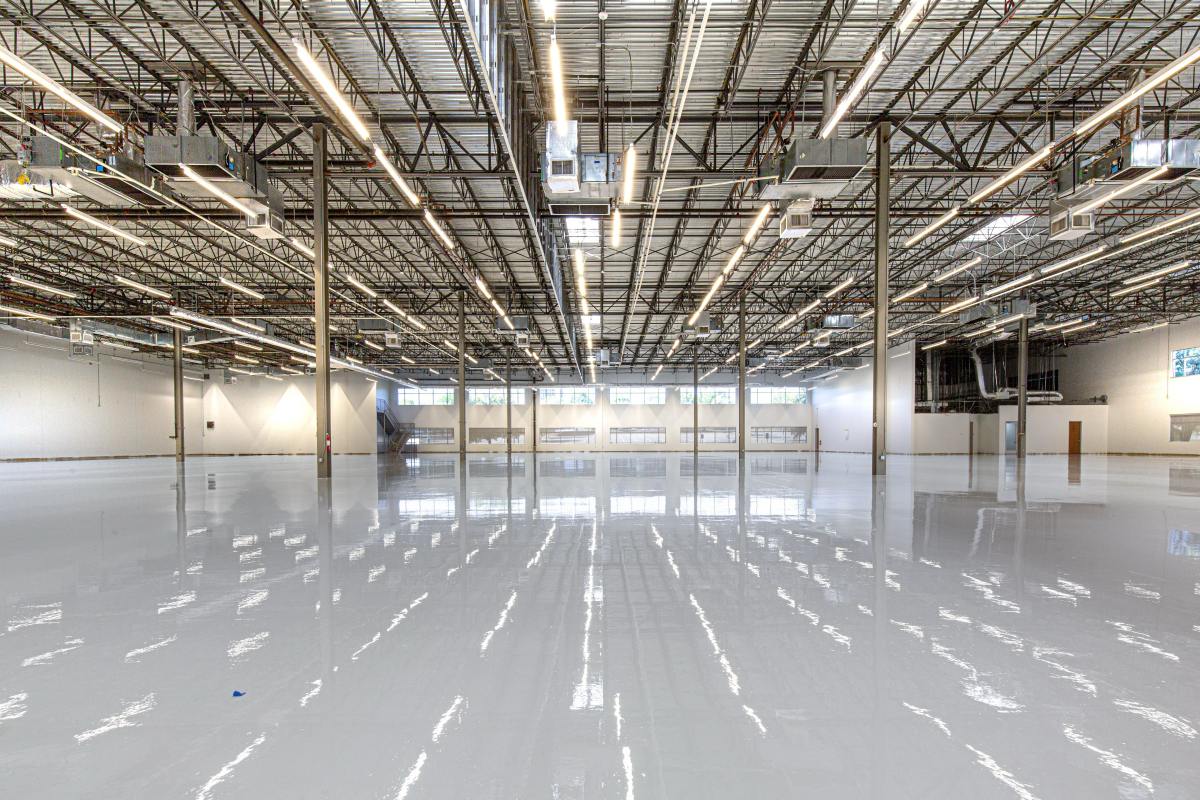
UK data centre operator Pulsant has completed a £10 million investment in a new high-density data hall at its Milton Keynes site, SE-1. The facility has been developed to support increased demand for artificial intelligence and advanced computing workloads, with the expansion forming part of Pulsant’s national platformEDGE framework, extending high-performance, UK-based infrastructure outside the London market. The 1.2MW expansion is designed for high-density computing applications, including AI, machine learning, and accelerated workloads. These use cases are commonly associated with sectors such as financial services, healthcare, biotechnology, IT, and gaming. Regional capacity beyond the London market Pulsant positions the Milton Keynes site as an alternative location for organisations seeking UK data centre capacity outside London. The site sits within the Oxford-Cambridge technology cluster, which is home to around 570,000 employees and generates approximately £135 billion in annual turnover. The facility offers latency of around two milliseconds to London Docklands and Slough. It forms part of Pulsant’s network of 14 UK data centres, interconnected via a 400Gb-capable network, providing access to more than 1,600 cloud services, network providers, and business partners. The launch follows increased focus on domestic digital infrastructure, including government funding aimed at strengthening UK AI capability. Milton Keynes has continued to attract technology businesses, supported by regional business networks and digital innovation activity. Rob Coupland, CEO at Pulsant, says, “The £10 million expansion of our Milton Keynes data centre is another big investment in our digital platform to meet hunger for high density compute power. "UK digital infrastructure is facing unprecedented demand. With AI-ready capacity in short supply, bringing high performance, flexibility, and choice to regional locations is critical. “For organisations looking for ultra-low latency, international connectivity, and UK sovereign compute power, Milton Keynes is a great option compared to constrained and costly London data centres which lack the opportunity for expansion. “Our unique platform gives local, national, and international clients the flexibility to circumvent some of the risks associated with the London cluster while maintaining high performance, resilience, and connectivity.” Pulsant states that it plans to roll out its high-density model to additional UK regions as part of its wider national infrastructure strategy. For more from Pulsant, click here.

North East England data centre hub launched
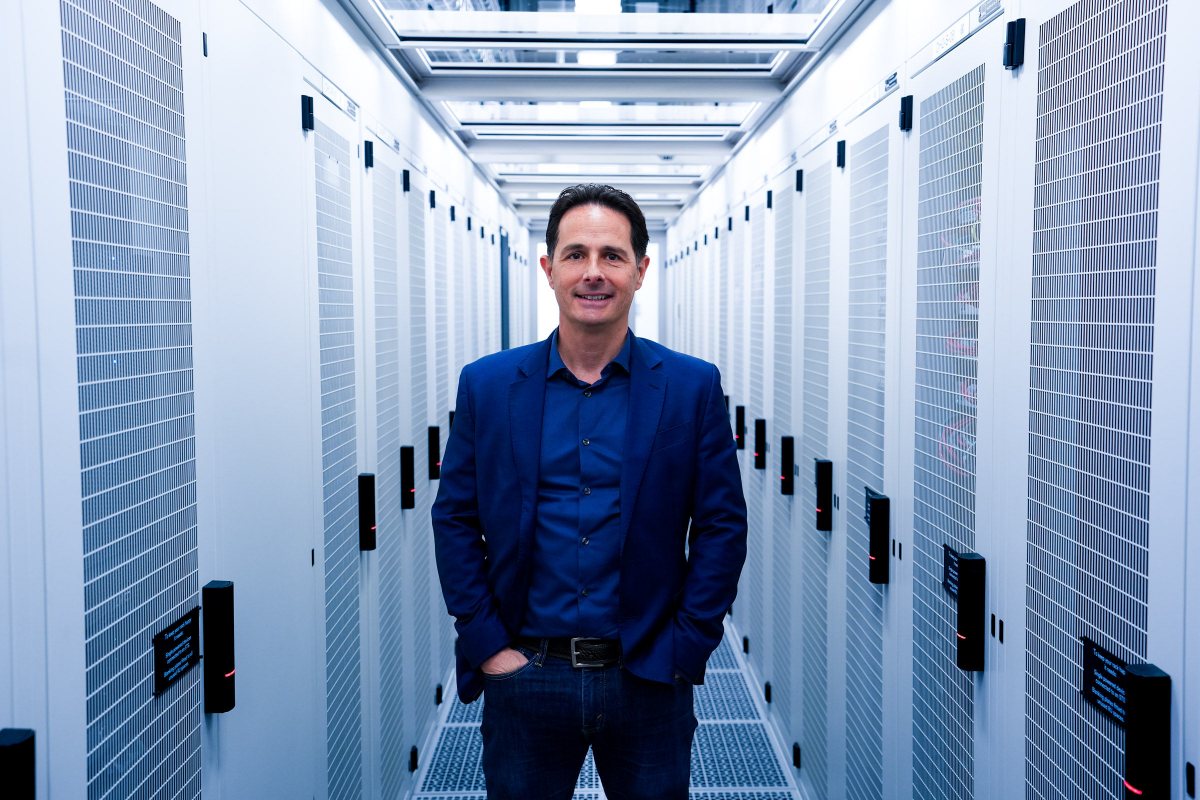
A consortium of North East engineering and manufacturing powerhouses have joined forces to launch a new not-for-profit forum designed to help shape and propel the future of the data centre sector in the region. The North East Data Centre Hub has been founded by major global companies including RED Engineering Design, Cleveland Cable Company, CMP Products, Durata, and RWO Associates. Together, the founding members says they share a clear ambition to build momentum by collaborating on the development of a strong local engineering, construction, and digital supply chain to support data centre projects across the region and beyond. Opportunities in the North East With the North East strongly positioned as one of Europe’s largest data centre and AI infrastructure hubs - driven by government policy, energy availability, and major hyperscale investment - the launch of the hub provides an opportunity to shape the conversation locally and accelerate growth through regular engagement. The initiative aims to unlock the region’s full potential as a leading data centre destination. To mark its launch, the consortium will host the North East Data Centre Hub’s first networking event (which is already fully booked) on 25 February, from 5:30pm to 8:00pm, at Liberty House in Newcastle's city centre. Speaking about the North East Data Hub and its first event, John McGee (pictured above), Group CEO at Durata, says, “The hub provides an excellent opportunity for professionals in the sector - from developers and operators through to consultants and suppliers - to collaborate, share innovation, and exchange best practice. "By strengthening local connections, we can amplify the North East’s contribution to the wider UK and global data centre market. “We are delighted with the companies spearheading this initiative. Each brings extensive global experience in delivering critical infrastructure projects and, by working together - and joining forces with other local businesses - we can build a strong, resilient regional supply chain that supports long‑term growth, investment, and skills development in the North East. “With registration already reaching full capacity for our first event, it’s clear there is strong appetite for a hub of this nature. Many delegates will be attending with a shared goal, and this is just the beginning. We have an exciting programme of events planned over the next 12 months, with much more to come from the North East Data Centre Hub.” The North East Data Centre Hub is open to organisations across the data centre ecosystem, with plans for a programme of bi-monthly events hosted across the region, featuring speakers and with the opportunity for discussion and continued networking. To be the first to know about upcoming events and industry news from the newly formed hub, you can sign up for alerts by clicking here.

DataVita secures £44.9m contract with Glasgow City Council
DataVita, a UK data centre and cloud services provider, has announced it has secured a major contract with Glasgow City Council to provide the city’s core compute and storage services. The initial agreement is valued at £44.9 million over five years and nine months and will see DataVita modernise the Council's digital backbone to underpin essential public services. The partnership includes options for the Council to extend for multiple periods and, should the contract run for its maximum permitted duration of over 10 years, the total projected value is estimated to be between £80 million and £110 million. Under the initial term, which began on 8 October 2025, DataVita will deliver a comprehensive suite of services from its Tier-III-certified Scottish data centres. These services will form the foundation of the Council's IT infrastructure, supporting over 400 applications that are critical to daily public services. The scope includes providing resilient primary and disaster recovery environments, managing virtual and physical servers, scalable storage, and "robust backup solutions" featuring immutable copies for maximum data protection. As part of the contract, up to 25 new roles will also be created, including several apprenticeships, which DataVita says reflects its "commitment to skills development and job creation within Scotland’s tech sector." Investments in Scotland's backbone Danny Quinn, Managing Director of DataVita, comments, "We are incredibly proud to be selected as a strategic partner for Glasgow City Council. We are focused on delivering exceptional value and innovation over the initial term and see this as the start of a long-term partnership. "Our mission is to provide a resilient, secure, and sustainable digital infrastructure that will not only meet the city's needs today, but also support its ambitions for the future. This award is a testament to our team's expertise and our commitment to investing in Scotland's technology ecosystem." As part of Glasgow's transition to a multi-source IT delivery model, DataVita will integrate with the Council's Service Integration and Management (SIAM) function, aiming to ensure efficient and collaborative service delivery alongside other partners. Paul Leinster, Chair of the Digital Glasgow Board from Glasgow City Council, says, “The essential services that we deliver to citizens and the value they add to people’s lives are always our first priorities. “Increasingly, though, we rely on a complex digital estate to deliver those services, and this contract will ensure we have a secure, resilient platform to support what is an incredibly diverse range of work. "DataVita brings proven capability here in Scotland, and their commitment to renewable, energy‑efficient operations aligns with Glasgow’s ambitions for a cleaner, greener city.” For more from DataVita, click here.

Johnson Controls launches cooling reference design guides
Johnson Controls, a global provider of smart building technologies, has announced the launch of its Reference Design Guide Series for one-gigawatt AI data centres. Each guide in the series maps the full thermal chain, offering cooling architectures tailored to diverse compute densities, geographies, and elevations. The series begins with a blueprint for water-cooled chiller plants, with future guides to address air-cooled and absorption chiller solutions. As AI transforms industries, the scale and complexity of data centre infrastructure is rapidly evolving. The ability to efficiently manage thermal loads at gigawatt scale is now a critical enabler for AI innovation, and the industry faces mounting pressure to deliver facilities that are not only high-performing, but also sustainable and future-ready. Johnson Controls says its Reference Design Guide Series responds to this challenge by outlining how to achieve "industry-leading" energy and water efficiency (PUE and WUE) while maintaining flexibility to scale across diverse climates and operational requirements. The guide outlines a complete thermal architecture supporting both liquid- and air-cooled IT loads through integrated computer room air handlers (CRAHs), fan coil walls, coolant distribution units (CDUs), and high-efficiency YORK centrifugal chillers. It provides sizing guidance for 220MW compute quadrants and defines temperature and operating conditions across all major facility loops, including Technology Cooling System (TCS) loops supporting next-generation GPUs. Stated key outcomes • Zero water consumption — A "fully water-free" heat rejection process using dry coolers, "reducing operational costs and advancing sustainability objectives." • Future-ready thermal flexibility — High-temperature TCS loop readiness aims to ensure compatibility with forthcoming GPU architectures. • Optimised high-density AI performance — Alignment with NVIDIA DSX reference architecture enables scalable deployment of 1-GW-class AI Factories. • Energy-efficient operation — Elevated condenser water temperatures, bifurcated loops, and YORK high-lift chillers aim to deliver good PUE and improved annualised efficiency. Austin Domenici, Vice President & General Manager at Johnson Controls Global Data Center Solutions, says, "AI Factories are production facilities - the places where intelligence is manufactured at an industrial scale. "By supporting the NVIDIA DSX reference architecture and improving water and energy efficiency in the cooling process while maintaining high temperature loop compatibility, our Reference Design Guide equips customers to deploy gigawatt-scale AI infrastructure that is scalable, repeatable, resilient, and sustainable." For more from Johnson Controls, click here.

BCS Consultancy launches Sustainable Development Service
BCS Consultancy, a global data centre consultancy, has launched a new Sustainable Development Service and appointed James Rogers Jones as Head of Sustainable Development. The new service formalises sustainability as a core element of BCS Consultancy’s project management, cost management, commercial advisory, and technical delivery work, rather than a standalone offering. The move reflects increasing client demand for advice that balances commercial delivery with environmental impact, community expectations, and long-term operational resilience. James joins BCS Consultancy with experience supporting major data centre operators, including Digital Realty, Google, GreenScale, and AtlasEdge. His work has focused on sustainability strategy, regulatory compliance, and operational performance across complex data centre portfolios. James comments, “Data centres underpin our modern economy and are one of the most impactful industries in the world. These assets can deliver enormous value to both clients and the communities they serve. "Sustainability should no longer be framed primarily around ESG-signalling or long-term carbon targets; instead, it is increasingly becoming linked to energy security, price stability, and operational resilience.” Responding to community and planning pressures The Sustainable Development Service will support clients with long-term decision-making, including data centre roadmaps, portfolio strategy, sustainability frameworks, and policy advisory. It is also intended to address growing development pressures, as community opposition and project cancellations increase across several data centre markets. BCS Consultancy points to findings from its forthcoming 2026 Data Centre Trends Report, which indicate that communities are seeking more than renewable energy commitments when considering data centre developments. Concerns increasingly relate to water usage, local electricity pricing, and wider quality of life impacts. The consultancy states that operators must demonstrate their role as responsible local stakeholders alongside meeting environmental targets. The launch of the service forms part of BCS Consultancy’s wider approach to supporting clients through continued growth in global digital infrastructure and increased demand driven by AI workloads. The consultancy positions sustainability as a contributor to long-term value for both clients and host communities. Chris Coward, Chief Operating Officer at BCS Consultancy, says, “Our clients are facing increasingly complex challenges from power constraints and planning risk to community scrutiny and long-term resilience. They need a simpler way to achieve their sustainability goals with project managers, cost managers, and technical experts who understand sustainability and can deliver outcomes as part of their day job. “The launch of our Sustainability Service is about delivering better outcomes and aligns with how our clients expect us to operate. James brings both credibility and clarity of thinking, and his appointment strengthens our ability to support responsible, long-term decision-making across the entire lifecycle.” For more from BCS Consultancy, click here.

Expert cleaning for critical environments
IT Cleaning is the UK’s trusted authority in specialist IT and technical cleaning to ISO 14644-1 2022 Class 8, delivering expert services where precision is critical and failure is not an option. From data centres and data halls to server rooms and comms rooms, the company protects vital infrastructure with meticulous, industry-approved cleaning solutions. Every service is carried out by highly trained technicians using advanced anti-static methods, designed to safeguard sensitive equipment and reduce operational risk. With minimal disruption and maximum attention to detail, IT Cleaning ensures technology environments remain clean, compliant, and performance-ready. Operating nationwide, the company cleans for organisations that demand absolute reliability, strict compliance, and exceptional standards. Its reputation is built on technical expertise, consistent delivery, and a no-compromise approach to quality. For businesses that depend on uninterrupted IT performance, IT Cleaning is the specialist cleaning partner of choice. Click here to visit the company's website and find out more.

AIP partners with Caterpillar for 2GW AI power
Developer of integrated AI power and compute infrastructure platforms American Intelligence & Power Corporation (AIP), construction equipment manufacturer Caterpillar, and equipment deliverer Boyd CAT have formed a strategic partnership to support the development of AIP’s Monarch Compute Campus in West Virginia, USA. The agreement includes a purchase arrangement for dedicated onsite power infrastructure, intended to support hyperscale and enterprise data centre requirements. The initial phase will provide up to 2GW of generation capacity, with power delivery beginning in 2026 and full capacity online during 2027. Under the agreement, AIP has ordered 2GW of fast-response natural gas generator sets to support the first phase of Monarch. Deliveries are scheduled between September 2026 and August 2027. The generation systems will be supported by battery energy storage systems (BESS), intended to manage rapid load changes associated with AI workloads. The equipment is expected to be commissioned within months of delivery, supporting phased deployment at the site. Further expansion is planned in later phases. Power platform for AI data centre workloads The Monarch site is designed as a behind-the-meter power platform, with onsite generation intended to operate independently of incremental utility transmission or distribution infrastructure. According to the companies, the platform is intended to support rapid load variability, high availability, and predictable long-term operation for AI-driven data centre environments. Daniel J Shapiro, CEO of AIP, comments, “This strategic alliance reflects a shared commitment to delivering reliable, scalable, and capital-efficient power solutions on an accelerated timeline. "Our design is purpose-built for AI data centre operations, combining fast-response natural gas generation with battery energy storage to manage rapid load variability and deliver consistent power quality at scale. "By leveraging our existing microgrid designation from the State of West Virginia, we can bring new capacity online quickly while supporting long-term grid reliability and resilience, without increasing rates or adding costs for existing utility customers.” Melissa Busen, Senior Vice President of Electric Power at Caterpillar, adds, “This collaboration reflects Caterpillar and our dealers’ continued focus on supporting customers that require primary, continuous-duty power at scale through our broad energy portfolio. "Projects like Monarch demonstrate how Caterpillar’s natural gas generation platforms are being deployed as core infrastructure for data centres and other power intensive applications where reliability, speed of deployment, and lifecycle performance are critical.” Generator details The project will use Caterpillar G3516 fast-response natural gas generator sets, selected for behind-the-meter data centre applications. The generators are designed to support rapid start, load-following operation, and continuous-duty performance. According to the companies, the systems can ramp from zero to full load in approximately seven seconds, supporting workloads with rapid load fluctuations. The generators will operate on natural gas and incorporate emissions controls, including selective catalytic reduction, to support compliance with relevant air permitting requirements. The Monarch platform has a stated long-term target of up to 8GW of planned generation capacity. With an existing West Virginia microgrid designation, the site is intended to operate without increasing rates or adding costs for existing utility customers. In parallel, AIP and Caterpillar have also entered into a strategic alliance framework covering phased expansion planning, operations and maintenance strategy, lifecycle performance, and service and parts support. The agreement also includes vendor equipment financing through Caterpillar Financial, subject to standard terms and conditions and aligned with delivery phasing. For more from Caterpillar, click here.


Translate »