12 March 2026
Legrand's UPS wins Data Centre World award
 
12 March 2026
'Agentic core networks shape 6G, unlocking new business'
 
11 March 2026
STMicroelectronics begins silicon photonics production for AI
 
11 March 2026
Huawei: Accelerating towards the agentic internet era
 
10 March 2026
Tecnair launches new CDUs for data centre cooling
 

Latest News


Pure DC appoints new Chairman and Interim CEO
Pure Data Centres Group (Pure DC), a designer, developer, and operator of hyperscale data centres, has appointed Gary Wojtaszek as Executive Chairman and Interim CEO as the company enters a new phase of expansion across Europe and the Middle East. Gary previously led data centre operator CyrusOne through a period of growth that culminated in its $15 billion (£11 billion) acquisition by KKR and Global Infrastructure Partners. The appointment comes as demand for data centre capacity continues to grow, driven by cloud services and artificial intelligence workloads, with Pure DC saying it is expanding its presence in established European cloud markets and developing large-scale AI-focused campuses across the region. Gary comments, “Pure DC has built a strong, differentiated platform across Europe and the Middle East. The AI wave that transformed the US market is now emerging across Europe, and the opportunity to scale a focused, high-quality platform at this moment is compelling. "Our objective is clear: expand in supply-constrained core markets, deliver for hyperscale and AI customers at the highest standards, and develop the next generation of large-scale AI campuses across the region.” Leadership transition at a time of expansion As part of the leadership change, Dame Dawn Childs will move from CEO to the role of President of Pure DC. She has led the company since May 2023. She notes, “Gary’s appointment is a significant milestone for Pure DC. His global leadership experience and proven ability to scale complex infrastructure platforms make him uniquely suited to lead our next chapter of growth. "We have strong momentum and a world-class team, and this leadership transition positions us to accelerate further.” Pure DC says it currently has more than 1GW of data centre capacity either operational or under development, with several projects underway across Europe and the Middle East. For more from Pure DC, click here.

AirTrunk secures $1.2bn Tokyo data centre loan
Australian data centre operator AirTrunk has secured a ¥191.6 billion ($1.24 billion; £903 million) green loan to refinance and expand its TOK1 hyperscale data centre campus in East Tokyo, Japan. The financing is reportedly the largest data centre loan completed in Japan to date and will support further development of the campus as demand for cloud and artificial intelligence infrastructure grows. The loan, structured under AirTrunk’s Green Financing Framework, will refinance existing facilities and fund new development phases at the TOK1 site. The campus is designed to scale to more than 300MW of capacity. The company also says it has recently started construction to add more than 100MW of IT load to meet near-term customer demand. The financing was led by SMBC, MUFG, Crédit Agricole CIB, and Société Générale as global coordinators. A total of 12 banks participated as mandated lead arrangers and bookrunners. Expansion of hyperscale infrastructure in Japan AirTrunk says the financing forms part of its wider investment in Japan’s digital infrastructure. Most notably, the operator recently announced OSK2, its second hyperscale data centre in Osaka, alongside the establishment of a new headquarters in Japan. At full build-out, AirTrunk’s four campuses in Japan - TOK1, TOK2, OSK1, and OSK2 - are expected to deliver around 530MW of capacity to support cloud and AI workloads. Robin Khuda, founder and CEO of AirTrunk, comments, “Japan is one of the world’s most important cloud and AI markets, and we’re committed to building the digital infrastructure that enables its long-term growth. "AirTrunk has been investing deeply in Japan for this reason: to build the hyperscale platform that will underpin the country’s digital future and connect it to the broader region. "This landmark financing enables us to accelerate the expansion of TOK1 and continue delivering the capacity our customers need today, while preparing Japan for the extraordinary compute demands ahead.” Masato Hori, Associate Vice President Treasury Japan at AirTrunk, adds, “This is the largest data centre financing ever completed in Japan and a testament to the deep collaboration between AirTrunk and our banking partners. We’re especially grateful for the strong support from Japan’s leading financial institutions including SMBC, MUFG, Chiba Bank and Mizuho Bank. "The structure of the facility reflects our commitment to transparency, sustainability, and innovation in capital markets, and further strengthens AirTrunk’s financing platform across the region.” The financing also includes margin incentives that will be directed to the AirTrunk Social Impact Fund, supporting community initiatives in Japan including STEM education, digital inclusion, biodiversity, and disaster relief. For more from AirTrunk, click here.

'Gen Z don’t want data centres in their backyard'
New polling conducted by YouGov, a UK international market research and data analytics company, on behalf of Cavendish Consulting, a UK communications consultancy, reveals that while the UK public broadly supports the expansion of data centres, younger generations are significantly less comfortable with them on their doorstep. Just 44% of Gen Z say they would support a new data centre in their local area - the lowest level of support of any generation - while 31% would actively oppose one. By contrast, Gen Z opposition to data centres nationally stands at just 13%, highlighting that proximity is a key issue. The survey of 2,124 UK adults aged over 18 shows strong backing for the sector overall. Some 69% of Brits support new data centres across the UK. However, support falls to 56% when developments are proposed locally, with opposition more than doubling from 10% nationally to 21% in respondents’ own areas. The findings come as the UK Government plans a major expansion of data centre capacity to bolster the country’s position as a global hub for AI innovation and to unlock significant productivity gains. Capacity is expected to increase from 1.6GW in 2024 to between 3.3GW and 6.3GW by 2030. Jobs drive support, but expectations may outpace reality Employment is the sector’s strongest argument at community level. Nearly half (49%) of respondents say new local jobs would make them more likely to support a data centre, rising to 58% among those already supportive. However, the UK’s 450 data centres currently support around 24,300 full-time roles - an average of 54 per site - suggesting public expectations for job creation may exceed the sector’s current footprint. Environment remains the key battleground Environmental concerns dominate opposition, cited by 39% of respondents (particularly among younger audiences). Across generations, the main reasons for opposing local data centres are: impact on the local environment, pressure on energy supply, and water usage (with water being especially important for Gen Z). Notably, only 22% of Gen Z who oppose or are undecided say investment in green space would change their view, and a quarter of opponents say nothing would persuade them to support a local data centre. With the increasing presence of the Green Party, especially at local government level, environmental factors are predicted to become even more influential. Recent YouGov polling conducted by Cavendish Consulting (22–23 Feb 2026) shows 46% of young people would now vote Green, highlighting the political dimension of environmental concern. The top reasons that could sway Gen Z to support local data centres are new jobs (45%) and lower energy bills (37%). Max Camplin, Executive Director at Cavendish Consulting, comments, “While national support for data centres is strong, local backing depends on credibility. "Environmental impact is the top driver of opposition, particularly among younger audiences who prioritise ecological protection over economic benefits. The sector must address this head on, countering misconceptions and clearly demonstrating how impacts are prevented. Above all, developers should speak the language of each community, tailoring messages to local priorities and political context, with environmental responsibility running as a golden thread throughout.”

Data centre land platform, TEA Real Estate, launched
A new specialist real estate platform, TEA Real Estate, has been formed with a focus on identifying and preparing land for data centre development across the UK and Europe. The company aims to secure and prepare sites suitable for digital infrastructure as demand grows from hyperscalers, operators, and institutional investors. Founded by Gary Goodman, John Clarke, and Paul Boyfield, the business focuses on sites where planning, utilities, and environmental challenges must be addressed before development can begin. It will work across the UK and selected European markets, preparing land for potential data centre projects. The team also includes Duncan Clubb, Associate Partner, who has experience advising on mission-critical data centre and enterprise infrastructure. Focus on brownfield and constrained sites TEA Real Estate says it focuses on progressing constrained or underused land, including brownfield and redundant industrial sites, through planning, environmental, and infrastructure processes so that development can move forward. Sites with existing grid connections are increasingly important as power availability becomes a key constraint on data centre growth. The company says it already has visibility of a pipeline of potential opportunities across the UK and Europe, ranging from smaller edge facilities to large campus-scale developments. It may operate either as an advisor or as a development partner, depending on project requirements. John Clarke, Partner at TEA Real Estate, notes, “There is no shortage of capital and demand for data centres, but there is a real shortage of viable, deliverable land. TEA Real Estate exists to bridge that gap - doing the hard development work upfront to turn complex sites into opportunities that investors and operators can move on with confidence.” Gary Goodman, Partner, adds, “Planning, power, and environmental risk are now the defining constraints on data centre growth. Our focus is on de-risking sites properly - from contaminated land and remediation through to planning strategy and stakeholder management - so that development can progress with greater certainty and pace.” Paul Boyfield, Partner, comments, “AI presents one of the biggest economic opportunities for UK plc in a generation, but it also brings significant challenges around infrastructure, energy, and planning. "If the UK is to remain competitive, we need to move faster in enabling the physical foundations that AI depends on. TEA Real Estate is focused on helping unlock that growth by making complex sites viable and investable.” TEA Real Estate says it will work with data centre operators seeking land for development, institutional investors and infrastructure funds looking for access to development-ready sites, and major landowners seeking to repurpose redundant estates. Associate Partner Duncan Clubb concludes, “Operators want locations that work technically as well as commercially. TEA Real Estate understands the operational realities of mission-critical infrastructure and aligns land, power, and planning strategy with how data centres are actually designed, built, and run.”

Datadog to launch new UK data centre presence
Datadog, a monitoring and security platform for cloud applications, has today announced plans for a new UK data centre presence. The move aims to support UK organisations as cloud adoption accelerates across regulated industries and as data governance and security requirements continue to evolve. The launch adds to Datadog’s existing service locations in North America, Asia, and Europe. Datadog comments that the new UK data centre presence expands its ability to support its customers and partners that require local storage of operational data in the UK. By keeping data in-region, it says organisations can also reduce latency and use Datadog’s full observability and security platform from a single UK-resident environment. This capability, the company suggests, is crucial for companies operating in regulated environments such as government, banking, healthcare, and higher education. Increasing cloud adoption in the UK Cloud adoption continues to accelerate across regulated organisations in the UK. In financial services, 82% of firms surveyed by LSEG operate in multi-cloud or hybrid environments. In the public sector, annual digital technology spend exceeds £26 billion, with around 60% of IT systems running on cloud infrastructure, according to GOV.UK figures. Companies are also adapting to evolving UK data governance, including changes introduced under the Data (Use and Access) Act 2025, which has increased focus on where operational data is stored and processed. Yanbing Li, Chief Product Officer at Datadog, says, “As more organisations modernise and run critical systems in the cloud and deploy AI, where operational data is stored has become a practical constraint, not just a compliance question. “This launch reflects our continued investment in building regional infrastructure to meet that reality. For the public sector and highly regulated industries such as financial services and healthcare, storing data locally is critical. "The UK data centre presence gives customers a way to adopt modern observability and security without compromising in-region data storage.” Steve Barrett, VP EMEA at Datadog, adds, “The UK is one of the fastest adopters of cloud and AI technologies in Europe. Organisations here are modernising quickly while facing increasing scrutiny around data governance and security. "Cloud adoption is now the norm and AI is becoming a second wave on top of it - exponentially increasing operational complexity. Expanding our regional footprint now ensures organisations have trusted, local data processing as they scale cloud and AI securely and reliably.” Datadog’s full range of products and services will be supported in the UK data centre, which is expected to open later in 2026. For more from Datadog, click here.

Socomec launches energy audit initiative for UKI data centres
Socomec, a manufacturer of low voltage power management systems, has launched an energy audit programme for data centres in the UK and Ireland, aimed at helping operators measure energy use and meet reporting requirements under the EU Energy Efficiency Directive (EED). Under EU EED rules, owners and operators of facilities with a capacity above 500kW must disclose their power usage effectiveness (PUE) and other environmental performance indicators each year. The next reporting deadline is 15 May 2026. The directive closely aligns with the UK’s Energy Savings Opportunity Scheme (ESOS) and the ISO 50001 standard, which requires organisations to monitor and report energy consumption and power utilisation accurately. Improving PUE is also becoming an operational priority for data centres as electricity costs increase and workloads linked to artificial intelligence raise power demand. Socomec estimates that improving PUE by 0.1 - from 1.6 to 1.5, for example - can reduce annual energy consumption by around 6–8%. For a 2MW data centre, this could equate to more than £100,000 in yearly energy savings while also extending the lifespan of existing infrastructure. Energy infrastructure assessments for operators Data centre operators in the UK and Ireland can apply for an assessment of their energy infrastructure through the programme. Socomec’s engineers will carry out site inspections covering IT and non-IT loads, including UPS systems, server racks, cooling equipment, lighting, and switchgear. The aim is to determine PUE and identify gaps in existing metering capabilities. Participating facilities receive a report outlining energy efficiency measures, estimated cost savings, and potential return on investment. The findings are intended to support decision-making across sustainability, finance, and engineering teams. The audits are particularly relevant for older colocation data centres seeking to measure PUE at rack level using Measuring Instrument Directive-compliant metering. More detailed measurement can also allow operators to allocate energy costs more accurately between tenants. Colin Dean, Managing Director of Socomec, says, “The EU EED represents a gold standard for sustainable energy management and it’s only a matter of time before other countries follow Germany’s example and start penalising non-compliance. "In addition, there is a fear - particularly among legacy data centre operators - that a rip-and-replace approach is needed to achieve modern energy efficiency. At Socomec, our aim is to plug this gap with proactive and practical guidance, showing that metering can be retrofitted to improve efficiency without infrastructure overhaul or operational downtime. “Our energy audit is designed to help operators of mission-critical data centres take informed action towards sustainability while maximising their investments. With clear, accurate insights into PUE, data centres can turn energy data into action, optimise operational costs, and drive long-term resilience.”

Reshaping data infrastructure to help carriers digitally transform
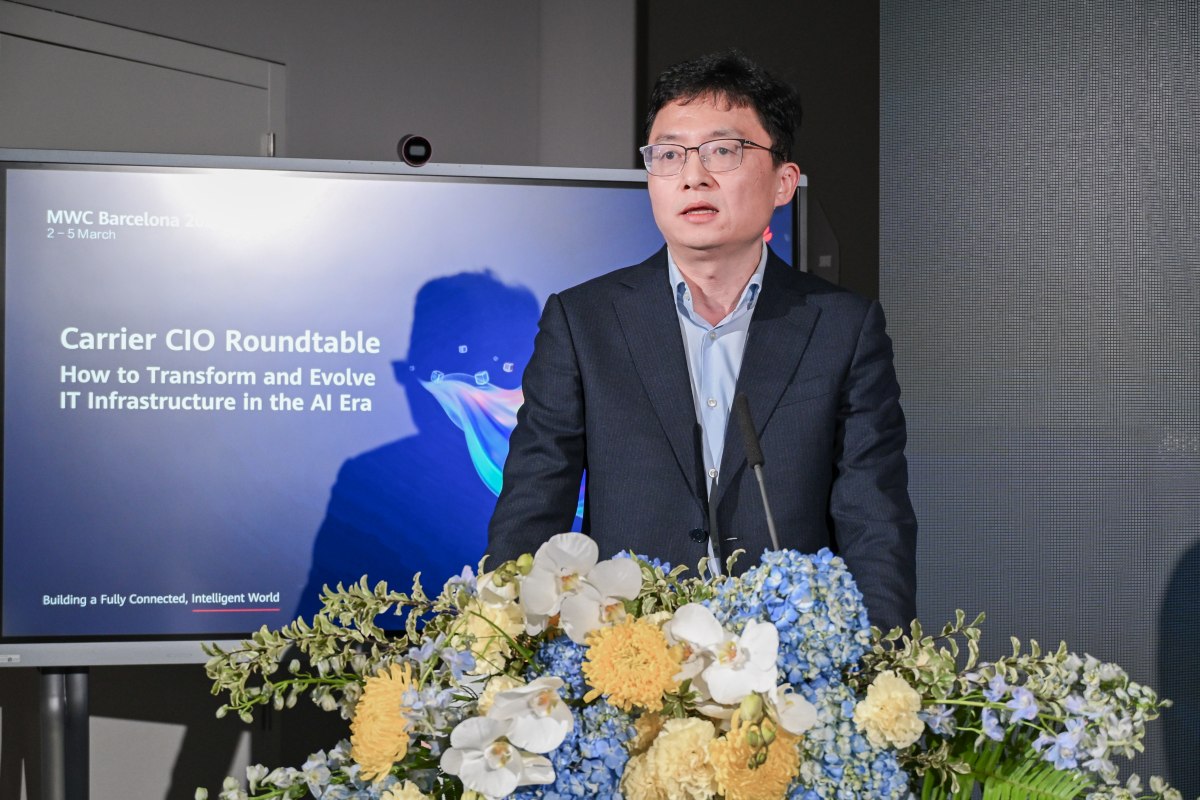
At MWC Barcelona 2026, Yuan Yuan, President of Huawei Data Storage Product Line, shared Chinese multinational technology company Huawei's key insights and innovations for enabling carriers to plan their data infrastructure, address challenges in AI adoption, and prepare for IT architecture transformation in the AI era. Data preparation for AI: From dormancy to awakening In the age of AI, data is an essential asset. Yuan noted that in the past two years, over 90% of enterprises actively embraced AI for business innovation, but fewer than 10% have successfully mastered and scaled AI technology. There are three primary challenges: persistent data silos that hinder data collaboration across regions and organisations; a lack of quality data supply, especially industry-specific knowledge; and inefficiencies in the data preparation phases like data collection, cleansing, and labelling. This results in AI applications falling short of commercial viability, raising doubts about the return on investment. Yuan predicts, "In the future, cold data will become a thing of the past. Data will shift from 'offline' to 'always online,' and retention policies will move from being compliance-driven to a principle of retaining and never deleting. Consequently, data volumes will expand from petabytes to exabytes, which will drive demand for greener, more efficient data infrastructure." Architectural transformation: From storing data to storing knowledge and memory As AI agents become the primary consumers of data, data infrastructure must evolve to embrace new data paradigms, including vector, graph, and key-value (KV) semantics. To eliminate AI hallucinations and enable continual AI evolution, data infrastructure must be capable of storing knowledge and memory. Yuan discussed Huawei's AI data platform, an innovative solution that integrates knowledge, memory, and inference acceleration services into a single storage system. This consolidated approach significantly reduces system complexity and O&M costs. The platform delivers a massive upgrade in performance. Inference efficiency (measured in tokens generated per second) is multiplied, while latency (time to first token) is reduced by 90%. Furthermore, the continual evolution of data, knowledge, and memory makes AI agents smarter over time. As Yuan explains, "In the future, every carrier will need its own AI data platform to help agents understand business processes, acquire domain-specific expertise, and iterate and upgrade rapidly. Otherwise, AI will remain nothing more than an expensive toy." AI adoption planning: From AI exploration to AI-driven service upgrades Although many carriers have made AI a strategic priority and are beginning to adopt it, significant challenges remain in real-world deployment: inference failure, inference costs, and inference speed. Yuan presented an intelligent computing service platform, jointly developed with a Chinese carrier, that tackles these challenges. The platform uses the KV cache technology to improve storage resource utilisation and supports inference applications of different large models like DeepSeek and Qwen. It optimises cost-effectiveness by innovatively eliminating repeated computing via querying. Through the collaboration of on-chip memory, DRAM, and AI storage, the platform enables PB-scale KV cache storage. This improves the overall throughput by more than 10 times, reduces inference costs by about 50%, and shortens response time to less than one second. In addition, algorithm optimisation addresses challenges like low KV cache hit ratios and inference failure due to long-sequence inputs in research report analysis. Serving as the foundation for AI, the platform has been deployed at scale at the group to enable multidimensional innovation across services, including internal IT systems, B2C services, B2B services, and B2H services. Yuan says, "Planning AI training and inference platforms requires more than focusing on computing power and models; deep collaboration between storage and compute is also essential to improve system-level efficiency and user experience." Yuan highlighted that AI is reshaping data infrastructure. In the AI era, storage systems will evolve into intelligent engines, which will not only store critical data assets, but also serve as the knowledge sources and memory carriers for the continuous evolution of AI agents. He called on carriers to prioritise accumulation and protection of quality data, and to plan and build a unified AI data platform that supports a wide range of large model applications while enabling service innovation for both internal operations and external offerings. Huawei says it will continue to advance technological innovation and architectural upgrades to help carriers digitally transform. For more from Huawei, click here.

Crestchic unveils 600kW liquid-cooled loadbank
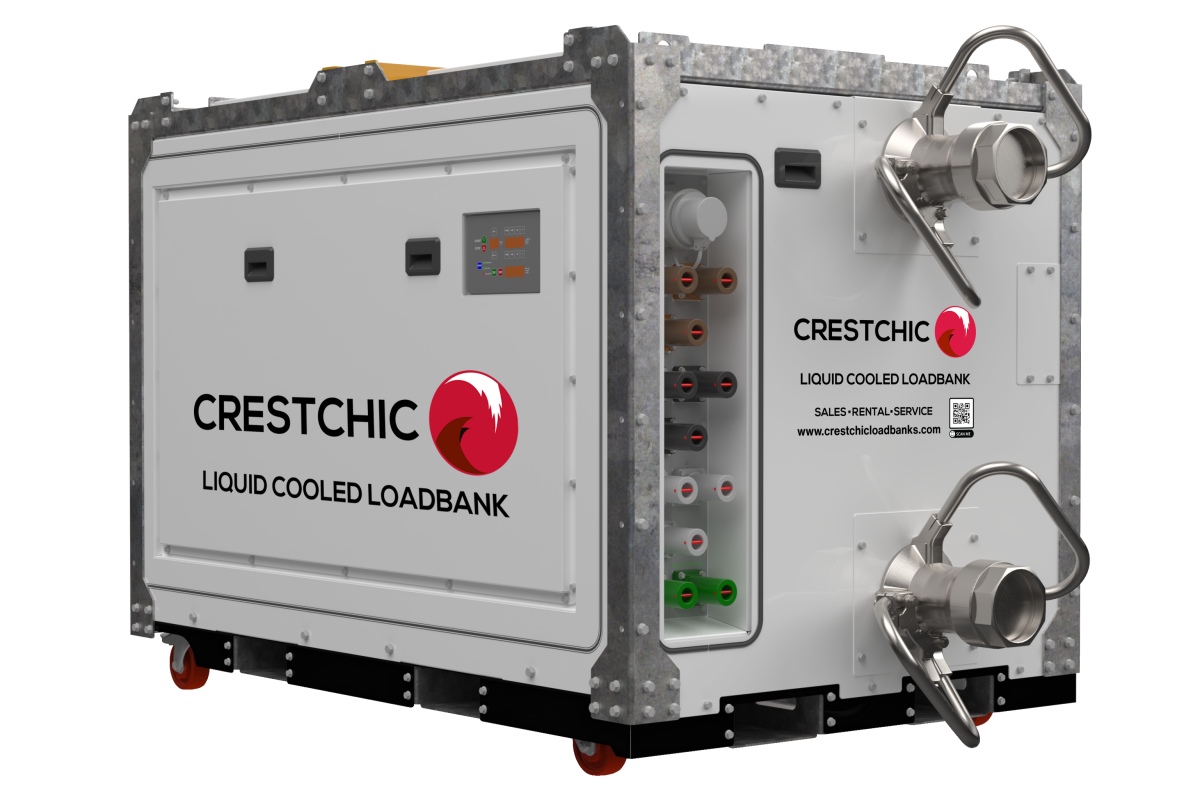
Crestchic, a UK manufacturer of loadbanks and transformers for testing power systems and data centres, has launched its new 600kW Liquid Cooled Loadbank at Data Centre World London 2026, aimed at supporting commissioning in the growing liquid-cooled data centre market. As rack power densities increase, operators are increasingly adopting liquid cooling to manage higher thermal loads. Crestchic says the new system has been designed to provide accurate thermal validation and precision electrical testing for liquid-cooled infrastructure. The 600kW loadbank delivers up to 648kW at 415V and features stable ΔT thermal control to ±0.5°C, enabling repeatable testing during commissioning. Temperature accuracy is maintained regardless of flow variation, while built-in protections cover flow, pressure, overload, underload, and thermal shock. Designed for liquid-cooled data centre commissioning The unit uses a single-vessel architecture, reducing footprint compared with multi-vessel systems at similar power levels. This compact design makes it easier to position in plant rooms and simplifies transport and handling. The platform includes a stackable structure, flush-mounted connections, heavy-duty castors, and dual-side forklift pockets, allowing two units to be transported within a standard-height ISO shipping container. The system integrates with Crestchic’s VCS software, providing live monitoring of supply and hydraulic data, real-time load profiling, and the ability to cluster up to 240 load banks for hybrid air- and liquid-cooled testing. Paul Brickman, Commercial Director at Crestchic, says, “The move towards liquid cooling is accelerating as rack densities increase, particularly with AI and high-performance computing workloads. “Our new 600kW Liquid Cooled Loadbank has been designed from the ground up to serve this market, giving commissioning engineers the precision, reliability, and control they need to bring critical infrastructure online with confidence." The 600kW Liquid Cooled Loadbank is available for sale or rental through Crestchic’s global network. For more from Crestchic, click here.

Verne appoints new COO
Verne, a provider of low-carbon, high-performance data centres across the Nordics, has appointed Wayne Louw as Chief Operating Officer (COO) - a development the business states strengthens its operational leadership as it enters a more complex, AI-intensive phase of growth and continues to scale its multi-site platform. The company says he brings extensive experience leading multi-site, mission-critical environments and will guide the next stage of Verne’s operational scale. Wayne most recently led large-scale, mission-critical operations across Europe and Africa for NTT Global Data Centers. As COO, he will oversee Verne’s operational strategy, performance and resilience across its multi-site infrastructure. Wider growth in Northern Europe His appointment comes as Verne supports increasingly power-intensive AI deployments across Northern Europe. The EUDCA State of European Data Centres 2025 identifies Northern Europe as one of Europe’s most active colocation markets, underpinned by renewable power availability and regulatory stability, with growth driven by hyperscalers, neoclouds, and enterprises seeking secure, scalable access to power. Wayne notes, “Verne operates in markets where access to secure, renewable power is a strategic advantage. That matters even more as AI workloads push density and cooling requirements higher. "I have spent my career operating complex, multi-country platforms at scale. What excites me about Verne is the opportunity to apply that operational discipline to a business entering a new level of technical intensity. That next stage demands disciplined execution at scale.” Praise from Verne With senior leadership experience at Gyron and NTT Global Data Centers, Wayne has managed large, distributed teams across multiple markets. He reportedly unified regional operations under a single model while supporting hyperscale customers through periods of significant capacity build-out. Commenting on the news, Dominic Ward, CEO of Verne, says, “Verne is entering a more technically demanding phase of growth, as our multi-site platform grows in both density and complexity. In this environment, operational discipline becomes a strategic differentiator. "Wayne brings experience leading multi-market, mission-critical platforms at scale. His appointment strengthens our ability to grow capacity while delivering the resilience, consistency, and performance our customers depend on.” Wayne has an electrical engineering background. He began his career in the banking sector, where he says he witnessed first hand the transition from enterprise-owned data centres to commercial colocation and hyperscale models. For more from Verne, click here.

Huawei showcases industrial intelligence at MWC 2026
During MWC Barcelona 2026, Chinese multinational technology company Huawei released 115 industrial intelligence showcases, together with its customers, during Industrial Digital and Intelligent Transformation Summit 2026. The summit, titled 'Advancing Industrial All Intelligence', was held by Huawei to explore new practices in industrial intelligence with its customers, partners, and peers. The company also announced the launch of upgrades to its SHAPE 2.0 partner framework. In addition, Huawei showcased 22 new industrial intelligence solutions with partners for the electric power, manufacturing and retail, finance, transportation, oil and gas, ISP, media, public service, and smart city sectors. Huawei proposed the ACT Pathway: A replicable intelligence framework AI technologies have advanced rapidly over the last year, with reasoning models and agentic workflows both maturing and physical AI beginning to truly take off. This has allowed AI tools to begin entering core production scenarios and helped applications move from pilots to large-scale use. AI agents can now better understand and interact with the physical world, being capable of making decisions independently. With this in mind, Huawei has introduced the ACT Pathway, which has been developed during its collaboration with global customers over the past few years. Three key steps specified in the ACT framework were mandatory for achieving comprehensive industrial intelligence: The first step is “assessing high-value scenarios”. So far, Huawei has helped customers identify over 1,000 core production scenarios where AI can play a big role. The second step is “calibrating AI models with high-quality vertical data”. Huawei has built a six-layer AI security framework to ensure every stage of the AI lifecycle is secure and trustworthy. The third step is “transforming business operations with AI talent”. Talent that understands both industry and AI are needed. Huawei does this by focusing on four areas, including hands-on practice programs, CANN open-source communities, vertical industry communities on Huawei Cloud, and ICT Academies. Huawei worked with customers to release global industrial intelligence showcases During the summit, a number of Huawei’s customers joined on stage to help launch 115 global showcases for industrial intelligence, including executives from Eskom, Shandong Port Group, Converge ICT, HM Hospitales, and PetroChina (Beijing)’s Digital Intelligent Research Institute, CNPC, providing reference for organisations of various sectors to embark on their journey towards intelligence. MWC Barcelona 2026 is being held from 2 March to 5 March in Barcelona, Spain. During the event, Huawei is showcasing its latest products and solutions at Stand 1H50 in Fira Gran Via Hall 1. For more information, click here to visit Huawei’s website. For more from Huawei, click here.


Translate »