Modular Data Centres in the UK: Scalable, Smart Infrastructure

Prism expands into the US market
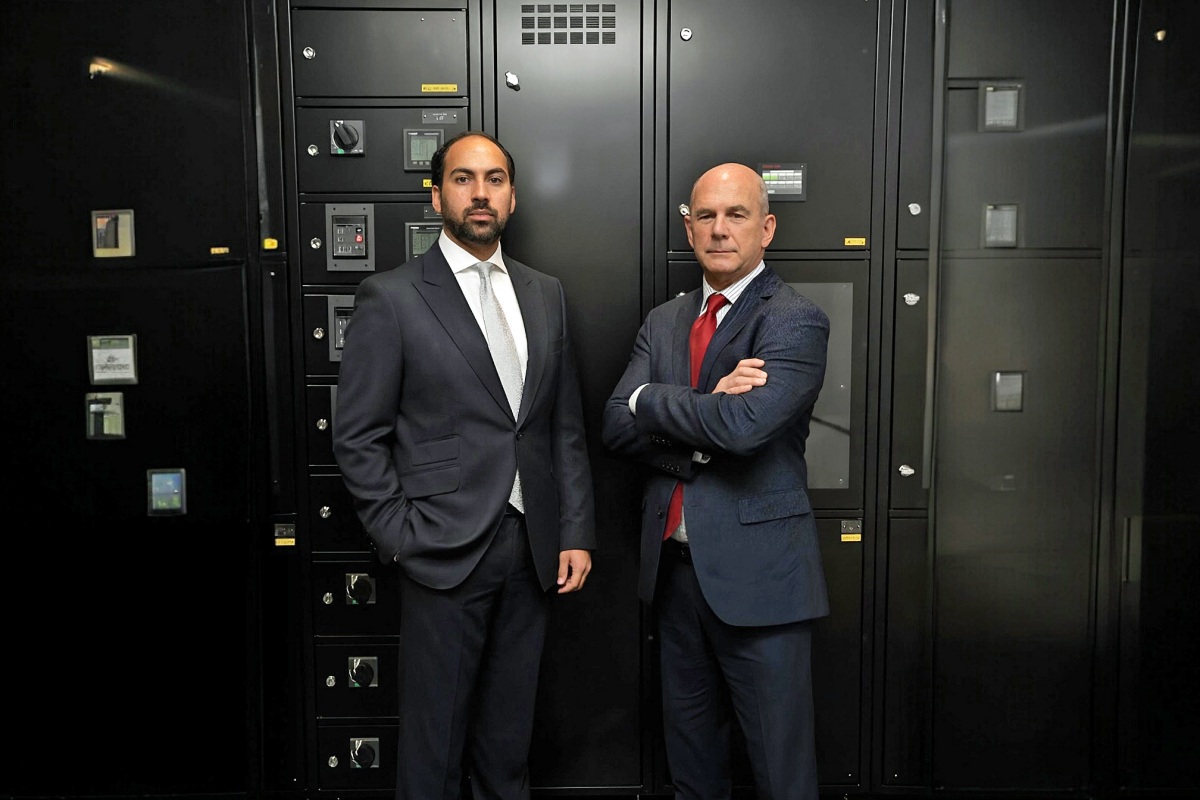
Prism Power Group, a UK manufacturer of electrical switchgear and critical power systems for data centres, is looking to purchase a US business that already has UL Certification (for compliance, safety, and quality assurance regulations) and is reportedly raising $40 million (£29.8 million) for the acquisition. With surging data centre demand straining power infrastructure and outpacing domestic capacity, US developers are actively seeking trusted overseas suppliers to keep pace. Prism says it is well placed to take advantage of the current climate, having forged its reputation in mechanical and electrical infrastructure for modular data centre initiatives in the UK and across Europe since 2005. It adds that its engineers have executed a variety of end-to-end installations, from high-voltage substations and backup generators to low-voltage switchboards that safeguard servers, in "tightly scheduled" data centre projects. Expansion to meet ongoing supply strain Adhum Carter Wolde-Lule, Director at Prism Power Group, explains, “The scale and urgency is such that America’s data centre expansion has become an international endeavour, and we’re again able to punch well above our weight in providing the niche expertise that’s missing and will augment strained local supply chains on the ground, straight away. “Major power manufacturers in the United States are ramping up production, while global giants have announced new stateside factories for transformers and switchgear components, aiming to cut lead times and ease the backlog - but those investments will take years to bear fruit and that is time the US data centre market simply doesn’t have.” Keith Hall, CEO at Prism Power Group, adds, “For overseas engineering companies like us [...], the time is now and represents an exceptional opening into the world’s fastest-growing infrastructure market. "Equally, for the US sector, the willingness to look globally for critical power systems excellence will prove vital in keeping ambitious build-outs on schedule and preventing the data centre explosion from hitting a capacity wall.”

SITE delivers modular DC on remote Atlantic island
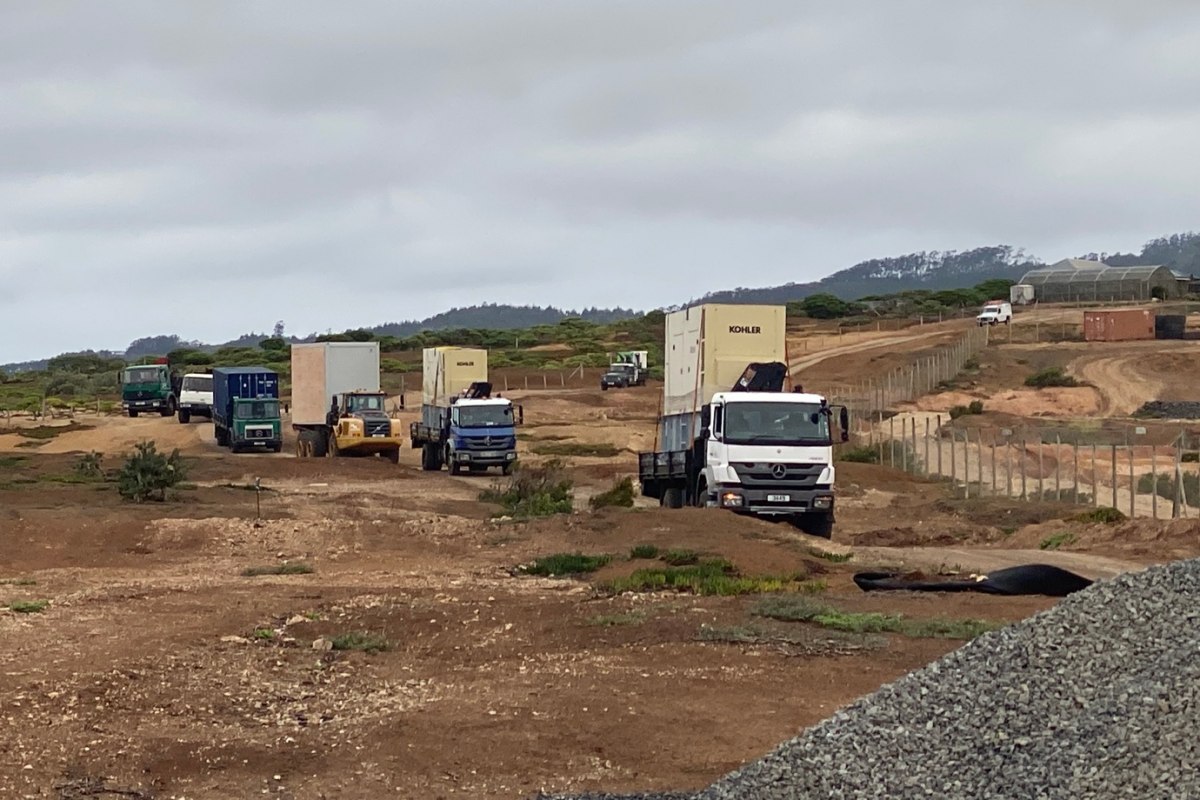
Secure I.T. Environments (SITE), a UK design and build company for modular, containerised, and micro data centres, has announced the completion of a complex, modular, containerised data centre for a global telecommunications provider on a remote South Atlantic island. The facility will support mission-critical ground operations connecting customers to next-generation satellite and subsea backbone services. Located 1,800km west of mainland Africa, the remote island offers an effective operating profile for satellite connectivity, but presented formidable barriers including rugged volcanic terrain with no pre-existing access road, minimal local infrastructure, limited sea freight windows, and a single weekly flight subject to weather. The brief demanded a resilient, high-capacity facility capable of continuous operation in a corrosive coastal climate, delivered with meticulous risk management and zero compromise on safety or performance. Overcoming challenging logistics One of the defining aspects of this project was the logistical coordination required not just across continents, but in partnership with the local community. The island’s small population meant that everyone from hotel owners to logistics workers became part of the project in some way. The project created local employment opportunities and, the company says, fostered a sense of community pride in supporting a high-tech project. Given the island's limited flight availability (one flight per week, weather permitting), all deliveries, personnel scheduling, and construction phases had to be meticulously timed. The team also had to navigate unpredictable weather, which could delay flights and shipping schedules. A spokesperson for the client outlines, “This was such a crucial project for us. We did a huge amount of work ensuring we picked an experienced data centre builder that could cope with the challenges. "SITE supported us throughout the design phase, adapted to meet our needs, and created a very detailed plan for delivery and installation, focused on minimising risks. We are very pleased with the outcome.” SITE’s bespoke solution Initial design discussions to final commissioning took 12 months and was completed on time. SITE designed, manufactured, pre-built, and factory-tested a multi-container modular facility - comprising a main data room, a separate UPS/switch room, and lobby space - engineered specifically for the island’s conditions, including specially adapted air conditioning condensers, protective coatings, and materials to withstand high salinity levels and ocean spray. The architecture integrates high-density IT racks with cold-aisle containment, N+1 energy-efficient cooling, modular N+1 UPS, custom switchgear, fire detection and suppression, security systems (CCTV, access control, intruder alarms), fibre raceways, and full electrical infrastructure. All modules underwent integrated systems testing (IST) in the UK to ensure seamless on-site assembly and performance alignment once deployed. Chris Wellfair, Projects Director at SITE, comments, “This was an extraordinary project in every sense: remote location, complex logistics, and high client expectations. "Our modular approach and close collaboration with clients ensured a smooth delivery despite the odds. It’s a project we’re incredibly proud of.” For more from SITE, click here.

NorthC to build new data centre in Geneva
NorthC Group, a data centre operator in Northwest Europe, will begin construction of a new data centre in Geneva, Switzerland in Q1 of this year. The new facility will be built at The Hive campus, a technology park just outside Geneva. This will be NorthC’s sixth data centre in Switzerland, in addition to its existing data centres in Biel (Bern), Winterthur (Zurich) and Münchenstein (Basel), as well as the recently announced and yet-to-be-built data centre on the uptownBasel campus in Arlesheim (Basel). The total IT capacity will be 4.5 MW, delivered in phases of 1.5 MW, and the data centre will have a total floor area of 5,400 m², with construction expected to be completed by Q2 2028. NorthC says it will prioritise sustainability in constructing the new data centre "by implementing innovative technologies." The facility will use 100% green power, consistent with all of NorthC's data centres, and its cooling system will require no water. Additionally, backup generators will operate on HVO100, a fossil-free fuel made from renewable materials such as vegetable oils and waste fats. Designed for AI The new data centre will be designed to support emerging technologies (such as inference applications) through direct-to-chip (D2C) liquid cooling, which dissipates heat from computer chips more efficiently than traditional methods. Alexandra Schless, CEO of NorthC Group, comments, “Geneva is an important commercial and economic hub in Switzerland, alongside the Basel and Zurich regions. Demand for digital services - and, consequently, for data centre capacity - is growing rapidly. "This makes Geneva a logical location for NorthC to build a new data centre. The proximity to the renowned scientific research centre, CERN, also offers new opportunities for collaboration in scientific research and innovation, including AI.” Modular design and readiness for residual heat exchange The new Geneva data centre will be built according to NorthC’s standard blueprint design, which is based on modular construction, meaning additional modules can be added and activated as demand increases. This approach often results in more efficient energy consumption and enables rapid scaling. The data centre will also have a direct, high-speed data connection to NorthC’s other locations in Switzerland, providing customers in the region with fast access to services running at other locations. The construction, led by HIAG, a Swiss real estate developer, aims to ensure that the Geneva data centre is designed with sustainability at its core. Like almost all of NorthC's data centres, the Geneva facility will be prepared to support the exchange of residual heat. At The Hive campus, where the data centre is being built, this heat will be used to supply nearby buildings. The facility is also being prepared for a potential future connection to the district heating network operated by the local energy company. For more from NorthC, click here.

Vertiv, GreenScale to deploy DC platforms across Europe
Vertiv, a global provider of critical digital infrastructure, and GreenScale, a developer of hyperscale data centre campuses, have announced a strategic collaboration to deliver factory-integrated data centre platforms engineered for next-generation AI workloads in Europe. Following a competitive pre-qualification questionnaire (PQQ) process, GreenScale selected Vertiv as its preferred provider for standardised, prefabricated Vertiv OneCore hybrid-built data centres. While GreenScale will manage slab-down construction and site-wide infrastructure, Vertiv will provide AI-ready data centre modules engineered to support liquid-cooled deployments of NVIDIA Grace Blackwell GB200/300 graphic processing units (GPUs), including next-generation Vera Rubin GPUs. Vedran Brzic, VP Infrastructure Solutions Business EMEA at Vertiv, says, “AI workloads demand density and speed. By integrating the Vertiv OneCore platform into GreenScale’s standard design, we can help to accelerate deployment of scalable infrastructure for AI, high-performance (HPC), and high-density computing. "Our scalable prefabricated solution integrates our proven power, thermal, and IT infrastructure into a single factory-assembled system that can help customers deploy high-density capacity more efficiently while increasing reliability and performance.” Vertiv's OneCore platform The Vertiv OneCore platform supports up to 200+ kW per rack and features coolant distribution units (CDUs) with a dual-loop liquid cooling system. The platform is supported by Vertiv SmartRun overhead prefabricated infrastructure, which includes an integrated secondary fluid network (SFN) for liquid-cooled thermal management - optimised for GPU-intensive architectures - and power distribution. Modules arrive factory-built and pre-tested, with GreenScale providing comprehensive site services including grid integration, permitting, battery monitoring system (BMS)/security systems, and slab-down construction. Dan Thomas, CEO at GreenScale, comments, “Our collaboration with Vertiv aligns perfectly with GreenScale’s mission to rapidly deploy high efficiency, AI-ready infrastructure across Europe. By standardising on Vertiv’s prefabricated platforms, we gain significant advantages in speed-to-market, quality control, and operational efficiency. "Their proven experience in high-density cooling solutions and factory-integrated approach helps us minimise on-site complexity while enabling our facilities to be optimised for the most demanding AI workloads. This standardised platform approach will be instrumental in executing our ambitious expansion plans across Northern Ireland and the Nordics.” GreenScale plans to expand with approximately 120 MW in Northern Ireland and over 300 MW across the Nordics, with a long-term vision to deploy close to 1 GW across Europe. The company says it aims to implement a high-performance compute model that aligns its objectives and timelines with "technology providers who can efficiently deliver scalable, AI-ready solutions." For more from Vertiv, click here.

Portable data centre to heat Scandinavian towns
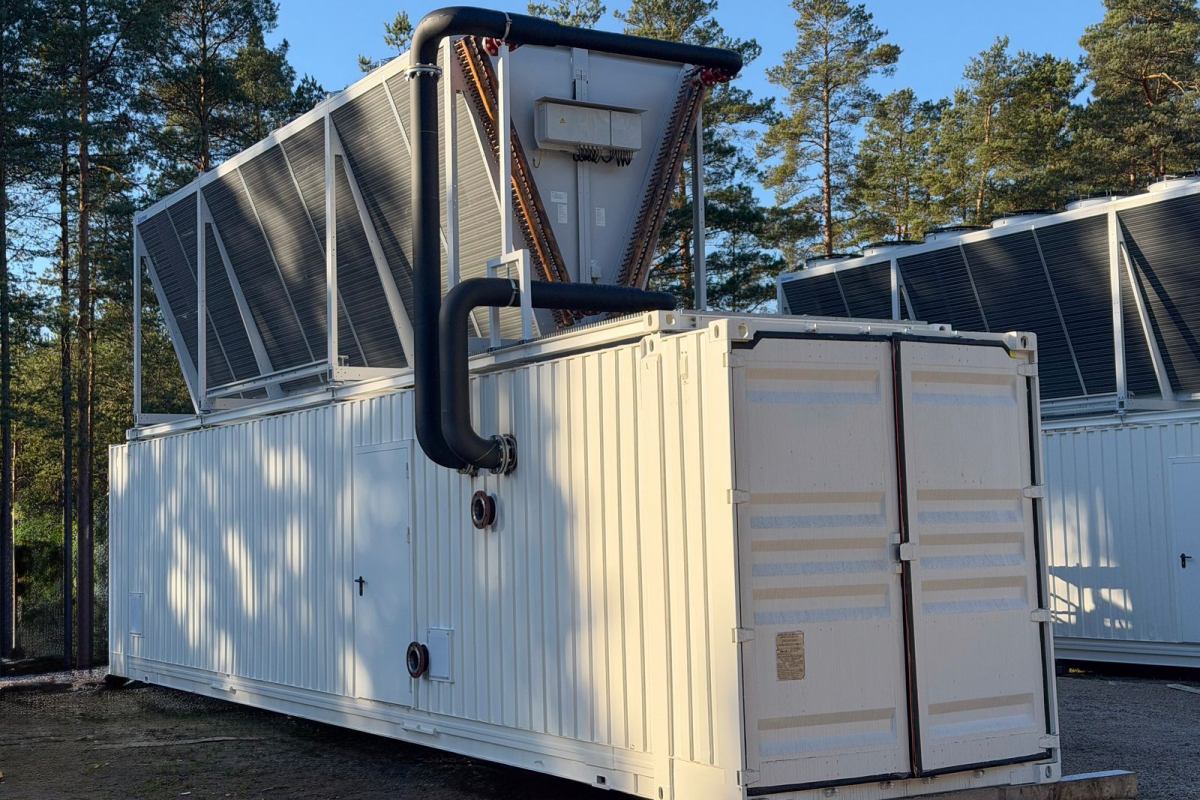
Power Mining, a Baltics-based personal Bitcoin mining device manufacturer, has developed a portable data centre that will heat towns using residual heat from Bitcoin mining. The first two data centres, housed in shipping containers, will be shipped to a Scandinavian town, where they will be connected to the municipal heating system. In one year, one Power Mining data centre can reportedly mine up to 9.7 Bitcoin and heat up to 2000 homes. With 1.6 MW/h in power, the data centre achieves 95% energy efficiency, thereby providing the municipality with 1.52 MW/h. A portable data centre design The data centres are built in Latvia, at a cost starting from €300,000 (£262,000). Due to being put together in a shipping container, they are easily shipped around the world. The data centre is made up of eight server closets, each outfitted with 20 Whatsminer M63S++ servers that consume 10kW of electricity each and create an equivalent amount of heat. The servers can raise the incoming coolant temperature by 10-14°C, producing the equivalent amount of heat while mining Bitcoin. Each server closet is equipped with warm and cool fluid collectors which send the warmed liquid to a built-in heat pump station, where a 1.7 MW heat exchanger ensures the redistribution of heat from the data centre to the town’s heating grid. If the heating grid does not require additional heat from the data centre, the heated fluid is redirected to a built-in dry cooler, which adjusts the temperature to suit the needs of the servers. This way, the data centre is able to cool itself and also contribute to balancing the municipality’s heating grid. Steps towards increased energy efficiency The development of a passive heating data centre is one step towards increased energy efficiency in Bitcoin mining. While classical data centres can collect heat at approximately 27°C, Power Mining says its data centres can collect heat up to 65°C, providing cities with more efficient sources of heat. European data centres already make up more than 3% of the continent’s total electricity consumption, which is expected to surpass 150 TW/h annually - an equivalent of all of Poland’s electricity demands. Up to 40% of this energy is turned into heat, which most often is released into the atmosphere. If this energy were collected and redirected back to heating, it could provide up to 10 million European households with heat. Heat collection from data centres could become one of the most effective ways to combine digitalisation and climate goals.

Secure I.T. constructs modular DC for NHS Trust
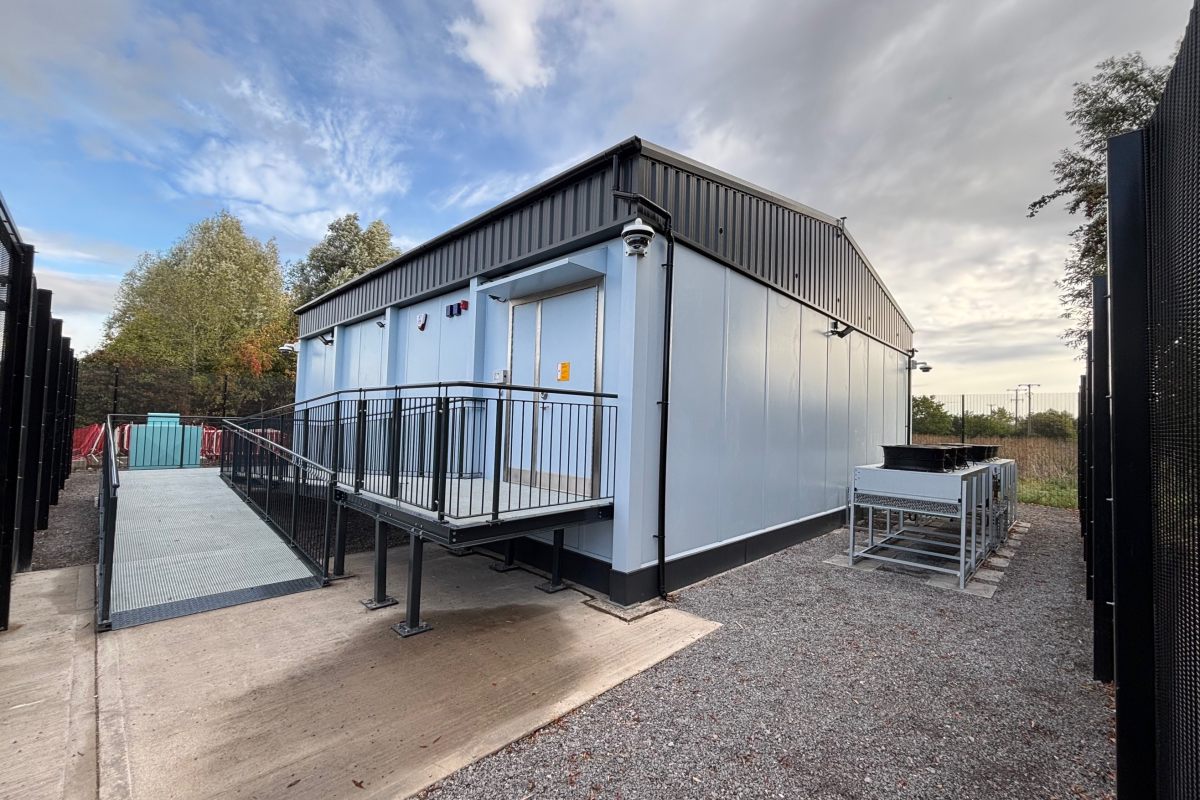
Secure I.T. Environments (SITE), a UK design and build company for modular, containerised, and micro data centres, has today announced the handover of its latest external modular data centre project with Somerset NHS Foundation Trust. The new 125m² data centre has now been completed and provides an energy-efficient disaster recovery facility for the Trust, ensuring it can continue to deliver resilient services across Somerset and for the 1.7 million patient contacts that take place. A data centre for all challenges Whilst the Trust initially considered cloud solutions for its data requirements, these could not meet the requirements for existing clinical software, nor the cost constraints in place. In response, SITE proposed its external modular data centre, which is intended to provide a cost-effective and secure way to build new data centres or extend existing infrastructure to meet the growing demands of on-site IT needs. SITE says its modular system can be built rapidly and that this particular project was designed, built, and live within 8 months. The company also says its modular rooms are a pre-engineered solution, offering a clean and fast construction process, making it appropriate for locations where an existing room is not available or where a new building is impractical. The modular system reportedly has high protection, including protecting against physical security threats by meeting industry standards BS476 / EN1047 and LPS1175 security ratings. Design and delivery The design was divided into three areas: the main IT racks, an electrical plant area, and build area. Working with the Trust, SITE’s design incorporated 20 19” 48U cabinets, configured in two rows of 10 with cold aisle containment, energy-efficient UPS systems in N+1 format, as well as GEA Multi-DENCO Energy Efficient DX Freecool air conditioning units, also in N+1 configuration. SITE managed the delivery of all groundworks and mechanical and electrical infrastructure. The delivery of the new facility included a new concrete pad, drainage, power distribution, FK 5-1-12 fire suppression, VESDA detection systems, environmental monitoring, backup generator, and fuel tank. Furthermore, the design and specification hardened the data centre against burglary (LPS 1175 SR2 specifications), fire, fire-fighting water, heat, humidity, gases, dust, debris, and unauthorised access. The facility's external perimeter security has been protected with CCTV, prison mesh anti-climb fencing, security gates, and Amcor barriers. Chris Wellfair, Projects Director at Secure I.T. Environments, comments, “At a time when many organisations are trying to balance the needs of their IT infrastructure with challenging budgets, our modular data centres are making it easier for them to achieve their goals without compromising on performance. "Having previously built a data centre for the Trust at another hospital location, we were pleased to work with Somerset NHS Foundation Trust to deliver this new data centre to meet their specific requirements.” Adam Morgan, Deputy Chief Technology Officer at Somerset NHS Foundation Trust, adds, “Secure I.T. have delivered a significant upgrade to the Trust’s data centre infrastructure. "We were very specific about the design brief and requirements, and it has been a positive project delivering this facility with Secure I.T. Environments. "The Trust now has additional capacity for growth for years to come, which will bring benefits to clinical care by enabling resilient delivery of clinical systems across the county of Somerset.” For more from Secure I.T. Environments, click here.

Schneider, DataCentre UK deliver £1.4m modular DC
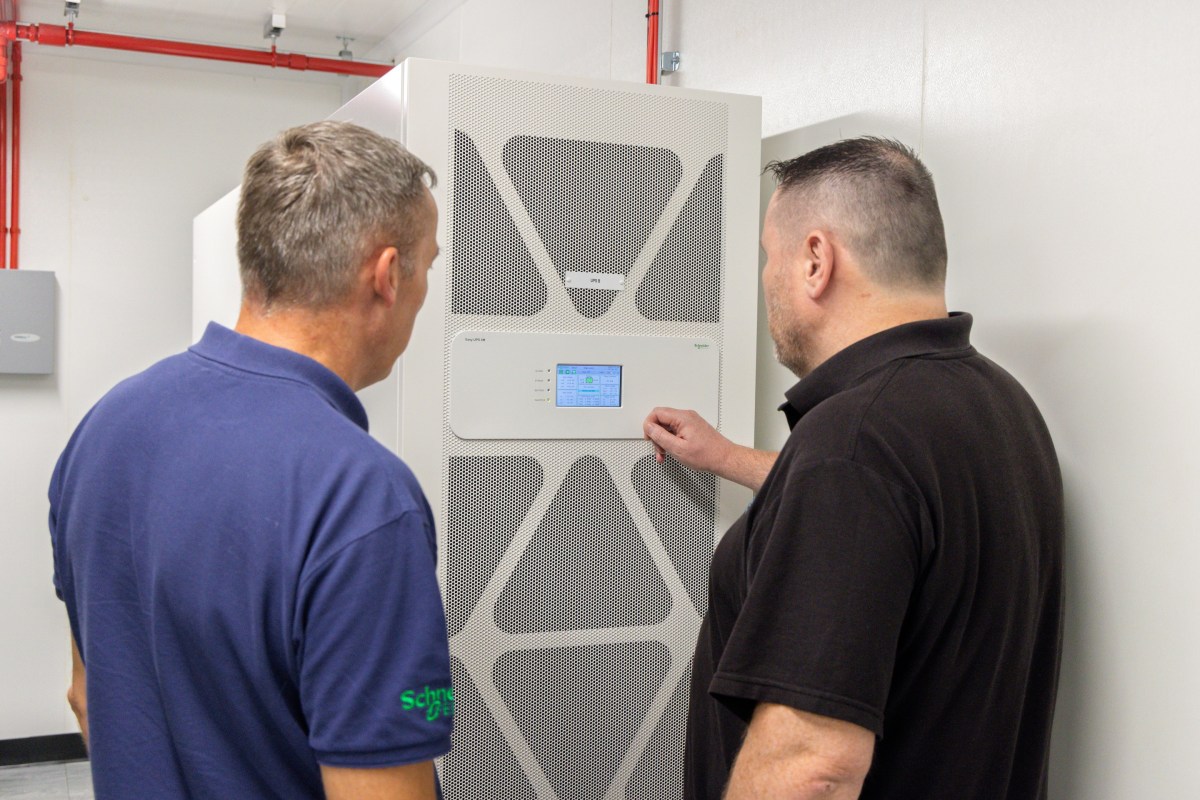
Schneider Electric, a global energy technology company, in partnership with its EcoXpert Partner DataCentre UK, has delivered a new modular data centre for South Warwickshire University NHS Foundation Trust (SWFT). The £1.4 million project seeks to strengthen the Trust’s digital infrastructure, improving energy efficiency, operational resilience, and capacity to support future healthcare demands. Supporting digital transformation and scalable healthcare infrastructure Facing growing pressure on legacy systems, Innovate Healthcare Services required a modern, scalable, and secure data centre. The new facility incorporates Schneider Electric’s EcoStruxure Data Centre technology, including APC NetShelter racks, modular cooling units, APC power distribution units (PDUs), and Easy UPS systems. Together, these components should provide greater resiliency and efficiency, while supporting the Trust’s sustainability goals. Paul Almond, MD at DataCentre UK, says, “As an EcoXpert Partner to Schneider Electric, we have integrated Schneider Electric's EcoStruxure Data Centre solutions into the design. "These solutions are pre-engineered, configurable, and scalable, encompassing racks, power, cooling, and management systems, aimed at maximising resiliency, sustainability, and efficiency. “Innovate and SWFT trusted our design and our selection of products and approved us to proceed with the build-out.” Improving energy performance and sustainability The upgraded infrastructure has reportedly reduced the Trust’s data centre energy consumption by an estimated 60% compared with its previous setup. Enhanced monitoring and management capabilities allow continuous optimisation of performance and efficiency, in line with SWFT’s Green Plan. “It was all built around sustainability,” notes Mike Conlon, Associate Director of Technology Services at Innovate Healthcare Services. “Conservatively, we are now using 60% less electricity on the same amount of IT load, based on the previous server room implementation, and the system has been designed with an expected annualised PUE of 1.2.” Ongoing operation and maintenance will be provided through a year-round support agreement managed by DataCentre UK and Schneider Electric. Strengthening healthcare resilience through infrastructure partnerships Karlton Gray, Director of Channels, UK & Ireland, Schneider Electric, comments, “With data centres underpinning critical healthcare services, it’s essential that infrastructure delivers the highest levels of reliability, scalability, and sustainability. "Our solutions have helped Innovate significantly improve their environmental footprint, while maintaining exceptional operational performance, and delivered a healthcare environment built for the future.” The project demonstrates how modular and energy-efficient data centre designs can support digital transformation across the healthcare sector, helping organisations meet sustainability targets while maintaining continuity of care. For more from Schneider Electric, click here.

Duos Edge AI awarded patent for modular DC entryway
The US Patent and Trademark Office has granted Duos Edge AI, a provider of edge data centre (EDC) systems, a patent for a new entryway design for modular data centres. The system aims to improve security and protect mission-critical equipment by combining a two-door access configuration with filtration to reduce the intrusion of dust, dirt, and moisture. Duos Edge AI, a subsidiary of Duos Technologies Group, develops modular edge data centres intended to provide reliable, low-latency data access in areas where traditional infrastructure is limited. The patented entryway is designed to support these facilities in remote or rural locations by improving equipment resilience and service uptime. Supporting communities The company’s edge data centres are used by schools, hospitals, warehouses, carriers, and first responders. By enhancing environmental protection for infrastructure, the new design is expected to strengthen operational continuity in sectors that depend on constant access to digital services. Doug Recker, President and founder of Duos Edge AI, says, "This patent demonstrates our commitment to delivering ruggedised, field-ready edge data centres that meet the unique needs of rural and underserved markets. "By addressing critical challenges like environmental intrusion, we are setting a higher standard for reliability and long-term value for our customers." The modular approach aligns with Duos Edge AI’s wider focus on delivering scalable, rapidly deployable facilities that move data processing closer to users. This can help reduce latency, support real-time applications, and expand digital access in regions with growing demand. For more from Duos Edge AI, click here.

Schneider Electric launches new data centre solutions
Schneider Electric, a player in the digital transformation of energy management and automation, today announced new data centre solutions designed with the aim of meeting the demands of next-generation AI cluster architectures. Adding to its EcoStruxure Data Center Solutions portfolio, the company has introduced a Prefabricated Modular EcoStruxure Pod Data Center solution that consolidates infrastructure for liquid cooling, high-power busway, and high-density NetShelter Racks. In addition, the EcoStruxure Rack Solutions incorporate rack configurations and frameworks designed to accelerate High Performance Computing (HPC) and AI data centre deployments. “The sheer power and density required for AI clusters create bottlenecks that demand a new approach to data centre architecture,” says Himamshu Prasad, Senior Vice President of EcoStruxure IT, Transactional & Edge, and Energy Storage Center of Excellence at Schneider Electric. “Customers need integrated infrastructure solutions that not only handle extreme thermal loads and dynamic power profiles but also deploy rapidly, scale predictably, and operate efficiently and sustainably. Our innovative next-generation EcoStruxure solutions that support NVIDIA technology address these critical requirements head on.” Here is an overview of the new products:● Prefabricated Modular EcoStruxure Pod Data Center - Prefabricated, scalable pod architecture that seeks to enable operators to deploy high-density racks, supporting pods up to 1MW, at scale. ● EcoStruxure Rack Solutions - High-density rack systems which adapt to EIA, ORV3, and NVIDIA MGX modular design standards approved by certain IT chip and server manufacturers. According to the company, configurations accommodate an array of power and cooling distribution schemes and employ Motivair in-rack liquid cooling, as well as new rack and power distribution products including: o NetShelter SX Advanced Enclosureo NetShelter Rack PDU Advancedo NetShelter Open Architecture “Schneider Electric’s innovative solutions provide the reliable, scalable infrastructure our customers need to accelerate their AI initiatives,” claims Vladimir Troy, Vice President of Data Center Engineering, Operations, Enterprise Software, and Cloud Services at NVIDIA. “Together, we’re addressing the rapidly growing demands of AI factories — from kilowatt to megawatt-scale racks — and delivering future-proof solutions that maximise scalability, density, and efficiency.” For more from Schneider Electric, click here.

Siemens, Cadolto, Legrand introduce new modular data centre
Siemens Smart Infrastructure, a division of German conglomerate Siemens focusing on intelligent building technologies, energy systems, and digital infrastructure solutions, Cadolto Datacenter, and Legrand Data Center Solutions are jointly unveiling a next-generation, modular edge data centre. The system will debut at Data Center World Frankfurt, taking place 4-5 June 2025. Unlike containerised data centres, this solution aims to offer customisable, prefabricated modules that can be tailored to operational needs and deployed faster. Siemens integrates its full suite of Smart Infrastructure technologies – from medium- and low-voltage power distribution to building automation, fire safety, and physical security systems. Cadolto acts as manufacturer and general contractor of the modular edge data centre, delivering the prefabricated modular building with integrated climate control. Legrand brings its knowledge in IT white space infrastructure – from racks and structured cabling to intelligent Power Distribution Units (PDUs) and Uninterruptible Power Supply (UPS) systems. “With digital transformation accelerating across every industry, our customers need infrastructure that moves as fast as they do,” says Ciaran Flanagan, Global Head of Data Center Solutions & Services at Siemens AG. “This solution offers all the performance of a traditional data centre, but with the agility to scale quickly, tailored to our customers’ specific needs. When ramping up capacity, it’s just a case of plugging it in.” The data centre has been designed to be suitable for both permanent operation and interim use, to be able to be deployed wherever needed – from high-performance computing in pharmaceutical environments to temporary applications such as test setups in the automotive sector or space-constrained office locations. There will also be “IT-ready” rental models which intend to enable fast deployment without upfront investment, making them appropriate for temporary IT hubs, lab environments, or other short-term infrastructure needs. Visitors can experience the new data centre first-hand at Data Center World Frankfurt, Hall 8, Catering Area CA4, where a full-scale demo unit will be on display. For more from Siemens, click here.


Translate »