Products


Vertiv expands immersion liquid cooling portfolio
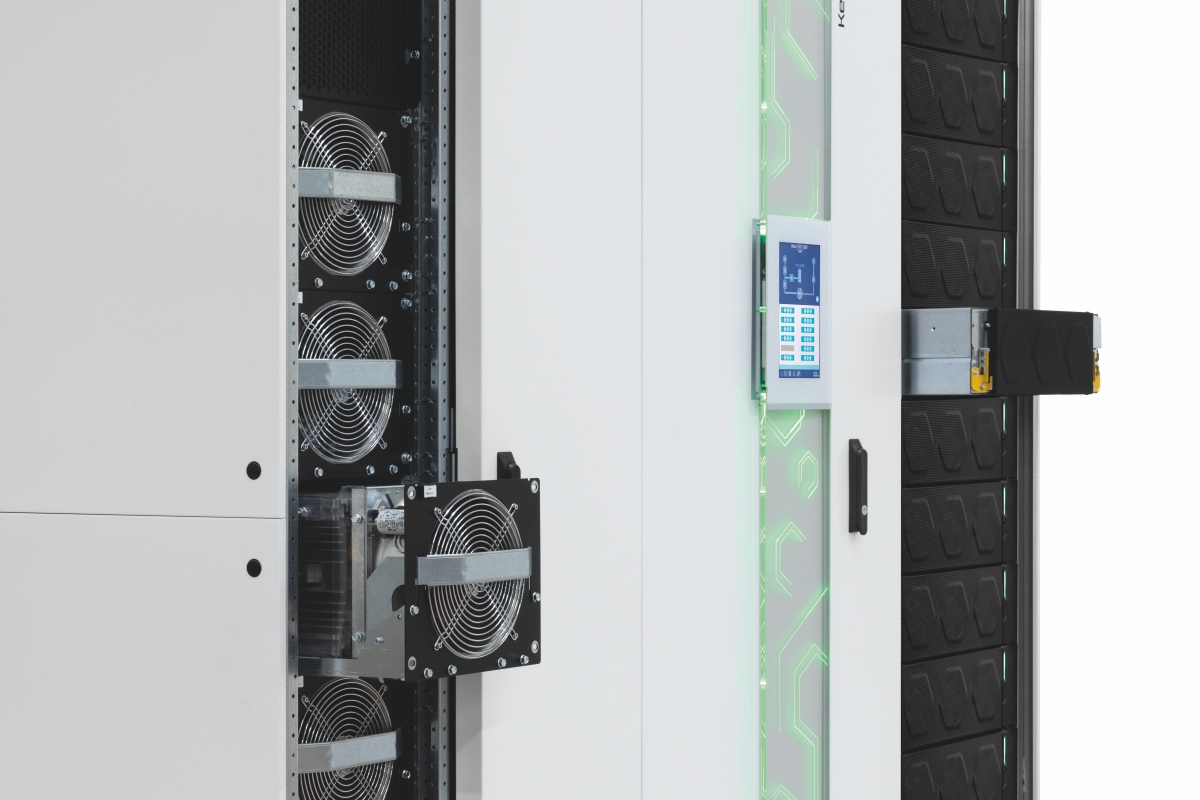
Vertiv, a global provider of critical digital infrastructure, has introduced the Vertiv CoolCenter Immersion cooling system, expanding its liquid cooling portfolio to support AI and high-performance computing (HPC) environments. The system is available now in Europe, the Middle East, and Africa (EMEA). Immersion cooling submerges entire servers in a dielectric liquid, providing efficient and uniform heat removal across all components. This is particularly effective for systems where power densities and thermal loads exceed the limits of traditional air-cooling methods. Vertiv has designed its CoolCenter Immersion product as a "complete liquid-cooling architecture", aiming to enable reliable heat removal for dense compute ranging from 25 kW to 240 kW per system. Sam Bainborough, EMEA Vice President of Thermal Business at Vertiv, explains, “Immersion cooling is playing an increasingly important role as AI and HPC deployments push thermal limits far beyond what conventional systems can handle. “With the Vertiv CoolCenter Immersion, we’re applying decades of liquid-cooling expertise to deliver fully engineered systems that handle extreme heat densities safely and efficiently, giving operators a practical path to scale AI infrastructure without compromising reliability or serviceability.” Product features The Vertiv CoolCenter Immersion is available in multiple configurations, including self-contained and multi-tank options, with cooling capacities from 25 kW to 240 kW. Each system includes an internal or external liquid tank, coolant distribution unit (CDU), temperature sensors, variable-speed pumps, and fluid piping, all intended to deliver precise temperature control and consistent thermal performance. Vertiv says that dual power supplies and redundant pumps provide high cooling availability, while integrated monitoring sensors, a nine-inch touchscreen, and building management system (BMS) connectivity simplify operation and system visibility. The system’s design also enables heat reuse opportunities, supporting more efficient thermal management strategies across facilities and aligning with broader energy-efficiency objectives. For more from Vertiv, click here.

ZincFive introduces battery system designed for AI DCs
ZincFive, a producer of nickel-zinc (NiZn) battery-based solutions for immediate power applications, has announced a new nickel-zinc battery cabinet designed for data centres deploying artificial intelligence workloads. The system, named BC AI, is positioned as an uninterruptible power supply (UPS) battery platform that can support both high-intensity AI power surges and conventional backup requirements. The company says the new system builds on its existing nickel-zinc battery range and is engineered for environments where GPU clusters and rapid power fluctuations are driving changes in electrical infrastructure requirements. The battery technology is intended to respond to fast transient loads associated with AI training and inference, while also providing backup during power interruptions. The system includes a battery management platform and nickel-zinc chemistry designed for frequent high-power discharge cycles. The company says this approach reduces reliance on upstream electrical capacity by managing dynamic loads at the UPS level. Nickel-zinc battery design for transient load handling As well as incorporating a new nickel-zinc battery cell designed for high-intensity usage and long service life, ZincFive highlights the product's compact footprint and field-upgradeable design. Nickel-zinc chemistry offers power density characteristics that allow the system to accommodate rapid load spikes without significant footprint expansion. ZincFive says competing approaches may require substantially more physical space to manage similar peak loads, particularly where AI applications can generate power demands above nominal UPS levels. The system is targeted at hyperscale operators, colocation facilities, and UPS manufacturers integrating AI-ready backup capacity. The company also points to potential benefits related to infrastructure design, including reduced UPS sizing requirements and support for power-management strategies aimed at improving grid interaction. Tod Higinbotham, Chief Executive Officer of ZincFive, says, “AI is transforming the very foundation of data centres, creating new challenges that legacy technologies cannot solve. "With BC 2 AI, we are delivering a safe, sustainable, and future-ready power solution designed to handle the most demanding AI workloads while continuing to support traditional IT backup. "This is a defining moment not just for ZincFive, but for the entire data centre industry as it adapts to the AI era.” For more from ZincFive, click here.

Wolong introduces efficient motors for DC cooling applications
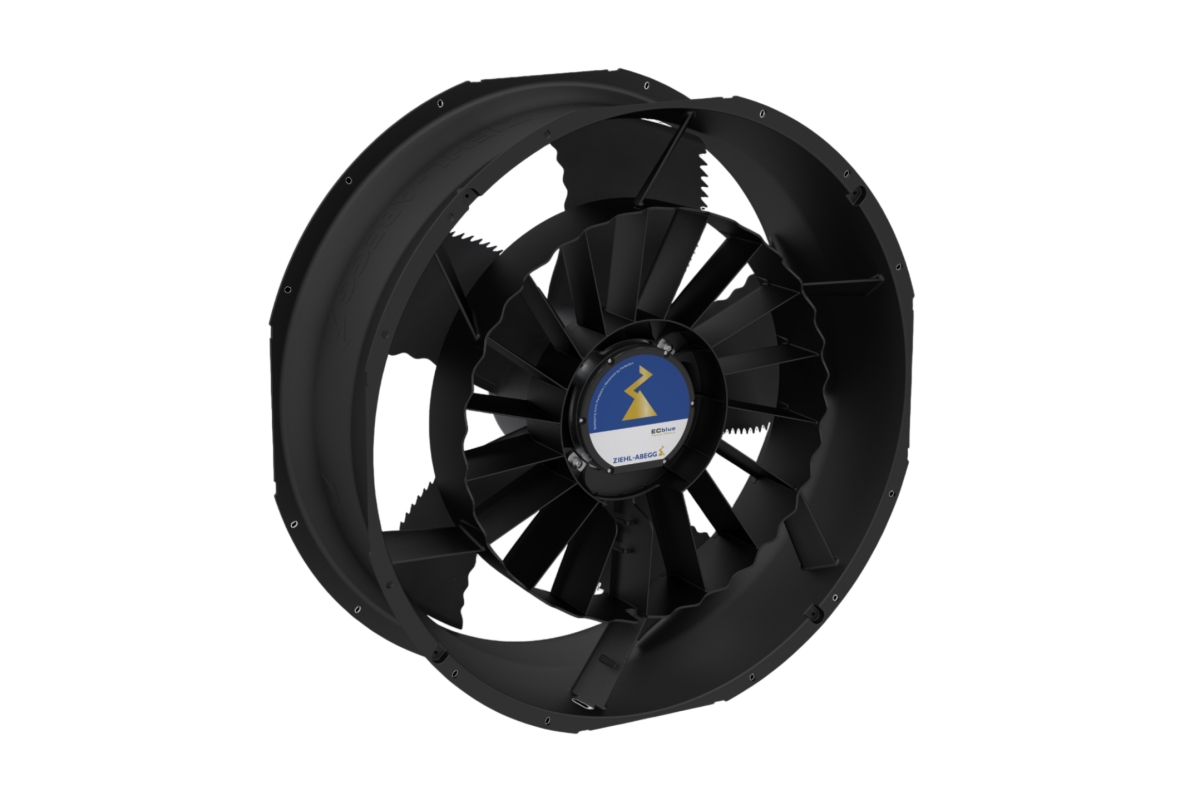
Wolong Electric America, a developer of industrial motor and drive technology, has introduced its Permanent Magnet Direct Drive (PMDD) motors, highlighting their ability to improve energy efficiency and reduce heat generation in high-demand environments such as data centres. Designed to operate without belts or sheaves, PMDD motors use a direct drive system that reduces mechanical complexity and common failure points, improving reliability and minimising maintenance requirements. The approach should also reduce mechanical stress and radial load on bearings, contributing to a longer service life. Lower heat output and energy use in data centres At the core of each motor is a rare earth magnet design that delivers stronger magnetic fields in a compact form factor. This aims to enable higher efficiency and cooler operation compared with traditional induction motors, which would be a key advantage in temperature-sensitive environments such as data centres, where controlling internal heat and power consumption are constant priorities. The motors are operated via a variable frequency drive (VFD), enabling precise speed control, smooth acceleration and deceleration, and reduced electrical strain on supporting systems. A 4:1 turndown ratio allows the motors to maintain torque and efficiency - including at low speeds - supporting variable airflow demands within cooling systems. Wolong Electric says its PMDD motors can be integrated directly into fan assemblies, reducing overall system losses and eliminating inrush current at startup. With reported efficiency improvements of around 20% over conventional induction motors, the design should contribute to measurable reductions in both energy use and waste heat. Flexible configurations for critical environments Wolong Electric says the PMDD motors can be tailored to specific applications, including data centre cooling systems, refineries, and OEM equipment such as heat exchangers. The motors are designed to operate at lower temperatures and with reduced maintenance demands, supporting long-term reliability and stable thermal management across facility operations. The company’s design approach hopes to enable easy integration with OEM and packaged system configurations, helping operators meet efficiency goals while aligning with evolving energy standards.

Object First launches 'ransomware-proof' storage
Object First, a US provider of storage appliances, has introduced Ootbi Mini, a compact immutable storage appliance designed for remote and branch offices, edge environments, and small businesses using Veeam for backup. The device is intended to protect local backup data against ransomware attacks without requiring a traditional data centre setup. Available in 8, 16, and 24 terabyte capacities, Ootbi Mini brings the company’s existing enterprise-level security to a smaller form factor. Built on 'zero trust' principles, it provides what the company describes as “absolute immutability”, meaning that no one - including administrators - can alter its firmware, operating system, storage layer, or backup data. The device offers the same data protection, user interface, and Veeam integration as Object First’s existing Ootbi systems, with minimal setup required. Ootbi Mini will be available for purchase or through a subscription model, with deliveries due to begin in January 2026. New additional features Alongside Ootbi Mini, Object First has announced several additional updates: The first, Ootbi Honeypot, introduces early warning protection against cyberthreats targeting Veeam Backup and Replication (VBR). The feature, available in version 1.7 at no additional cost to current customers, deploys a decoy VBR environment to detect suspicious activity. If a threat is detected, Honeypot immediately sends an alert via the customer’s chosen communication channel. The company has also launched a beta programme for Ootbi Fleet Manager, a cloud-based platform that allows customers to monitor and manage their entire Ootbi fleet from a single dashboard. The system provides granular monitoring, reporting, and hardware health insights, enabling customers to maintain visibility across distributed environments. Phil Goodwin, Research Vice President at IDC, comments, “Organisations running Veeam can benefit from storage technologies that combine immutability, simplicity, and resilience. "With Ootbi Mini, Honeypot, and Fleet Manager, Object First is expanding its ransomware-proof portfolio to meet the needs of businesses of all sizes.” David Bennett, CEO at Object First, adds, “Our mission is to make ransomware-proof backups simple, powerful, and accessible for every Veeam user. With Ootbi Mini, any organisation can achieve enterprise-grade immutability within a small footprint. "Honeypot strengthens cyber resilience by providing early threat detection, while Fleet Manager simplifies how customers monitor their deployments. Together, these innovations reinforce our commitment to secure, straightforward, and reliable backup for Veeam users.” For more from Object First, click here.

CommScope expands SYSTIMAX Constellation platform
CommScope, a US manufacturer of network infrastructure products, has announced the global availability of its evolved SYSTIMAX Constellation platform, an edge-based system for power and data connectivity designed for large-scale enterprise networks. Now compliant with international power and data transmission standards, the Constellation platform combines fault-managed power with hybrid power and data fibre cabling in a simplified star topology. The design enables hundreds or thousands of connected devices to be powered and linked efficiently across buildings or campuses. Simplified architecture for modern infrastructure The platform’s modular, technology-agnostic design supports both AC and DC power applications and multiple IT and operational technology (OT) standards. The company says unlike traditional structured cabling, Constellation removes the need for a telecoms room or wiring closet on every floor, allowing centralised uninterruptible power supply (UPS) management. Constellation Points (CPs) can be installed in ceilings, walls, or equipment racks, reducing space requirements and component use. The system delivers higher power and faster data speeds over longer distances, supporting 10G and above bandwidth and up to 1kW of fault-managed power. According to CommScope, the platform can reduce installation labour by more than 50% compared with conventional cabling, while also lowering material use and the network’s overall carbon footprint through reductions in copper and plastic. Luc Adriaenssens, Vice President of Building and Campus, CommScope Connectivity Solutions, comments, “The Constellation platform enables our customers to support denser urban environments and the growing number of connected devices in their buildings. "By offering a modular, technology-agnostic solution, we’re providing greater flexibility for network design - allowing scalability, sustainability, and cost efficiency.” Technical and sustainability features Part of CommScope’s SYSTIMAX cabling and connectivity range, the Constellation system includes Propel fibre panels, power transmitters, and transition panels connected to CPs via hybrid fibre trunks. End devices are linked through pre-terminated Cat 6A patch cords and cable assemblies. Key performance and sustainability metrics include: • Up to 1,800W of power delivered at distances of 250m• Up to 1,000W at 500m• Up to 700W at 1,000m• Support for 10G and higher data rates• Up to 50 connected devices per CP• 57% reduction in skilled installation labour hours• 59% less copper and 65% less plastic compared with traditional LAN systems• Up to 40% lower embodied network carbon footprint The Constellation platform is now available worldwide. For more from CommScope, click here.

Infinidat expands enterprise storage offerings
Infinidat, a provider of enterprise data storage systems, has announced the expansion of its InfiniBox G4 family of enterprise storage systems with a series of enhancements and a new smaller form-factor model. The InfiniBox SSA G4 F24 all-flash family aims to deliver high-end storage in a reduced footprint, with improved energy efficiency and a lower entry price point for enterprise storage. The evolution of the InfiniBox G4 family is hoped by the company to make high-end enterprise storage more accessible to a broader range of enterprises. Eric Herzog, CMO at Infinidat, says, "We continue to expand and enhance our InfiniBox G4 family, enabling enterprise customers and service providers to store larger quantities of data more efficiently, have easier access to advanced storage capabilities, benefit from flexible capacity management, free up rack space and floorspace, and reduce energy consumption for a greener storage infrastructure at a better power cost-efficiency per terabyte of storage." Key features of the InfiniBox SSA G4 F24 One of the attributes of the new InfiniBox SSA G4 F24 all-flash family is a 31% smaller physical configuration, intending to achieve a more efficient power profile. The entry price point is also 29% lower than the original small form-factor of the InfiniBox SSA G4. The system features a 45% reduction in power per petabyte (PBu), which - the company hopes - should mean less power usage, less use of coolant chemicals, and a reduction in greenhouse gas emissions. Infinidat claims the product offers 28% more capacity in the smaller footprint, up to two times better bandwidth performance, and "over 32% better overall performance." The full stack of InfiniSafe software's cyber storage security technology comes at no charge with the InfiniBox G4 system. For more from Infinidat, click here.

Arteco introduces ECO coolants for data centres
Arteco, a Belgian manufacturer of heat transfer fluids and direct-to-chip coolants, has expanded its coolant portfolio with the launch of ECO versions of its ZITREC EC product line, designed for direct-to-chip liquid cooling in data centres. Each product is manufactured using renewable or recycled feedstocks with the aim of delivering a significantly reduced product carbon footprint compared with fossil-based equivalents, while maintaining the same thermal performance and reliability. Addressing growing thermal challenges As demand for high-performance computing rises, driven by artificial intelligence (AI) and other workloads, operators face increasing challenges in managing heat loads efficiently. Arteco’s ZITREC EC line was developed to support liquid cooling systems in data centres, enabling high thermal performance and energy efficiency. The new ECO version incorporates base fluids, Propylene Glycol (PG) or Ethylene Glycol (EG), sourced from certified renewable or recycled materials. By moving away from virgin fossil-based resources, ECO products aim to help customers reduce scope 3 emissions without compromising quality. Serge Lievens, Technology Manager at Arteco, says, “Our comprehensive life cycle assessment studies show that the biggest environmental impact of our coolants comes from fossil-based raw materials at the start of the value chain. "By rethinking those building blocks and incorporating renewable and/or recycled raw materials, we are able to offer products with significantly lower climate impact, without compromising on high quality and performance standards.” Certification and traceability Arteco’s ECO coolants use a mass balance approach, ensuring that renewable and recycled feedstocks are integrated into production while maintaining full traceability. The process is certified under the International Sustainability and Carbon Certification (ISCC) PLUS standard. Alexandre Moireau, General Manager at Arteco, says, “At Arteco, we firmly believe the future of cooling must be sustainable. Our sustainability strategy focuses on climate action, smart use of resources, and care for people and communities. "This new family of ECO coolants is a natural extension of that commitment. Sustainability for us is a continuous journey, one where we keep researching, innovating, and collaborating to create better, cleaner cooling solutions.” For more from Arteco, click here.

ProLabs expands 100G DCO transceiver range to 80km
ProLabs, a provider of optical connectivity and networking equipment, has launched an expanded QSFP28 100G digital coherent optics (DCO) transceiver family capable of extending network reach to 80 kilometres - up to twice the distance of typical transceivers. The development comes as the UK, the world’s third-largest data centre market, faces increasing demand from AI and other emerging technologies. By using ProLabs’ 100G DCO transceivers, the company says operators can connect data centres over longer distances without the need for repeaters, reducing infrastructure costs and freeing up resources for other areas of the network. Reducing equipment and energy demand According to ProLabs, the new range reduces reliance on intermediate points of presence (PoPs) and reconfigurable optical add-drop multiplexers (ROADMs), cutting the amount of equipment required. Sam Walker, Vice President of Sales EMEAI at ProLabs, comments, “We are delighted to have launched our expanded range of DCO transceivers complementing our existing 400G ZR+ ahead of Connected Britain. "Our transceivers will enable operators to improve their networks, reducing the number of active elements within the optical path. Not only does this reduce avoidable overheads, but it also helps address the growing demand for high-capacity, low-latency connectivity.” The range is available in two variants: a standard power version for -10 dBm requirements and a high-transmit version for specific applications. Options include ITEMP, ITEMP AutoTune, and CTEMP AutoTune, with a CMIS version due to be launched shortly. These features allow operators to automatically select the required wavelength once installed, aiming to support faster and more flexible integration. Sam continues, “Another issue facing operators is power consumption. AI data centres require far more processing power than traditional facilities, and energy is costly. "However, less network infrastructure means less power is required, so the use of our 100G DCO transceivers means operators can free up essential resources that may have been tied to power consumption.” The ProLabs family of 100G DCO transceivers will be available for the first time at Connected Britain in London (24-25 September) at Stand 258. For more from ProLabs, click here.

Panduit launches EL2P intelligent PDU
Panduit, a manufacturer of electrical and network infrastructure solutions, has introduced the EL2P Intelligent Power Distribution Unit (iPDU), designed to improve power management in mission-critical data centre environments. With rising rack power densities driven by artificial intelligence (AI) workloads and broader digital transformation, the EL2P series provides data centre operators with tools to maintain uptime, optimise capacity, and support sustainability goals. Key aspects of the product include metering accuracy of ±0.5%, advanced cybersecurity, flexible outlet configurations, and integrated environmental sensing. Features and capabilities The EL2P iPDU includes an integrated colour touchscreen with an automatic interface rotation for different installation orientations, intended to improve usability for technicians. Its hot-swappable controller and display module allow servicing or upgrades without interrupting power, reducing downtime risks. The outlets are designed to provide flexibility by supporting multiple configurations (C13, C15, C19, or C21) within a single unit. The iPDU also supports extended operating temperatures up to 60°C, making it suitable for high-density racks and constrained edge environments. Cybersecurity is addressed with compliance to UL 2900-1 and IEC 62443-4-2 standards, secure code signing, 802.1x authentication, and a USGv6-certified IPv6 stack. Additional functions include: • Dual 1Gb Ethernet with daisy-chain capability – enabling up to 64 iPDUs to share one IP address and switch port• Native Cisco Nexus Dashboard integration – providing energy and sustainability insights without external hardware• Secure Zero Touch Provisioning (sZTP) – for faster configuration and scalable deployment• Redfish and RESTful API integration – ensuring compatibility with DCIM and cloud platforms Available in single- and three-phase models, the EL2P series offers input capacities from 5kVA to 43.5kVA and comes with dual-rated approvals for both North America and EMEA. Martin Kandziora, Senior Marketing Manager EMEA at Panduit, says, “The EL2P is a direct response to our customers’ demand for intelligent power management that simplifies installation, enhances security, and provides the granular visibility needed to future-proof operations. "It combines cutting-edge features like hot-swappable controllers, dual 1Gb Ethernet, and best-in-class metering accuracy in a single platform.” Panduit says the EL2P series is designed for colocation providers requiring tenant-level billing, hyperscale and cloud operators demanding high-density outlet configurations, and enterprises seeking scalable and secure power distribution. For more from Panduit, click here.

Fluke launches DC kits to reduce fibre failures
Fluke Networks, a manufacturer of network certification and troubleshooting tools, has introduced a set of Versiv Data Center Kits designed to help technicians and engineers prevent copper and fibre connectivity issues, as well as troubleshoot them more efficiently. The launch comes as global demand for data centre capacity continues to rise, driven by artificial intelligence (AI), cloud computing, and hyperscale facilities. With increasing density in fibre connections, contamination and testing challenges are becoming more significant risks to uptime. Kits for fibre inspection and troubleshooting The new kits include: • Fibre and Copper Commissioning and Troubleshooting Kit – for verifying and optimising networks throughout a data centre’s lifecycle, from commissioning to upgrades and troubleshooting • Fibre Inspection Kit – aimed at reducing failures by addressing end-face contamination, a leading cause of fibre performance issues • MPO Maintenance and Troubleshooting Kit – designed to speed up multi-fibre trunk testing by up to 80% with single-button operation Alongside the kits, Fluke is also releasing accessories that support Very Small Form Factor (VSFF) connectors, which enable higher connection density. These accessories allow users of the CertiFiber Pro Optical Loss Test Set to apply the recommended single-jumper reference method for testing MDC connections, as well as inspect and clean MMC, MDC, and SN connectors. Nigel Hedges, Application and Technical Specialist at Fluke Networks, says, “With over 9,000 data centres worldwide, and AI, cloud, and hyperscale technologies driving explosive growth, infrastructure teams are under unprecedented pressure. "The new Versiv Data Center Kits are designed to help technicians and engineers meet that challenge head-on - equipping them with tools to prevent failures, speed up troubleshooting, and ensure high-density fibre connections are clean, tested, and reliable.” Fluke Networks says the kits are intended to support teams working in hyperscale and enterprise environments, where the margin for error is minimal and preventative maintenance is essential to maintaining resilience.


Translate »