Enterprise Network Infrastructure: Design, Performance & Security
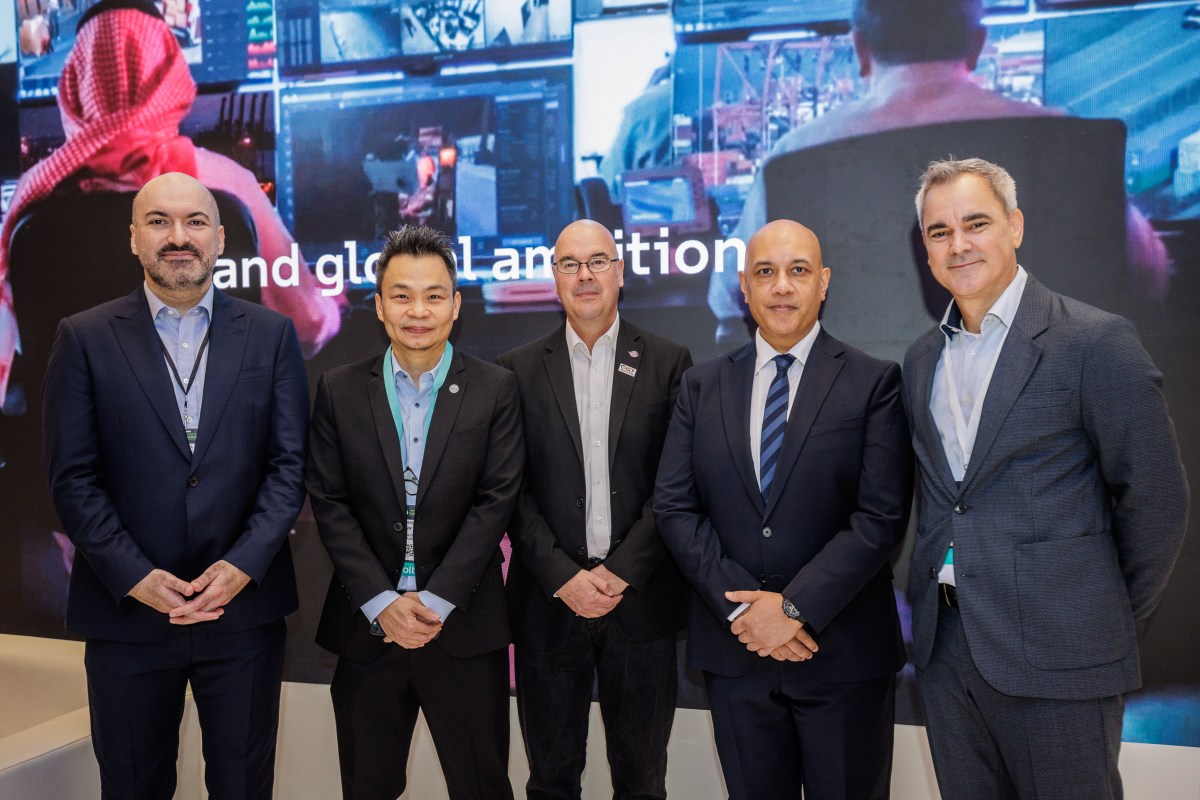

Huber+Suhner expands Microsoft Azure fibre collaboration
Huber+Suhner, a Swiss fibre optic cable manufacturer, has strengthened its collaboration with Microsoft Azure to support the wider deployment of hollow core fibre (HCF) connectivity across the Azure network. The company plans further investment in production capabilities to increase manufacturing volumes as Microsoft expands the use of HCF across additional Azure regions. The collaboration is focused on supporting cloud and AI infrastructure requirements. Huber+Suhner has worked with Microsoft’s Azure fibre team in Romsey, UK, since 2017, following the acquisition of Lumenisity, a University of Southampton spin-out. Together, the organisations have developed HCF cable and connector technologies which are already deployed within the Azure network. Higher-capacity variants are also in development to support future infrastructure growth. The two companies have jointly developed and qualified a range of outside plant (OSP) and inside plant (ISP) cable designs for field deployment. Work is also ongoing to develop higher-density HCF cable designs for future network requirements. At Huber+Suhner’s manufacturing facility in Herisau, Switzerland, dedicated processes have been introduced to integrate HCF into multi-fibre loose-tube cables, with scope to increase capacity as demand grows. Connector development supporting HCF deployment Alongside cable development, Huber+Suhner has developed a mode-converting HCF connector designed for hyperscale and metro optical environments. These connectors are manufactured at the company’s Cube Optics facility in Mainz, Germany, with further investment planned to expand production capacity. With both HCF cable and connector designs qualified, Huber+Suhner says it is extending its portfolio to support end-to-end fibre connectivity across cloud infrastructure. Jürgen Walter, COO Communication Segment at Huber+Suhner, comments, “Huber+Suhner is proud to support Microsoft as HCF connectivity solutions move to deployment at scale. "Building on our foundations of innovation and quality, we can expect further advances in our HCF connectivity portfolio as the pace of adoption accelerates. Together, we look forward to shaping the future of cloud connectivity and unlocking the full potential of HCF.” Colin Wallace, GM Cloud Network Engineering at Microsoft Azure, adds, “We value our long-standing collaboration with Huber+Suhner, which has helped us transition HCF technology from advanced research into operational deployment in the Microsoft Azure network. "These HCF cable and connector technologies are already deployed and carrying live traffic over Azure HCF links today, and this integrated capability will help us rapidly co-design and scale connectivity solutions for the future of cloud and AI network infrastructure.” The relevance of HCF HCF technology enables data to be transmitted through air rather than glass, allowing for significantly lower latency in optical networks. Microsoft’s Double-Nested Anti-Resonant Nodeless Fibre design also supports lower signal loss and higher launch powers compared to standard single-mode fibre, reducing the need for optical amplification in some metro networks. The use of HCF in data centre environments is expected to support greater flexibility in site location, as well as improved efficiency in distributed AI workloads by reducing latency between compute clusters. However, wider deployment presents technical challenges, including the need for robust cable designs and compatible termination methods. Huber+Suhner says its HCF connectors are designed to interface with standard single-mode fibre systems while protecting the hollow core structure and maintaining performance in operational environments. For more from Huber+Suhner, click here.

STL launches Neuralis US data centre platform
STL, an optical and digital systems company, has launched its Neuralis data centre connectivity portfolio in the United States, targeting infrastructure designed for artificial intelligence and high-density computing environments. The announcement was made by STL Optical Connectivity NA, the company’s US subsidiary, at Data Center World 2026 in Washington, D.C. Neuralis is designed to support evolving data centre requirements, particularly the shift towards AI workloads, hyperscale computing, and edge deployments. These trends are increasing demand for high-speed, high-density connectivity within and between facilities. The portfolio focuses on managing the transition from traditional north–south traffic flows to more intensive east–west traffic, driven by GPU-based architectures and AI training processes. Designed for high-density AI infrastructure The Neuralis portfolio is structured around two main areas: The first focuses on maximising data centre space through the use of high-density, pre-terminated fibre cabling. This approach moves connection work into manufacturing environments, reducing on-site installation time and complexity. The second area addresses data centre interconnect (DCI), supporting large-scale data transfer between sites. This includes fibre infrastructure designed for high-capacity environments, with cables capable of supporting large fibre counts for AI deployments. STL has developed the portfolio through collaboration with customers, with a focus on addressing space, density, and deployment challenges in modern data centres. The company’s manufacturing process covers the full fibre lifecycle, including preform production, fibre drawing, cabling, and connector integration. Production for the US market is supported by STL’s facility in Lugoff, South Carolina. Ankit Agarwal, Managing Director of STL, notes, "AI demands a level of precision and density that traditional cabling simply cannot meet. "With STL Neuralis, we are providing the high-speed, low-latency foundation that allows GPU clusters to perform at their peak, moving complexity out of the field and into a controlled, high-precision factory environment." The launch reflects increasing demand for infrastructure capable of supporting AI-driven workloads, as operators continue to scale data centre capacity across North America. For more from STL, click here.

DE-CIX, Ooredoo link Doha IX to Marseille
Internet exchange (IX) operator DE-CIX and Qatari telecommunications company Ooredoo have connected Doha IX to DE-CIX Marseille, expanding international interconnection for networks in Qatar. The link connects Qatar’s first commercial internet exchange with a wider European ecosystem, enabling direct access to networks in Marseille and remote connectivity to those linked via DE-CIX Frankfurt. Doha IX is operated by Ooredoo under the DE-CIX-as-a-Service model and is hosted in one of the company’s data centres. The interconnection is intended to improve access to cloud platforms and digital services not currently available locally. The connection allows networks in Qatar to exchange data directly with almost 120 networks in Marseille, as well as access a broader pool of networks connected through Frankfurt, one of Europe’s largest internet exchanges. This supports lower-latency connectivity and provides additional resilience for cloud and content delivery. It also enables access to major cloud providers through dedicated and private connections, alongside tools designed to support hybrid and multi-cloud environments. Expanding low-latency access to global networks Since its launch in October, Doha IX has developed as a carrier-neutral interconnection hub, supporting local and international data exchange. The platform also offers services including cloud connectivity, IP transit, hosting, and colocation. Ivo Ivanov, CEO of DE-CIX, says, “The direct interconnection between the IXs in Doha and Marseille brings the world closer together. “By providing even better performance and user experience for internet-based content and applications, our collaboration with Ooredoo opens up new opportunities for Qatar’s digital economy. "Enhanced connectivity will further strengthen the digital ecosystem in the GCC, supporting economic growth and innovation while paving the way for the amazing digital decades ahead of us.” Hassan Ismail Al Emadi, Chief Business Officer at Ooredoo Qatar, adds, “The direct interconnection between Doha IX and DE-CIX Marseille represents a strategic expansion of Qatar’s global digital reach. “By linking our national interconnection platform with one of Europe’s leading internet exchange ecosystems, we are enabling differentiated digital performance through lower latency, enhanced resilience, and secure, seamless access to global cloud and content networks. "This collaboration reinforces Qatar’s position as a regional digital gateway and enables enterprises to operate with greater performance, reach, and competitiveness, accelerating digital transformation across Qatar and the wider GCC.” The companies say the development reflects continued investment in interconnection infrastructure to support growing demand for cloud services and international data exchange. For more from DE-CIX, click here.

Nokia recognised in data centre switching report
Finnish telecommunications company Nokia has been named a Leader and Outperformer in the 2026 data centre switching Radar Report by GigaOm, marking the fifth consecutive year it has received this recognition. The annual report evaluates data centre switching platforms based on technical capabilities, product development plans, and business criteria. In the 2026 edition, Nokia’s Data Center Fabric is positioned in the Innovation/Platform Play category and classified as an Outperformer. GigaOm assessed 10 vendors in the market, comparing their offerings against a range of operational and technical benchmarks. Nokia’s platform received five-star ratings across all key feature areas reviewed, including hardware, switching and routing functionality, operational management, NetDevOps alignment, and traffic security. Focus on automation and AI-ready networking The report also highlights Nokia’s capabilities in areas such as AI-focused networking features and its microservices-based network operating system architecture. Andrew Green, Analyst at GigaOm, says, “GigaOm’s analysis highlights Nokia’s consistent innovation in data centre switching and its strong feature delivery over the past year. "Its Data Center Fabric stands out for the depth of its hardware and software capabilities and strong support for automation that are designed to address the requirements of modern AI-driven data centre environments.” The recognition reflects broader trends in the data centre sector, where organisations are updating infrastructure to support data-intensive workloads and distributed cloud environments. Michael Bushong, Vice President Data Center at Nokia, comments, “Being named a GigaOM data centre switching Leader and Outperformer for the fifth year in a row is validation of two things: "First, we are doing the hard work of providing highly reliable data centre solutions for cloud, enterprise, and service provider customers tasked with building in this AI era. "And second, we are keeping pace with all the innovation being driven by AI. Openness, automation, scale, and reliability are more than buzzwords; they require constant care and feeding, and this recognition represents that.” Nokia’s Data Center Fabric combines switching platforms, the SR Linux network operating system, and an event-driven automation platform to support automated data centre environments. It is designed to be deployed in both new and existing infrastructure and to integrate with a range of network environments. For more from Nokia, click here.

NetAlly launches LinkRunner AT tester
NetAlly, a manufacturer of portable network testing and analysis tools, has introduced a new handheld network link and cable tester, the LinkRunner AT 1500, expanding its LinkRunner range. The device is designed to validate copper network links and cables, supporting troubleshooting, moves, adds, and changes, as well as fault isolation. It is aimed at network technicians, IT teams, and managed service providers. According to NetAlly, the tester enables users to verify connectivity, link speed, VLAN configuration, and Power over Ethernet (PoE) through a single interface, without requiring a laptop. Test results and screenshots can then be uploaded to Link-Live, the company’s cloud-based reporting and analysis platform. Testing capabilities and deployment use The LinkRunner AT 1500 provides automated testing across multiple aspects of a network link. It can identify cable length, detect wiring faults, and indicate the distance to a fault. The device also identifies the nearest network switch and port, and verifies link speed and duplex up to 10 Gig. Additional functions include VLAN validation, connectivity checks to on-network and external devices, and PoE measurement. The tester can assess voltage, wattage, and active wire pairs to confirm power delivery before device installation. Dan Klimke, Director of Product Marketing at NetAlly, says, “The 1500 brings pro-level testing to frontline techs at just £1,140 MSRP. It draws on our 25-plus years of experience building innovative troubleshooting tools for network engineers and technicians. "The goal is simple: put fast, definitive answers in the hands of the technicians closest to the problem so issues get solved at the source, not escalated up the chain. "With Wi-Fi 7 access points, smart building systems, and modern IoT devices increasingly demanding higher power levels that only PoE++ can deliver, the LinkRunner AT 1500 validates full 90W PoE performance to ensure those devices are fully powered upon deployment.” NetAlly states that its products are available through authorised channel partners. The LinkRunner AT 1500 will be demonstrated at DTX 2026, taking place in the UK at Manchester Central on 29–30 April. Live demonstrations will be available at Stand E94 via its UK partner, Full Control Networks.

Zayo Europe joins GNM-IX network
GNM, a Dutch internet exchange and backbone operator, has announced that network infrastructure provider Zayo Europe has joined its internet exchange, GNM-IX, expanding interconnection capacity across Europe. GNM-IX connects more than 700 autonomous systems (ASNs) and supports over 10.7 Tbps of peak traffic. The platform provides carrier-neutral traffic exchange across several European markets. By joining, GNM notes that Zayo Europe gains direct access to a broad community of carriers, ISPs, cloud platforms, and content networks. Zayo Europe operates a large fibre network across the region, linking major metropolitan areas and data centres. Its backbone infrastructure integrates with GNM’s dense wavelength division multiplexing (DWDM) network, supporting additional interconnection routes and traffic efficiency. Expanded interconnection across Europe The move builds on an existing working relationship between the two organisations. Following earlier transport collaboration, Zayo Europe’s participation in GNM-IX extends technical integration and increases interconnection options across multiple European routes. Ahmed Eidarous, International Development Manager at GNM, says, “We are pleased to welcome Zayo Europe to GNM-IX. Their extensive fibre infrastructure across major European markets naturally complements our distributed internet exchange built on GNM’s DWDM backbone. "By establishing presence in GNM-IX, Zayo Europe gains direct access to a rapidly growing peering ecosystem while enabling additional interconnection opportunities for networks across our platform.” GNM and Zayo Europe say they will continue to work together on further initiatives focused on connectivity and network resilience across Europe. For more from GNM, click here.

STL launches 'India's first' hollow core fibre cable
STL, an optical and digital systems company, has introduced a hollow core fibre (HCF) cable in India, designed for data centre networks and high-frequency transmission environments. The development focuses on reducing latency and supporting higher bandwidth demands in modern data centres, hyperscale facilities, and network infrastructure. Unlike conventional optical fibre, which transmits light through a solid glass core, hollow core fibre uses an air-filled core. This allows signals to travel at higher speeds, with STL stating performance improvements of around 46%, alongside reduced latency and signal loss. Noting that it is the first company to develop and manufacture this type of cable in India, STL says it is expanding its optical connectivity portfolio in response to increasing demand from AI-driven and high-performance computing environments. The cable also incorporates a hybrid design intended to support a range of network requirements. This includes hollow core fibre for low-latency transmission, G.654.E fibre for long-distance, low-loss performance, and G.657.A1 fibre to support flexible deployment across different network types. Hybrid design supports varied network needs The hybrid architecture reflects the growing complexity of data centre and telecoms infrastructure, where operators require a mix of performance characteristics within a single cable system. STL reports that the design supports both high-speed data transmission and broader network coverage, particularly in large-scale or distributed environments. The company also states that it holds more than 780 patents and continues to focus on optical technologies aimed at increasing network capacity and efficiency. Badri Gomatam, CTO at STL, says, "Our R&D focus has always been on solving the most complex challenges of the future. With the launch of [this] Hollow Core Fibre cable, we are providing the 'speed-of-light' infrastructure required for the AI revolution. "This is a defining moment that demonstrates our capability to innovate and empower hyperscalers and data centres on a global scale.” For more from STL, click here.

SATLINE completes Tier III infrastructure modernisation
SATLINE, a Lithuanian provider of virtual satellite-to-IP streaming services and colocation for satellite communications, has upgraded its core infrastructure to align with Tier III standards under the Uptime Institute Tier Classification System, strengthening resilience across its power and cooling environments. The upgrade introduces full redundancy across critical systems, enabling concurrent maintainability and removing single points of failure, all without interrupting live operations. The project included a comprehensive overhaul of SATLINE’s infrastructure, namely: • Power redundancy — upgraded from a single generator to two fully redundant generators• Expanded UPS capacity — systems doubled to improve runtime and load handling• Modernised cooling — HVAC systems redesigned for full redundancy and improved efficiency• Tier III-aligned architecture — enabling maintenance without service disruption All improvements were reportedly completed with no customer-impacting downtime. Improved resilience and operational continuity The transition from Tier II to a Tier III-aligned design delivers a fully resilient environment. This allows any component within the infrastructure to be serviced without affecting operations, while also improving fault tolerance and scalability. For customers, the upgrade should provide greater continuity, even during maintenance or future system expansions. Simas Mockevicius, Senior Network Engineer at SATLINE, comments, “Our Tier III–aligned upgrade has already delivered measurable gains in operational resilience. “Building on a 10-year track record of 100% uptime across both network and power, we have further strengthened our infrastructure through fully redundant power generation, increased UPS capacity, and modernised cooling. "The result is a system that not only sustains uninterrupted service, but is engineered to exceed the reliability benchmarks our customers depend on.” The upgrade, according to the SATLINE, forms part of its broader strategy to support the uptime demands of satellite communications and critical connectivity services. The company has also outlined plans to expand into Asia, targeting regions with growing demand for satellite connectivity.

RETN now live at Manchester's Lunar 1 data centre
RETN, an independent global network service provider, has launched a new point of presence (PoP) in Manchester, UK. As the city’s interconnection ecosystem continues to grow, RETN says it is enabling secure, reliable, and future-ready connectivity, powering both local and global digital ambitions. Christopher Elliott, UK Commercial Director at RETN, comments, “This new PoP strengthens our presence in the North, delivering greater route diversity and resilience for businesses, ISPs, and enterprises across the region. "It’s another step in our commitment to the Northern Powerhouse, supporting Manchester’s role as one of the UK’s leading connectivity hubs. Lunar’s commitment to operational excellence and customer‑focused service makes them an ideal partner as we continue to expand our network footprint.” Darren Elliston, Director of Customer Success at Lunar Digital, adds, “RETN’s decision to build a PoP inside our facility is a strong endorsement of the quality, resilience, and strategic importance of Lunar’s data centres. "This partnership gives our customers even more choice and flexibility in how they build and scale their infrastructure. It also reinforces Manchester’s position as one of the UK’s most important digital hubs, supporting the region’s continued growth and innovation.” For more from RETN, click here.

Corning expands AI data centre connectivity
Corning, a US manufacturer of optical fibre for telecommunications and data centres, has expanded its data centre connectivity portfolio through a licensing agreement with US Conec. The agreement enables Corning to use PRIZM TMT optical ferrule technology, designed to increase fibre density within data centre environments, particularly for AI infrastructure. The technology supports higher fibre counts in limited space, addressing growing demand for connectivity as AI workloads scale and data centre architectures evolve. Mike O’Day, Senior Vice President and General Manager of Corning Optical Communications, comments, “AI infrastructure is pushing optical connectivity into new and more demanding environments. “By licensing PRIZM TMT, Corning is strengthening its ability to deliver scalable, fibre-rich solutions that help customers build larger, faster, and more efficient AI clusters, while aligning closely with the broader industry ecosystem.” Supporting higher-density AI infrastructure As AI deployments expand, data centres are increasing the number of connected accelerators and shifting towards optical connections in place of traditional copper links. This change is driving higher fibre density within server and switch racks, increasing the need for compact, high-performance connectors. The PRIZM TMT ferrule uses expanded beam technology with precision-aligned microlenses, rather than direct fibre contact. This approach is intended to improve installation reliability, reduce sensitivity to contamination, and support faster deployment. According to the companies, these characteristics are suited to large-scale AI environments, where high connection density and consistent performance are required. For more from Corning, click here.


Translate »