Enterprise Network Infrastructure: Design, Performance & Security


OpenNebula validated with NVIDIA Spectrum-X
OpenNebula Systems has today announced that its cloud management and virtualisation platform, OpenNebula, has been validated by NVIDIA as an orchestration platform integrated with NVIDIA Spectrum-X Ethernet networking. OpenNebula is used as a multi-tenant platform for AI factories, providing isolation, governance, and lifecycle management for accelerated infrastructure. The company says the validation supports the deployment of AI-ready cloud infrastructure using Spectrum-X Ethernet. Spectrum-X Ethernet is designed for AI networking environments, where latency, congestion, and jitter can affect large-scale training and multi-tenant inference workloads. OpenNebula now integrates with the networking platform to provide a software-defined cloud environment for AI applications, with multi-tenancy across compute, GPU, and network layers on a shared Spectrum-X Ethernet fabric. Automated orchestration for AI workloads The integration allows OpenNebula to orchestrate tenant provisioning, network configuration, and device attachment through Spectrum-X Ethernet. The OpenNebula control plane also runs on NVIDIA Air, which provides a platform for testing, integration, and validation. Customers can use the environment to evaluate the integration, run simulations, and test automation workflows for AI factory deployments. Ignacio M. Llorente, CEO of OpenNebula Systems, says, “Through our collaboration with NVIDIA, we are extending OpenNebula to support the networking and performance requirements of modern AI infrastructures. "This integration allows customers to manage multi-tenant AI environments where NVIDIA Grace Blackwell and NVIDIA Grace Blackwell Ultra compute and Spectrum-X Ethernet networking are tightly orchestrated and optimised as a single platform.” Amit Katz, VP of Networking at NVIDIA, adds, “OpenNebula’s integration with NVIDIA Spectrum-X Ethernet brings cloud-native agility to the AI Factory, enabling customers to orchestrate multi-tenant accelerated infrastructure with maximum performance and predictability. "NVIDIA Air enables OpenNebula and our ecosystem partners to validate and simulate large-scale AI Factory deployments, giving customers a powerful environment to evaluate and accelerate their AI cloud strategies.” For more from OpenNebula, click here.

Keysight, Point2 collaborate to advance AI interconnects
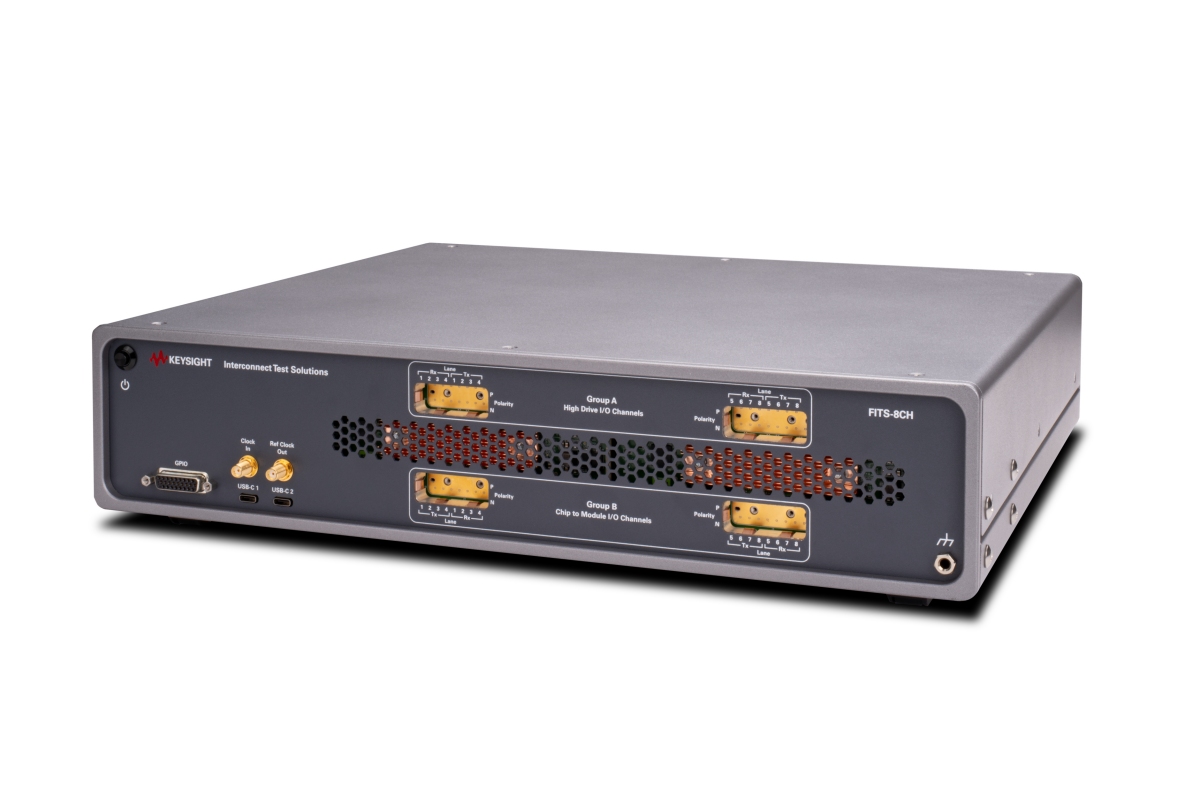
Keysight Technologies, a manufacturer of electronic test and measurement equipment and software, and interconnects provider Point2 Technology have announced a collaboration to validate next-generation, multi-terabit interconnects intended to address scale-up connectivity constraints in AI and machine learning data centres. The companies are working together to test Point2’s e-Tube interconnect technology using Keysight’s high-speed digital test and measurement platforms. The validation work is focused on meeting the performance and reliability requirements associated with hyperscale AI infrastructure. As AI workloads increase bandwidth demand, hyperscale operators face challenges when scaling xPU clusters. Point2’s e-Tube technology uses RF data transmission over plastic waveguide and is intended to extend reach beyond traditional copper-based interconnects while reducing power consumption and latency. The approach is positioned as an alternative to conventional copper connections within high-density AI systems. Validating multi-terabit performance Keysight is providing validation and characterisation support to assess whether the interconnect technology meets hyperscaler requirements for reliability and signal integrity. The collaboration also enables early research and development work on emerging 3.2T interfaces, supported by high-speed electrical signal generation and advanced real-time and sampling analysis. The testing environment supports the generation and analysis of high-baud-rate PAM4 signals required for terabit-scale data transmission within AI systems. Sean Park, CEO at Point2 Technology, says, “A strategic partnership with Keysight gives us access to world-class engineering tools and support, allowing us to accelerate our e-Tube product development cycles. "The confidence that comes from validating our e-Tube platform using Keysight’s rigorous test equipment is invaluable as we engage with leading hyperscaler customers globally.” Dr Joachim Peerlings, Vice President of Network and Data Centre Solutions at Keysight, adds, “AI scale-up architectures demand disruptive innovation in physical interconnects. Keysight provides the industry’s trusted source of measurement truth, helping innovative partners like Point2 validate technologies quickly and confidently at multi-terabit speeds to achieve their next breakthroughs.” For more from Keysight, click here.

Corning, Meta agree $6bn data centre supply deal
Corning, a US manufacturer of optical fibre for telecommunications and data centres, and US technology company Meta Platforms have today announced a multi-year agreement of up to $6 billion (£4.3 billion) to support the build-out of advanced data centres in the United States. Under the agreement, Corning will supply Meta with optical fibre, cable, and connectivity products to support its data centre and AI infrastructure. As part of the arrangement, Corning will expand manufacturing capacity across its operations in North Carolina, including a major expansion at its optical cable manufacturing facility in Hickory, where Meta will act as an anchor customer. Corning says the agreement will support increased domestic production of optical connectivity technology used in large-scale data centre deployments. Manufacturing expansion and employment impact Wendell P. Weeks, Chairman and Chief Executive Officer of Corning, comments, “This long-term partnership with Meta reflects Corning’s commitment to develop, innovate, and manufacture the critical technologies that power next-generation data centres here in the US. “The investment will expand our manufacturing footprint in North Carolina, support an increase in Corning’s employment levels in the state of 15–20%, and help sustain a highly skilled workforce of more than 5,000 people - including the scientists, engineers, and production teams at two of the world’s largest optical fibre and cable manufacturing facilities. "Together with Meta, we are strengthening domestic supply chains and helping to ensure that advanced data centres are built using US innovation and advanced manufacturing.” Meta says it is continuing to expand its data centre footprint in the US and increase the use of domestically manufactured technology to support its infrastructure requirements. Joel Kaplan, Chief Global Affairs Officer at Meta, notes, “Building the most advanced data centres in the US requires world-class partners and American manufacturing. "We are proud to partner with Corning - a company with deep expertise in optical connectivity and a strong commitment to domestic manufacturing - to supply the high-performance fibre optic cables our AI infrastructure requires. "This collaboration will help create well-paid, skilled jobs in the US, strengthen local economies, and help secure the US lead in the global AI race.” The agreement covers the supply of latest-generation optical fibre, cable, and connectivity products designed to meet the density and scale requirements of large AI-focused data centres.

FTTH Council Europe welcomes the DNA
The FTTH Council Europe, a European industry association promoting fibre-optic broadband deployment across Europe, has said it welcomes the Digital Networks Act, as put forward by the European Commission. The mission of the FTTH Council Europe is to see the widespread availability and use of FTTH (Fibre to the Home) in Europe as quickly as possible. It therefore maintains that it is important to ensure that the regulatory framework incentivises investment and fosters effective competition, adding that that these two objectives must remain at the core of any access policy. The FTTH Council Europe positively welcomes the proposal for the switch-off of copper networks. The process, it claims, strikes the right balance between the need to incentivise the take-up of future-proof networks, the necessity to consider national specificities, and avoiding unintended consequences for consumers. The association says it is convinced that copper switch-off is an important driver for investments and that it will positively contribute to the competitiveness of the EU, supporting the digital transition and the enhancement of the Single Market. Therefore, it invites the co-legislators to support the European Commission approach on this topic. The FTTH Council Europe further considers that the current regulatory framework has delivered positive outcomes. It believes maintaining the SMP process in the proposed DNA is central to preserving competition and demonstrates the Commission’s commitment to a stable and predictable regulatory environment, something critical to supporting investors and enabling the continued development of sustainable competition. The Council also notes the proposed harmonised access products but believes that any remedies should start by being tailored to the specific realities of national and market contexts, which can vary significantly between countries and market segments. National Regulatory Authorities (NRAs), it propounds, are best positioned to define, where necessary, appropriate SMP obligations that reflect the unique characteristics of their markets. The FTTH Council Europe also acknowledges the provisions on security and resilience in the DNA that recognise the critical importance of communications infrastructure. However, the body invites the co-legislators to make clear that any obligation that may arise should be adequately supported by national and European resources in the next MFF and not create excessive burdens for a sector that is investing heavily in the achievement of the Digital Decade targets. There are other aspects that need refinement, according to the FTTH Council Europe, and there are certain issues where it believes a different approach should be taken, not least regarding the availability of licence-free spectrum for RLAN. The FTTH Council Europe says it looks forward to working constructively with co-legislators to share its insights and experience in refining this proposal.

Fluke Networks launches CertiFiber Max fibre tester
Fluke Networks, a manufacturer of network certification and troubleshooting tools, has launched CertiFiber Max, a third-generation optical loss test set designed for high-density data centre fibre testing. The tester is built on the Versiv platform and integrates with LinkWare software. Fluke Networks states that CertiFiber Max can certify up to 24 fibres in under one second, addressing growing testing demands as fibre density increases in AI- and cloud-driven environments. As data centre architectures evolve, contractors are under pressure to certify more fibres within tighter performance margins. Fluke Networks notes that many existing tools either limit fibre counts or rely on fan-out cables and adapters, increasing testing time and complexity. Designed for high-density fibre certification CertiFiber Max supports 12-, 16-, and 24-fibre MPO connectors, as well as 16- and 24-fibre MMC connectors, using field-replaceable UniPort adapters. These adapters are designed to connect directly to multiple connector types and can be replaced or upgraded on site, extending the working life of the tester. The company says this approach allows technicians to adapt to changing connector standards without replacing test equipment, while also protecting tester ports during use in demanding environments. Vineet Thuvara, Chief Product Officer at Fluke Corporation, comments, “CertiFiber Max reflects our belief that trust in data centre operations starts at the physical layer. Built on the proven Versiv platform, it delivers native 24-fibre support for high-density networks.” As fibre counts continue to rise, the company positions its CertiFiber Max as a tool designed to support both current installations and future requirements, including emerging connector formats such as MMC. Charlie Stroup, Applications Engineering Manager at US Conec, notes, “As MMC deployments continue to expand rapidly, Fluke’s CertiFiber Max plays a critical role in supporting reliable testing for next-generation AI networks.” The system measures optical loss, length, and polarity across multiple fibres in under a second and uses the one-jumper reference method recommended by industry standards and manufacturers. For more from Fluke Networks, click here.

Molex turns infrastructure into advantage
Today’s data centres and enterprises face pressure to move faster, scale seamlessly, and maintain uptime. The network infrastructure beneath it all can’t just keep up; it must lead the way. For over 40 years, Molex has helped organisations rethink structured cabling as a strategic asset. Its 'Enterprise Cabling Infrastructure' delivers scalable copper and fibre systems for buildings across sectors. Its 'Data Center Solutions' extend that reliability to high-density optical fibre environments, enabling faster deployment and effortless growth. With proven global expertise and end-to-end support, Molex turns infrastructure into advantage, backed by a 25-year System Performance and Application Assurance Warranty. What sets Molex apart • Design for what’s next - infrastructure built to handle tomorrow’s requirements • One ecosystem - copper, fibre, and accessories engineered to work seamlessly together • Global reach - technical experts and installers in more than 50 countries • Assured performance - every installation guaranteed for reliability and longevity • Tailored collaboration - custom solutions engineered around you For more from Molex, click here.

Zayo Europe partners with Reintel for network in Iberia
Network infrastructure provider Zayo Europe has announced a partnership with Reintel, a dark fibre operator in Spain, to expand its service offering across Iberia. The deal marks a milestone as Zayo Europe brings its 400GE enabled wavelength network to the Iberian Peninsula as well as expanding its Tier-1 IP offering to Portugal and to more Spanish cities. Carriers and enterprises in the region can now connect to Zayo Europe’s network, which links over 600 data centres across Europe. The collaboration will aim to deliver low-latency, high-capacity connectivity across Iberia, connecting key business hubs including Madrid, Lisbon, Barcelona, Bilbao, and Sines. This new route will seek to enhance network diversity, reduce deployment times, and strengthen connectivity options for businesses and carriers operating in the region. Spanning over 3,500km of fibre across Iberia, Zayo Europe's network will enable DC-to-DC connectivity, faster cloud adoption, and high-performance handling of data-intensive workloads. The move also strengthens Zayo Europe’s global reach, linking Iberia to international networks across the Mediterranean and Atlantic and supporting the digital transformation of businesses across multiple continents. Emerging data centre hubs Colman Deegan, CEO at Zayo Europe, comments, “This partnership marks another important step in Zayo Europe’s journey to connect the continent’s most dynamic markets. "Spain and Portugal are quickly emerging as major data centre hubs, with a strong supply of renewable energy driving new investments to power AI and other cutting-edge technologies. “We’re delighted to partner with Reintel, who operate the highest quality mission-critical fibre infrastructure in the region. By extending our network through their low-latency, high-availability fibre routes, we’re enabling enterprises, data centres, and carriers across Iberia to access our extensive high-performance connectivity that underpins Europe’s innovation economy. "Following our recent expansion in the German market, Iberia becomes the next strategic link in furthering the reach of our pan-European network. With the significant DC rollout planned in 2026, Zayo Europe is poised to set connectivity trends for the decade ahead.” Francisco J. Blanca Patón, CEO at Reintel, adds, “Zayo Europe’s expansion into Iberia aligns perfectly with our mission to accelerate Spain’s digital transformation. "Combining our extensive dark fibre footprint with Zayo Europe’s international network and unparalleled service excellence creates powerful opportunities for customers across the region. “This partnership will empower data centres and businesses across Spain and Portugal to keep pace with rising data demands and, ultimately, strengthen Europe’s digital backbone. We look forward to what can be achieved together through 2026 and beyond.” For more from Zayo Europe, click here.

Huber+Suhner expands sustainable packaging drive
Huber+Suhner, a Swiss fibre optic cable manufacturer, has broadened the use of recycled and recyclable packaging across its fibre optic portfolio as part of its ongoing sustainability programme. The company has removed more than 743,000 single-use plastic bags, substituted approximately 1.5 million cable ties, and replaced 35,500 blister packages with recycled polyethylene terephthalate. 11 product families are now covered by the initiative. Lana Ollier, Head of Global Sustainability at Huber+Suhner, says, “Removing single-use plastic items and moving more product families to recyclable and sustainable materials show what’s possible when sustainability is designed in, not added on.” Less waste and lower packaging emissions The measures include FSC-certified, recyclable paper packaging for connector and cable assemblies, and recycled PET for fibre modules including LISA, SYLFA HD, and IANOS. Huber+Suhner reports improvements in handling, dust protection, and transport weight. Verified lifecycle assessments indicate that blister packaging emissions have been reduced by around 50% for selected modules when compared with traditional plastics. The changes are intended to cut on-site material waste and ease installation through simplified paper formats and stackable blister trays. Following positive feedback, the company says its sustainable packaging approach will extend to 17 fibre optic product families during 2026. For more from Huber+Suhner, click here.

1547 announces the McAllen Internet Exchange (MCT-IX)
fifteenfortyseven Critical Systems Realty (1547), a developer and operator of interconnected data centres and carrier hotels across North America, has announced the launch of the McAllen Internet Exchange, known as MCT-IX, located within the Chase Tower in McAllen, Texas. Chase Tower has long operated as a carrier hotel and a key aggregation point for cross-border network traffic between the United States and Mexico. The introduction of an internet exchange within the building provides a local platform for traffic exchange in a facility already used by multiple network operators. MCT-IX has been formally registered with ARIN and is now accepting initial participants, with several networks already committing ports. Interest in the exchange follows continued growth in network activity within Chase Tower. During 2025, the site has seen additional carrier deployments, capacity expansions by existing network operators, and increased demand for cross-connects. The building’s owner has invested more than $6 million (£4.4 million) in infrastructure upgrades, covering backup power, lifts, fire and life safety systems, and HVAC improvements. Capacity expansion and interconnection investment 1547 has also expanded interconnection infrastructure within the building, including the development of a new meet-me room and a dedicated carrier room. The additional space is designed to support growing cross-connect demand and to provide direct access between networks, the new internet exchange, and other tenants within the facility. Further capacity expansion is underway to support both existing data centre tenants and future MCT-IX participants; this includes an additional 500 kW of colocation capacity within Chase Tower, alongside a separate 3MW, 13,000ft² data centre annex. Both projects are scheduled for completion in Q4 2026. J. Todd Raymond, CEO and Managing Director of 1547, says, “Announcing MCT-IX is an important milestone for both 1547 and the McAllen market. "With formal ARIN recognition and early port commitments already underway, it is clear there is strong demand for an internet exchange that builds on the long-established interconnection ecosystem inside Chase Tower. "As owners of the carrier hotel, we are committed to supporting this next phase of growth.” The exchange is expected to reduce reliance on upstream routing that currently sends cross-border traffic outside the region before reaching its destination, giving networks a more local option for traffic exchange. John Bonczek, Chief Revenue Officer of 1547, adds, “Across Chase Tower, we are seeing measurable increases in interconnection activity, from new deployments to expanded capacity and growing interest in route diversity. "MCT-IX aligns with the needs of the ecosystem inside the building and complements our planned expansion.” 1547 says it will provide further updates as the exchange progresses through its launch phases and participation increases. For more from 1547, click here.

tde expands tML breakout module for 800GbE ethernet
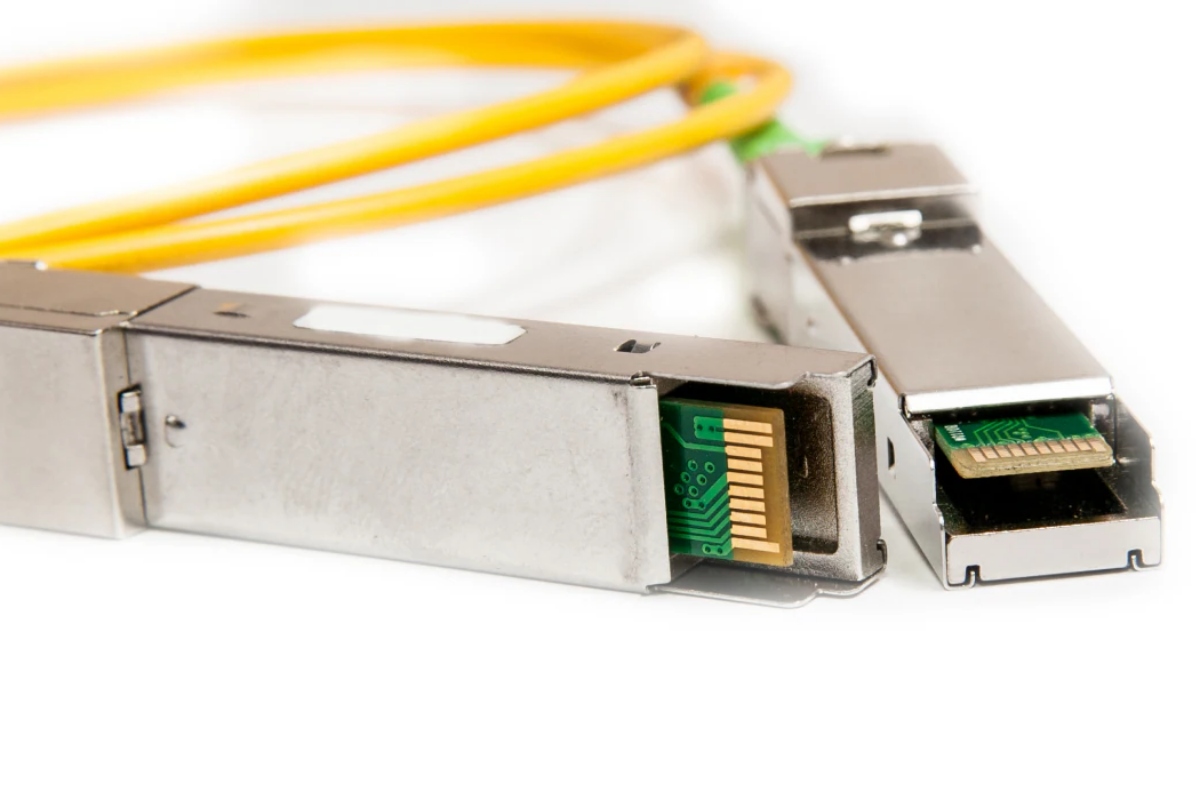
trans data elektronik (tde), a German manufacturer of fibre optic and copper cabling systems for data centres, has further developed its tML system and made it fit for increased network requirements, with the new breakout modules now supporting transceivers up to 800GbE. QSFP, QSFP-DD, and OSFP transceivers can now be used more efficiently and split into ports with lower data rates (4 x 100GbE or 8 x 100GbE). This allows data centre and network operators to increase the port density of their switch and router chassis and make better use of existing hardware. The company says the new breakout module is particularly suitable for use in high-speed data centres and modern telecommunications infrastructures. “Breakout applications have become firmly established in the high-speed sector,” explains André Engel, Managing Director of tde. "With our tML breakout modules, customers can now use transceivers up to 800GbE and still split them into smaller, clearly structured port speeds. "This allows them to combine maximum port density with very clear, structured cabling." Efficient use of MPO-based high-speed transceivers The current high-speed transceivers in the QSFP, QSFP-DD, and OSFP form factors have MPO connectors with 12, 16, or 24 fibres - in multimode (MM) or single-mode (SM). Typical applications such as SR4, DR4, and FR4 use eight fibres of the 12-fibre MPO, while SR8, DR8, and FR8 use sixteen fibres of a 16- or 24-fibre MPO. This is where tde says it comes in with its tML breakout modules. Depending on the application, the modules split the incoming transmission rate into, for example, four 100GbE or eight 100GbE channels with LC duplex connections. This allows multiple dedicated links with lower data rates to be provided from a single high-speed port - for switches, routers, or storage systems, for example. Alternatively, special versions with other connector faces such as MDC, SN, SC, or E2000 are available. Front MPO connectors and maximum packing density tde also relies on front-integrated MPO connectors for the latest generation of tML breakout modules. The MPO connections are plugged in directly from the front via patch cables. Compared to conventional solutions with rear MPO connectors, this aims to simplify structured patching, ensure clarity in the rack, and facilitate moves, adds, and changes during operation. A high port density can be achieved without the need for separate fanout cables. Eight tML breakout modules can be installed in the tML module carrier with one height unit. Future-proofing and investment protection tde says it has designed the tML breakout module for maximum ease of use. It can only be patched in the front patch panel level, seeking to support structured and clear cabling. Since the tML module carrier can be mixed and matched depending on the desired application and requirements, the breakout module should offer high packing density. Fibre-optic and copper modules can also be combined. André concludes, “With the addition of the tML breakout module, our tML system platform is well equipped for the future and will remain competitive in the long term.”


Translate »