Enterprise Network Infrastructure: Design, Performance & Security

tde expands tML breakout module for 800GbE ethernet
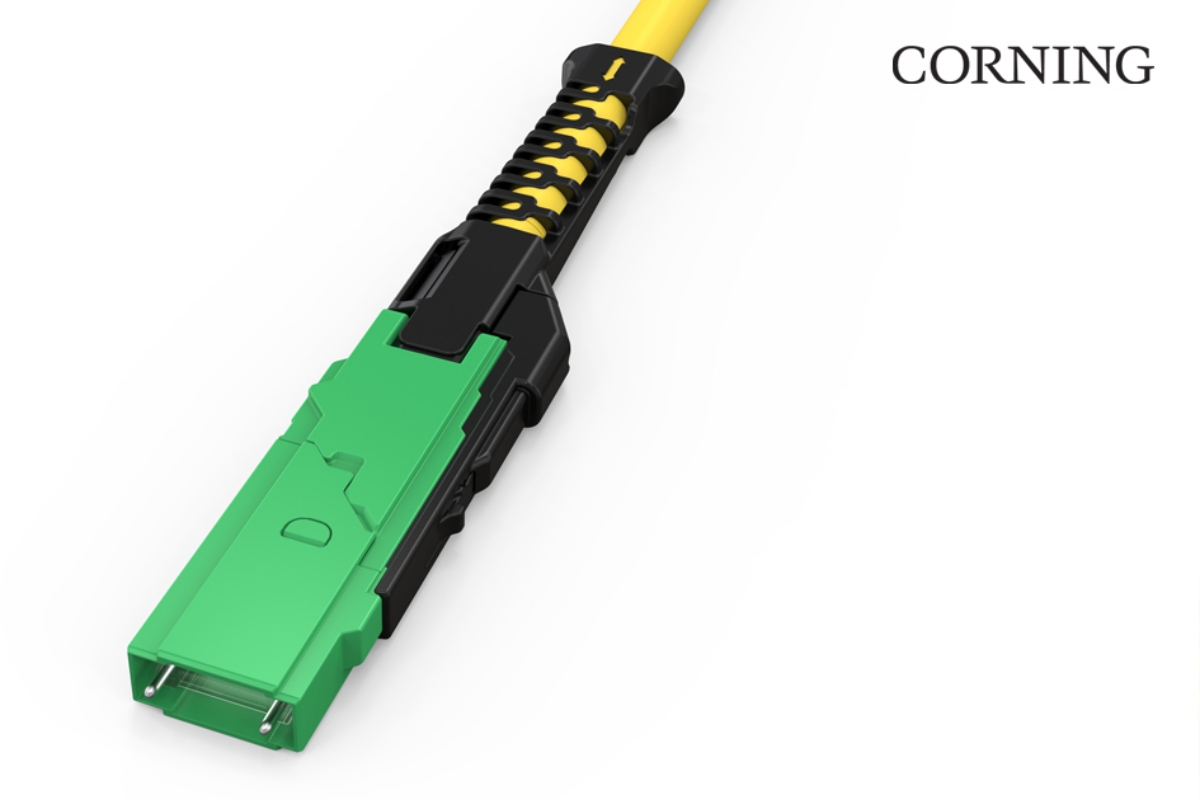
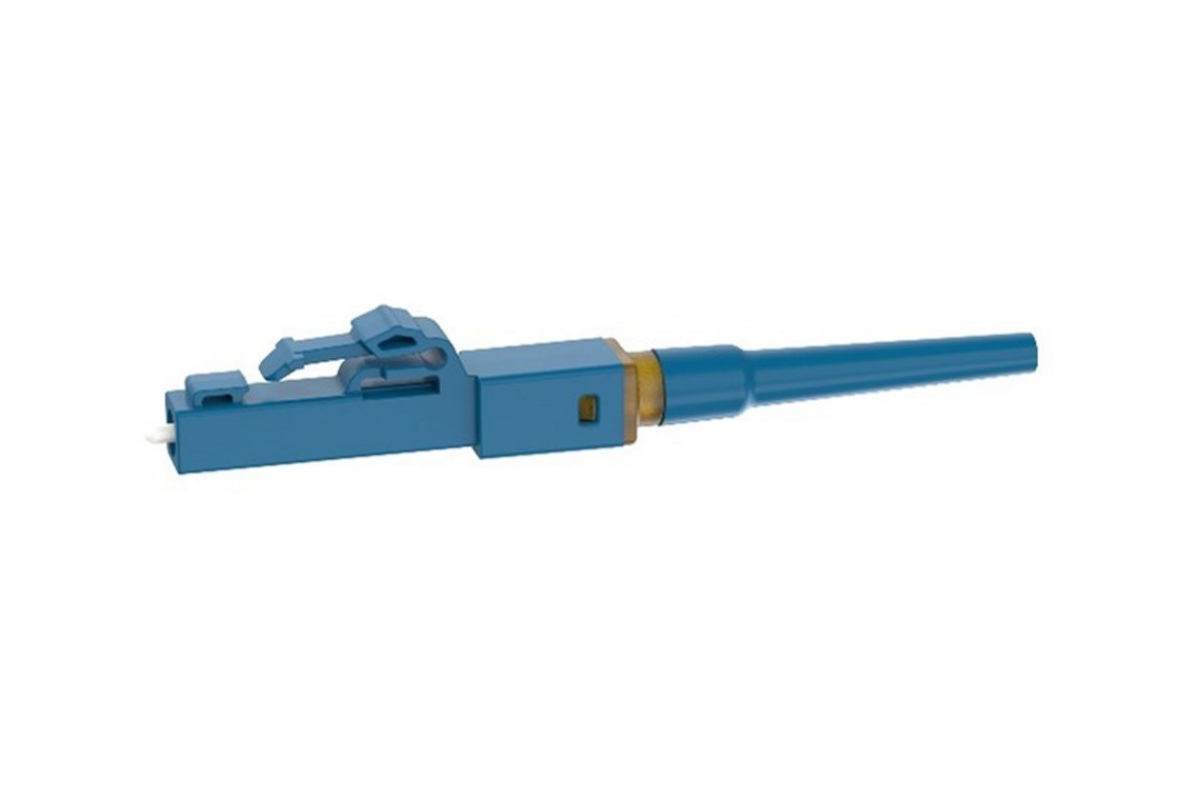
trans data elektronik (tde), a German manufacturer of fibre optic and copper cabling systems for data centres, has further developed its tML system and made it fit for increased network requirements, with the new breakout modules now supporting transceivers up to 800GbE. QSFP, QSFP-DD, and OSFP transceivers can now be used more efficiently and split into ports with lower data rates (4 x 100GbE or 8 x 100GbE). This allows data centre and network operators to increase the port density of their switch and router chassis and make better use of existing hardware. The company says the new breakout module is particularly suitable for use in high-speed data centres and modern telecommunications infrastructures. “Breakout applications have become firmly established in the high-speed sector,” explains André Engel, Managing Director of tde. "With our tML breakout modules, customers can now use transceivers up to 800GbE and still split them into smaller, clearly structured port speeds. "This allows them to combine maximum port density with very clear, structured cabling." Efficient use of MPO-based high-speed transceivers The current high-speed transceivers in the QSFP, QSFP-DD, and OSFP form factors have MPO connectors with 12, 16, or 24 fibres - in multimode (MM) or single-mode (SM). Typical applications such as SR4, DR4, and FR4 use eight fibres of the 12-fibre MPO, while SR8, DR8, and FR8 use sixteen fibres of a 16- or 24-fibre MPO. This is where tde says it comes in with its tML breakout modules. Depending on the application, the modules split the incoming transmission rate into, for example, four 100GbE or eight 100GbE channels with LC duplex connections. This allows multiple dedicated links with lower data rates to be provided from a single high-speed port - for switches, routers, or storage systems, for example. Alternatively, special versions with other connector faces such as MDC, SN, SC, or E2000 are available. Front MPO connectors and maximum packing density tde also relies on front-integrated MPO connectors for the latest generation of tML breakout modules. The MPO connections are plugged in directly from the front via patch cables. Compared to conventional solutions with rear MPO connectors, this aims to simplify structured patching, ensure clarity in the rack, and facilitate moves, adds, and changes during operation. A high port density can be achieved without the need for separate fanout cables. Eight tML breakout modules can be installed in the tML module carrier with one height unit. Future-proofing and investment protection tde says it has designed the tML breakout module for maximum ease of use. It can only be patched in the front patch panel level, seeking to support structured and clear cabling. Since the tML module carrier can be mixed and matched depending on the desired application and requirements, the breakout module should offer high packing density. Fibre-optic and copper modules can also be combined. André concludes, “With the addition of the tML breakout module, our tML system platform is well equipped for the future and will remain competitive in the long term.”

Energy Estate unveils Tasmanian subsea cables and hubs
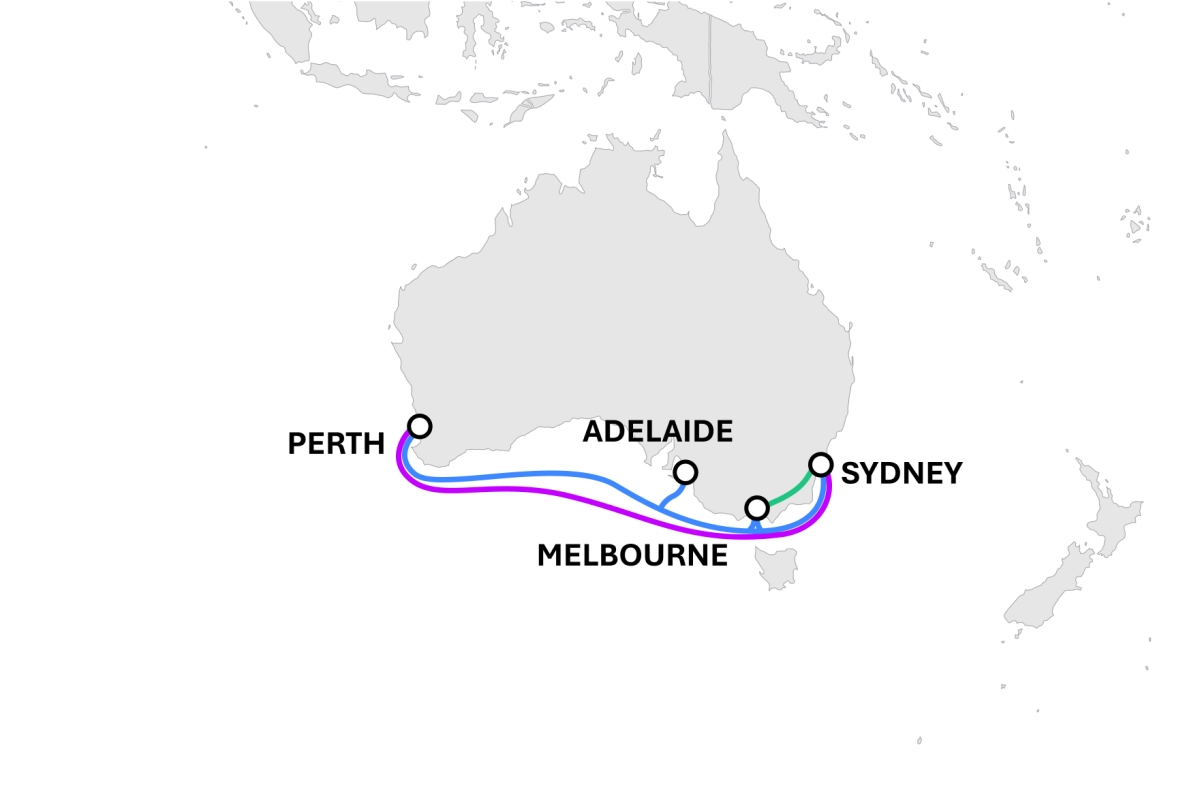
Energy Estate Digital, a digital infrastructure platform backed by Energy Estate, has set out plans for new data centre hubs and subsea connectivity in Tasmania as part of a wider programme to support the growth of artificial intelligence infrastructure across Australia, New Zealand, and key international markets. The company is developing subsea cable routes between Australia and New Zealand, as well as major global hubs including California, Japan, and India. These new links are intended to support the expanding AI sector by connecting regions that offer land availability, renewable energy potential, and access to water resources. The platform, launched in December 2024, aligns with national objectives under the Australian National AI Plan announced recently by the Federal Government. As part of its approach to sovereign capability, the company says it intends to offer “golden shares” to councils and economic development agencies in landing-point regions. Two proposed subsea cable landings in Tasmania will form part of the network: the CaliNewy route from California will come ashore at Bell Bay, while the IndoMaris route from Oman and India will land near Burnie. These proposed locations are designed to complement existing cable links between Victoria and Tasmania and future upgrades anticipated through the Marinus Link project. Large-scale energy and infrastructure precincts are expected to develop around these landings, hosting AI facilities, data centre campuses, and other power-intensive industries such as manufacturing, renewable fuels production, and electrified transport. These precincts will be supported by renewable energy and storage projects delivered by Energy Estate and its partners. Partnership to develop industrial and digital precincts Energy Estate has signed a memorandum of understanding with H2U Group to co-develop energy and infrastructure precincts in Tasmania, beginning with the Bell Bay port and wider industrial area. In 2025, H2U signed a similar agreement with TasPorts to explore a large-scale green hydrogen and ammonia facility within the port. Bell Bay has been identified by the Tasmanian Government and the Australian Federal Government as a strategic location for industrial development, particularly for hydrogen and green manufacturing projects. Energy Estate and H2U plan to produce a masterplan that builds on existing infrastructure, access to renewable energy, and the region’s established industrial expertise. The work will also align with ongoing efforts within the Bell Bay Advanced Manufacturing Zone. The digital infrastructure hub proposed for Bell Bay will be the first of three locations Energy Estate intends to develop in Northern Tasmania. The company states that the scale of interest reflects Tasmania’s emerging position as a potential global centre for AI-related activity. Beyond Tasmania, Energy Estate is advancing similar developments in other regions, including the Hunter in New South Wales; Bass Coast and Portland in Victoria; Waikato, Manawatu, and South Canterbury in New Zealand; and the Central Valley in California.

Vertiv launches DC power system for networks in EMEA
Vertiv, a global provider of critical digital infrastructure, has introduced the Vertiv PowerDirect 7100 Energy, a hybrid-ready DC power platform designed to support next-generation telecom and edge networks across Europe, the Middle East, and Africa (EMEA). The system is engineered to strengthen power stability in environments ranging from robust grid connections to remote or off-grid locations while supporting operators’ wider energy transition strategies. The PowerDirect 7100 Energy provides up to 52 kW of scalable 48 V DC power and reportedly achieves efficiencies of up to 98%. Built on Vertiv’s fourth-generation hybrid architecture, it can integrate inputs from grid, generators, and alternative energy sources including solar, wind, or fuel-cell systems. Intelligent power management for diverse deployments At the core of the platform are Vertiv solar converters and modular rectifiers, managed by the Vertiv NetSure Control Unit. This combination enables remote monitoring, advanced load control, and energy scheduling to optimise system performance and extend equipment lifespan. Dave Wilson, Director of Global Hybrid Solutions at Vertiv, comments, “The world expects energy efficiency and flexibility with the growth of communications such as 5G and edge connectivity. "The Vertiv PowerDirect 7100 Energy gives operators a single, intelligent platform capable of adapting to any grid condition, delivering reliable power while supporting the transition to cleaner, more efficient energy strategies.” Built for harsh and space-constrained sites The system is available in 500 A, 750 A, and 1000 A configurations for telecom and edge data racks. A front-access layout simplifies installation and servicing, while an operating range of –40°C to +65°C allows for deployment in challenging or remote locations. The PowerDirect 7100 Energy joins Vertiv’s wider portfolio of Vertiv NetSure systems and hybrid-energy platforms within the company’s power-train architecture. Paired with Vertiv thermal management, IT management, and lifecycle support services, it seeks to provide operators with a foundation for resilient and efficient digital infrastructure. For more from Vertiv, click here.

Capacity Europe 2025 notes record attendance
The 24th edition of Capacity Europe, an event for global digital infrastructure and connectivity, wrapped up last week after three packed days and record-breaking attendance, cementing its status as a major event for the global connectivity ecosystem. Hosted by provider of digital infrastructure events techoraco at the InterContinental London – The O2, the event brought together over 3,600 senior leaders from more than 100 countries, marking the largest turnout in its history. Discussions around a changing landscape This year’s event showcased the industry’s rapid transformation, fuelled by advances in AI and the expansion of data infrastructure, reshaping the telecommunications and digital infrastructure landscape. With a focus on innovation, investment, and next-generation network strategy, Capacity Europe 2025 placed a spotlight firmly on the evolving digital ecosystem. Opening the show was the keynote panel 'Disrupt to Lead: The New Telco Mindset'. The session explored how next-generation infrastructure is reshaping the telecom industry and driving operators toward new business models. Panellists examined the evolution from traditional carriers to "techcos", blending infrastructure with value-added services and platform-based offerings that deliver on-demand, flexible experiences for enterprise customers. Moderated by Silvia Peneva, Managing Director of GLF & ITW at techoraco, the panel featured industry figures including Annette Murphy (CCO, Colt Technology Services), Enrico Bagnasco (CEO, Sparkle), Dimitrios Rizoulis (SVP Global Connectivity, T Wholesale), Fánan Henriques (Director of Product & International Business, Vodafone Business), Valerie Cussac (CEO, Orange Wholesale International), and Mohammed Al-Abbadi (Group Chief Carrier & Wholesale Officer, STC). “Capacity Europe 2025 has been our most impactful year yet,” notes Liss Boot-Handford, Product Director at Capacity Media, techoraco. “The energy, collaboration, and level of deal-making we’ve seen this year demonstrates how vital this event is to the industry’s future.” Key milestones • More than 3,600 senior leaders from over 100 countries• Upwards of 80 keynote sessions and panels• Over 250 exhibitors and sponsors• Record number of partnership deals signed on site Across its keynote sessions and panel discussions, the event delivered insights from leaders across telecoms, cloud, edge, investment, and AI infrastructure. Highlights included explorations of the global dynamics redefining connectivity and the race to expand digital capacity to meet AI-driven demand. As Capacity Europe looks ahead to its milestone 25th anniversary in 2026, this year’s success sets the stage for another chapter in the evolution of global digital connectivity. The 2026 edition will return to the InterContinental London – The O2, from 13-16 October 2026. For more on Capacity Europe, click here.

Arista unveils 800G R4 series networking portfolio
Arista Networks, a provider of cloud and AI networking systems, has introduced a new generation of R4 Series networking platforms designed for artificial intelligence, large-scale data centre environments, and routed backbone deployment. The new systems are intended to support high-performance compute clusters, low-latency operation, and large routing backbones. According to Arista, the portfolio is designed to provide high port density and support for 800-gigabit ethernet networks, with integrated security features for encrypted traffic. Seamus Crehan, President of Crehan Research, says, “The 800GbE market is growing explosively with port shipments more than tripling sequentially in Q2 '25, and Arista led in branded market share for both 800GbE as well as overall data centre ethernet switching. "These new 800GbE products from Arista are well-timed to capitalise on this segment’s projected 90% five-year average annual growth rate driven by AI, storage, and general compute workloads.” Arista states that the new systems are designed to reduce operating costs and energy consumption in AI and data centre environments, while supporting routing technologies such as EVPN, VXLAN, MPLS, and SR/SRv6. The company also highlights engineering for predictable latency and packet-handling performance. Focus on high-density 800G networking for AI Arista says the platforms are aimed at workloads including AI training, inference, data centre interconnect, and large-scale routing. The new generation supports a range of 800-gigabit configurations, with capacity options designed for large-enterprise, cloud, and service provider networks. Tim Smith, Senior Vice President of Technical Infrastructure Engineering and Operations at Magnite, comments, “When Magnite needed to build our next-generation data centre solution for AI and other advanced computing needs, Arista was the clear choice given their high quality offering. "We've deployed a dense 800G spine using the modular Arista platform with both AI-optimised and high-scale multiservice routing linecards, providing an ideal foundation for the future.” Arista notes that the systems include options for secure traffic handling with wirespeed encryption across all ports, including MACsec, IPsec, and VXLANsec. The highest-capacity chassis in the range supports hundreds of 800-gigabit ethernet ports in one system. Arista also introduces its HyperPort interface, which the company says can simplify scale-across network designs and reduce AI workload completion times compared with traditional multi-link configurations. Supporting spine and leaf deployments Arista has also expanded its fixed-form systems designed for use as either data centre spines or leaf switches. According to the company, the systems offer flexible port combinations for 800-gigabit and 100-gigabit ethernet environments. Leaf systems in the portfolio are positioned for direct server connectivity and mixed-workload data centres. These switches include copper and fibre options, uplink ports, and hardware-based encryption support. Arista says its larger modular systems and several associated linecards are available now, alongside new fixed-format switches. Additional platforms and configurations are scheduled for release in early 2026. For more from Arista, click here.

Sparkle's BlueMed submarine cable lands in Cyprus
Sparkle, the first international service provider in Italy, and Cyta, a provider of integrated electronic communications in Cyprus, have announced the arrival of the BlueMed submarine cable at Cyta’s Yeroskipos landing station in Cyprus. BlueMed is Sparkle's new cable connecting Italy with several countries bordering the Mediterranean and up to Jordan. It's part of the Blue & Raman Submarine Cable Systems - built in partnership with Google and other operators - that stretch further in the Middle East up to Mumbai, India. With four fibre pairs and an initial design capacity of more than 25 Tbps per pair, the system delivers high-speed, low-latency, and scalable connectivity across Europe, the Middle East, and Africa. A new PoP in Cyprus With the branch to Yeroskipos station, Sparkle secures a key point of presence (PoP) in Cyprus, while Cyta gains access to the BlueMed submarine cable system, enhancing connectivity between Cyprus, Greece, and other Mediterranean countries. This initiative aims to enable Cyta to better meet the growing demand for advanced internet services and digital content in the country, while strengthening Cyprus’ role as a strategic digital hub - providing direct connectivity to Greece, to Western and Central Europe via Genoa and Marseille, and to the Levant through other neighbouring eastern Mediterranean countries. Enrico Bagnasco, CEO of Sparkle, comments, “This is a new, important stage for BlueMed, a project that embodies our commitment to innovation and collaboration, linking Europe with Africa and the Middle East through state-of-the-art infrastructure. “Today, we are also particularly glad to celebrate this milestone with our long-standing partner Cyta, confirming our shared commitment to strengthening connectivity in the Mediterranean basin.” George Malikides, Chief Technology Officer at Cyta, adds, “The connection of Cyta to BlueMed will further enhance the Cyprus digital ecosystem and reinforce the island’s position as a key digital hub in the Eastern Mediterranean." George Metzakis, Chief Commercial Officer at Cyta, concurs, stating, “The arrival of BlueMed in Cyprus marks a pivotal step forward in our ongoing mission to strengthen the island’s international connectivity.” BlueMed has received funding from the European Commission under the Connecting Europe Facility (CEF) programme, highlighting its strategic relevance for improving digital resilience and connectivity across Europe and beyond.

GNM-IX launches new PoP in Bucharest
GNM-IX, a Dutch internet exchange and backbone operator, has announced the launch of a new point of presence (PoP) in Bucharest, Romania, located in NXDATA-1, one of the country’s major carrier-neutral data centres and a digital gateway to Southeast Europe. This marks GNM’s first presence in Romania, expanding the company’s distributed interconnection platform into another region of Europe. The new Bucharest site provides access to GNM’s core connectivity services - internet exchange (GNM-IX), VLAN-based interconnections, and global IP Transit - enabling Romanian operators and content networks to exchange traffic locally and optimise international routes through GNM’s multi-terabit platform. For existing GNM members, the new PoP should strengthen connectivity across Southeast Europe, creating additional redundancy and more efficient routing options towards the Balkans, Central Europe, and beyond. Alex Surkoff, Business Development Director at GNM, comments, “Our goal is to make high-performance connectivity available wherever networks grow. “Expanding to Bucharest enhances our distributed architecture and gives both local and international operators new ways to interconnect - staying local in traffic exchange while remaining part of the global internet fabric.” GNM-IX now has more than 10 Tbps of aggregated traffic and 650+ connected networks. For more from GNM, click here.

Huber+Suhner launches SYNCRO
Huber+Suhner, a Swiss fibre optic cable manufacturer, has introduced its new SYNCRO family, an integrated, modular timing and Global Navigation Satellite System (GNSS) distribution portfolio, designed to simplify optical timing integration for data centre operators. Precise time synchronisation, accurate to within nanoseconds, underpins critical services such as global trade, telecommunications, navigation, and scientific measurement. The SYNCRO system aims to enable operators to integrate optical timing into existing fibre infrastructure, improving performance and reducing the cost and complexity associated with coaxial cabling. Modular design for reliable, scalable synchronisation The SYNCRO portfolio seeks to extend transmission distances, reduce the number of GNSS antennas required, and minimise the limitations of traditional cabling. It builds on Huber+Suhner’s earlier GNSS and Power-over-Fibre (PoF) technologies to deliver precise time synchronisation while maintaining nanosecond accuracy across a network. PoF allows optical fibre to transmit both timing signals and electrical power to remote antenna assemblies, removing the need for separate cabling or rooftop power connections. This enables operators to use existing fibre networks to deliver GNSS signals and centrally managed power to antenna locations. Dominik Tibolla, Product Manager at Huber+Suhner, says, “The increasing computing requirements driven by digitalisation, particularly in cloud computing and artificial intelligence, mean that data centre operators must expand capacity efficiently and securely. "SYNCRO has been developed to help operators scale their infrastructure, enhance monitoring, and ensure high levels of reliability and redundancy.” Details of the new range The SYNCRO range is available in three configurations to meet different operational needs: • SYNCRO Max — offering PoF capability, signal expansion, monitoring, and redundancy for demanding environments • SYNCRO Eco — which provides signal expansion and monitoring without PoF • SYNCRO Mini — for applications that do not require PoF or redundancy, while maintaining monitoring and expansion functions According to Huber+Suhner, moving timing distribution onto fibre eliminates many installation constraints and simplifies planning. The plug-and-play design, the company asserts, removes transmission distance limits associated with coaxial cabling, reduces the need for reinforced ducting or extensive grounding, and supports secure, long-distance connections between antennas and receivers. Dominik continues, “SYNCRO gives operators a reliable, cost-effective timing solution that consolidates GNSS antennas and simplifies deployment. This allows infrastructure budgets to be reallocated to higher-value projects while maintaining precise, resilient synchronisation across data centre operations.” The SYNCRO family will be presented at booth 29 at the International Timing and Sync Forum in Prague, Czech Republic, from 27–30 October. For more from Huber+Suhner, click here.

DC BLOX to expand Myrtle Beach landing station
DC BLOX, a provider of connected data centre and fibre networks, has announced the planned expansion of its Myrtle Beach cable landing station in South Carolina, USA. The company has acquired approximately 20 acres of adjacent land within the Myrtle Beach International Technology and Aerospace Park (ITAP) with the potential to accommodate up to five additional subsea cables and an additional 20MW of power from the current on-site substation. The Myrtle Beach cable landing station (MYR1) opened in 2023 and was developed to enable a resilient international communications gateway for subsea cable access into the southeastern US from western European countries, South America, the Caribbean, and Africa. MYR1 is the largest facility of its kind on the Eastern Seaboard. MYR2 will complement existing subsea cables already landing in Myrtle Beach (including Firmina, Anjana, and Nuvem), enhancing the region’s role in connecting the US with the world. Expanding existing connectivity Jeff Wabik, Chief Technology Officer at DC BLOX, says, “Demand for landing subsea cables in Myrtle Beach has been extraordinary and the rapid addition of new carrier partners into MYR1 has significantly enhanced the facility’s connectivity ecosystem. “By preparing for MYR2, DC BLOX is enabling new digital infrastructure development across the region by global hyperscale companies and ensuring continued growth of the Southeast’s digital economy.” Sandy Davis, Myrtle Beach Regional EDC President & CEO, comments, “The continued growth of DC BLOX in our community is the vision presented by their leadership in 2021. "DC BLOX is an extraordinary company committed to providing technology services and community partnerships as promised. We are excited to have DC BLOX expand in Horry County and to house the largest facility of its kind on the Eastern Seaboard in our county." Pending additional demand, the new MYR2 facility would be built adjacent to MYR1 within ITAP, a site that offers a solid coastal location for subsea systems. Once completed, the two facilities combined would support up to ten subsea cables, strengthening international connectivity and advancing Myrtle Beach’s position as a global cable landing destination. For more from DC BLOX, click here.

Fibre overlooked in UK, delaying 82% of DC projects
Neos Networks, a UK-based B2B connectivity provider, today revealed that 82% of UK data centre operators have delayed site builds or expansion due to fibre availability. 95% of these operators say that access to new, high-capacity fibre networks will now influence their expansion plans. The findings come from new research showing that, despite unprecedented government and enterprise momentum around data centre development and artificial intelligence (AI), fibre remains the critical bottleneck that could slow the UK’s digital growth. However, Neos says the industry is united on the solution: investment in new, high-capacity fibre backbones. The study, carried out in partnership with Censuswide, surveyed data centre operators, enterprise IT leaders and local government stakeholders. Across all three groups, there was a consensus that core fibre networks are the foundation of the UK’s AI infrastructure: • 89% of local government stakeholders report that fibre gaps have delayed infrastructure projects in their regions. • Almost half (45%) of enterprises cite fibre as the key bottleneck holding back AI and digital infrastructure. • Almost half (46%) of local government authorities say their region’s fibre infrastructure is not fully ready to support AI data centres. • One in six companies (16%) doubt the ability of the UK’s current fibre infrastructure to support their AI ambitions. Lee Myall, CEO of Neos Networks, comments, “Over the past decade, we’ve seen a huge amount of investment in last-mile fibre builds, but core fibre networks across the country have received much less attention. Without them, workloads cannot move between data centres, data cannot be trained, and investments stall. "The UK has the ambition, the demand and the regional readiness to lead in AI, but if we don’t address fibre gaps, we risk losing out on one of the greatest economic opportunities of our generation.” AI is reshaping data centre and digital strategy The UK government has set out its ambition to position the country as a global leader in AI, with initiatives such as AI Growth Zones in the AI Opportunities Action Plan central to this vision. The research shows these policies are already shaping investment and strategy across the ecosystem: • 96% of data centre operators say AI Growth Zones are influencing expansion and site selection, with 44% citing them as a strong influence. • 68% of enterprises view AI Growth Zones as a strong driver of change in their infrastructure planning. Importantly, this momentum is fuelling new growth corridors beyond London. While 23% of data centre operators still expect new investment in Greater London, a greater share pointed to the North of England and the Midlands (39%), signalling a shift towards regional hubs of AI activity. This diversification is mirrored in the way compute is being deployed. With data centre sites becoming more dispersed, almost all (97%) data centre operators expect up to half of their UK compute to move to the edge of the network by 2030, underlining the need for high-performance, resilient fibre across every region. But despite this momentum, concerns remain: • 41% of data centre leaders believe the UK’s fibre networks are only partially prepared to support regional AI workloads. • More than 70% of enterprises feel the UK’s attractiveness for data centre investment needs improvement (53%) or is lagging (17%). Unlocking opportunity through new fibre backbones The research highlights a path forward, with new fibre backbone projects critical to unlocking growth. Nearly all respondents agree that investment in high-capacity fibre corridors will transform confidence in the UK’s ability to attract and scale AI projects: • 95% of data centre operators, 96% of enterprises, and 96% of local authorities say new fibre corridors into underserved areas would positively impact AI and data centre growth. • More than half of local authorities (53%) believe such projects would be transformative for their regions. Lee concludes, “AI is no longer a future ambition; it’s here today, reshaping how businesses, communities, and governments operate. "But the UK cannot lead in AI on yesterday’s infrastructure and we need continued investment in the fibre backbones that connect every region of the country. "At Neos, we’re committed to building those foundations so the UK can not only keep pace, but compete and thrive in the global AI race.” For more from Neos Networks, click here.


Translate »