Data Centre Business News and Industry Trends

1547's Orangeburg data centre reaches full occupancy
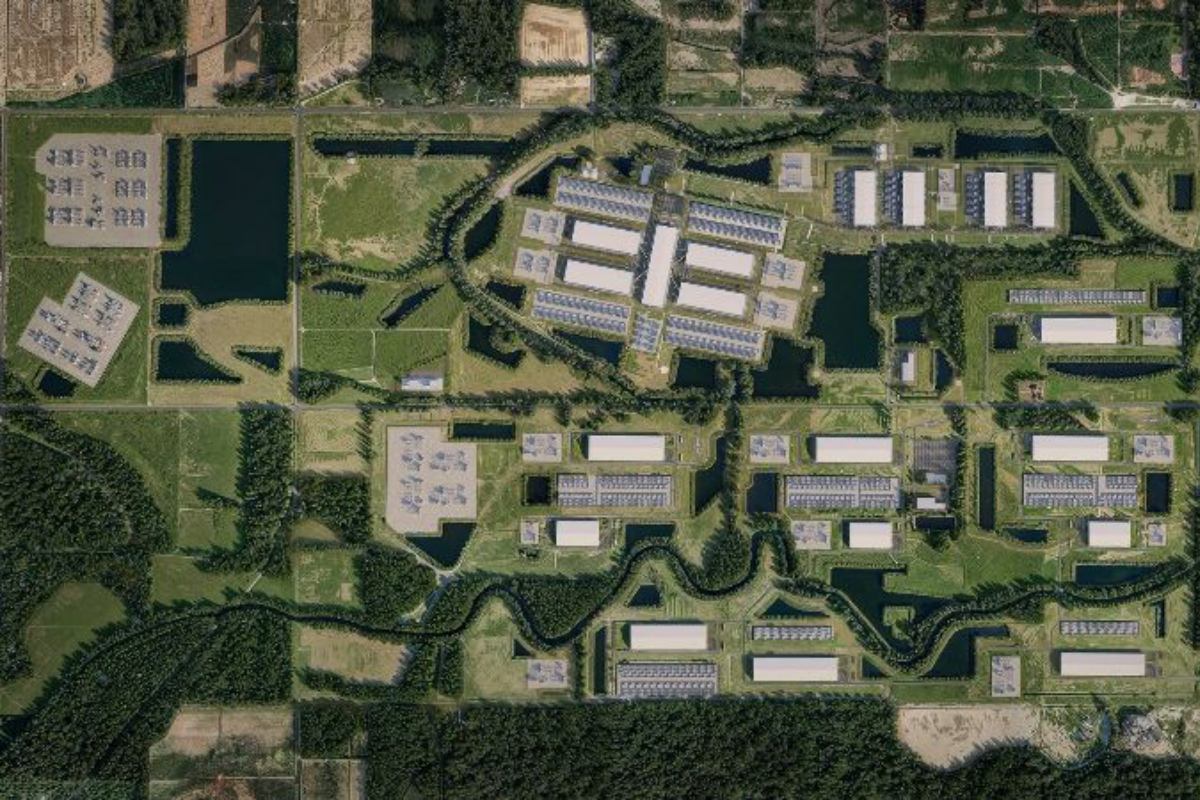
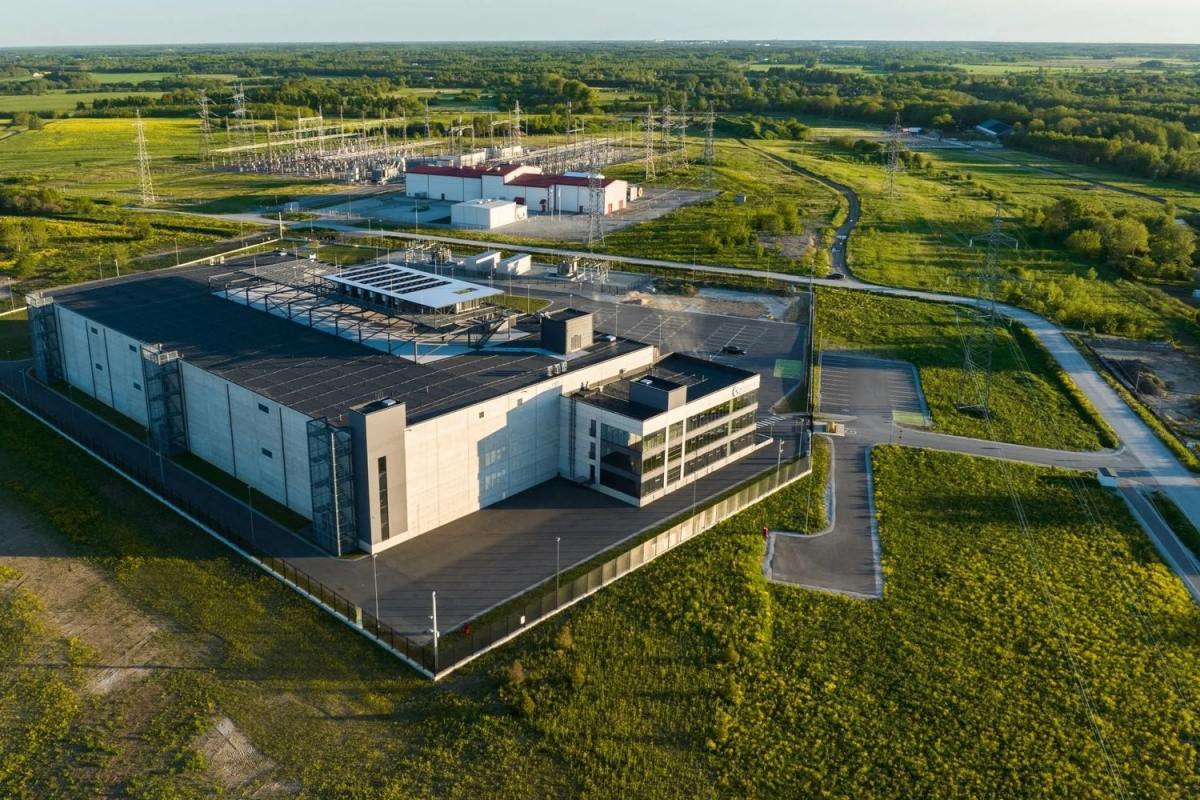
Harrison Street Asset Management and fifteenfortyseven Critical Systems Realty (1547), a developer and operator of interconnected data centres and carrier hotels across North America, have completed the latest expansion phase of their Orangeburg data centre in New York, with the facility now fully leased and operating at near-full utilisation. The colocation site, located around 18 miles (28.9 kilometres) north of Manhattan, provides capacity for tenants requiring proximity to New York City and access to established connectivity routes. Originally supporting 3.7 MW of IT load when acquired in 2021, the joint venture has since added approximately 14 MW of capacity while increasing density across the existing 232,000ft² (21,553m²) facility. A further 12MW utility feed is currently under development, with additional long-term expansion plans in place. The site has outline approval for a new 230,000ft² (21,367m²) building, supported by a planned 60MW on-site substation. Expansion driven by connectivity demand The Greater New York data centre market remains one of the largest in the US, supported by multiple terrestrial fibre routes and subsea cable landings along Long Island and New Jersey, enabling international connectivity, particularly with Europe. The Orangeburg facility now supports around 18 MW of IT load and has reached near-full utilisation following recent leasing activity. Demand is primarily driven by financial services organisations, including banks, trading platforms, and hedge funds, which require low-latency connectivity to Manhattan. Michael Hochanadel, Head of Digital Assets at Harrison Street Asset Management, comments, "The Orangeburg data centre exemplifies our approach to digital infrastructure investing, pairing strategic locations with disciplined demand-driven expansion." J Todd Raymond, Chief Executive Officer and Managing Director of 1547, adds, "From day one, our focus has been on delivering capacity in direct response to customer demand while maintaining the performance and reliability our clients depend on." Since 2018, Harrison Street Asset Management’s digital investment platform has committed more than $6.5 billion (£4.8 billion) to data centre and connectivity infrastructure, including powered shells, carrier hotels, colocation facilities, and dark fibre networks. For more from 1547, click here.

€50bn Croatia AI data centre investment announced
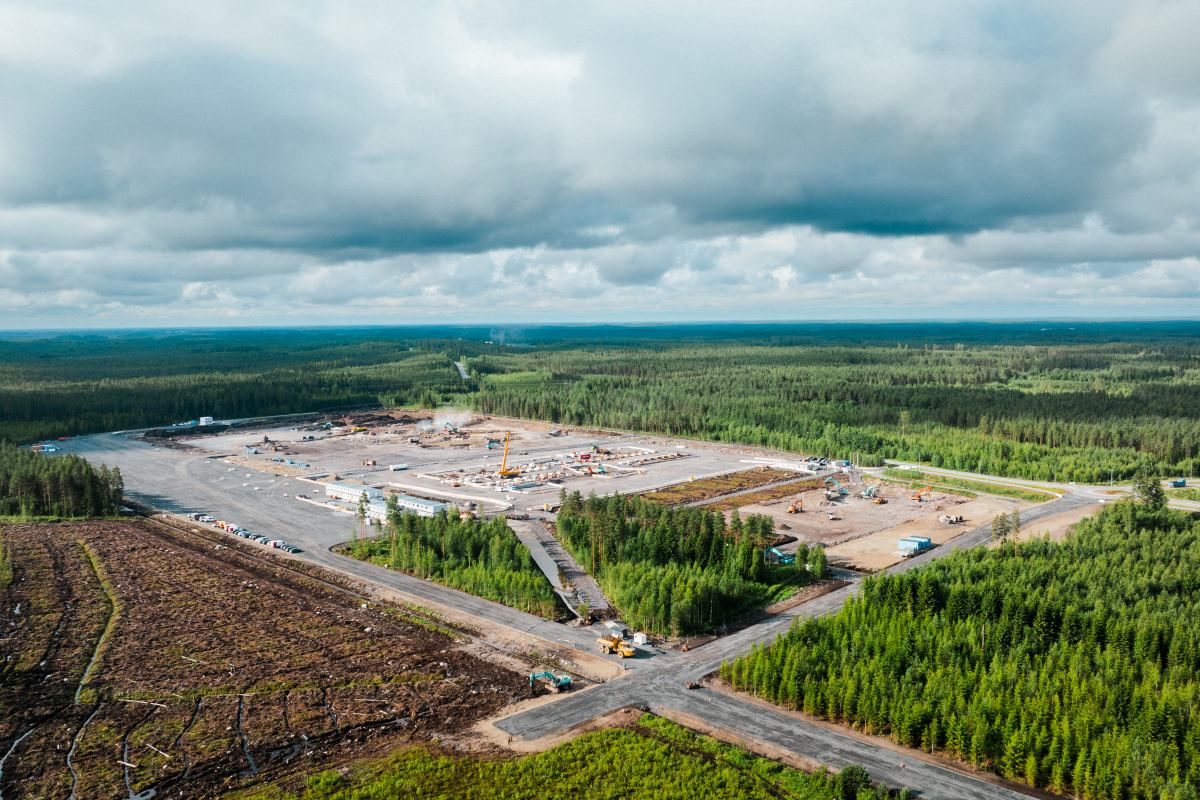
Pantheon Atlas, a transatlantic-led investment group, has announced plans to develop a hyperscale AI data centre and innovation campus in Topusko, Croatia, with total investment expected to exceed €50 billion (£43 billion). This is reportedly the largest investment of its kind in Croatian history and among the largest private US investments in Europe. The project, known as Pantheon AI, is intended to address growing demand for AI-driven data centre capacity across Europe, where availability of power, land, and construction resources remains constrained. The development is being delivered by a transatlantic investment group combining US capital with local expertise in Croatia, including regulatory and grid access experience. The announcement was made at the Three Seas Initiative Summit in Dubrovnik. Pantheon AI is designed to meet NVIDIA’s gigawatt-scale AI factory standards and is expected to offer high levels of availability, exceeding Tier IV benchmarks. Jako Andabak, Founding Partner at Pantheon AI, comments, "Pantheon AI is a signal to the world that Croatia is open for the highest-caliber investment. "This project is the culmination of years of work to bring world-class digital infrastructure to Croatia." Addressing European data centre capacity Across Europe, established data centre markets are operating with limited vacancy, while grid connection delays continue to affect new developments. Demand in Central and Eastern Europe is expected to increase significantly by 2035, particularly as AI workloads expand and regulatory requirements encourage data to be stored within EU borders. Ryan Rich, Managing Partner at Pantheon AI, explains, "We have assembled a transatlantic partnership to solve one of the most pressing challenges in global digital infrastructure: enabling hyperscale operators to meet AI-driven demand at scale." The project is expected to support up to 5.2 GW of renewable energy integration into Croatia’s grid. It will include an on-site solar installation and battery storage, alongside multiple fibre connections across European network corridors. Joshua Volz, Special Envoy for Global Energy Integration at the US Department of Energy, says, "Critical infrastructure of this scale, built by the private sector responding to real market demand, is exactly how US interests and European security advance together." Construction of the campus is scheduled to begin in early 2027, with operations expected to start in the first quarter of 2029. The initial phase represents a €12 billion (£10 billion) investment, with additional funding anticipated as tenants deploy infrastructure. The campus will have a planned capacity of 1GW, including 800MW of usable IT load, and will span approximately 310 acres (1.2 km²), with expansion potential. The development is expected to create around 1,500 permanent roles, alongside 3,000 jobs during construction.

Vertiv acquires Strategic Thermal Labs
Vertiv, a global provider of critical digital infrastructure, has acquired Strategic Thermal Labs (STL), a company specialising in liquid-cooling technologies for high-density computing environments. The acquisition is intended to strengthen Vertiv’s engineering capabilities in managing the interaction between server-level liquid cooling and supporting infrastructure, which is becoming increasingly important in AI and high-performance computing deployments. Strategic Thermal Labs brings experience in cold-plate design, server-side liquid cooling, and thermal validation for high-density systems. This is expected to support Vertiv’s ability to simulate real-world operating conditions and improve the integration of thermal and power systems. Acquisition targets high-density cooling challenges As computing workloads become more intensive, thermal management at chip level is playing a greater role in overall system performance and reliability. The addition of STL is aimed at improving design, integration, commissioning, and long-term operation of liquid-cooled environments. Scott Armul, Chief Product and Technology Officer at Vertiv, comments, “As AI and high-performance computing push power densities to unprecedented levels, understanding and solving heat challenges at the chip level becomes critical to system design, performance, and reliability. "STL brings deep expertise and proven capability in addressing some of the industry’s most demanding chip-level density and thermal problems, strengthening Vertiv’s ability to emulate and validate system-level solutions and enabling customers to improve performance and lifecycle outcomes in liquid-cooled environments.” Vertiv states that the acquisition will not change its approach to supporting interoperable infrastructure and the company will continue to work with a range of server and silicon platforms. It adds that the move forms part of its wider strategy to address increasing infrastructure complexity through integrated power, thermal, and lifecycle capabilities. For more from Vertiv, click here.

Report finds what's slowing down DC planning permission
A new report by Hoare Lea, a UK engineering consultancy, has found that data centre planning applications in the United Kingdom are being delayed by an average of 490 days, driven largely by objections related to inadequate community engagement, unclear community benefits, design, infrastructure constraints, and energy use. Hoare Lea’s Societal Insights team analysed 33 disputed applications to understand the underlying reasons for rejection and delay. Rejections frequently cited policy non-compliance, unsuitable locations, and insufficient energy strategies. These findings identify the tension between the growing demand for data centres in the UK - infrastructure that is supported by the Government’s AI Growth Zones - and the realities of navigating the planning system. Carl Walker, Head of Societal Insights at Hoare Lea, comments, “Success will be judged not only by new infrastructure, but also by the skills, growth, and opportunities delivered to local communities, [whose needs] must be recognised in the planning process.” Ambitions to build data centres in the UK already face significant challenges. Electricity grid capacity is already under strain, particularly in London and the M4 corridor, where data centres have delayed housing developments. Concerns also exist around environmental impacts, green belt land, and controversial government interventions overriding local planning decisions. The report findings underscore the need for integrated approaches that combine renewable energy planning, transparent governance, and meaningful community dividends. It suggests that by engaging communities early, supporting local skills and infrastructure, and embedding social and environmental value, data centres can become catalysts for sustainable local growth rather than sources of conflict. To view the full report, click here.

Pure DC expands its Middle East data centres
Pure Data Centres Group (Pure DC), a designer, developer, and operator of hyperscale data centres, has confirmed further investment in the Middle East, including a capacity increase at its Abu Dhabi campus and new development plans in Saudi Arabia. The company has received final approval from TAQA to expand IT capacity at its AUH01 site in Abu Dhabi from 41MW to 48MW. The increase has been achieved through design optimisation and the addition of new power infrastructure, supporting additional demand including AI workloads. The AUH01 campus is located on a 16-acre (64,749m²) site and is designed for phased expansion. One 20MW building is already operational, with initial data hall capacity delivered to a hyperscale customer in 2025. The site uses a combination of air and liquid cooling to support different deployment requirements. Pure DC has also matched 100% of the electricity used at AUH01 in 2025 with International Renewable Energy Certificates (I-RECs), sourced from solar generation at the Mohammed bin Rashid Al Maktoum Solar Park in the UAE. This approach aims to support reduced carbon intensity for operations and contribute to market-based Scope 2 emissions targets. Regional growth plans Alongside its UAE operations, Pure DC has entered a joint venture with Dune Vaults to develop a hyperscale data centre in Riyadh, Saudi Arabia. The RUH01 campus will be built on a 270,000m² site, with an initial design capacity of 57.6MW across two buildings. The development has potential to scale beyond 100MW as demand increases. Gary Wojtaszek, Executive Chairman and Interim CEO at Pure DC, comments, “We remain deeply committed to the Middle East and grateful for support we continue to receive from authorities across the UAE and KSA in the current climate. "Our sites are delivering uninterrupted service, reflecting the resilience and reliability that underpins our presence in the region. While the current macro-political environment may have slowed sector investment, digital demand remains unchanged. "The region’s ambitious national visions recognise the transformation enabled by digital government, enterprise modernisation, and a future-ready workforce. Pure DC is fully committed to contributing to that future through the continued development and operation of world-class digital infrastructure across the Middle East.” For more from Pure DC, click here.

Kao Data backs Discover Tech careers programme
Kao Data, a developer and operator of data centres, has joined the Cisco-led Discover Tech programme, aimed at widening access to technology careers for young people across the UK. As an employer member, the data centre operator joins organisations including Adobe, Accenture UK&I, IBM, and World Wide Technology, alongside CDW, FDM, BBC, Highpoint, and Softcat. The initiative focuses on supporting underrepresented groups to explore opportunities in the technology sector. A pilot programme launched in February 2026 engaged 100 students, with most participants reporting increased interest in technology careers and participating employers. The scheme will expand in July, offering a two-day programme for around 600 young people in London and Manchester. The first day provides an introduction to the sector, while the second involves on-site visits with employer partners, covering areas such as AI, cybersecurity, and cloud computing. Kao Data will host around 40 students at its Harlow campus on 15 July, providing an overview of data centre infrastructure and its role in supporting digital services. The site is located at Kao Park, associated with early fibre optic research led by Sir Charles Kao. Industry initiative targets skills gap The programme forms part of wider efforts to address skills shortages in the technology sector, particularly within digital infrastructure and data centres. Kalay Moodley, Chief People Officer at Kao Data, comments, “Discover Tech is exactly the kind of initiative the sector needs. The data centre industry is facing a significant skills shortage, and if we are serious about closing that gap we have to reach into communities that have historically been overlooked and show young people what a career in our industry can look like. “Hosting these students at Kao Park is a real privilege. This is the birthplace of fibre optic networks, the technology that carries the modern internet, and we want every young person who walks onto our campus to leave understanding that the digital world they use every day is built by people, and that those people could be them.” Rachel Morar, Managing Director at Connectr Early Engagement, says, “We're delighted to welcome Kao Data to the Discover Tech family. "This group of employers has come together with the ambition of positively impacting 7,000 young people over the next three years, myth-busting about the sector and getting students excited about where they fit into the ecosystem. “Kao Data shares our passion for making sure young people are informed about the tech sector at this pivotal decision-making age in their school and college careers. “Data centres will play a vital role in the UK's economic growth, and Kao Data joining the programme will bring invaluable insights for our Y12s to learn from in July.” The initiative also supports Kao Data’s wider education and skills activities, including its Kao Academy programme for primary schools and its Critical Careers campaign focused on data centre roles. For more from Kao Data, click here.

How to ensure your infrastructure complies with DORA
In this exclusive article for DCNN, Chris Noon, Director of Solution Engineering, International at Alkira, outlines how financial institutions must embed security, resilience, and transparency into their network infrastructure to meet the demands of DORA: Rethinking network infrastructure The Digital Operational Resilience Act (DORA) marks a major change in how the European financial sector manages technology risk. Instead of focusing only on solvency, DORA emphasises keeping digital services running smoothly. For enterprise organisations, this means every part of the technology stack, especially the network infrastructure connecting cloud environments and data centres, must be reviewed with operational resilience and security in mind. With this new framework, financial institutions are ultimately responsible for their digital resilience, even as they rely more on a complex network of ICT third-party service providers. To manage this, IT and compliance teams need to shift from reactive security to building systems where resilience is built in from the start. The core pillars of DORA compliance DORA requires financial organisations to have a complete strategy for managing ICT risks. This strategy should address five main areas: ICT risk management, incident reporting, operational resilience testing, third-party risk management, and information sharing. From an infrastructure point of view, the regulation says organisations must treat their network and cloud providers as essential parts of service delivery. IT teams should make sure providers go beyond just offering a service-level agreement and also give clear information about how their systems are built, managed, and secured. Security by design in network infrastructure To build security by design, start by choosing infrastructure platforms that follow well-known industry standards. When reviewing a network provider, IT teams should look for signs of a "born-in-the-cloud" or "security-first" approach. This shows the platform was built to work in high-risk, tightly regulated settings. Key indicators of a security-by-design approach include: • Identity and access governance — Providers should have strong identity and access management (IAM) features, such as multi-factor authentication (MFA); detailed, role-based access control (RBAC); and Policy Based Access Control (PBAC). This helps make sure only authorised people can change important network settings. • Encrypted connectivity — Security by design means data must be protected both while moving and when stored. Network providers should make it easy to use encryption across multi-cloud and hybrid setups without making operations more complicated. • Independent validation — Security claims need to be supported by third-party audits. Certifications like SOC 2 Type II, which cover security, availability, and confidentiality, are important standards. These reports give the proof needed for the due diligence required by DORA. Building for operational resilience Operational resilience means a company can handle, respond to, and recover from technology problems. For DORA, this means the network should not have a single point of failure. A resilient setup is usually spread out so if one part fails, traffic is rerouted to keep services running. IT teams should choose providers that focus on high availability as a key part of their services. This means having constant monitoring and alerts to catch problems early. The provider should also have a clear and tested incident response plan. DORA requires financial institutions to report major ICT incidents to regulators quickly, so the network provider must be able to supply the needed data and logs for fast investigation and reporting. Managing third-party risk and oversight A major challenge with DORA is the extra oversight of third-party providers. Financial organisations now have to include clear contract terms about oversight and audit rights. This need for transparency can be hard for some traditional technology providers to handle. When choosing an infrastructure partner, organisations should pick providers with clear processes for handling compliance questions. This means they can share security policies, operational procedures, and proof of regular penetration testing under non-disclosure agreements. The provider should act as a partner, helping the customer meet regulatory requirements, not just supplying a technical service. The role of Infrastructure-as-a-Service (IaaS) As financial institutions update their networks, many are choosing Infrastructure-as-a-Service (IaaS) models to handle the complexity of multi-cloud environments. These platforms connect on-premises data centres with different cloud service providers, acting as the system’s central hub. To meet DORA requirements, an IaaS platform must show it does not create new risks. It should be built on a well-known cloud infrastructure that already meets strong security standards. Using a resilient IaaS model helps IT teams see their whole network clearly, making risk management and compliance easier. Practical steps for IT teams To get ready for DORA, IT and risk management teams should take these practical steps with their network providers: 1. Conduct comprehensive due diligence — Check current and potential providers to make sure they meet DORA’s rules for security controls, incident response, and resilience testing. 2. Audit contractual arrangements — Make sure contracts clearly state audit rights, service levels, and the provider’s duty to help during a regulatory inquiry. 3. Evaluate multi-cloud strategy — Check if your current network setup allows you to quickly move workloads between cloud providers if one goes down. 4. Establish clear reporting lines — Decide how the network provider will communicate during an incident and what information they will give to support your reporting needs. Looking forward DORA is an ongoing operational process, not a one-off project. As regulations change, the need for operational resilience will only grow. Financial institutions that focus on security by design and pick infrastructure partners who value transparency and reliability will be better prepared for these changes. In the end, resilience is something everyone shares. The financial organisation is still responsible to the regulator, but its compliance success depends on its technology providers. By choosing providers who see compliance as a key part of their design, organisations can build a digital foundation that meets DORA and supports the future of digital finance.

Mitie acquires Nordic data centre security firms
Mitie, a UK facilities management and professional services company, has acquired two fire and security businesses in Denmark and Norway to expand its data centre capabilities across the Nordics. The company has purchased El Team Vest and ABC Elektro for a combined initial cash consideration of £8.1 million, with additional deferred payments linked to performance. The acquisitions are intended to strengthen Mitie’s project delivery and maintenance capabilities in the European data centre fire and security systems market. The group is already active in the sector, supporting clients including Microsoft, Google, and Equinix. El Team Vest, based in Horsens, Denmark, has around 20 years’ experience in electrical design, installation, and maintenance. Its work includes data and fibre networks, fire and security systems, building management systems, and high-voltage electrical connections. Recent projects include electrical retrofit work for Velux, as well as contracting for the headquarters of ABB Group and DSV Logistics. ABC Elektro, based in Horten, Norway, provides fire and security services alongside electrical capabilities such as data connections and building management system installations. The company primarily serves commercial and construction customers in the Oslo region. Nordic expansion driven by data centre growth Demand for data centre capacity continues to grow, driven in part by increased use of AI and machine learning technologies. The Nordic region has become a key location for new developments, supported by renewable energy availability, grid capacity, and cooler operating conditions. Mitie already operates in the Nordic data centre market through its fire and security business, GBE Converge, acquired in 2023. The addition of El Team Vest and ABC Elektro is expected to strengthen its regional presence, with a combined workforce of around 100 employees. El Team Vest will operate as a regional centre of expertise, providing technical and operational support across Mitie’s Nordic activities. For the 12 months to 31 December 2025, El Team Vest reported revenue of £16.6 million and EBITDA of £3.2 million. ABC Elektro reported revenue of £2.7 million over the same period, with break-even EBITDA following investment. Jason Buttle, Managing Director - Fire & Security Projects at Mitie, comments, “The acquisitions of El Team Vest and ABC Elektro strengthen our ability to deliver complex fire, security, and electrical solutions across the Nordics, one of Europe’s most important and fast-growing data centre hubs. "With Mitie’s financial backing and [its] deep technical expertise, strong local reputations, and track records supporting major commercial and technology clients, we expect these businesses to scale up our data centre offering. "We look forward to welcoming their highly skilled colleagues to Mitie as we support our hyperscale and colocation customers in meeting the rapidly increasing demand for data centre capacity.”

LS Electric wins $115m data centre contract
LS Electric, a South Korean manufacturer of electrical equipment and automation systems, has secured a $115 million (£84.9 million) contract to supply power infrastructure for a series of data centre developments across North America. The projects will support major technology companies expanding capacity for artificial intelligence and other compute-intensive applications, where consistent and high-quality power is required. Under the agreement, LS Electric will deliver switchgear and distribution transformers designed for continuous operation in high-demand environments. Expanding North American manufacturing footprint The deal comes at a time as data centre operators are increasing focus on power systems that offer reliability, adaptability, and long-term support as facilities scale to meet rising workloads. Large-scale developments of this kind also require suppliers able to meet strict technical standards while maintaining consistent delivery across manufacturing, logistics, and on-site coordination. LS Electric says it will support the projects from design through to commissioning. To fulfil the contract, LS Electric will utilise its growing industrial presence in North America, including operations in Utah and Texas, such as MCM Engineering II and its Bastrop campus. These facilities will support production and system integration, as well as ongoing regional expansion in engineered power infrastructure. LS Electric states it will continue to expand its offering for the sector, focusing on technologies that support reliable and energy-efficient data centre performance. For more from LS Electric, click here.

Mission Critical Group invests in WattEV
Mission Critical Group (MCG), a critical power infrastructure company, has announced a strategic investment in WattEV to support the development of 800V DC power infrastructure for AI data centres. The partnership focuses on advancing power delivery systems designed to meet the increasing demands of high-density AI workloads, including generative AI and inference applications. As part of the agreement, Mission Critical Group will support the industrialisation and deployment of a medium-voltage solid-state transformer (SST) platform. This technology is intended to enable the transition to 800V DC architectures within large-scale data centre environments. The companies state that traditional AC-based power systems are facing limitations as AI workloads scale, driving interest in alternative approaches to power distribution. The proposed 800V DC architecture enables direct conversion from medium-voltage AC, with the aim of improving efficiency and reducing system complexity. The modular design is intended to support flexible deployment, faster installation, and easier expansion. High-density power delivery Jeff Drees, CEO of Mission Critical Group, says, “We are building the next evolution in modular power delivery. The investment in WattEV highlights our commitment to advancing solutions for ultra-high-density AI workloads, including generative AI and inference.” Michael Maiello, SVP of Innovation at Mission Critical Group, adds, “We are moving beyond incremental improvements to a fundamentally different power architecture. "By converting the ultra-high-power demands of AI directly from medium-voltage AC to 800 VDC, we unlock the full efficiency and performance benefits of 800 VDC distribution.” Salim Youssefzadeh, CEO of WattEV, concludes, “Our technology is already proven in high-power, real-world applications where efficiency and reliability are critical. Together with MCG, we’re bringing that performance into the data centre to accelerate the adoption of 800 VDC architectures with confidence and speed.” The companies state that the collaboration aims to support the deployment of scalable power infrastructure for next-generation AI data centres. For more from Mission Critical Group, click here.


Translate »