Data Centre Business News and Industry Trends

UK parliamentarians launch Data Centres APPG
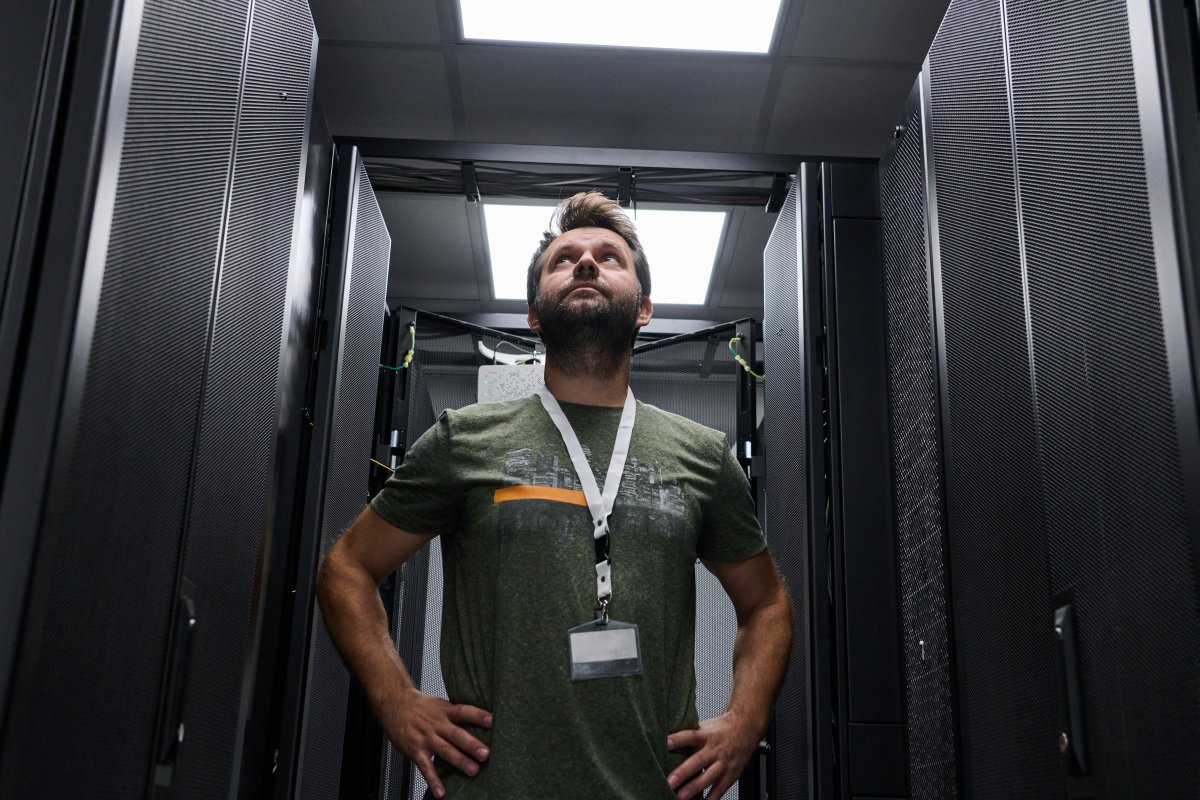
MPs and peers have launched a new All-Party Parliamentary Group (APPG) focused on data centres, examining the sector’s role in economic growth, digital infrastructure resilience, and net zero targets. The cross-party group is chaired by Chris Curtis MP, Labour MP for Milton Keynes North and Chair of the Labour Growth Group. Other officers include: • Lewis Cocking MP, Conservative MP for Broxbourne (as co-chair)• Alison Griffiths MP, Conservative MP for Bognor Regis and Littlehampton• Lord Philip Hunt of Kings Heath OBE, former Minister of State for Energy Security and Net Zero The APPG aims to improve parliamentary understanding of data centre development across the UK, review challenges and opportunities facing the sector, and produce evidence-based policy recommendations. The group will examine areas including infrastructure delivery, planning considerations, and energy demand linked to sector growth. The APPG has opened a formal call for evidence, inviting contributions from across the digital infrastructure ecosystem. Submissions will help shape the group’s Terms of Reference and define its areas of focus for 2026. Stakeholders invited to contribute include data centre operators and developers, energy suppliers, network operators, water providers, investors, consultancy organisations, local authorities, technology providers, trade associations, environmental groups, and academic institutions. Consultation launched to gather industry evidence Chris Curtis MP, Chair of the Data Centres APPG, notes, “Data centres are a vital part of the UK’s digital economy, and it is essential that we remain an attractive destination for the investment that drives growth and creates high-skilled jobs. "As Chair of the APPG, I want to ensure Parliament has the evidence and understanding it needs to shape a balanced approach: one that supports development, delivers real economic benefits, and works for local communities, while recognising wider considerations. "Getting this right will be critical to securing the UK’s long-term digital future.” Lewis Cocking MP, Co-Chair of the Data Centres APPG, adds, “Data centre development must work for the communities that host them. Google's £1 billion investment at Waltham Cross is a clear sign of Broxbourne's growing importance as a hub for technology and innovation, and we must ensure this growth delivers genuine benefits for local people. "This new APPG will focus on ensuring that local voices are heard in planning processes, that developments deliver tangible benefits (such as local jobs and waste heat utilisation), and that the highest environmental standards are met. "Local residents need to have a real say in projects like these. We'll work to ensure developments like Google's enhance Broxbourne and other local areas while meeting our environmental commitments.” Lord Hunt of Kings Heath OBE, Officer of the Data Centres APPG, says, “As a former Minister of State for Energy Security and Net Zero, I've seen firsthand how critical it is to align infrastructure growth with our climate commitments. "Data centres are major energy users, but they're also driving innovation in renewable energy procurement and efficiency. "This APPG will focus on ensuring their growth supports our net zero ambitions, exploring how these facilities can contribute to clean energy infrastructure, utilise waste heat, and support grid modernisation. "With the right policy framework, we can build the digital capacity our economy needs while advancing our environmental goals. Data centres shouldn't be seen as a challenge to net zero, but as part of the solution.”

EUDCA publishes its new 2026 report
The European Data Centre Association (EUDCA), the representative body of the European data centre community, has announced the publication of its 2026 State of European Data Centres report. Building upon regional benchmarks established in last year’s report, the new data reveals a European market that has moved beyond the era of hub-centric development and is evolving into a distributed, energy-integrated, and AI-driven digital ecosystem. Europe’s data centre sector is shown to be entering a period of exceptional expansion, structural diversification, and rapid technological transformation, driven by AI hyper-expansion. However, its ability to fully exploit potential growth is threatened by energy availability and access. The new EUDCA report finds European market growth not only within traditional centres - such as the Frankfurt, London, Amsterdam, Paris, and Dublin (FLAP-D) - but also rapidly decentralising across Southern Europe, the Nordics, Central and Eastern Europe (CEE), and selected Tier2 metros. Moving from cloud-led growth to AI demand, data centres are now recognised as critical infrastructure underpinning Europe’s competitiveness and security. Growth and investment in Europe’s data centres Europe’s IT power capacity grew from 10,539 MW (2023) to 14,784 MW (2025), exceeding forecasts. Furthermore, €176 billion (£151.6 billion) in cumulative investment is expected from 2026–2031. Within this growth and investment, scale colocation campuses and AI-optimised facilities dominate new builds. A CAGR exceeding 25% through to 2031 is expected for scale colocation, reflecting rising demand for high-density cloud and AI clusters. Traditional retail and wholesale sites continue to expand, but their relative share of new capacity is declining as customers increasingly require multi-building, AI-ready environments with long-term scalability. Hyperscale data centre expansion is accelerating into regions with improving access to renewable energy and favourable operating conditions, as training workloads tend to favour regions with abundant power availability such as the Nordics and parts of Southern Europe. A notable driver of growth is the rise of neocloud, namely providers of ultra-high-density compute with rapid deployment capability and large power tranches aligned with the needs of AI developers, global model providers, and emerging cloud-adjacent platforms. Constraints and socioeconomic impact A significant factor affecting the industry is energy availability and access. Power availability is reported as the top challenge for more than two thirds (67%) of operators. Grid congestion and long connection timelines in many geographies are slowing deployment. Within these developments, AI clusters are pushing extreme rack densities beyond 100kW, calling for changes in data centre design, deployment, and operation, as well as driving a rapid shift towards liquid and hybrid cooling architectures. The European data centre industry continues to make a significant contribution to the economy and society. The report finds a €53 billion (£45.6 billion) GDP contribution in 2025, rising to an expected €137.5 billion (£118.4 billion) by 2031, with more than 300,000 direct, high-skilled jobs supported across the ecosystem. The facilities and campuses also bring local benefits, such as supporting district heating, providing energy grid flexibility services, renewable power purchase agreements (PPA) that support renewable energy development, and community infrastructure. Sustainability progress and regulatory alignment The industry’s rapid growth is firmly aligned with climate and regulatory expectations. The continued application of the Energy Efficiency Directive (EED) marks a new era of harmonised reporting and transparency for the industry. The vast majority (90%) of energy consumed by European data centres is now generated from renewable energy sources. At the same time, there has been strong progress on water usage effectiveness (WUE), renewable procurement, and heat reuse integration, addressing many of the concerns of the citizenry with regard to data centre facilities. There are outstanding examples of biodiversity, heat reuse, and community benefit projects across Europe. Global leadership and the next phase EUDCA Secretary General Michael Winterson comments, “The exceptional growth of Europe’s data centre market is welcome news at a time when international volatility has focused many geographies on digital sovereignty and security. “Once the issues of power availability and access are addressed, Europe has the opportunity to lead globally in AI-ready infrastructure, while maintaining the highest standards of sustainability and responsible stewardship.” The 2026 State of European Data Centres report clearly demonstrates the need for industry, policymakers, and partners to come together on bold steps to accelerate grid investment and permitting reform. This will require deeper and improved cross-border coordination to achieve greater collaboration on energy system integration. The report states that if these challenges are met, Europe will be positioned not only to accommodate growth in cloud and AI infrastructure, but to lead in the development of a secure, sustainable, and strategically independent digital economy. For more from the EUDCA, click here.

nLighten expands footprint through Paris site acquisition
nLighten, a European data centre operator, has announced the acquisition of a data centre in Émerainville, Paris from oXya, a provider of SAP cloud services and managed IT infrastructure. The facility becomes nLighten's eighth site in France and adds to its portfolio of over 30 data centres in seven markets. Strategically located in Paris's eastern data centre cluster, approximately one kilometre from nLighten's existing PAR1 facility, the site will continue serving anchor customer oXya under a long-term master services agreement, while additional capacity will be made available to enterprise customers via channel partners. The facility is designed to support high-density and AI-ready configurations, providing scalable infrastructure that evolves with customer requirements. nLighten says its approach emphasises delivering sustainable, interconnected infrastructure tailored to enterprise needs, with "seamless connectivity between [its] sites." Expanding digital infrastructure Harro Beusker, CEO and co-founder of nLighten, comments, "The acquisition of this Paris data centre represents a significant expansion of our French footprint and strengthens our position in one of Europe's most dynamic digital infrastructure markets. "Paris is a critical hub for regional connectivity and this facility enables us to deliver enhanced capacity and resilience to our enterprise customers. The proximity to our existing Paris sites creates operational synergies while also allowing us to support dual-site deployments. "This acquisition exemplifies our strategy of building smart, sustainable infrastructure that scales with customer needs and contributes to the digital transformation of European businesses." Anwar Saliba, Managing Director at nLighten France, adds, “This acquisition fully aligns with our ambition to build a distributed, locally operated digital infrastructure across France. "By adding capacity in the Paris region through three interconnected sites, we provide our customers with the conditions needed to deploy more resilient architectures, better secure their data, and meet growing requirements in terms of performance, service continuity, and digital sovereignty." Christophe Bronner, Group Chief Financial Officer at oXya, states, "We are pleased to see this data centre continue its evolution thanks to the partnership with nLighten. "This transition allows oXya to focus on its core business of delivering managed cloud services and consulting to our customers, while ensuring continuity and enhanced capabilities for our infrastructure needs. "We believe nLighten's expertise and commitment to sustainable operations will benefit both our organisation and the broader customer community.” For more from nLighten, click here.

BCS Consultancy launches Sustainable Development Service
BCS Consultancy, a global data centre consultancy, has launched a new Sustainable Development Service and appointed James Rogers Jones as Head of Sustainable Development. The new service formalises sustainability as a core element of BCS Consultancy’s project management, cost management, commercial advisory, and technical delivery work, rather than a standalone offering. The move reflects increasing client demand for advice that balances commercial delivery with environmental impact, community expectations, and long-term operational resilience. James joins BCS Consultancy with experience supporting major data centre operators, including Digital Realty, Google, GreenScale, and AtlasEdge. His work has focused on sustainability strategy, regulatory compliance, and operational performance across complex data centre portfolios. James comments, “Data centres underpin our modern economy and are one of the most impactful industries in the world. These assets can deliver enormous value to both clients and the communities they serve. "Sustainability should no longer be framed primarily around ESG-signalling or long-term carbon targets; instead, it is increasingly becoming linked to energy security, price stability, and operational resilience.” Responding to community and planning pressures The Sustainable Development Service will support clients with long-term decision-making, including data centre roadmaps, portfolio strategy, sustainability frameworks, and policy advisory. It is also intended to address growing development pressures, as community opposition and project cancellations increase across several data centre markets. BCS Consultancy points to findings from its forthcoming 2026 Data Centre Trends Report, which indicate that communities are seeking more than renewable energy commitments when considering data centre developments. Concerns increasingly relate to water usage, local electricity pricing, and wider quality of life impacts. The consultancy states that operators must demonstrate their role as responsible local stakeholders alongside meeting environmental targets. The launch of the service forms part of BCS Consultancy’s wider approach to supporting clients through continued growth in global digital infrastructure and increased demand driven by AI workloads. The consultancy positions sustainability as a contributor to long-term value for both clients and host communities. Chris Coward, Chief Operating Officer at BCS Consultancy, says, “Our clients are facing increasingly complex challenges from power constraints and planning risk to community scrutiny and long-term resilience. They need a simpler way to achieve their sustainability goals with project managers, cost managers, and technical experts who understand sustainability and can deliver outcomes as part of their day job. “The launch of our Sustainability Service is about delivering better outcomes and aligns with how our clients expect us to operate. James brings both credibility and clarity of thinking, and his appointment strengthens our ability to support responsible, long-term decision-making across the entire lifecycle.” For more from BCS Consultancy, click here.

DataVita's North Lanarkshire site named AI Growth Zone
Data centre and cloud services provider DataVita's North Lanarkshire site has been named a UK AI Growth Zone, unlocking £8.2 billion of private investment for the region - one of the largest technology commitments in Scottish history. The project brings together three integrated components: 500MW of AI-ready data centre capacity, over 1GW of private wire renewable energy infrastructure, and 'innovation parks' designed to attract next-generation industries. Over 3,400 jobs will reportedly be created in the coming years, from immediate construction roles through to permanent positions in data centre operations, renewable energy, and AI-related fields. Site details DataVita is building 500MW of hyperscale data centre capacity optimised for AI workloads. The facilities use closed-loop cooling systems with near-zero water consumption and will operate at a power usage effectiveness (PUE) of 1.15. Over 1GW of renewable energy - wind, solar, and battery storage - will be developed on private wire connections directly to the data centres. The system will be grid positive, exporting surplus clean energy to the national grid. Power costs will be sub-10p per kWh, with carbon intensity under 5 gCO₂e/kWh - 97% lower than the London grid average. Purpose-built 'innovation parks' will provide the physical infrastructure for next-generation industries. The development includes laboratory space, robotics research facilities, and advanced manufacturing units, aiming to attract companies and researchers who need proximity to AI compute at scale. The goal is to create a thriving ecosystem where the anchor investment draws new businesses and hundreds of additional jobs to the region. A community fund will also deliver over £543 million to North Lanarkshire over the next 15 years, supporting skills and training programmes, local charities, and community initiatives. The fund will be governed by an independent board with local representation, ensuring the community decides how the money is spent. Additional commitments include 50 apprenticeships and an AI Venture Fund backing Scottish startups. Eco-conscious development DataVita claims the AI Growth Zone will be one of the most sustainable AI infrastructure developments in the world. The system is grid positive, with renewable sources to generate more energy than the data centres consume. Carbon intensity will be 97% lower than other major UK data centre hubs and with almost zero water waste. Technology Secretary Liz Kendall comments, "Today’s announcement is about creating good jobs, backing innovation, and making sure the benefits AI will bring can be felt across the community. “From thousands of new jobs and billions in investment through to support for local people and their families, AI Growth Zones are bringing generation-defining opportunity to all corners of the country.” Danny Quinn, Managing Director of DataVita, adds, "Scotland has everything AI needs: the talent, the green energy, and now the infrastructure. But this goes beyond the physical build. "We're creating innovation parks, new energy infrastructure, and attracting inward investment from some of the world's leading technology companies. This is a real opportunity for North Lanarkshire, and we want to make sure local people share in it. "The £543 million community fund means the benefits stay here: good jobs, new skills, and investment that actually reaches the people who live and work in this area." For more from DataVita, click here.

GridAI names new CEO
GridAI Technologies, a US provider of AI-driven software platforms for managing utility load and distributed energy resources, has appointed Marshall Chapin as CEO of its AI and energy infrastructure subsidiary, GridAI, following its acquisition of the company. GridAI Technologies says the appointment is intended to support its expansion at the intersection of artificial intelligence and energy infrastructure, as demand increases from hyperscale AI data centre developments. GridAI is developing grid and power-management software for large-scale AI data centre campuses. The platform is designed to coordinate distributed energy resources and manage power across multiple scales, with the aim of supporting more efficient and reliable operation as energy demand from AI workloads grows. The company says its software supports functions such as market-based dispatch, peak-load reduction, and dynamic pricing in utility and commercial environments. It also monitors real-time inputs, including energy prices and weather, to support operational decision-making. Platform focus and leadership background New hyperscale campuses can consume hundreds of megawatts of power, requiring advanced systems to manage and optimise energy resources. GridAI says that its platform incorporates forecasting, bidding, and dynamic load-balancing to support reliability and efficiency across large installations. The company also says the platform can be used in residential and small business environments to manage behind-the-meter assets such as HVAC systems, appliances, and batteries. Chapin brings experience across grid optimisation, energy transition, and distributed energy. Since March 2025, he has served as interim CEO of Amp X, an AI-driven grid-edge platform that is also a GridAI subsidiary. Jason Sawyer, CEO of GridAI Technologies, comments, “Marshall’s proven ability to commercialise complex energy-software platforms and scale global go-to-market operations makes him the ideal leader for GridAI at this pivotal moment. "With hyperscale AI campuses emerging as the defining infrastructure challenge of this decade, our power orchestration capabilities will be critical in helping hyperscalers deploy energy assets rapidly, profitably, and with enhanced reliability and resilience.” Marshall says, “GridAI is uniquely positioned to help hyperscalers, utilities, and energy-asset owners orchestrate the massive amount of flexible power required for this transformation. I’m excited to build on this vision and lead GridAI through this extraordinary phase of growth.”

XYZ Reality appoints new COO and CFO
XYZ Reality, a provider of augmented reality (AR) and real-time project controls, has appointed Bruno P.S. Rocha as Chief Operating Officer (COO) and Soroosh Keshtgar (pictured above) as Chief Financial Officer (CFO) at a time when demand is increasing across data centre construction projects. The company says adoption of its construction delivery platform is rising across hyperscale data centre and mission-critical environments, with projects increasing in scale and complexity. The appointments are intended to support operational growth and long-term expansion. As COO, Bruno will be responsible for operational execution, aligning teams, and strengthening consistency across delivery as the company expands across markets and customers. His remit also includes shaping the operating model and supporting planned fundraising activity. He has previously held senior roles at Palantir and Gecko Robotics, with experience in engineering-led and robotics organisations. He joins XYZ Reality with a background focused on applying technology to physical-world operations. Soroosh joins as CFO as the company scales into larger projects and prepares for further international growth. His role will focus on strengthening financial systems, processes, and governance to support decision-making and future investment. He began his career in aerospace engineering before qualifying as a chartered accountant at PwC. He has since held senior finance roles in high-growth organisations, with experience in scaling finance functions during periods of rapid expansion and organisational change. Leadership to support mission-critical growth David Mitchell, founder and CEO of XYZ Reality, says, “As we scale the business, it’s critical that we strengthen our leadership team alongside the customer base and technology. "Bruno and Soroosh bring the experience, perspective, and operational discipline we need to support increasingly complex projects and build a resilient company for long-term growth.” Bruno Rocha, COO at XYZ Reality, comments, “XYZ Reality is at a real inflection point. The technology is proven and the momentum is clear; now it’s about building a company that can scale well beyond a single product or market. "This is about solving real problems in construction. With the right people and ambition, there’s a genuine opportunity to rethink how construction is delivered end to end.” Soroosh Keshtgar, CFO at XYZ Reality, adds, “As XYZ Reality scales into larger, more complex projects, financial clarity becomes critical. "My focus is on building the systems, transparency, and insight that allow the business to make confident, data-informed decisions, supporting customers, investors, and the wider team as we grow.” For more from XYZ Reality, click here.

FTTH Council Europe welcomes the DNA
The FTTH Council Europe, a European industry association promoting fibre-optic broadband deployment across Europe, has said it welcomes the Digital Networks Act, as put forward by the European Commission. The mission of the FTTH Council Europe is to see the widespread availability and use of FTTH (Fibre to the Home) in Europe as quickly as possible. It therefore maintains that it is important to ensure that the regulatory framework incentivises investment and fosters effective competition, adding that that these two objectives must remain at the core of any access policy. The FTTH Council Europe positively welcomes the proposal for the switch-off of copper networks. The process, it claims, strikes the right balance between the need to incentivise the take-up of future-proof networks, the necessity to consider national specificities, and avoiding unintended consequences for consumers. The association says it is convinced that copper switch-off is an important driver for investments and that it will positively contribute to the competitiveness of the EU, supporting the digital transition and the enhancement of the Single Market. Therefore, it invites the co-legislators to support the European Commission approach on this topic. The FTTH Council Europe further considers that the current regulatory framework has delivered positive outcomes. It believes maintaining the SMP process in the proposed DNA is central to preserving competition and demonstrates the Commission’s commitment to a stable and predictable regulatory environment, something critical to supporting investors and enabling the continued development of sustainable competition. The Council also notes the proposed harmonised access products but believes that any remedies should start by being tailored to the specific realities of national and market contexts, which can vary significantly between countries and market segments. National Regulatory Authorities (NRAs), it propounds, are best positioned to define, where necessary, appropriate SMP obligations that reflect the unique characteristics of their markets. The FTTH Council Europe also acknowledges the provisions on security and resilience in the DNA that recognise the critical importance of communications infrastructure. However, the body invites the co-legislators to make clear that any obligation that may arise should be adequately supported by national and European resources in the next MFF and not create excessive burdens for a sector that is investing heavily in the achievement of the Digital Decade targets. There are other aspects that need refinement, according to the FTTH Council Europe, and there are certain issues where it believes a different approach should be taken, not least regarding the availability of licence-free spectrum for RLAN. The FTTH Council Europe says it looks forward to working constructively with co-legislators to share its insights and experience in refining this proposal.

DE-CIX, Nomad Futurist partner to tackle skills gap
The Interconnection Academy, founded by internet exchange (IX) operator DE-CIX and the Universitat Pompeu Fabra in Barcelona, has formed a partnership with the Nomad Futurist Foundation, a nonprofit organisation advancing education in digital infrastructure, to widen access to free training covering networking, data centres, and interconnection. The collaboration aims to support skills development as digital infrastructure roles expand and organisations report difficulty filling technical posts. Industry research points to growing demand for skills in areas including networks, security, AI, and data, alongside an expected fall in available talent as experienced network engineers retire over the coming years. Through the agreement, both organisations will share selected online learning content and training modules, with new Interconnection Academy courses on networking and interconnection scheduled to launch in January and April 2026 and additional material planned later in the year. Shared content and new training pathways The Interconnection Academy is an online education initiative created to improve understanding of digital infrastructure and interconnection. It works with industry specialists and partner organisations to produce accessible technical and market-related material, aimed at supporting people entering the workforce as well as existing staff needing to update their knowledge. The Nomad Futurist Foundation is a non-profit organisation focused on raising awareness of the digital infrastructure sector through education and engagement. Its associated academy provides introductory and specialist learning covering data centre development, interconnection, and related areas. As part of the agreement, selected modules - beginning with content explaining data centre infrastructure - will be made available through the Interconnection Academy platform. The partnership announcement coincides with meetings between the organisations in Hawaii on 16 and 17 January, where Interconnection Academy founder and DE-CIX Chief Executive Ivo Ivanov will take part in the annual PTC Beyond Masterclass educational programme. Ivo notes, “With the advent of AI, we are facing the newest industrial revolution, in which we will need to further up-skill and re-skill workers for tomorrow’s industries.” Yolandi Cloete, Manager of the Global Interconnection Academy, comments, “Working with the Nomad Futurist Foundation enables us to expand access to high-quality educational offerings and co-create and share industry-relevant learning modules with a trusted partner. "The two organisations are united by a shared passion for education and innovation in the digital infrastructure space.” Nabeel Mahmood, co-founder and CEO of the Nomad Futurist Foundation, adds, “Digital infrastructure touches every part of modern life, yet very few people truly understand how it works or the opportunities it creates. "By partnering with the Interconnection Academy, we’re bridging that gap, making complex concepts approachable, and helping people see a future for themselves in this industry. Education is the on-ramp to inclusion, innovation, and long-term impact.” For more from DE-CIX, click here.

BCS Consultancy appoints new COO
BCS Consultancy, a global data centre consultancy, has appointed Chris Coward as its new Chief Operating Officer following the departure of co-founder Scott Shearer after ten years with the business. Chris steps into the role as BCS says it continues to grow internationally and expand its work with customers across the data centre lifecycle. Chris joined BCS in 2017 as one of its earliest employees. Over the past eight years he has worked with founders James Hart and Scott Shearer as the company expanded from a small UK-based consultancy to a global business with more than 165 specialists across five international offices. During that period, BCS has supported more than 300 projects, advised on over £20 billion of investment, and generated annual revenue in excess of £22 million. Chris has led the development of the company’s project management capability and helped build its talent pipeline, including launching an apprenticeship programme designed to address skills shortages within the data centre sector. BCS says Chris will help guide the company through its current phase of overseas expansion, focusing on strengthening internal operations, supporting digital adoption, and maintaining a customer-first culture. New leadership during a global growth phase Commenting on his appointment, Chris says, “I’ve had the privilege of working closely with James and Scott for much of my career, and want to thank them both for their leadership and trust, which have shaped both my journey and the culture of BCS. "As BCS becomes an increasingly global business, my primary focus is to ensure we have the right operational structure, technology, and support in place to deliver consistently for our clients while staying true to the ethos that makes BCS different.” BCS reports that demand for data centre expertise remains strong. According to the company's Q4 Data Centre Commercial Report, 92% of surveyed professionals expect continued sector growth through 2026. However, the report also highlights challenges such as increased AI-driven workloads, skills shortages, power and supply chain constraints, and the need for more resilient infrastructure. BCS states that Chris’s appointment reflects its commitment to supporting customers entering the AI era and strengthening operational capability as the company continues to expand internationally.


Translate »