Sustainable Infrastructure: Building Resilient, Low-Carbon Projects


A-Gas completes large-scale DC refrigerant recovery project
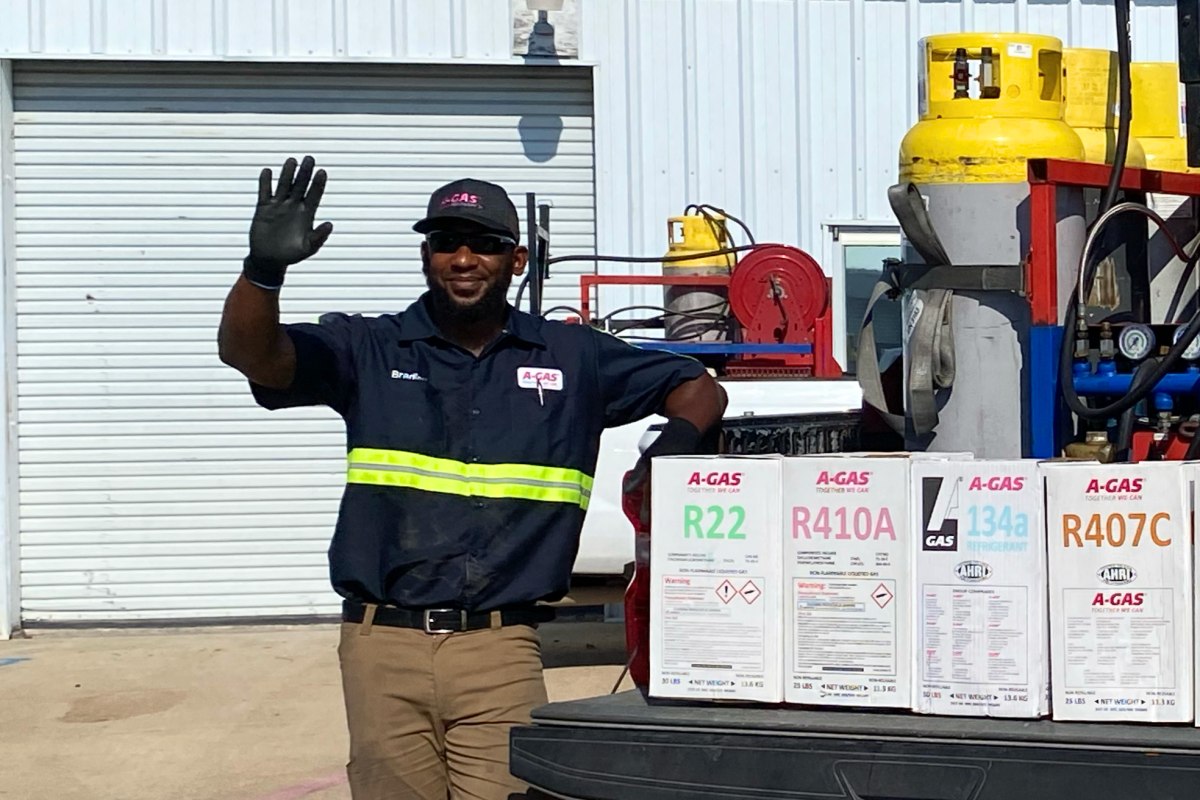
A-Gas, a company specialising in Lifecycle Refrigerant Management (LRM), has completed a major refrigerant recovery project for a global technology provider, marking a significant environmental milestone for the data centre sector. More than 73,000 lbs (33,000 kg) of R410A were safely recovered across five buildings containing 222 cooling units scheduled for decommissioning. The work, carried out under challenging summer conditions, prevented the release of greenhouse gases equivalent to 70,226 tonnes of carbon dioxide (CO₂e). The project was managed by A-Gas Rapid Recovery, the company’s on-site refrigerant recovery division, which specialises in high-speed, compliant recovery operations for commercial and industrial facilities. Environmental and operational impact A-Gas said the recovery operation demonstrated its commitment to safe and environmentally responsible refrigerant lifecycle management. The project not only reduced environmental impact, but also delivered financial benefits to the client through the A-Gas buyback programme. Rapid Recovery’s process is designed to complete complex projects quickly, with recovery speeds up to 10 times faster than conventional methods, helping reduce downtime during critical infrastructure transitions. The operation included full Environmental Protection Agency (EPA) documentation, refrigerant analysis, and regulatory compliance checks throughout. A-Gas said its approach combines global expertise with safety-first practices to help technology and data centre clients meet both operational and sustainability goals. For more from A-Gas, click here.

R&M awarded EcoVadis gold medal for sustainability
R&M, a globally active Swiss developer and provider of infrastructure for data and communications networks, has again been awarded a gold medal for sustainability by EcoVadis. The recognition places the company in the top 4% of all firms assessed globally, and in the top 3% of manufacturers in the “cables and network technologies” sector. EcoVadis evaluates companies on environmental, social, and ethical performance. According to R&M, its strongest improvements in the past year were in environmental measures, particularly in the tracking of carbon emissions and waste management. Integrating sustainability across operations R&M has said it is embedding sustainability across its business areas through its 'Connecting the Planet' programme, which covers environment, people, ethics, and circular economy. The company has introduced more detailed measurement of CO₂ emissions, as well as policies to support compliance and integrity in business practices. The EcoVadis framework assesses organisations against a set of international sustainability standards, including climate protection, labour rights, procurement, business ethics, and transparent reporting of progress. R&M CEO Dr Roger Baumann says, “EcoVadis confirms that we were able to improve slightly overall and significantly in the environmental area compared to the previous year. "The entire R&M team is proud that we were once again able to achieve gold status. The award underscores the credibility and effectiveness of our ‘Connecting the Planet’ sustainability programme.” Jonas Güresir, COO and Sustainability Officer at R&M, adds, “The renewed award is the result of exceptional teamwork. "We want to continuously develop in all facets of sustainability and contribute to the achievement of the UN Sustainable Development Goals within the scope of our capabilities as a medium-sized, family-owned company.” For more from R&M, click here.

Ramboll report outlines roadmap to sustainable data centres
A new report published by Ramboll, an architecture, engineering, and consultancy company, at Climate Week NYC sets out a strategic framework for reducing the environmental impact of data centres and achieving net zero carbon. The report, Developing sustainable data centres: A strategic roadmap to achieve net zero carbon and reduce environmental impact, provides guidance across the full value chain, with recommendations for owners, developers, operators, and consultants. It addresses key sustainability challenges including embodied and operational carbon, biodiversity, circularity, energy, and water use. Tackling operational and embodied carbon Data centres accounted for around 1.5% of global electricity consumption last year, a figure projected by the International Energy Agency (IEA) to double by 2030. Given this demand, operational carbon is the largest component of emissions. The report states that net zero operational carbon is achievable through measures such as optimised energy efficiency, renewable energy procurement, energy reuse and export, and demand response. Embodied carbon, associated with construction materials, can be reduced by using low-carbon steel and concrete, sourcing locally, and reusing materials from decommissioned buildings. Ed Ansett, Ramboll’s Global Director of Technology and Innovation, says, “The construction of data centres powered by the rise of artificial intelligence is booming across the globe, driving unprecedented demand for electricity and significantly contributing to global greenhouse gas emissions, increased water consumption, waste production, habitat destruction, and resource depletion. "These challenges can be managed and mitigated if data centres are built with climate, biodiversity, and circularity impacts in mind from the very start.” Biodiversity, circularity, and water use The report highlights the importance of integrating biodiversity into site planning, recommending ecological surveys to identify protected species and habitats at an early stage. It also calls for the involvement of landscape architects to help reduce ecological impacts. For circularity, Ramboll proposes a benchmark of 100% reuse, reusability, or recyclability of materials, with no output to landfill or incineration. Water consumption, a major concern in regions with limited supply, can be reduced by achieving water neutrality. Strategies include avoiding water-based cooling, maximising cycles of concentration, and making use of alternative sources such as rainwater. Ed continues, “There are economic benefits for data centre owners if they focus on circular practices. For instance, the sole physical byproduct of data centre energy consumption is heat, which has historically been unused and released to atmosphere. Data centres are in an excellent position to export what would otherwise be wasted energy.” For more from Ramboll, click here.

Why data centres should care about atmospheric chemistry
Data centres are multiplying to satisfy the world’s appetite for computational power, driven by AI and other emerging technologies. The outcome has been an unprecedented surge in energy demand and greenhouse gas (GHG) emissions. Here, Alexander Krajete, CEO at emissions treatment specialist Krajete, explains why data centres must look beyond their direct carbon footprint and adopt a holistic approach to multi-emission capture and valorisation: What's changed? Data centres once had a modest footprint, accounting for under 1% of global GHG emissions, according to the International Energy Agency. But rising demand from AI, streaming, and blockchain is set to more than double their energy use from 415 TWh in 2024 to 945 TWh by 2030. Some tech giants share these predictions. Google stated in its 2024 Environmental Report that “in spite of the progress we're making, we face significant challenges that we’re actively working through. In 2023, our total GHG emissions increased 13% year-over-year, primarily driven by increased data centre energy consumption and supply chain emissions.” A holistic approach to data centre sustainability Some leading tech companies claim to have purchased or generated enough renewable electricity to match 100% of their operational energy consumption. As the IEA notes, buying renewable energy or certificates doesn’t guarantee a data centre runs on clean power 24/7 due to the intermittency of renewables and potential mismatches in location or grid. A more accurate, holistic calculation also includes indirect emissions throughout the supply chain — the so-called scope three emissions. These include mining raw materials like copper, silicon, and lithium - used in a data centre’s server racks - or the production of building materials like aluminium, steel, and concrete. Complying with new sustainability regulations Although not specifically aimed at data centres, the EU’s Corporate Sustainability Reporting Directive (CSRD) requires organisations, including tech companies, to report on their sustainability performance, including scope one, two, and three emissions. In addition, in 2024, the European Commission adopted legislation specifically aimed at “establishing an EU-wide scheme to rate the sustainability of EU data centres.” To comply with these new legal obligations, data centre operators must examine their environmental footprint holistically. Why atmospheric chemistry matters to data centres Although reducing the amount of CO2 in the atmosphere remains vital, we must also address other gases that can harm our ecosystems and climate. These chemicals include nitrogen oxides (NOX), carbon monoxide (CO), hydrogen sulphide (H2S), sulphur oxides (SOX), hydrocarbons, and various metals. Once released, these gases can react with one another, leading to secondary pollutants. The consequences of these are yet to be fully understood. They originate from combustion-heavy sectors like mining, cement, and energy, all contributors to scope two and three emissions. Traditionally, there have been two ways of capturing atmospheric pollutants. Take CO2 as an example. The sacrificial method uses limestone to remove CO2 and other gases, creating non-reusable carbonates. The regenerative amine-based method produces reusable amine carbamates but emits harmful, amine-based degradation products. Advanced adsorption is a low-energy, low-emission regenerative process that captures and valorises emissions at temperatures below 100°C, far lower than the 150–200°C required for amine-based methods. Pollutant gases weakly bind to a complex inorganic filter, allowing for easy separation. It can be applied at the exhaust point of any combustion process, such as cement factory chimneys or stationary diesel engines. By supporting the adoption of advanced adsorption technology throughout their supply chains, data centres can address their scope two and three emissions more effectively and meet their sustainability goals. Multi-emission capture is the key to sustainable data centres Thanks to innovative technologies like advanced adsorption, we can go beyond capturing and neutralising pollutants like nitrogen oxides. We can also transform these emissions into valuable by-products like fertilisers, supporting a circular economy. As the world’s insatiable demand for data grows, data centres must adopt holistic sustainability strategies that withstand the test of time. Multi-emission capture must be part of the solution, enabling data centres to balance the growing need for powerful AI with the needs of our planet.

Siemens earns Platinum in EcoVadis Sustainability Rating
German multinational technology company Siemens has been awarded the Platinum medal in the 2025 EcoVadis Sustainability Rating. This achievement places Siemens among the top 1% of around 130,000 companies assessed worldwide by EcoVadis, a provider of business sustainability ratings. The Platinum medal, according to the company, "underscores Siemens' commitment to sustainability and reflects achievements across all of EcoVadis’ assessment areas: Environment, Ethics, Labour & Human Rights, and Sustainable Procurement." EcoVadis assessed Siemens with a score of 85 points. In addition, Siemens Mobility was assessed separately, achieving a score of 84 points. More than 90% of Siemens’ business enables customers to achieve a positive sustainability impact across three key areas: decarbonisation and energy efficiency, resource efficiency and circularity, and people centricity & society. “Achieving the highest-ever score and being among the top 1% of all rated companies reinforces our position as a sustainability leader and recognises the dedication of our people,” claims Eva Riesenhuber, Global Head of Sustainability at Siemens. “Sustainability is at the core of our business, and we are continuing to scale our impact in the areas of industry, infrastructure, and mobility, while empowering our customers to become more competitive, more resilient, and more sustainable.” Andreas Mehlhorn, Head of Sustainability at Siemens Mobility, adds, “Being awarded the EcoVadis Platinum medal once again is a strong testament to our leading position in the rail industry. "It reflects our commitment to integrating sustainable solutions for our customers by maintaining rigorous sustainability standards across our operations and supply chain.” The EcoVadis business sustainability rating is based on international sustainability standards, including the Ten Principles of the UN Global Compact, the International Labour Organization (ILO) conventions, the Global Reporting Initiative (GRI) standards, and ISO 26000. For more from Siemens, click here.

'AI boom triggers 160% data centre power surge'
Artificial intelligence (AI) is rapidly transforming industries from healthcare to finance, but it comes with a massive energy footprint. Data centres, the backbone of AI, consume huge amounts of power, pushing companies like Meta, Google, and Microsoft to find sustainable solutions. The complexity and scale of AI models, particularly training large neural networks, require extraordinary computational power, resulting in substantial carbon emissions. For example, maintaining optimal cooling in data centres alone adds significant energy overhead. This demand is further driven by AI technologies like autonomous vehicles and predictive analytics, which require continuous data processing. The increased energy use means more burning of coal, oil, and natural gas, which leads to higher emissions. With renewable energy not scaling fast enough, fossil fuels are still the main power source for many data centres. This reliance is especially concerning given projections that power demand in data centres will increase by 160% by 2030, with AI’s energy needs growing rapidly. Recent headlines show the scale of the challenge: Meta’s landmark 20-year deal to source nuclear power for its Illinois data centres underlines just how critical nuclear energy has become in meeting AI’s soaring electricity demand. Meanwhile, Google’s agreements to power its data centres with small nuclear reactors and Microsoft’s plans to restart the Three Mile Island plant further highlight how these tech giants are betting big on nuclear to keep AI running without ramping up carbon emissions. AI boom threatens net zero goals Data centres, the backbone of AI-powered systems, are among the most energy-intensive facilities in the world. According to the EU Energy Efficiency Directive (EED), operators must now demonstrate continual energy improvements. This directive aligns with broader regulations like the European Climate Law, which enforces the EU’s target of climate neutrality by 2050. In the UK, schemes like ESOS Phase 3 place additional energy reporting and efficiency requirements on operators. In Europe, three of the largest economies - the UK, Germany, and France - are at the forefront of efforts to decarbonise their economies and transition to net zero. However, the data centres operating within these countries are facing significant challenges in meeting their decarbonisation and sustainability targets. Recent findings from a CFP Energy survey highlight that while the majority of data centres in these countries have a net-zero strategy in place, achieving their targets remains elusive. Net zero strategy adoption • UK: 94% have a net zero strategy, but 22% are not meeting their decarbonisation and sustainability targets.• Germany: 90% have a net zero strategy, but 30% are falling short of their targets.• France: 86% have a net zero strategy, with 14% not hitting their targets. These statistics underscore a critical reality: despite ambitious targets and high adoption rates of net zero strategies, achieving actual decarbonisation is proving to be a major hurdle. This trend is particularly concerning as AI demand is poised to increase significantly. If the cost equation remains imbalanced, we may soon face a situation where net zero targets are discarded in favour of meeting the demands of AI, as is already happening in various parts of the world. The growing reliance on carbon offsetting With the rapid increase in energy demand from AI, many large tech companies, including Microsoft, are turning to carbon credits and voluntary carbon projects as a means to mitigate their environmental impact. This has become crucial for companies that simply cannot reduce their energy consumption with current technologies. For instance, Microsoft recently entered into an agreement with Re-Green, committing to offset its emissions through carbon credit purchases and climate-positive projects. While these measures help compensate for carbon emissions, they highlight a gap in current energy solutions: the technology and power infrastructure are not yet capable of fully supporting the sustainable growth of AI. Mitigating the environmental footprint of AI and data centres CFP Energy, a UK-based provider of energy trading, risk management, and environmental services, says it advocates for: • Sustainable construction — Reducing environmental impact from the outset by using low-embodied-carbon materials in data centre design, which helps cut emissions during both construction and operation. • Advanced cooling systems — Improving energy efficiency through approaches like liquid cooling, which reduce electricity usage while maintaining optimal performance in increasingly power-intensive environments. • Voluntary carbon offsetting — Compensating for unavoidable emissions with verified carbon credits. However, recent disputes - such as the suspension of a Kenyan soil-carbon project involving Netflix and Meta - reveal serious concerns about transparency, community impact, and oversight. These events highlight the need for stronger governance and ethical standards across the voluntary carbon market. • Collaboration — Developing joint solutions with governments, utilities, and technology partners - including renewable energy agreements and efficient hardware - to drive systemic progress and ensure sustainable AI infrastructure at scale. A legislative push towards sustainability The policy environment is rapidly evolving, with regulations like the Digital Operations Resilience Act and the Corporate Sustainability Reporting Directive mandating transparency on emissions and energy efficiency. Operators who fail to adapt risk falling behind, both in compliance and customer retention. Businesses increasingly prioritise sustainability, and carbon-conscious customers are gravitating towards providers with robust strategies for renewable energy adoption and operational efficiency. George Brown, Sustainability Researcher for Data Centres at CFP, comments, “The climate emergency is a clear signal for change, and we need sustainable solutions now. “While AI is driving innovation and is critical to our digital future, it - and the data centres that support it - must align with the environmental imperatives of the 21st century. "Data centres need to operate in a way that supports, rather than undermines, our environmental goals. Despite widespread net zero strategies, many data centres are failing to meet their targets. “At CFP Energy, we believe collaboration is key. Tech companies, governments, and energy providers must work together. Sustainable construction, advanced cooling, and voluntary carbon offsetting are essential. "Carbon credits are a temporary solution, but long-term investments in renewables and efficiency must accelerate. "Regulations are pushing for greater transparency and efficiency, and businesses that don’t adapt risk penalties and losing eco-conscious customers. AI’s growth must align with sustainability, and CFP Energy is committed to leading the transition. "Every stakeholder - governments, businesses, and consumers - must work together to ensure a sustainable digital landscape. Each has a role to play in ensuring that our digital future is also a sustainable one.”

Xela Energy gains approval for Hursley solar project
Xela Energy (formerly Clean Energy Capital), a UK-based provider of private-wire renewable energy systems for data centres and industrial-scale power consumers, has received full planning permission for a 5MW solar farm that will supply renewable electricity directly to IBM’s Hursley campus near Winchester, England. The project is the first in the UK to connect a data centre to a dedicated solar installation via a private-wire arrangement. The solar farm will be built on agricultural land located close to the Hursley site and will provide traceable renewable energy directly to the IBM campus. By operating independently of the UK’s main electricity grid and without reliance on government subsidies, the project is intended to contribute to national decarbonisation targets, while also helping to reduce strain on grid infrastructure and improve overall energy security. Once operational, the facility is expected to generate nearly 5 million kWh of energy per year. Over its lifetime, this is estimated to reduce CO₂ emissions by 46,000 tonnes - equivalent to planting around 60,000 trees. In addition to powering IBM’s 27,000ft² data centre, which opened in 1977, the project includes landscaping features and dedicated areas to support Biodiversity Net Gain. Xela Energy, which has a growing pipeline of private-wire schemes, describes its approach as land-led rather than consultancy-led - focusing on securing sites near large energy consumers to provide fully funded, dedicated clean energy solutions. The company develops, builds, owns, and operates each installation directly, delivering "low-cost, traceable electricity" to its clients. “This project represents a major milestone in how large power users can decarbonise with certainty, speed, and integrity,” claims Alexander Goodall, founder and CEO of Xela Energy. “It’s a blueprint for how the UK can decarbonise its most energy-intensive industries at scale. If our energy is unsustainable, so is our existence. "That’s why Xela Energy exists: to make clean, cost-effective power available directly at the point of use without waiting for policy, grid reform, or subsidies. Projects like this show we don’t have to choose between economic growth and environmental responsibility, it’s possible to have both.” The Hursley installation is set to begin construction in the coming months. It comes at a time when data centre energy demand is increasing, driven by generative AI and other high-performance computing workloads.

Allegro argues case for sustainable energy storage
As data centre expansion accelerates to meet the demands of AI, cryptocurrencies, and cloud services, Australia-based developer Allegro Energy is arguing for the relevance and applicability of its long-duration energy storage (LDES) technology in "enabling scalable, sustainable energy solutions tailored to the unique needs of modern data centres." With data centres operating on consistent, high-load profiles, they are uniquely positioned to benefit from a clean power strategy that combines renewable generation with long-duration energy storage. Allegro Energy’s modular, scalable, and environmentally-friendly battery systems, according to the company, "present a solution that overcomes the prohibitive cost, scalability, and sustainability challenges associated with traditional lithium-ion or vanadium-based systems." • Modularity & scalability — Allegro’s LDES systems are designed to grow in parallel with a data centre’s needs, allowing incremental investment and deployment. • Renewable compatibility — The system pairs with solar and wind energy, aiming to help data centres navigate grid volatility and peak pricing while advancing towards net zero carbon targets. • Climate-friendly storage chemistry — The water-based electrolyte technology is not resource-constrained, hoping to offer a low-impact alternative that can be deployed at scale. “The exponential growth of generative AI, cloud computing, and digital services has made energy a critical chokepoint in data infrastructure,” says Thomas Nann, CEO of Allegro Energy. “We believe the future of high-performance computing does not need to come at the cost of the planet. With our technology, data centres can be powered entirely by renewables, supported by reliable, cost-effective long-duration storage.” Allegro Energy’s proprietary, locally manufactured micro-emulsion electrolyte technology eliminates the need for scarce or rare metals, reducing fire risk and allowing for extended storage durations at a lower cost.

Digital Realty adopts PPC’s energy matching programme
Digital Realty, a provider of cloud- and carrier-neutral data centre, colocation, and interconnection systems, today announced that it has adopted PPC’s 24/7 hourly renewable energy matching programme to power its three highly-connected data centres in Athens, Greece, with clear, real-time matched clean electricity. The initiative builds on the company’s existing 24/7 energy matching programmes in France and Sweden and supports improved transparency and reporting of renewable energy use. The programme, provided by PPC, Southeast Europe’s largest electric utility group, has been designed to help large corporate customers accurately trace and report their clean energy usage. Leveraging PPC’s renewable energy assets and digital tracking tools, the programme seeks to enable businesses to verify both the source and the time of clean electricity consumption on an hourly basis. The service includes the full management of Guarantees of Origin (GOs) and uses software from Granular Energy to enable real-time tracking of renewable energy generation and associated carbon emissions. It aims to "empower customers to credibly report Scope 2 emissions and progress towards net zero targets." Digital Realty’s participation represents a sizeable deployment of hourly energy matching in the region, helping to support the development of a more resilient and decarbonised power grid. By matching renewable energy generation and consumption in real time, the programme aims to create clearer signals for investment in clean energy technologies and infrastructure. “This programme with PPC strengthens our commitment to transparent and data-driven energy sourcing,” comments Alexandros Bechrakis, Managing Director, Digital Realty in Greece. “It helps us support our customers’ renewable energy goals with credible, hourly-matched clean electricity – delivering greater visibility into how and when clean energy is being used across their digital infrastructure.” “At PPC, we are shaping the future of energy by enabling our clients to lead with credibility in a carbon-free economy,” claims Angelos Spanos, Chief Marketing & Products Officer at PPC. “Through 24/7 carbon-free energy hourly matching, we provide our corporate customers with verified, real-time insights into their renewable energy consumption. "This collaboration with Digital Realty demonstrates how forward-looking energy solutions can accelerate the clean energy transition for entire industries.” The programme, according to Digital Realty, supports the company’s science-based targets for carbon emissions reduction and aligns with its broader sustainability strategy, which includes a commitment to carbon neutrality across its data centre operations and value chain. As part of this strategy, Digital Realty already matches 100% of the electricity used across its entire European portfolio with renewable energy. For more from Digital Realty, click here.

Aligned’s Phoenix data centre earns Three Green Globes
Aligned Data Centers, a technology infrastructure company, has announced its latest Phoenix data centre to receive the Green Globes for New Construction certification from the Green Building Initiative (GBI). Aligned’s PHX-06 data centre received a rating of Three Green Globes for its success in resource efficiency, environmental impact reduction, and improvements in occupant wellness. “As the global demand for AI and high-performance computing continues to accelerate, we’re continuously looking for new ways to increase the efficiency and sustainability of our data centres, even as we keep pace with and anticipate the growth of that demand,” states Andrew Schaap, CEO of Aligned. “GBI's third-party review of PHX-06 resulted in an award of [the] Three Green Globes certification, which is a testament to our relentless pursuit of sustainable excellence. "This recognition not only validates the exceptionally high standards we set for environmentally responsible design and construction, but also underscores our unmatched speed of delivery, which enables massive, future-proof scalability across the Americas. Despite continuous innovation and ever-higher standards, Aligned remains the highest certifying data centre in the programme.” Aligned's Three Green Globes achievement for PHX-06 was driven by factors like reduced water usage, efficient cooling, and 100% renewable power. Another contributing factor to its certification is the company’s Adaptive Modular Infrastructure (AMI), which uses standardised, prefabricated modules for various building components. AMI seeks to sustainably accelerate deployment timelines and minimise waste by relying on repeatable manufacturing processes that produce fewer components and cut down on Scope 3 emissions through reduced onsite construction. “Achieving this level of sustainability is an outstanding accomplishment and Aligned should be proud of the strategies applied to the design and construction of this facility,” comments Vicki Worden, GBI CEO. “We look to data centre owner-operators to be responsible stewards of the planet’s resources, and Aligned continues to demonstrate its leadership in sustainability with its exceptional outcomes in energy efficiency, water conservation, carbon emissions reduction, and occupant health.” Founded in 2004, GBI is an international nonprofit organisation and American National Standards Institute (ANSI) Accredited Standards Developer dedicated to improving the built environment’s impact on climate and society. GBI’s Green Globes third-party certification process involves a design and onsite assessment, evaluating environmental assessment areas including project management, site, energy, water, resources, emissions, and indoor environment. For more from Aligned, click here.


Translate »