Sustainable Infrastructure: Building Resilient, Low-Carbon Projects


Equinix, A2A to heat Milan via district heating
Equinix, a US global data centre and interconnection services provider, and A2A, Italy’s second-largest energy operator, have announced a partnership to recover waste heat from a data centre campus near Milan and use it to supply the city's district heating network. The project will recover heat generated by servers at Equinix's campus in Settimo Milanese and transfer it to a new energy centre developed by A2A. The recovered heat will then be used to provide heating across parts of Milan. Equinix will design and manage the system used to export heat from the campus, working with customers whose IT equipment generates the thermal energy. A2A's new energy centre will use four large-scale heat pumps with a combined capacity of 72MW, together with two thermal storage systems capable of storing 6,000m³ of water. The facility will connect to Milan's district heating network via dedicated heat transport infrastructure. Once fully operational, the project is expected to recover up to 225GWh of thermal energy each year. According to the companies, this will increase the amount of heat distributed through A2A's district heating network by around 20%, providing enough energy to heat more than 21,000 homes. The partners also estimate the scheme will avoid more than 345,000 tonnes of CO₂ emissions. Heat recovery supports district heating expansion As part of the project, A2A will expand Milan's district heating network, enabling recovered heat from the data centre to be supplied across a wider area of the city, including the Duomo and Palazzo Reale, which are already connected to the network. Adaire Fox-Martin, CEO and President of Equinix, comments, "Equinix has a long and proud history of aligning the needs of our business with the needs of the communities we call home. "Our collaboration with A2A is a clear example of how essential digital infrastructure and local sustainability goals can work in service of each other. By putting thermal energy from our operations to use for local homes and residents, we're eliminating waste and moving Milan towards a low-carbon future." Emanuela Grandi, Managing Director of Equinix Italy, adds, "Excess heat is a by-product of the processing power required for digital transformation and AI, but when we redistribute it to the areas surrounding our data centres, we can create tremendous value for our communities while reducing the overall energy needed to heat the area. "We are very proud of the efforts and achievements Equinix has done in blazing a trail for data centre heat export in Europe and we're applying learnings from our successes to our efforts in Italy. "By scale, this initiative in Italy is expected to become among the largest data centre heat export projects in Europe outside the Nordics." Renato Mazzoncini, CEO of A2A, concludes, "Data centres are strategic infrastructure for the competitiveness of the country and for supporting the digital transformation of the economy. "Their growth requires models capable of combining technological innovation, energy efficiency, and environmental sustainability. From this perspective, heat recovery is a key lever for maximising the value of digital hubs and accelerating the decarbonisation of cities. "The collaboration with Equinix is fully aligned with our strategy to develop an integrated ecosystem where energy, infrastructure, and innovation operate synergistically." The companies say the partnership forms part of wider efforts to support the decarbonisation of urban energy systems through the reuse of waste heat generated by digital infrastructure. For more from Equinix, click here.

EUDCA reaffirms sustainability commitment
The European Data Centre Association (EUDCA), the representative body of the European data centre community, has reaffirmed its commitment to supporting climate-neutral data centres and the sustainable growth of Europe's digital infrastructure. The organisation says it remains focused on developing a digital economy that balances increasing demand for digital services with environmental sustainability and closer integration with Europe's energy system. Founded in 2012, the EUDCA works with the data centre industry, policymakers, and other stakeholders to support the development of Europe's digital infrastructure. As a co-founder of the Climate Neutral Data Centre Pact, the association has committed to helping the sector achieve climate neutrality by 2030. This includes improving energy efficiency, increasing the use of renewable energy, reducing water consumption, supporting circular economy initiatives, and encouraging the reuse of waste heat. Over recent years, the EUDCA has worked with the European Commission and industry partners on policies intended to support both digital infrastructure growth and environmental objectives. Energy integration and grid capacity On 3 June 2026, the EUDCA joined the European Commission, Commissioner Dan Jørgensen, and organisations from across the energy sector in signing a Declaration of Intent to support the sustainable integration of data centres into the European energy system. The declaration highlights the need for reliable low-carbon electricity, closer collaboration between data centre operators, grid operators, and public authorities, and a stable regulatory environment to support future investment. The association also says that expanding Europe's digital infrastructure will depend on addressing wider challenges within the electricity system, including reinforcing transmission and distribution networks, streamlining planning and permitting processes, and improving access to low-carbon electricity. Michael Winterson, Secretary General of the EUDCA, comments, "We reaffirm our commitment to sustainability, irrespective of technological developments or changing demands. A liveable, equitable, and sustainable future remains our utmost goal." The EUDCA's annual State of European Data Centres report also tracks the sector's sustainability and environmental, social, and governance (ESG) performance using member data and information collected under the European Energy Efficiency Directive. For more from the EUDCA, click here.

Global cities launch sustainable data centre pact
Cities from around the world have launched the Global Urban Data Centres Pact, a new initiative aimed at supporting sustainable data centre development in urban areas. Announced during London Climate Action Week, the pact brings together 38 cities across six continents, including London, Barcelona, Johannesburg, Miami, Melbourne, Phoenix, and Rio de Janeiro. The founding signatories represent a combined population of almost 90 million people. The agreement comes as demand for data centres continues to grow, driven in part by the expansion of artificial intelligence and digital services. City leaders say the pact is intended to help balance economic growth with concerns around energy use, water consumption, heat generation, and pressure on local infrastructure. The initiative sets out a framework for how cities, developers, investors, and operators can work together to support data centre growth whilst addressing environmental and community considerations. Cities seek sustainable approach to data centre growth Under the pact, signatories support data centres that are strategically integrated into cities, resource efficient, engaged with local communities, and capable of delivering wider economic benefits. The agreement also highlights examples of measures already being adopted in different regions, including heat reuse projects, water-conscious cooling systems, the use of renewable energy, and initiatives that direct investment towards local priorities. Kate Gallego, Mayor of Phoenix and Vice Chair of C40 Cities, says, "While data centres can power important advancements, rapid growth also brings important responsibilities. Residents expect local leaders to ensure development is planned carefully, infrastructure keeps pace, and surrounding communities share in the benefits." Nicholas Reece, Lord Mayor of Melbourne and Vice Chair of C40 Cities, adds, "Local communities should be involved in decisions that affect them, which means growth must be matched by responsible planning, sustainable resource use, and genuine community benefits." Sadiq Khan, Mayor of London and Co-Chair of C40 Cities, notes, "AI and digital infrastructure will play a major role in the future prosperity of cities around the world, but residents are right to expect growth to be managed responsibly." Additional support for the initiative has come from cities including Athens, Chicago, and Seattle, whose leaders highlighted the importance of managing the impacts of data centre development on energy systems, water resources, land use, and local communities. Framework developed ahead of continued sector growth According to the pact's organisers, global data centre capacity is expected to increase significantly over the coming decade, with much of that growth concentrated in urban areas. The agreement calls for greater collaboration between local authorities, national governments, and the private sector to ensure future data centre developments align with sustainability goals and community needs. Cristina Gamboa, CEO of the World Green Building Council, concludes, "Data centres are not just buildings; they are major, long-term consumers of critical urban resources, and the decisions being made today about these AI factories will shape local energy systems, water supplies, and communities for decades to come." Further city endorsements are expected ahead of COP31, as the initiative seeks to establish a shared approach to sustainable urban data centre development.

Experts urge sustainable requirements for new developments
Industry experts are calling on the UK Government to introduce stronger sustainability requirements for new data centre developments, following reports that the sector's future energy demand could exceed previous forecasts. The comments follow a report by The Times suggesting that growing demand from data centres could significantly increase national electricity consumption, driven in part by the rapid expansion of AI infrastructure. Concerns have also been raised over proposals for some large-scale developments to build dedicated gas-fired power generation to overcome grid capacity constraints. David Woon, Head of Net Zero Engineering and Operations at Ennovus Solutions, says, “The figures for the expected energy demand of data centres are staggering, but immediately pivoting to new gas power stations is incredibly disappointing. "The space and resources required to build a new gas power plant could almost certainly be used instead for significant renewable generation development - ideally utilising wind turbines to better match the consistent, 24/7 energy demand of these facilities. “While on-site renewables may not provide 100% of the baseline power required by these data centres, a forward-thinking country aiming for energy independence and climate mitigation should jump at the chance to integrate green generation directly into planning permissions. "We already mandate solar panels on new-build homes; why are we not implementing similar, strict sustainable development mandates for industrial-scale data centres? “Furthermore, as the Government considers mandating grid ‘flexibility’ from operators, we must look beyond standard battery technologies like lithium-ion. Long-standing, energy-hungry data centres need a technology that matches their requirements, like Vanadium Flow batteries. They are suited to large energy demand projects, provide up to double the lifespan of lithium-ion, experience no degradation, and avoid environmentally hazardous, scarce materials like cobalt and lithium. "If battery storage is on the table to support the National Grid, it is nonsensical not to bring on-site renewable generation into the exact same conversation.” Grid constraints remain a major challenge Lee Ackerman, Utilities General Manager at Connectus Utilities, adds that while infrastructure upgrades are possible, they are likely to require significant investment and lengthy delivery timescales. He says, “The reality is that, while resolving these infrastructure bottlenecks is physically possible, it carries massive cost and time implications. "The National Energy System Operator (NESO) and Ofgem have transitioned the grid from a ‘first come, first served’ model to a ‘first ready and needed, first connected’ approach. "While major structural upgrades, new on-shore power lines, and smart grid sensors are scheduled for rollout between 2026 and 2028, there is an immense amount of work to do before we see true grid relief by 2030. “Every utility connection faces identical hurdles: cable lengths, land access, and complex legal processes. It’s not just an electricity problem either; data centres require major water capacity for cooling. “Developers could and should be targeting the Environmental Discounts offered in Water Charging Statements, aiming for Tier 2 or Tier 3 water neutrality incentives through advanced rainwater harvesting and greywater recycling. "Some might argue that technology will naturally become more efficient over time, but history shows that as components shrink, developers simply pack more technology into the same footprint. The energy demand isn’t going to drop on its own; we must build [in] sustainability from day one.” The comments highlight growing debate around how future AI and data centre infrastructure should be powered, with industry figures calling for greater emphasis on renewable energy generation, long-duration energy storage, water efficiency, and sustainable design principles during the planning process.

Pure DC completes cross-border biomethane deal
Pure Data Centres Group (Pure DC), a designer, developer, and operator of hyperscale data centres, has completed what it describes as Europe's first large-scale cross-border biomethane purchase for a data centre, transferring 9GWh of certified biomethane from Germany to the Irish gas network. The transaction follows a proof-of-concept project announced in March 2026 and represents a significant increase in scale. According to Pure DC, the deal demonstrates that biomethane can be used to support the decarbonisation of gas-connected data centres through existing energy infrastructure and certification frameworks. The biomethane was produced in Germany during 2025 using waste and residue feedstocks. The fuel is certified under the International Sustainability and Carbon Certification (ISCC) scheme and complies with the requirements of the Renewable Energy Directive (RED) II and RED III. Pure DC says the biomethane has a carbon intensity of less than 12gCO₂/MJ, meeting thresholds required for zero-rated treatment under the EU Emissions Trading System, subject to approval of monitoring plans by the relevant authorities. The gas was mass balanced from the German network to Ireland through existing interconnectors, with renewable attributes tracked through the Gas Networks Ireland (GNI) Renewable Gas Registry. Biomethane forms part of wider net zero strategy Pure DC says renewable gas is intended to act as a transitional measure within its broader strategy to achieve net zero emissions by 2040. The company is continuing to pursue biomethane procurement from Irish, European, and UK sources while also developing longer-term initiatives including renewable energy integration, energy storage, and efficiency improvements. Ireland's National Biomethane Strategy targets production of up to 5.7TWh of domestic biomethane annually by 2030. While local production capacity continues to develop, imports can help meet demand through existing gas infrastructure and certification systems. Maria Jose Rivas Duarte, Director of Sustainability at Pure DC, says, "This milestone supports Ireland’s Climate Action Plan and aligns with the LEU policy, under which data centres must meet at least 80% of their annual energy demand with additional renewable electricity. "By demonstrating that cross-border biomethane can be procured, mass balanced, and registered at volume through existing infrastructure, we are helping to pave the way for broader data centre sector adoption as well as other industries seeking a credible route to decarbonise natural gas." Pure DC says the transaction forms part of a strategy to develop a diversified biomethane portfolio spanning multiple geographies, feedstocks, and supply arrangements. Agnes Warner, Property Director at Pure DC, says, "Our biomethane procurement strategy is designed to build a balanced portfolio that provides long-term security and credibility. "For our customers, this means a demonstrable, auditable pathway to lower embedded emissions, making our platform more attractive to hyperscalers and enterprise customers while supporting their sustainability commitments." For more from Pure DC, click here.

Pure DC launches carbon removal platform
A Healthier Earth (AHE), the climate technology research and development subsidiary of Pure Data Centres Group (Pure DC), has launched a carbon removal platform designed to increase the availability of biochar-based carbon removal credits for hyperscale operators, enterprises, and institutional buyers. According to AHE, the platform combines carbon removal project development, financing, governance, and verification within a single framework. The company says the initiative is intended to address challenges associated with the fragmented nature of the current carbon removal market. The launch comes as demand for carbon removal projects increases alongside broader corporate decarbonisation targets and continued investment in AI infrastructure. Gary Wojtaszek, Executive Chairman and interim CEO of Pure DC, comments, “What we’re doing at Pure DC is the first of its kind anywhere in the world. "In Dublin, we’ve demonstrated that net zero carbon, self-powered data centres are deliverable. Now, with our Biochar Integrated Carbon Removal from AHE, we’re making them scalable. “This isn’t incremental improvement; it’s a complete reset of how this sector will be built going forwards.” AHE says it is expanding its commercial, scientific, and operational capabilities to support the development of the platform as it moves from individual projects towards a longer-term operating model. Platform combines carbon removal projects and verification According to AHE, the platform combines company-owned production facilities with partner-developed projects, operating under a common governance structure and technical standards. All carbon removal credits generated through the platform will be certified under the Isometric Standard and supported by digital monitoring, reporting, and verification technology from Mangrove Systems. The company says this approach is intended to provide buyers with greater consistency, transparency, and traceability across carbon removal projects. Lukas May, Chief Commercial Officer at Isometric, states, “The data centre sector needs scalable, high-quality carbon removal and the confidence that every credit represents genuine climate impact. We’re looking forward to working with A Healthier Earth to deliver on that mission.” Brandon Vlaar, CEO of Mangrove Systems, adds, “We’re proud to be chosen as AHE’s digital data infrastructure partner, combining automation and AI-enabled tools to ensure every tonne of carbon removed through the platform is measured, accurate, and verified.” Carbon removal linked to data centre decarbonisation plans Pure DC says the platform forms part of its wider decarbonisation strategy and will support discussions with hyperscale customers and other organisations seeking to address residual emissions alongside energy efficiency measures. According to the company, the platform is designed to complement carbon reduction initiatives across its data centre campuses while providing customers with access to independently verified carbon removal projects. AHE says the framework has been developed to provide long-term access to carbon removal credits while maintaining oversight through centralised governance, verification processes, and project monitoring. For more from Pure DC, click here.

GreenScale study examines data centre energy use
GreenScale, a developer of hyperscale data centre campuses, has published analysis examining how a proposed data centre development in Derry/Londonderry could support renewable energy use and reduce electricity system costs in Northern Ireland. The whitepaper analyses grid constraints, renewable energy curtailment, electricity demand, and infrastructure capacity across the region. According to the report, locating data centre infrastructure closer to renewable energy generation in Northern Ireland’s North West could improve grid utilisation and reduce renewable energy wastage. Northern Ireland is targeting 80% renewable electricity consumption by 2030, with the transition projected to deliver annual consumer savings of approximately £110 million. Brian Doherty, Managing Director of GreenScale Ireland, says, “This whitepaper highlights a growing mismatch between where renewable energy is generated and where demand is located. "Northern Ireland has made strong progress in expanding wind capacity, but transmission and system constraints mean a significant proportion of that clean energy is curtailed, which means it is effectively switched off, often during periods of high generation. "This increases system costs and reduces the value of existing infrastructure. A strategically located data centre campus in the North West could help absorb surplus power, reduce curtailment, and support lower overall electricity system costs.” Wind curtailment remains a major challenge The report states that 29.6% of wind generation in Northern Ireland was curtailed during 2024 because of transmission constraints and electricity system balancing requirements. According to the analysis, the strongest wind generation resources are concentrated in the North West, while the largest areas of electricity demand are located elsewhere. The report argues that this imbalance limits the effective use of renewable generation during periods of high wind output. GreenScale says flexible electricity demand from data centres could help absorb excess renewable generation that would otherwise be curtailed. The company also states that facilities capable of adjusting parts of their power demand in response to grid conditions could improve overall electricity system efficiency. Pressure grows on established data centre markets The whitepaper also highlights wider growth in global data centre electricity demand, which is projected to reach 945TWh by 2030. The report notes that established European data centre markets including Frankfurt, London, Amsterdam, Paris, and Dublin (FLAP-D) are facing increasing grid constraints and longer connection timelines, leading operators to consider alternative regions with greater power availability. GreenScale identifies Northern Ireland’s North West as a suitable location for future data centre infrastructure because of its wind generation resources, available land, and proximity to renewable energy supply. The report concludes that improving alignment between renewable generation and electricity demand could reduce energy wastage, improve grid efficiency, and support Northern Ireland’s clean energy targets. For more from GreenScale, click here.

Case study: Reducing emissions through refrigerant recovery
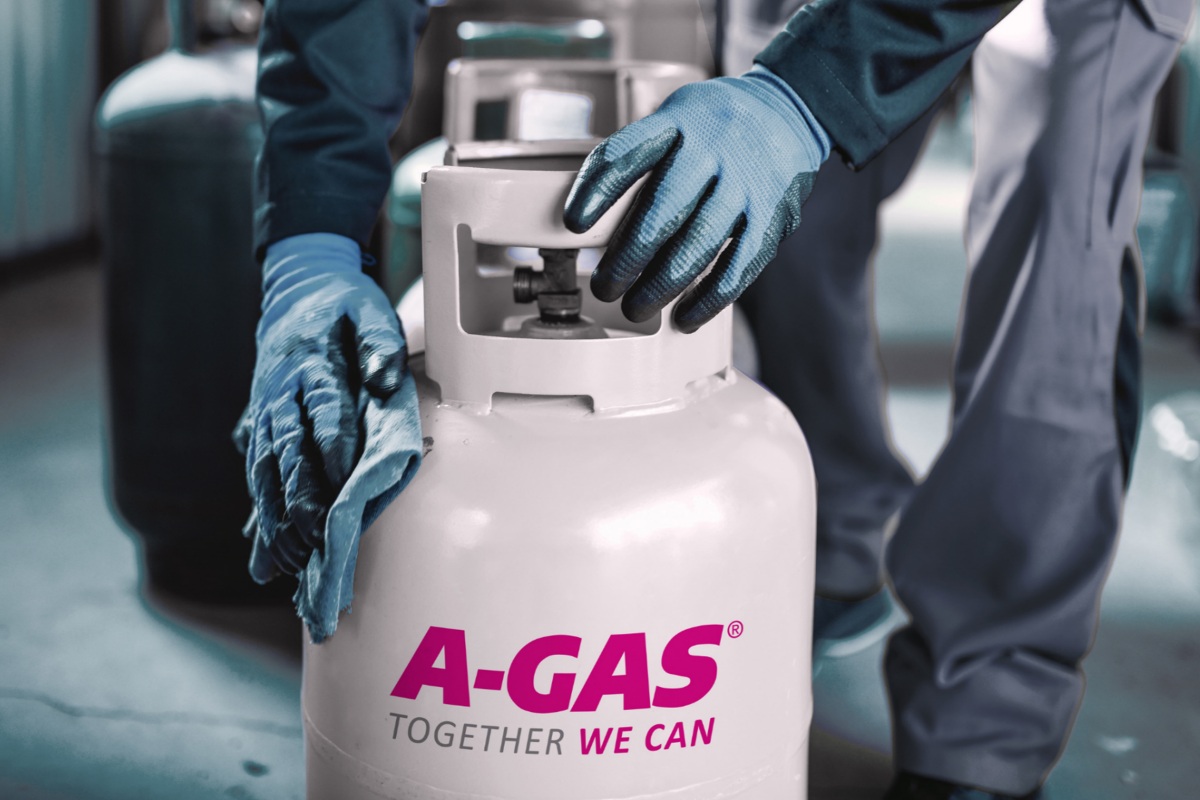
Through this case study, A‑Gas, a company specialising in lifecycle refrigerant management (LRM), demonstrates how its Rapid Recovery service enabled the safe, fast recovery and AHRI‑700 reclamation of 1,745 kg of R134a during a London data centre chiller retrofit, preventing 2,495 tonnes CO₂e, maintaining continuous operations, and enabling a successful transition to lower‑GWP cooling. The background The customer is a leading technology solutions and services provider in Europe, headquartered in the United Kingdom. It offers a broad portfolio of products and services, including data centre hosting, enterprise infrastructure, and cloud infrastructure, among others. The company, A‑Gas, is building a sustainable future through the supply of lower global warming refrigerants combined with responsible lifecycle management of refrigerant gases. Through its first-class recovery, reclamation, and repurposing processes, it captures refrigerants and fire protection gases for future re-use or safe destruction, preventing harmful release into the atmosphere. The offering, Rapid Recovery, is A-Gas’s premier refrigerant recovery service. Across the globe, it provides a safe and fast onsite solution, which includes what the company calls industry-leading F-Gas documentation. The challenge A-Gas was engaged by a digital infrastructure provider operating an edge data centre in London to support the recovery of refrigerant and assist in the transition to a lower GWP solution. The A-Gas Rapid Recovery team was contracted to recover a significant volume of R134a from four chillers scheduled for decommissioning. These units were being replaced as part of a retrofit project involving the installation of new cooling equipment with a substantially lower GWP. The solution A-Gas Rapid Recovery, an onsite refrigerant recovery service that operates up to 10 times faster than traditional methods, was appointed to assist with recovering the high GWP gas used at the data centre. The Rapid Recovery equipment is fully independent of external services (such as power), is portable, and is capable of reaching units across distances exceeding 300 feet (91 metres) through flexible hoses, making it ideal for challenging locations. This innovative solution proved perfect for the complex retrofit project, where efficiency was paramount. A-Gas’s team of certified F-Gas engineers managed the full recovery process, enabling contractors to focus on other critical aspects of the retrofit, ensuring streamlined and timely project completion. The results Over a four-day period, the A-Gas Rapid Recovery team successfully recovered 1,745 kg of R134a refrigerant, preventing the equivalent of 2,495 tonnes of CO₂e emissions. In addition, new chillers with a lower GWP were installed, significantly reducing the Total Equivalent Warming Impact (TEWI) of the cooling systems. A-Gas’s quick and efficient refrigerant recovery process ensured the project was executed without disruption to data centre operations, maintaining continuous service to customers and uninterrupted data security. The conclusion The recovered refrigerant was reclaimed to AHRI 700 standards, ready for safe reuse in the market. By ensuring full recovery and reclamation, A-Gas mitigated emissions from both leaks and the production of new refrigerants, supporting the principles of the circular economy, combining environmental protection with operational continuity. For more from A-Gas, click here.

Deep Green partners with Zendo on renewable data centres
British digital infrastructure company Deep Green has partnered with Zendo Energy, a London-based startup building an AI-powered energy management platform, to support a "new generation" of AI-ready data centres powered by renewable energy and energy management technology. The partnership begins at Deep Green’s 400kW site in Urmston, Greater Manchester, where Zendo has secured a renewable energy supply contract for the facility. Designed for high-performance computing and AI workloads, the Urmston site supports rack densities of up to 150kW. Waste heat generated by the servers is captured and reused to heat the swimming pool at Trafford Leisure Centre. According to Deep Green, the heat reuse system is expected to save the leisure centre around £80,000 annually while reducing carbon emissions. The company’s approach centres on deploying modular data centres close to facilities that can use recovered heat, including swimming pools, district heating networks, and public buildings. Renewable energy aiding modular data centre expansion Deep Green says demand for AI infrastructure continues to increase, while grid limitations and planning delays remain challenges for UK data centre developments. The company says its modular deployment model allows new capacity to be brought online more quickly than traditional developments. Through the partnership, Zendo will provide energy monitoring, forecasting, and capacity optimisation using its Energy OS platform. Renewable power for the Urmston facility, in particular, will be supplied by ENGIE. Hazel Lim, Chief Financial Officer at Deep Green, says, “Zendo has been a strong partner in shaping our power procurement strategy for our data centres. "We are excited to draw on their expertise to develop a highly efficient, cost-effective approach that maximises value for our colocation clients by fully capturing the advantages of heat reuse.” Drew Barrett, COO and co-founder of Zendo Energy, adds, “Deep Green has an ambitious vision to accelerate data centre deployments at pace, and we're proud to be the energy technology partner making sure energy is never the bottleneck. “The flexibility we've built into this contract is designed to grow alongside their trajectory, and we see this as a blueprint for what the next generation of data centres should look like: flexible, sustainable, and built for scale.” For more from Deep Green, click here.

Design strategies for efficient, high-performance data centres
The rapid expansion of artificial intelligence workloads is placing unprecedented demands on data centre infrastructure. As computer densities increase and operational expectations tighten, the need to balance performance with energy efficiency and carbon reduction has become more urgent. This shift is driving a re-evaluation of how data centres are designed, particularly in relation to cooling strategies and overall resource use. Data centres are now a critical component of global infrastructure, supporting cloud services, digital platforms, and AI applications. With increasing digitalisation, energy consumption associated with these facilities continues to rise. In the UK and globally, regulatory and market pressures are also evolving, with greater emphasis on energy performance, carbon reporting, and long-term sustainability targets. Within this context, various industry reports are suggesting that: • Data centres are estimated to account for approximately 1–1.5% of global electricity consumption• High-density AI workloads can exceed 30–80 kW per rack, significantly increasing cooling demand• Leading facilities are targeting power usage effectiveness (PUE) values of 1.2 or lower Efficient cooling system strategies As computational loads increase, cooling systems are under growing pressure to maintain stable operating conditions without excessive energy use. Traditional approaches that rely heavily on mechanical cooling are becoming less viable due to their high energy intensity. This challenge affects operators, developers, and designers, particularly as expectations around efficiency and environmental performance continue to rise. BSE|3D, a UK building services engineering and consultancy practice, says it works with organisations navigating these challenges by applying a performance-led design approach from the earliest project stages. The company notes that it has observed that early integration of simulation tools allows for more effective alignment between building form, system design, and operational performance. Solutions that focus on reducing cooling demand at source while optimising system efficiency can significantly improve outcomes. This includes evaluating environmental conditions, refining building parameters, and developing strategies that prioritise low-energy operation. A key approach involves enabling a cooling profile where approximately 70% of annual demand can be met through low-energy systems such as economisation and adiabatic processes, with mechanical systems supporting peak conditions and operational resilience. This reduces reliance on continuous compressor use and supports improved overall performance. Kriti Gupta, Sustainability Consultant at BSE|3D, explains, “As data centre loads continue to increase, the industry needs to move beyond conventional cooling approaches. By prioritising low-energy strategies and validating them through simulation, it is possible to reduce energy demand while maintaining performance and resilience. Early-stage design decisions play a critical role in achieving this balance.” Data centres are expected to play an increasingly significant role in supporting digital infrastructure. As their impact grows, so too does the importance of designing them in a way that responds to both operational requirements and environmental considerations.


Translate »