Data Centre Projects: Infrastructure Builds, Innovations & Updates


Duos Edge AI expands Amarillo data centre footprint
Duos Technologies Group, through its subsidiary, Duos Edge AI, a provider of edge data centre (EDC) systems, has deployed a second EDC in the Amarillo, Texas market. The carrier-neutral facility is located on land in Potter County, adjacent to a major colocation site in the Texas Panhandle. It is designed to support regional demand for low-latency computing, including AI applications, enterprise workloads, and public sector services. The deployment builds on the company’s initial Amarillo site and forms part of a wider expansion across Texas, with additional locations in Lubbock, Waco, Victoria, Abilene, and Corpus Christi. The facility is designed to provide local processing capacity, reducing reliance on data centres in larger metropolitan areas and supporting improved network performance. Regional expansion and edge infrastructure strategy Duos Edge AI says the site will deliver high-density computing, increased bandwidth availability, and secure data processing capabilities for organisations operating in the region. The expansion reflects a broader strategy to develop edge infrastructure in underserved and high-growth markets. Dave Irek, Chief Operations Officer at Duos Edge AI, says, “This expansion enhances capacity and capability in the region. We are creating a robust, carrier-neutral ecosystem designed to support innovation, attract investment, and drive long-term economic growth.” Potter County Judge Nancy Tanner adds, “This collaboration with Duos Edge AI represents a significant investment in our community's future. [It] will attract new businesses, improve connectivity for our residents and schools, and position Potter County as a leader in digital infrastructure.” The new facility is expected to become operational in the coming months. For more from Duos Edge AI, click here.

Nscale, Microsoft partner on large-scale campus in West Virginia
Nscale, a UK developer of AI data centres and cloud infrastructure, has signed a letter of intent with Microsoft to deliver 1.35GW of AI compute capacity at the Monarch AI campus in West Virginia, in collaboration with NVIDIA and Caterpillar. The development will deploy NVIDIA’s next-generation Vera Rubin NVL72 GPU systems, based on the NVIDIA DSX AI Factory reference design, with the undertaking expected to begin in phases from late 2027. In addition to this news, Nscale has also announced the acquisition of American Intelligence & Power Corporation (AIPCorp), which includes the Monarch Compute Campus in Mason County. The site spans up to 2,250 acres (9.1 km²) and is designed as a state-certified AI microgrid, with the potential to scale beyond 8GW of power capacity. Hyperscale AI infrastructure and power integration Under the agreement, Nscale will construct and operate the data centre infrastructure, with Microsoft supporting long-term compute services and lease arrangements. The campus is intended to support large-scale AI training and inference workloads, with high-speed connectivity to major US data centre hubs, including Ashburn and Chicago. As part of the project, Caterpillar will supply G3500 series natural gas generator sets, with plans to deliver up to 2GW of on-site power generation by the first half of 2028. The microgrid design enables the facility to operate independently of the local grid, while also allowing for potential future grid integration. The development reflects increasing demand for AI-driven data centre capacity, with industry forecasts indicating significant growth in global power requirements over the coming years. The Monarch campus is expected to build on Nscale’s existing capacity and support expansion of large-scale AI infrastructure in the US. For more from Nscale, click here.

Pure DC, AVK deploy 'Europe’s first' data centre microgrid
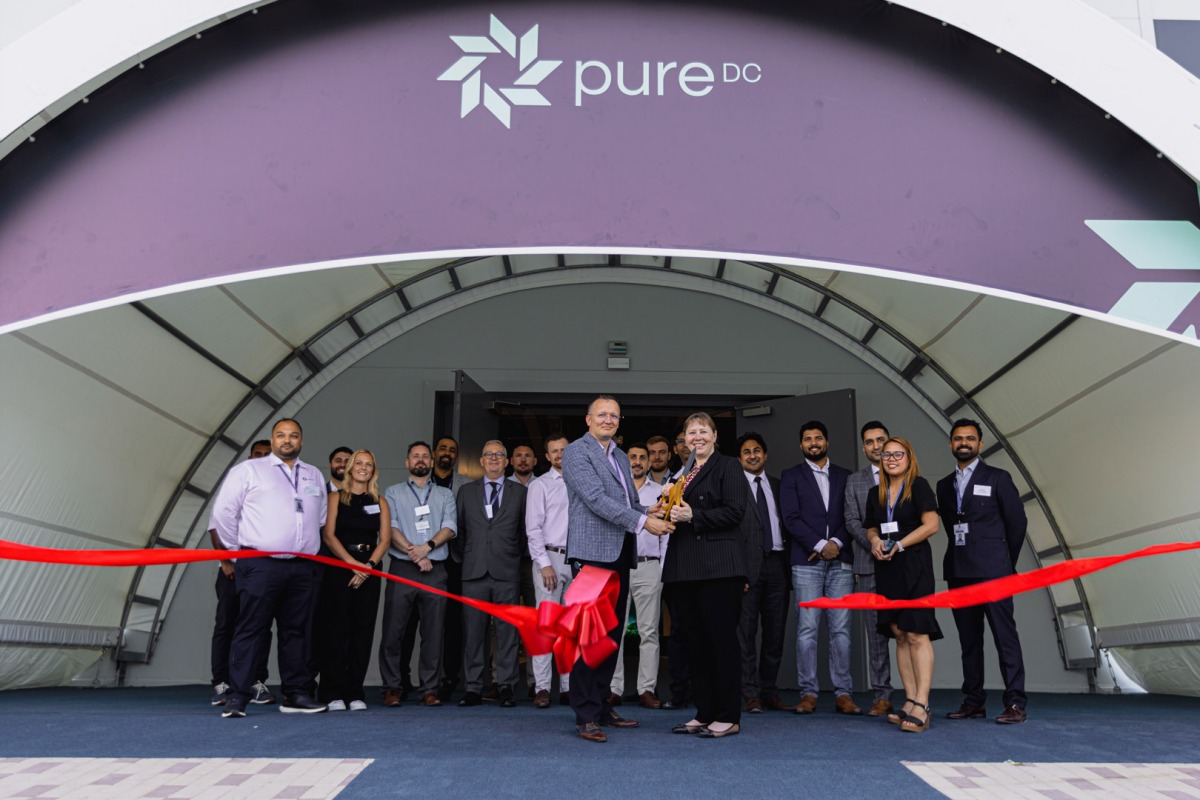
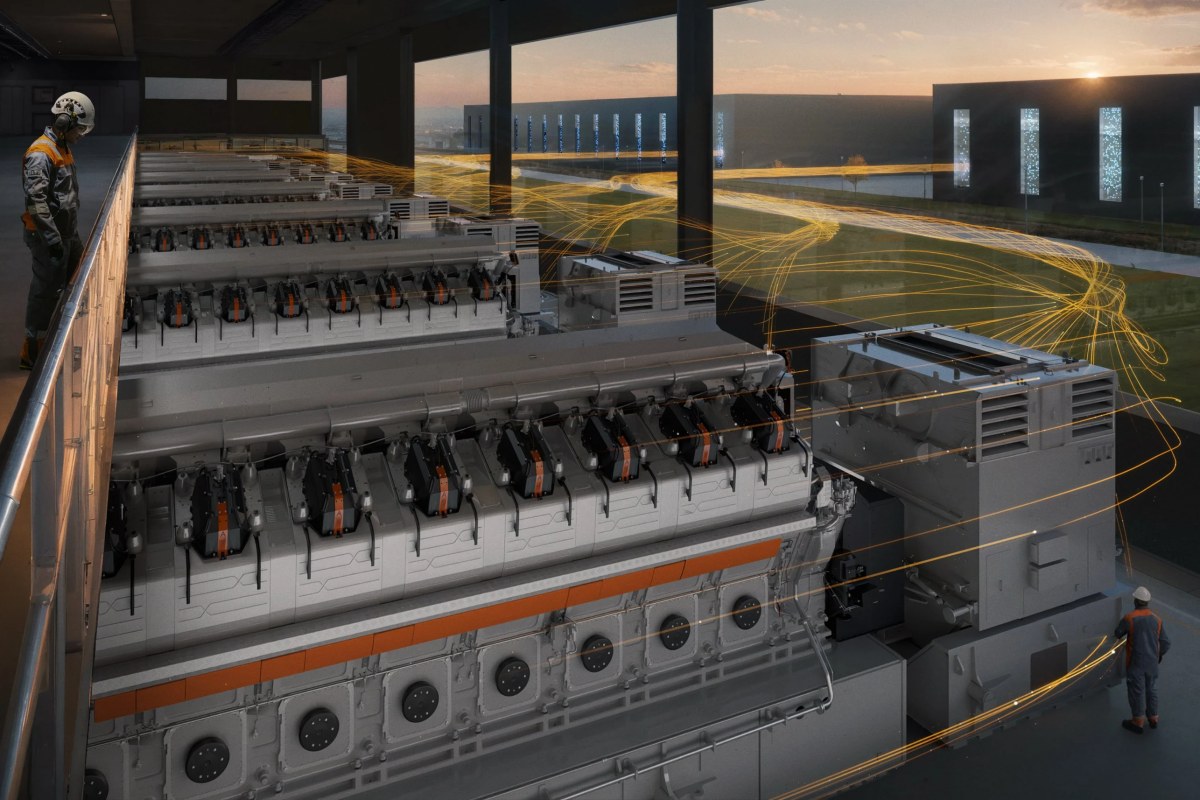
Pure Data Centres Group (Pure DC), a designer, developer, and operator of hyperscale data centres, together with AVK, a provider of power systems and electrical infrastructure for data centres, have announced the launch of what they describe as Europe’s first, large-scale, 110MW on-site microgrid, developed to support early‑phase site operational resilience. Located within Pure DC’s Dublin campus, the on‑site energy system provides the opportunity for dispatchable capacity to support data centre operations during initial development phases, prior to full integration with the national electricity system as grid connection capacity becomes available. Over time, the campus is intended to operate as part of a hybrid energy configuration, combining grid‑supplied electricity with on‑site infrastructure designed to enhance flexibility, resilience, and system stability. What AVK describes as a "first-of-its-kind deployment in Europe" showcases the ability to use its microgrid technology for on-site power generation, and the transitional and complementary role it can play in supporting the delivery of strategically important digital infrastructure. This is particularly relevant for regions where grid reinforcement and renewable generation are being delivered on a phased basis under national planning frameworks. A replicable model The microgrid also represents a blueprint for energy generation and showcases how large-scale microgrids can be replicated across Europe - with Germany, the Netherlands, and the UK having been identified as key target markets for the technology. The Mayor of Fingal County Council, Councillor Tom O'Leary, comments, “Fingal wants to remain a champion for breakthrough technologies, but we also understand that progress must be delivered in a way that is climate friendly, resilient, and aligned with Ireland’s energy transition. That’s why this project is so important. "A microgrid that can generate and manage its own power supports future integration into the national grid, integrates renewable energy, enables storage, and trials new low‑carbon fuels like biomethane. This is innovation with purpose.” Gary Wojtaszek, Pure DC’s Executive Chairman and interim CEO, notes, “The biggest barrier to deploying AI infrastructure in Europe today isn’t technology; it’s power. This microgrid proves that even the most constrained markets can unlock new digital capacity, giving Ireland the opportunity to lead Europe’s next chapter of AI infrastructure. "The future of AI infrastructure will be built where energy and compute come together, and that’s exactly what we’re building at Pure.” Speaking about the project, Ben Pritchard, CEO of AVK-SEG, adds, “We are delighted to have worked with Pure DC to deliver this groundbreaking project. While several microgrids are already in operation in the US, until today there were none of these deployments in Europe. This project demonstrates how carefully designed onsite energy infrastructure can complement national energy planning frameworks. “This recognises that power is now the new differentiator for data centres, and that energy has shifted from being a utility to a strategic asset - shaping the location, design, economics, and competitiveness for operators. "The first of many in Europe, this microgrid has the capability to revolutionise the data centre power race as we know it, providing a complementary solution that will ease gridlock and pave the way for greater take-up of AI and cloud.” Powering the digital economy Pure DC’s microgrid is comprised of three, interconnected energy centres, with each building generating up to 30 MW of power. Energy Centre 1 (EC1) and EC2 will be fully operational by the end of 2026 and will be followed by EC3 at a later stage. The design includes combined heat and power (CHP) capability, with infrastructure in place to enable heat recovery and potential future connection to district heating networks, subject to third‑party demand and regulatory approvals. Waste heat recovery systems are also used to improve operational efficiency within the energy centres. Future water management measures include rainwater harvesting and on‑site treatment, reducing reliance on mains water for engine‑related processes. The system is engineered to accommodate incremental changes in fuel composition - including hydrogen blending - supporting future decarbonisation of the gas network in line with national policy developments. Pure DC’s battery energy storage system (BESS) is integrated to manage load fluctuations and enhance operational efficiency, improving response times and enabling more optimal engine operation. The BESS is designed to support future renewable energy integration as part of a broader transition pathway. For more from Pure DC, click here, and for more from AVK, click here.

STL, Mynet deliver fibre in mountainous Italy
STL, an optical and digital systems company, has worked with Mynet to deliver optical fibre infrastructure for the Intacture data centre in Trentino, Italy, located in a mountainous area described as the ‘heart of the mountain’. The project was led by the University of Trento as implementing body and scientific lead. It involves total funding of €50.2 million (£43.7 million), including €18.4 million (£16 million) from Italy’s National Recovery and Resilience Plan (PNRR). Mynet, a telecommunications company focused on fibre optic networks across Northern Italy, is the first provider to activate fibre connectivity at the facility. The deployment required high-capacity fibre to be installed within a tight timeframe and in a geographically complex environment. https://www.youtube.com/watch?v=9KpsqOIWu2E Fibre deployment completed within two months STL supplied high fibre-count cable with a compact diameter, designed for installation in 10/12mm duct systems. The cable is engineered to support long-distance blowing, faster end preparation, and simplified on-site handling, while meeting performance, durability, and scalability requirements. The connectivity infrastructure assigned to Mynet was completed in under two months. According to the companies, this resulted in around a 50% reduction in deployment time, an expected network lifetime of more than 15 years, and improved stability during peak load. Giovanni Zorzoni, General Manager of Mynet, says, “We accepted a challenge to bring high-performance connectivity to this extraordinary infrastructure in less than sixty days. "With STL’s advanced optical fibre solutions, we were able to focus on the design and execution without compromising on reliability or performance. The quality, robustness, and ease of deployment of STL’s optical fibre solutions enabled us to complete the project at record speed, even in a uniquely demanding environment.” Rahul Puri, CEO, ONB, STL, adds, “This collaboration underscores STL's expertise in delivering mission-critical digital infrastructure for data centres. "By providing scalable, future-ready solutions like multi-core and low-latency fibre, we are helping our customers build resilient networks structurally prepared for an AI-driven future.” For more from STL, click here.

McLaren appointed for 70MW London data centre phase
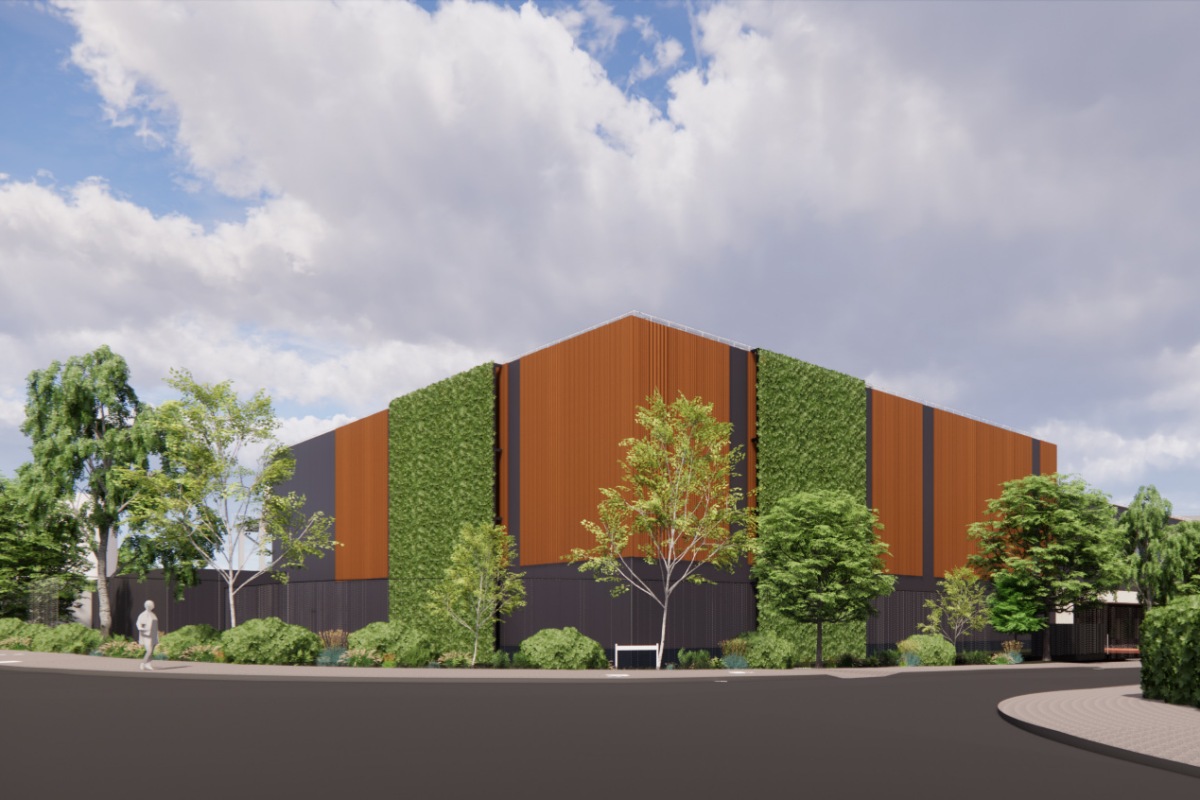
UK construction firm McLaren Construction has been appointed to deliver the shell and core of the first 70MW building at global data centre developer and operator Ada Infrastructure’s Docklands campus in London. The project marks Ada Infrastructure’s first European development and forms part of a planned 210MW campus in the Royal Docks. McLaren’s contract also covers enabling infrastructure for the wider site and provision for a future district heating network. The development will comprise three 70MW data centre buildings, alongside a community facility and public realm improvements, including upgraded pedestrian and cycle routes along the River Thames and works to the river wall, including a new flood defence barrier. The buildings will incorporate air and liquid cooling systems designed to operate without water evaporation, as well as low-carbon construction materials and connection points for district heating. The campus is targeting a BREEAM Excellent rating and is designed to support AI and high density workloads. A 210MW campus in London's Royal Docks James Moloney, Head of Ada Infrastructure EMEA, says, “The appointment of McLaren Construction is an important step in bringing this vision to life. "[Its] experience delivering complex data centre and infrastructure projects will be instrumental as we transform this long-vacant site into a sustainable, future-focused campus that also enhances public spaces and contributes to the wider regeneration of the Royal Docks.” McLaren’s supply chain partners include Keltbray for CFA piling, Menard for BMC piling, Gallagher for groundworks and civils, and William Hare for the steel frame. The shell and core contract is scheduled for completion in mid-2028, with the first building expected to be ready for occupation by the end of 2028.

Norton advises on €210m data centre financing for Berlin
Global law firm Norton Rose Fulbright has advised British multinational bank Standard Chartered and French international banking group Crédit Agricole on a €210 million (£183 million) development facility for Virtus Data Centres, a UK data centre owner-operator providing colocation services across the region. The facility will finance the development of a 19,000m² data centre campus in Marienpark, Berlin. Once fully operational, the campus will deliver 57.6MW of IT capacity to meet the needs of hyperscale, government, and enterprise customers. Investment in Germany's infrastructure market The multi-disciplinary Norton Rose Fulbright team was led by London-based partners Jennie Dorsaint and Jonathan Crookes, and included partners Veit Sahlfeld (Hamburg), Holger Wolf (Frankfurt), Simon Weppner (Düsseldorf), Head of Real Estate Finance EMEA Sarah Cullen (London), counsels Michael-Alexander Volks (Hamburg) and Tobias Block (Hamburg), Senior Associate Anne-Sophie Wilhelmy (Frankfurt), and associates Symone Malcolm (London) and Jakob Kramer (Hamburg). Jonathan Crookes comments, “This financing is a landmark transaction, representing a significant investment in Germany’s rapidly growing digital infrastructure market. The deal showcases not only the breadth of our cross-border network but also the depth of our capability in the sector.”

Echelon secures €1.7bn loan financing for European expansion
Echelon Data Centres, an Irish-headquartered developer and operator of large-scale data centre infrastructure, has announced the successful closing of an initial €1.7 billion (£1.4 billion) in loan financing provided by investment bank and financial services company Morgan Stanley. The data centre operator says the financing "further strengthens [its] capital base to continue its planned expansion across Europe." Echelon now has eight campuses across Europe, totalling 1.2 GW of capacity, of which 400MW is operational or under development. The company notes that this "new multi-billion-euro financing facility enhances [its] ability to scale [its] development pipeline, invest in enabling power infrastructure, and grow [its] campus portfolio across Ireland, the UK, Spain, and Italy." David Smith, Deputy CEO of Echelon Data Centres, comments, “Ireland is one of Europe’s most important and supply-constrained data centre markets, and we have established the leading position in the Irish market through the delivery of large-scale campus developments supported by innovative power solutions developed in partnership with customers, regulators, and grid stakeholders. “Over the past 15 months, we have expanded into Spain - in joint venture with Europe’s largest utility, Iberdrola - and into Italy, extending our development model into new strategic markets. “We are incredibly proud of the growth Echelon has achieved over the past several years and [we are] excited for the opportunity ahead. "Demand for digital infrastructure across Europe is substantial and long term, and our ambition is to continue expanding our platform to support the growth of our customers in key strategic markets.” Continuing growth Charlie Etheridge, Head of Investments at Echelon Data Centres, adds, “This €1.7 billion financing strengthens our capital position and provides the flexibility to execute on our pipeline at scale and at pace. “It reflects the quality of our platform and the strong institutional support behind our strategy. We are pleased to continue our valued partnership with Morgan Stanley as we advance the next phase of our European expansion.” Echelon was advised by A&O Shearman and Arthur Cox. For more from Echelon, click here.

atNorth confirms 'mega' 300MW data centre in Sweden
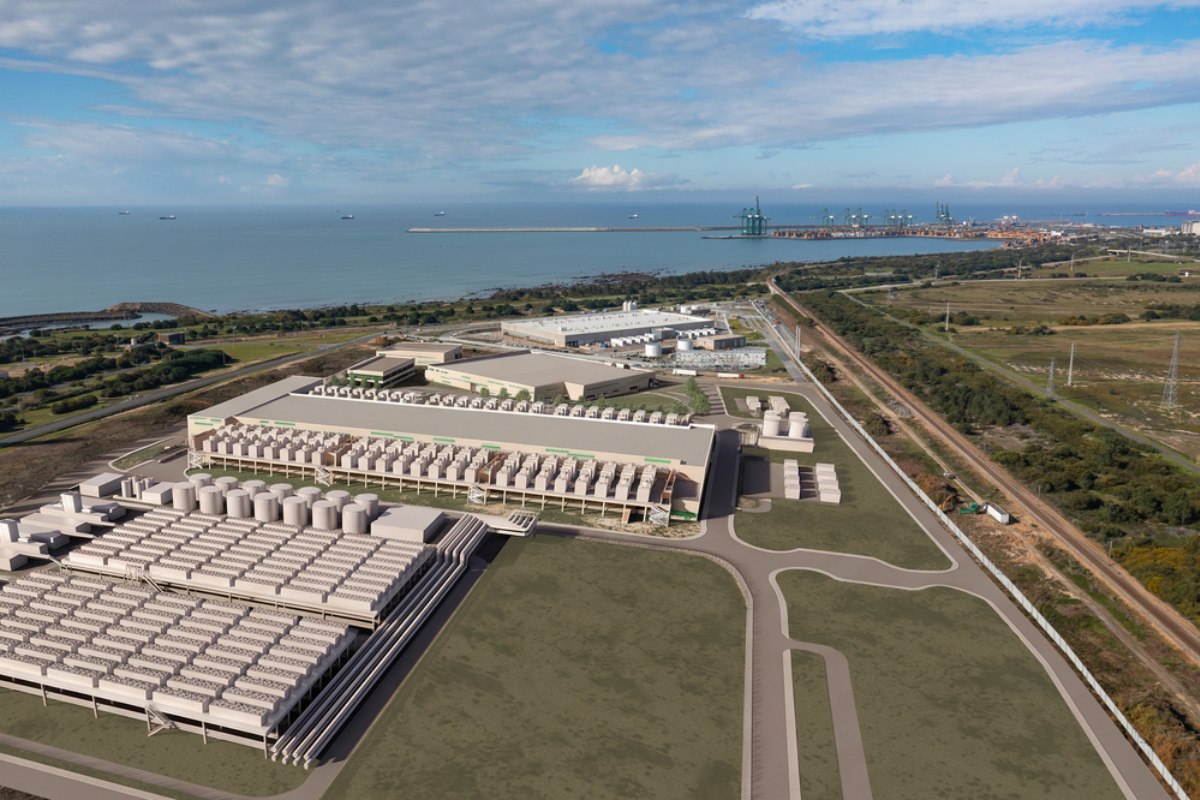
atNorth, a Nordic high-density data centre provider, has confirmed plans to develop a 300MW data centre in Sollefteå Municipality, Sweden. Located at Hamre Industrial Park in Långsele, the new site will be developed on a 50-hectare (202km²) plot (Hamre 1) and is expected to be operational in the first half of 2028. The industrial park is fully zoned for development, which the company says supports a shorter construction timeline as demand grows for AI and high-performance computing infrastructure. Renewable energy and heat reuse The site was selected for its grid capacity and access to renewable energy. The campus will follow atNorth’s modular design approach and is intended to support both colocation and built-to-suit deployments. The company states it will pursue heat reuse partnerships so that excess heat from the facility can be redirected for local use. Eyjólfur Magnús Kristinsson, CEO at atNorth, says, “We face a critical point in time right now, where we must balance unprecedented growth in high-density workloads with an increasingly urgent need for sustainable, scalable digital infrastructure. "Our Sollefteå campus represents a significant milestone for the company and demonstrates our commitment to building data centre ecosystems that deliver both technical excellence and long-term value for local communities.” The announcement follows recent expansion projects in Iceland and Stockholm. For more from atNorth, click here.

Secure I.T. completes Qatar financial data centre design
Secure I.T. Environments (SITE), a UK design and build company for modular, containerised, and micro data centres, has completed a full server room design programme for a financial institution in the State of Qatar. The company delivered the engineering and layout documentation, enabling local procurement and installation. The project involved a new server room within an existing building footprint - covering approximately 110m² - and included a separate staging area to improve security and operational flow. The design includes eight IT racks and three communications racks, based on a target density of 6kW per IT rack. Power infrastructure features dual 50kW UPS systems operating in parallel, alongside additional UPS provision for communications equipment. Capacity, cooling, and resilience Cooling is based on an N+1 direct expansion configuration using three air conditioning units, providing around 80kW of sensible cooling capacity. The total estimated site load is approximately 145kVA within a 150kVA allowance. Environmental monitoring and fire protection systems were also incorporated, with humidity control and condensate management designed for high ambient temperatures. The design follows the ISO/IEC TS 22237 data centre facility standards and related international guidance covering power, environmental control, security, and management. Chris Wellfair, Projects Director at Secure I.T. Environments, comments, “For overseas data centre and server room projects, getting the design decisions right up front is what de-risks delivery. "This programme focused on producing a complete, buildable design for a controlled, resilient environment, with clear capacity assumptions, practical access planning, and standards-led engineering across power, cooling, fire, and security. "Having our work in demand internationally is a testament to the work of our design team.” For more from Secure I.T. Environments, click here.

LINX to upgrade Lunar Digital data centre into fully resilient PoP
The London Internet Exchange (LINX), an internet exchange point (IXP) operator, is planning to upgrade its presence at the Lunar Digital data centre in Manchester, UK, transitioning the site from a single-homed transmission site to a dual-homed, fully resilient point of presence (PoP). LINX initially went live at Lunar Digital to gauge market demand for an additional PoP at the LINX Manchester interconnection hub. The reportedly strong uptake of services since the September 2024 deployment has now indicated to the company the need for a full, diverse, and resilient presence from the IXP at the facility. Jennifer Holmes, CEO of LINX, comments, “Manchester continues to establish itself as a powerhouse digital hub for the North, and the response and demand for LINX services from networks at Lunar Digital has exceeded our expectations.” Mike Hellers, Product Development Manager for LINX, adds, “Our Manchester LAN has tripled in size over the last couple of years to now enabling 130 networks to access low-latency services and [it] regularly carries more than 900Gbps of traffic at busy periods. “Upgrading Lunar to a resilient PoP ensures existing LINX members and future networks can benefit from enhanced reliability, additional capacity, and greater choice as the regional ecosystem continues to grow.” Manchester as a growing hub Lunar Digital operates three data centres in Manchester with LINX being accessible via a single cross connect from Lunar1 and Lunar2. The announced move underscores the rapid expansion of network operators, cloud platforms, content providers, and digital businesses choosing to colocate in Manchester. “We’re thrilled to deepen our collaboration with LINX,” says Rob Garbutt, CEO of Lunar Digital. “The upgrade to a full PoP reflects not only the growth of Lunar Digital, but the wider demand for robust, high‑performance, low-latency connectivity options across the North of England.” Networks at Lunar Digital will be able to access services at the LINX Manchester internet exchange via a single cross connect. This includes services like peering, private VLANs, Closed User Groups, and the exclusive Microsoft Azure Peering Service (MAPS). The transition work is due to be completed in the coming weeks. For more from LINX, click here.


Translate »