Data Centre Projects: Infrastructure Builds, Innovations & Updates

Equinix to build new $22m data centre in Lagos, Nigeria
Digital infrastructure company Equinix today announced its intention to open its latest high performance data centre in Lagos, Nigeria. The $22 million (£16.7 million) investment in LG3 marks the first phase of an ambitious investment plan of around $100 million (£75.9 million) aimed at transforming Africa’s digital landscape over the next two years. Set to open in Q1 2026, the site will deliver new infrastructure to Nigeria, empowering local businesses to scale while aiming to draw international companies to the country in this strategically positioned hub for global connectivity. The addition of the new LG3 data centre in Nigeria also brings the incorporation of Network-as-a-Service platform Equinix Fabric into the metro, enabling businesses to connect their physical and virtual infrastructure to other Equinix locations all around the world. Bridging Africa’s digital divide Wole Abu, Managing Director for West Africa at Equinix, comments, “LG3 marks a significant milestone in Equinix’s long-term commitment to bridging Africa’s digital divide. “As Lagos emerges at the crossroads of talent, innovation, and global connectivity, this facility is accelerating access to technologies like cloud, AI, and the next wave of startups." Olawale Owoeye, Managing Director at Cedarview, adds, "Equinix’s Lagos data centre will provide us with the robust and resilient platform our customers demand to expand our digital footprint. "The unparalleled reliability and access to a global ecosystem empower us to deliver high performance solutions to our customers, and the new LG3 data centre in Lagos is [a] key step in ensuring we remain at the forefront of businesses connecting Africa." Nigeria is the second-largest economy in Sub-Saharan Africa. Lagos, in particular, is at the epicentre of Africa’s digital transformation, recognised as the only African city in the Global Top 100 Startup Ecosystems. Expansion opportunities Commenting on the opportunity for Equinix in Africa, Aslıhan Güreşcier, Vice President, EMEA Growth & Emerging Markets at Equinix, says, “Africa’s digital transformation is accelerating, driven by a young population, rising internet access, and increasing demand for secure data infrastructure. "With the opening of our newest data centre in Lagos, Equinix is proud to invest in this dynamic region, supporting our customers’ growth with world-class data centres that power everything from banking and education to emergency services and commerce.” Since entering the African market in 2022, Equinix has expanded its presence in key African markets including, Nigeria, Ghana, and Ivory Coast (Côte d’Ivoire). Last year, the company also opened its first data centre in Johannesburg, South Africa. With a footprint spanning over 270 data centres worldwide, Equinix says it is continuing to bring its global expertise and infrastructure to the region, including harnessing Nigeria’s strategic position as an international hub for global subsea cable connections, linking Africa with Europe, Asia, and beyond. For more from Equinix, click here.

HUMAIN, AirTrunk to build DCs in Saudi Arabia
AI company HUMAIN and hyperscale data centre operator AirTrunk have agreed a strategic partnership to develop data centres in Saudi Arabia, including an initial project valued at around $3 billion (£2.2 billion) for a new campus in the country. HUMAIN is headquartered in Saudi Arabia and focuses on artificial intelligence capability development, while AirTrunk operates hyperscale data centre platforms across Asia Pacific. HUMAIN is owned by the Public Investment Fund, and AirTrunk is backed by Blackstone and the Canada Pension Plan Investment Board. The companies say the partnership is intended to support Saudi Arabia’s ambitions to expand its digital infrastructure and position itself as a regional technology hub. According to the organisations, the joint initiative aims to combine local AI and infrastructure expertise with international hyperscale data centre deployment experience. Industry comments Tareq Amin, Chief Executive Officer of HUMAIN, says, “Together with AirTrunk and Blackstone, HUMAIN is strengthening the technological infrastructure that underpins the Kingdom’s digital economy. "This partnership marks a pivotal moment in creating scalable, secure, and sustainable data centre capacity to support the rapid growth of AI and cloud computing. This initiative not only accelerates Saudi Arabia’s technological advancement, but also establishes a platform for long-term economic diversification and global competitiveness.” Robin Khuda, founder and Chief Executive Officer of AirTrunk, says, “Our strategic partnership with HUMAIN, a key player in the region, will support Saudi Arabia to realise its vision of being a data- and AI-driven economy. "We’re bringing together the whole digital ecosystem, combining HUMAIN’s end-to-end AI capabilities, from infrastructure to models, with AirTrunk’s hyperscale data centre capabilities. This announcement strengthens the AirTrunk data centre platform as we deliver world-class digital infrastructure for the cloud and AI across the Asia Pacific and now the Middle East, which is one of the fastest growing regions in the world.” Stephen A Schwarzman, Chair, Chief Executive Officer, and co-founder of Blackstone, says, “We are thrilled to help power this next era of innovation in the Middle East and enable AirTrunk’s expansion in this important region. "The AI revolution continues to be one of Blackstone’s highest conviction themes, and we bring scale and expertise across the ecosystem as the largest provider of data centres globally and a significant investor in related services and infrastructure." Long-term development and investment focus The partnership is expected to cover the design, construction, financing, and operation of large-scale facilities in Saudi Arabia. HUMAIN says it will lead national efforts to deliver AI-ready infrastructure, while AirTrunk and Blackstone will focus on development and investment. Areas of collaboration include attracting cloud service providers and enterprise customers to the sites. A talent development focus is also planned, with training and capability-building programmes intended to support local workforce growth in the sector. According to the companies, the partnership aligns with the Kingdom’s plans to build a digital economy, expand local skills, and accelerate AI infrastructure deployment. For more from AirTrunk, click here.

Colt DCS to expand West London hyperscale campus
Colt Data Centre Services (Colt DCS), a global provider of AI, hyperscale, and large enterprise data centres, has announced that it has received committee approval (Resolution to Grant) from Hillingdon Council to expand its Hayes Digital Park campus in West London with three new hyperscale data centres and an Innovation Hub. The £2.5 billion investment will strengthen the UK’s digital infrastructure, support the government’s modern industrial strategy, and help drive the nation’s growing AI economy. The three new hyperscale data centres - London 6, 7, and 8 - will be powered using 100% renewable energy through a Power Purchase Agreement (PPA). Power contracts for this development have been secured with National Grid and a high voltage supply is due to be delivered by October 2027. The expansion will add an additional 97MW to the available IT power at the Hayes Digital Park, taking the total capacity to 160MW. Construction is expected to start in mid-2026, with the first data centre (London 6) scheduled to go live in early 2029. Once operational, the new facilities will create over 500 permanent jobs, training more than 50 technical apprentices over a 10-year build programme. In addition to the data centres, Colt DCS will develop an Innovation Hub in partnership with Brunel University, designed to serve as a community space and incubator for digital start-ups. The hub will promote economic synergy by co-locating light-industrial and digital innovation businesses, creating opportunities for collaboration, research, and skills development within an affordable workspace. Students from Brunel University will be encouraged to use the hub to develop entrepreneurial projects and technology-led ventures to support the digital economy. AECOM has been appointed to develop the design proposals for the Innovation Hub. The facility aims to act as a base for innovation and community engagement, with flexible space for future industrial use, in line with planning policy for Strategic Industrial Land. It will also provide social value by hosting local events themed around culture, food, film, music, and literature. The new development will also deliver a district heating network, using waste heat from the data centres to support local businesses, communities, and residential buildings. Under the planning permission, back-up generators will only be permitted to operate for a maximum of 15 hours per year, with the data centres powered directly from the national grid. “This announcement marks another important milestone for the UK’s digital economy,” says Xavier Matagne, Chief Real Estate Officer at Colt DCS. “Data centres are a cornerstone of digital transformation. With this expansion, we can help power innovation, support the AI revolution, and contribute to the energy transition.” Xavier continues, “Our new campus in Hayes, including the Innovation Hub in partnership with Brunel University, will drive community value, from reusing heat for district heating to creating jobs, skills, and long-term investment. As one of the few operators capable of delivering new capacity in this area of London over the next decade, we’re proud to be helping power the UK’s future economy in a sustainable and inclusive way.” Cllr Steve Tuckwell, Hillingdon Council's Cabinet Member for Planning, Housing and Growth, notes, "Hillingdon is open for business, and we're working closely with our business community, new and existing investors and partners to drive innovation and development in the right places. "The innovation hub is an exciting new development that will help to foster economic growth. It will help to equip residents and smaller local businesses with the right skills, affordable workspaces, and opportunities to thrive. "Hayes is playing a leading role in shaping London's digital economy and infrastructure and it's vital local people have more opportunities to experience the benefits." For more from Colt DCS, click here.

Equinix announces £3.9 billion UK data centre investment
Digital infrastructure company Equinix has acquired an 85-acre site in Hertfordshire, where it plans to develop a large-scale data centre campus. The company says it intends to invest £3.9 billion in the project, which is expected to deliver more than 250 MW of compute capacity. According to Equinix, the campus will support both domestic and international organisations across sectors including healthcare, life sciences, public services, financial services, manufacturing, and entertainment. The development is also referenced by the company as part of broader ambitions around sovereign AI capability in the UK. The site, previously known as DC01UK, is expected to create around 2,500 construction jobs and, once operational, more than 200 permanent roles. KPMG estimates that direct and indirect employment could generate roughly £120 million in wages. KPMG analysis also suggests the project could contribute up to £3 billion in annual Gross Value Added during construction, and up to £260 million once operational, reflecting supply-chain activity and wage spending. DC01UK, commenting on the sale of its site to Equinix, states, "The deal represents one of the largest infrastructure and real estate transactions in the world in recent years. This milestone transaction marks a defining moment for UK digital infrastructure. "With a projected total investment value in the region of £3.9 billion, the deal lays the foundation for one of Europe’s largest and most advanced data centre campuses - a project of unprecedented scale and ambition that will drive the next wave of cloud and AI innovation." Economic and community impact Equinix says it intends to work with local organisations on education, skills, and environmental programmes linked to the development. The company notes it has operated data centres for 27 years and currently runs more than 270 facilities across six continents. In the UK, Equinix supports over 1,300 customers and employs more than 1,200 people. James Tyler, UK Managing Director at Equinix, says, “The UK is a cornerstone of the global economy and is a natural home for our most substantial investment in Europe to date. This development brings a significant amount of data centre capacity to Britain, contributing to the government’s AI growth ambition. "But this investment goes far beyond building the infrastructure needed to unlock the UK’s digital potential; it’s the evolution of an ongoing partnership with the local and national community.” Liz Kendall, Secretary of State for Science, Innovation, and Technology, comments, “This £3.9 billion investment is a huge win for Britain. It will give businesses - from life sciences to high street banks - the ability to connect to thousands of other businesses across the world in an instant, powering our AI ambitions, boosting growth and creating hundreds of well-paid jobs. "This is about making sure the UK is at the forefront of the digital revolution and ensuring that every community benefits from the opportunities this new technology brings.” Luisa Cardani, Head of Data Centres at techUK, adds, “This announcement reflects the scale of opportunity the UK has to strengthen its digital foundations. "As highlighted in our Foundations for the Future report, data centres are the backbone of our economy: they enable innovation, productivity, and growth across every sector. "Continued investment in sustainable, resilient digital infrastructure will be critical to delivering on the UK’s ambitions for AI and long-term economic prosperity.” Sustainability measures and site plans The company states that all its sites in Europe, including the UK, are powered by 100% renewable energy, and it is targeting global coverage by 2030. At the Hertfordshire campus, Equinix plans to use dry-cooling technology, to retain more than half the land as open space, and to create ecological habitats to achieve at least a 10% biodiversity net gain. Equinix also says the campus will be designed to enable heat reuse for local benefit in the future. The company’s existing UK presence includes 14 data centres, which support UK-based and global customers, and heat export capability across sites. For more from Equinix, click here.

Data centre spending to quadruple by 2029 across UK
Spending on new data centres across Britain is set to reach an incredible £10 billion per year by 2029, according to new analysis by construction data experts Barbour ABI. That is more than four times as much as the current £1.75 billion being spent per annum. Atop this, the report states that, as investors seek cheaper land costs and cooler climates, the data centre drive will spread north - away from just London - and into Wales. Nearly 100 data centres are currently in planning, with strong growth driven by demand from AI technologies and the internet of things (IoT). The impact of this rapid growth “With exponential growth of this kind, sustainability must be at the forefront of industry strategy if we are to avoid an environmental disaster,” notes Ed Griffiths, Head of Business and Client Analytics at Barbour ABI. “Data centres are now recognised as Critical National Infrastructure (CNI). However, given the immense power they consume, operators will come under growing pressure to adopt greener practices. “While many firms are pledging to use 100% renewable energy and implement energy-efficient technologies, there is currently no requirement to report energy usage publicly, so it will be difficult to hold them to account.” As the need for data processing accelerates, the market is forecast to attract over £25 billion in inward investment over the next five years, according to Barbour’s latest data centre construction market report. This surge in capital is reshaping the data centre construction landscape, with a rapid pipeline of new developments already underway. Hyperscale facilities outside of urban areas Growth is being supported by government initiatives such as 'AI Growth Zones', which aim to streamline the planning process and support the delivery of new infrastructure. “The impact of AI is one of the most significant trends shaping the future of the data centre industry,” continues Ed. “As AI technologies become integrated into daily operations, the need for high-performance data centres is becoming critical. "Operators are investing in hyperscale facilities outside of urban areas, designed to manage immense computing workloads.” While London and the Southeast have traditionally dominated the sector, data centre development is now expanding nationwide. Barbour ABI found that regions such as the Northeast, East of England, and Wales are becoming increasingly attractive for new projects. This shift is being driven by greater land availability, lower costs, cooler climates, access to renewable energy, and targeted regional growth policies. The UK’s largest planned data centre project is located at Northumberland Energy Park in Blyth. Backed by US asset management firm Blackstone, the development is expected to be worth £10 billion. Whilst the sector seems ripe for investors looking for big wins in the next few years, Ed does add a note of caution, stating, “While the headline story for data centres is one of growth and innovation, the industry faces real challenges. "Rising energy costs, constraints on supply and land, planning barriers, and a shortage of skilled labour could all affect the pace of expansion.”

Data Centre Congress Global returns in 2026
Data Centre Expo Global is set to return to Olympia London on 4–5 February 2026, bringing together global leaders and innovators from across the digital infrastructure ecosystem to explore the future of green data, intelligent investment, and resilient physical infrastructure. Driving sustainable growth through innovation and investment Under this year’s themes of green investment, digital innovation, and physical infrastructure, the programme will spotlight how operators are redefining the foundations of data centres. Expect deep explorations of decarbonisation strategies, circular and modular design, grid integration, advanced cooling, power systems innovation, and sustainable site planning. Sessions will also examine how digital innovation is reshaping infrastructure, from AI-driven operations, automation, and control systems to next-generation materials, software-defined infrastructure, and data centre architectures that flex with demand and resilience requirements. Hyperscale, edge, and ensuring infrastructure resilience On the day two track, speakers will explore how hyperscale and edge infrastructures must evolve to serve a distributed, latency-sensitive, resilient future. Topics include data sovereignty, resilient connectivity, distributed compute, AI orchestration, fault tolerance, and hybrid edge-cloud architectures. The focus will remain squarely on designing systems that sustain performance under evolving stressors and threats. Hear from leading voices in digital infrastructure Attendees will gain first-hand insight from distinguished industry leaders, including: ● Elena Rehman, EMEA Head for Data Center Land Development, Microsoft● Kenneth Dalton, Operations Director, Global Switch● Vladimir Prodanovic, Principal Product Manager, NVIDIA● Susanna Kass, Data Center Advisor (UNSDG-EP)● Wilfried Dudink, Senior Director, Strategy & Development, Digital Realty● Joe Hurman, Principal Consultant, STL Partners● Steve Hone, CEO and co-founder, DCA (Data Centre Alliance)● Venessa Moffat, Advisory Board Member, DCA These experts will share case studies, forecasts, technical deep dives, and actionable guidance to help decision-makers across data centre and infrastructure industries. A hub for cross-domain collaboration Co-located with Cyber Security & Cloud Expo, AI & Big Data Expo, IoT Tech Expo, Digital Transformation Week, Cloud Transformation Conference, Edge Computing Expo and the Intelligent Automation Conference, the Expo will offer delegates exposure to the full spectrum of digital infrastructure trends and challenges. This integrated environment aims to foster "serendipitous connections and cross-industry innovation." Nearly 8,000 attendees, 150 exhibitors, and over 200 speakers are expected to convene in London to chart the course of next-generation infrastructure. To be a part of it, you can review the full agenda, explore the speaker list, or register for a free or 'Gold' pass by visiting the event's website.

Start Campus, Nscale to deploy NVIDIA Blackwell in the EU
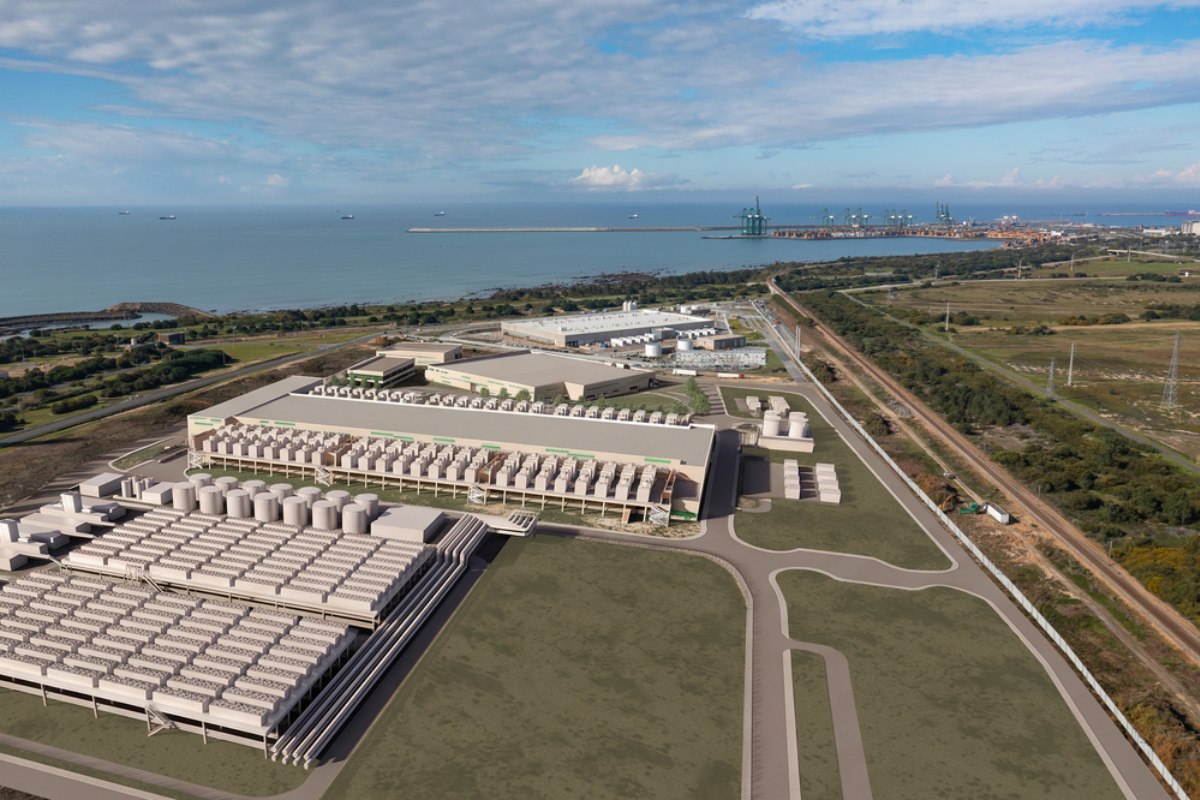
Start Campus, a designer, builder, and operator of sustainable data centres, in partnership with hyperscaler Nscale, has announced one of the European Union’s first deployments of the NVIDIA GB300 NVL72 platform at its SIN01 data centre in Sines, Portugal. The project supports Microsoft’s AI infrastructure strategy and marks a milestone in the development of advanced, sovereign AI capacity within the EU. Nscale, a European-headquartered AI infrastructure company operating globally, selected Start Campus’s site for its strategic location, readiness, and scalability. The first phase of the deployment is scheduled to go live in early 2026 at the SINES Data Campus. High-density power to support next-generation AI The NVIDIA GB300 NVL72 platform is designed for high-performance AI inference and training workloads, supporting larger and more complex model development. Start Campus says the installation will accommodate rack densities exceeding 130 kW, with power and cooling systems engineered to meet the requirements of ultra-dense AI computing. Portugal’s government has welcomed the investment as a key step in strengthening the country’s position in the European digital economy. Castro Almeida, Minister of Economy and Territorial Cohesion, comments, “This investment in Sines confirms international confidence in Portugal as a destination for innovation and technology. It strengthens our position in the global digital economy and supports high-value job creation.” Miguel Pinto Luz, Minister of Infrastructure and Housing, adds, “Start Campus illustrates how digital and infrastructure strategies can align to deliver long-term sustainability. "Sines demonstrates the convergence of the digital transition with Portugal’s geographic advantages - particularly its port, which plays a strategic role in connecting new submarine cables and enabling low-carbon investment.” Recent research by Copenhagen Economics projects that data centre investment could contribute up to €26 billion (£22.6 billion) to Portugal’s GDP by 2030, creating tens of thousands of jobs. Portugal’s location supports strong connectivity through high-capacity subsea cables such as Equiano, 2Africa, and EllaLink, providing low-latency global links. Data from national grid operator Redes Energéticas Nacionais (REN) shows that renewable energy supplied 71% of Portugal’s electricity consumption in 2024, rising to 81% in early 2025. The country’s energy costs also remain below EU and Euro Area averages. The next steps Robert Dunn, CEO of Start Campus, says, “With SIN01 now at full capacity and expanding to meet demand, we have demonstrated that the SINES Data Campus is ready for ultra-dense, next-generation AI workloads. "Partnering with Nscale and NVIDIA on this deployment highlights Portugal’s role as a leader in sustainable AI infrastructure.” The company is also progressing work on its next facility, the 180 MW SIN02 data centre, which will form part of the same campus. Josh Payne, CEO and founder of Nscale, notes, “AI requires an environment that combines scale, resilience, and sustainability. This deployment demonstrates our ability to deliver advanced infrastructure in the European Union while meeting the technical demands of modern workloads. "Partnering with Start Campus allows us to lay the groundwork for the next generation of AI.” Nscale is expanding its European footprint, including building the UK’s largest AI supercomputer with Microsoft at its Loughton campus and partnering with Aker ASA on Stargate Norway - a joint venture linked to multi-billion-euro agreements with Microsoft. For more from Start Campus, click here.

Rewiring the data centre
In this exclusive article for DCNN, Will Stewart, Global Senior Industry Segment Manager Lead, Smart Infrastructure and Mobility at HARTING, explores how modularity, power density, and sustainability are converging to redefine how facilities are built, cooled, and scaled: Building smarter infrastructure for the AI age Artificial intelligence (AI) has moved from hype to headline, impacting everything from health diagnostics to financial analysis. While the public marvels at AI breakthroughs, the engines powering these advances - the world’s data centres - face growing, behind-the-scenes challenges. As organisations expand their AI capabilities, the energy needed to support modern computing infrastructure is rising at an unprecedented rate. Current research projects that global data centre power demand will increase by 50% as soon as 2027 and 165% by 2030, with much of this surge attributed to AI workloads’ explosive growth. Already, data centres account for approximately 2% of worldwide electricity consumption and forecasts suggest this share will continue its upward march. The resulting strain extends beyond server rooms; it is currently reshaping energy supply chains, policy priorities, and environmental strategy across industries. Rising to the infrastructure challenge Serving next-generation, AI-driven applications requires a dramatic rethink of traditional data centre design. Historically, a data centre’s infrastructure balanced a mix of physical and virtual resources - servers, storage, networking, power distribution units, cooling systems, security protocols, and supporting elements like racks and fire suppression - all engineered for reliability and uptime. AI’s energy-hungry, compute-intensive tasks have shattered these historical balances. Data centres today must deliver far more power to denser racks, operate reliably under heavier loads, and deploy new capacity at speeds unimaginable even a decade ago. These requirements are putting immense pressure on every inch of physical infrastructure, from the electrical grid connection to the server cabinet. Navigating power and cooling demands One of the most acute challenges is arising from escalating power and cooling needs. Where historical rack architecture required 16 or 32A, current designs push 70, 100, or even 200A, often in the same amount of physical rack space. These giant increases not only generate more heat, but require thicker, less flexible power cabling, raising new problems for deployment and ongoing maintenance. Efficiently removing heat from ever-denser configurations is a major engineering feat. Next-generation cooling technologies - ranging from liquid cooling to full-system immersion - are becoming essential rather than optional. At the same time, every connection point and cable run becomes a potential source of inefficiency or risk. Operators can no longer afford energy loss, heat generation, or even the downtime that results from outdated power distribution or poorly optimised layouts. The space and scalability constraint AI workloads are increasingly mission-critical. Even short interruptions in data centre uptime can lead to significant financial loss or damaging outages for users and services. With power loads climbing fast and every square foot optimised, the need for trustworthy, quickly serviceable infrastructure grows more urgent. Reliable system operation is now a defining competitive factor for data centre operators. To complicate matters further, capacity needs are accelerating, but available space remains finite. In many regions, the cost and scarcity of real estate forces data centres to pack as much compute and power as possible into smaller footprints. As higher-power architectures proliferate, the infrastructure supporting them - from power to networking - must become more compact and adaptable, maintaining robust operation without sacrificing maintainability or safety. Because new workloads can spike unpredictably, data centre leaders now require infrastructure that can be rapidly scaled up, upgraded, or reconfigured, sometimes within days rather than months. The traditional model of labour-intensive rewiring is proving unsustainable in today’s emerging reality. Sustainability in the spotlight Environmental scrutiny from regulators, investors, and end-users places data centres at the heart of the global decarbonisation agenda. Facilities must now integrate renewable energy, maximise electrical efficiency, and minimise overall carbon footprints while delivering more power each year. But achieving these goals demands holistic change from energy procurement and grid strategy down to every connector, cable, and cooling loop inside the facility. The challenges of the AI era are being met with new ideas at every level of the data centre: smarter building management systems now orchestrate lighting, thermal control, and energy use with unprecedented efficiency; cooling technologies are evolving quickly, as operators push beyond the limits of traditional air-based systems; advanced power distribution and grid connectivity solutions are enabling better load balancing, more reliable energy supply, and easier renewable integration. Within this broad transformation, the move towards modular, plug-and-play connections - sometimes called connectorisation - is having a dramatic impact. Unlike hardwired installations - which are slow to deploy, often hard to scale and maintain, and require specialised labour that is often unavailable - connectorised infrastructure supports pre-assembled, pre-tested units that can be installed in days rather than weeks and by the workforce that is already available on-site. This not only gets new capacity online faster, but also reduces the opportunity for error, simplifies expansions, and supports higher power throughput within constrained spaces. Connectors designed for current and future demands minimise heat and energy loss, enhance reliability, and simplify upgrades. Maintenance is easier and faster, with less need for specialised expertise and less operational downtime. These modular technologies are also helping data centres better optimise their architecture, manage complex workloads, and future-proof their operations. Cooperation and adaptation in a complex landscape Modernising data centre infrastructure is not simply a technical challenge, but one that requires broad collaboration between technology vendors, utilities, cloud providers, regulators, and policymakers. Federal incentives, innovative funding, and public-private partnerships are all working in support of grid modernisation efforts, while the need for flexibility in design and operation allows data centres to adapt to regional differences in energy supply, regulation, and demand. While AI has redefined what is possible, it has also redefined what is required behind the scenes. Data centre infrastructure must evolve rapidly - becoming not only larger, but smarter, faster, and greener. Every connection system and square foot now counts in the race to keep up with exponential demand. For more from HARTING, click here.

Rethinking infrastructure for the AI era
In this exclusive article for DCNN, Jon Abbott, Technologies Director, Global Strategic Clients at Vertiv, explains how the challenge for operators is no longer simply maintaining uptime; it’s adapting infrastructure fast enough to meet the unpredictable, high-intensity demands of AI workloads: Built for backup, ready for what’s next Artificial intelligence (AI) is changing how facilities are built, powered, cooled and secured. The industry is now facing hard questions about whether existing infrastructure, which has been designed for traditional enterprise or cloud loads, can be successfully upgraded to support the pace and intensity of AI-scale deployments. Data centres are being pushed to adapt quickly and the pressure is mounting from all sides: from soaring power densities to unplanned retrofits, and from tighter build timelines to demands for grid interactivity and physical resilience. What’s clear is that we’ve entered a phase where infrastructure is no longer just about uptime; instead, it’s about responsiveness, integration, and speed. The new shape of demand Today’s AI systems don’t scale in neat, predictable increments; they arrive with sharp step-changes in power draw, heat generation, and equipment footprint. Racks that once averaged under 10kW are being replaced by those consuming 30kW, 40kW, or even 80kW - often in concentrated blocks that push traditional cooling systems to their limits. This represents a physical problem. Heavier and wider AI-optimised racks require new planning for load distribution, cooling systems design, and containment. Many facilities are discovering that the margins they once relied on - in structural tolerance, space planning, or energy headroom - have already evaporated. Cooling strategies, in particular, are under renewed scrutiny. While air cooling continues to serve much of the IT estate, the rise of liquid-cooled AI workloads is accelerating. Rear-door heat exchangers and direct-to-chip cooling systems are no longer reserved for experimental deployments; they are being actively specified for near-term use. Most of these systems do not replace air entirely, but work alongside it. The result is a hybrid cooling environment that demands more precise planning, closer system integration, and a shift in maintenance thinking. Deployment cycles are falling behind One of the most critical tensions AI introduces is the mismatch between innovation cycles and infrastructure timelines. AI models evolve in months, but data centres are typically built over years. This gap creates mounting pressure on procurement, engineering, and operations teams to find faster, lower-risk deployment models. As a result, there is increasing demand for prefabricated and modular systems that can be installed quickly, integrated smoothly, and scaled with less disruption. These approaches are not being adopted to reduce cost; they are being adopted to save time and to de-risk complex commissioning across mechanical and electrical systems. Integrated uninterruptable power supply (UPS) and power distribution units, factory-tested cooling modules, and intelligent control systems are all helping operators compress build timelines while maintaining performance and compliance. Where operators once sought redundancy above all, they are now prioritising responsiveness as well as the ability to flex infrastructure around changing workload patterns. Security matters more when the stakes rise AI infrastructure is expensive, energy-intensive, and often tied to commercially sensitive operations. That puts physical security firmly back on the agenda - not only for hyperscale operators, but also for enterprise and colocation facilities managing high-value compute assets. Modern data centres are now adopting a more layered approach to physical security. It begins with perimeter control, but extends through smart rack-level locking systems, biometric or multi-factor authentication, and role-based access segmentation. For some facilities - especially those serving AI training operations - real-time surveillance and environmental alerting are being integrated directly into operational platforms. The aim is to reduce blind spots between security and infrastructure and to help identify risks before they interrupt service. The invisible fragility of hybrid environments One of the emerging risks in AI-scale facilities is the unintended fragility created by multiple overlapping systems. Cooling loops, power chains, telemetry platforms, and asset tracking tools all work in parallel, but without careful integration, they can fail to provide a coherent operational picture. Hybrid cooling systems may introduce new points of failure that are not always visible to standard monitoring tools. Secondary fluid networks, for instance, must be managed with the same criticality as power infrastructure. If overlooked, they can become weak points in otherwise well-architected environments. Likewise, inconsistent commissioning between systems can lead to drift, incompatibility, and inefficiency. These challenges are prompting many operators to invest in more integrated control platforms that span thermal, electrical, and digital infrastructure. The goal is now to have the ability to see issues and to act quickly - to re-balance loads, adapt cooling, or respond to anomalies in real time. Power systems are evolving too As compute densities rise, so too does energy consumption. Operators are looking at how backup systems can do more than sit idle: UPS fleets are being turned into grid-support assets. Demand response and peak shaving programmes are becoming part of energy strategy. Many data centres are now exploring microgrid models that incorporate renewables, fuel cells, or energy storage to offset demand and reduce reliance on volatile grid supply. What all of this reflects is a shift in mindset. Infrastructure is no longer a fixed investment; it is a dynamic capability - one that must scale, flex, and adapt in real time. Operators who understand this are the best placed to succeed in a fast-moving environment. From resilience to responsiveness The old model of data centre resilience was built around failover and redundancy. Today, resilience also means responsiveness: the ability to handle unexpected load spikes, adjust cooling to new workloads, maintain uptime under tighter energy constraints, and secure physical systems across more fluid operating environments. This shift is already reshaping how data centres are specified, how vendors are selected, and how operators evaluate return on infrastructure investment. What once might have been designed in isolated disciplines - cooling, power, controls, access - is now being engineered as part of a joined-up, system-level operational architecture. Intelligent data centres are not defined by their scale, but by their ability to stay ahead of what’s coming next. For more from Vertiv, click here.

Telehouse breaks ground on new London data centre
Telehouse International Corporation of Europe, a global data centre service provider and subsidiary of telecommunications company KDDI Corporation, has today broken ground on the new Telehouse West Two data centre at its existing London Docklands campus - which Telehouse says is the most connected data centre campus in Europe. The £275m investment in the new data centre is set for completion in 2028. Flynn Management & Contracting, an international construction and fit-out company, will work with Jones Engineering Group, specialists in mechanical, electrical, and fire protection, to deliver the project. Strategically located close to London’s financial district, the new facility will be purpose-built to support the rapid adoption of emerging technologies such as AI. The new facility will integrate both air and liquid cooling technologies to meet growing demand for high density compute environments, allowing customers to scale without compromise. Telehouse West Two will offer two meet-me rooms and four dedicated secure connectivity risers. Designed with sustainability, resiliency, and security at its core, Telehouse West Two will offer uptime guarantees of 99.999% to ensure uninterrupted operations for customers. The data centre has been designed to BREEAM Excellent standards, indicating a high level of environmental performance against a widely recognised sustainability assessment for buildings. 100% renewable energy will power its operations. The new facility will deliver exceptional efficiency with very low WUE and PUE, while also supporting sustainability objectives with heat recovery potential and HVO-fuelled backup generators. The new data centre represents a significant step in Telehouse’s long-term strategy to expand its presence in London, where it has maintained a presence for more than 35 years. This latest development in London strengthens Telehouse’s global growth trajectory, meeting the rising demand for advanced digital infrastructure and empowering enterprises to accelerate their digital transformation. Kenkichi Honda, Managing Director at Telehouse Europe, says, “The new Telehouse West Two site marks another important step in our ongoing mission to deliver world-class, sustainable digital infrastructure. This expansion will empower digital transformation for enterprise clients across multiple sectors, enabling them to benefit from emerging technologies which are shaping the future world, while supporting the uncompromising need for energy efficiency and carbon neutrality.” The nine-storey building will cover a total gross area of 32,000m², including 11,292m² of white space across six levels, on floor customer storage and plant areas. With flexibility central to the design, the layout will incorporate associated switchgear, UPS systems, chilled water cooling, and a floor-by-floor ventilation plant to support a wide range of customer requirements. The site will also be powered by two new 132kV substations which will provide 11kV across the wider campus, enabling an overall building capacity of 33MW. Each floor will be capable of delivering up to 4.4 megawatts (MW) of power capacity ensuring the resilience and scalability required for future growth. To ensure the highest levels of protection, the facility will be equipped with multi-layered physical security and advanced threat detection, including 24/7 surveillance, on-site security personnel, and real-time incident response protocols. Kevin Flynn, CEO of Flynn Management & Contracting, comments, “We’re proud to have once again been appointed by Telehouse for a new building project. Our team is ready to deliver on the company’s vision for a data centre that meets the ever-growing digital needs of companies, and it’s a great opportunity for us to further enhance our presence in the capital’s data centre market.” Brendan McAtamney, Group Director, Jones Engineering Group, adds, “We’re delighted to work with Flynn Management & Contracting on the engineering and installation of services to Telehouse West Two. This is a fantastic opportunity for us to work on a major data centre project in the heart of London, and we’re looking forward to getting started.” For more from Telehouse, click here.


Translate »