Data Centre Projects: Infrastructure Builds, Innovations & Updates

TA Realty and EdgeConneX to develop DC campus in Atlanta
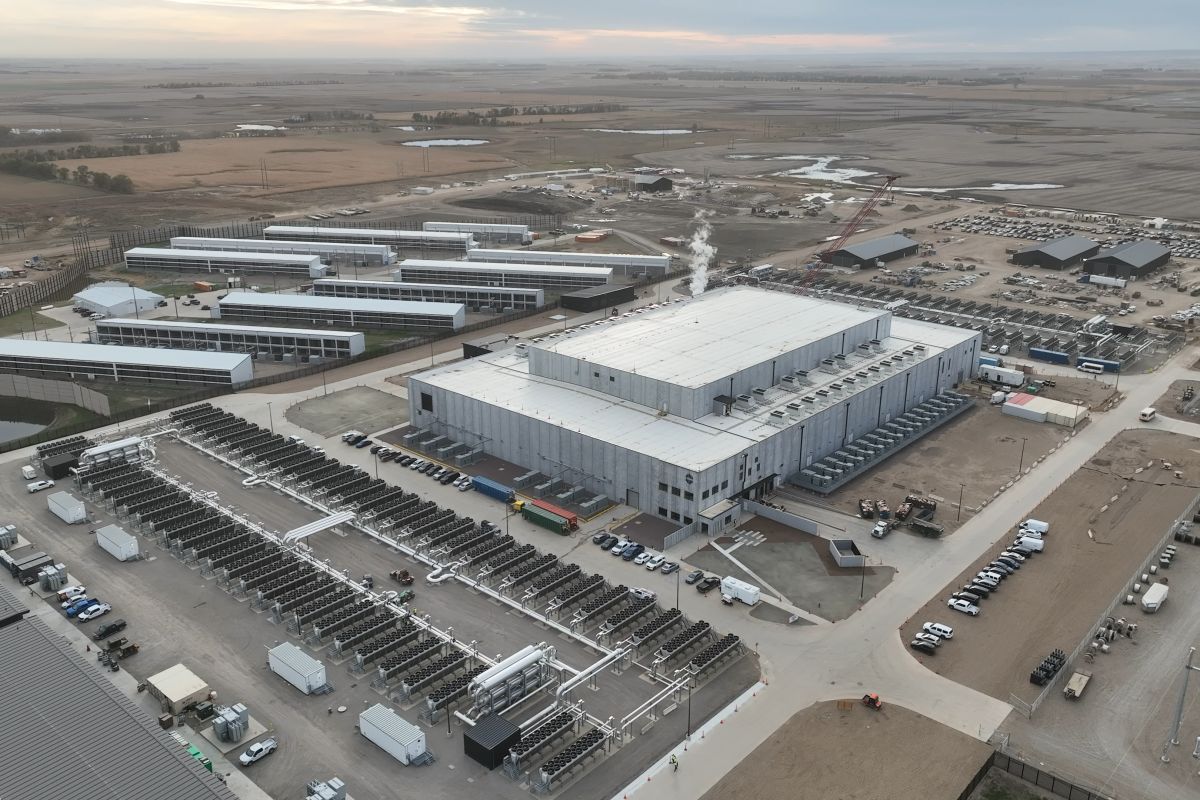
TA Realty, a provider of real estate investment management services, and EdgeConneX, a global provider of data centre solutions, have announced the joint development of a 324MW hyperscale data centre campus in Atlanta, Georgia. In addition to acquiring the site, TA Realty, through its dedicated hyperscale development arm TA Digital Group, will manage power procurement and secure all necessary utilities, zoning approvals, permits, and entitlements, addressing the complexities and challenges inherent in these processes. EdgeConneX will bring its comprehensive experience in designing, building and operating data centres. By combining their respective expertise, both companies will aim to ensure the successful delivery of this project with the goal of bringing the site live on time and on budget. This collaborative effort brings together the strengths of each company, in an effort to provide a comprehensive and efficient data centre development process from inception to completion that is optimised for hyperscale customer requirements. TA Realty's extensive background in real estate and its power-first approach to data centres are enhanced by its rich legacy in the Atlanta market, coupled with its broad presence in other Tier 1 markets. Positioned strategically in a key Atlanta sub-market, this location serves as a crucial element in the company's broader plan to develop large-scale data centre complexes in major metropolitan areas. This initiative also highlights TA Digital Group's dedication to sustainable development and proactive community involvement, the company says. Through that dedication, and by harnessing the existing resources and infrastructure of Atlanta, TA Realty aims to not only ensure the enduring value of its assets, but also foster a positive social impact. Leveraging a foundation of innovation, EdgeConneX drives the future of data centres by enabling customers to achieve their vision with customised, build-to-suit data centre solutions on a global scale. Headquartered in Northern Virginia, Singapore, and Amsterdam, EdgeConneX builds infrastructure solutions where, how and when customers need data centre capacity, delivering capacity for content, cloud and AI service providers. With over 80 data centres across North America, Europe, Asia Pacific, and South America, EdgeConneX delivers hyperlocal to hyperscale to hyperdense data centre solutions globally and sustainably. Construction is set to commence later this year, with the first phase of the data centre campus expected to be operational by 2026. This development supports the growing demands for low latency, high-performance computing driven by advancements in AI, cloud services, and other emerging technologies. As businesses increasingly rely on these technologies, the need for resilient and scalable digital infrastructure continues to rise, making this project an essential component of the region's digital growth.

New Oslo data centre to double as a green urban space
Drawing on the competencies of international engineering consultancy, COWI, the new Skygard data centre is creating highly secure, energy-efficient, and environmentally friendly operations in the centre of Oslo. Skygard is owned by Norwegian companies Telenor, Hafslund, HitecVision, and Analysys Mason Nordic, which have decided to invest 2.4 billion Norwegian kroner (£1.7bn) in the project. For Skygard, it's essential to create a data centre that will address national security, data safety, and sustainability, while strengthening Norway's AI position in the process. Thus, the Skygard data centre, which will use renewable energy sources, will reportedly be one of the most energy-efficient data centres in Norway. The excess heat from the plant will be utilised and integrated into the district heating network, and the circular energy design of Skygard could serve as a pilot project for future data centres in Norway. The future of data centre design Skygard contracted engineering consultancy COWI to deliver a complete solution due to the company's broad experience within the design of data centres, sustainable energy, engineering solutions, and architecture. Meanwhile, Norwegian company, A-lab, was responsible for the architectural design of the centre. Located centrally in Hovinbyen in Oslo, Skygard will take an innovative approach by transforming an industrial brownfield area into a green public space for the citizens of the Norwegian capital. The choice of location means the site itself will have minimal impact on existing biodiversity and contribute to urban greening. The location, however, also represents a series of challenges since the site is placed between a city street and a light rail track. Tommy Lundegaard, Business Development Director at COWI, says, "In a time where data centres are facing increased scrutiny due to energy consumption and land use, Skygard is a visionary project that points the way to the future way of creating data centres. At COWI, we are excited to be an integral part of Skygard's project because it allows us to apply our capacities to fulfil the wishes and needs of our client." Moving from an old data centre to a modern one like Skygard can reduce power requirements by between 50-70%. Utilising surplus heat for district heating will also help energy efficiency and bring down the environmental impact of data centres. National security, data safety, and environmental responsibility The Skygard data centre will provide colocation facilities for multiple tenants, and it will be operational in the first half of 2025. Elise Lindeberg, CEO of Skygard, comments, "With the investment in Skygard and other data centres, we will provide Norway with a much-needed data centre capacity that prioritises national security, data safety, and sustainability. The current geopolitical situation has made the need for secure solutions more important, but there is also an urgent need to improve the environmental footprint of data centres. With Skygard, we address all these issues and set a new standard for the future." In addition to the first centre, Skygard has ambitions to build two more data centres in the capital region. Once fully developed, the three data centres are planned to have a combined capacity of 40MW.

Schneider wins data centre award for Loughborough Uni project
Schneider Electric, a leader in digital transformation of energy management and automation, has received double honours in two categories at the DCS Awards 2024. The first saw Schneider Electric awarded for the ‘Outstanding Contribution to Diversity, Equality and Social Responsibility’ category for its continued commitments to providing equitable opportunities for everyone, everywhere, and ensuring a safe, inclusive working environment. In collaboration with its UK Elite Data Centre Partners, on365 - a specialist in physical IT and data centre infrastructure services, Schneider Electric also won the DCS Award for ‘Data Centre Consolidation/Upgrade Project of the Year’ for the second consecutive year. The award was given for a major modernisation project undertaken at Loughborough University, the world’s leading university for sport-related subjects, and saw Schneider Electric and on365 modernise the university's data centres with new energy efficient and resilient technologies to support new breakthroughs in sporting research. “I’m delighted to accept these awards on behalf of Schneider Electric, which are testament to our ongoing commitments to diversity and inclusion, and our work to address both the sustainability and talent challenges across a host of critical industries”, said Mark Yeeles, Vice President, Secure Power Division, Schneider Electric UK&I. “The data centre sector has become a fourth utility on which all of us depend, and it’s a great honour to be awarded alongside our longstanding partners, on365, for our work together at Loughborough - one of the world’s leading universities.” Data Centre Consolidation / Upgrade Project of the Year In 2023, Schneider Electric and its Elite Data Centre Partners, on365, partnered to deliver a comprehensive modernisation project at Loughborough University, a world-leader in sports related subjects. For the university, IT operations are fundamental to its student experience, providing High Performance Computing (HPC) servers which support analytical research projects, and a highly virtualised data centre environment for critical applications, including finance, administration, and security. To overcome a series of challenges including a redesign and upgrade of its legacy cooling systems, and the need for improved cooling efficiencies, Loughborough worked with the companies to undertake a major modernisation project at its Haslegrave and Holywell Park data centres. Delivered in two phases to avoid the threat of downtime, on365 deployed Schneider Electric’s EcoStruxure Row Data Centre solution. Further improvements in resilience and efficiency were also achieved by replacing legacy UPSs with new Galaxy VS UPSs’, and DCIM EcoStruxure IT software, providing Loughborough with enhanced levels of visibility and data-driven insights which quickly help it to identify and mitigate potential faults before they become critical. This, in conjunction with a new three-year Schneider Electric services agreement, has provided the university 24/7 access to expert maintenance support, reflecting its ongoing commitment to protecting its IT investments, and ensuring the equipment is fully operational, reliable, and quality maintained. Outstanding Contribution to Diversity, Equality and Social Responsibility Schneider Electric’s commitments to diversity, equality, and inclusion (DEI) earned it the ‘Outstanding Contribution to Diversity, Equality and Social Responsibility’ award for the company's continued work to provide offer equal opportunities to everyone everywhere, and its ambition to make employees - no matter who they are, or where in the world they live - feel uniquely valued, and safe to contribute their best. It’s action-driven and strategic DEI efforts are evident through various initiatives, such as doubling the number of opportunities for early-careers and apprenticeships as part of its mission to develop a new generation of talent, while building leadership communities, and implementing inclusive recruitment initiatives, which have been instrumental to its UK operations. Furthermore, active work has taken place to work on building a sense of community and belonging by creating spaces for sharing, exchanging, and fostering connections through its Employee Resource Groups (ERGs), Women's Leadership Cohorts, Military Ambassadors, dedicated initiatives for employees on late stage of their career, and others. Additionally, inclusive policies and flexibility have played a pivotal role in supporting employees on different career and life stages. Ensuring employees are also able to contribute to society showcasing collective impact is represented with Schneider Electric’s Volunteering Day on 12 July 2024 which runs for a second year. Last year, employees from across the UK and Ireland united with a shared purpose: to give back to their communities and make a positive difference in the world with activities like litter picking, gardening, and beach clean-ups, showing dedication to community engagement and sustainability. Schneider Electric’s sustainability efforts also exceeded expectations during the last twelve months, with 112 million tonnes of CO2 saved and avoided in 2023 alone. Great strides were also made in transforming its supply chain, and carbon emissions from Schneider Electric’s top 1,000 suppliers fell by 27%, while 21% of the company’s most strategic supply chain partners met Schneider Electric’s decent work standards. By the end of 2023, 63% of Schneider Electric’s product packaging was free of single-use plastic and made of recycled cardboard. The company’s long-standing commitment to close the energy gap also advanced at pace, with 46.5 million people now accessing clean and reliable electricity around the world. For more from Schneider Electric, click here.

Schneider Electric helps Sidara build a greener future
Schneider Electric, a leader in the digital transformation of energy management and automation, has revealed that its smart energy management solutions feature in the London headquarters of leading design, engineering, and consulting group, Sidara. Designed by Sidara’s own engineers, 150 Holborn has been created with sustainability and user efficiency at its core. Embedded with innovative smart building technology, the new headquarters will play a key role in supporting Sidara’s ambition to decarbonise its business by 2030, under the World Green Building Council’s Net Zero Carbon Buildings Commitment. The building, which officially opened its doors in January 2023, is over 180,000 square feet and caters for over 1,000 employees. It is built on Schneider Electric’s EcoStruxure IoT platform and uses a sophisticated network of over 650 sensors and controls to collect, analyse, and manage over 60,000 data points. These provide vital information into energy usage, occupancy patterns, and environmental conditions, such as temperature, humidity, and light intensity, in near real time. The data and insights from the platform allow Sidara to tailor the environmental conditions within office spaces and meet the specific needs and preferences of occupants. Whether it’s adjusting lighting levels, modifying temperatures or boosting air quality, the system ensures that workspaces are not just habitable but are optimised to promote well-being and productivity. It is also helping the company to reduce energy waste and deliver on the wider sustainability initiatives. “Access to Schneider Electric’s expertise and experience has been vital to understanding how our building’s technology and systems must be designed to enable continuous optimisation and innovation,” says Dan Cope, IT manager at Sidara. “Our vision is to create a best-in-class working environment to optimise energy consumption and enhance comfort levels for both employees and visitors. However, this is just the beginning. Becoming more sustainable is a journey and ongoing engagement with the Schneider Electric team will be key to understanding the building and benchmarking ourselves moving forward.” Kas Mohammed, VP Digital Energy at Schneider Electric UK & Ireland, notes, “With 150 Holborn, Sidara has created a building of the future, today. Every aspect of its smart infrastructure has been meticulously planned and executed to help the company on its journey to net-zero. This new headquarters stands as a beacon of best-practice and Sidara’s efforts to build sustainability into its very foundation is something that others can – and should – look to emulate.” For more from Schneider Electric, click here.

High-performance connectivity for apartments in Finland
More than 500 apartments at a housing complex in Finland can now access fast and affordable broadband thanks to a partnership between InCoax Networks and Finnish network operator, Pohjois-Satakunnan Seutuverkko (PSSV). PSSV deployed InCoax’s MoCA Access 2.5 technology to provide symmetrical gigabit broadband – with the option of reaching multi-gigabit speeds – to tenants living in apartments in Kankaanpää, Finland. By extending its fibre network to each building and reusing the existing coaxial network, previously used for cable-TV, PSSV could provide a fibre-like broadband performance to individual tenants residing in the multi-dwelling unit. “We are delighted to provide tenants at Kankaanpään Asunnonhankinta with affordable broadband that supports their day-to-day activities, including home working and education,” says InCoax’s Business Development Director, Helge Tiainen “PSSV has been able to increase the services delivered with InCoax’s cost-effective and easy to deploy technology, which has also enabled the network operator to introduce more competitive pricing.” The partnership has more than halved the price of TV and broadband services packages for tenants, which now start from €6 (£5.15) per month in comparison to the previous start price of €12.95 (£11.10) per month. The initial take-up rate prior to deployment was only 13% of the complex’s apartments. However, the return on investment (ROI) can be reached within the first year of deployment if 25% of customers sign up for the new broadband offering from PSSV, which will be achieved according to PSSV’s estimates. Located in Kankaanpää, a town and municipality of Finland, the complex consists of 545 apartments. PSSV’s fibre network covers five municipal areas in the Western part of Finland, and it is the only local operator in the region. Jukka Ehto, CEO at PSSV, notes, “Fast and reliable broadband is now a requirement everywhere, and it is vital that tenants’ broadband experience is prioritised. InCoax’s technology and technical support has laid the foundations for us to continue to promote digital inclusion and provide widespread connectivity for homes in Finland.” The technology’s cost-effectiveness and non-intrusive nature enables a proactive deployment process for network operators. It can be deployed even if a limited number of tenants purchase the package of services available. This means that additional apartments in the complex can be quickly and easily integrated onto the network once they sign onto the new broadband package. InCoax’s MoCA Access 2.5 technology offers multi-gigabit speeds of up to 2.5 Gbps and has the potential to provide up to 10 Gbps in the near future.

Quantum Frederick breaks ground on its 600-acre nature reserve
Quantum Loophole, a developer of the first master-planned data centre community, has announced that the company broke ground on its revolutionary 600-acre nature reserve at its Quantum Frederick campus in Frederick, Maryland. The nature reserve will act as a carbon-sink onsite, enabling operation of the first carbon negative industrial-development of its kind. Once complete, the integrated Nature Reserve will have a total of one million plantings. In March 2024, the project kicked off with a demonstration planting in collaboration with University of Maryland (UMD) professors and students, as well as the local community. The trees have been planted in association with Global Tree Initiative (GTI), an organisation focused on advancing global efforts in reforestation. The plantings feature all-native species selected to optimise carbon capture and enhance biodiversity. The Nature Reserve expands on the company’s Bees and Trees initiative with the local Frederick County Beekeepers and students serving as caretakers of hives within the Nature Reserve. Maryland is home to over 400 species of pollinators which are vital for maintaining biodiversity and ecosystem health. “Working in partnership with the University of Maryland and Frederick County, we made an important promise to prioritise the revitalisation of this site, from its dirty industrial past into a place that demonstrates the potential for modern sustainable industry,” says Scott Noteboom, Co-Founder and CTO at Quantum Loophole. “The nature reserve is a vital differentiator of our master planned data centre communities. By integrating our own human innovations with those of nature herself, we’re able to help industry become part of nature, versus counter to nature. By doing so, we hope to set an example not just for data centre developers, but to help serve as a blueprint for any industrial development in the world.” Master Planning enables Quantum Loophole to achieve its carbon neutral goals through a two-step approach. Firstly, the company enables the reduction of carbon emissions through strategic site selection and paired with diverse high criticality power infrastructure - as well as substantiating renewable primary and backup energy supply chains. Secondly, the company has established the 600-acre nature reserve to capture all carbon emitted onsite operationally. “Breaking ground on the 600-acre Nature Reserve at Quantum Frederick marks a critical step towards a holistic, industrial ecology approach in data centre development,” says Dr. David Tilley, Associate Professor at UMD. “As these centres become integral to our livelihood and social fabric due to global increases in computing needs, the University of Maryland’s Departments of Environmental Science & Technology and Landscape Architecture are eager to advance a partnership with Quantum Loophole. Together, through research on nature-based solutions and demonstration of ecologically engineered designs, we aim to establish the global gold standard for more sustainable data centre practices.” When the nature reserve is complete, it will be open to the public to enjoy scenic walking trails throughout the Quantum Frederick 3.5 square-mile development. The project is part of Maryland’s wildlife corridors network and helps play a pivotal role in preserving our environment’s natural balance. In addition to revitalising the area with native plant species, the Nature Reserve acts as a buffer between human and industrial environments. This buffer ensures the health of the viewscape, soundscape, and the community by using berms, trees, and public trails to create benefits beyond traditional data centre development. Quantum Loophole’s master planned approach sets the stage, beginning with the site selection process, to map out the major land components in advance. The nature reserve is a vital element to master planning, overlaying the environmental benefits aligned with particular site features and needs.

Schneider Electric increases support for the 'Orchards in the Community’ initiative
Schneider Electric has announced its participation in the DCs for Bees initiative, in association with Host In Ireland, for the third successive year. The ‘Orchards in the Community’ initiative accompanies Schneider Electric’s commitment to the DCs for Bees Pollinator Plan, a collective plan of action led by Host In Ireland and executed by 48 partners from across the data centre industry. It aims to save Ireland's declining bee population and ensure its survival for future generations, along with other endangered species such as flying insects and butterflies. To help protect bees, increase pollination, and support biodiversity, Schneider Electric, alongside 73 other companies, has pledged to contribute to the planting of over 3,587 mixed fruit orchards across Ireland. As part of the programme, 222 schools and colleges and 171 community groups from tidy towns, retirement homes, community centres, and local sports facilities have received and planted orchards in their communities. Today these orchards provide vital green spaces in Ireland’s cities and towns. Alongside this, 33% of the country's 99 wild bee species are at risk of extinction but the new orchards provide them and other biodiverse creatures with vital food as they struggle when emerging from winter. During the partnership, Schneider Electric sponsored a total of 500 orchards - equivalent to 2,500 trees - over three planting years. In 2023, it further sponsored 100 orchards consisting of three apple trees, a plum tree, and a pear tree in each orchard. 34 orchards have been taken by employees and 66 orchards went to communities who had signed up for the initiative. Communities that have benefited from the biodiversity benefits of the orchards include Kilmaine Tidy Towns, Monivea Tidy Towns, Gorey Community Schools, Abbeyleix Tidy Towns, Oaktree Court Residence Association, Dromahair Tidy Towns, Holy Rosary College, and Sustainable Community Area Network Milltown.   “Orchards are a focal point for communities to connect people with nature. Growing orchards in the community helps raise awareness of our connection to our food sources and plays an important role in biodiversity and the plight of bees in Ireland,” says Garry Connolly, founder of Host in Ireland. “That spirit of community is alive and well with ‘Orchards in the Community’ as organisations like Schneider Electric come together with biodiversity groups, schools, colleges, tidy towns, and others across Ireland to tackle challenges like biodiversity loss to save Ireland’s pollinators.”

Schneider Electric delivers data centre project for Loughborough University
Schneider Electric has delivered a new data centre modernisation project for Loughborough University, in collaboration with its elite partner, on365. The project saw Schneider Electric and on365 modernise the university’s IT infrastructure with new energy efficient technologies, including an EcoStruxure Row Data Center, InRow Cooling solution, Galaxy VS UPS and EcoStruxure IT software, enabling the university to harness the power of resilient IT infrastructure, data analytics and digital services to support new breakthroughs in sporting research. As Loughborough University is known for its sports-related subjects and is home to world-class sporting facilities, IT is fundamental to its operations, from its high-performance computing (HPC) servers which support analytical research projects, to a highly virtualised data centre environment that provides critical applications including finance, administration and security. To overcome a series of data centre challenges, including requirements for a complete redesign, modernisation of legacy cooling systems, improved cooling efficiencies, and greater visibility of its distributed IT assets, the university undertook the project at its Haslegrave and Holywell Park data centres. Delivered in two phases, the project firstly saw on365 modernise the Haslegrave facility by replacing an outdated raised floor and deploying an EcoStruxure Row Data Center solution. The deployment of this significantly improved the overall structure, enabling an efficient data centre design. During the upgrade, it also brought other parts of the infrastructure under the IT department’s control, using new InRow DX units to deliver improved cooling reliability, and provide it with greater ability to cope with unplanned weather such as heat waves, which had adversely affected its IT and cooling operations in the past. Use of this solution also created a new space for future IT expansions and extended a ‘no single points of failure’ design throughout the facility. This made the environment more suitable for a new generation of compact and powerful servers, and the solution was replicated at Holywell Park thereafter. Further improvements in resilience and efficiency were also achieved by Schneider Electric’s Galaxy VS UPS with lithium-ion batteries. “At the foundational level of everything which is data-driven at the university, the Haslegrave and Holywell data centres are the power behind a host of advancements in sports science, and our transition towards a more sustainable operation,” says Mark Newall, IT Specialist at the University of Loughborough. “Working with Schneider Electric and on365 has enabled our data centre to become more efficient, effective and resilient.” The university has also upgraded the software used to manage and control its infrastructure. It has deployed the company’s EcoStruxure IT platform, providing it with enhanced visibility and data-driven insights that help identify and mitigate potential faults before they become critical. This, in conjunction with a new three-year Schneider Electric services agreement delivered via on365, has given the university 24x7 access to maintenance support. The university also utilises a large distributed edge network environment, which has in excess of 60 APC Smart-UPS protecting it. As part of its services agreement, all critical power systems are monitored and maintained via EcoStruxure IT, providing real-time visibility and helping IT personnel to manage the campus’ network more efficiently.

Ten years of growth – ten years of change by i3 Solutions Group
By Ed Ansett, Chairman and Founder, i3 Solutions Group Over the last decade, the data centre industry has experienced a shift in scale that even the most optimistic of players had not foreseen. 10 years ago when i3 Solutions Group was founded, a data centre design of 15MW-20MW would be bracketed in the medium-to-large category. Today, thanks to the hyperscalers and large commercial data centre developers, projects 10 times that size are not unusual. More predictably, data centre developments are moving beyond traditional large metropolitan established markets into every corner of the world. The higher density loads that were forecast have grown from averages of 3-5kW per rack 10 years ago, to 15-20kW today. At the same time, the requirement for high levels of resilience has softened. Power fault tolerance at 2N levels have moved to N+1 or N+2 designs, partly due to cost and partly to advances in IT, such as software failover across availability zones. This growth, driven by an exponential demand for data throughout the globe and touching every commercial, social, and government activity, is now challenging the data centre industry to provide long-term sustainable infrastructure design, developments and operation of digital infrastructure at vast scale. While governments tout digitalisation as one answer to economic growth, a raft of regulations to ensure sustainability measures such as carbon reporting and circularity are now being imposed upon the industry. The game has changed. From then to now Building on more than two decades of mission critical data centre engineering experience, Ed Ansett founded i3 Solutions Group in 2013. Based on a desire to do great work for its clients, the company had a clear mission to challenge the status quo and provide new approaches to design thinking for data centre power, cooling and control systems. “Like all start-ups, i3 had to prove itself. Beginning with securing and successfully delivering relatively small mission critical projects, the company proved its credentials, and this led to the number and size of projects delivered growing consistently over our first 10 years. From two engineers we are now a global team with offices in Asia Pacific and UK, and representation through our partnerships in the US, EMEA and across the globe. “Today we are delivering major projects at scale with the world’s largest and most recognisable data centre brands and global critical infrastructure developers. We continue to work with governments and commercial operators and the leading global infrastructure providers,” says Ed Ansett, i3 Chairman and Founder. In its first 10 years of business, i3 Solutions Group has delivered multiple award-winning data centre projects for clients, developed entirely new concepts in data centre power provision, and become respected thought leaders, helping shape industry approaches to practical sustainability and growing an international client base. “i3 Solutions has been at the forefront of data centre innovation since its inception. Their design focus on reliability, energy efficiency and sustainability has set the mark for mission critical facilities,” says Peter Gross PE, Managing Partner, PMG Associates Consulting and Advisory. The next 10 years i3 experts continually scan the horizon for what challenges and opportunities are coming next. These challenges naturally include the application of sustainable technologies to the data centre industry. This is a topic that begins with what happens outside the data centre to what happens at IT level. The data centre sector needs to understand that it must behave in a manner that reflects its growth curve over the last 10 years and its growth trajectory over the next decade. This requires the industry to recognise its growing public profile by learning to manage its reputation in a mature manner. It means changing attitudes by embracing practical approaches to design and operation that verifiably tackle sustainability issues with technical, engineered solutions. For example, there must be an end to any form of greenwashing. The industry must accept and understand the difference between PPA (Power Purchase Agreements) and carbon offsetting, versus design and operation that empirically cuts its own GHG emissions. It must grasp the sustainability nettle on its own, and broader economic and national interests by accepting that at scale, data centres will be operating as microgrids. That is, they will become power producers as well as energy-intensive users. The industry must embrace demand response (DR) opportunities, designing in the capability to feed power back to the main grid. “As countries seek to increase the sustainability of their grids, this is the single most important power issue that we face if we are to maintain the reliable flow of electricity to the IT load. This is not just an issue for the industry, but a global issue as governments force electrical grids to decarbonise,” says Ed. Within the walls of the data centre, the industry has lowered PUE and WUE, and those performing best have proved what can be achieved. But in terms of pure power provision the sector may have hit the limits with these efficiency gains. Inside the data centre, new sustainability gains must include design and engineering working more closely with IT. i3 continuously works on gaining a deep understanding of IT operations and how design can help support workloads through more efficient, reliable and sustainable power provision. One of the company’s first detailed technical papers, as part of its Green House Gas (GHG) abatement initiative, was titled, “An Approach to Calculating and Defining Overall Data Centre Energy Efficiency including Compute, Network, Storage and Facilities.” The demand growth for data is accelerating. “No-one, and certainly not a data centre engineer, can stop the data tsunami. But as engineers we want to push the industry to maximise the utilisation of all secured and available power. To do that requires a forward-looking understanding of how the IT load is changing. Not all IT loads are equal, so we cannot continue with low utilisation and monolithic power topologies,” says Ed. Throughout its first 10 years of operation, i3 has built its business around a team of experts with a commitment to delivering excellence for clients. At the same time, the company has cultivated an ethos of curiosity, critical thinking and enquiry dedicated into creating ever more efficient and sustainable critical digital infrastructure. It will continue these efforts over the next 10 years and beyond.

evroc reveals plans to build Europe's first sovereign hyperscale cloud
evroc has presented its plans to build Europe’s first secure, sovereign, and sustainable hyperscale cloud. It recently closed a seed funding round to build its launch team. The company now plans to raise and invest three billion euros over the next couple of years to develop and operate two hyperscale data centres, one in Northern Europe and one in Southern Europe. By 2028, it aims to establish eight hyperscale data centres, as well as three software development hubs, across the continent, employing over 3,000 people in total. “The lack of home-grown hyperscale cloud providers poses a serious challenge for Europe. Not only because our citizens’ data is placed under foreign ownership by companies operating under laws that conflict with European privacy legislation. It is also a real threat to our long-term competitiveness in a digital world where others are advancing much faster. Europe’s digital economy must be built on a European foundation,” says Mattias Åström, Founder and CEO, evroc. Cloud services play a key role in critical digital infrastructure. Between 2017 and 2022, the European cloud market grew five-fold. During the same time, the market share of European cloud players fell from 27% to 13%. A competitive European hyperscale cloud is critical to enable the continent’s digital economy, keeping investments, job creation, technology development and intellectual property rights within its borders. It will also give Europe digital sovereignty that is compliant with European privacy legislation, settling a long-standing problem. “evroc has spotted an exciting opportunity to make Europe a leader in cloud technologies by bringing together the continent’s brightest minds, ambitious thinkers, and experienced entrepreneurs. We believe the next generation of European tech companies will be built on evroc’s cloud services,” says Ted Persson, Partner at EQT Ventures. Data centres until now have had a significant environmental footprint, consuming about 3% of the global electricity supply, and accounting for 2% of global greenhouse gas emissions. evroc will build a clean cloud by leveraging energy-efficient technologies to maximise its sustainability impact, including a proprietary eco load balancer solution. The eco load balancer enables data to flow seamlessly and securely between evroc’s data centres based on where renewable energy is most readily available and affordable. “The data centre industry is on par with the airline industry in terms of greenhouse gas emissions. Data processing will continue to grow substantially over the coming decades, causing significant emissions and damage to our climate, unless we change direction. evroc’s holistic strategy for clean energy usage, combined with the implementation of state-of-the-art energy efficiency technology, could set the standard for the entire industry,” says Tove Larsson, Partner at Norrsken VC.


Translate »