Data Centre Projects: Infrastructure Builds, Innovations & Updates

Pure DC expands its Middle East data centres
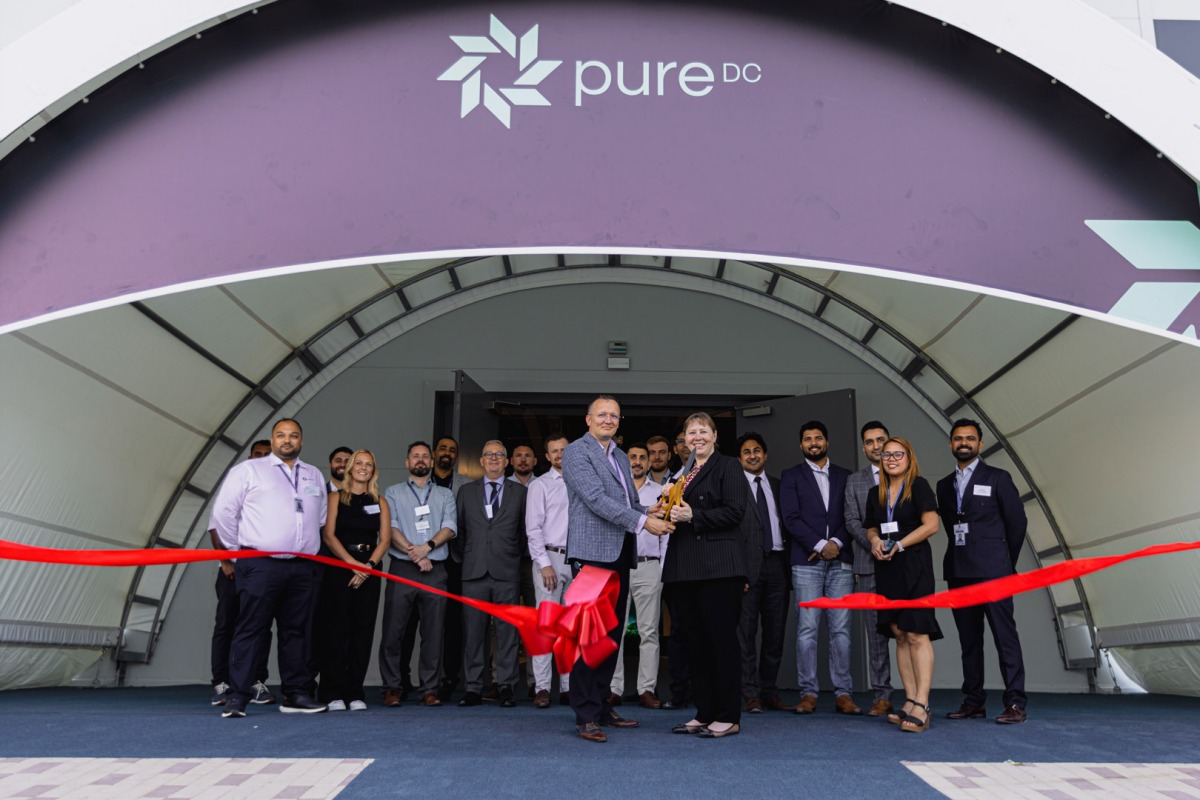
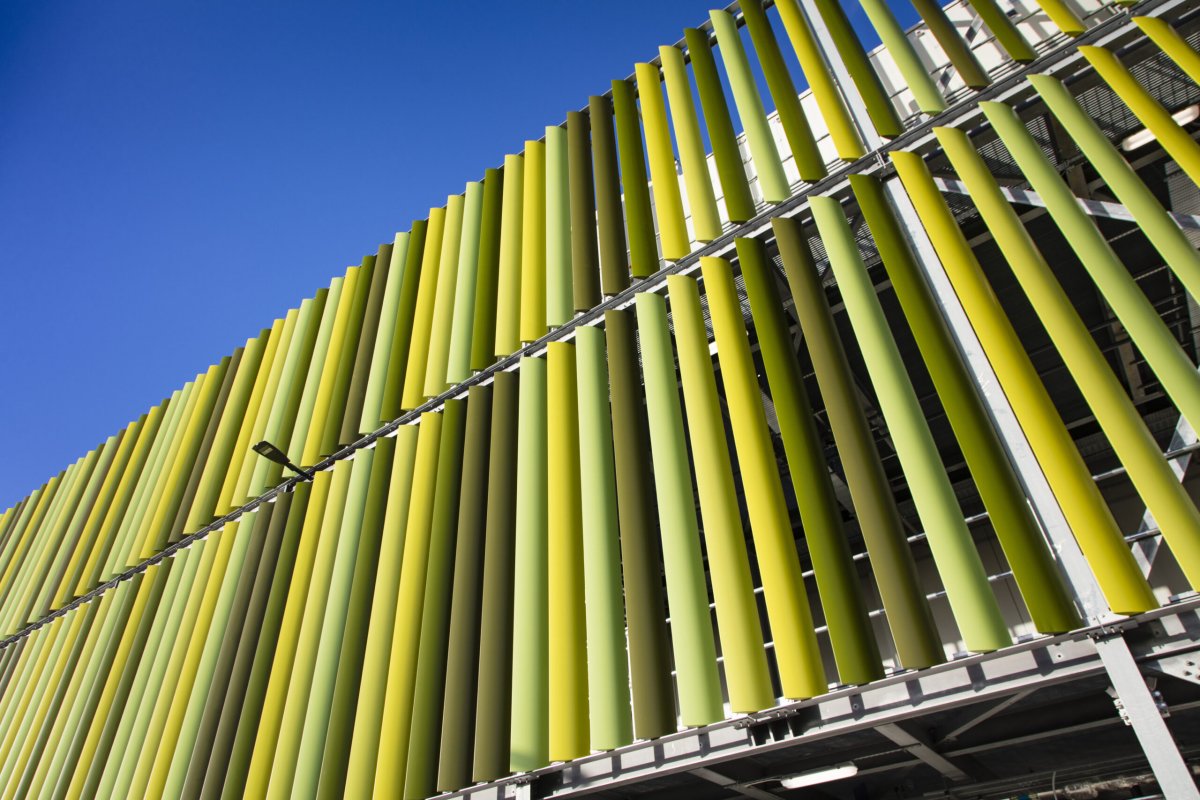
Pure Data Centres Group (Pure DC), a designer, developer, and operator of hyperscale data centres, has confirmed further investment in the Middle East, including a capacity increase at its Abu Dhabi campus and new development plans in Saudi Arabia. The company has received final approval from TAQA to expand IT capacity at its AUH01 site in Abu Dhabi from 41MW to 48MW. The increase has been achieved through design optimisation and the addition of new power infrastructure, supporting additional demand including AI workloads. The AUH01 campus is located on a 16-acre (64,749m²) site and is designed for phased expansion. One 20MW building is already operational, with initial data hall capacity delivered to a hyperscale customer in 2025. The site uses a combination of air and liquid cooling to support different deployment requirements. Pure DC has also matched 100% of the electricity used at AUH01 in 2025 with International Renewable Energy Certificates (I-RECs), sourced from solar generation at the Mohammed bin Rashid Al Maktoum Solar Park in the UAE. This approach aims to support reduced carbon intensity for operations and contribute to market-based Scope 2 emissions targets. Regional growth plans Alongside its UAE operations, Pure DC has entered a joint venture with Dune Vaults to develop a hyperscale data centre in Riyadh, Saudi Arabia. The RUH01 campus will be built on a 270,000m² site, with an initial design capacity of 57.6MW across two buildings. The development has potential to scale beyond 100MW as demand increases. Gary Wojtaszek, Executive Chairman and Interim CEO at Pure DC, comments, “We remain deeply committed to the Middle East and grateful for support we continue to receive from authorities across the UAE and KSA in the current climate. "Our sites are delivering uninterrupted service, reflecting the resilience and reliability that underpins our presence in the region. While the current macro-political environment may have slowed sector investment, digital demand remains unchanged. "The region’s ambitious national visions recognise the transformation enabled by digital government, enterprise modernisation, and a future-ready workforce. Pure DC is fully committed to contributing to that future through the continued development and operation of world-class digital infrastructure across the Middle East.” For more from Pure DC, click here.

Wärtsilä secures 790MW Texas data centre deal
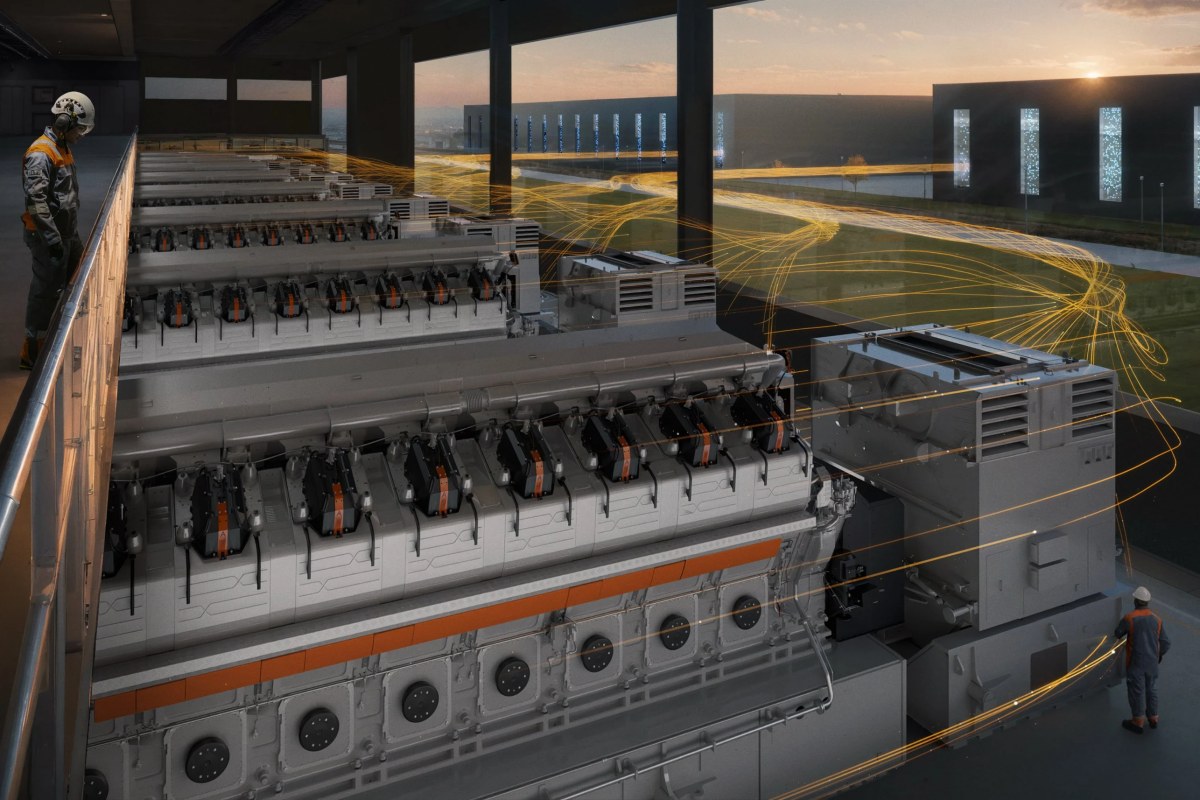
Wärtsilä, a Finnish technology company that manufactures and services power systems, has secured an order to supply a 790MW off-grid power system for a data centre under construction in Texas, USA. The project will use 42 Wärtsilä 50SG gas engines operating on natural gas to provide primary power for the facility. The order was recorded in the company’s Q2 2026 intake and represents its first data centre-related project in Texas. The deployment reflects growing demand for power in regions where grid capacity is constrained, particularly as large-scale AI and cloud infrastructure continues to expand. Wärtsilä’s engine-based system is designed to deliver continuous power without reliance on the grid, supporting early-stage operations while grid connections are developed or where capacity is limited. Engine-based power for off-grid deployment The selected engines are capable of operating at full output in high temperatures, which is a key consideration for projects in Texas. The system is also designed to support efficiency and emissions requirements, with a heat rate of approximately 6,800 Btu/kWh. The modular configuration allows capacity to be scaled as demand increases, while also enabling integration with renewable energy sources where available. Anders Lindberg, President of Wärtsilä Energy and Executive Vice President of Wärtsilä, comments, “Wärtsilä’s primary power solutions offer significant benefits to data centre developers by providing continuous, reliable primary power while using significantly less water and fuel than traditional alternatives. "Also, our power solutions ramp up quickly and offer a dependable and sustainable foundation for delivering power availability, which is vital for AI and cloud operators. "Our modular engine power plants allow easy capacity scale-ups, making them an ideal choice for the fast-growing data centre market.” Texas continues to attract data centre development due to its access to natural gas resources, established energy infrastructure, and growing renewable generation capacity. Engine-based systems can also be used to support grid balancing once a facility is connected. Equipment delivery for the project is scheduled for 2028, with full operations expected by late 2029. Wärtsilä has now supplied more than 2.4GW of power capacity to data centre projects across the United States.

Yondr powers up 27MW Toronto data centre
Yondr Group, a global developer, owner, and operator of hyperscale data centres, has energised its 27MW data centre in Toronto, marking its entry into the Canadian market. The 4.5-acre (18,211m²) site is expected to be ready for service in mid-2026 and forms part of the company’s wider expansion across North America and Europe. The facility is designed to provide hyperscale capacity to support growing demand for digital infrastructure in the region. The data centre incorporates a closed-loop cooling system to reduce water usage and has been developed in line with the Toronto Green Standard. The site also includes electric vehicle charging points, cycle parking, bird-friendly glazing, and landscaping using native and pollinator plant species. Yondr states that the development aligns with its target to achieve net zero scope one and two emissions by 2030. Sustainability and community engagement initiatives Alongside the build, Yondr has partnered with the University of Toronto to support a scholarship programme for undergraduate students across disciplines including computer science, commerce, life sciences, and physical sciences. The programme offers awards of up to CA$5,000 (£2,700), with two students supported to date. The company has also contributed to local initiatives, including pre-apprenticeship placements, apprentice site tours, support for youth sports teams, and a tree planting event linked to Earth Day. John Madden, Chief Data Center Officer at Yondr Group, says, “We’re proud to mark the energisation of our Toronto data centre campus - a major milestone that moves us another step closer to delivering critical digital infrastructure for the region. "Demand for capacity is accelerating at a pace we’ve never experienced before, driven by AI scale and a shift towards compute-led economies. Our Toronto campus forms a key part of Yondr’s strategy to deliver the next generation of sustainable, high-performance data centre capacity across North America and beyond.” Todd Sauer, VP Design & Construction Americas at Yondr Group, adds, “This campus has been designed with future demand and long-term environmental responsibility in mind, integrating innovative cooling efficiency, resilience, and local sustainability standards from the outset. "Combined with our delivery model and rapid campus deployment approach, we’re unlocking speed, scale, and certainty for customers as they plan the digital infrastructure of tomorrow. “We’re committed to building not just capacity, but lasting value. From delivering hyperscale-ready infrastructure to working with academic partners like the University of Toronto to invest in future talent pipelines, this project represents a significant commitment to the region and its long-term digital growth.” For more from Yondr Group, click here.

ECL developing 35MW Santa Clara data centre
ECL, a US data-centre-as-a-service company, has announced plans to develop a 35MW data centre in Santa Clara, California, USA, designed to support high-density AI workloads using a mix of power sources. The facility, known as CSC-1, will combine on-grid electricity with hydrogen and natural gas generation. The approach is intended to address growing demand for power in data centre markets where grid capacity is limited. CSC-1 will launch with rack densities ranging from 75kW to 270kW, and the site is based on ECL’s FlexGrid architecture, which integrates multiple power inputs and is designed to operate alongside local utility infrastructure. The system is expected to deliver a power usage effectiveness (PUE) of below 1.15 while supporting lower emissions through a combination of cooling methods. The development will follow a phased approach, starting with an initial 2.5MW deployment and scaling up to full capacity as demand increases. This model is intended to allow operators to begin AI workloads earlier, without waiting for full site completion. Modular power approach addresses grid constraints Northern California remains a constrained market for data centre power, with delays in grid connections affecting new developments. As a result, alternative approaches such as on-site power generation are becoming more widely adopted. ECL’s FlexGrid system uses modular power blocks that can be deployed incrementally. This allows capacity to be added over time, aligning infrastructure growth with demand for AI compute. The system also incorporates different cooling methods, including direct-to-chip and air cooling. When hydrogen is used as a power source, by-product water can be reused within the cooling process, reducing the need for additional water supply. The architecture is designed to meet Tier III-level reliability requirements and includes a real-time management platform to monitor and adjust power generation, cooling, and rack-level operations. Yuval Bachar, Co-founder and CEO of ECL, comments, “A 35MW facility delivered in Santa Clara in under a year would have been unthinkable through traditional grid-connected development. "Every major AI operator in the Bay Area is staring at the same maths, with years-long interconnection queues pitted against AI deployment needs that are growing by the minute. "By phasing growth through modular power blocks, ECL matches infrastructure deployment to the actual pace of AI demand rather than forcing customers to overbuild or wait. This site demonstrates that power architecture itself can become the enabling layer for AI scale rather than the constraint.” ECL is currently accepting enquiries from prospective tenants for the site. For more from ECL, click here.

'AI growth doesn’t have to break the grid'
A UK high‑performance computing (HPC) data centre has reportedly cut its carbon emissions by three quarters while easing pressure on the electricity system, offering a blueprint for how the fast‑growing AI sector can expand without overwhelming the grid. Stellium Datacenters, which operates one the UK's largest purpose-built data centre campuses near Newcastle, has switched to a new way of sourcing electricity. This matches its power use with renewable generation hour by hour, rather than relying on annual averages. The move comes as data centres face mounting scrutiny over their energy use, with concerns growing that AI and cloud computing could strain local grids and push up energy costs. That scrutiny has intensified in recent months, with MPs launching an inquiry through the Environmental Audit Committee into the environmental impact of data centres, including their growing electricity and water use and the pressure they place on local grids. Working with renewable energy supplier Good Energy, Stellium now runs its site on a 100% renewable, hourly‑matched electricity supply, linking consumption directly to power generated by more than 3,300 independent UK renewable generators. This approach allows the company to show exactly when its electricity demand is met by renewable sources, achieving an hourly matching score of 95.4%, more than double the current market average of around 43%. Planned additions, including large-scale battery storage, are expected to lift this to 97–98% while being able to show exactly which UK renewable assets powered the data centre and when. 'Hourly matching' as an improved metric Traditionally, many data centres rely on renewable certificates that show clean electricity was generated somewhere on the grid over a year, even if fossil fuels were used at the time power was actually consumed. Some “100% renewable” tariffs relying on this system mask continued reliance on fossil-fuelled power at precisely the moments when the grid is most constrained. By contrast, hourly matching provides a much clearer picture of real‑world impact, demonstrating which users are sourcing clean, homegrown power versus relying on fossil‑fuelled generation at peak times. Stellium says the change has transformed conversations with customers, regulators, and auditors, particularly global AI and technology firms with strict net zero and reporting requirements. The company says it can now demonstrate, in detail, which renewable assets powered its operations, when they did so, and where they are located. Paul Mellon, Operations Director at Stellium, notes, “Data centres often get bad press for their high, inflexible energy use. But this shows that AI and high‑performance computing don’t have to come at the expense of the grid or the climate. "By switching to hourly‑matched renewable power, we’ve been able to cut emissions dramatically while giving customers the transparency they increasingly demand.” Nigel Pocklington, CEO of Good Energy, adds, “By matching electricity use with renewable generation hour by hour, Stellium can show when clean power is actually being used. "That kind of transparency cuts carbon emissions, reduces reliance on fossil fuels at peak times, and proves that digital growth and a resilient energy system can go hand in hand.” Explosive data centre growth in the UK The case comes as the UK prepares for a major expansion in data centre capacity to support AI, cloud computing, and data‑driven industries. As planners, communities, and policymakers look more closely at how new developments will affect local infrastructure, Stellium’s experience suggests that data centres can respond by sourcing and reporting their energy responsibly, rather than relying on offsetting or misleading annualised accounting. With pressure growing on the sector to prove its environmental credentials, the model demonstrates that practical solutions may already exist, and that AI‑driven growth can be aligned with a cleaner, more resilient electricity system. For more from Stellium Datacenters, click here.

Lonestar unveils space-based data storage service, StarVault
Lonestar, a space-based data storage company building orbital and lunar data centres, has announced the launch of StarVault, the "world's first" commercial space-based data storage service, alongside plans to expand its orbital infrastructure through a new agreement with Sidus Space, a US space and defence technology company. The platform is designed to store data off-planet, combining space-based infrastructure with cryptographic key management. It is intended for use by organisations seeking additional resilience for critical data. Lonestar has also ordered a second orbital payload from Sidus Space to increase storage capacity and redundancy. The first payload is currently in development and is scheduled to launch in October aboard the LizzieSat-4 satellite, with a second launch planned for 2027. Expansion of orbital data infrastructure The expansion follows earlier test missions and increasing interest from sectors including government, finance, and critical infrastructure. The StarVault platform is designed to provide an additional layer of data protection, supporting resilience against risks such as cyber incidents, environmental disruption, and geopolitical instability. Steve Eisele, CEO of Lonestar, says, “Demand for off-planet data security has exceeded expectations. With StarVault, we are not just launching a new category; we are scaling it.” Sidus Space is building the initial payload, with further deployments expected as Lonestar develops its orbital data storage network. The companies state that the initiative represents an early step in the development of space-based data infrastructure, with a focus on secure storage beyond traditional terrestrial data centres.

DataScope, BCEI sign global data centre agreement
DataScope, a UK provider of construction management software, and Burr Computer Environments (BCEI), an engineering and construction management firm specialising in data centres, have signed a global enterprise agreement to deploy DataScope’s full software suite across BCEI’s data centre projects worldwide. The agreement will cover all current and future developments, including projects delivered in collaboration with EdgeConneX. It formalises a partnership that began in September 2020 with the deployment of DataTouch Daily Site Co-ordination in Santiago, Chile, and has since expanded across multiple international data centre campuses. Locations where the system has been implemented so far include Brussels, Jakarta, Kuala Lumpur, Frankfurt, Chicago, Atlanta, New Albany, and Austin. Over this period, DataScope’s platform has been used to provide visibility of labour allocation, site attendance, and workforce competency tracking. It has also supported the management of high-risk activities, alongside reported improved communication and collaboration across project teams. BCEI has additionally used the system to manage key health and safety processes digitally, including permits, safety communications, RAMS, and safety observations. The companies say this has enabled the use of real-time safety data to support proactive risk management across projects. Supporting global scaling and consistency The enterprise agreement is intended to support BCEI’s continued global expansion, enabling more consistent reporting, improved operational control, and greater efficiency across its data centre portfolio. Jason Crowell, Environmental, Health, and Safety Director at BCEI, comments, “Data centre delivery is evolving rapidly and our clients demand both predictability and absolute reliability. "This global agreement ensures we have the digital backbone to scale efficiently while maintaining the highest safety standards across every region we operate in.” Joe Desormeaux, VP, Mission Critical at DataScope, adds, “This enterprise agreement marks a significant milestone in our journey with BCEI. What began in 2020 with the successful deployment of DataTouch in Santiago has grown into a truly global partnership spanning multiple continents and some of the most complex data centre projects in the world. “We are incredibly proud of what has been achieved together to date, from establishing robust workforce management and digital permit controls to creating best-in-class daily coordination processes. We look forward to the next phase of this partnership and to supporting BCEI’s continued growth across its global data centre portfolio.”

Nebius to operate 310MW Polarnode data centre
Dutch AI cloud company Nebius will operate a 310MW data centre campus in Lappeenranta, Finland, in a project developed by Finnish data centre project developer Polarnode. Construction is already under way in the Pajarila district, with the first phase expected to become operational in 2027. Once complete, the site is set to be among the largest AI-focused data centres in Europe. The development reflects increasing demand for large-scale infrastructure to support AI workloads, with operators seeking locations that offer access to power, cooling efficiency, and connectivity. Finland is increasingly seen as a suitable location for data centre development, due to its access to low-carbon energy, established grid infrastructure, and favourable climate conditions for cooling. Nebius states it is targeting more than 3GW of contracted power capacity globally by the end of 2026, with the Lappeenranta site contributing to that target. The local impact Mikko Toivanen, Chair at Polarnode, says, “It is fantastic that the first data centre project in Lappeenranta and its surrounding area has advanced to the construction phase on an accelerated schedule, and that [...] Nebius will be operating the campus. "In terms of scale, the project is historic, and this major investment is excellent news for the whole of Southeast Finland.” Arkady Volozh, founder and CEO of Nebius, adds, “We have been building in Finland for many years and are pleased to be expanding our presence here. Lappeenranta represents a significant addition to our global AI infrastructure build-out and will make a significant contribution to achieving our capacity goals.” Polarnode reports that the project will create around 700 direct construction roles, alongside additional indirect employment through subcontractors. Once operational, the facility is expected to employ more than 100 permanent staff. The company has also announced further data centre developments in Nokia, Pori, and Kuopio, as part of its expansion in Northern Europe. Tuomo Sallinen, Mayor of Lappeenranta, notes, “Lappeenranta offers an increasingly attractive environment for innovation, with our universities playing a key role in developing top talent tailored to the needs of high-tech industries. The new data centre will position our city at the forefront of Finland’s AI ecosystem.” For more from Polarnode, click here.

JSM constructing power infrastructure for Maincubes Berlin DC
JSM Group, a provider of integrated utility infrastructure solutions, has commenced construction of the high-voltage substation and cable route for Maincubes’ new data centre campus in Nauen, Germany. The start of the works follows the granting of a building permit for the energy infrastructure and represents a major milestone in the delivery of the main Hub Berlin campus. JSM is responsible for the delivery of the companioned 110kV cable route and substation - critical components that will underpin the campus’s long-term energy security and scalability. The approximately six kilometre cable route will transport electricity from renewable energy sources via the modern E.DIS distribution network to the site’s 110kV substation. Enabling high-performance infrastructure for cloud and AI The new campus has been designed with a grid connection capacity of 200 megawatts - with further expansion options available - to support high-performance computing environments, including advanced AI workloads and complex data analytics. Maincubes selected Nauen as the site for its new campus due to the Berlin-Brandenburg region’s stable energy supply, strong renewable generation from wind and photovoltaics, and favourable conditions for sustainable growth. Oliver Menzel, CEO of Maincubes, comments, “The start of construction of the substation is the next visible step on our journey towards Hub Berlin. "In Nauen, a state-of-the-art data centre location is being created: regionally rooted and internationally connected. In doing so, we are consistently continuing the success story of Maincubes and reinforcing our commitment to sustainable, energy efficient, and resilient digital infrastructure.” JSM leadership perspective Michael Booth, CEO of JSM Group, says, “This project highlights JSM Group’s capability to deliver complex, high-voltage energy infrastructure for mission critical environments. "Data centres of this scale demand absolute reliability, technical excellence, and close collaboration with our partners. We are proud to be playing a central role in enabling Maincubes’ expansion in the Berlin region and supporting the delivery of sustainable, high-performance digital infrastructure.” Michael Wiebersinsky, Mayor of the City of Nauen, adds, “With the new data centre campus, our region is developing into a highly modern location where future innovations can emerge. From a sustainability perspective, it gives me confidence that Nauen will be a reliable partner for the operating company, Maincubes.” Hanjo During, Managing Director of E.DIS Netz, notes, “With the campus currently under development, we will connect a particularly high-performance data centre to our regional electricity distribution network. With the campus planned here in Nauen, the connected capacity will increase significantly in the future.” Through the Nauen development, Maincubes says it continues to expand its presence in the capital region, building on the "successful operation of its first Berlin data centre, BER01."

atNorth data centre heat reuse powers Finnish store
atNorth, a Nordic high-density data centre provider, has begun supplying recycled heat from its FIN02 data centre in Espoo, Finland, to a nearby retail store operated by Kesko Corporation. The heat reuse system became operational in November 2025 and captures surplus heat generated by the data centre, using it to provide most of the heating required by the adjacent store. The approach reduces reliance on district heating and lowers emissions for both organisations. For Kesko, the initiative supports its target to reduce Scope 1 and Scope 2 emissions by 58.8%. The recovered heat is expected to cut emissions linked to district heating by around 200 tonnes of CO₂ equivalent per year, representing approximately 0.9% of its district heating emissions. Antti Kokkonen, Director of Energy at Kesko, comments, “Reducing emissions from the heating of our properties is a key priority within our sustainability strategy. “Through this collaboration with atNorth, we are able to significantly cut emissions at one of our stores while demonstrating how innovative partnerships can accelerate the transition to lower-carbon operations.” Supporting local energy systems through heat reuse The project reflects a wider trend of integrating data centres into local energy systems by repurposing excess heat. By capturing waste heat, the FIN02 facility improves overall energy efficiency while contributing to Finland’s circular economy objectives. Erling Gudmundsson, COO of atNorth, notes, “As demand for AI-ready digital infrastructure continues to grow, it is essential that data centres scale responsibly. “This project demonstrates how data centres can become active contributors to local energy systems. By recycling excess heat, we can reduce our client’s environmental footprint while supporting our partners’ sustainability goals and delivering tangible benefits to the surrounding community.” The FIN02 site forms part of atNorth’s wider Nordic expansion strategy. The company is also involved in similar heat reuse projects, including a greenhouse development in Iceland and partnerships with Vestforbrænding in Denmark and Stockholm Exergi in Sweden to supply district heating networks. For more from atNorth, click here.


Translate »