Data Centre Build News & Insights


Data centre waste heat could warm millions of UK homes
New analysis from EnergiRaven, a UK provider of energy management software, and Viegand Maagøe, a Danish sustainability and ESG consultancy, suggests that waste heat from the next generation of UK data centres could be used to heat more than 3.5 million homes by 2035, provided the necessary heat network infrastructure is developed. The research estimates that projected growth in data centres could generate enough recoverable heat to supply between 3.5 million and 6.3 million homes, depending on data centre design efficiency and other technical factors. The report argues that without investment in large-scale heat network infrastructure, much of this heat will be lost. The study highlights a risk that the UK will expand data centre and AI infrastructure without making use of the waste heat produced, missing an opportunity to reduce household energy costs and improve energy resilience. “Our national grid will be powering these data centres - it’s madness to invest in the additional power these facilities will need and waste so much of it as unused heat, driving up costs for taxpayers and bill payers,” argues Simon Kerr, Head of Heat Networks at EnergiRaven. “Microsoft has said it wants its data centres to be ‘good neighbours’ - giving heat back to their communities should be an obvious first step.” Regional opportunities and proximity to housing The research points to examples where data centres are located close to both new housing developments and areas affected by fuel poverty. Around Greater Manchester, for example, 15,000 homes are planned in the Victoria North development, with a further 14,000 to 20,000 planned in Adlington. The area also includes more than a dozen existing data centres, with additional facilities planned. According to the analysis, these sites could potentially supply heat to nearby new housing, reducing the need for individual gas boilers and supporting lower-carbon heating. Moreover, the study maps how similar patterns could be replicated across the UK, linking waste heat sources with residential demand through heat networks. Using waste heat for space heating is common in parts of northern Europe, particularly in Nordic countries. There, waste heat from sources such as data centres, power plants, incinerators, and sewage treatment facilities is often connected to district heat networks, supplying homes via heat interface units instead of individual boilers. In the UK, a number of cities have been designated as Heat Network Zones, where heat networks have been identified as a lower-cost, low-carbon heating option. From 2026, Ofgem will take over regulation of heat networks and new technical standards will be introduced through the Heat Network Technical Assurance Scheme, aimed at improving consumer and investor confidence. Heat networks, regulation, and policy context The Warm Homes Plan includes a target to double the proportion of heat demand met by heat networks in England to 7% by 2035, with longer-term ambitions for heat networks to supply around 20% of heat by 2050. The plan also includes funding support for heat network development. However, Simon argues that current policy does not fully reflect the scale of opportunity from large waste heat sources, continuing, “Current policy in the UK is nudging us towards a patchwork of small networks that might connect heat from a single source to a single housing development. If we continue down this road, we will end up with cherry-picking and small, private monopolies, rather than national infrastructure that can take advantage of the full scale of waste heat sources around the country. “We know that investment in heat networks and thermal infrastructure consistently drives bills down over time and delivers reliable carbon savings, but these projects require long-term finance. "Government-backed low-interest loans, pension fund investment, and institutions such as GB Energy all have a role to play in bridging this gap, as does proactivity from local governments, who can take vital first steps by joining forces to map out potential networks and start laying the groundwork with feasibility studies.” Peter Maagøe Petersen, Director and Partner at Viegand Maagøe, adds, “We should see waste heat as a national opportunity. In addition to heating homes, heat highways can also reduce strain on the electricity grid and act as a large thermal battery, allowing renewables to keep operating even when usage is low and reducing reliance on imported fossil fuels. "As this data shows, the UK has all the pieces it needs to start taking advantage of waste heat - it just needs to join them together. With denser cities than its Nordic neighbours and a wealth of waste heat on the horizon, the UK is a fantastic place for heat networks. It needs to start focusing on heat as much as it does electricity - not just for lower bills, but for future jobs and energy security.”

RWE sustainably powers Global Switch’s London DC
RWE, a German renewable energy company, has signed an eight-year power purchase agreement (PPA) with Global Switch, an owner, operator, and developer of data centres in Europe and Asia-Pacific. Under the terms of the agreement, Global Switch will source electricity produced from RWE’s Brechfa Forest West onshore wind farm to power its data centre in the heart of London’s Docklands. From January 2026 until 2033, RWE will supply a total of 70 gigawatt hours of clean electricity per year. The Brechfa Forest West onshore wind farm is located in southwest Wales and was commissioned in 2018. It comprises 28 turbines and has a generation capacity of 57.4 megawatts. Ulf Kerstin, Chief Commercial Officer at RWE Supply & Trading, notes, “In view of the ongoing digitalisation and the increasing use of artificial intelligence in almost all areas of life, the number of data centres and their energy requirements are growing. "Some data centre operators are already relying on the use of low-carbon electricity from RWE, and we are delighted to have gained Global Switch as another partner.” Peter Domeney, COO at Global Switch, comments, “Our agreement with RWE is a critical next step on our journey to purchasing 100% renewable energy by 2030 and to the setting of new standards for what a sustainable, environmentally-conscious data centre can look like. "It’s an agreement that brings together the forests of Wales and the most powerful, most advanced AI and high-performance compute deployments in the world.” Wind power from Wales to London Global Switch’s London data centre, set to benefit from this agreement, is located in the heart of the city’s business district, with access to 224 Mega Volt Ampere (MVA) - or approximately 224 MW - of secured power and currently undergoing a programme of densification and expansion. Last year, it was selected by CoreWeave to host one of Europe’s largest deployments of NVIDIA H100 and H200 GPUs, as well as being the site of the company’s liquid cooling showcase - a presentation of the latest liquid cooling technologies, some of which had never before been deployed in Europe. Global Switch is targeting 100% renewable energy by 2030, and annualised power usage efficiency (PUE) of 1.2 across its European sites. In 2025, its emissions reduction targets were approved by the Science Based Targets initiative and its sites were inducted into the voluntary European Code of Conduct for Energy Efficiency in Data Centres initiative. RWE says it is investing billions of euros in expanding its generation portfolio, particularly in offshore and onshore wind, solar energy, and battery storage. This is complemented by its global energy trading business. The company says that, thanks to its "integrated portfolio of renewables, battery storage, and flexible generation, [it] is well positioned to meet the growing global demand for electricity," which is being driven by the increasing use of artificial intelligence and further electrification.

McCarthy tops out NV12 project at Vantage’s campus
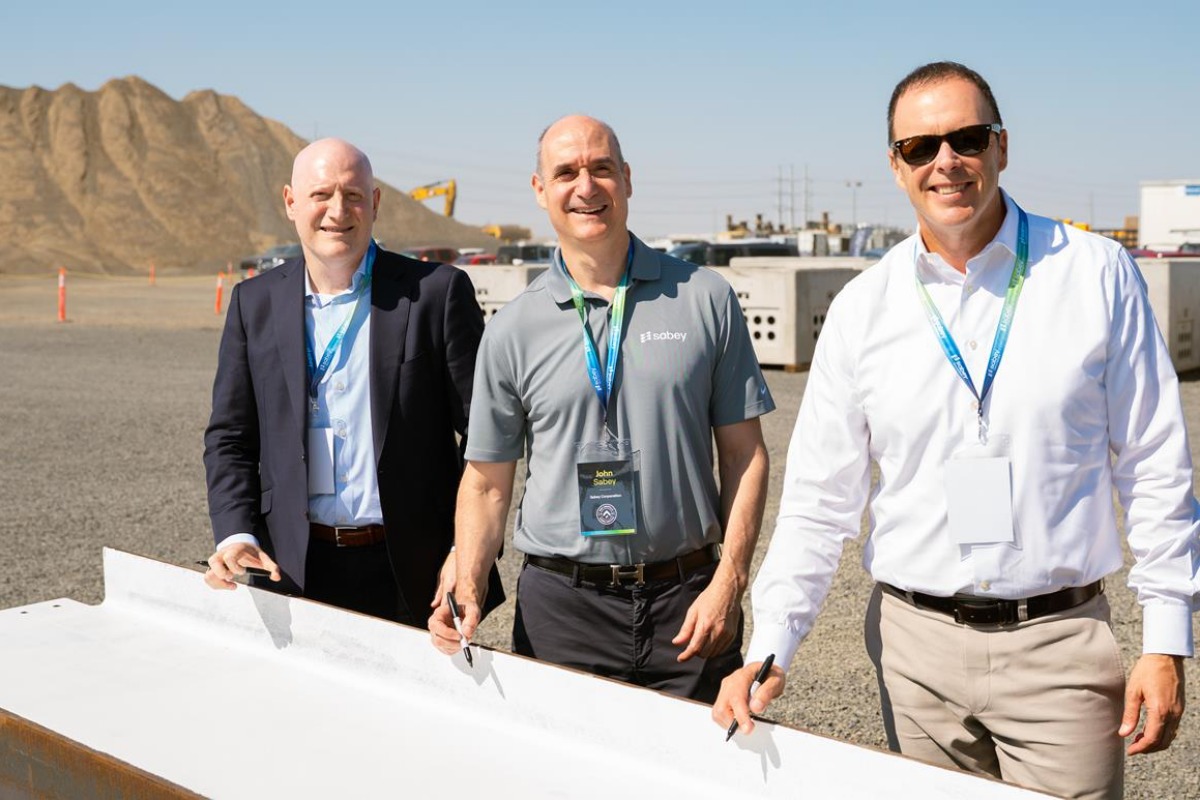
General contractor McCarthy Building Companies recently completed the topping out milestone for hyperscale data centre provider Vantage Data Centers’ second of four planned data centres on its NV1 Campus, located outside of Reno in Storey County, Nevada, USA. With representatives from Storey County and Vantage leadership in attendance, the project marked major progress on the NV12 facility, the second 64-megawatt (MW) data centre on the campus. Phase I of the campus provides hyperscalers and large cloud providers with 128 MW of combined critical IT capacity across its NV11 and NV12 facilities. The campus has reportedly created more than 1,200 local construction jobs and generated local economic impact. McCarthy notes that, just recently, the campus reached more than 1.1 million labour hours on site since breaking ground in May 2024, with zero lost-time incidents through what it describes as a "campus-wide commitment to safe construction practices and innovative methods." Austin Osborne, Storey County Manager, explains, “Vantage Data Centers, our developer partners; McCarthy Building Companies, the general contractor on site; and the Storey County team - from Community Development and Planning to Business Development and the Fire Protection District - have worked closely to move this project forward. "It’s a strong example of effective collaboration, and we’re grateful for the long-term opportunities this project will continue to bring to our community.” The 260,000ft² (24,155m²), two-storey NV12 facility utilises liquid-to-liquid cooling, similar to NV11, that operates on a closed loop chilled water system to properly cool the systems while requiring only an initial fill. This more sustainable design is common across Vantage’s data centres, with the company noting it represents its "commitment to sustainable operations and long-term reliability." Continued construction during ongoing operation Jared Carlson, Senior Vice President at McCarthy Building Companies, comments, “This project has demonstrated an incredible commitment to sustainability, safe construction, and operations, and has created a strong sense of community within Storey County. "Vantage and our design-build partners have been instrumental in creating a campus that will provide significant economic impact to the region and will continue to sustain technological growth in the years to come.” Following turnover of NV11, NV12 will begin to turn over phased portions of the facility beginning in December 2027, allowing customers to begin operations prior to final completion in early 2029. As construction progress continues, McCarthy will be piloting the use of an HP Robot to map out the layout of NV12’s walls, blockouts, and backing. Following the robot’s success on some of McCarthy's healthcare projects, the team will use the robot to layout all elements on the concrete slab, based on the existing Building Information Model (BIM) layout. This method allows for greater efficiency and precision as the facility’s core components have already been digitally modelled to the site’s conditions.Both NV11 and NV12 are being constructed by McCarthy in a design-build effort with Corgan, serving as the campus architect. Key design-build trade partners include: Amfabsteel, Chavez-Grieves, Rosendin Electric, Apollo Mechanical Contractors, Salas O’Brien, Integrated Fire and Security Solutions, Cosco Fire Protection, and Wood Rogers. For more from Vantage, click here.

Datacloud Middle East comes to Dubai
Taking place in Dubai, UAE on 10–12 February 2026, Datacloud Middle East will highlight the region’s rapid emergence as a global data centre hub, driven by hyperscaler investment, sovereign AI strategies, and large-scale digital transformation. Over three days, the event will examine how the Middle East will build future-ready infrastructure to support AI at scale while advancing sustainability and innovation. More than 50 industry experts will share insights on preparing for AI-driven workloads, with focused discussions on energy strategy, high-density design, and major developments such as Stargate UAE. Driving data centre acceleration in the Middle East The agenda will also address financing and delivery challenges, including capital deployment, modular construction, and international expansion. Sessions will explore operational excellence and sustainability, showcasing advanced cooling technologies, sovereign AI initiatives, and interconnection strategies that will enable resilient, high-performance connectivity across the region. With over 500 attendees, Datacloud Middle East will offer a comprehensive view of how gigawatt-scale campuses, cutting-edge cooling, and strategic partnerships will shape the Middle East’s AI infrastructure leadership. Click here to secure your place now.

Huber+Suhner expands sustainable packaging drive
Huber+Suhner, a Swiss fibre optic cable manufacturer, has broadened the use of recycled and recyclable packaging across its fibre optic portfolio as part of its ongoing sustainability programme. The company has removed more than 743,000 single-use plastic bags, substituted approximately 1.5 million cable ties, and replaced 35,500 blister packages with recycled polyethylene terephthalate. 11 product families are now covered by the initiative. Lana Ollier, Head of Global Sustainability at Huber+Suhner, says, “Removing single-use plastic items and moving more product families to recyclable and sustainable materials show what’s possible when sustainability is designed in, not added on.” Less waste and lower packaging emissions The measures include FSC-certified, recyclable paper packaging for connector and cable assemblies, and recycled PET for fibre modules including LISA, SYLFA HD, and IANOS. Huber+Suhner reports improvements in handling, dust protection, and transport weight. Verified lifecycle assessments indicate that blister packaging emissions have been reduced by around 50% for selected modules when compared with traditional plastics. The changes are intended to cut on-site material waste and ease installation through simplified paper formats and stackable blister trays. Following positive feedback, the company says its sustainable packaging approach will extend to 17 fibre optic product families during 2026. For more from Huber+Suhner, click here.

Multi-million pound Heathrow data centre upgrade completed
Managed IT provider Redcentric has completed a multi-million pound electrical infrastructure upgrade at its Heathrow Corporate Park data centre in London. The project was partly funded through the Industrial Energy Transformation Fund, which supports high-energy organisations adopting lower-carbon technologies. The programme included replacement of legacy uninterruptible power supplies (UPS). As part of the upgrade, Centiel supplied StratusPower modular UPS equipment to protect an existing 7 MW critical load. Redcentric states the system design allows the facility to increase capacity to 10.5 MW without additional infrastructure work. The site reports a rise in UPS operating efficiency from below 90% to more than 97%, which could reduce future emissions over the expected lifecycle of the equipment. Modular UPS deployment and installation Paul Hone, Data Centre Facilities Director at Redcentric, comments, “Our London West colocation data centre is a strategically located facility that offers cost effective ISO-certified racks, cages, private suites, and complete data halls, as well as significant on-site office space. The data centre is powered by 100% renewable energy, sourced solely from solar, wind, and hydro. “In 2023 we embarked on the start of a full upgrade across the facility which included the electrical infrastructure and live replacement of legacy UPS before they reached end of life. This part of the project has now been completed with zero downtime or disruption. “In addition, for 2026, we are also planning a further deployment of 12 MW of power protection from two refurbished data halls being configured to support AI workloads of the future.” Aaron Oddy, Sales Manager at Centiel, adds, “A critical component of the project was the strategic removal of 22 MW of inefficient, legacy UPS systems. By replacing outdated technology with the latest innovation, we have dramatically improved efficiency delivering immediate and substantial cost savings. “StratusPower offers an exceptional 97.6% efficiency, dramatically increasing power utilisation and reducing the data centre's overall carbon footprint - a key driver for Redcentric. “The legacy equipment was replaced by Centiel’s StratusPower UPS system, featuring 14x500kW Modular UPS Systems. This delivered a significant reduction in physical size, while delivering greater resilience as a direct result of StratusPower’s award-winning, unique architecture. Durata carried out the installation work. Paul Hone concludes, “Environmental considerations were a key driver for us. StratusPower is a truly modular solution, ensuring efficient running and maintenance of systems. Reducing the requirement for major midlife service component replacements further adds to its green credentials. “With no commissioning issues [and] zero reliability challenges or problems with the product, we are already talking to the Centiel team about how they can potentially support us with power protection at our other sites.” For more from Centiel, click here.

DCNN to host webinar with CRH
Resilient data centre infrastructure isn’t built at commissioning; it’s built at conception. DCNN and CRH, a US data centre construction specialist, are coming together for a powerful panel discussion exploring how early collaboration with building material providers and site engineers can shape smarter, stronger, and more sustainable data centres. The webinar, 'From the ground up: How future‑proofing data centres starts at the beginning of the project', is a must‑attend session for anyone involved in planning, designing, or delivering next‑generation facilities. Date: 19 February 2026Time: 3pm BST (10am EST)Location: Online (Zoom) Why join this webinar? • Understand how early‑stage decisions influence long‑term resilience • Hear directly from CRH’s global leaders in sustainability, innovation, and infrastructure delivery • Gain insights across the full project lifecycle - from planning to execution • Connect with experts shaping the future of data centre construction Meet the panel Moderator: Joe Peck, Assistant Editor, DCNN Frans Vreeswijk, VP Customer Solutions Strategy, CRH Americas Jenessa Miglietta, VP Sustainability & Innovation, CRH Americas Thomas Donoghue, VP Industry Innovation, CRH Group Attendees will gain insights into how local providers mitigate challenges and address critical issues, along with practical ideas for accelerating construction timelines. They will also learn strategies for expanding partnerships with essential suppliers. Click here to register now and be part of the conversation that starts at the foundation.

SITE delivers modular DC on remote Atlantic island
Secure I.T. Environments (SITE), a UK design and build company for modular, containerised, and micro data centres, has announced the completion of a complex, modular, containerised data centre for a global telecommunications provider on a remote South Atlantic island. The facility will support mission-critical ground operations connecting customers to next-generation satellite and subsea backbone services. Located 1,800km west of mainland Africa, the remote island offers an effective operating profile for satellite connectivity, but presented formidable barriers including rugged volcanic terrain with no pre-existing access road, minimal local infrastructure, limited sea freight windows, and a single weekly flight subject to weather. The brief demanded a resilient, high-capacity facility capable of continuous operation in a corrosive coastal climate, delivered with meticulous risk management and zero compromise on safety or performance. Overcoming challenging logistics One of the defining aspects of this project was the logistical coordination required not just across continents, but in partnership with the local community. The island’s small population meant that everyone from hotel owners to logistics workers became part of the project in some way. The project created local employment opportunities and, the company says, fostered a sense of community pride in supporting a high-tech project. Given the island's limited flight availability (one flight per week, weather permitting), all deliveries, personnel scheduling, and construction phases had to be meticulously timed. The team also had to navigate unpredictable weather, which could delay flights and shipping schedules. A spokesperson for the client outlines, “This was such a crucial project for us. We did a huge amount of work ensuring we picked an experienced data centre builder that could cope with the challenges. "SITE supported us throughout the design phase, adapted to meet our needs, and created a very detailed plan for delivery and installation, focused on minimising risks. We are very pleased with the outcome.” SITE’s bespoke solution Initial design discussions to final commissioning took 12 months and was completed on time. SITE designed, manufactured, pre-built, and factory-tested a multi-container modular facility - comprising a main data room, a separate UPS/switch room, and lobby space - engineered specifically for the island’s conditions, including specially adapted air conditioning condensers, protective coatings, and materials to withstand high salinity levels and ocean spray. The architecture integrates high-density IT racks with cold-aisle containment, N+1 energy-efficient cooling, modular N+1 UPS, custom switchgear, fire detection and suppression, security systems (CCTV, access control, intruder alarms), fibre raceways, and full electrical infrastructure. All modules underwent integrated systems testing (IST) in the UK to ensure seamless on-site assembly and performance alignment once deployed. Chris Wellfair, Projects Director at SITE, comments, “This was an extraordinary project in every sense: remote location, complex logistics, and high client expectations. "Our modular approach and close collaboration with clients ensured a smooth delivery despite the odds. It’s a project we’re incredibly proud of.” For more from SITE, click here.

Integral triples capacity at Equinix SG1
Integral, a currency technology provider to the financial markets, has tripled the size of its presence at the Equinix SG1 data centre in Singapore to accommodate reported soaring regional demand. The company is also leveraging digital infrastructure company Equinix’s software-defined interconnection, Equinix Fabric, to establish private and direct connections to cloud services providers, as well as key partners and customers. This expansion comes amid increased transaction volumes and system load, with Integral now processing over one million tickets daily at Equinix SG1. Equinix operates a global network of over 270 International Business Exchange (IBX) facilities, providing infrastructure for advanced connectivity and colocation. Connecting clients in Asia-Pacific Integral’s SG1 data facility is employed to service clients not only based in Singapore, but across the Asia-Pacific. The news is directly correlated with the company’s growth in the region, with numerous client partnerships established in the past year. To service this expanding client base, Integral says it is committed to ongoing investment in infrastructure which "supports scalability, reliability, and optimal efficiency." Data is a crucial element of this dynamic and underpins the decision to triple infrastructure footprint at the SG1 data facility. The expansion aims to enable Integral to manage the increase in transaction volumes without a decline in speed or performance. Alongside Singapore (SG1), Integral also operates infrastructure within Equinix data centers in New York (NY4), Tokyo (TY4), and London (LD3). Yee May Leong, Managing Director, Singapore at Equinix, comments, "We are thrilled to support Integral in their significant expansion in SG1. This growth not only reflects Integral's commitment to meeting the soaring demand in the financial markets, but also underscores the trust they place in Equinix as a strategic partner. "Our robust finance ecosystem, combined with our global footprint and seamless access to leading cloud service providers, empowers Integral to deliver unparalleled performance and reliability to their clients across the Asia-Pacific region. "We look forward to continuing our collaboration and enabling Integral to thrive in this dynamic landscape." Harpal Sandhu, CEO of Integral, adds, “For over three decades, Integral has remained resolute in its support of the growing institutional and retail trading landscape across APAC, increasing our established customer base and strengthening the local liquidity ecosystem. "Singapore has been a key market for accelerating our regional presence, and the expansion of our SG1 data facility represents our commitment to ensuring our clients have access to the most sophisticated and agile cloud-based infrastructure possible.”

NorthC to build new data centre in Geneva
NorthC Group, a data centre operator in Northwest Europe, will begin construction of a new data centre in Geneva, Switzerland in Q1 of this year. The new facility will be built at The Hive campus, a technology park just outside Geneva. This will be NorthC’s sixth data centre in Switzerland, in addition to its existing data centres in Biel (Bern), Winterthur (Zurich) and Münchenstein (Basel), as well as the recently announced and yet-to-be-built data centre on the uptownBasel campus in Arlesheim (Basel). The total IT capacity will be 4.5 MW, delivered in phases of 1.5 MW, and the data centre will have a total floor area of 5,400 m², with construction expected to be completed by Q2 2028. NorthC says it will prioritise sustainability in constructing the new data centre "by implementing innovative technologies." The facility will use 100% green power, consistent with all of NorthC's data centres, and its cooling system will require no water. Additionally, backup generators will operate on HVO100, a fossil-free fuel made from renewable materials such as vegetable oils and waste fats. Designed for AI The new data centre will be designed to support emerging technologies (such as inference applications) through direct-to-chip (D2C) liquid cooling, which dissipates heat from computer chips more efficiently than traditional methods. Alexandra Schless, CEO of NorthC Group, comments, “Geneva is an important commercial and economic hub in Switzerland, alongside the Basel and Zurich regions. Demand for digital services - and, consequently, for data centre capacity - is growing rapidly. "This makes Geneva a logical location for NorthC to build a new data centre. The proximity to the renowned scientific research centre, CERN, also offers new opportunities for collaboration in scientific research and innovation, including AI.” Modular design and readiness for residual heat exchange The new Geneva data centre will be built according to NorthC’s standard blueprint design, which is based on modular construction, meaning additional modules can be added and activated as demand increases. This approach often results in more efficient energy consumption and enables rapid scaling. The data centre will also have a direct, high-speed data connection to NorthC’s other locations in Switzerland, providing customers in the region with fast access to services running at other locations. The construction, led by HIAG, a Swiss real estate developer, aims to ensure that the Geneva data centre is designed with sustainability at its core. Like almost all of NorthC's data centres, the Geneva facility will be prepared to support the exchange of residual heat. At The Hive campus, where the data centre is being built, this heat will be used to supply nearby buildings. The facility is also being prepared for a potential future connection to the district heating network operated by the local energy company. For more from NorthC, click here.


Translate »