Data Centre Architecture Insights & Best Practices

Zumtobel upgrades lighting at London data centre
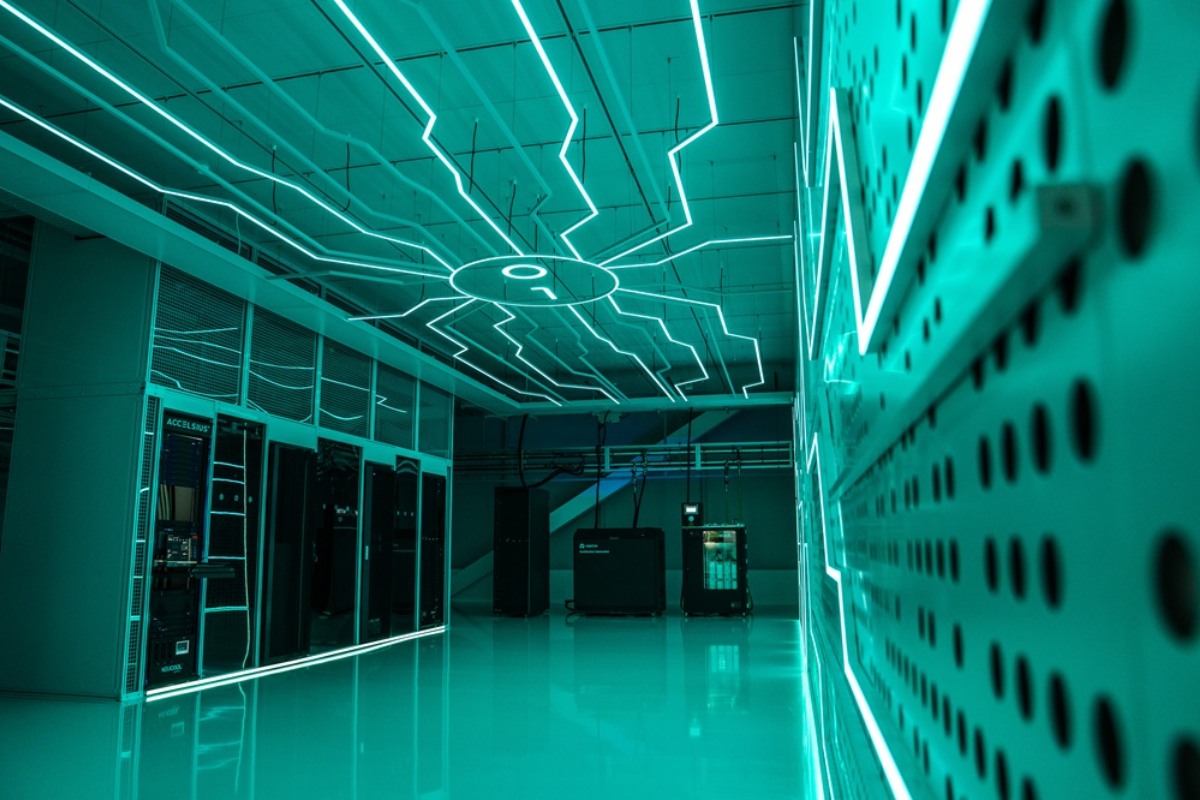
Zumtobel, an Austrian company specialising in professional indoor and outdoor lighting, has completed a lighting upgrade at Global Switch’s London East data centre campus in Docklands, supporting the site’s ongoing refurbishment programme for AI and high-performance computing (HPC) workloads. The project covered multiple floors across the facility, including data halls, plant areas, offices, and a liquid cooling demonstration suite. The refurbishment programme is focused on improving flexibility, operational resilience, and energy efficiency as demand for AI-ready infrastructure continues to grow. Zumtobel worked alongside consultants including Hilson Moran, Burns & McDonnell, and AFK Studios, while Datalec Precision Installations carried out installation works. Lighting designed for AI-ready infrastructure The lighting installation was designed to improve visibility within the high-density data halls while supporting energy efficiency and long-term operational requirements. Zumtobel deployed its TECTON continuous-row lighting system across the halls, using split-lens optics to improve vertical illuminance at rack level for maintenance and operational tasks. Emergency lighting was integrated with the eBOX monitoring platform, providing automated testing and reporting functions designed for mission-critical environments. Plant areas, offices, and shared spaces were fitted with AMPHIBIA luminaires, selected for durability in technical environments, while the LITECOM lighting management platform enables centralised monitoring and control. Future refurbishment phases on levels eight and nine are expected to include TECTON II lighting, which supports faster installation through a modular 'plug-and-play' design. Ken Knight, Head of Data Centres - UK & Ireland at Zumtobel Group, comments, “Data centre environments place very specific demands on lighting, from vertical illuminance at rack level to reliability and energy efficiency. "Our role was to translate those requirements into a scalable solution that could be implemented across multiple floors while supporting Global Switch’s ongoing expansion and innovation strategy.” Matt Perrier Flint, Director - UK & Ireland at DPI, adds, “Delivering a project of this scale required close coordination between all parties. The modular design of the Zumtobel lighting system simplified installation and helped maintain programme certainty, while the collaborative approach ensured that technical requirements were clearly understood at every stage.” Lighting a liquid cooling demonstration suite Level 10 of the facility includes a liquid cooling demonstration suite designed by AFK Studios, showcasing technologies intended to support higher-density AI and HPC deployments. The lighting scheme was developed to support visibility, operational safety, and flexibility within the technical demonstration environment. According to Global Switch, the upgraded lighting infrastructure supports safer rack maintenance, lower energy consumption through LED technology and intelligent controls, simplified future upgrades, and improved emergency lighting monitoring. Derek Allen, Group Operations Director at Global Switch, notes, “Across our global portfolio, operational resilience and flexibility are fundamental. The lighting strategy implemented at our London data centre supports safe, efficient operations while giving us the adaptability required to meet evolving customer demands. "It forms part of the wider infrastructure platform that enables us to support increasingly complex AI and high-performance computing deployments.” Emily Clark, Global Switch, explains, “As our London data centre continues to evolve to support the demands of the most powerful AI and high-performance workloads, it was important that the supporting infrastructure could match that pace of innovation. "The lighting solution delivered by Zumtobel provides the performance, flexibility, and reliability we require across both operational data halls and demonstration spaces.” For more from Zumtobel, click here.

'DC construction enters a new era of delivery pressure'
In this exclusive article for DCNN, Dave Wagner, VP of Product Marketing at Newforma, examines how AI-driven demand, compressed timelines, and constantly evolving designs are forcing construction teams to rethink how data centre projects are coordinated and delivered: Why construction teams are rewriting the playbook The data centre boom has pushed construction into unfamiliar territory. Demand keeps climbing, driven by cloud computing, AI workloads, and real-time digital services. Analysts expect the global data centre market to pass $500 billion (£369 billion) within the decade. That growth sounds like opportunity; on the ground, it feels like pressure. Project teams face a new reality: Designs shift mid-build, stakeholders span continents, precision requirements leave no room for error, timelines shrink, and the old workflows do not hold up under these conditions. The solution isn’t just to work harder; it’s to work differently. The golden thread is under strain The “golden thread” promises a clear, traceable record of decisions from design through to delivery. In data centre projects, that thread gets pulled in every direction. Designs evolve while construction is already underway and a change in server density drives new cooling requirements. That then triggers updates across mechanical and electrical systems, while documentation must reflect those changes in real time or the thread breaks. Carl Veillette, Chief Product Officer at Newforma, sees this first hand, stating, “On data centre projects, the golden thread is not a static record; it is a live system. If it falls out of sync with reality, the risk compounds fast.” When information lags, teams build off outdated assumptions. That leads to rework, delays, and finger-pointing. Maintaining continuity of information is no longer a compliance exercise, but a delivery requirement. Design does not sit still Traditional construction relies on a stable design phase. Data centres ignore that sequence as technology advances too quickly. A facility planned around one generation of hardware often needs to support the next before completion. GPU-heavy AI workloads increase power density while liquid cooling replaces air in certain zones and redundancy strategies evolve. Each shift forces coordination across disciplines:• Electrical systems must handle higher loads.• Cooling infrastructure must adapt to new methods.• Structural layouts must support revised equipment footprints. These are not minor tweaks; they affect core systems. Carl puts it plainly, “You are designing for a future state that keeps changing. The teams that succeed are the ones that accept that volatility and build processes around it.” That means parallel workflows. Design, coordination, and construction happen at the same time, whilst decisions move faster, often with incomplete data. Teams need immediate visibility into the latest information to stay aligned. Precision, security, and uptime raise the stakes Data centres operate under strict conditions. Downtime is not tolerated and systems must perform on day one. This drives extreme precision: • Redundant power systems must function without failure.• Cooling must maintain exact environmental conditions.• Security measures must meet strict standards.• System integration must be flawless. At the same time, security concerns limit information access. Teams must share data widely enough to stay aligned while also restricting sensitive details. The margin for error disappears. According to Uptime Institute, over 60% of data centre outages cost more than $100,000 (£74,000), with a growing share exceeding $1 million (£739,000). That risk shapes every decision. Teams cannot afford mistakes caused by poor coordination or outdated information. Speed to market is the new benchmark The race to bring capacity online has compressed schedules across the industry. Hyperscale operators push for faster delivery to meet demand, and delays translate into lost revenue and competitive disadvantage. This pressure reshapes project timelines: • Design cycles shorten.• Construction phases overlap.• Procurement accelerates.• Commissioning windows tighten. There is no buffer for inefficiency. Rework becomes expensive and miscommunication becomes costly. Carl highlights the impact, noting, “Speed to market is not a goal anymore; it is the baseline. The only way to hit it is to remove friction from how teams share and act on information.” A shift towards structured collaboration The common thread across these challenges is information flow. Projects succeed when the right data reaches the right people at the right time. That requires a shift in how teams manage project information: • Centralised access to current documents and models• Clear tracking of RFIs, submittals, and decisions• Real-time updates across all stakeholders• A complete audit trail for accountability and risk management This is where platforms like Newforma play a role. They support the golden thread by keeping project information connected, traceable, and accessible. The impact shows up in reduced risk and faster delivery. Teams spend less time searching for information and more time acting on it. Coordination improves and errors drop, whilst projects move forward with fewer disruptions. The new standard Data centre construction has set a new standard for the industry. It demands speed without sacrificing precision. It requires flexibility without losing control. It depends on collaboration at a scale most projects never reach. These conditions will not ease, as demand will keep rising and technology will keep evolving. The teams that adapt their workflows to this reality will keep pace. Those that do not will fall behind. The playbook has already changed. The only question is who is still using the old one.

Schneider, GreenScale partner on new operational architectures
Global energy technology company Schneider Electric has partnered with GreenScale, a developer of hyperscale data centre campuses, to support the development of data centre sites across Europe, focusing on AI-ready infrastructure and operational design. Under the agreement, Schneider Electric’s Secure Power and Services divisions will provide engineering and design consultancy, contributing to the development of new operational architectures for data centres. The collaboration combines Schneider Electric’s infrastructure expertise with GreenScale’s experience in data centre operations, software, and digital twin technology. The aim is to improve deployment timelines, operational predictability, and maintenance processes through the use of automation and data-driven tools. With application in mind, GreenScale is developing data centres in regions with available power and renewable energy potential, with projects intended to support long-term regional investment and infrastructure growth. A focus on automation and operational efficiency The partnership includes the use of predictive analytics, condition-based maintenance, and digital twin integration to support performance and reliability across sites. These approaches are intended to reduce operational risk, improve maintenance planning, and support consistent performance, particularly in remote or emerging locations. The companies are also working on reference architectures designed to incorporate automation and monitoring from the outset, enabling improved visibility and control across infrastructure systems. Dan Thomas, CEO at GreenScale, says, "As demand for AI, Cloud and HPC accelerates in Europe, data centre operators must rethink how facilities are designed and managed." Thierry Chamayou, Vice President, Cloud and Service Providers, Europe at Schneider Electric, adds, "By combining expertise from our Secure Power and Services divisions, we are helping to create a resilient, AI-ready infrastructure platform." The collaboration also includes the integration of monitoring and control systems that connect physical infrastructure with digital platforms, supporting high-density AI and cloud workloads. For more from Schneider Electric, click here.

Design strategies for efficient, high-performance data centres
The rapid expansion of artificial intelligence workloads is placing unprecedented demands on data centre infrastructure. As computer densities increase and operational expectations tighten, the need to balance performance with energy efficiency and carbon reduction has become more urgent. This shift is driving a re-evaluation of how data centres are designed, particularly in relation to cooling strategies and overall resource use. Data centres are now a critical component of global infrastructure, supporting cloud services, digital platforms, and AI applications. With increasing digitalisation, energy consumption associated with these facilities continues to rise. In the UK and globally, regulatory and market pressures are also evolving, with greater emphasis on energy performance, carbon reporting, and long-term sustainability targets. Within this context, various industry reports are suggesting that: • Data centres are estimated to account for approximately 1–1.5% of global electricity consumption• High-density AI workloads can exceed 30–80 kW per rack, significantly increasing cooling demand• Leading facilities are targeting power usage effectiveness (PUE) values of 1.2 or lower Efficient cooling system strategies As computational loads increase, cooling systems are under growing pressure to maintain stable operating conditions without excessive energy use. Traditional approaches that rely heavily on mechanical cooling are becoming less viable due to their high energy intensity. This challenge affects operators, developers, and designers, particularly as expectations around efficiency and environmental performance continue to rise. BSE|3D, a UK building services engineering and consultancy practice, says it works with organisations navigating these challenges by applying a performance-led design approach from the earliest project stages. The company notes that it has observed that early integration of simulation tools allows for more effective alignment between building form, system design, and operational performance. Solutions that focus on reducing cooling demand at source while optimising system efficiency can significantly improve outcomes. This includes evaluating environmental conditions, refining building parameters, and developing strategies that prioritise low-energy operation. A key approach involves enabling a cooling profile where approximately 70% of annual demand can be met through low-energy systems such as economisation and adiabatic processes, with mechanical systems supporting peak conditions and operational resilience. This reduces reliance on continuous compressor use and supports improved overall performance. Kriti Gupta, Sustainability Consultant at BSE|3D, explains, “As data centre loads continue to increase, the industry needs to move beyond conventional cooling approaches. By prioritising low-energy strategies and validating them through simulation, it is possible to reduce energy demand while maintaining performance and resilience. Early-stage design decisions play a critical role in achieving this balance.” Data centres are expected to play an increasingly significant role in supporting digital infrastructure. As their impact grows, so too does the importance of designing them in a way that responds to both operational requirements and environmental considerations.

STL launches Neuralis US data centre platform
STL, an optical and digital systems company, has launched its Neuralis data centre connectivity portfolio in the United States, targeting infrastructure designed for artificial intelligence and high-density computing environments. The announcement was made by STL Optical Connectivity NA, the company’s US subsidiary, at Data Center World 2026 in Washington, D.C. Neuralis is designed to support evolving data centre requirements, particularly the shift towards AI workloads, hyperscale computing, and edge deployments. These trends are increasing demand for high-speed, high-density connectivity within and between facilities. The portfolio focuses on managing the transition from traditional north–south traffic flows to more intensive east–west traffic, driven by GPU-based architectures and AI training processes. Designed for high-density AI infrastructure The Neuralis portfolio is structured around two main areas: The first focuses on maximising data centre space through the use of high-density, pre-terminated fibre cabling. This approach moves connection work into manufacturing environments, reducing on-site installation time and complexity. The second area addresses data centre interconnect (DCI), supporting large-scale data transfer between sites. This includes fibre infrastructure designed for high-capacity environments, with cables capable of supporting large fibre counts for AI deployments. STL has developed the portfolio through collaboration with customers, with a focus on addressing space, density, and deployment challenges in modern data centres. The company’s manufacturing process covers the full fibre lifecycle, including preform production, fibre drawing, cabling, and connector integration. Production for the US market is supported by STL’s facility in Lugoff, South Carolina. Ankit Agarwal, Managing Director of STL, notes, "AI demands a level of precision and density that traditional cabling simply cannot meet. "With STL Neuralis, we are providing the high-speed, low-latency foundation that allows GPU clusters to perform at their peak, moving complexity out of the field and into a controlled, high-precision factory environment." The launch reflects increasing demand for infrastructure capable of supporting AI-driven workloads, as operators continue to scale data centre capacity across North America. For more from STL, click here.

Reshaping data infrastructure to help carriers digitally transform
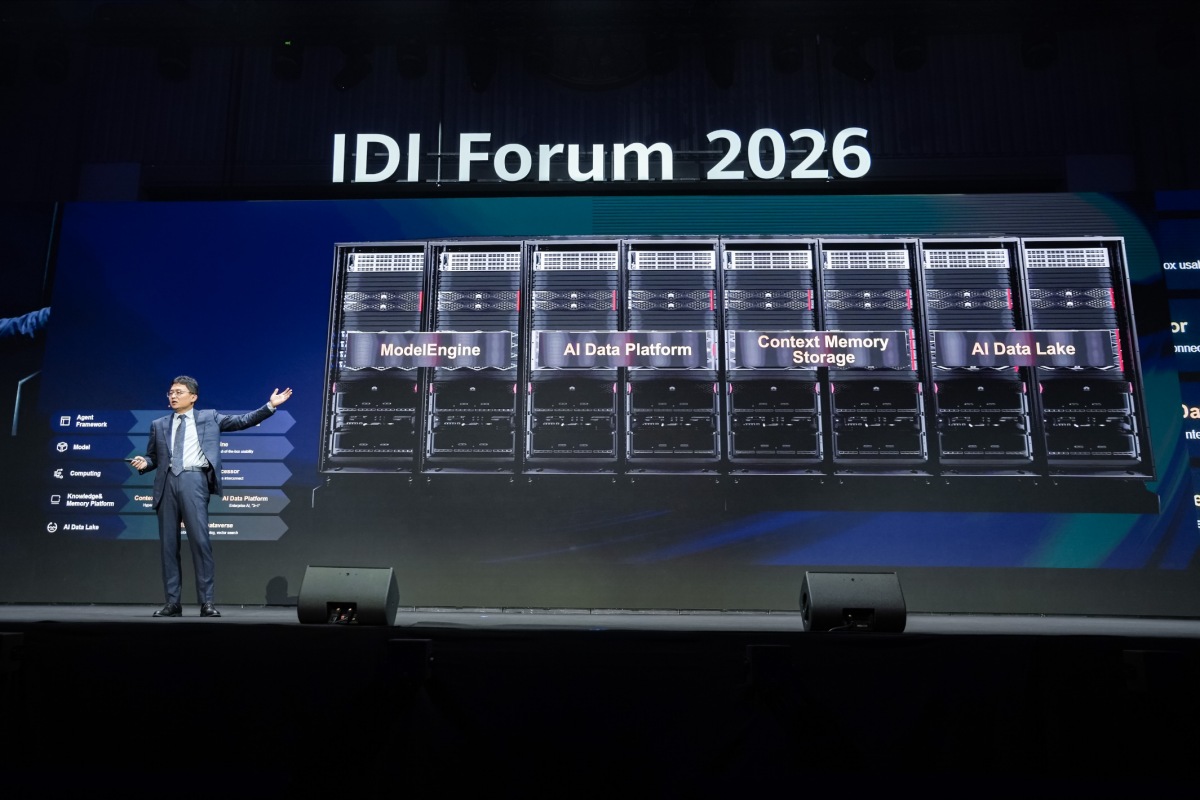
At MWC Barcelona 2026, Yuan Yuan, President of Huawei Data Storage Product Line, shared Chinese multinational technology company Huawei's key insights and innovations for enabling carriers to plan their data infrastructure, address challenges in AI adoption, and prepare for IT architecture transformation in the AI era. Data preparation for AI: From dormancy to awakening In the age of AI, data is an essential asset. Yuan noted that in the past two years, over 90% of enterprises actively embraced AI for business innovation, but fewer than 10% have successfully mastered and scaled AI technology. There are three primary challenges: persistent data silos that hinder data collaboration across regions and organisations; a lack of quality data supply, especially industry-specific knowledge; and inefficiencies in the data preparation phases like data collection, cleansing, and labelling. This results in AI applications falling short of commercial viability, raising doubts about the return on investment. Yuan predicts, "In the future, cold data will become a thing of the past. Data will shift from 'offline' to 'always online,' and retention policies will move from being compliance-driven to a principle of retaining and never deleting. Consequently, data volumes will expand from petabytes to exabytes, which will drive demand for greener, more efficient data infrastructure." Architectural transformation: From storing data to storing knowledge and memory As AI agents become the primary consumers of data, data infrastructure must evolve to embrace new data paradigms, including vector, graph, and key-value (KV) semantics. To eliminate AI hallucinations and enable continual AI evolution, data infrastructure must be capable of storing knowledge and memory. Yuan discussed Huawei's AI data platform, an innovative solution that integrates knowledge, memory, and inference acceleration services into a single storage system. This consolidated approach significantly reduces system complexity and O&M costs. The platform delivers a massive upgrade in performance. Inference efficiency (measured in tokens generated per second) is multiplied, while latency (time to first token) is reduced by 90%. Furthermore, the continual evolution of data, knowledge, and memory makes AI agents smarter over time. As Yuan explains, "In the future, every carrier will need its own AI data platform to help agents understand business processes, acquire domain-specific expertise, and iterate and upgrade rapidly. Otherwise, AI will remain nothing more than an expensive toy." AI adoption planning: From AI exploration to AI-driven service upgrades Although many carriers have made AI a strategic priority and are beginning to adopt it, significant challenges remain in real-world deployment: inference failure, inference costs, and inference speed. Yuan presented an intelligent computing service platform, jointly developed with a Chinese carrier, that tackles these challenges. The platform uses the KV cache technology to improve storage resource utilisation and supports inference applications of different large models like DeepSeek and Qwen. It optimises cost-effectiveness by innovatively eliminating repeated computing via querying. Through the collaboration of on-chip memory, DRAM, and AI storage, the platform enables PB-scale KV cache storage. This improves the overall throughput by more than 10 times, reduces inference costs by about 50%, and shortens response time to less than one second. In addition, algorithm optimisation addresses challenges like low KV cache hit ratios and inference failure due to long-sequence inputs in research report analysis. Serving as the foundation for AI, the platform has been deployed at scale at the group to enable multidimensional innovation across services, including internal IT systems, B2C services, B2B services, and B2H services. Yuan says, "Planning AI training and inference platforms requires more than focusing on computing power and models; deep collaboration between storage and compute is also essential to improve system-level efficiency and user experience." Yuan highlighted that AI is reshaping data infrastructure. In the AI era, storage systems will evolve into intelligent engines, which will not only store critical data assets, but also serve as the knowledge sources and memory carriers for the continuous evolution of AI agents. He called on carriers to prioritise accumulation and protection of quality data, and to plan and build a unified AI data platform that supports a wide range of large model applications while enabling service innovation for both internal operations and external offerings. Huawei says it will continue to advance technological innovation and architectural upgrades to help carriers digitally transform. For more from Huawei, click here.

Crestchic unveils 600kW liquid-cooled loadbank
Crestchic, a UK manufacturer of loadbanks and transformers for testing power systems and data centres, has launched its new 600kW Liquid Cooled Loadbank at Data Centre World London 2026, aimed at supporting commissioning in the growing liquid-cooled data centre market. As rack power densities increase, operators are increasingly adopting liquid cooling to manage higher thermal loads. Crestchic says the new system has been designed to provide accurate thermal validation and precision electrical testing for liquid-cooled infrastructure. The 600kW loadbank delivers up to 648kW at 415V and features stable ΔT thermal control to ±0.5°C, enabling repeatable testing during commissioning. Temperature accuracy is maintained regardless of flow variation, while built-in protections cover flow, pressure, overload, underload, and thermal shock. Designed for liquid-cooled data centre commissioning The unit uses a single-vessel architecture, reducing footprint compared with multi-vessel systems at similar power levels. This compact design makes it easier to position in plant rooms and simplifies transport and handling. The platform includes a stackable structure, flush-mounted connections, heavy-duty castors, and dual-side forklift pockets, allowing two units to be transported within a standard-height ISO shipping container. The system integrates with Crestchic’s VCS software, providing live monitoring of supply and hydraulic data, real-time load profiling, and the ability to cluster up to 240 load banks for hybrid air- and liquid-cooled testing. Paul Brickman, Commercial Director at Crestchic, says, “The move towards liquid cooling is accelerating as rack densities increase, particularly with AI and high-performance computing workloads. “Our new 600kW Liquid Cooled Loadbank has been designed from the ground up to serve this market, giving commissioning engineers the precision, reliability, and control they need to bring critical infrastructure online with confidence." The 600kW Liquid Cooled Loadbank is available for sale or rental through Crestchic’s global network. For more from Crestchic, click here.

McLaren appointed for 70MW London data centre phase
UK construction firm McLaren Construction has been appointed to deliver the shell and core of the first 70MW building at global data centre developer and operator Ada Infrastructure’s Docklands campus in London. The project marks Ada Infrastructure’s first European development and forms part of a planned 210MW campus in the Royal Docks. McLaren’s contract also covers enabling infrastructure for the wider site and provision for a future district heating network. The development will comprise three 70MW data centre buildings, alongside a community facility and public realm improvements, including upgraded pedestrian and cycle routes along the River Thames and works to the river wall, including a new flood defence barrier. The buildings will incorporate air and liquid cooling systems designed to operate without water evaporation, as well as low-carbon construction materials and connection points for district heating. The campus is targeting a BREEAM Excellent rating and is designed to support AI and high density workloads. A 210MW campus in London's Royal Docks James Moloney, Head of Ada Infrastructure EMEA, says, “The appointment of McLaren Construction is an important step in bringing this vision to life. "[Its] experience delivering complex data centre and infrastructure projects will be instrumental as we transform this long-vacant site into a sustainable, future-focused campus that also enhances public spaces and contributes to the wider regeneration of the Royal Docks.” McLaren’s supply chain partners include Keltbray for CFA piling, Menard for BMC piling, Gallagher for groundworks and civils, and William Hare for the steel frame. The shell and core contract is scheduled for completion in mid-2028, with the first building expected to be ready for occupation by the end of 2028.

Expert cleaning for critical environments
IT Cleaning is the UK’s trusted authority in specialist IT and technical cleaning to ISO 14644-1 2022 Class 8, delivering expert services where precision is critical and failure is not an option. From data centres and data halls to server rooms and comms rooms, the company protects vital infrastructure with meticulous, industry-approved cleaning solutions. Every service is carried out by highly trained technicians using advanced anti-static methods, designed to safeguard sensitive equipment and reduce operational risk. With minimal disruption and maximum attention to detail, IT Cleaning ensures technology environments remain clean, compliant, and performance-ready. Operating nationwide, the company cleans for organisations that demand absolute reliability, strict compliance, and exceptional standards. Its reputation is built on technical expertise, consistent delivery, and a no-compromise approach to quality. For businesses that depend on uninterrupted IT performance, IT Cleaning is the specialist cleaning partner of choice. Click here to visit the company's website and find out more.

Thorn, Zumtobel to exhibit at Data Centre World
Thorn and Zumtobel, both lighting brands of the Zumtobel Group, are to present a "unified approach" to data centre lighting at Data Centre World 2026. The companies say the focus will be on three operational priorities for data centre operators and delivery teams: reduced energy consumption, reliable operation, and consistent control across white space, plant, circulation, and perimeter areas. The stand will outline how a coordinated lighting and controls strategy can support specification, installation, and ongoing operation across different data centre environments. The Zumtobel Group says its approach is intended to support consistency across projects, while also simplifying long-term maintenance and operational management. Lighting controls for data centres A central element of the stand will be the use of the LITECOM control platform, which is presented as a way to connect a defined portfolio of luminaires across different zones of a data centre. The companies say this is intended to support scheduling, presence detection, daylight strategies, scene setting, and portfolio standardisation. The stand will also feature TECTON II, shown as part of a continuous-row lighting infrastructure approach, which is designed to support rapid, tool-free assembly and future adaptation. Lighting applications on show will cover white space, technical areas, offices, and exterior zones. Products listed for demonstration include: • Thorn: Aquaforce Pro, ForceLED, Piazza, Omega Pro 2, IQ Beam • Zumtobel: IZURA, TECTON II, MELLOW LIGHT, AMPHIBIA, LANOS All are shown as being controlled via LITECOM. The stand design itself will be intended to reflect Zumtobel Group's stated sustainability principles, using reused and modular components from previous events, with minimal new-build elements. In addition, graphics have been consolidated to reduce printing and waste. Neil Raithatha, Head of Marketing, Thorn and Zumtobel Lighting UK & Ireland, notes, “Data centre customers need lighting that is consistent, efficient, and straightforward to manage. “Our presentation this year brings together proven luminaires with a control platform that helps project teams deliver quickly and run reliably, from the white space to the perimeter.” Thorn and Zumtobel will be exhibiting at Stand F140 at Excel London on 4–5 March 2026. For more from Thorn and Zumtobel, click here.


Translate »