Data Centre Software for Smarter Operations


What European data sovereignty means for data centre tools
In this exclusive article for DCNN, Swiss privacy technology company Proton Mail examines why evolving European data sovereignty requirements are forcing data centre operators to reassess the tools they use to manage infrastructure, store operational data, and demonstrate regulatory compliance: Data sovereignty moves into the data centre For most data centre teams, the concept of data sovereignty has lived at a comfortable arm's length. It was something legal worried about, something the sales team put in proposals, something that got mentioned at vendor briefings before the coffee break. But that distance is collapsing, and fast. The European Union's regulatory architecture around data has shifted from a set of compliance checkboxes into something far more structural. GDPR established the foundations; the EU Data Act, the Data Governance Act, and the ongoing ripple effects of transatlantic legal friction (particularly the tensions created by the US CLOUD Act) have built several more floors on top of it. The result is a framework that increasingly determines not just what data your organisation holds, but which tools you are permitted to use to manage, transfer, share, and store it. This has direct, practical consequences for data centre operations teams. The monitoring platform you log into each morning, the cloud storage your engineers use to share runbooks, the ticketing system where incidents are logged, the collaboration suite where shift handovers happen: if any of these tools are operated by a company headquartered outside the EU, they may now carry a compliance risk that regulators are no longer prepared to overlook. As explored in a broader look at why data security is no longer optional, the costs of underestimating this shift go well beyond fines. The sovereignty problem in plain terms Data sovereignty, at its core, is the principle that data generated within a jurisdiction should remain subject to that jurisdiction's laws, regardless of where it is physically stored or which company's servers it sits on. In the EU context, this means that personal data relating to European citizens and businesses should not be accessible to foreign governments or legal systems without going through EU legal channels and oversight. The complication arises from the US CLOUD Act, signed into law in 2018. This legislation grants US authorities the power to compel American technology companies to hand over data, even data stored on servers in Europe, without necessarily requiring a formal mutual legal assistance treaty process. For a European organisation using a US-headquartered SaaS provider, this creates what regulators have called an active legal paradox: data that appears to be stored safely in an EU data centre may still be legally accessible to a non-EU government. It is a risk that regulators across France, Germany, the Netherlands, and beyond are treating with increasing seriousness. Enforcement actions against US cloud providers by national data protection authorities have grown steadily, and the appetite for leniency is diminishing. Where operations teams feel it The challenge for data centre teams is that the operational tooling that makes modern facilities function efficiently has, over the past decade, migrated almost entirely into the cloud - and largely into platforms operated by American technology companies. This was a rational progression: the tools were excellent, the pricing was competitive, and the compliance requirements, while present, were manageable. That calculus is changing. The categories of software that carry the most exposure include: • DCIM platforms — If telemetry, asset data, or incident records are routed through non-EU cloud infrastructure, they may be subject to foreign access requests. • Ticketing and ITSM systems — Incident logs can contain sensitive operational and customer data, and where these records are stored and processed matters legally. • Collaboration and file-sharing tools — Runbooks, change documentation, and engineering notes shared via US-headquartered platforms may not satisfy GDPR data processing requirements. • Monitoring and observability platforms — Network performance data, access logs, and infrastructure health metrics can constitute sensitive data under certain regulatory interpretations. • Email and calendar services — Operational communications may be covered by data residency requirements, particularly in regulated sectors such as finance or healthcare. The question teams are increasingly being asked by compliance officers, enterprise customers during audits, and regulators during inspections is not simply "is this data encrypted?" but "under whose legal jurisdiction does this data sit, and who could compel access to it?" Industry voices have been making this point for some time, as reflected in commentary gathered on Data Privacy Day, where the emphasis fell squarely on building repeatable operational controls rather than chasing individual compliance milestones. The sovereign cloud push The response from the market has been a wave of "sovereign cloud" offerings: architecture models where infrastructure, operational staff, and legal entities are all resident within the EU, and where data is contractually and technically ringfenced from parent-company access in non-EU jurisdictions. Several major hyperscalers have invested heavily in these products. Microsoft's EU Data Boundary, Google's Sovereign Controls, and AWS's EU Sovereign Cloud are all attempts to provide assurances that European data will not traverse US legal jurisdiction. Whether these assurances are sufficient, given that the parent companies remain subject to US law, remains contested amongst legal scholars and regulators. Germany and France, in particular, have pushed back on the idea that a US company's technical commitments can fully override a foreign court order. The EU's Gaia-X initiative represents the most ambitious attempt to build a native alternative: a federated, interoperable digital infrastructure that reduces dependency on non-European hyperscalers entirely. Progress has been slower than its architects hoped, but the framework it has established around transparency, portability, and provenance of data is increasingly influencing procurement decisions at large European enterprises and public sector bodies. The physical reality of where infrastructure actually sits remains critical to all of this, a point underlined by the lessons drawn from the OVHCloud fire, which demonstrated how quickly assumed protections can evaporate when something goes wrong at the hardware level. Rethinking the toolchain For data centre teams, the practical consequence is a growing need to audit the toolchain - not just the infrastructure they manage for customers, but the tools they use internally to manage that infrastructure. This is a non-trivial task. Many of the most capable platforms in categories like monitoring, ITSM, and collaboration are US-headquartered. Replacing them wholesale is expensive, disruptive, and technically risky. The more pragmatic approach being adopted by many European operators is a tiered assessment: identifying which tools handle which categories of data, and which of those data categories carry the highest regulatory exposure. Operational telemetry that contains no personal data may carry a different risk profile than a shared drive full of customer documentation, change records, and contractual files. The latter category (documents and files shared amongst engineering and operations teams) is one where the market for European-origin alternatives has matured considerably. For file storage and document sharing specifically, a number of privacy-focused alternatives have emerged that offer end-to-end encryption, EU-based infrastructure, and no exposure to US jurisdiction. Proton Drive is one example; being built on zero-access encryption and hosted under Swiss and EU law, it is designed so that even the service provider cannot access the contents of stored files. For operations teams handling sensitive engineering documentation or customer-related records, this kind of architecture addresses the sovereignty question at a technical rather than contractual level. The distinction between technical and contractual sovereignty protections is one that regulators are increasingly paying attention to. A Data Processing Agreement with a US cloud provider commits that provider contractually to certain behaviours; zero-access encryption means that no behaviour, however compelled, can result in plaintext data being handed over, because the keys never leave the customer's control. The compliance burden on operations What makes this period particularly challenging for data centre teams is that sovereignty compliance is not a one-time project; it is a continuous risk assessment process, one that requires keeping pace with an evolving regulatory landscape across multiple EU member states. Germany alone layers 17 state-level data laws on top of national and EU requirements. The practical implication is that an operations team running a facility serving customers across multiple European jurisdictions may need to maintain a sophisticated, jurisdiction-aware view of where data flows, which tools touch it, and which legal regimes apply. The full scope of what that means for day-to-day operations is covered across DCNN's compliance coverage. This is driving demand for a new kind of capability within operations teams: compliance literacy, meaning engineers who understand not just how to configure a monitoring platform, but what data that platform collects, where it sends it, and whether that is consistent with the data processing agreements their organisation holds with its customers. The audit pressure is already here Customer-driven audit pressure is one of the most immediate ways data centre teams are encountering sovereignty requirements in practice. Enterprise customers, particularly those in regulated sectors like finance, healthcare, and government, are increasingly including detailed data residency and toolchain questions in their due diligence processes before signing colocation or managed service contracts. They want to know not just where their data sits, but which third-party tools the data centre operator uses to manage access, monitor systems, and handle incidents, because those tools are part of the data processing chain. A data centre that stores customer data on EU infrastructure but logs all incident management activity through a US-based ITSM platform may have a harder time satisfying those audits than one that has thought carefully about the full operational stack. This connects directly to the broader operational challenges outlined in an earlier look at the key pressures facing data centre operations teams, where compliance and ESG demands were already competing for finite team bandwidth. Looking ahead European data sovereignty is not a temporary regulatory moment; it reflects a deep structural shift in how European governments, regulators, and enterprise customers think about digital infrastructure, one in which the origin and legal jurisdiction of technology matters as much as its performance or price. For data centre teams, this means the toolchain review is not optional. The platforms that operations, engineering, and management teams use every day are now part of the compliance picture. The good news is that the market for sovereign-by-design tooling is expanding, covering everything from monitoring and observability to file storage and secure communications. The teams that will navigate this most successfully are those that start the audit now, before a customer inquiry, a regulatory inspection, or an incident forces the issue. Understanding which tools handle which data, under whose jurisdiction, and with what level of technical protection is not just a compliance exercise; it is increasingly a competitive differentiator.

Broadcom, Nationwide deepen cloud partnership
Nationwide Building Society, the world’s largest building society, has expanded its strategic partnership with Broadcom, a designer, developer, and supplier of semiconductor and infrastructure software, as it continues to develop its private cloud infrastructure and integrate Virgin Money into the wider organisation. The agreement will see Nationwide adopt VMware Cloud Foundation as the platform for its private cloud, providing a standardised infrastructure for applications and digital services across the enlarged group. According to the organisations, the platform is intended to support greater resilience, scalability, and operational consistency while meeting the governance and compliance requirements of the UK financial services sector. Paul Walsh, Director of Infrastructure and Service Delivery at Nationwide, says, "Our extended partnership with Broadcom represents a significant step forward in our technology strategy. "As we continue to evolve as a business, including integrating Virgin Money into the group, it is vital that we have a resilient, scalable, and secure technology foundation. "A private cloud built on VMware Cloud Foundation enables us to simplify operations, accelerate innovation, and deliver seamless digital experiences for our members, while maintaining the trust and stability that define the Nationwide brand." A private cloud platform to support integration VMware Cloud Foundation combines compute, storage, networking, management, security, and automation within a single private cloud platform. Nationwide says the technology will provide a common infrastructure for traditional applications, cloud-native workloads, and future artificial intelligence deployments, whilst helping simplify infrastructure management across the organisation. The building society also expects the platform to support long-term operational efficiency and service continuity as it modernises its IT estate. Joe Baguley, EMEA Chief Technology Officer at Broadcom, says, "Nationwide is taking a deliberate and strategic approach to private cloud that balances agility with control and innovation with resilience. "By extending our partnership and adopting VMware Cloud Foundation as a consistent platform across the group, Nationwide will be able to integrate operations more efficiently, accelerate service delivery, and reduce operational complexity, while maintaining the security and governance expected of a leading UK financial services brand."

Schneider upgrades NHS Trust's critical infrastructure
Northumbria Healthcare NHS Foundation Trust has completed a power infrastructure modernisation project using Schneider Electric technology to improve monitoring, visibility, and management of critical systems across its estate. The project was delivered with Schneider Electric, alongside EcoXpert partner RMD and technology provider XMA, and included the deployment of EcoStruxure monitoring software and uninterruptible power supply (UPS) equipment across multiple sites. The Trust provides healthcare services to more than 500,000 people across Northumberland and North Tyneside in the UK, with its IT infrastructure supporting electronic patient records, clinical systems, administration, access control, and CCTV. According to the Trust, a mix of legacy UPS systems from different manufacturers had created challenges around maintenance, monitoring, and service continuity. Mathew Burns, Operational Infrastructure Manager at Northumbria Healthcare NHS Foundation Trust, says, "With the UPS and network infrastructure, our ultimate goal is to improve service as it underpins everything the hospital does. "It's not only about looking at new technologies and different ways of working, but extracting more value from what we already have. In terms of meeting Service Level Agreements (SLAs), the key challenge is achieving 100% uptime, ensuring systems are always available across multiple sites over a very large geographical area." Creating a unified view across multiple sites To address these challenges, the Trust implemented EcoStruxure to provide centralised monitoring of UPS infrastructure across its facilities. The deployment includes Smart-UPS systems, network management cards, NetBotz cameras and sensors, and EcoStruxure IT Expert software for monitoring and reporting across 175 nodes. Ross Higgins, Senior Technical Specialist at RMD, explains, "We discussed the Trust's key issues such as the runtime needed for its data centres. It was clear that a centralised monitoring system was needed for its infrastructure." Bob Beckwith, Infrastructure Innovation and Transformation Manager at Northumbria Healthcare NHS Foundation Trust, notes, "Adoption of EcoStruxure is developing well. It provides reassurance that our UPS equipment on each site is reliable and 'fit for purpose'. "The Trust views its digital infrastructure as a pyramid, with power as the foundation and maintenance support at the top. We placed RMD, XMA, and Schneider Electric solutions at the base to create a really solid foundation." Supporting future infrastructure planning Following the deployment, the Trust reports complete visibility across its UPS infrastructure, alongside improved benchmarking of energy efficiency and equipment lifecycle status. The organisation says the data generated through EcoStruxure supports budgeting, maintenance forecasting, replacement planning, and future data centre consolidation projects. Mathew Burns continues, "Today, in terms of operations, our UPS estate state is healthy, with a reassuring healthy report from EcoStruxure. "This is a significant investment for the Trust, and we didn't want to put all the new equipment in without having the confidence to know that everything underpinning it was okay. EcoStruxure gives us that confidence." The project represents an investment of approximately £1 million. Under a five-year agreement, the Trust plans to continue upgrading UPS infrastructure, consolidate data centre operations, and maintain ongoing support services through RMD and Schneider Electric. Matthew Baynes, Vice President, Secure Power and Data Centre division at Schneider Electric UK & Ireland, concludes, "Projects like this demonstrate how resilient, connected power infrastructure underpins critical public services. "By modernising and standardising its UPS infrastructure, Northumbria Healthcare NHS Foundation Trust has created a highly resilient digital foundation that supports operational continuity, enhances visibility across its estate, and ensures healthcare teams can continue delivering outstanding patient care with confidence." For more from Schneider Electric, click here.

Russelectric expands microgrid controls offering
US power control manufacturer Russelectric, a Siemens business, has highlighted its Advanced Microgrid Controls platform, designed to support power resiliency and energy management across critical infrastructure environments including data centres. The system combines hardware and software for managing onsite generation assets and facility power infrastructure, including generators, battery storage systems, photovoltaic arrays, and electrical loads. According to Russelectric, the platform integrates with transfer switches, switchgear, and power controllers to support facility-wide monitoring and optimisation of distributed energy resources. The company says the system is designed to support operational continuity during grid outages through functions including dynamic islanding, automatic generator black start capability, and grid resynchronisation. Microgrid platform targets critical infrastructure Russelectric states that the platform is intended to help facilities improve power quality, reduce energy consumption, and lower operational emissions through more efficient management of onsite power assets. The company also offers engineering, commissioning, manufacturing, and maintenance support for microgrid deployments, alongside integrated switchgear and turnkey infrastructure options. Russelectric says it has more than 50 years of experience delivering microgrid control installations across critical infrastructure sectors. Siemens acquired Russelectric in 2011, with the business continuing to focus on power control and transfer systems for mission-critical facilities. For more from Siemens, click here.

DataScope, BCEI sign global data centre agreement
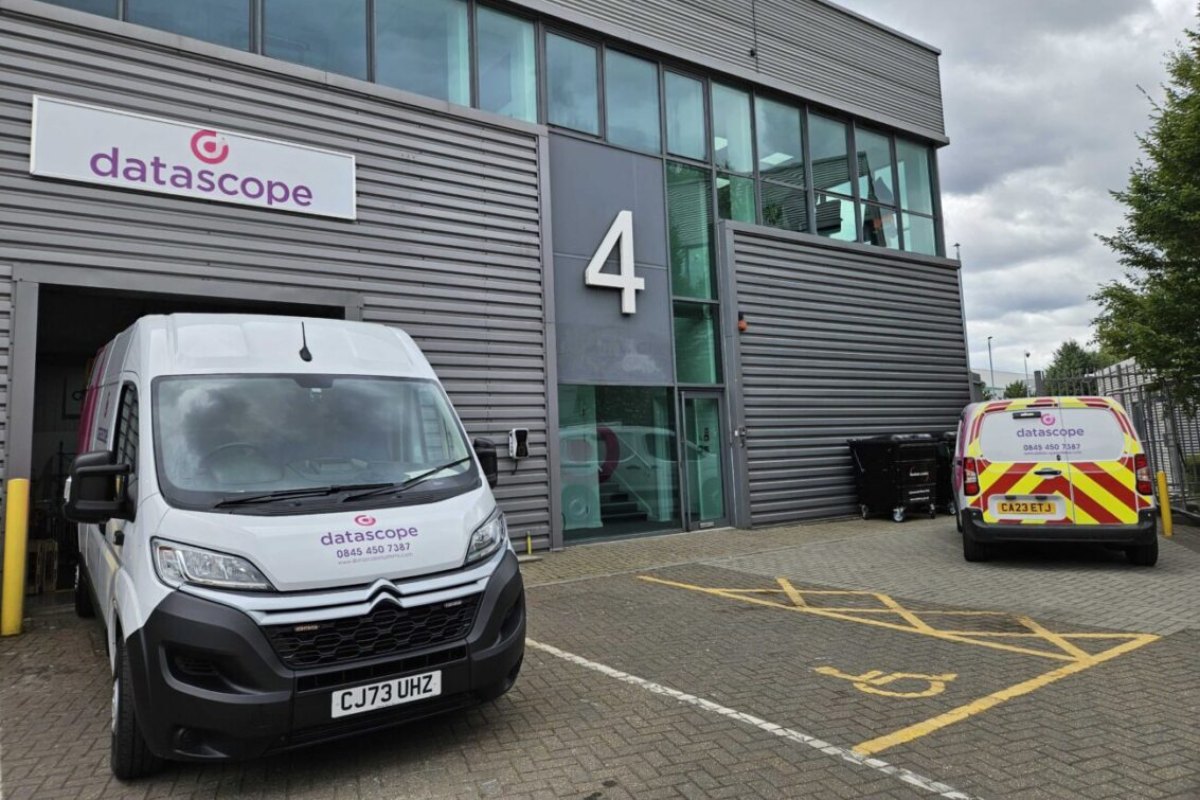
DataScope, a UK provider of construction management software, and Burr Computer Environments (BCEI), an engineering and construction management firm specialising in data centres, have signed a global enterprise agreement to deploy DataScope’s full software suite across BCEI’s data centre projects worldwide. The agreement will cover all current and future developments, including projects delivered in collaboration with EdgeConneX. It formalises a partnership that began in September 2020 with the deployment of DataTouch Daily Site Co-ordination in Santiago, Chile, and has since expanded across multiple international data centre campuses. Locations where the system has been implemented so far include Brussels, Jakarta, Kuala Lumpur, Frankfurt, Chicago, Atlanta, New Albany, and Austin. Over this period, DataScope’s platform has been used to provide visibility of labour allocation, site attendance, and workforce competency tracking. It has also supported the management of high-risk activities, alongside reported improved communication and collaboration across project teams. BCEI has additionally used the system to manage key health and safety processes digitally, including permits, safety communications, RAMS, and safety observations. The companies say this has enabled the use of real-time safety data to support proactive risk management across projects. Supporting global scaling and consistency The enterprise agreement is intended to support BCEI’s continued global expansion, enabling more consistent reporting, improved operational control, and greater efficiency across its data centre portfolio. Jason Crowell, Environmental, Health, and Safety Director at BCEI, comments, “Data centre delivery is evolving rapidly and our clients demand both predictability and absolute reliability. "This global agreement ensures we have the digital backbone to scale efficiently while maintaining the highest safety standards across every region we operate in.” Joe Desormeaux, VP, Mission Critical at DataScope, adds, “This enterprise agreement marks a significant milestone in our journey with BCEI. What began in 2020 with the successful deployment of DataTouch in Santiago has grown into a truly global partnership spanning multiple continents and some of the most complex data centre projects in the world. “We are incredibly proud of what has been achieved together to date, from establishing robust workforce management and digital permit controls to creating best-in-class daily coordination processes. We look forward to the next phase of this partnership and to supporting BCEI’s continued growth across its global data centre portfolio.”

Schneider joins OpenUSD alliance to advance digital twins
Global energy technology company Schneider Electric, alongside AVEVA and ETAP, has joined the Alliance for OpenUSD (AOUSD) to accelerate the development of interoperable digital twins and simulation-ready 3D assets for industrial environments. The three companies join existing contributors such as NVIDIA, Pixar, Adobe, and Autodesk. The announcement was made during Schneider Electric’s Innovation Summit North America in Las Vegas, which brought together more than 2,500 industry leaders to discuss the future of resilient and intelligent energy systems. OpenUSD is an extensible framework designed to improve interoperability between software tools and data formats used to build virtual environments and industrial digital twins. By joining the alliance, the three companies aim to advance open standards that support industrial simulation, collaborative design, and large-scale AI infrastructure planning. Supporting next-generation digital twins The collaboration aligns the companies more closely with NVIDIA’s vision for real-time, physically accurate digital twins that can model buildings, data centres, factories, and emerging AI infrastructure. Many organisations now use NVIDIA Omniverse libraries to develop digital twin applications that optimise design, performance, and sustainability. By adopting OpenUSD as a shared foundation, Schneider Electric, AVEVA, and ETAP aim to support new capabilities across: • SimReady asset development, enabling interoperable models of physical infrastructure such as power and cooling systems for use in Omniverse-based simulations. • Digital twin collaboration, allowing integrated views of complex systems, including data centres, energy networks, and industrial facilities built on platforms such as EcoStruxure, AVEVA, and ETAP. • AI infrastructure planning, using tools including the NVIDIA Omniverse DSX Blueprint to support the co-design of gigawatt-scale AI factories. These capabilities are intended to support more accurate modelling of thermal behaviour, power distribution, airflow, and other operational variables within data centres and industrial sites. Jim Simonelli, Senior Vice President and Chief Technology Officer for Data Centres at Schneider Electric, comments, “Joining the Alliance allows us to contribute to a shared digital language that empowers collaboration, simulation, and innovation across the AI ecosystem.” Rev Lebaredian, Vice President of Omniverse and Simulation Technology at NVIDIA, notes, “To efficiently design and operate complex systems like AI factories, industries need a robust, simulation-ready foundation. "Schneider Electric’s expertise in energy management, hardware, and software, combined with NVIDIA Omniverse libraries, will accelerate the creation of the AI factories and intelligent grids of the future.” Expanding long-term collaboration The three companies have an established partnership with NVIDIA across digital twin development and AI infrastructure design. They are co-developing reference architectures and integrated hardware and software approaches to support power, cooling, and energy management for next-generation AI factories. At the recent GTC DC event, Schneider Electric was named as a power, cooling, and energy technology partner for the NVIDIA AI Factory Research Center, which is powered by the NVIDIA Vera Rubin platform. The facility serves as a foundation for the Omniverse DSX Blueprint and supports research in generative AI, scientific computing, and advanced manufacturing. In March 2025, ETAP by Schneider Electric released a new digital twin tool capable of accurately modelling the power requirements of AI factories. For more from Schneider Electric, click here.

Red Hat adds support for OpenShift on NVIDIA BlueField DPUs
Red Hat, a US provider of open-source software, has announced support for running Red Hat OpenShift on NVIDIA BlueField data processing units (DPUs). The company says the development is intended to help organisations deploy AI workloads with improved security, networking, and storage performance. According to Red Hat, modern AI applications increasingly compete with core infrastructure services for system resources, which can affect performance and security. The company states that running OpenShift with BlueField aims to separate AI workloads from infrastructure functions, such as networking and security, to improve operational efficiency and reduce system contention. It says the platform will support enhanced networking, more streamlined lifecycle management, and resource offloading to the DPU. Workload isolation and resource efficiency Red Hat states that by shifting networking services and infrastructure management tasks to the DPU, CPU resources can be used for AI applications, also highlighting acceleration features for data-plane and storage-traffic processing, including support for NVMe over Fabrics and optimised Open vSwitch data paths. Additional features include distributed routing for multi-tenant environments and security controls designed to reduce attack surfaces by isolating workloads away from infrastructure services. Support for BlueField on OpenShift will be offered initially as a technical preview, with broader integration planned. Red Hat notes that ongoing work with NVIDIA aims to add further support for the NVIDIA DOCA software framework and third-party network functions. The companies also expect future capability enhancements with the next generation of BlueField hardware and integration with NVIDIA’s Spectrum-X Ethernet networking for distributed AI environments. Ryan King, Vice President, AI and Infrastructure, Partner Ecosystem Success at Red Hat, comments, “As the adoption of generative and agentic AI grows, the demand for advanced security and performance in data centres has never been higher, particularly with the proliferation of AI workloads. "Our collaboration with NVIDIA to enable Red Hat OpenShift support for NVIDIA BlueField DPUs provides customers with a more reliable, secure, and high-performance platform to address this challenge and maximise their hardware investment.” Justin Boitano, Vice President, Enterprise Products at NVIDIA, adds, “Data-intensive AI reasoning workloads demand a new era of secure and efficient infrastructure. "The Red Hat OpenShift integration of NVIDIA BlueField builds on our longstanding work to empower organisations to achieve unprecedented scale and performance across their AI infrastructure.” For more from Red Hat, click here.

Cadence adds NVIDIA DGX SuperPOD to digital twin platform
Cadence, a developer of electronic design automation software, has expanded its Reality Digital Twin Platform library with a digital model of NVIDIA’s DGX SuperPOD with DGX GB200 systems. The addition is aimed at supporting data centre designers and operators in planning and managing facilities for large-scale AI workloads. The Reality Digital Twin Platform enables users to create detailed digital replicas of data centres, simulating power, cooling, space, and performance requirements before physical deployment. By adding the NVIDIA DGX SuperPOD, Cadence says engineers can model AI factory environments with greater accuracy, supporting faster deployment and improved operational efficiency. Digital twins for AI data centres Michael Jackson, Senior Vice President of System Design and Analysis at Cadence, says, “Rapidly scaling AI requires confidence that you can meet your design requirements with the target equipment and utilities. "With the addition of a digital model of NVIDIA’s DGX SuperPOD with DGX GB200 systems to our Cadence Reality Digital Twin Platform library, designers can model behaviourally accurate simulations of some of the most powerful accelerated systems in the world, reducing design time and improving decision-making accuracy for mission-critical projects.” Tim Costa, General Manager of Industrial and Computational Engineering at NVIDIA, adds, “Creating the digital twin of our DGX SuperPOD with DGX GB200 systems is an important step in enabling the ecosystem to accelerate AI factory buildouts. "This step in our ongoing collaboration with Cadence fills a crucial need as the pace of innovation increases and time-to-service shrinks.” The Cadence Reality Digital Twin Platform allows engineers to drag and drop vendor-provided models into simulations to design and test data centres. It can also be used to evaluate upgrade paths, failure scenarios, and long-term performance. The library currently contains more than 14,000 items from over 750 vendors. Industry engagement The addition of the NVIDIA model is part of Cadence’s ongoing collaboration with NVIDIA, following earlier support for the NVIDIA Omniverse blueprint for AI factory design. Cadence will highlight the expanded platform at the AI Infra Summit in Santa Clara from 9-11 September, where company experts will take part in keynotes, panels, and talks on chip efficiency and simulation-driven data centre operations. For more from Cadence, click here.

Microchip enhances TrustMANAGER platform
International cybersecurity regulations continue to adapt to meet the evolving threat landscape. One major focus is on outdated firmware in IoT devices, which can present significant security vulnerabilities. To address these challenges, Microchip Technology, an American semiconductor manufacturer, is enhancing its TrustMANAGER platform to include secure code signing and Firmware Over-the-Air (FOTA) update delivery as well as remote management of firmware images, cryptographic keys, and digital certificates. These advancements support compliance with the European Cyber Resilience Act (CRA) which mandates strong cybersecurity measures for digital products sold in the European Union (EU). Aligned with standards like the European Telecommunications Standards Institute (ETSI) EN 303 645 baseline requirements of cybersecurity for consumer IoT and the International Society of Automation (ISA)/International Electrotechnical Commission (IEC) 62443 security of industrial automation and control systems standards, the CRA sets a precedent that is expected to influence regulations worldwide. Microchip’s ECC608 TrustMANAGER leverages Kudelski IoT’s keySTREAM Software as a Service (SaaS) to deliver a secure authentication Integrated Circuit (IC) that is designed to store, protect, and manage cryptographic keys and certificates. With the addition of FOTA services, the platform helps customers securely deploy real-time firmware updates to remotely patch vulnerabilities and comply with cybersecurity regulations. “As evolving cybersecurity regulations require connected device manufacturers to prioritise the implementation of mechanisms for secure firmware updates, lifecycle credential management, and effective fleet deployment, the addition of FOTA services to Microchip’s TrustMANAGER platform offers a scalable solution that removes the need for manual, expensive, static infrastructure security updates," says Nuri Dagdeviren, Corporate Vice President of Microchip’s Security Products Business Unit. "FOTA updates allow customers to save resources while fulfilling compliance requirements and helping to future-proof their products against emerging threats and evolving regulations." Further enhancing cybersecurity compliance, the Microchip WINCS02PC Wi-Fi network controller module used in the TrustMANAGER development kit is now certified against the Radio Equipment Directive (RED) for secure and reliable cloud connectivity. RED establishes strict standards for radio devices in the EU, focusing on network security, data protection, and fraud prevention. Beginning 1 August 2025, all wireless devices sold in the EU market must adhere to RED cybersecurity provisions. By incorporating these additional services, TrustMANAGER - governed by keySTREAM - tackles key challenges with IoT security, regulatory compliance, device lifecycle management, and fleet management. This solution is designed to serve IoT device manufacturers and industrial automation providers. For more from Microchip, click here.

Hitachi Vantara launches Virtual Storage Platform 360
Hitachi Vantara, the data storage, infrastructure, and hybrid cloud management subsidiary of Hitachi, today announced the launch of Virtual Storage Platform 360 (VSP 360), a unified management software solution designed to help customers simplify data infrastructure management operations, improve decision-making, and the delivery of data services. With support for block, file, object, and software-defined storage, VSP 360 consolidates multiple management tools and aims to enable IT teams, including those with limited storage expertise, to more efficiently control hybrid cloud deployments, gain AIOps predictive insights, and simplify data lifecycle governance. Organisations today are struggling to manage sprawling data environments spread across disparate storage systems, fragmented data silos, and complex application workloads, all while grappling with overextended IT teams and rising demands for compliance and AI readiness. A recent survey showed AI has led to a dramatic increase in the amount of data storage that businesses require, with the amount of data expected to increase 122% by 2026. The survey also revealed that many IT leaders are being forced to implement AI before their data infrastructure is ready to handle it, with many embarking on a journey of experimentation, hoping to find additional ways to recover some of the cost of their investments. VSP 360 seeks to address these obstacles by integrating data management tools across enterprise storage to monitor key performance indicators, including storage capacity utilisation and overall system health, helping to deliver optimal performance and efficient resource management. It intends to improve end-to-end visibility, leveraging AIOps observability to break down data silos, as well as streamlining the deployment of VSP One data services. “VSP 360 represents a bold step forward in unifying the way enterprises manage their data,” says Octavian Tanase, Chief Product Officer, Hitachi Vantara. “It’s not just a new management tool—it’s a strategic approach to modern data infrastructure that gives IT teams complete command over their data, wherever it resides. With built-in AI and automation and by making it available via SaaS, Private, or via your mobile phone, we're empowering our customers to make faster, smarter decisions and eliminate the traditional silos that slow innovation.” “VSP 360 gives our customers the unified visibility and control they’ve been asking for,” claims Dan Pittet, Senior Solutions Architect, Stoneworks Technologies. “The ability to manage block, file, object, and software-defined storage from a single AI-driven platform helps streamline operations and reduce complexity across hybrid environments. It’s especially valuable for IT teams with limited resources who need to respond quickly to evolving data demands without compromising performance or governance.” "VSP 360 hits the mark for what modern enterprises need," states Ashish Nadkarni, Group Vice President and General Manager, Worldwide Infrastructure Research, IDC. "It goes beyond monitoring to deliver true intelligence across the storage lifecycle. The solution's robust data resiliency helps businesses maintain continuous operations and protect their critical assets, even in the face of unexpected disruptions. By integrating advanced analytics, automation, and policy enforcement, Hitachi Vantara is giving customers the agility and resilience needed to thrive in a data-driven economy.” For more from Hitachi, click here.


Translate »