What European data sovereignty means for data centre tools
Author: Joe Peck
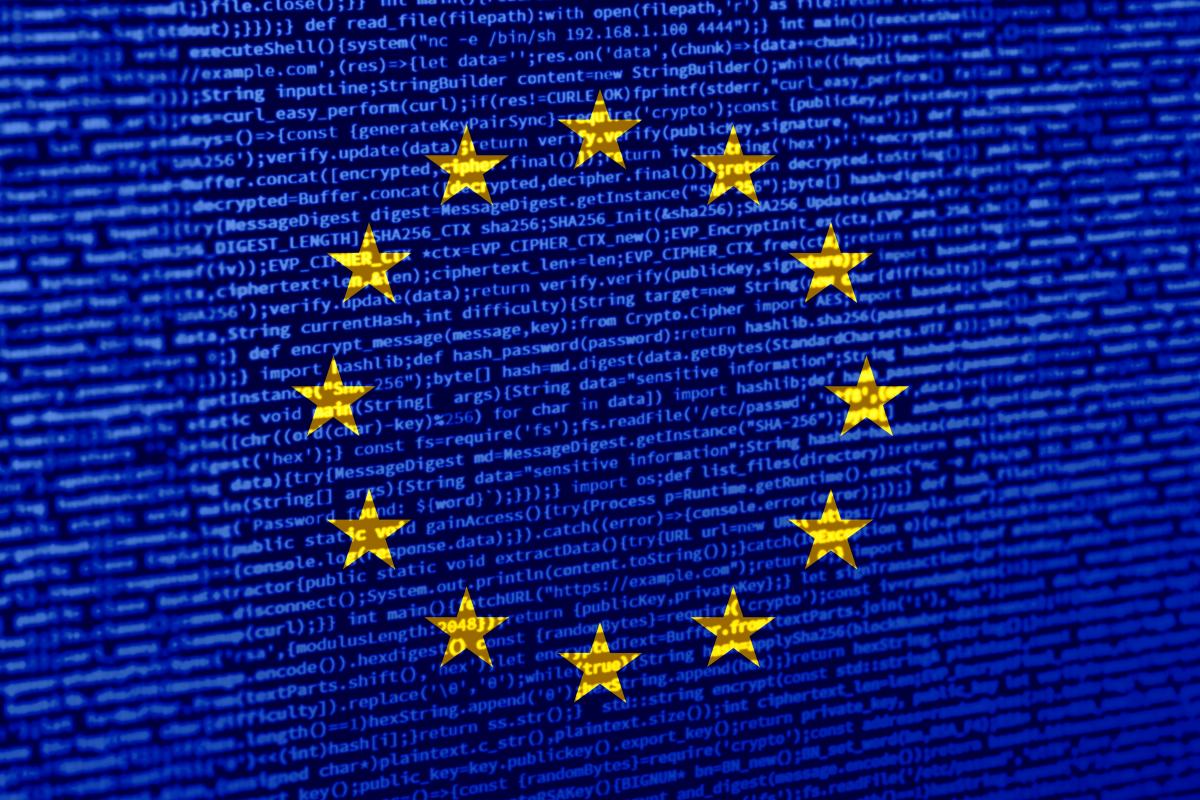
In this exclusive article for DCNN, Swiss privacy technology company Proton Mail examines why evolving European data sovereignty requirements are forcing data centre operators to reassess the tools they use to manage infrastructure, store operational data, and demonstrate regulatory compliance:
Data sovereignty moves into the data centre
For most data centre teams, the concept of data sovereignty has lived at a comfortable arm’s length. It was something legal worried about, something the sales team put in proposals, something that got mentioned at vendor briefings before the coffee break. But that distance is collapsing, and fast.
The European Union’s regulatory architecture around data has shifted from a set of compliance checkboxes into something far more structural. GDPR established the foundations; the EU Data Act, the Data Governance Act, and the ongoing ripple effects of transatlantic legal friction (particularly the tensions created by the US CLOUD Act) have built several more floors on top of it. The result is a framework that increasingly determines not just what data your organisation holds, but which tools you are permitted to use to manage, transfer, share, and store it.
This has direct, practical consequences for data centre operations teams. The monitoring platform you log into each morning, the cloud storage your engineers use to share runbooks, the ticketing system where incidents are logged, the collaboration suite where shift handovers happen: if any of these tools are operated by a company headquartered outside the EU, they may now carry a compliance risk that regulators are no longer prepared to overlook. As explored in a broader look at why data security is no longer optional, the costs of underestimating this shift go well beyond fines.
The sovereignty problem in plain terms
Data sovereignty, at its core, is the principle that data generated within a jurisdiction should remain subject to that jurisdiction’s laws, regardless of where it is physically stored or which company’s servers it sits on. In the EU context, this means that personal data relating to European citizens and businesses should not be accessible to foreign governments or legal systems without going through EU legal channels and oversight.
The complication arises from the US CLOUD Act, signed into law in 2018. This legislation grants US authorities the power to compel American technology companies to hand over data, even data stored on servers in Europe, without necessarily requiring a formal mutual legal assistance treaty process. For a European organisation using a US-headquartered SaaS provider, this creates what regulators have called an active legal paradox: data that appears to be stored safely in an EU data centre may still be legally accessible to a non-EU government.
It is a risk that regulators across France, Germany, the Netherlands, and beyond are treating with increasing seriousness. Enforcement actions against US cloud providers by national data protection authorities have grown steadily, and the appetite for leniency is diminishing.
Where operations teams feel it
The challenge for data centre teams is that the operational tooling that makes modern facilities function efficiently has, over the past decade, migrated almost entirely into the cloud – and largely into platforms operated by American technology companies. This was a rational progression: the tools were excellent, the pricing was competitive, and the compliance requirements, while present, were manageable.
That calculus is changing. The categories of software that carry the most exposure include:
• DCIM platforms — If telemetry, asset data, or incident records are routed through non-EU cloud infrastructure, they may be subject to foreign access requests.
• Ticketing and ITSM systems — Incident logs can contain sensitive operational and customer data, and where these records are stored and processed matters legally.
• Collaboration and file-sharing tools — Runbooks, change documentation, and engineering notes shared via US-headquartered platforms may not satisfy GDPR data processing requirements.
• Monitoring and observability platforms — Network performance data, access logs, and infrastructure health metrics can constitute sensitive data under certain regulatory interpretations.
• Email and calendar services — Operational communications may be covered by data residency requirements, particularly in regulated sectors such as finance or healthcare.
The question teams are increasingly being asked by compliance officers, enterprise customers during audits, and regulators during inspections is not simply “is this data encrypted?” but “under whose legal jurisdiction does this data sit, and who could compel access to it?” Industry voices have been making this point for some time, as reflected in commentary gathered on Data Privacy Day, where the emphasis fell squarely on building repeatable operational controls rather than chasing individual compliance milestones.
The sovereign cloud push
The response from the market has been a wave of “sovereign cloud” offerings: architecture models where infrastructure, operational staff, and legal entities are all resident within the EU, and where data is contractually and technically ringfenced from parent-company access in non-EU jurisdictions.
Several major hyperscalers have invested heavily in these products. Microsoft’s EU Data Boundary, Google’s Sovereign Controls, and AWS’s EU Sovereign Cloud are all attempts to provide assurances that European data will not traverse US legal jurisdiction. Whether these assurances are sufficient, given that the parent companies remain subject to US law, remains contested amongst legal scholars and regulators. Germany and France, in particular, have pushed back on the idea that a US company’s technical commitments can fully override a foreign court order.
The EU’s Gaia-X initiative represents the most ambitious attempt to build a native alternative: a federated, interoperable digital infrastructure that reduces dependency on non-European hyperscalers entirely. Progress has been slower than its architects hoped, but the framework it has established around transparency, portability, and provenance of data is increasingly influencing procurement decisions at large European enterprises and public sector bodies. The physical reality of where infrastructure actually sits remains critical to all of this, a point underlined by the lessons drawn from the OVHCloud fire, which demonstrated how quickly assumed protections can evaporate when something goes wrong at the hardware level.
Rethinking the toolchain
For data centre teams, the practical consequence is a growing need to audit the toolchain – not just the infrastructure they manage for customers, but the tools they use internally to manage that infrastructure.
This is a non-trivial task. Many of the most capable platforms in categories like monitoring, ITSM, and collaboration are US-headquartered. Replacing them wholesale is expensive, disruptive, and technically risky. The more pragmatic approach being adopted by many European operators is a tiered assessment: identifying which tools handle which categories of data, and which of those data categories carry the highest regulatory exposure.
Operational telemetry that contains no personal data may carry a different risk profile than a shared drive full of customer documentation, change records, and contractual files. The latter category (documents and files shared amongst engineering and operations teams) is one where the market for European-origin alternatives has matured considerably.
For file storage and document sharing specifically, a number of privacy-focused alternatives have emerged that offer end-to-end encryption, EU-based infrastructure, and no exposure to US jurisdiction. Proton Drive is one example; being built on zero-access encryption and hosted under Swiss and EU law, it is designed so that even the service provider cannot access the contents of stored files. For operations teams handling sensitive engineering documentation or customer-related records, this kind of architecture addresses the sovereignty question at a technical rather than contractual level.
The distinction between technical and contractual sovereignty protections is one that regulators are increasingly paying attention to. A Data Processing Agreement with a US cloud provider commits that provider contractually to certain behaviours; zero-access encryption means that no behaviour, however compelled, can result in plaintext data being handed over, because the keys never leave the customer’s control.
The compliance burden on operations
What makes this period particularly challenging for data centre teams is that sovereignty compliance is not a one-time project; it is a continuous risk assessment process, one that requires keeping pace with an evolving regulatory landscape across multiple EU member states.
Germany alone layers 17 state-level data laws on top of national and EU requirements. The practical implication is that an operations team running a facility serving customers across multiple European jurisdictions may need to maintain a sophisticated, jurisdiction-aware view of where data flows, which tools touch it, and which legal regimes apply. The full scope of what that means for day-to-day operations is covered across DCNN‘s compliance coverage.
This is driving demand for a new kind of capability within operations teams: compliance literacy, meaning engineers who understand not just how to configure a monitoring platform, but what data that platform collects, where it sends it, and whether that is consistent with the data processing agreements their organisation holds with its customers.
The audit pressure is already here
Customer-driven audit pressure is one of the most immediate ways data centre teams are encountering sovereignty requirements in practice. Enterprise customers, particularly those in regulated sectors like finance, healthcare, and government, are increasingly including detailed data residency and toolchain questions in their due diligence processes before signing colocation or managed service contracts.
They want to know not just where their data sits, but which third-party tools the data centre operator uses to manage access, monitor systems, and handle incidents, because those tools are part of the data processing chain. A data centre that stores customer data on EU infrastructure but logs all incident management activity through a US-based ITSM platform may have a harder time satisfying those audits than one that has thought carefully about the full operational stack. This connects directly to the broader operational challenges outlined in an earlier look at the key pressures facing data centre operations teams, where compliance and ESG demands were already competing for finite team bandwidth.
Looking ahead
European data sovereignty is not a temporary regulatory moment; it reflects a deep structural shift in how European governments, regulators, and enterprise customers think about digital infrastructure, one in which the origin and legal jurisdiction of technology matters as much as its performance or price.
For data centre teams, this means the toolchain review is not optional. The platforms that operations, engineering, and management teams use every day are now part of the compliance picture. The good news is that the market for sovereign-by-design tooling is expanding, covering everything from monitoring and observability to file storage and secure communications.
The teams that will navigate this most successfully are those that start the audit now, before a customer inquiry, a regulatory inspection, or an incident forces the issue. Understanding which tools handle which data, under whose jurisdiction, and with what level of technical protection is not just a compliance exercise; it is increasingly a competitive differentiator.