Data Centre Operations: Optimising Infrastructure for Performance and Reliability
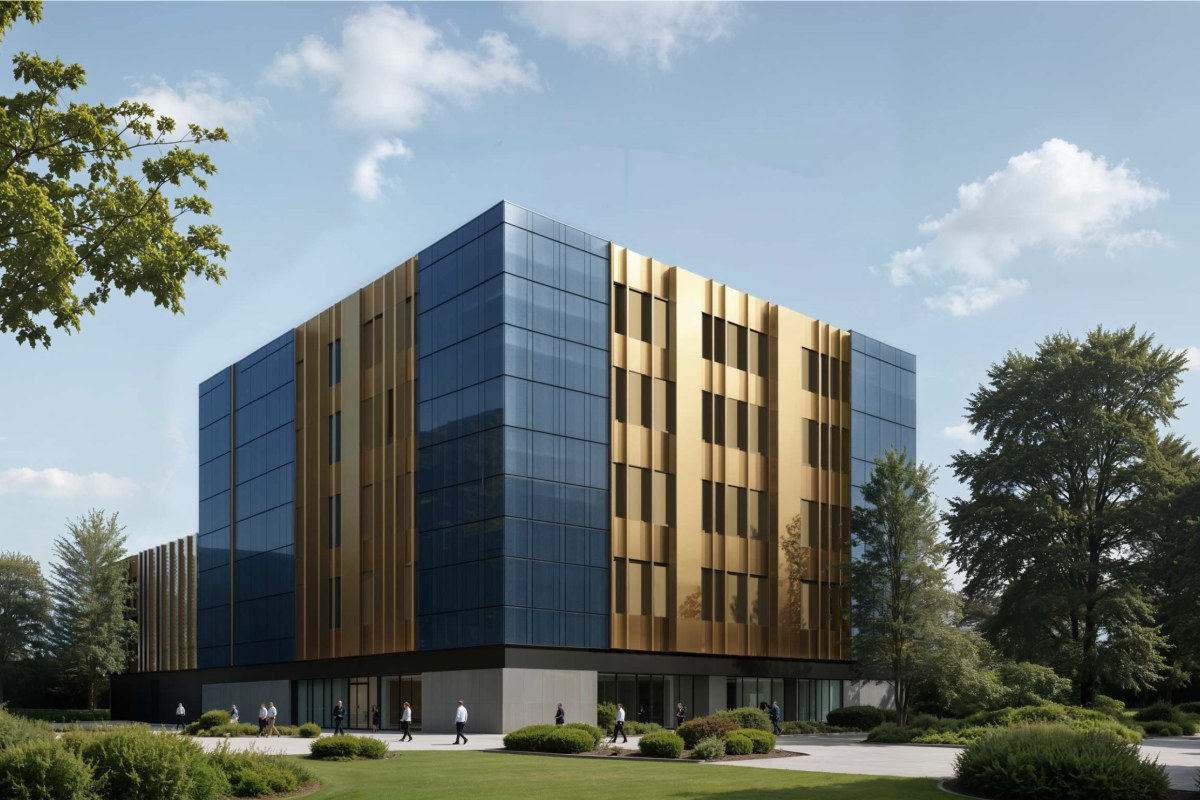

NorthC to build new data centre in Geneva
NorthC Group, a data centre operator in Northwest Europe, will begin construction of a new data centre in Geneva, Switzerland in Q1 of this year. The new facility will be built at The Hive campus, a technology park just outside Geneva. This will be NorthC’s sixth data centre in Switzerland, in addition to its existing data centres in Biel (Bern), Winterthur (Zurich) and Münchenstein (Basel), as well as the recently announced and yet-to-be-built data centre on the uptownBasel campus in Arlesheim (Basel). The total IT capacity will be 4.5 MW, delivered in phases of 1.5 MW, and the data centre will have a total floor area of 5,400 m², with construction expected to be completed by Q2 2028. NorthC says it will prioritise sustainability in constructing the new data centre "by implementing innovative technologies." The facility will use 100% green power, consistent with all of NorthC's data centres, and its cooling system will require no water. Additionally, backup generators will operate on HVO100, a fossil-free fuel made from renewable materials such as vegetable oils and waste fats. Designed for AI The new data centre will be designed to support emerging technologies (such as inference applications) through direct-to-chip (D2C) liquid cooling, which dissipates heat from computer chips more efficiently than traditional methods. Alexandra Schless, CEO of NorthC Group, comments, “Geneva is an important commercial and economic hub in Switzerland, alongside the Basel and Zurich regions. Demand for digital services - and, consequently, for data centre capacity - is growing rapidly. "This makes Geneva a logical location for NorthC to build a new data centre. The proximity to the renowned scientific research centre, CERN, also offers new opportunities for collaboration in scientific research and innovation, including AI.” Modular design and readiness for residual heat exchange The new Geneva data centre will be built according to NorthC’s standard blueprint design, which is based on modular construction, meaning additional modules can be added and activated as demand increases. This approach often results in more efficient energy consumption and enables rapid scaling. The data centre will also have a direct, high-speed data connection to NorthC’s other locations in Switzerland, providing customers in the region with fast access to services running at other locations. The construction, led by HIAG, a Swiss real estate developer, aims to ensure that the Geneva data centre is designed with sustainability at its core. Like almost all of NorthC's data centres, the Geneva facility will be prepared to support the exchange of residual heat. At The Hive campus, where the data centre is being built, this heat will be used to supply nearby buildings. The facility is also being prepared for a potential future connection to the district heating network operated by the local energy company. For more from NorthC, click here.

Vertiv predicts data centre innovation trends
Data centre innovation is continuing to be shaped by macro forces and technology trends related to AI, according to a report from Vertiv, a global provider of critical digital infrastructure. The Vertiv Frontiers report, which draws on expertise from across the organisation, details the technology trends driving current and future innovation, from powering up for AI to digital twins and adaptive liquid cooling. Scott Armul, Chief Product and Technology Officer at Vertiv, says, “The data centre industry is continuing to rapidly evolve how it designs, builds, operates, and services data centres in response to the density and speed of deployment demands of AI factories. “We see cross-technology forces, including extreme densification, driving transformative trends such as higher voltage DC power architectures and advanced liquid cooling that are important to deliver the gigawatt scaling that is critical for AI innovation. "On-site energy generation and digital twin technology are also expected to help advance the scale and speed of AI adoption.” The Vertiv Frontiers report builds on and expands Vertiv’s previous annual Data Centre Trends predictions. The report identifies macro forces driving data centre innovation. These include: • Extreme densification — accelerated by AI and HPC workloads• Gigawatt scaling at speed — with data centres now being deployed rapidly and at unprecedented scale• Data centre as a unit of compute — as the AI era requires facilities to be built and operated as a single system• Silicon diversification — noting data centre infrastructure must adapt to an increasing range of chips and compute The report details how these macro forces have in turn shaped five key trends impacting specific areas of the data centre landscape: 1. Powering up for AI Most current data centres still rely on hybrid AC/DC power distribution from the grid to the IT racks, which includes three to four conversion stages and some inefficiencies. This existing approach is under strain as power densities increase, largely driven by AI workloads. The shift to higher voltage DC architectures enables significant reductions in current, size of conductors, and number of conversion stages while centralising power conversion at the room level. Hybrid AC and DC systems are pervasive, but as full DC standards and equipment mature, higher voltage DC is likely to become more prevalent as rack densities increase. On-site generation - and microgrids - will also drive adoption of higher voltage DC. 2. Distributed AI The billions of dollars invested into AI data centres to support large language models (LLMs) to date have been aimed at supporting widespread adoption of AI tools by consumers and businesses. Vertiv believes AI is becoming increasingly critical to businesses, but how - and from where - those inference services are delivered will depend on the specific requirements and conditions of the organisation. While this will impact businesses of all types, highly regulated industries (such as finance, defence, and healthcare) may need to maintain private or hybrid AI environments via on-premise data centres, due to data residency, security, or latency requirements. Flexible, scalable high-density power and liquid cooling systems could enable capacity through new builds or retrofitting of existing facilities. 3. Energy autonomy accelerates Short-term, on-site energy generation capacity has been essential for most standalone data centres for decades to support resiliency. However, widespread power availability challenges are creating conditions to adopt extended energy autonomy, especially for AI data centres. Investment in on-site power generation, via natural gas turbines and other technologies, does have several intrinsic benefits but is primarily driven by power availability challenges. Technology strategies such as 'Bring Your Own Power (and Cooling)' are likely to be part of ongoing energy autonomy plans. 4. Digital twin-driven design and operations With increasingly dense AI workloads and more powerful GPUs also comes a demand to deploy these complex AI factories with speed. Using AI-based tools, data centres can be mapped and specified virtually - via digital twins - and the IT and critical digital infrastructure can be integrated, often as prefabricated modular designs, and deployed as units of compute, reducing time-to-token by up to 50%. This approach will be important to efficiently achieving the gigawatt-scale buildouts required for future AI advancements. 5. Adaptive, resilient liquid cooling AI workloads and infrastructure have accelerated the adoption of liquid cooling, but, conversely, AI can also be used to further refine and optimise liquid cooling solutions. Liquid cooling has become mission-critical for a growing number of operators, but AI could provide ways to further enhance its capabilities. AI, in conjunction with additional monitoring and control systems, has the potential to make liquid cooling systems smarter and even more robust by predicting potential failures and effectively managing fluid and components. This trend should lead to increasing reliability and uptime for high value hardware and associated data/workloads. For more from Vertiv, click here.

Duos Edge AI deploys edge DC in Abilene, Texas
Duos Technologies Group, through its subsidiary Duos Edge AI, a provider of edge data centre (EDC) systems, has deployed a new edge data centre in Abilene, Texas, in partnership with Region 14 Education Service Center. The facility forms part of the company’s ongoing rollout of carrier neutral edge data centres across Texas and is intended to support education, healthcare, workforce development, and local businesses. Expanding regional edge infrastructure Located at Region 14 ESC, the data centre will act as a local colocation site and computing hub for more than 40 school districts and charter schools spanning 11 counties. The company says the installation provides secure processing, increased bandwidth, and low-latency compute closer to users. According to Duos Edge AI, the deployment is designed to reduce reliance on remote data centres and improve access to digital services, including AI-based applications and cloud platforms, particularly for schools in rural and underserved areas. The Abilene installation follows earlier deployments in Amarillo, Waco, and Victoria, and is aligned with the company’s strategy to develop distributed edge capacity for education, healthcare, and enterprise use cases. Doug Recker, President of Duos and founder of Duos Edge AI, comments, “We are excited to partner with Region 14 ESC to bring cutting-edge technology to Abilene and West Texas, bringing a carrier neutral colocation facility to the market while empowering educators and communities with the tools they need to thrive in a digital world.” Region 14 ESC Executive Director Chris Wigington adds, “Collaborating with Duos Edge AI allows us to elevate the technological capabilities of our schools and partners, ensuring equitable access to high-speed computing and AI resources.” The facility is scheduled to become operational in early 2026, with a launch event planned. For more from Duos Edge AI, click here.

Duos Edge AI expands US edge data centres
Duos Technologies Group, through its subsidiary Duos Edge AI, a provider of edge data centre (EDC) systems, has expanded its EDC footprint in Texas and entered the Illinois market, serving the Greater Chicago area. The company reports continued deployments across several Texas locations and that the Illinois site represents its first installation in the Midwest. Duos Edge AI says further sites are planned as part of a broader geographic expansion. Texas and Midwest deployments In Texas, Duos Edge AI has added two edge data centres in Lubbock to support carrier neutral requirements. The company has also deployed sites supporting education, healthcare, and service providers in Amarillo, Victoria, Waco, Dumas, and Corpus Christi. The Illinois deployment is located in the Greater Chicagoland area and is described as the first of multiple planned installations in the Midwest. According to the company, the Lubbock sites are intended to address service provider demand, while the broader Texas portfolio supports a range of public and private sector use cases. Duos Edge AI’s modular edge data centres include security controls aligned with SOC 2 Type II certification under AICPA standards. The company also references its patented modular data centre entryway design, which is intended to protect equipment in controlled environments. Commenting on the expansion, Doug Recker, President of Duos and founder of Duos Edge AI, says, “Expanding within Texas and into the Illinois market is a meaningful milestone that reflects both execution discipline and rising demand for our Edge Data Center. "We are building a scalable, repeatable deployment model that supports education, carriers, and enterprises with secure, low-latency infrastructure. "These expansions align with our growth strategy and reinforce our confidence in continued momentum as we execute against our long-term guidance.” Duos Edge AI states that it plans to expand into additional US states, focusing on carrier neutral facilities that support localised compute and edge infrastructure requirements in a range of markets. For more from Duos Edge AI, click here.

Vertiv, GreenScale to deploy DC platforms across Europe
Vertiv, a global provider of critical digital infrastructure, and GreenScale, a developer of hyperscale data centre campuses, have announced a strategic collaboration to deliver factory-integrated data centre platforms engineered for next-generation AI workloads in Europe. Following a competitive pre-qualification questionnaire (PQQ) process, GreenScale selected Vertiv as its preferred provider for standardised, prefabricated Vertiv OneCore hybrid-built data centres. While GreenScale will manage slab-down construction and site-wide infrastructure, Vertiv will provide AI-ready data centre modules engineered to support liquid-cooled deployments of NVIDIA Grace Blackwell GB200/300 graphic processing units (GPUs), including next-generation Vera Rubin GPUs. Vedran Brzic, VP Infrastructure Solutions Business EMEA at Vertiv, says, “AI workloads demand density and speed. By integrating the Vertiv OneCore platform into GreenScale’s standard design, we can help to accelerate deployment of scalable infrastructure for AI, high-performance (HPC), and high-density computing. "Our scalable prefabricated solution integrates our proven power, thermal, and IT infrastructure into a single factory-assembled system that can help customers deploy high-density capacity more efficiently while increasing reliability and performance.” Vertiv's OneCore platform The Vertiv OneCore platform supports up to 200+ kW per rack and features coolant distribution units (CDUs) with a dual-loop liquid cooling system. The platform is supported by Vertiv SmartRun overhead prefabricated infrastructure, which includes an integrated secondary fluid network (SFN) for liquid-cooled thermal management - optimised for GPU-intensive architectures - and power distribution. Modules arrive factory-built and pre-tested, with GreenScale providing comprehensive site services including grid integration, permitting, battery monitoring system (BMS)/security systems, and slab-down construction. Dan Thomas, CEO at GreenScale, comments, “Our collaboration with Vertiv aligns perfectly with GreenScale’s mission to rapidly deploy high efficiency, AI-ready infrastructure across Europe. By standardising on Vertiv’s prefabricated platforms, we gain significant advantages in speed-to-market, quality control, and operational efficiency. "Their proven experience in high-density cooling solutions and factory-integrated approach helps us minimise on-site complexity while enabling our facilities to be optimised for the most demanding AI workloads. This standardised platform approach will be instrumental in executing our ambitious expansion plans across Northern Ireland and the Nordics.” GreenScale plans to expand with approximately 120 MW in Northern Ireland and over 300 MW across the Nordics, with a long-term vision to deploy close to 1 GW across Europe. The company says it aims to implement a high-performance compute model that aligns its objectives and timelines with "technology providers who can efficiently deliver scalable, AI-ready solutions." For more from Vertiv, click here.

Sabey's Manhattan facility becomes AI inference hub
Sabey Data Centers, a data centre developer, owner, and operator, has said that its New York City facility at 375 Pearl Street is becoming a hub for organisations running advanced AI inference workloads. The facility, known as SDC Manhattan, offers dense connectivity, scalable power, and flexible cooling infrastructure designed to host latency-sensitive, high-throughput systems. As enterprises move from training to deployment, inference infrastructure has become critical for delivering real-time AI applications across industries. Tim Mirick, President of Sabey Data Centers, says, "The future of AI isn't just about training; it's about delivering intelligence at scale. Our Manhattan facility places that capability at the edge of one of the world's largest and most connected markets. "That's an enormous advantage for inference models powering everything from financial services to media to healthcare." Location and infrastructure Located within walking distance of Wall Street and major carrier hotels, SDC Manhattan is among the few colocation providers in Manhattan with available power. The facility has nearly one megawatt of turnkey power available and seven megawatts of utility power across two powered shell spaces. The site provides access to numerous network providers as well as low-latency connectivity to major cloud on-ramps and enterprises across the Northeast. Sabey says it offers organisations the ability to deploy inference clusters close to their users, reducing response times and enabling real-time decision-making. The facility's liquid-cooling-ready infrastructure supports hybrid cooling configurations to accommodate GPUs and custom accelerators. For more from Sabey Data Centers, click here.

Europe races to build its own AI backbone
Recent outages across global cloud infrastructure have once again served as a reminder of how deeply Europe depends on foreign hyperscalers. When platforms run on AWS or services protected by Cloudflare fail, European factories, logistics hubs, retailers, and public services can stall instantly. US-based cloud providers currently dominate Europe’s infrastructure landscape. According to market data, Amazon, Microsoft, and Google together control roughly 70% of Europe’s public cloud market. In contrast, all European providers combined account for only about 15%. This share has declined sharply over the past decade. For European enterprises, this means limited leverage over resilience, performance, data governance, and long-term sovereignty. This same structural dependency is now extending from cloud infrastructure directly into artificial intelligence and its underlying investments. Between 2018 and 2023, US companies attracted more than €120 billion (£104 billion) in private AI investment, while the European Union drew about €32.5 billion (£28 billion) over the same period. In 2024 alone, US-based AI firms raised roughly $109 billion (£81 billion), more than six times the total private AI investment in Europe that year. Europe is therefore trying to close the innovation gap while simultaneously tightening regulation, creating a paradox in which calls for digital sovereignty grow louder even as reliance on non-European infrastructure deepens. The European Union’s Apply AI Strategy is designed to move AI out of research environments and into real industrial use, backed by more than one billion euros in funding. However, most of the computing power, cloud platforms, and model infrastructure required to deploy these systems at scale still comes from outside Europe. This creates a structural risk: even as AI adoption accelerates inside European industry, much of the strategic control over its operation may remain in foreign hands. Why industrial AI is Europe’s real monitoring ground For any large-scale technology strategy to succeed, it must be tested and refined through real-world deployment, not only shaped at the policy level. The effectiveness of Europe’s AI push will ultimately depend on how quickly new rules, funding mechanisms, and technical standards translate into working systems, and how fast feedback from practice can inform the next iteration. This is where industrial environments become especially important. They produce large amounts of real-time data, and the results of AI use are quickly visible in productivity and cost. As a result, industrial AI is becoming one of the main testing grounds for Europe’s AI ambitions. The companies applying AI in practice will be the first to see what works, what does not, and what needs to be adjusted. According to Giedrė Rajuncė, CEO and co-founder of GREÏ, an AI-powered operational intelligence platform for industrial sites, this shift is already visible on the factory floor, where AI is changing how operations are monitored and optimised in real time. She notes, “AI can now monitor operations in real time, giving companies a new level of visibility into how their processes actually function. I call it a real-time revolution, and it is available at a cost no other technology can match. Instead of relying on expensive automation as the only path to higher effectiveness, companies can now plug AI-based software into existing cameras and instantly unlock 10–30% efficiency gains.” She adds that Apply AI reshapes competition beyond technology alone, stating, “Apply AI is reshaping competition for both talent and capital. European startups are now competing directly with US giants for engineers, researchers, and investors who are increasingly focused on industrial AI. From our experience, progress rarely starts with a sweeping transformation. It starts with solving one clear operational problem where real-time detection delivers visible impact, builds confidence, and proves return on investment.” The data confirms both movement and caution. According to Eurostat, 41% of large EU enterprises had adopted at least one AI-based technology in 2024. At the same time, a global survey by McKinsey & Company shows that 88% of organisations worldwide are already using AI in at least one business function. “Yes, the numbers show that Europe is still moving more slowly,” Giedrė concludes. “But they also show something even more important. The global market will leave us no choice but to accelerate. That means using the opportunities created by the EU’s push for AI adoption before the gap becomes structural.”

Portable data centre to heat Scandinavian towns
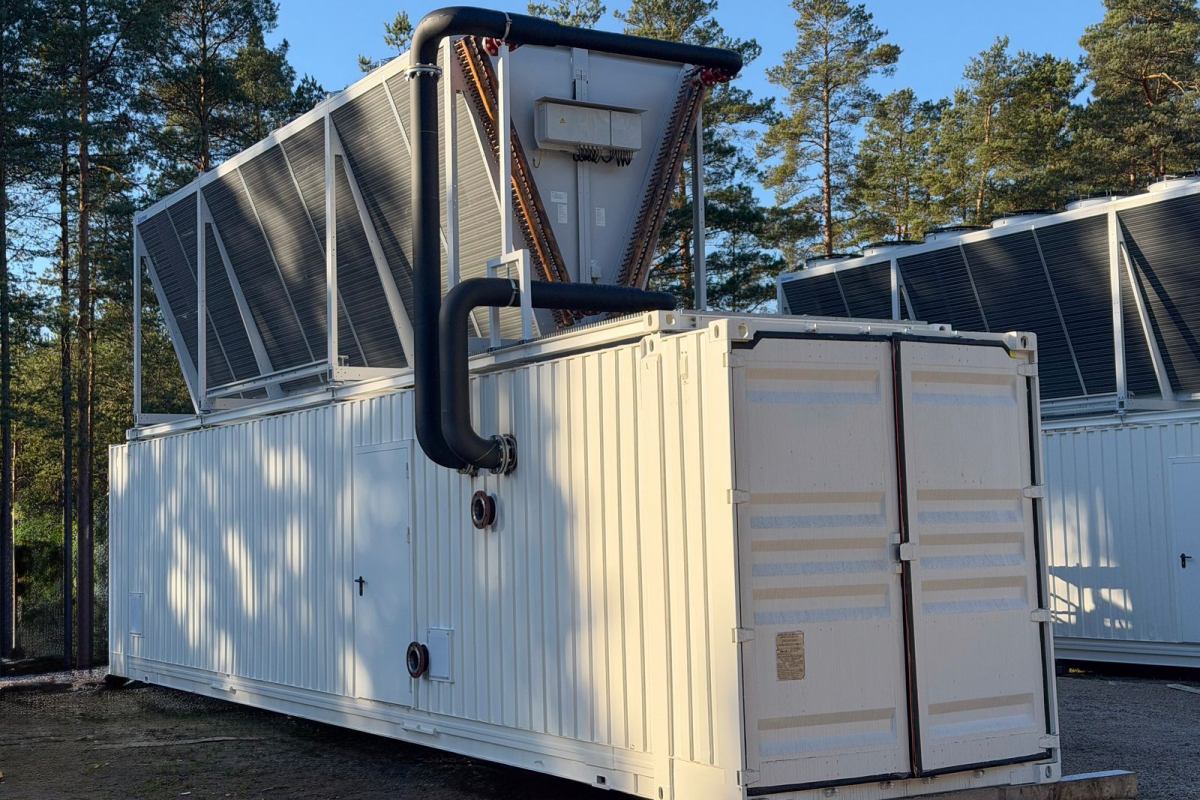
Power Mining, a Baltics-based personal Bitcoin mining device manufacturer, has developed a portable data centre that will heat towns using residual heat from Bitcoin mining. The first two data centres, housed in shipping containers, will be shipped to a Scandinavian town, where they will be connected to the municipal heating system. In one year, one Power Mining data centre can reportedly mine up to 9.7 Bitcoin and heat up to 2000 homes. With 1.6 MW/h in power, the data centre achieves 95% energy efficiency, thereby providing the municipality with 1.52 MW/h. A portable data centre design The data centres are built in Latvia, at a cost starting from €300,000 (£262,000). Due to being put together in a shipping container, they are easily shipped around the world. The data centre is made up of eight server closets, each outfitted with 20 Whatsminer M63S++ servers that consume 10kW of electricity each and create an equivalent amount of heat. The servers can raise the incoming coolant temperature by 10-14°C, producing the equivalent amount of heat while mining Bitcoin. Each server closet is equipped with warm and cool fluid collectors which send the warmed liquid to a built-in heat pump station, where a 1.7 MW heat exchanger ensures the redistribution of heat from the data centre to the town’s heating grid. If the heating grid does not require additional heat from the data centre, the heated fluid is redirected to a built-in dry cooler, which adjusts the temperature to suit the needs of the servers. This way, the data centre is able to cool itself and also contribute to balancing the municipality’s heating grid. Steps towards increased energy efficiency The development of a passive heating data centre is one step towards increased energy efficiency in Bitcoin mining. While classical data centres can collect heat at approximately 27°C, Power Mining says its data centres can collect heat up to 65°C, providing cities with more efficient sources of heat. European data centres already make up more than 3% of the continent’s total electricity consumption, which is expected to surpass 150 TW/h annually - an equivalent of all of Poland’s electricity demands. Up to 40% of this energy is turned into heat, which most often is released into the atmosphere. If this energy were collected and redirected back to heating, it could provide up to 10 million European households with heat. Heat collection from data centres could become one of the most effective ways to combine digitalisation and climate goals.

Study finds consumer GPUs can cut AI inference costs
A peer-reviewed study has found that consumer-grade GPUs, including Nvidia’s RTX 4090, can significantly reduce the cost of running large language model (LLM) inference. The research, published by io.net - a US developer of decentralised GPU cloud infrastructure - and accepted for the 6th International Artificial Intelligence and Blockchain Conference (AIBC 2025), provides the first open benchmarks of heterogeneous GPU clusters deployed on the company’s decentralised cloud platform. The paper, Idle Consumer GPUs as a Complement to Enterprise Hardware for LLM Inference, reports that clusters built from RTX 4090 GPUs can deliver between 62% and 78% of the throughput of enterprise-grade H100 hardware at roughly half the cost. For batch processing or latency-tolerant workloads, token costs fell by up to 75%. The study also notes that, while H100 GPUs remain more energy efficient on a per-token basis, extending the life of existing consumer hardware and using renewable-rich grids can reduce overall emissions. Aline Almeida, Head of Research at IOG Foundation and lead author of the study, says, “Our findings demonstrate that hybrid routing across enterprise and consumer GPUs offers a pragmatic balance between performance, cost, and sustainability. "Rather than a binary choice, heterogeneous infrastructure allows organisations to optimise for their specific latency and budget requirements while reducing carbon impact.” Implications for LLM development and deployment The research outlines how AI developers and MLOps teams can use mixed hardware clusters to improve cost-efficiency. Enterprise GPUs can support real-time applications, while consumer GPUs can be deployed for batch tasks, development, overflow capacity, and workloads with higher latency tolerance. Under these conditions, the study reports that organisations can achieve near-H100 performance with substantially lower operating costs. Gaurav Sharma, CEO of io.net, comments, “This peer-reviewed analysis validates the core thesis behind io.net: that the future of compute will be distributed, heterogeneous, and accessible. "By harnessing both data-centre-grade and consumer hardware, we can democratise access to advanced AI infrastructure while making it more sustainable.” The company also argues that the study supports its position that decentralised networks can expand global compute capacity by making distributed GPU resources available to developers through a single, programmable platform. Key findings include: • Cost-performance ratios — Clusters of four RTX 4090 GPUs delivered 62% to 78% of H100 throughput at around half the operational cost, achieving the lowest cost per million tokens ($0.111–0.149). • Latency profiles — H100 hardware maintained sub-55ms P99 time-to-first-token even at higher loads, while consumer GPU clusters were suited to workloads tolerating 200–500ms tail latencies, such as research, development environments, batch jobs, embeddings, and evaluation tasks.

UK Chancellor urged to use AI for economic growth
UK Chancellor Rachel Reeves has been urged to use the opportunity afforded by AI to ‘Make Britain Great Again’. The news comes as the Government announced that thousands of new AI jobs and billions of pounds of investment will be poured into the next parliament to help stimulate economic growth. New AI Growth Zones Amongst the package of measures proposed for the budget today include a new AI Growth Zone in South Wales, which will create more than 5,000 new jobs for local communities over the next decade, and a further £137 million to support key scientists to drive breakthroughs and develop new drugs, cures, and treatments. Patrick Sullivan, CEO of think tank Parliament Street, argued that with limited options at the budget, only AI can ‘Make Britain Great Again’. He claims, “With limited options due to Labour’s absurd manifesto pledge to rule out income tax rises, the Chancellor is now forced to cobble together a quick fix solution to fill a black hole which is entirely of her own making. "However, the one saving grace is the advent of mass AI adoption, a technology that will bring mass savings at a time when the Government needs it most. “This is Labour’s chance to show that it gets private enterprise and recognises that by supporting tech talent, AI can truly Make Britain Great Again.” Tech expert Graeme Stewart, Head of Public Sector at Check Point Software, says, “The case for investing billions in AI to drive growth and reboot the economy is clear, yet little has been said about the cyber and regulatory risks associated with mass adoption. “Whether it’s attacks on the NHS, nurseries, or local councils, cyber criminals have already proven that nothing in the public sector is off limits. That’s why it’s vital the Chancellor’s AI rollout is backed up with a robust action plan for protecting critical national infrastructure and minimising cyber risk. "We also need to hear more about the Government’s plans to protect the public and private sector from the new wave of AI-enabled cyber-attacks, which require a cohesive national strategy.” Graeme continues, “Mastering AI to drive growth is the right thing to do, but this approach must always go hand-in-hand with the necessary cyber strategy, to ensure the government stays one step ahead of the increasingly lethal cyber threat.” Kenny MacAulay, CEO of Acting Office, a software platform for accounting practices, adds, “With businesses still reeling from the £25 billion National Insurance increase, the Chancellor has a tough task ahead to win the back trust from the private sector. "Proposals for a nationwide AI rollout and investment in infrastructure can help kickstart economic growth, but only alongside a clear action plan to get businesses hiring again. “The industry needs to embrace the opportunities that AI can bring, in terms of centralising technology investment and improving customer service.”


Translate »