Data Centre Operations: Optimising Infrastructure for Performance and Reliability


EDGE Modular launches containerised data centres
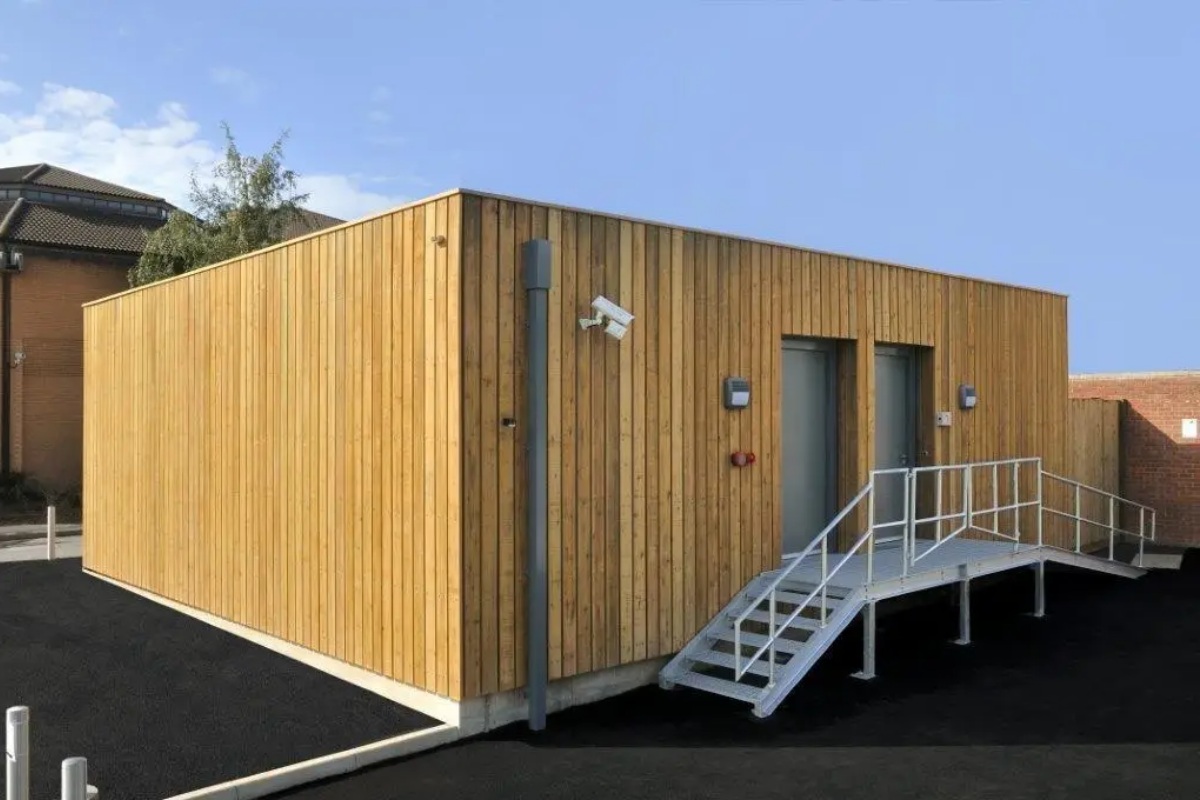
EDGE Modular has launched globally, expanding its containerised data centre offering for edge computing, telecoms, and remote infrastructure deployments. The New Zealand-based company, a division of Edge Defence, designs and manufactures modular data centre systems intended for rapid deployment in locations where traditional construction may be impractical or time-consuming. According to EDGE Modular, the systems are aimed at organisations requiring scalable infrastructure for edge computing and localised data processing. The company says its modular approach allows systems to be manufactured, tested, and deployed more quickly than conventional brick-and-mortar facilities, while also supporting future expansion through scalable designs. John Gell, General Manager at EDGE Modular, explains, “Our mission is to provide innovative, containerised data centre solutions tailored to the unique needs of each client. "We ensure efficiency, quality, and flexibility for future growth in every project we undertake.” Modular infrastructure for edge computing EDGE Modular’s portfolio includes containerised data centres in 10ft, 20ft, and 40ft formats, alongside telecom exchange units, command and control rooms, battery storage systems, and specialist workshop environments. The company states that its infrastructure is designed for deployment in remote and challenging environments, with systems transportable via road, rail, or sea using standard shipping container logistics. EDGE Modular also says its systems are designed for concurrent maintainability, allowing maintenance work to be carried out without interrupting critical operations. In addition to manufacturing, the company provides infrastructure consultancy, system design services, and maintenance support for deployed installations.

Techno Digital commissions Mumbai edge data centre
Indian data centre developer Techno Digital has announced the completion of its Mumbai Edge Data Center (EDC) in Mahalakshmi, South Mumbai, India. Developed in partnership with RailTel Corporation of India, the facility is built to Rated-3 infrastructure standards and is now fully operational. The site has been designed to support enterprise workloads through a smaller infrastructure footprint focused on low latency and connectivity. The Mumbai EDC is positioned to support businesses operating in Mumbai’s financial districts, providing a reported latency of less than 150 microseconds from the Bombay Stock Exchange in Nariman Point and less than 250 microseconds from the National Stock Exchange of India in Bandra Kurla Complex (BKC). The facility is located near business districts including BKC, Nariman Point, Worli, Lower Parel, Mahalakshmi, and Fort, allowing organisations to deploy infrastructure closer to operational sites. A focus on low-latency connectivity Key features of the facility include: • Low-latency connectivity across Mumbai business districts• Access to RailTel’s nationwide fibre network, spanning more than 63,000km• Infrastructure designed to support sovereign and compliance-focused workloads Its proximity to Mumbai’s cable landing stations is also intended to support international connectivity while maintaining low-latency domestic performance. The Mumbai facility forms part of Techno Digital’s wider edge data centre expansion strategy in partnership with RailTel. The company plans to launch five additional edge locations, with a longer-term target of expanding to 102 sites across India over the next three to four years. Ankit Saraiya, Director & CEO of Techno Digital, comments, “As India’s digital economy scales, infrastructure requirements are evolving beyond capacity to include proximity and performance. "The Mumbai EDC is designed to align infrastructure with demand centres, particularly in high-performance environments such as financial services and real-time platforms. "At Techno Digital, our mission is to build a leading distributed network of interconnected edge infrastructure that matches the concentration of economic and digital activity. The Mumbai facility represents a key milestone in that journey.” Amit Agrawal, President of Techno Digital, adds, “In a city like Mumbai, where milliseconds can impact outcomes, infrastructure placement becomes critical. "This facility combines low-latency architecture, strong connectivity, and sovereign infrastructure to support performance-critical workloads ranging from trading and fintech platforms to real-time AI inferencing and enterprise applications. "It is designed to deliver the reliability and responsiveness required in latency-sensitive environments.” For more from Techno Digital, click here.

Russelectric expands microgrid controls offering
US power control manufacturer Russelectric, a Siemens business, has highlighted its Advanced Microgrid Controls platform, designed to support power resiliency and energy management across critical infrastructure environments including data centres. The system combines hardware and software for managing onsite generation assets and facility power infrastructure, including generators, battery storage systems, photovoltaic arrays, and electrical loads. According to Russelectric, the platform integrates with transfer switches, switchgear, and power controllers to support facility-wide monitoring and optimisation of distributed energy resources. The company says the system is designed to support operational continuity during grid outages through functions including dynamic islanding, automatic generator black start capability, and grid resynchronisation. Microgrid platform targets critical infrastructure Russelectric states that the platform is intended to help facilities improve power quality, reduce energy consumption, and lower operational emissions through more efficient management of onsite power assets. The company also offers engineering, commissioning, manufacturing, and maintenance support for microgrid deployments, alongside integrated switchgear and turnkey infrastructure options. Russelectric says it has more than 50 years of experience delivering microgrid control installations across critical infrastructure sectors. Siemens acquired Russelectric in 2011, with the business continuing to focus on power control and transfer systems for mission-critical facilities. For more from Siemens, click here.

NEOIX, Hitachi partner on hyperscale data centres
NEOIX, a London-based data centre developer, has signed a memorandum of understanding with energy infrastructure provider Hitachi Energy and Hitachi Vantara, its digital infrastructure arm, to collaborate on the development of AI-ready hyperscale data centres in selected global markets. The agreement combines NEOIX’s data centre development and sustainability experience with infrastructure and digital platform technologies from Hitachi Energy and Hitachi Vantara. According to the companies, the collaboration will focus on developing large-scale data centre campuses designed to support AI, cloud computing, and high-performance workloads. Under the agreement, NEOIX will lead hyperscale campus development, including site design, scalability, and sustainability planning. Hitachi Energy will support work related to grid connectivity, renewable energy integration, energy storage, and power infrastructure, while Hitachi Vantara will provide digital infrastructure platforms and storage technologies for operational and business applications. AI infrastructure and energy efficiency Hari Slipicevic, CEO of NEOIX, says, “This partnership with Hitachi represents a powerful alignment of capabilities across energy, digital infrastructure, and development. “At NEOIX, we are focused on building the next generation of AI-ready data centre campuses, designed from the outset to be scalable, sustainable, and deeply integrated with the energy system.” Antonio Marinoni, Senior Business Development Director at Hitachi EMEA Region, adds, “By combining the strengths of Hitachi Energy and Hitachi Vantara, we are pleased to support NEOIX in enabling high-performance, sustainable infrastructure for the AI era. “This collaboration reflects a shared commitment to integrating energy and digital innovation, ensuring that next-generation data centres are not only scalable and resilient, but also aligned with the global transition towards low-carbon infrastructure.” The companies state that the collaboration will initially focus on concept development, reference architectures, and market engagement activities ahead of potential future project delivery. For more from Hitachi, click here.

Fluke warns AI boom exposes 'confidence crisis'
As artificial intelligence (AI) demand accelerates, new research from Fluke Corporation, a US manufacturer of electronic test and measurement tool, suggests a growing confidence crisis among data centre professionals, raising concerns about the sector’s ability to scale reliably. A survey of more than 150 data centre professionals, conducted at Data Centre World London 2026, found that only 22% fully trust that their test and measurement data reflects real-world operating conditions. Confidence drops further under pressure, with just 19% expressing full trust in data accuracy during peak load or failure scenarios. Several factors are driving this lack of confidence in infrastructure data. Skills and training gaps were cited as the biggest barrier (43%), followed by time pressures during commissioning (16%), inconsistent testing processes (11%), and budget constraints (10%). The operational impact is seemingly already being felt. Half of respondents reported experiencing unplanned outages or major performance disruptions at least annually, with nearly one in five experiencing disruptions as frequently as monthly (10%) or weekly (8%). Outdated testing equipment is compounding the issue, with nearly two thirds (65%) saying legacy tools increase the risk of downtime and compliance failures within their organisation. Speed vs compliance trade-offs emerge The research exposes a widening gap between intent and execution. While almost all respondents agree that regular maintenance is critical to reducing downtime, only 28% have real-time or predictive monitoring in place across critical infrastructure such as power, cooling, and networks. One fifth admit maintenance is conducted quarterly at most. Adoption of advanced technologies also reportedly remains limited. Just 10% have fully implemented automation, AI diagnostics, or predictive monitoring, while many remain in pilot (22%) or early-stage (19%) phases. Pressure to deliver data centre capacity faster is also creating new risks. 42% of respondents said time pressures create occasional compliance risks, while 17% said they make it significantly harder to meet evolving connector and certification requirements. Mike Slevin, Director of EMEA Market at Fluke Corporation, comments, “What’s striking here is that organisations already know what needs to be done. There’s broad recognition that regular maintenance and better monitoring are critical to reducing downtime, yet, in practice, adoption is lagging. “That gap between awareness and action is where risk builds. When testing isn’t consistent and monitoring isn’t real-time, small issues can quickly escalate into outages.” UK readiness in question as AI ambitions grow The findings also cast doubt on the UK’s ability to support its ambitions to become a global AI leader. Only half of respondents believe the UK data centre sector is operationally ready to scale for AI, cloud, and hyperscale demand over the next five years. Additionally, just 7% believe the UK currently has the infrastructure resilience and operational standards required to support its “AI superpower” ambitions, with 28% pointing to significant infrastructure gaps. Mike continues, “AI is redefining the demands placed on data centre infrastructure. With higher-density architecture and increasingly complex fibre environments, multi-fibre testing has become paramount as the margin for error narrows. “If organisations can’t confidently validate performance under real-world conditions, they risk building AI on unstable foundations. The challenge now is ensuring that capacity is resilient and ready for sustained demand.” For more from Fluke, click here.

Rebellions, SKT, Arm partner on AI infrastructure
Rebellions, a South Korean semiconductor company, has announced a collaboration with South Korean telecommunications company SK Telecom (SKT) and British semiconductor and software design company Arm to develop AI inference infrastructure for sovereign AI and telecom-focused data centres. The partnership will focus on building an AI server combining an Arm-designed data centre CPU with Rebellions’s AI accelerators. The system will be tested within SK Telecom’s data centre environment before potential wider deployment. The initiative is intended to address growing demand for AI inference infrastructure, particularly in sectors requiring data sovereignty and telecom-specific processing capabilities. The planned platform will integrate Arm’s AGI CPU, based on the Neoverse CSS V3 architecture, with Rebellions’ RebelCard accelerator. The companies will also work together on the supporting software stack, including firmware, to ensure compatibility and performance. Development and validation of the AI server platform Testing will take place in SK Telecom’s operational data centres, where the infrastructure will be assessed for performance and stability. This includes evaluating its suitability for large-scale data processing and AI models used in telecommunications environments. There are also plans to assess the use of SK Telecom’s A.X K1 foundation model on the platform as part of the validation process. Following testing, the companies will consider broader deployment opportunities, with a focus on telecom operators and public sector organisations that require independent AI infrastructure. Jinwook Oh, CTO of Rebellions, says, “We expect this 'one-team' collaboration of experts to serve as a significant precedent in the industry for building AI-specialised infrastructure.” Jaeshin Lee, Vice President and Head of AI Business Development at SK Telecom, adds, “By providing a full package that combines inference-optimised infrastructure with our proprietary foundation model, A.X K1, we will further strengthen our competitiveness in the AI data centre market.” Eddie Ramirez, Vice President of the Cloud AI Business Unit at Arm, notes, “As AI infrastructure expands globally, CPUs play a critical role in coordinating workloads across accelerators, memory, and networking. "Arm AGI CPU, built on Arm Neoverse CSS V3, was designed to deliver the performance and efficiency required for large-scale AI deployments. Together with Rebellions and SK Telecom, we’re enabling scalable infrastructure for sovereign AI and telecommunications markets.”

SambaNova, Intel unveil hybrid AI platform
SambaNova, a company specialising in AI hardware and software, and American multinational technology company Intel have announced a new hybrid-chip platform designed to address data centre capacity constraints linked to AI workloads. The architecture combines GPUs for prefill processing, Intel Xeon 6 processors for system control and workload execution, and SambaNova’s reconfigurable dataflow units (RDUs) for inference decoding. The platform is expected to be available in the second half of 2026 for enterprise, cloud, and sovereign AI deployments. The design targets agent-based AI workloads, which require coordinated processing across multiple stages, including data input, model inference, and execution of external tools and applications. Hybrid approach to AI infrastructure The platform reflects a shift towards heterogeneous computing in data centres, where different processor types are used for specific tasks rather than relying solely on GPUs. In this model, GPUs handle the initial processing of prompts, while RDUs manage high-throughput inference tasks. Xeon 6 processors act as both the host system and execution layer, coordinating workloads, running code, and managing interactions with external systems. Rodrigo Liang, CEO and co-founder of SambaNova Systems, explains, “Agentic AI is moving into production, and the winning pattern we’re seeing is GPUs to start the job, Intel Xeon 6 to run it, and SambaNova RDUs to finish it fast. "Together with Intel, we’re giving customers a blueprint they can deploy in existing air-cooled data centres, with broad x86 coverage for the coding agents and tools they already use today.” Kevork Kechichian, Executive Vice President and General Manager of the Data Center Group at Intel, adds, “The data centre software ecosystem is built on x86 and it runs on Xeon, providing a mature, proven foundation that developers, enterprises, and cloud providers rely on at scale. "Workloads of the future will require a heterogeneous mix of computing, and this collaboration with SambaNova delivers a cost-efficient, high-performance inference architecture designed to meet customer needs at scale, powered by Xeon 6.” The companies state that the approach is intended to support increasing demand for AI inference, particularly as agent-based systems move from testing into production environments. Additional industry participants highlighted the growing need for scalable infrastructure to support coding agents and similar workloads, which rely on CPUs for execution alongside accelerators for inference. The announcement marks an expansion of the existing collaboration between SambaNova and Intel, with a focus on enabling large-scale AI deployment across data centre environments.

DataScope, BCEI sign global data centre agreement
DataScope, a UK provider of construction management software, and Burr Computer Environments (BCEI), an engineering and construction management firm specialising in data centres, have signed a global enterprise agreement to deploy DataScope’s full software suite across BCEI’s data centre projects worldwide. The agreement will cover all current and future developments, including projects delivered in collaboration with EdgeConneX. It formalises a partnership that began in September 2020 with the deployment of DataTouch Daily Site Co-ordination in Santiago, Chile, and has since expanded across multiple international data centre campuses. Locations where the system has been implemented so far include Brussels, Jakarta, Kuala Lumpur, Frankfurt, Chicago, Atlanta, New Albany, and Austin. Over this period, DataScope’s platform has been used to provide visibility of labour allocation, site attendance, and workforce competency tracking. It has also supported the management of high-risk activities, alongside reported improved communication and collaboration across project teams. BCEI has additionally used the system to manage key health and safety processes digitally, including permits, safety communications, RAMS, and safety observations. The companies say this has enabled the use of real-time safety data to support proactive risk management across projects. Supporting global scaling and consistency The enterprise agreement is intended to support BCEI’s continued global expansion, enabling more consistent reporting, improved operational control, and greater efficiency across its data centre portfolio. Jason Crowell, Environmental, Health, and Safety Director at BCEI, comments, “Data centre delivery is evolving rapidly and our clients demand both predictability and absolute reliability. "This global agreement ensures we have the digital backbone to scale efficiently while maintaining the highest safety standards across every region we operate in.” Joe Desormeaux, VP, Mission Critical at DataScope, adds, “This enterprise agreement marks a significant milestone in our journey with BCEI. What began in 2020 with the successful deployment of DataTouch in Santiago has grown into a truly global partnership spanning multiple continents and some of the most complex data centre projects in the world. “We are incredibly proud of what has been achieved together to date, from establishing robust workforce management and digital permit controls to creating best-in-class daily coordination processes. We look forward to the next phase of this partnership and to supporting BCEI’s continued growth across its global data centre portfolio.”

hi-tequity reports 5GW modular power delivery
hi-tequity, a provider of mission-critical infrastructure for data centres, says it has delivered 5GW of data centre infrastructure over a two-and-a-half-year period, alongside completing more than 200 projects. The company states that this activity includes deployments structured around 100MW data centre blocks, reflecting increasing demand from hyperscale and AI-driven workloads. Operations have also expanded across 25 US states during this period, as demand for capacity continues to grow. Industry forecasts highlight the scale of that demand. The International Energy Agency reports that electricity use from data centres could double by 2026, driven largely by AI workloads. At the same time, CBRE data indicates vacancy rates in major US markets have fallen below 3%, with power availability emerging as a primary constraint on new developments. A focus on power and deployment timelines hi-tequity attributes its recent boost in activity to a focus on power availability, supply chain coordination, and construction timelines. The company states it secures electrical capacity before site acquisition, while also working with manufacturing partners to support equipment supply, including transformers, switchgear, uninterruptible power systems, and cooling infrastructure. It also reports the use of modular and prefabricated approaches to reduce construction timelines for large-scale deployments. As data centre design requirements evolve, particularly for AI applications, the company highlights increasing rack densities exceeding 30kW, alongside higher cooling and power redundancy requirements. Ryne Friedman, Associate at hi-tequity, comments, “The bottleneck in AI infrastructure is no longer compute; it’s power and deployment speed. "Our ability to deliver 100MW in nine months and scale to 5GW of infrastructure demonstrates that the industry needs a fundamentally different approach to building data centres - one that starts with power and ends with execution certainty.”

Duos Edge AI expands Amarillo data centre footprint
Duos Technologies Group, through its subsidiary, Duos Edge AI, a provider of edge data centre (EDC) systems, has deployed a second EDC in the Amarillo, Texas market. The carrier-neutral facility is located on land in Potter County, adjacent to a major colocation site in the Texas Panhandle. It is designed to support regional demand for low-latency computing, including AI applications, enterprise workloads, and public sector services. The deployment builds on the company’s initial Amarillo site and forms part of a wider expansion across Texas, with additional locations in Lubbock, Waco, Victoria, Abilene, and Corpus Christi. The facility is designed to provide local processing capacity, reducing reliance on data centres in larger metropolitan areas and supporting improved network performance. Regional expansion and edge infrastructure strategy Duos Edge AI says the site will deliver high-density computing, increased bandwidth availability, and secure data processing capabilities for organisations operating in the region. The expansion reflects a broader strategy to develop edge infrastructure in underserved and high-growth markets. Dave Irek, Chief Operations Officer at Duos Edge AI, says, “This expansion enhances capacity and capability in the region. We are creating a robust, carrier-neutral ecosystem designed to support innovation, attract investment, and drive long-term economic growth.” Potter County Judge Nancy Tanner adds, “This collaboration with Duos Edge AI represents a significant investment in our community's future. [It] will attract new businesses, improve connectivity for our residents and schools, and position Potter County as a leader in digital infrastructure.” The new facility is expected to become operational in the coming months. For more from Duos Edge AI, click here.


Translate »