Hyperscale Data Centres: Scale, Speed & Strategy

HSCALE expands Milan hyperscale data centre plans
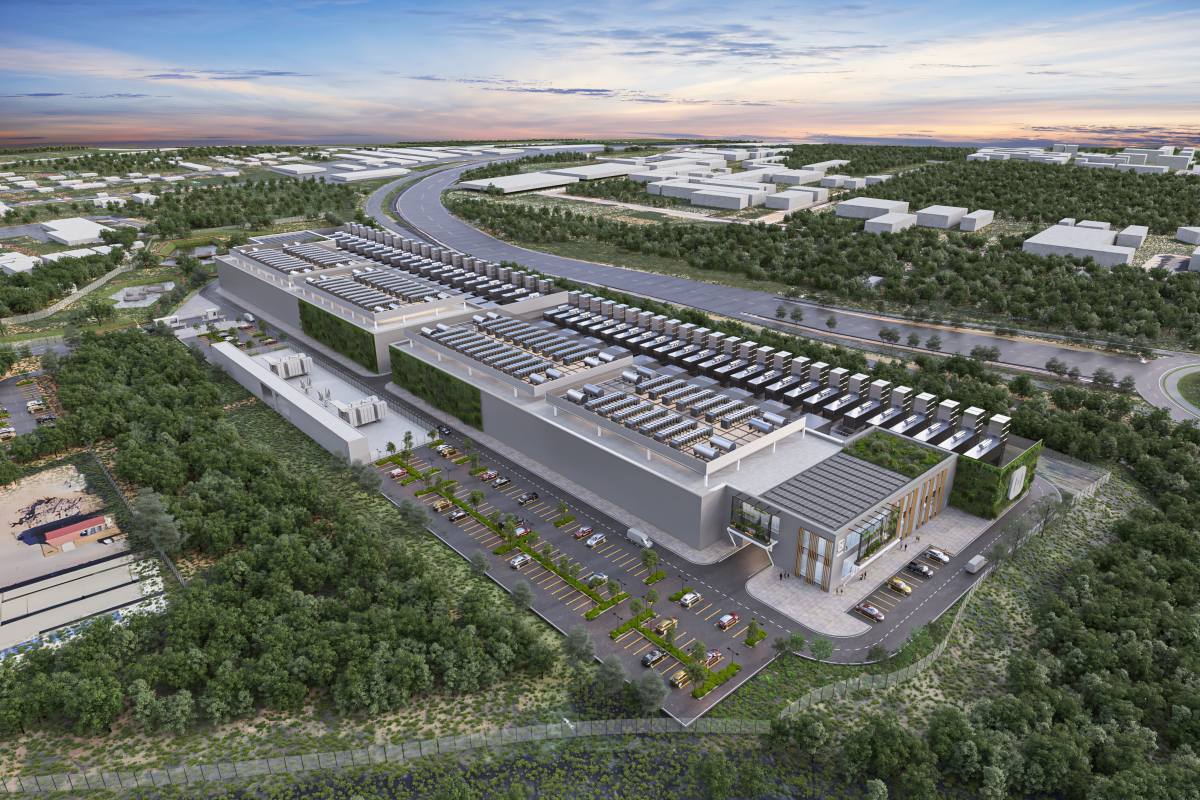
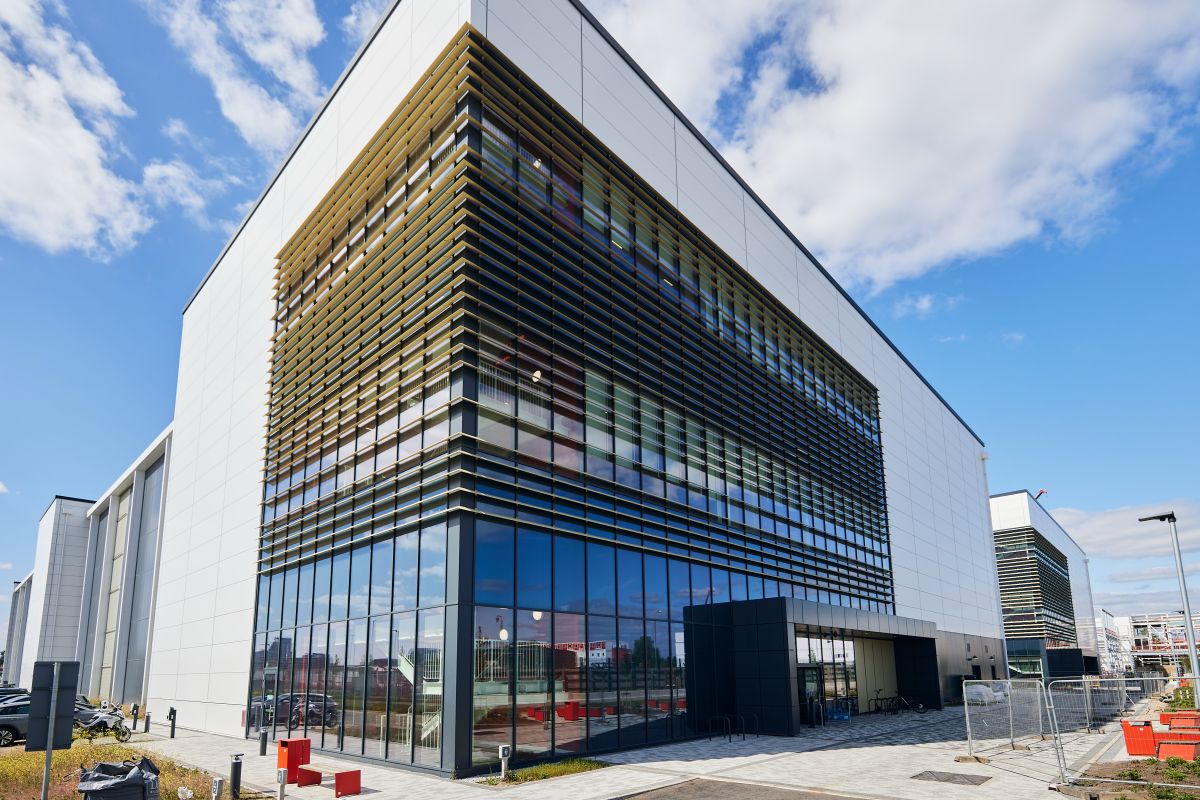
HSCALE, a London-based pan-European hyperscale data centre developer, has completed the acquisition of a second hyperscale data centre campus in northwest Milan, Italy, bringing its total planned power capacity in the region to 250MW. The company, which is backed by Bain Capital, says the combined investment across both Milan campuses will exceed €2 billion (£1.7 billion), with facilities expected to be ready for service in 2028. Both campuses are located in Settimo, northwest Milan, an area the company describes as one of the region’s most established hyperscale infrastructure locations. HSCALE says the sites are fully owned, with power capacity secured and pre-construction work already underway. According to the company, the projects are intended to support growing demand for hyperscale cloud and AI infrastructure across Southern Europe. Oliver Schiebel, CEO of HSCALE, explains, “We designed HSCALE's Milan campuses around a simple principle: the building should never be the bottleneck. "Our base design is liquid-cooled first, built for the most demanding hyperscale and AI workloads, and can pivot to air-cooled traditional deployments in the same physical structure. No redesign, no additional capex. "We design and build like this because we understand the long-term commitments our customers must make.” Flexible cooling designs target AI workloads HSCALE says the campuses have been designed to support multiple cooling approaches, including air cooling, direct liquid cooling, and hybrid configurations. The company states that this flexibility is intended to support both traditional cloud infrastructure and higher-density AI workloads without requiring major facility redesigns. Paul Berry-Selwood, CCO at HSCALE, says, “Milan is one of the strongest hyperscale markets in Europe and we are committing around €2 billion to this region because we understand what the market needs and are serious about its growth potential. "Our team closed the second site, secured the power, and is already progressing through pre-construction, ensuring we deliver real capacity as fast as possible.” The announcement also highlights Milan’s growing role as a connectivity hub, supported by the Milan Internet Exchange and increasing hyperscale investment outside traditional FLAP-D markets. Renewable energy and regional investment plans HSCALE says its Milan energy strategy currently targets an electricity mix with approximately 50% renewable generation, including solar, wind, and hydroelectric sources. The company also states that it is working with Aquila Clean Energy as part of a wider clean energy partnership. In addition to infrastructure investment, HSCALE says the developments are expected to create jobs across construction, engineering, IT, and data centre operations within the Milan region. The company is also supporting local initiatives including the Festival di Villa Arconati cultural event.

NEOIX, Hitachi partner on hyperscale data centres
NEOIX, a London-based data centre developer, has signed a memorandum of understanding with energy infrastructure provider Hitachi Energy and Hitachi Vantara, its digital infrastructure arm, to collaborate on the development of AI-ready hyperscale data centres in selected global markets. The agreement combines NEOIX’s data centre development and sustainability experience with infrastructure and digital platform technologies from Hitachi Energy and Hitachi Vantara. According to the companies, the collaboration will focus on developing large-scale data centre campuses designed to support AI, cloud computing, and high-performance workloads. Under the agreement, NEOIX will lead hyperscale campus development, including site design, scalability, and sustainability planning. Hitachi Energy will support work related to grid connectivity, renewable energy integration, energy storage, and power infrastructure, while Hitachi Vantara will provide digital infrastructure platforms and storage technologies for operational and business applications. AI infrastructure and energy efficiency Hari Slipicevic, CEO of NEOIX, says, “This partnership with Hitachi represents a powerful alignment of capabilities across energy, digital infrastructure, and development. “At NEOIX, we are focused on building the next generation of AI-ready data centre campuses, designed from the outset to be scalable, sustainable, and deeply integrated with the energy system.” Antonio Marinoni, Senior Business Development Director at Hitachi EMEA Region, adds, “By combining the strengths of Hitachi Energy and Hitachi Vantara, we are pleased to support NEOIX in enabling high-performance, sustainable infrastructure for the AI era. “This collaboration reflects a shared commitment to integrating energy and digital innovation, ensuring that next-generation data centres are not only scalable and resilient, but also aligned with the global transition towards low-carbon infrastructure.” The companies state that the collaboration will initially focus on concept development, reference architectures, and market engagement activities ahead of potential future project delivery. For more from Hitachi, click here.

AirTrunk secures $1.2bn Tokyo data centre loan
Australian data centre operator AirTrunk has secured a ¥191.6 billion ($1.24 billion; £903 million) green loan to refinance and expand its TOK1 hyperscale data centre campus in East Tokyo, Japan. The financing is reportedly the largest data centre loan completed in Japan to date and will support further development of the campus as demand for cloud and artificial intelligence infrastructure grows. The loan, structured under AirTrunk’s Green Financing Framework, will refinance existing facilities and fund new development phases at the TOK1 site. The campus is designed to scale to more than 300MW of capacity. The company also says it has recently started construction to add more than 100MW of IT load to meet near-term customer demand. The financing was led by SMBC, MUFG, Crédit Agricole CIB, and Société Générale as global coordinators. A total of 12 banks participated as mandated lead arrangers and bookrunners. Expansion of hyperscale infrastructure in Japan AirTrunk says the financing forms part of its wider investment in Japan’s digital infrastructure. Most notably, the operator recently announced OSK2, its second hyperscale data centre in Osaka, alongside the establishment of a new headquarters in Japan. At full build-out, AirTrunk’s four campuses in Japan - TOK1, TOK2, OSK1, and OSK2 - are expected to deliver around 530MW of capacity to support cloud and AI workloads. Robin Khuda, founder and CEO of AirTrunk, comments, “Japan is one of the world’s most important cloud and AI markets, and we’re committed to building the digital infrastructure that enables its long-term growth. "AirTrunk has been investing deeply in Japan for this reason: to build the hyperscale platform that will underpin the country’s digital future and connect it to the broader region. "This landmark financing enables us to accelerate the expansion of TOK1 and continue delivering the capacity our customers need today, while preparing Japan for the extraordinary compute demands ahead.” Masato Hori, Associate Vice President Treasury Japan at AirTrunk, adds, “This is the largest data centre financing ever completed in Japan and a testament to the deep collaboration between AirTrunk and our banking partners. We’re especially grateful for the strong support from Japan’s leading financial institutions including SMBC, MUFG, Chiba Bank and Mizuho Bank. "The structure of the facility reflects our commitment to transparency, sustainability, and innovation in capital markets, and further strengthens AirTrunk’s financing platform across the region.” The financing also includes margin incentives that will be directed to the AirTrunk Social Impact Fund, supporting community initiatives in Japan including STEM education, digital inclusion, biodiversity, and disaster relief. For more from AirTrunk, click here.

McCarthy tops out NV12 project at Vantage’s campus
General contractor McCarthy Building Companies recently completed the topping out milestone for hyperscale data centre provider Vantage Data Centers’ second of four planned data centres on its NV1 Campus, located outside of Reno in Storey County, Nevada, USA. With representatives from Storey County and Vantage leadership in attendance, the project marked major progress on the NV12 facility, the second 64-megawatt (MW) data centre on the campus. Phase I of the campus provides hyperscalers and large cloud providers with 128 MW of combined critical IT capacity across its NV11 and NV12 facilities. The campus has reportedly created more than 1,200 local construction jobs and generated local economic impact. McCarthy notes that, just recently, the campus reached more than 1.1 million labour hours on site since breaking ground in May 2024, with zero lost-time incidents through what it describes as a "campus-wide commitment to safe construction practices and innovative methods." Austin Osborne, Storey County Manager, explains, “Vantage Data Centers, our developer partners; McCarthy Building Companies, the general contractor on site; and the Storey County team - from Community Development and Planning to Business Development and the Fire Protection District - have worked closely to move this project forward. "It’s a strong example of effective collaboration, and we’re grateful for the long-term opportunities this project will continue to bring to our community.” The 260,000ft² (24,155m²), two-storey NV12 facility utilises liquid-to-liquid cooling, similar to NV11, that operates on a closed loop chilled water system to properly cool the systems while requiring only an initial fill. This more sustainable design is common across Vantage’s data centres, with the company noting it represents its "commitment to sustainable operations and long-term reliability." Continued construction during ongoing operation Jared Carlson, Senior Vice President at McCarthy Building Companies, comments, “This project has demonstrated an incredible commitment to sustainability, safe construction, and operations, and has created a strong sense of community within Storey County. "Vantage and our design-build partners have been instrumental in creating a campus that will provide significant economic impact to the region and will continue to sustain technological growth in the years to come.” Following turnover of NV11, NV12 will begin to turn over phased portions of the facility beginning in December 2027, allowing customers to begin operations prior to final completion in early 2029. As construction progress continues, McCarthy will be piloting the use of an HP Robot to map out the layout of NV12’s walls, blockouts, and backing. Following the robot’s success on some of McCarthy's healthcare projects, the team will use the robot to layout all elements on the concrete slab, based on the existing Building Information Model (BIM) layout. This method allows for greater efficiency and precision as the facility’s core components have already been digitally modelled to the site’s conditions.Both NV11 and NV12 are being constructed by McCarthy in a design-build effort with Corgan, serving as the campus architect. Key design-build trade partners include: Amfabsteel, Chavez-Grieves, Rosendin Electric, Apollo Mechanical Contractors, Salas O’Brien, Integrated Fire and Security Solutions, Cosco Fire Protection, and Wood Rogers. For more from Vantage, click here.

Report: How Slough became Europe's largest DC cluster
Kao Data, a developer and operator of data centres engineered for AI and advanced computing, has published a new report examining how Slough has evolved into Europe’s largest data centre cluster - and the UK’s de facto AI Growth Zone (AIGZ) - hosting over 675 Megawatts (MW) of hyperscale data centre capacity, while contributing more than 14,000 jobs and over £30 million in annual business rates to the local economy. The new report, ‘The Quiet Revolution: How Data Centres Remade Slough and Secured the UK’s Digital Future’, was released just as the UK marks 12 months since the inception of the Government’s AI Opportunities Action Plan, which proposed the creation of AIGZs to accelerate infrastructure deployments in support of the country’s AI and economic ambitions. Kao Data’s new report, produced with support from Carbon3IT and Parisi, demonstrates that such a growth zone already exists in Slough, operating at around 1GW of capacity and providing a proven blueprint for regional, economic growth. Further, it highlights the positive contribution that data centres - often incorrectly maligned as an industry which creates minimal jobs and economic impact - can have on a local community. For example, the report reveals that data centres replaced declining manufacturing employment in the Slough region on a near one-to-one basis, and created approximately 8,000 construction jobs between 2010 and 2025, alongside hundreds of permanently skilled operational roles. Other key findings • Slough hosts more than 30 operational data centres with around 1GW of total capacity, including 675MW of hyperscale facilities serving UK availability zones. • The cluster supports approximately 14,000 jobs across direct, indirect, and induced employment. • Data centre operators contribute over £30 million per year in local business rates. • 95% of Slough’s data centre electricity demand is backed by 100% renewable procurement. • The Simplified Planning Zone (SPZ) framework generated £18 million in council revenues between 2014 and 2024. • Nearly 2.7 million people with engineering, construction, and telecommunications experience live within one hour of the Slough Trading Estate. Spencer Lamb, MD & Chief Commercial Officer at Kao Data, explains, “Slough shows, in very real terms, what happens when infrastructure is developed with planning certainty, energy availability, and a skilled workforce, and our new report demonstrates that data centres have delivered long-term job creation, significant tax revenues, and a resilient foundation for the UK’s AI and digital economies. “We firmly believe that data centres are a force for good in this country, providing well-paid, varied, and future-proof employment, economic regeneration to post-industrial areas, and, through operator-led energy procurement, are helping transition the UK to a green economy.” With Slough and West London’s grid constraints well documented, the economic case for developing additional regional hubs in the UK has never been more urgent. Moreover, with data centres now designated as Critical National Infrastructure (CNI), the report concludes that the UK must create additional clusters across the country to propel regional economic growth and provide security diversity. With Slough proving what's possible when the conditions and local governance are right, the task now is to build on that success deliberately, regionally, and at scale - starting with the UK’s AIGZs and existing city tech communities like Greater Manchester - so that Britain's AI and digital economies can be powerful and resilient. For more from Kao Data, click here.

CleanArc breaks ground on 900MW Virginia hyperscale campus
CleanArc Data Centers, a developer and operator of hyperscale data centre campuses, has just announced the groundbreaking of its flagship campus in Caroline County, Virginia. Offering 900MW of grid capacity, the new data centre campus will aim to support the growing demand for scalable, sustainability-focused, and hyperscale-ready digital infrastructure. Governor Glenn Youngkin joined local officials, community partners, and CleanArc leadership at the ceremony, celebrating the official start of construction on the project. “Today marks an important milestone for CleanArc Data Centers and Northern Virginia,” says James Trout, founder and CEO of CleanArc Data Centers. “This new, leading-edge campus reflects our commitment to delivering reliable, efficient, and sustainable data centre solutions while supporting the local economy and workforce.” Features of the VA1 campus The VA1 campus is designed to meet growing hyperscale demand, featuring: • Nearly 1GW of grid power — With the first 300MW coming online in Q1 2027, the second 300MW currently projected for 2030, and another 300MW in the 2033–2035 timeframe, the campus seeks to ensure robust redundancy and resilience, supporting both current demand and future scalability. • Sustainability and efficiency focus — The VA1 campus incorporates land conservation initiatives, minimal water usage with closed-loop systems, and design features to reduce noise and light pollution. At VA1, customers have the option to leverage CleanArc’s approach to energy structuring - what it calls “True Additionality” - where clean energy is added onto electric grids in the region where the energy is being consumed. • Design focused on scalability and speed — Using advanced modular data centre design and off-site manufacturing, CleanArc intends to deliver pre-engineered, factory-tested systems to the construction site to reduce complexity, shorten deployment timelines, and help customers capture market opportunities faster. The future potential The project is backed by majority investor Snowhawk and minority investors Nuveen and Townsend Group, who all say they are committed to "driving the next wave of AI and cloud innovation while prioritising responsible growth and community impact." VA1 is expected to generate approximately $13 million (£9.9 million) in new annual tax revenue for Caroline County, equivalent to 17% of the county’s current general fund. The project will also create at least 50 new full-time jobs in the county and hundreds of additional jobs during the project’s construction over the next several years. Additionally, CleanArc is reportedly partnering with local vendors and workforce programs to support economic growth in the county Brian McMullen, Managing Partner and co-founder of Snowhawk Partners, comments, “We are thrilled to support this project, which represents a significant investment in the future of digital infrastructure and underscores our commitment to building advanced, sustainable facilities that empower businesses and communities.” For more from CleanArc Data Centers, click here.

Pure Storage and SK Hynix announce collaboration
Pure Storage, a provider of data storage technology and services, today announced a collaboration with SK Hynix, a South Korean semiconductor company, to deliver QLC flash storage products that aim to meet the high-capacity, energy efficient requirements for data-intensive hyperscaler environments. Modern data centres require solutions that can provide high storage density capabilities without sacrificing performance or energy efficiency. Data bottlenecks can lead to decreased productivity and high energy costs, affecting overall company performance. Traditional storage solutions such as hard disk drives (HDDs) have limitations as they are unable to handle the high-capacity, data-intensive workloads of hyperscale data centres in the AI era. Pure Storage intend to deliver future DirectFlash Module products with SK Hynix’s QLC NAND flash memory that will be purpose-built for demanding hyperscaler environments. Benefits could include: • Sustained High Performance — Integrating Pure Storage's data storage platform with SK Hynix's QLC NAND technology to enable low-latency solutions geared towards exascale, data-intensive workloads. • Increased Energy Efficiency — Collaborating to provide lower energy consumption, helping customers overcome power availability constraints, lower operating costs, and decrease an organisation's overall carbon footprint. • Improved Scalability & TCO — The combined solution seeks to provide highly rack-dense and scalable systems. “This collaboration with SK Hynix is an exciting step in our mission to deliver superior all-flash storage technology to hyperscalers. By combining SK Hynix's advanced QLC products with Pure Storage’s host-based flash management architecture, we can deliver an optimised solution for the hyperscale production environment and AI infrastructure,” says Bill Cerreta, GM, Hyperscale, Pure Storage. “Hyperscalers are constantly searching for data storage technology that doesn’t limit their potential innovation, but propels it to unforeseen levels. SK Hynix's NAND technology, combined with Pure Storage's robust platform, presents a formidable option for data centre operators focused on maximizing performance, efficiency, and scalability. Together, we are empowering hyperscale environments to tackle burgeoning data volumes with cutting-edge, sustainable storage solutions,” comments Sam Lee, EVP, Head of Global Sales and Marketing, SK Hynix. For more from Pure Storage, click here.

Techno Digital to power India’s digital infrastructure
Techno Electric & Engineering Company Ltd. (TEECL), one of India’s most trusted names in power infrastructure for over four decades, has officially launched Techno Digital Infra Pvt, its wholly-owned digital infrastructure arm. Backed by an ambitious investment plan of $1 billion, Techno Digital plans an integrated network of hyperscale and edge data centres targeting a cumulative capacity of 250 MW spread across the country. This strategic move marks a transformative leap to revolutionise India’s digital economy, aligned with the Government of India’s flagship programme, Digital India. Rooted in strong credentials of engineering, procurement and construction excellence, TEECL is leveraging its deep domain expertise in power infrastructure and sustainability to build an efficient, reliable, and eco-conscious network of data centres. The launch of Techno Digital underscores the Group’s vision to become a cornerstone in India’s data revolution - bringing scalable, secure, and low-latency digital infrastructure to metro and non-metro regions alike. “The decision to enter the digital infrastructure space is both timely and visionary,” says Padam Prakash Gupta, Managing Director, Techno Electric & Engineering. “India’s data economy is poised for exponential growth, and with our legacy in power infrastructure and EPC, we see ourselves as natural enablers of this transformation. Techno Digital is not just a business venture - it’s a national mission to bridge the digital divide and power a truly connected India.” The journey begins at Chennai, where Techno is building a 36 MW hyperscale data centre within SIPCOT IT Park, Siruseri. This Rated-3 facility spans approximately two Lakh square foot, houses up to 2,400 racks, and integrates renewable energy with Battery Energy Storage Systems (BESS) for continuous sustainability, adiabatic cooling for water efficiency (WUE), 25% green cover and a facility design PUE of 1.35. Future locations for hyperscale facilities include Kolkata and Noida, positioning Techno Digital as a key player in supporting India’s digital growth. “We are not just building data centres, we are powering India’s digital revolution,” adds Amit Agrawal, President, Techno Digital. “Our hybrid strategy integrating hyperscale and edge will redefine how data is hosted, processed, and delivered. Whether it’s AI, OTT, fintech, or governance, our infrastructure is designed for the next decade of digital growth. We are empowering our ecosystem partners to offer unique solutions around cloud, security and managed services, thereby ensuring cutting edge technology’s ubiquitous availability and affordability. As part of its nation-building vision, Techno has partnered with RailTel Corporation of India, a Government of India enterprise under the Ministry of Railways, to develop edge data centres in 102 cities across 23 Indian states. This landmark project will be the largest deployments of its kind, bringing low-latency computing closer to users in Tier 2 and Tier 3 cities, empowering sectors such as AI, BFSI, telecom, OTT, e-sports, healthcare, e-governance, and manufacturing. “This partnership with RailTel embodies our core belief that digital infrastructure should be democratised to transform India into a digitally empowered society and knowledge-based economy,” says Ankit Saraiya, Director & CEO, Techno Electric & Engineering. “From AI workloads and 5G to cloud-native applications, we’re enabling India to process data where it’s consumed, reducing latency, energy use, and cost. Our edge deployment model is not just technically superior, it’s a complete ecosystem that encompasses all aspects of a digital infrastructure. We are honoured to be RailTel’s trusted partner in this national mission.”

Yondr and CBRE to create data centre apprenticeship programme
Yondr Group, a global developer, owner and operator of hyperscale data centres, has teamed up with CBRE, a real estate services company with 25 years’ experience in integrated data centre operations, to create an apprenticeship programme that will be rolled out to all Yondr data centre projects worldwide. The programme reiterates both companies’ commitment to developing the skills that the data centre industry needs around the world. As Yondr’s global data centre operations partner, CBRE will collaborate with the company to facilitate the scheme. Apprentices will be recruited for each Yondr data centre once the asset has moved into the operational phase and will work with the Yondr and CBRE teams on site, while also receiving training towards certification in disciplines such as administration, critical environment engineering and management. Recruitment and training for the apprentices globally will align with local apprenticeship models for each location, drawing on relationships with local colleges and training providers. The programme will also offer professional experience and mentoring from Yondr and CBRE colleagues to empower apprentices on their path toward a successful future in the data centre industry. The first project to benefit from the apprenticeship programme is Yondr’s London data centre campus in Slough, where one apprentice is already in post and a second is currently being recruited. At this 100MW site, where the campus will comprise three data centres, two apprentices will be recruited for each data centre building. With Yondr’s Netherlands project already live, Frankfurt recently handed over, and progress continuing at pace at the company’s projects across North America, Europe, and Asia, the apprenticeship programme is set to develop exponentially as data centre assets come online. The company anticipates recruiting four apprentices in Slough, and two each in the Netherlands, Germany, the US and Malaysia by the end of 2025. Paul Hood, Yondr’s COO - Global Data Center Operations, comments, “As a former apprentice myself, I have always been an advocate of this career route and recognised the value of apprenticeships in selecting talent that is ambitious and pragmatic with a can-do attitude. “With the partnership of CBRE and support of training providers, we can help guide future talent into the skilled professionals of tomorrow. I am very excited that Yondr will not only be shaping young people’s careers, but also inspiring them to play a vital role in operating the digital infrastructure on which we all rely.” Andrew Chilcott, Global Alliance Director for CBRE’s Data Centre Solutions business, adds, “The task of operating data centres is distinct from running any other commercial property. It’s vital that the data centre sector nurtures bespoke talent and highlights the potential for varied and exciting careers in our dynamic industry to attract high calibre candidates. “With our joint investment in this global apprenticeship programme and our commitment to supporting the apprentices we recruit; I am certain that this will be the beginning of a very successful journey for all involved.” Yondr’s investment in the global apprenticeship programme forms part of the company’s social impact strategy, which aims to create value and opportunity for the communities surrounding its data centres. So far, the strategy has led to a range of social impact initiatives, including STEM and employability skills training, as well as scholarship programmes in Europe and North America. Similarly, CBRE is committed to its broader Talent Strategy, actively engaging in apprenticeship programmes with over 1,800 apprentices globally. For more from Yondr Group, click here.

Start Campus achieves OCP certification for Portugal data centres
Start Campus, a company focused on designing, building and operating a new generation of sustainable data centres, announced today that its operational SIN01 and planned SIN02 data centres have been officially certified as Open Compute Project (OCP) Ready v2 for Hyperscale data centres. These are the first facilities in Southern Europe, and just the third and fourth in Europe, to meet this new benchmark. Start Campus says that the rigorous assessment underscores the company's commitment to open standards, sustainability, and scalable digital infrastructure. The OCP Ready certification, granted by the Open Compute Project Foundation, recognises that SIN01 and SIN02 meet the highest standards set for hyperscale data centres and AI/HPC workloads. This certification is a mark of trust, providing a competitive edge and a strategic advantage by ensuring faster deployments, reduced total cost of ownership, and seamless integration with cutting-edge technologies such as AI and high-performance computing (HPC). The OCP Ready v2 facilities are designed with openness, modularity, and interoperability at their core, delivering superior energy efficiency and environmental leadership. To achieve OCP Ready certification, Start Campus had to undergo a detailed OCP Ready v2 assessment of its operational SIN01 and planned SIN02 facilities, which assess critical factors such as logistics, site access, security, base building infrastructure, and network connectivity. These comprehensive assessments ensure the facilities meet the specific needs of hyperscale companies and align with both OCP standards and industry best practices. This certification confirms that Start Campus’ data centres are optimised to support hyperscale demands and future-proofed for the evolving digital landscape. “OCP Ready certification means our clients can confidently deploy today’s most advanced compute infrastructure, knowing the foundation is built for tomorrow,” says Rob Dunn, CEO of Start Campus. “This achievement is not just a milestone for Start Campus, but a win for hyperscale, cloud, and AI/HPC-driven companies looking to secure their future in Europe in readily available and large-scale data centres.” Located on the south-western edge of Europe, SINES DC is one of the continent’s most ambitious infrastructure projects. The SIN01 facility, operational since Q4 2024, delivers up to26 MW of IT capacity, while SIN02, ready to be built for delivery as early as in 2026, will add another 180 MW. These facilities are part of Start Campus’s 1.2 GW SINES Data Campus, built from the ground up to support AI-native workloads, liquid cooling, and high-density compute environments. Both SIN01 and SIN02 are powered by 100% renewable energy and feature an innovative seawater cooling system, enabling them to operate at a Power Usage Effectiveness (PUE) of 1.1 and Water Usage Effectiveness (WUE) of 0 - impressive metrics that demonstrate Start Campus’ commitment to environmental responsibility without compromising performance. This certification was co-led by OCP Foundation team members, Mark Dansie and Raúl Àlvarez, working within the Data Centre Facilities Project at the OCP. Mark Dansie, OCP Ready Facilities Program Co-Lead, comments, “The certification of Start Campus’ SIN01 and SIN02 facilities as OCP Ready for Hyperscale is a pivotal moment for the European data centre landscape. By aligning with the new v2 specifications, Start Campus demonstrates how strategic facility design can deliver on the evolving demands of hyperscale deployments. It’s a blueprint for how sustainability, performance, and openness can come together to meet the future of compute.” Raúl Àlvarez, European Market Development Manager, adds, “Start Campus’s OCP Ready v2 certification not only highlights its technical excellence, but also its alignment with the OCP Community’s vision of interoperable, efficient, and scalable data centre environments. The SIN01 and SIN02 facilities showcase how the latest global standards can be deployed locally to accelerate digital infrastructure and support the next generation of AI and cloud-native workloads.” This news follows the successful inauguration of SIN01, the first operational facility within the company’s 1.2-gigawatt (GW) Sines Data Campus. For more from Start Campus, click here.


Translate »