Hyperscale Data Centres: Scale, Speed & Strategy

Yondr agrees deal for its UK hyperscale data centre
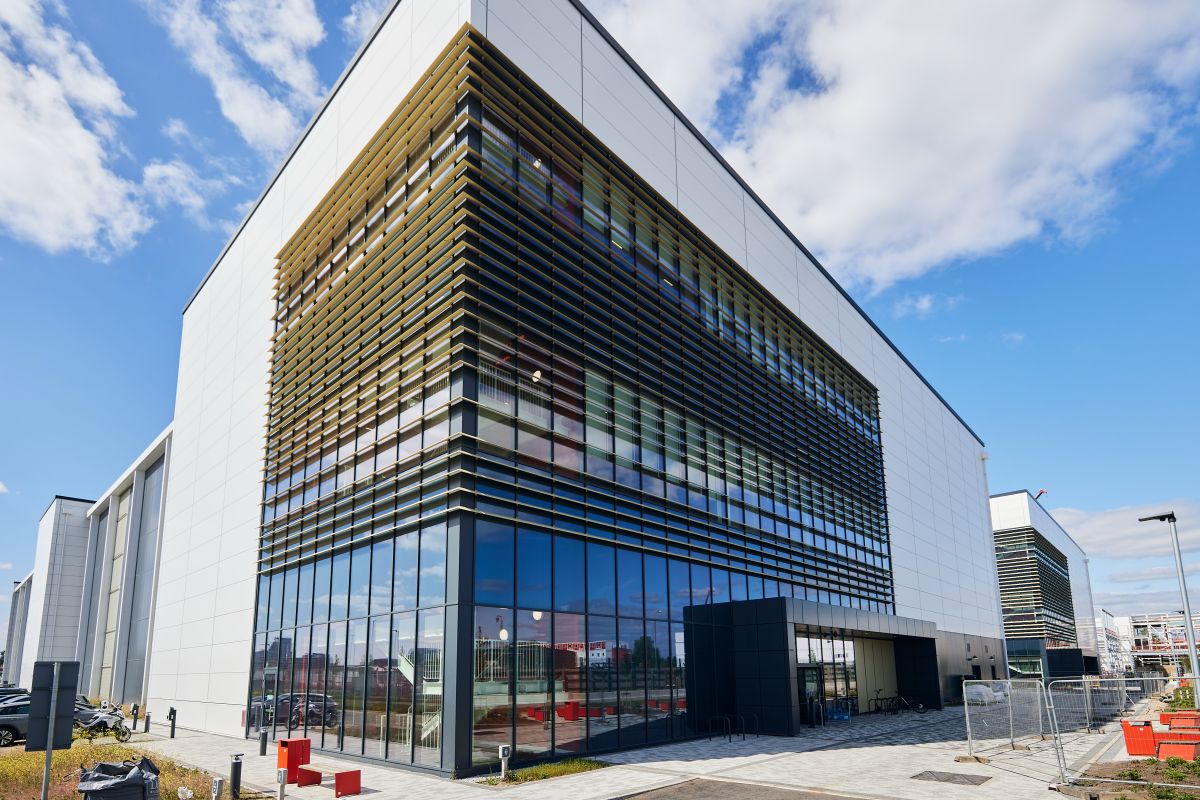
Yondr Group, a global developer, owner, and operator of hyperscale data centres, has agreed to sell a majority stake in one of its UK hyperscale data centre campuses to GLIL Infrastructure, retaining a minority ownership interest and the responsibility for operating the site. The transaction involves a campus in Slough comprising two operational hyperscale data centre buildings serving a hyperscale customer. Financial terms were not disclosed. Yondr says the agreement enables it to realise value from a completed asset whilst continuing to manage its day-to-day operations and retain a long-term interest in the campus. Aaron Wangenheim, Chief Executive Officer at Yondr, says, "This transaction represents another important milestone in Yondr's long-term growth strategy. Bringing GLIL on board as an investment partner allows us to realise value from a high-quality, stabilised asset while remaining invested in its future and continuing to operate the campus on behalf of our customer." Investment expands digital infrastructure portfolio For GLIL Infrastructure, the acquisition adds to its digital infrastructure investments, which include a stake in Cornerstone, the UK's largest mobile tower company. Lee Belfield, Investment Director at LPPI and GLIL Infrastructure, notes, "Digital infrastructure is increasingly fundamental to the UK's economy, and hyperscale data centres are critical to supporting growing demand for cloud services and artificial intelligence. "This investment reflects GLIL's strategy of partnering with high-quality operators to invest in essential infrastructure that delivers resilient, long-term value for our pension fund members. "Yondr has developed a high-quality asset with a strong operational track record, and we look forward to commencing a long-term partnership with the Yondr team." The transaction is expected to complete in the coming months, subject to customary closing conditions and regulatory approvals. RBC Capital Markets acted as Yondr's financial adviser, with Linklaters providing legal advice. GLIL Infrastructure was advised by Nomura, with Simpson Thacher & Bartlett acting as legal counsel. For more from Yondr Group, click here.

Croatia approves power infrastructure for 1GW AI data centre
Croatia's national transmission system operator, HOPS, has approved the power infrastructure blueprint for data centre developer Pantheon AI's planned 1GW hyperscale AI campus in Topusko, marking a key milestone for the project. The approval confirms the technical and regulatory feasibility of supplying electricity to the proposed facility and supports plans for construction to begin in early 2027. As part of the proposal, more than €500 million (£427 million) of electricity transmission infrastructure will be developed, including 280km of new transmission lines, fibre-optic networks, a 400kV substation in Topusko, and associated road infrastructure. According to Pantheon AI, the completed infrastructure will be transferred to the Republic of Croatia for long-term ownership and operation. Grid investment to support renewable energy growth The company says the planned infrastructure will also enable access to more than 5GW of renewable energy capacity that is currently constrained by limitations within the national electricity grid. Pantheon AI also explains that the planned 310-acre hyperscale AI data centre has been designed to NVIDIA's 'GW-Scale AI Factory' standards. Mario Gudelj, Project Director at Pantheon AI, comments, "Croatia's largest-ever private investment is moving forward as a direct result of momentum from the unique partnership driving this project: Croatian expertise, US capital, world-class partners in Končar and Greenvolt, and continued support from the Ministry of Economy of the Republic of Croatia and HEP (a state-owned utility company)." The project team includes Končar Group, Dalekovod Projekt, Parsec Lab, Latham & Watkins, Hodgson Russ, PwC, KPMG, and EU Energy Group. Sisak-Moslavina County has also formally recognised the development as being of special regional importance. For more from Pantheon AI, click here.

Duos secures 10MW hyperscale colocation agreement
Duos Edge AI, a provider of edge data centre (EDC) systems, has signed a five-year colocation agreement with an investment-grade hyperscale customer for 10MW of IT capacity at its data centre campus in Columbus, Georgia. The contract is valued at more than $111 million (£82.5 million) over five years and is expected to commence in the fourth quarter of 2026. The agreement will also increase the campus's total contracted IT capacity to 20MW by the end of 2026. The company says its initial 10MW deployment at the Columbus site remains on schedule to begin generating revenue in August 2026. Duos recently completed a $55 million (£40.9 million) fundraising to support the acquisition of the Columbus facility, alongside investment in infrastructure required for contracted customer deployments and future expansion. Doug Recker, CEO of Duos, says, "This agreement shows how we are investing in infrastructure in key markets so we can quickly add capacity for our customers. "The Columbus campus gives us the ability to rapidly deploy high-density AI infrastructure while generating durable recurring revenue. We believe this model positions Duos to meet growing customer demand and create meaningful long-term value for our shareholders." Campus capacity doubles to 20MW With the latest agreement, Duos Edge AI says it has now secured 20MW of contracted deployments scheduled for delivery during 2026. The Columbus campus forms part of the company's stated strategy of developing and operating high-density AI infrastructure supported by long-term customer agreements. For more from Duos Edge AI, click here.

Lightpath expands fibre network for 1GW data centres
Lightpath, a New York-based fibre network and connectivity provider, has announced two new fibre network builds to support hyperscale data centre campuses under construction in Michigan and Wisconsin, USA. The projects will extend the company's fibre network to campuses in Saline, Michigan, and Port Washington, Wisconsin, both of which are planned to exceed 1GW of capacity. Lightpath will provide triverse fibre infrastructure and multi-terabit connectivity to both sites in partnership with an anchor hyperscale customer. The Saline deployment is scheduled for completion by the end of 2026, with the Port Washington build expected to follow in the second quarter of 2027. Supporting gigawatt-scale AI infrastructure Chris Morley, CEO of Lightpath, comments, "Lightpath is playing an increasingly central role in partnering with hyperscalers to build new fibre infrastructure to address AI-driven demand across the US. Fibre infrastructure remains a critical component in the evolving and accelerating AI ecosystem." The new projects follow the company's recent network expansion in Phoenix, eastern Pennsylvania, and Columbus, as well as the development of a long-haul fibre route linking Columbus and Chicago. Tim Haverkate, Chief Commercial Officer at Lightpath, says, "Gigawatt-scale AI campuses need more than fibre in the ground; they need a partner that can engineer an end-to-end connectivity solution across new construction, existing Lightpath network assets, and strategic partner fibre. "Our ability to creatively combine those assets is what allows us to deliver route-diverse, multi-terabit capacity on timelines that match the pace of hyperscale AI development." According to Lightpath, the latest builds form part of its wider investment in fibre infrastructure serving locations with increasing concentrations of hyperscale data centres and AI workloads. For more from Lightpath, click here.

Pure DC, SEGRO to develop Paris data centre
Pure Data Centres Group (Pure DC), a designer, developer, and operator of hyperscale data centres, and SEGRO, a UK-listed real estate investment trust (REIT), have formed a second joint venture to develop a 48MW fully fitted data centre in Paris, targeting a long-term lease with a global hyperscale operator. The proposed development will be built in a Paris Availability Zone on land contributed by SEGRO, alongside a pre-secured 75MVA power connection. The companies say the project represents their second collaboration following their joint venture at Premier Park in West London. The development is expected to require around £800 million of investment, including the value of the land contributed by SEGRO. SEGRO's cash equity contribution is expected to be approximately £60 million during construction, with the remaining equity provided by Pure DC. The facility will be delivered in phases, with construction due to begin once planning permission has been secured and a pre-let agreement has been signed. The first phase is expected to complete after around three years, with the remaining capacity delivered approximately one year later. Joint venture builds on London project The partners say the project combines SEGRO's land portfolio and development expertise from Pure DC's experience in designing, building, and operating hyperscale facilities. The data centre will include mechanical and electrical infrastructure, together with power distribution, cabling, and cooling systems. IT equipment, including servers and racks, will be supplied by the future occupier. David Sleath, Chief Executive of SEGRO, comments, "This second joint venture with Pure DC builds on the momentum across our European data centre platform and demonstrates how SEGRO can crystallise the significant value in its 3.0GVA power bank through a repeatable, capital-efficient model. "This project in Paris will be our first data centre development in Continental Europe, and [it's] another great example of how combining our carefully assembled, prime, power-secured sites with Pure DC’s technical expertise can accelerate the delivery of highly profitable, fully fitted facilities. "Our first project together at Premier Park is progressing well, with planning approval secured ahead of schedule and active discussions underway with two global hyperscalers." Gary Wojtaszek, Executive Chairman and Interim CEO of Pure DC, adds, "Large-scale, powered sites in Europe’s leading metropolitan markets have become one of the scarcest and most strategically valuable resources in digital infrastructure. "Demand for digital infrastructure across Europe is accelerating, but access to suitable sites with secured power and favourable planning positions in the FLAP-D markets remains the defining constraint." The announcement follows progress at the companies' first joint venture at Premier Park in West London, where planning permission was approved in March 2026. The partners say discussions are underway with two hyperscale operators interested in occupying the site's full capacity. For more from Pure DC, click here.

EdgeMode signs MOU for 300MW Toledo data centre
EdgeMode, a digital infrastructure company specialising in developing high-performance computing (HPC) data centres, has signed a memorandum of understanding (MOU) with the City Council of Mora to support the development of the planned 300MW DC Malpica data centre campus in Toledo, Spain. The agreement establishes a framework for cooperation between the two during the development of the site, which is intended to support artificial intelligence (AI), HPC, and cloud workloads. The MOU was signed by Mora Mayor Emilio Bravo Peña and EdgeMode CEO Charlie Faulkner during a ceremony at the municipality's plenary hall. EdgeMode says DC Malpica forms part of its eight-site portfolio in Spain, representing more than 4.35GW of planned capacity. The site is also located near Madrid, a major European hub for AI and digital infrastructure. In addition to this, earlier this year, the company announced plans to deploy solid oxide fuel cell microgrid technology to supply power to the campus. Agreement sets out development priorities Under the agreement, the City Council of Mora will provide institutional support for the project, coordinate with administrative departments, and support efforts to secure Project of Strategic Interest status for the development. EdgeMode says it will work to integrate the campus into the local economy, with priorities including employment, collaboration with regional businesses, and skills development initiatives. According to the company, the project could create up to 5,000 jobs during the construction phase. The planned campus will also incorporate energy-efficient and low-emission technologies as part of its sustainability strategy. Emilio Bravo Peña comments, "With this data centre project, we will be a leading town not just in Spain, but in Europe. Furthermore, I am sure that the magnet effect will work, and companies from other sectors - some of which are necessary for this project - will also come to Mora." Charlie Faulkner, CEO of EdgeMode, adds, "This agreement marks a critical milestone in the development of one of Europe's prime locations for data centre capacity and our collaboration with the City of Mora. "By establishing this institutional framework, we can navigate the development process efficiently while ensuring that DC Malpica delivers lasting economic value, high-quality employment, and technological advancement to the local community without compromising on environmental standards." The memorandum has an initial term of 24 months and outlines commitments to regulatory compliance, transparent communication, and cooperation throughout the development process.

1.5GW Utah data centre receives planning approval
Pronghorn Development, a Utah-headquartered infrastructure firm, has secured a conditional use permit (CUP) to develop the 1.5GW Antelope Data Campus in Iron County, Utah. The approval allows the infrastructure developer to move forward with plans for the large-scale data centre campus, which the company says is intended to support future technology infrastructure requirements while contributing to local economic development. According to Pronghorn Development, the project has been shaped through consultation with residents, landowners, agricultural stakeholders, and community representatives over the past year. The company says feedback gathered during the engagement process has influenced elements of the project's operational plans and development approach. Project expected to deliver jobs and investment Pronghorn Development states that the multi-phase development is expected to generate significant economic activity within Iron County, including construction employment, permanent operational roles, and additional tax revenue. The company has worked in the region for two decades through the development of energy infrastructure projects and says its local experience has informed the planning of the Antelope Data Campus. Scott Cuthbertson, a spokesperson for Pronghorn Development, comments, "Securing this permit validates the trust we’ve built with our neighbors in Iron County. We are incredibly grateful for the open dialogue and collaborative spirit that has shaped the Antelope Data Campus. "Moving forward, we remain committed to listening to the community, acting as responsible environmental stewards, and driving economic prosperity here for decades to come." The company says the campus will incorporate water-efficient technologies and sustainable design measures intended to minimise environmental impact and align with local ecosystem preservation objectives. With the conditional use permit now secured, Pronghorn Development is expected to begin the next phase of the project and prepare the site for construction.

HSCALE expands Milan hyperscale data centre plans
HSCALE, a London-based pan-European hyperscale data centre developer, has completed the acquisition of a second hyperscale data centre campus in northwest Milan, Italy, bringing its total planned power capacity in the region to 250MW. The company, which is backed by Bain Capital, says the combined investment across both Milan campuses will exceed €2 billion (£1.7 billion), with facilities expected to be ready for service in 2028. Both campuses are located in Settimo, northwest Milan, an area the company describes as one of the region’s most established hyperscale infrastructure locations. HSCALE says the sites are fully owned, with power capacity secured and pre-construction work already underway. According to the company, the projects are intended to support growing demand for hyperscale cloud and AI infrastructure across Southern Europe. Oliver Schiebel, CEO of HSCALE, explains, “We designed HSCALE's Milan campuses around a simple principle: the building should never be the bottleneck. "Our base design is liquid-cooled first, built for the most demanding hyperscale and AI workloads, and can pivot to air-cooled traditional deployments in the same physical structure. No redesign, no additional capex. "We design and build like this because we understand the long-term commitments our customers must make.” Flexible cooling designs target AI workloads HSCALE says the campuses have been designed to support multiple cooling approaches, including air cooling, direct liquid cooling, and hybrid configurations. The company states that this flexibility is intended to support both traditional cloud infrastructure and higher-density AI workloads without requiring major facility redesigns. Paul Berry-Selwood, CCO at HSCALE, says, “Milan is one of the strongest hyperscale markets in Europe and we are committing around €2 billion to this region because we understand what the market needs and are serious about its growth potential. "Our team closed the second site, secured the power, and is already progressing through pre-construction, ensuring we deliver real capacity as fast as possible.” The announcement also highlights Milan’s growing role as a connectivity hub, supported by the Milan Internet Exchange and increasing hyperscale investment outside traditional FLAP-D markets. Renewable energy and regional investment plans HSCALE says its Milan energy strategy currently targets an electricity mix with approximately 50% renewable generation, including solar, wind, and hydroelectric sources. The company also states that it is working with Aquila Clean Energy as part of a wider clean energy partnership. In addition to infrastructure investment, HSCALE says the developments are expected to create jobs across construction, engineering, IT, and data centre operations within the Milan region. The company is also supporting local initiatives including the Festival di Villa Arconati cultural event.

NEOIX, Hitachi partner on hyperscale data centres
NEOIX, a London-based data centre developer, has signed a memorandum of understanding with energy infrastructure provider Hitachi Energy and Hitachi Vantara, its digital infrastructure arm, to collaborate on the development of AI-ready hyperscale data centres in selected global markets. The agreement combines NEOIX’s data centre development and sustainability experience with infrastructure and digital platform technologies from Hitachi Energy and Hitachi Vantara. According to the companies, the collaboration will focus on developing large-scale data centre campuses designed to support AI, cloud computing, and high-performance workloads. Under the agreement, NEOIX will lead hyperscale campus development, including site design, scalability, and sustainability planning. Hitachi Energy will support work related to grid connectivity, renewable energy integration, energy storage, and power infrastructure, while Hitachi Vantara will provide digital infrastructure platforms and storage technologies for operational and business applications. AI infrastructure and energy efficiency Hari Slipicevic, CEO of NEOIX, says, “This partnership with Hitachi represents a powerful alignment of capabilities across energy, digital infrastructure, and development. “At NEOIX, we are focused on building the next generation of AI-ready data centre campuses, designed from the outset to be scalable, sustainable, and deeply integrated with the energy system.” Antonio Marinoni, Senior Business Development Director at Hitachi EMEA Region, adds, “By combining the strengths of Hitachi Energy and Hitachi Vantara, we are pleased to support NEOIX in enabling high-performance, sustainable infrastructure for the AI era. “This collaboration reflects a shared commitment to integrating energy and digital innovation, ensuring that next-generation data centres are not only scalable and resilient, but also aligned with the global transition towards low-carbon infrastructure.” The companies state that the collaboration will initially focus on concept development, reference architectures, and market engagement activities ahead of potential future project delivery. For more from Hitachi, click here.

AirTrunk secures $1.2bn Tokyo data centre loan
Australian data centre operator AirTrunk has secured a ¥191.6 billion ($1.24 billion; £903 million) green loan to refinance and expand its TOK1 hyperscale data centre campus in East Tokyo, Japan. The financing is reportedly the largest data centre loan completed in Japan to date and will support further development of the campus as demand for cloud and artificial intelligence infrastructure grows. The loan, structured under AirTrunk’s Green Financing Framework, will refinance existing facilities and fund new development phases at the TOK1 site. The campus is designed to scale to more than 300MW of capacity. The company also says it has recently started construction to add more than 100MW of IT load to meet near-term customer demand. The financing was led by SMBC, MUFG, Crédit Agricole CIB, and Société Générale as global coordinators. A total of 12 banks participated as mandated lead arrangers and bookrunners. Expansion of hyperscale infrastructure in Japan AirTrunk says the financing forms part of its wider investment in Japan’s digital infrastructure. Most notably, the operator recently announced OSK2, its second hyperscale data centre in Osaka, alongside the establishment of a new headquarters in Japan. At full build-out, AirTrunk’s four campuses in Japan - TOK1, TOK2, OSK1, and OSK2 - are expected to deliver around 530MW of capacity to support cloud and AI workloads. Robin Khuda, founder and CEO of AirTrunk, comments, “Japan is one of the world’s most important cloud and AI markets, and we’re committed to building the digital infrastructure that enables its long-term growth. "AirTrunk has been investing deeply in Japan for this reason: to build the hyperscale platform that will underpin the country’s digital future and connect it to the broader region. "This landmark financing enables us to accelerate the expansion of TOK1 and continue delivering the capacity our customers need today, while preparing Japan for the extraordinary compute demands ahead.” Masato Hori, Associate Vice President Treasury Japan at AirTrunk, adds, “This is the largest data centre financing ever completed in Japan and a testament to the deep collaboration between AirTrunk and our banking partners. We’re especially grateful for the strong support from Japan’s leading financial institutions including SMBC, MUFG, Chiba Bank and Mizuho Bank. "The structure of the facility reflects our commitment to transparency, sustainability, and innovation in capital markets, and further strengthens AirTrunk’s financing platform across the region.” The financing also includes margin incentives that will be directed to the AirTrunk Social Impact Fund, supporting community initiatives in Japan including STEM education, digital inclusion, biodiversity, and disaster relief. For more from AirTrunk, click here.


Translate »