Hyperscale Data Centres: Scale, Speed & Strategy

Data Centre Regulations & UK Compliance Updates
Data Centres
Hyperscale Data Centres: Scale, Speed & Strategy
Are nuclear powered data centres on the horizon?
By Ed Ansett, Founder and Chairman, i3 Solutions Group
Small Modular Reactor maker seeks large data centre partner?
Across the globe, activity in the Small Modular Reactor (SMR) space is gathering pace. Governments, regulators, atomic agencies and authorities, global power manufacturers, research bodies and new market entrants are busy. For the data centre industry, the question is whether SMRs are applicable to the sector, could they change how data centres are powered?
A look at the output ranges and the different models under development, and the different nuclear technologies being proposed as suitable for the sector will tell us more.
The first thing to consider about an SMR is its power output. The International Atomic Energy Agency (IAEA) defines 'small' as under 300MWe, and up to about 700MWe as 'medium.'
So, a large data centre deployment is at the small end of the SMR market.
There are also developments in the micro modular reactor category. However, most of the recent activity in terms of regulations, licenses and investments has been in the SMR category.
SMRs under development and being built tell a story
Rolls Royce says its SMR will generate 470MWe. A single Rolls-Royce SMR power station will occupy a space the size of two football pitches and power approximately one million homes, supporting on-grid electricity and a range of off-grid clean energy solutions.
In January 2023, GE Hitachi announced a contract for its BWRX-300 - a 300MWe water-cooled SMR. According to the company, this is the first commercial contract for a grid-scale SMR in north America.
A Danish outfit called Seaborg is planning floating SMRs using barges that can accommodate four 200MWe reactors. It plans to use existing shipyards in which to create a production line for the barges.
In the UK, the Office of Nuclear Regulation is assessing submissions from several firms for the licensing of their technologies. These include US-based Holtec, which submitted its 160MWe pressurised water reactor SMR-160 design developed in collaboration with Mitsubishi Electric of Japan and Hyundai Engineering and Construction of South Korea.
X-Energy, a nuclear reactor and fuel design engineering company, wants to deploy its high-temperature gas reactor in the UK, saying it wants to tackle industrial decarbonisation as well as electricity generation. 'The Xe-100 can deliver reliable ‘always-on’ electricity,' it says, 'as well as increase or decrease power levels safely within minutes to respond to varying demand or supply.'
UK Atomics is a subsidiary of Danish start-up Copenhagen Atomics, which is developing a containerised thorium molten salt reactor. It says its technology is 'progressing swiftly with the first non-radioactive full-size reactor prototype to be tested in the UK in 2023.' The company expects deployment by 2028.
For future large data centre developments, anyone seeking a clean, reliable, low-carbon producing power generation supply, these systems could be applicable.
Current options to fuel SMRs
The World Nuclear Association (WNA) says there are four main SMR technology options being pursued; 'light water reactors, fast neutron reactors, graphite-moderated high-temperature reactors and various kinds of molten salt reactors (MSRs).'
WNA says that, ‘Light Water Reactors are moderated and cooled by ordinary water and have the lowest technological risk, being similar to most operating power and naval reactors today.’’
Fast neutron reactors (FNR) are smaller and simpler than light water types, they have better fuel performance and can have a longer refuelling interval (up to 20 years), but a new safety case needs to be made for them.'
'High-temperature gas-cooled reactors use graphite as a moderator (unless fast neutron type) and either helium, carbon dioxide or nitrogen as primary coolant.'
'Molten salt reactors mostly use molten fluoride salts as primary coolant, at low pressure. Lithium-beryllium fluoride and lithium fluoride salts remain liquid without pressurization up to 1400°C, in marked contrast to a PWR which operates at about 315°C under 150 atmospheres pressure. Fast-spectrum MSRs use chloride salt coolant. In most designs, the fuel is dissolved in the primary coolant, but in some, the fuel is a pebble bed.'
WNA also states many small reactors are being designed for industrial heat applications as well as power generation.
Light water reactors are constrained by pressure limitations and operate in the 300-400°C range. Liquid metal fast reactors are in the 400-600°C range, molten salt reactors are around 600-700°C, and high-temperature reactors are 600-900°C.
Possible use cases for SMRs
2022 and 2023 saw a number of large data centre development projects in the 200MWe range, many of them in South East Asia.
Last year, Yondr Group said it would develop a 200MWe hyperscale campus in Malaysia. The company announced a plan to develop 72.8 acres of land in Johor’s Sedenak Tech Park.
T5 Data Centres announced the planned development of a 140-acre, 200MWe government and enterprise cloud data centre campus in Augusta, Georgia, which it described as the South East US cyber security hub.
In South Korea, energy and construction firm Bosung Group said it is to build a 200Mwe data centre campus in SolaSeaDo, in Jeonnam Province. The company has partnered with The Green Korea (TGK), a joint venture between South Korean energy investment firm Energy Innovation Partners (EIP) and Diode Ventures.
None of these developments has made any announcement on the potential use of nuclear power as a primary power source. Today, the timeframes for SMR production and licensing stretch to 2028 and beyond, so it could be that none of the currently publicised projects can wait that long.
However, things could change quickly.

Beatrice - 23 March 2023

Hyperscale Data Centres: Scale, Speed & Strategy
Insights into Data Centre Investment & Market Growth
News
AirTrunk links its $5bn financing platforms to ESG
AirTrunk has linked 100% of its debt funding platforms to sustainability commitments following the raising of a $650 million Sustainability Linked Loan (SLL) in Japan. Across its financing platforms, AirTrunk has raised $5 billion in Environmental, Social and Governance (ESG) financing, making the company one of the largest issuers of sustainable financing in the data centre industry globally.
The incremental Japan SLL will finance a major expansion of AirTrunk TOK1 (TOK1) and is the first SLL for a data centre in Japan, and the first in APJ to combine operating energy and water efficiency as Key Performance Indicators (KPIs).
Energy and water are critical and interdependent resources that impact a data centre’s environmental footprint. As part of its commitment to accountability and transparency, AirTrunk continues to focus its financing KPIs on actual energy usage through operating power usage effectiveness (PUE) as opposed to design PUE.
AirTrunk plans to invest any margin incentives from the Japan SLL into social impact initiatives within Japan. Plans are underway to expand the program across APJ to support long term initiatives aligned to AirTrunk’s purpose of scaling and sustaining the region’s digital future. This will include supporting initiatives across four focus areas: equal digital access, STEM education, biodiversity and conservation, and innovation and research and development.
AirTrunk Chief Financial Officer, Prashant Murthy says, “By driving innovation in sustainable financing and creating a lasting impact in our communities, we are committed to powering positive industry change. We have now linked all our debt platforms to sustainability commitments, more than doubling our sustainable financing since our inaugural SLL launched in 2021. Our sustainable finance platform complements our recent commitment to net zero emissions by 2030.”
Beatrice - 14 March 2023

Cooling
Data Centres
Hyperscale Data Centres: Scale, Speed & Strategy
Vertiv introduces new chilled water thermal wall
Vertiv has introduced the Vertiv Liebert CWA, a new generation of thermal management system for slab floor data centres. For decades, hyperscale and colocation providers have used raised floor environments to cool their IT equipment. Simplifying data centre design with slab floors enables the construction of new white space more efficiently and cost-effectively, but also introduces new cooling challenges. The Liebert CWA was designed to provide uniform air distribution to the larger surface area which comes with a slab floor application, while also allowing more space for rack installation and compute density. Developed in the United States, the Liebert CWA chilled water thermal wall cooling unit is available in 250kW, 350kW and 500kW capacities across EMEA, as well as the Americas.
Liebert CWA technology utilises integrated state-of-the-art controls to facilitate improved airflow management and provide an efficient solution for infrastructures facing the challenges of modern IT applications. The Liebert CWA can also be integrated with the data centre’s chilled water system to improve the operating conditions of the entire cooling network. Furthermore, the Liebert CWA is installed outside the IT space to allow more floor space in the data centre, increase accessibility for maintenance personnel, and also increase the security of the IT space itself.
“The launch of the Liebert CWA reinforces our mission to provide innovative, state-of-the-art technologies for our customers that allow them to optimise the design and operation of their data centres” says Roberto Felisi, Senior Global Director, thermal core offering and EMEA business leader at Vertiv. “As the Liebert CWA can be quickly integrated with existing cooling systems, customers can leverage all the benefits of a slab floor layout, such as lower installation and maintenance costs, and a greater availability of white space.”
Air handling units have been used in the past to cool raised-floor data centres but there is now an opportunity in the market to drive more innovative thermal management solutions for slab floor data centres. The Vertiv Liebert CWA provides Vertiv’s customers with a standardised thermal wall built specifically for data centre applications, therefore minimising installation costs of custom-made solutions on site. The product's layout is engineered to maximise the cooling density and to meet the requirements for cooling continuity set by the most trusted and established certification authorities for data centre design and operation.
Vertiv has developed the Liebert CWA in close consultation with experienced data centre operators. With data centres having a myriad of layouts and equipment configurations, Vertiv has defined a strategic roadmap to enhance standardised thermal management solutions for slab floor applications. Vertiv also provides consulting and design expertise to create the right solution for their customers’ specific data centre white space requirements.
Beatrice - 9 March 2023
Data Centres
Hyperscale Data Centres: Scale, Speed & Strategy
Innovations in Data Center Power and Cooling Solutions
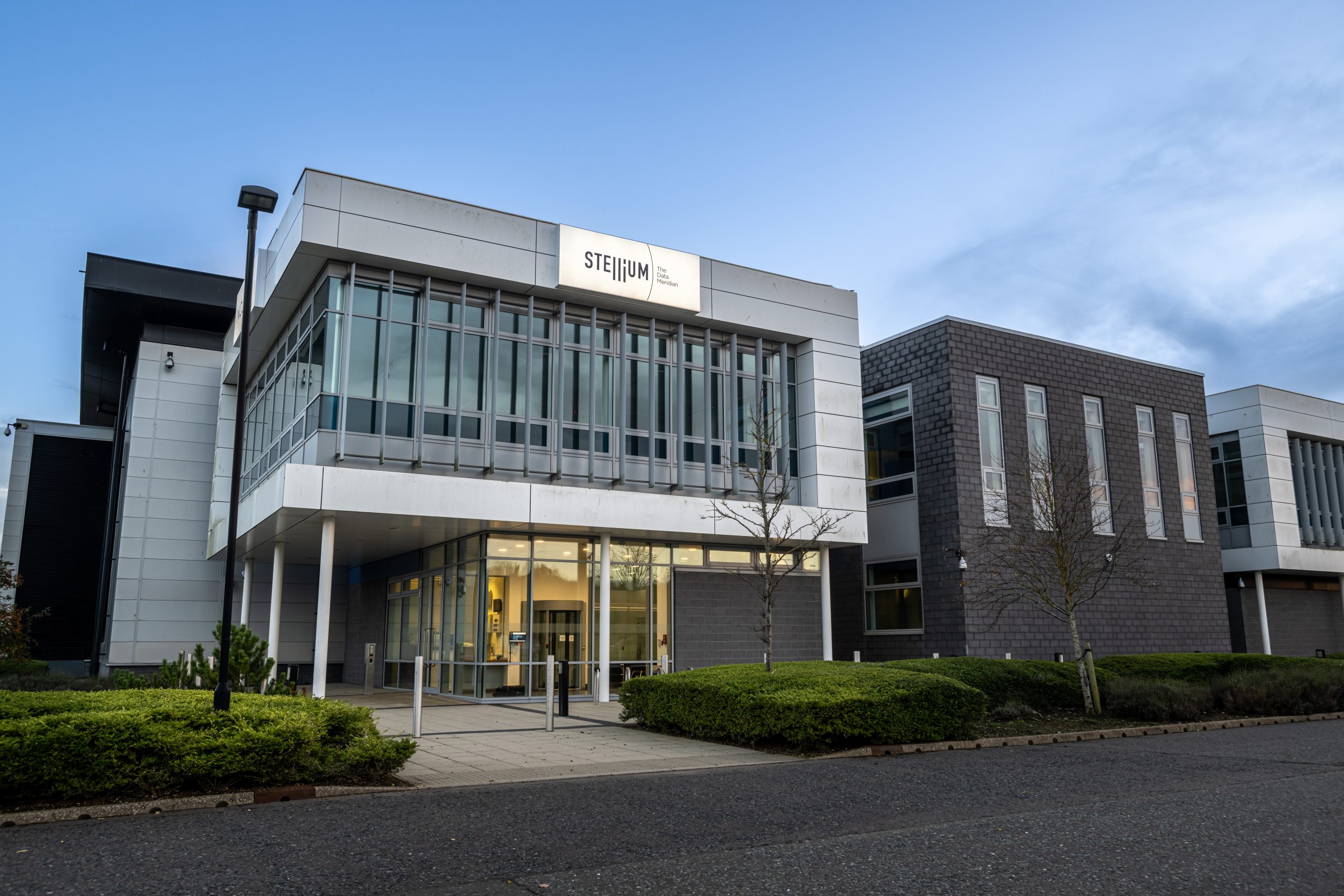
Stellium Datacentres selects Schneider Electric’s Galaxy VM UPS
Stellium Datacentres has partnered with Schneider Electric to help drive data centre resilience and efficiency. Stellium selected Schneider Electric’s Galaxy VM UPS with lithium-ion (li-ion) batteries to provide energy efficient, resilient, and sustainable power protection at its data centre in Newcastle.
Stellium’s location in Newcastle has emerged as a major UK connectivity hub, and the meeting place for high frequency data-transfer across local, national and international borders. CBRE, for example, recently cited its 80MW (scalable to 180MW) colocation facility, as the largest in the north of England region - offering hyperscalers and enterprises a viable, alternative wholesale location compared to operators in London and the south of England.
Powered by REGO certified 100% renewable energy, Stellium provides Tier 3+ mission-critical infrastructure and diverse connectivity services for a multitude of businesses including fintech and high frequency trading, energy, healthcare and pharmaceutical research and public sector. The company also positions itself as the new Data Meridian - where east meets west in data transfer - being the UK’s only data centre landing station for the Altibox/NO-UK Nordic subsea cables and Aqua Comms North Sea Connect cable, as well as the home of the UK’s newest Internet Exchange Point NCL-IX.
An international gateway
One of Stellium’s clients is Aqua Comms, a provider of international undersea fibre connectivity, which provides major connectivity linking the USA with Ireland, the UK and the Nordics. The America Europe Connect 2 (AEC-2) project is a dual diverse trans-Atlantic fibre connection comprising two legs, one directly from the US to Denmark and the other passing through Ireland, the Isle of Man and England, where it terminates at the Stellium Campus before continuing to Denmark.
The overriding requirement for Aqua Comms’ landing station is guaranteed, 100% uptime, reinforced by a stringent service level agreement (SLA). Several factors make the Stellium Campus a good fit, including ample utility power via the UK’s Super Grid, which provides dual 11kVA feeds into the site, as well as backup power systems that offer defence in depth.
Its features include 2N levels of redundancy offered by Schneider Electric’s Galaxy VM UPS and 6MVA standby generators arranged in an N+1 configuration. Stellium selected Schneider Electric’s Galaxy VM UPS due to its high levels of reliability, strong technical and energy efficiency capabilities, and because the company’s sustainable approach to its product strategy matched Stellium’s approach to life cycle management.
Galaxy VM UPS
Designed to provide highly efficient data centre power continuity, Schneider Electric’s Galaxy VM is a scalable, three-phase UPS for data centres and industrial environments. Powered by lithium-ion batteries, Galaxy UPS delivers the highest levels of backup power protection in a smaller footprint, offering advantageous space saving capabilities for colocation businesses.
Furthermore, Galaxy VM utilises Schneider Electric’s patented eConversion mode as standard, offering up-to 99% energy efficiency alongside Class-1 (UL certified) power protection level for critical loads, without compromising availability.
“Today, businesses have come to the realisation that through high quality fibre connections and access to 100% sustainable power, it is possible to have major data centres built to Tier 3 standards, in almost any location,” says Paul Mellon, Operations Director, Stellium Datacentres. “By partnering with Schneider Electric and using its UPSs to build the highest levels of redundancy and resiliency into our Newcastle data centre, we’re safeguarding the provision of our customers critical equipment, and ensuring their applications are powered both efficiently and sustainably.”
“Stellium Datacentres truly defines what it means to be a northern powerhouse and has built a campus primed to create hyperscale levels of growth in the north of England,” says Marc Garner, SVP, Secure Power Division, Schneider Electric, Europe. “We’re delighted that Stellium has selected our Galaxy VM technology to power its mission-critical workloads, and help it deliver industry-leading levels of resilience and efficiency.”
Beatrice - 9 March 2023

Data Centres
Hyperscale Data Centres: Scale, Speed & Strategy
Insights into Data Centre Investment & Market Growth
Increasing data centre power consumption in an energy crisis
Paul Brickman, Commercial Director, for Crestchic Loadbanks, explores the often-overlooked necessity of loadbank testing in securing data centre power in an energy crisis.
Hiked power prices as a result of Russia’s fuel sanctions, and the threat of planned blackouts or power rationing to better manage an unstable grid, are forcing data centres to redistribute investment away from key business functions like training and recruitment, and towards improving energy efficiency and securing power resilience.
The current geopolitical challenges and their far-reaching implications are recognised in the 2023 Uptime Institute report, Five Data Centre Predictions for 2023, in which the authors acknowledge that the Russian fuel sanctions, along with technological challenges 'will make the planning of data centre development and operations more difficult.'
Powering next-generation data centres
According to the Uptime Institute, IT hardware has been fairly standard in terms of its draw on mainstream server capacity for a few decades now, creating technical stability and relatively constant power and cooling requirement.
This has enabled data centre designers to accommodate several IT refreshes without major upgrades to server technology and the associated hike in power consumption that would come with it. Essentially, offering the latest technologies, without an increase in energy requirement.
This grace period is now over. Power requirements for next-generation IT hardware are far higher, rack power density is increasing, and 'hotter' processors are putting pressure on the performance parameters of existing infrastructure.
This rapid rise in IT power density means server power consumption is on a steep climb, creating a need for more power, at a time when the grid is unstable, and energy prices are at their highest in decades.
Extreme-density racks are now commonplace in technical computing too, as well as high-performance analytics and artificial intelligence training. If data centre operators want to successfully penetrate these niche markets, they will need to foot the heightened energy bill and maintain a robust power resilience regime until the situation stabilises.
Data centres take action
The demand for next-generation IT technologies will not slow. As a result, data centres are forging ahead with the essential upgrades required to UPS, batteries, switchgear and generators to accommodate increased power density.
This is a risk. With an unstable grid and planned blackouts still on the agenda for many governments, upgrades will need to be bolstered with a watertight energy resilience plan to protect against power fluctuations and total outages.
The importance of a power resilience strategy in an energy crisis
According to research from the Ponemon Institute, in its third Cost of Data Centre Outages report, the total cost of downtime has continued to rise over the last six years - rising a staggering 38% to $740,357 per incident. That equates to nearly $9,000 per minute - a figure that many data centres will have to swallow if the grid becomes too unstable to sustain their increasing power consumption.
Many data centres will already have a robust generator testing and maintenance regime in place, but the use of loadbanks is often overlooked, especially when budgets are stretched. At a time when power outages are more likely, loadbank testing should play an integral role in a data centre’s energy resilience strategy and it would be prudent to evaluate your strategy in line with the current landscape to ensure it is robust enough. With this in mind, what would be considered best practice for testing a backup power system?
Best practice loadbank testing in times of crisis
Ideally, as a minimum, all generators should be tested annually for real-world emergency conditions by using a resistive-reactive 0.8pf loadbank. Best practice dictates that all gensets (where there are multiple) should be run in a synchronised state, ideally for eight hours but for a minimum of three.
Where a resistive-only loadbank is used, testing should be increased to two to four times per year at three hours per test. In carrying out this testing and maintenance, fuel, exhaust and cooling systems are effectively tested and system issues can be uncovered in a safe, controlled manner without the cost of major failure or unplanned downtime. The alternator is not thoroughly tested though, with a resistive-only test and therefore a resistive-reactive test would always be recommended.
It may be advisable to test more frequently during times of crisis for added peace of mind.
Why is resistive-reactive the best approach?
Capable of testing both resistive and reactive loads, this type of loadbank provides a much clearer picture of how well an entire system will withstand changes in load patterns while experiencing the level of power that would typically be encountered under real operational conditions.
Furthermore, the inductive loads used in resistive/reactive testing will show how a system will cope with a voltage drop in its regulator. This is particularly important in any application which requires generators to be operated in parallel (prevalent in larger business infrastructures such as hyperscale data centres) where a problem with one generator could prevent other system generators from working properly or even failing to operate entirely. This is something which is simply not achievable with resistive-only testing.
Navigating growth when power is scarce
No matter the geopolitical challenges and the effect it is having on power availability, data centres have no choice but to grow.
Demand will not cease, and power-intensive next-generation technologies are unavoidable. Ensuring power resilience via a watertight backup power supply and a robust testing and maintenance regime will enable data centre designers and operators to grow, safe in the knowledge that, should planned blackouts, power rationing or grid fluctuations happen, the power will always remain on.
Beatrice - 24 February 2023

Data Centres
Hyperscale Data Centres: Scale, Speed & Strategy
Lunar Digital enters the Manchester data centre market
Lunar Digital has embarked on a new venture in the Manchester data centre industry. Lunar Digital has announced that it has completed the acquisition of the Equinix facility in Manchester, formerly known as MA2.
Equinix has 240 data centres spanning 27 countries, and had previously announced the closure of MA2 in December 2021.
The acquisition of the 22,500ft² 3MVA (expansion to 4MVA) facility is highly strategic for Lunar Digital to bolster its data centre footprint in the UK. The business also has an existing Tier 3 European facility in Norway.
Robin Garbutt says, “We’re very excited to announce that we’ve completed the acquisition of the Equinix data centre in Reynolds House. The acquisition will ensure client colocation capacity in the most highly demanded markets within the UK. The demand for premium data centre capacity in Manchester continues to be highlighted and we are proud to be playing our part in supporting its continued growth.”
Lunar Digital will be able to offer services immediately within the facility, providing stability and peace of mind to existing clients who had previously been informed that the site was due to close. The acquisition also adds notable additional capacity to Lunar Digital’s current data centre network which will also allow them to strengthen their private and virtual cloud solutions. The facility will be rebranded as Lunar1 and Lunar2 due to the fact there are two self-contained facilities within the site, offering highly connected, carrier neutral data centre capabilities in Manchester.
The Lunar Digital team is passionate about Manchester as a data centre location, with the city already establishing itself as a key location for data centre space in the UK, attracting large hyperscale operators like AWS, Azure and Facebook in recent years.
Manchester has a rich history in innovation and being able to continue supporting some of the incredible businesses that require dependable data centre services in the city is something that Lunar Digital says it is proud to do.
The Lunar1 and Lunar2 facilities in Reynolds House are carrier rich, boasting some of the largest global internet services providers able to provide resilient, low latency connectivity to clients. Lunar Digital will also be one of the last remaining independent data centre operators in the city.
The Lunar Digital team says it is looking forward to becoming a key operator in the city and continuing to support existing and new clients.
Beatrice - 22 February 2023

Commercial Real Estate: Property Developments, Trends & Infrastructure
Data Centres
Hyperscale Data Centres: Scale, Speed & Strategy
Insights into Data Centre Investment & Market Growth
News
DCI Data Centres appoints group CEO
DCI Data Centres (DCI) has announced the appointment of Nicholas Toh as the group Chief Executive Officer.
Nicholas is an industry veteran with more than 20 years’ experience across data centres, finance and real estate investments. He joins DCI from STT Global Data Centres, where he was one of the key founding team members, having been instrumental in the growth and development of the business, most recently as CEO, North-East Asia. During his time with STT GDC, he led market entry into the mature markets of UK and Japan as well as strategic investments and partnerships into India, South Korea, Indonesia, and the Philippines. Prior to joining STT, he was Senior Vice President at Securus Data Property Fund. An Australian national, Nicholas has also worked for Macquarie Group within the Banking and Financial Services group, as well as within Macquarie’s Real Estate group.
DCI Chair and Brookfield Global CEO Data Centres, Udhay Mathialagan says Nicholas brings an impressive track record in building data centre businesses across multiple geographies, marking a strategic milestone as DCI enters an accelerated growth phase.
“Nicholas’s appointment strengthens DCI’s growth trajectory as we look to build on our rapid growth in Australia and New Zealand by deepening our geographic and product strength in these markets in addition to targeted expansion across Asia. I am delighted to welcome Nicholas to the team,” adds Udhay.
“DCI’s growth and commitment to scale makes it an exciting time to join the company. DCI’s customer centric approach and ability to provide innovative solutions has enabled them to be a trusted partner, and I look forward to continuing to build the business and usher in new successes for our hyperscale customers,” Nicholas says.
Beatrice - 6 February 2023

Data Centres
Hyperscale Data Centres: Scale, Speed & Strategy
Data centres face three key challenges in 2023
By Honeywell Senior Data Centre Director, Alpesh Saraiya
Data centres play a critical role in keeping the global economy productive. Demand for data storage and processing has become insatiable worldwide, which makes it more challenging than ever to operate and scale these facilities efficiently. Managers also face mounting pressure to make their operations more energy efficient. Data centres consume about 3% of the world’s electricity - more than most countries - and produce 2% of global carbon emissions, which is about the same as the entire airline industry.
Given the exponentially increasing demand, managers are often forced to do more with less, while at the same dealing with tougher internal environmental, social and governance (ESG) directives and more stringent regulatory landscapes. When preparing for 2023 and ahead, operators should factor in three significant trends: continued pressure to cut operating costs, increasing demand for more sustainable facilities, and a growing shortage of talent interested in and qualified for managing data centres.
Rapid scaling with a sharp focus on managing OpEx
To meet the unrelenting demand, both hyperscale and colocation data centre operators have aggressively acquired smaller firms - but this practice has created as many problems as it has solved. For one, it creates a pastiche of ‘snowflake’ designs - no two are exactly alike - which means major headaches for integrators and heftier operating expenses (OpEx) for owners.
Blueprinting data centre designs to achieve commonality across facilities has thus become a key strategy for ‘doing more with less.’ While many see it as a critical step toward developing and implementing global design standards, operators must still comply with local and national building codes, financial accounting laws and security regulations.
Many data centre managers are also streamlining their operations with well-defined, purpose-built workflows and operational management tools to further reduce OpEx while still protecting uptime. To this end, some are installing cross-domain, site-level monitoring and management platforms to automate as many tasks as possible, thereby easing workloads and reducing the chances of human error, which caused major outages over the last three years at 40% of organisations surveyed by the Uptime Institute.
Tougher internal and external sustainability mandates
Data centres face mounting pressure from governments, clients and stockholders to become more sustainable and energy efficient. A sustainability strategy is no longer simply a ‘nice to have’ item, in the future, it may determine whether an operator succeeds or fails. With financial firms at either end of the transaction - as both clients and providers of capital - operators will face an additional hurdle of expectations when seeking to fund future projects, particularly as pressure increases on private equity and real estate investors to make greener investments. Further, even clients shopping for data centre colocation service providers are now examining ESG profiles to account for upstream Scope 2 and 3 carbon footprint.
As data centre operators struggle to scale up across different geographies, they face a range of ever-stricter local and national regulatory landscapes. Many of these include increasingly rigorous sustainability and ESG financial reporting standards that will phase in over this decade.
Governments including Ireland, the Netherlands and Singapore are requiring owners and operators to submit a detailed sustainability plan before granting them approval to build a new facility or expand an existing one. Singapore, in fact, imposed a moratorium on new data centre projects in 2019, and kept it in place until January 2022. Applicants for new projects now must explain how they will meet tough new standards enacted to protect the nation’s land, water and renewable energy resources.
Increasingly, governments are expecting data centres to measure and disclose their carbon footprint and demonstrate progress toward reductions. There are numerous ways to reduce carbon emissions - no one size fits all - but cost and new technologies usually factor into the equation. Among these, operators are evaluating a variety of energy optimisation techniques, from control loop optimisation to liquid cooling options, especially as high performance computing (HPC) and AI/ML applications become more ubiquitous and more demanding in heat dissipation requirements. Air cooling systems simply can’t keep up with the cooling needs of continually evolving, higher-density racks for these next gen workloads.
Liquid cooling leverages the higher thermal transfer properties of special fluids, providing as much as 3,000 times the efficiency of air cooling. With more and more businesses integrating HPC applications driven by AI - which require tremendous computing power - operators are realising that the time has arrived to seriously incorporate liquid cooling in their architecture and roadmap.
The human element: a looming talent shortage
Not least among data centre challenges is a widening skills gap and the ongoing ‘great resignation.’ Some see this as a result of the industry’s ineffective efforts to actively recruit and retain talent from the vocational schools over the last two decades. The industry is also dealing with an aging workforce of subject matter experts - those qualified to teach entry-level employees - many of whom will retire within the next 10 years. Yet Gen Z workers who have the skills and aptitude to pursue such a career are not seeing careers in data centres as an attractive option. Nevertheless, there are promising initiatives in the industry to source candidates from a pool of disciplined and well-qualified military veterans.
As operators develop plans for 2023, they should be considering strategies for scaling up intelligently, reining in OpEx and prioritising sustainability efforts. They should also take a hard look at how they can make the profession - and their facilities - more attractive to the next generation of talent.
Beatrice - 3 February 2023
Data Centres
Hyperscale Data Centres: Scale, Speed & Strategy
Insights into Data Centre Investment & Market Growth
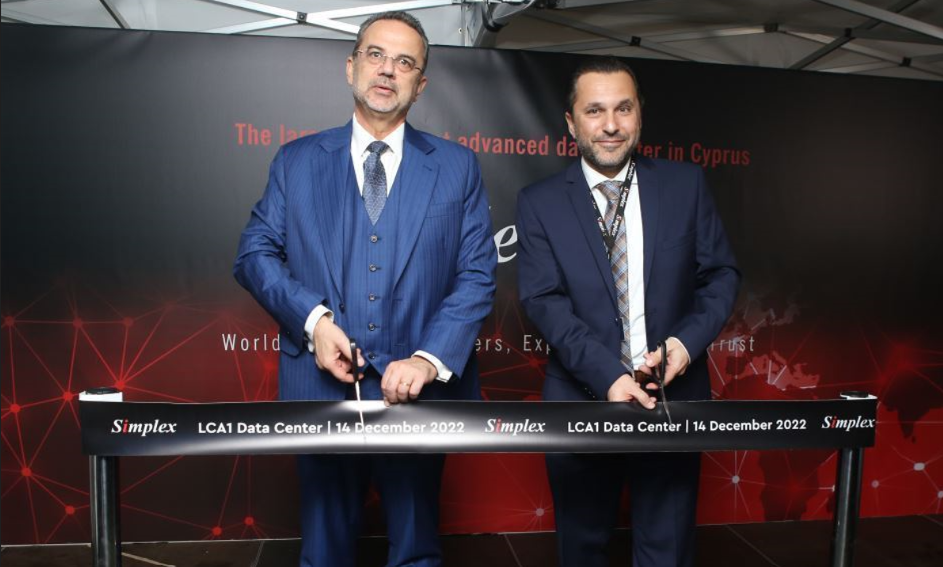
Grand opening of Simplex LCA1 - the largest data centre in Cyprus
Simplex puts Cyprus on the global data centre map with a world-class facility - one of the most advanced in the region.
In a ceremony in the presence of Kyriakos Kokkinos, Deputy Minister of Research, Innovation and Digital Policy, the opening of Simplex LCA1 took place in Larnaca, Cyprus on 14 December 2022. More than 100 guests including government officials, businessmen, IT managers and other industry professionals, representing the business and political community of Cyprus, gathered to celebrate what is expected to be a milestone for Cyprus’ digital transition and a true diversifier for the country’s economy.
LCA1 is the largest data centre in Cyprus and one of the most advanced in the region, offering reliability, security and flexibility. Simplex is now the only neutral operator with two privately owned data centres at diverse locations.
LCA1 has been operating since December 2020, however, due to the pandemic Simplex never had the opportunity to celebrate its opening and decided to do so on its second birthday/anniversary. A testament for LCA1’s qualities is the international recognition it has received during these two years. In particular, it has been awarded for Reliable and Efficient Data Centre Operation at the Impact Bite Awards, while it has also been shortlisted as a finalist for the 2021 Middle East & Africa Data Centre Development Award of the DCD Awards.
The growing business community of Larnaca, sufficient distance from both Limassol (business and financial centre) and Nicosia (the capital) for disaster recovery purposes, and the convenience for international clients flying in through Larnaca International Airport, were reasons for choosing Larnaca to host this facility.
Designed and constructed with efficiency and sustainability at its core, LCA1 has adopted many green technologies and it will soon be using extensively, if not exclusively, green power from renewable sources, mainly solar. During the event, the company’s Director, Michael Omerou, announced the certification of the company’s Environmental Management System to ISO 14001, as well as the upcoming certification to EMAS, EU’s Eco-Management and Audit Scheme, becoming the first Cyprus data centre operator to receive such certifications.
Michael says, “I am really proud and excited to be standing in front of such a mass gathering that inevitably demonstrates the importance of data centres in general and LCA1 in particular. Neutral, multi-tenant data centres like LCA1 consist of important, critical infrastructure and generate a huge economic potential.
“Strategically located, literally at the crossroads of Europe, Asia, Africa and the Middle East, LCA1 is a truly enterprise, world-class data centre, that will serve not only domestic clients, but also regional and even international ones. Jointly with other technology companies of the island and of course, the government, we aim to establish an ecosystem that will attract international technology giants including content providers, international ISPs, cloud providers and other hyperscalers that through Cyprus will be able to serve neighbouring countries which suffer from political and financial fragility and, despite their big population/market size, do not offer reliable telecoms and electricity infrastructure. LCA1 will evolve as an investment magnet and a multiplier of economic growth for Cyprus’ economy.”
Beatrice - 17 January 2023
Data Centres
Hyperscale Data Centres: Scale, Speed & Strategy
Insights into Data Centre Investment & Market Growth
The London Fund invests with Macquarie in digital infrastructure
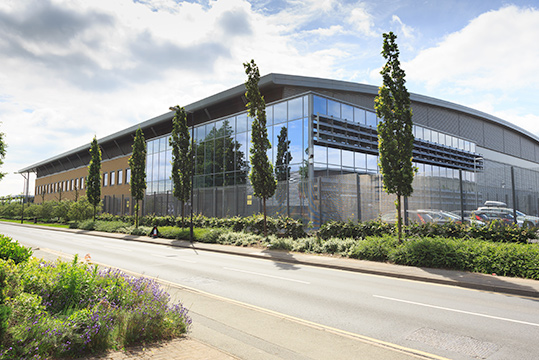
Local Pensions Partnership Investments (LPPI) has announced that The London Fund (the Fund) has agreed to co-invest alongside Macquarie Asset Management in its acquisition of a significant minority stake in London-based VIRTUS, a growing hyperscale data centre platform in London.
VIRTUS is a pure-play data centre owner-operator, providing critical digital infrastructure which provides vital connectivity and access to online services for residents and businesses in London. The business provides intelligent solutions to improve the storage, retrieval, management and security of data across global networks.
Established in 2008, VIRTUS currently comprises 11 sites in and around London, including in Enfield, Hayes, Slough and Stockley Park, with a combined capacity of more than 100MW. The business aims to build more sites in the Greater London area in line with increasing data needs, while beginning to expand its operations into Europe.
The VIRTUS investment also delivers on its Positive Social Outcomes promise by supporting London’s digital ecosystem through a data centre platform which matches its electricity consumption to 100% renewable energy procurement alongside its wider commitment to net zero by 2030 and efficient water and energy usage.
Richard Tomlinson, Chief Investment Officer, Local Pensions Partnership Investments, says, “Digital infrastructure has been driven by long-term tailwinds, including growing data consumption and the development of cloud computing and VIRTUS’s success is testament to this. With this investment, we’re pleased to be supporting a key global player in a rapidly growing sector, enhancing London’s digital ecosystem, whilst also proving that commercial success and a commitment to net zero can be compatible business goals.”
Vanessa Shia, Head of Private Markets, London CIV, says, “We are delighted to have partnered with Macquarie in our co-investment in VIRTUS through The London Fund. This builds on our continual focus to making critical investments in London and greatly complements our existing portfolio. This is one of our first direct investments in the digital infrastructure space, and, given the essential role it plays in supporting global connectivity by offering an alternative to travel and commuting, represents a pivotal investment on behalf of our clients in their journey to net zero.”
Phil Peters, Head of Macquarie Asset Management’s Client Solutions Group, says, “We are very pleased to be extending our existing partnerships with LPPI and London CIV, the collaborators of The London Fund, with this co-investment in VIRTUS Data Centres alongside our managed funds. The London Fund’s objective of investing in assets that have positive benefits for Londoners very much aligns with our responsibility and opportunity to drive positive change for all our stakeholders through our investments.”
Beatrice - 10 January 2023

Head office & Accounts:
Suite 14, 6-8 Revenge Road, Lordswood
Kent ME5 8UD
T: +44 (0)1634 673163
F: +44 (0)1634 673173