News


euNetworks launches Frankfurt–Strasbourg fibre route
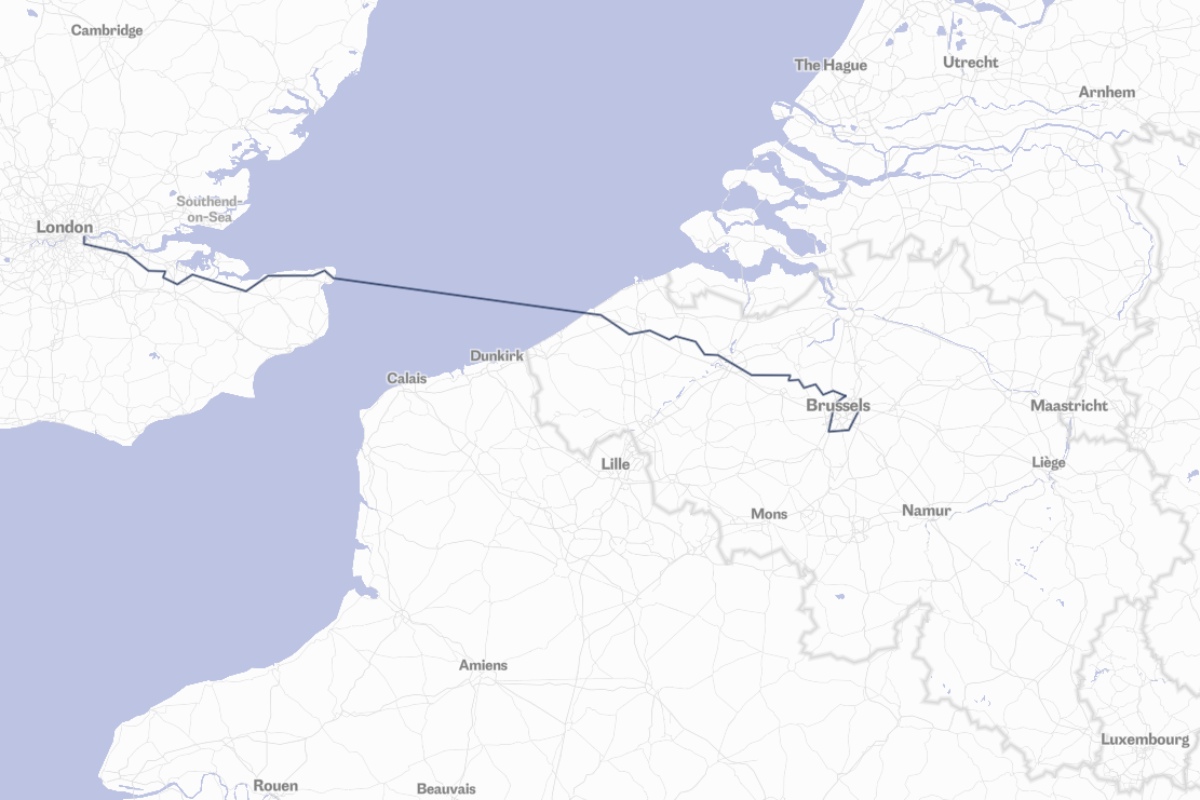
euNetworks, a European bandwidth infrastructure company, has launched a new long-haul fibre route connecting Frankfurt and Strasbourg, expanding its Super Highway network across Europe. The 247km route links two key connectivity hubs and has been developed in response to rising demand for AI and cloud infrastructure across the FLAP-D region, which includes Frankfurt, London, Amsterdam, Paris, and Dublin. The route provides direct, low-latency connectivity between the two cities, with access to more than 76 data centres in Frankfurt and further connections to over 600 sites across euNetworks’ wider European footprint. Built using new high-capacity fibre, the route has been designed to avoid congested areas, improving resilience and offering additional network diversity. Supporting capacity and resilience in FLAP-D The expansion addresses increased traffic between Frankfurt, one of the world’s most interconnected network hubs, and Strasbourg, an established interconnection point for long-haul routes. As part of the build, new infrastructure has been introduced along the route, including upgraded intermediate line amplifier sites designed to improve energy efficiency. The fibre deployed is also intended to support improved transmission performance and lower operational costs. Marisa Trisolino, CEO at euNetworks, comments, "euNetworks is relentless in our pursuit to address Europe’s accelerating demand for bandwidth, and we will continue to develop our state-of-the-art networks where our customers need it the most." The Frankfurt–Strasbourg link is the sixth route to be delivered as part of euNetworks’ Super Highway programme, which focuses on connecting major data centre markets across the FLAP-D region.

Schneider, GreenScale partner on new operational architectures
Global energy technology company Schneider Electric has partnered with GreenScale, a developer of hyperscale data centre campuses, to support the development of data centre sites across Europe, focusing on AI-ready infrastructure and operational design. Under the agreement, Schneider Electric’s Secure Power and Services divisions will provide engineering and design consultancy, contributing to the development of new operational architectures for data centres. The collaboration combines Schneider Electric’s infrastructure expertise with GreenScale’s experience in data centre operations, software, and digital twin technology. The aim is to improve deployment timelines, operational predictability, and maintenance processes through the use of automation and data-driven tools. With application in mind, GreenScale is developing data centres in regions with available power and renewable energy potential, with projects intended to support long-term regional investment and infrastructure growth. A focus on automation and operational efficiency The partnership includes the use of predictive analytics, condition-based maintenance, and digital twin integration to support performance and reliability across sites. These approaches are intended to reduce operational risk, improve maintenance planning, and support consistent performance, particularly in remote or emerging locations. The companies are also working on reference architectures designed to incorporate automation and monitoring from the outset, enabling improved visibility and control across infrastructure systems. Dan Thomas, CEO at GreenScale, says, "As demand for AI, Cloud and HPC accelerates in Europe, data centre operators must rethink how facilities are designed and managed." Thierry Chamayou, Vice President, Cloud and Service Providers, Europe at Schneider Electric, adds, "By combining expertise from our Secure Power and Services divisions, we are helping to create a resilient, AI-ready infrastructure platform." The collaboration also includes the integration of monitoring and control systems that connect physical infrastructure with digital platforms, supporting high-density AI and cloud workloads. For more from Schneider Electric, click here.

A-Gas participating as a Gold Sponsor at DCN
With the growing global demand for data, the need for efficient cooling solutions and environmentally friendly refrigerants is becoming increasingly critical. Meeting this rising demand sustainably is essential, which is where A-Gas, a company specialising in lifecycle refrigerant management (LRM), says it can play an important role, supporting the industry’s transition to lower-GWP alternatives. The company has announced that, for this reason, it will attend Data Center Nation (DCN) in Milan as a Gold Sponsor on 27 May, demonstrating how it can actively support industry players. Data Center Nation is an event dedicated to the data centre industry. The organisers say it serves as a hub where hyperscalers (such as AWS and Microsoft), investors, enterprise end users, and infrastructure suppliers can come together to discuss the future of digital infrastructure. At the event, A-Gas says it will feature a dedicated booth and contribute to the Tech Stage panel with a presentation titled 'Cooling in Transition: HFCs, Low-GWP Refrigerants & the Data Centre Challenge'. On 27 May, attendees can visit the company's stand to learn more about its offerings to support the transition to low-GWP alternatives and to discover its recovery, reclamation, and repurposing technologies. For more from A-Gas, click here.

Australia data centre forecast report launched
Data Centres Australia, an Australian industry body representing data centre developers, operators, and the broader digital infrastructure ecosystem, and DC Byte, a London-based market intelligence firm, have formed a partnership to provide independent market insight and forecasting for the country’s data centre sector. As part of the collaboration, the organisations have published the first Australian Data Centre Forecast Report, offering analysis of current capacity and future development trends. The report estimates that Australia’s operational data centre capacity currently stands at 1.5GW and could reach 3.2GW by 2030. The initiative aims to support policymakers, utilities, and industry stakeholders with more accurate data, as demand for digital infrastructure continues to grow across the Asia Pacific region. The partnership combines Data Centres Australia’s industry network with DC Byte’s global market intelligence, with a focus on improving understanding of development pipelines and long-term capacity planning. Addressing forecasting challenges in Australia The report highlights the challenges of tracking data centre growth, particularly in relation to early-stage developments that do not always progress to completion. This can lead to overstated projections and so-called ‘phantom demand’ within the market. By providing forward-looking forecasts based on industry data and development trends, the partners say they aim to support more informed decision-making across the sector. Data Centres Australia will use DC Byte’s analysis to inform engagement with members and policymakers, while DC Byte will provide briefings and insight sessions as part of the agreement. Belinda Dennett, Chief Executive Officer at Data Centres Australia, comments, "Australia has a significant opportunity to position [itself] as a global hub for AI infrastructure investment and sustainable data centre development." James Murphy, Managing Director APAC at DC Byte, adds, "As data centres become more important to Australia’s digital future, having clear visibility into the market matters." The partnership is intended to support collaboration between industry, government, and investors, while providing broader international context for Australia’s digital infrastructure development.

Hudson IX expands 60 Hudson Street capacity
Hudson InterXchange (Hudson IX), a New York-based carrier-neutral colocation and interconnection data centre provider, has added a new 1MW data hall at 60 Hudson Street in New York, USA, increasing available capacity at one of the city’s most connected carrier hotels. The facility is now operational and available for high-density colocation deployments. A second 1MW data hall is scheduled to come online in the second quarter of 2026, with longer-term plans to expand total capacity at the site beyond 10MW. The expansion comes as data centre space and power availability remain limited across the New York City market, particularly in locations with established network connectivity. 60 Hudson Street continues to act as a key interconnection hub, hosting more than 300 carriers and service providers. The latest development introduces additional capacity within this environment, enabling organisations to deploy infrastructure close to network providers and end users. Additional capacity in a constrained market Hudson IX is among a small number of operators currently adding new capacity within the building, supported by available power for future deployments. The new data hall is designed to support a range of requirements, including network providers, content delivery networks, cloud platforms, enterprises, and financial services organisations. The company notes it can accommodate both standard and high-density installations, including workloads linked to AI and other compute-intensive applications. Atul Roy of Hudson InterXchange says, "This expansion is the result of our remarkable team and its commitment to delivering a large, world-class, high-performance data centre platform with scalable solutions ranging from single cabinets to bespoke cages." Further expansion is planned as part of a wider roadmap to increase total capacity at the site beyond 10MW, supporting continued demand for colocation and interconnection in the New York metro area. For more from Hudson IX, click here.

AVK launches modular PowerPods for data centres
AVK, a provider of power systems and electrical infrastructure for data centres, has introduced a new modular power system, PowerPods, designed to support energy infrastructure for hyperscale data centres and AI deployments. The units integrate key electrical components - including uninterruptible power supplies (UPS), engines, switchgear, controls, enclosures, and transformers - into a single, pre-engineered system. Each unit is delivered ready for connection and deployment on site. The launch reflects growing demand for scalable power infrastructure, as data centre operators seek to deploy capacity more quickly while maintaining resilience and operational continuity. PowerPods have been developed using AVK’s experience in critical power systems, including standby and prime power, as well as control and service capabilities. Modular approach to data centre power deployment The company highlights that the systems are designed to simplify installation by combining multiple elements of the power chain into a single unit. This approach aims to reduce complexity during deployment and support more flexible expansion as demand increases. PowerPods can be configured to meet specific project requirements and are designed to support a range of technologies, allowing operators to adapt systems over time. The modular design also enables use across both new developments and existing sites requiring additional capacity. The units are available for immediate deployment, with a focus on reducing lead times for projects where rapid delivery is required. Ben Pritchard, CEO at AVK, says, “The launch of the AVK PowerPods reinforces our position as one of the few businesses capable of designing, delivering, and supporting the entire data centre power ecosystem - at scale, with true flexibility, and with the engineering depth that critical infrastructure demands. "Large data centres need partners who genuinely understand the full energy picture and we now own the full power train. “PowerPods complete our proposition to the market. They bring together our extensive critical power expertise with our technology-agnostic model to deliver a complete power train solution that makes us a reliable, long-term energy partner for data centre operators. "With our ready-to-deploy PowerPods model, we are perfectly positioned to support the next wave of hyperscale data centres and AI infrastructure.” For more from AVK, click here.

Ellis unveils heavy-duty cable hanger, Hercules
Ellis Patents, a UK manufacturer of cable cleats and cable management systems, has introduced a new heavy-duty cable hanger, Hercules, at Data Centre World Frankfurt, expanding its cable support range for high-capacity data centre infrastructure. The product has been developed to support heavier cable installations as facilities increase power density and cabling volumes. It is designed for use in environments where mechanical strength and cable integrity are critical. Hercules is available in sizes ranging from 6 inches to 25 inches, providing flexibility across different cable diameters and installation requirements. The hanger is also UV-resistant, making it suitable for installations where cable containment may be exposed to external conditions, such as perimeter runs or transition zones. Designed for high-capacity cable installations As data centre projects scale, contractors are required to manage larger power cables and higher electrical loads, often within tighter deployment schedules. Cable support systems play a key role in maintaining safety and reliability in these environments. Ellis says the Hercules cable hanger has been developed in consultation with industry stakeholders to address these installation challenges, supporting heavier cable runs while maintaining ease of installation. Kelly Brown, Sales Director at Ellis, explains, "As data centre infrastructure grows in scale and complexity, the need for dependable, heavy-duty cable support becomes increasingly important. "Hercules has been developed in partnership with industry experts to provide installers with a strong, practical solution that supports heavier cable runs while offering the flexibility, durability, and UV resistance along with the reliability customers need and have come to expect from Ellis." The product was presented to contractors, consultants, and specifiers at Data Centre World Frankfurt, where it is aimed at those involved in hyperscale, colocation, and enterprise data centre projects. Ellis states that the addition of Hercules also strengthens its wider cable management offering for data centre applications.

Daikin expands UK HVAC rental fleet
Daikin Rental Solutions, the dedicated temporary HVAC hire division of Daikin Applied UK, has expanded its UK rental fleet with additional cooling, heating, and air handling equipment, responding to growing demand for temporary HVAC systems. The investment reflects pressure on organisations to maintain operations while managing ageing infrastructure, higher temperatures, regulatory requirements, and the shift towards lower-carbon energy. The company has increased its range of high-capacity cooling systems, process cooling equipment, and heat pumps, alongside introducing UK-manufactured air handling units. Broader HVAC capability for UK industries Demand for temporary HVAC continues to rise across sectors such as data centres, healthcare, and manufacturing, where system downtime can have operational consequences. To support this, Daikin has added higher-capacity chiller units and an expanded range of heat pumps, offering scalable cooling and heating for larger or more complex environments. Additional dry air coolers have also been introduced to support process cooling requirements, including systems designed to improve energy performance under suitable conditions. The company has also expanded its airside equipment with a new range of air handling units manufactured in the UK. Produced at Daikin Applied UK’s facility in Cramlington, the units are designed for rental use, with a focus on ease of installation and suitability for environments such as cleanrooms and healthcare settings. Mike England, UK Rental Sales Manager at Daikin Applied UK, says, "In many of the sectors we support, downtime simply isn’t an option. Customers need solutions that are not only available quickly, but that perform reliably and integrate seamlessly into their existing systems." The company states that manufacturing air handling units within the UK is intended to improve equipment availability and reduce lead times, while maintaining consistent engineering standards across its rental fleet. Digital monitoring and control features are available on selected systems, supporting maintenance and operational oversight where required. For more from Daikin, click here.

Data centres 2026: Energy efficiency and sustainability
Prospero Events Group says it is proud to present the 3rd Energy Efficiency & Sustainability in Data Centers 2026 conference, taking place on 26–27 May 2026 in Amsterdam, the Netherlands. The event will bring together senior decision-makers, technology innovators, and sustainability leaders to explore how data centres can become more energy efficient, resilient, and environmentally responsible. Event presentation topics and speaker panel As AI adoption, hyperscale growth, and electrification continue to increase power demand, the conference will focus on the strategies needed to balance performance with sustainability. Key discussion areas include: • Renewable energy integration• Cooling efficiency and uptime• Waste heat reuse and district heating• On-site energy generation and energy resilience• ESG integration across the data centre lifecycle• Grid constraints and power availability• AI-driven optimisation and future-ready infrastructure The conference will feature expert insights from leading organisations, including: • Günter Eggers, Director Public, NTT Global Data Centers• Vladimir Prodanovic, Principal Program Manager, NVIDIA• Pedro Filipe Barreiros, Data Center Operations, Google• Stijn Grove, Managing Director, Dutch Data Center Association• Martijn Van Wijngaarden, Global Energy Transaction Manager, Iron Mountain• Simon Muskett and Olalekan Salami, Digital Realty The event offers a valuable platform for collaboration amongst operators, investors, technology providers, and sustainability experts committed to building the next generation of low-impact, high-performance data centres. Explore the complete speaker lineup, session topics, and key discussion points shaping the future of sustainable data centres. To register and download the event agenda, click here.

Fluke warns AI boom exposes 'confidence crisis'
As artificial intelligence (AI) demand accelerates, new research from Fluke Corporation, a US manufacturer of electronic test and measurement tool, suggests a growing confidence crisis among data centre professionals, raising concerns about the sector’s ability to scale reliably. A survey of more than 150 data centre professionals, conducted at Data Centre World London 2026, found that only 22% fully trust that their test and measurement data reflects real-world operating conditions. Confidence drops further under pressure, with just 19% expressing full trust in data accuracy during peak load or failure scenarios. Several factors are driving this lack of confidence in infrastructure data. Skills and training gaps were cited as the biggest barrier (43%), followed by time pressures during commissioning (16%), inconsistent testing processes (11%), and budget constraints (10%). The operational impact is seemingly already being felt. Half of respondents reported experiencing unplanned outages or major performance disruptions at least annually, with nearly one in five experiencing disruptions as frequently as monthly (10%) or weekly (8%). Outdated testing equipment is compounding the issue, with nearly two thirds (65%) saying legacy tools increase the risk of downtime and compliance failures within their organisation. Speed vs compliance trade-offs emerge The research exposes a widening gap between intent and execution. While almost all respondents agree that regular maintenance is critical to reducing downtime, only 28% have real-time or predictive monitoring in place across critical infrastructure such as power, cooling, and networks. One fifth admit maintenance is conducted quarterly at most. Adoption of advanced technologies also reportedly remains limited. Just 10% have fully implemented automation, AI diagnostics, or predictive monitoring, while many remain in pilot (22%) or early-stage (19%) phases. Pressure to deliver data centre capacity faster is also creating new risks. 42% of respondents said time pressures create occasional compliance risks, while 17% said they make it significantly harder to meet evolving connector and certification requirements. Mike Slevin, Director of EMEA Market at Fluke Corporation, comments, “What’s striking here is that organisations already know what needs to be done. There’s broad recognition that regular maintenance and better monitoring are critical to reducing downtime, yet, in practice, adoption is lagging. “That gap between awareness and action is where risk builds. When testing isn’t consistent and monitoring isn’t real-time, small issues can quickly escalate into outages.” UK readiness in question as AI ambitions grow The findings also cast doubt on the UK’s ability to support its ambitions to become a global AI leader. Only half of respondents believe the UK data centre sector is operationally ready to scale for AI, cloud, and hyperscale demand over the next five years. Additionally, just 7% believe the UK currently has the infrastructure resilience and operational standards required to support its “AI superpower” ambitions, with 28% pointing to significant infrastructure gaps. Mike continues, “AI is redefining the demands placed on data centre infrastructure. With higher-density architecture and increasingly complex fibre environments, multi-fibre testing has become paramount as the margin for error narrows. “If organisations can’t confidently validate performance under real-world conditions, they risk building AI on unstable foundations. The challenge now is ensuring that capacity is resilient and ready for sustained demand.” For more from Fluke, click here.


Translate »