Innovations in Data Center Power and Cooling Solutions

A-Gas participating as a Gold Sponsor at DCN
With the growing global demand for data, the need for efficient cooling solutions and environmentally friendly refrigerants is becoming increasingly critical. Meeting this rising demand sustainably is essential, which is where A-Gas, a company specialising in lifecycle refrigerant management (LRM), says it can play an important role, supporting the industry’s transition to lower-GWP alternatives. The company has announced that, for this reason, it will attend Data Center Nation (DCN) in Milan as a Gold Sponsor on 27 May, demonstrating how it can actively support industry players. Data Center Nation is an event dedicated to the data centre industry. The organisers say it serves as a hub where hyperscalers (such as AWS and Microsoft), investors, enterprise end users, and infrastructure suppliers can come together to discuss the future of digital infrastructure. At the event, A-Gas says it will feature a dedicated booth and contribute to the Tech Stage panel with a presentation titled 'Cooling in Transition: HFCs, Low-GWP Refrigerants & the Data Centre Challenge'. On 27 May, attendees can visit the company's stand to learn more about its offerings to support the transition to low-GWP alternatives and to discover its recovery, reclamation, and repurposing technologies. For more from A-Gas, click here.

AVK launches modular PowerPods for data centres
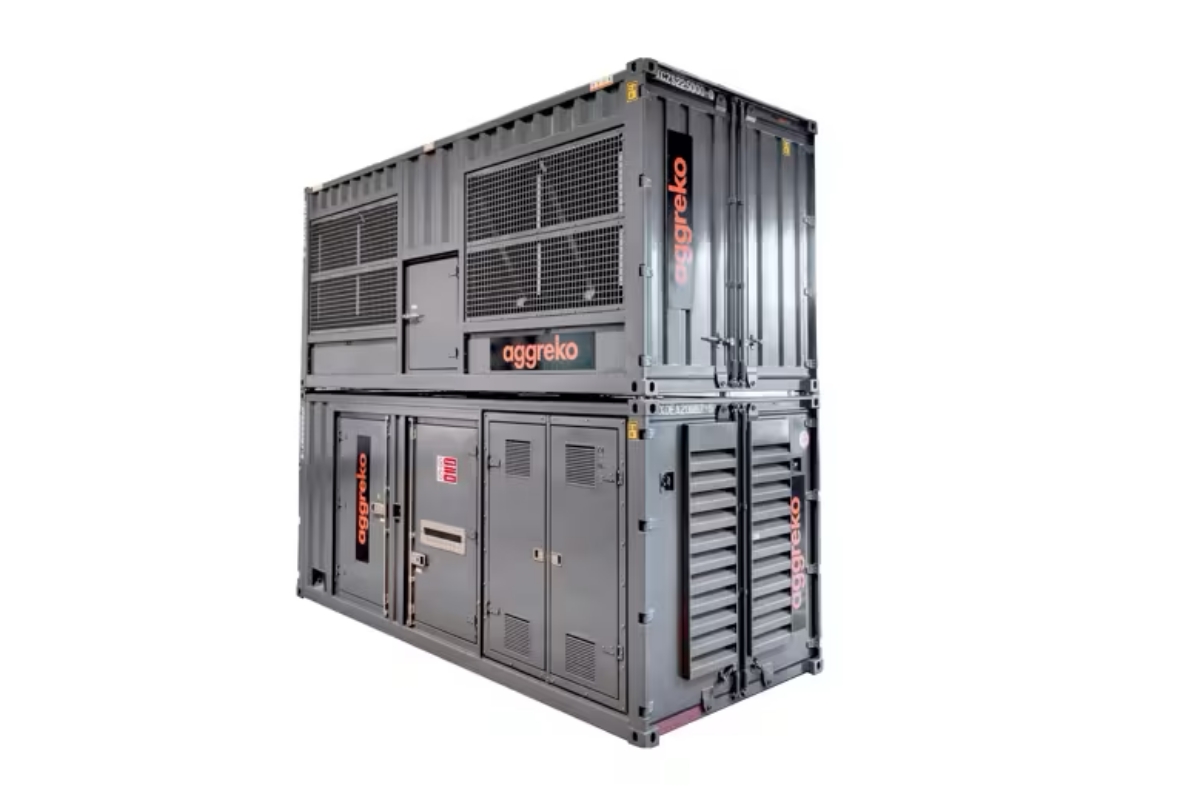
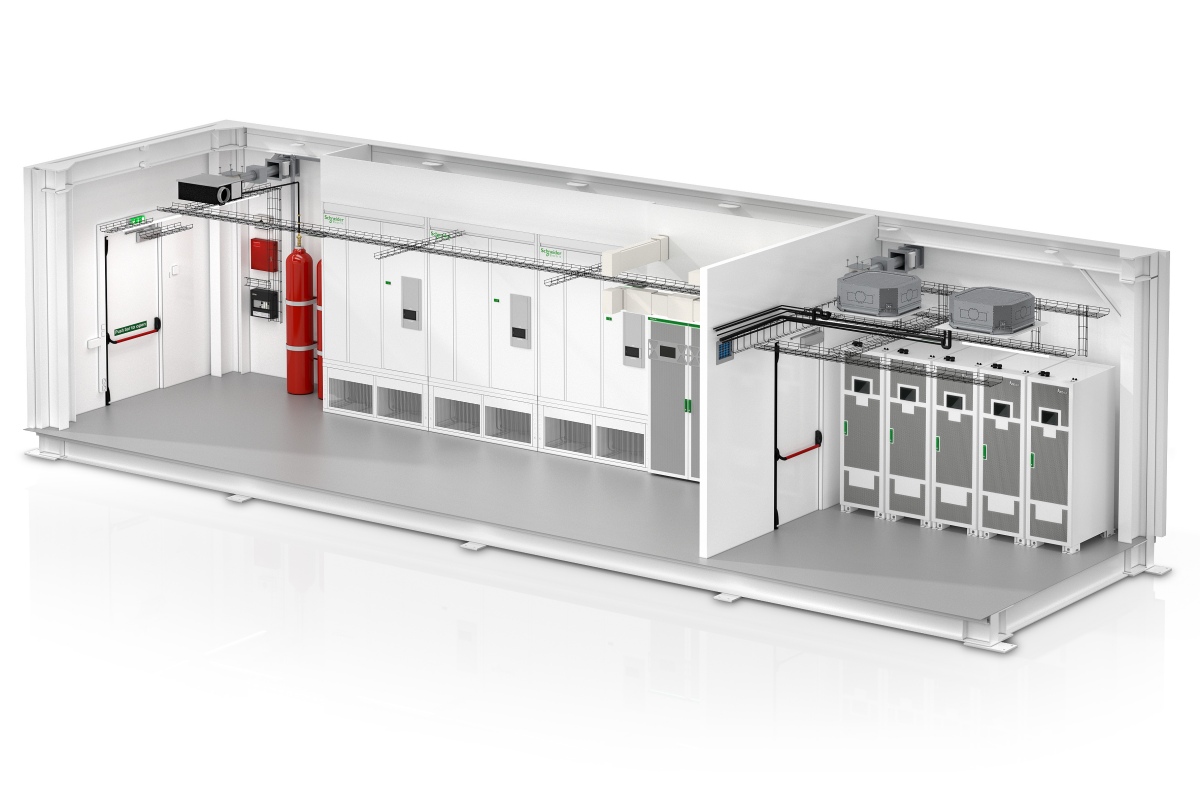
AVK, a provider of power systems and electrical infrastructure for data centres, has introduced a new modular power system, PowerPods, designed to support energy infrastructure for hyperscale data centres and AI deployments. The units integrate key electrical components - including uninterruptible power supplies (UPS), engines, switchgear, controls, enclosures, and transformers - into a single, pre-engineered system. Each unit is delivered ready for connection and deployment on site. The launch reflects growing demand for scalable power infrastructure, as data centre operators seek to deploy capacity more quickly while maintaining resilience and operational continuity. PowerPods have been developed using AVK’s experience in critical power systems, including standby and prime power, as well as control and service capabilities. Modular approach to data centre power deployment The company highlights that the systems are designed to simplify installation by combining multiple elements of the power chain into a single unit. This approach aims to reduce complexity during deployment and support more flexible expansion as demand increases. PowerPods can be configured to meet specific project requirements and are designed to support a range of technologies, allowing operators to adapt systems over time. The modular design also enables use across both new developments and existing sites requiring additional capacity. The units are available for immediate deployment, with a focus on reducing lead times for projects where rapid delivery is required. Ben Pritchard, CEO at AVK, says, “The launch of the AVK PowerPods reinforces our position as one of the few businesses capable of designing, delivering, and supporting the entire data centre power ecosystem - at scale, with true flexibility, and with the engineering depth that critical infrastructure demands. "Large data centres need partners who genuinely understand the full energy picture and we now own the full power train. “PowerPods complete our proposition to the market. They bring together our extensive critical power expertise with our technology-agnostic model to deliver a complete power train solution that makes us a reliable, long-term energy partner for data centre operators. "With our ready-to-deploy PowerPods model, we are perfectly positioned to support the next wave of hyperscale data centres and AI infrastructure.” For more from AVK, click here.

Daikin expands UK HVAC rental fleet
Daikin Rental Solutions, the dedicated temporary HVAC hire division of Daikin Applied UK, has expanded its UK rental fleet with additional cooling, heating, and air handling equipment, responding to growing demand for temporary HVAC systems. The investment reflects pressure on organisations to maintain operations while managing ageing infrastructure, higher temperatures, regulatory requirements, and the shift towards lower-carbon energy. The company has increased its range of high-capacity cooling systems, process cooling equipment, and heat pumps, alongside introducing UK-manufactured air handling units. Broader HVAC capability for UK industries Demand for temporary HVAC continues to rise across sectors such as data centres, healthcare, and manufacturing, where system downtime can have operational consequences. To support this, Daikin has added higher-capacity chiller units and an expanded range of heat pumps, offering scalable cooling and heating for larger or more complex environments. Additional dry air coolers have also been introduced to support process cooling requirements, including systems designed to improve energy performance under suitable conditions. The company has also expanded its airside equipment with a new range of air handling units manufactured in the UK. Produced at Daikin Applied UK’s facility in Cramlington, the units are designed for rental use, with a focus on ease of installation and suitability for environments such as cleanrooms and healthcare settings. Mike England, UK Rental Sales Manager at Daikin Applied UK, says, "In many of the sectors we support, downtime simply isn’t an option. Customers need solutions that are not only available quickly, but that perform reliably and integrate seamlessly into their existing systems." The company states that manufacturing air handling units within the UK is intended to improve equipment availability and reduce lead times, while maintaining consistent engineering standards across its rental fleet. Digital monitoring and control features are available on selected systems, supporting maintenance and operational oversight where required. For more from Daikin, click here.

Veolia, Amazon develop data centre water reuse system
Veolia, a French multinational environmental services company, is working with US technology and e-commerce company Amazon to introduce reclaimed water for cooling at a data centre in Mississippi, USA, as part of efforts to reduce water use and support long-term water resilience. The facility, expected to be operational in 2027, will be the first Amazon data centre in the state to use treated wastewater for cooling processes. The system will convert effluent from nearby treatment plants into water suitable for industrial use. Once fully operational, the project is expected to reuse more than 83 million gallons (313 million litres) of potable water each year, reducing demand on local groundwater and drinking water supplies. Veolia will deploy modular, containerised treatment systems designed for scalable use. The approach allows similar installations to be introduced at other data centres where conditions allow. Turning wastewater into cooling power for data centres The collaboration also includes the use of artificial intelligence to improve water treatment processes. Amazon Web Services (AWS) will support Veolia in developing systems for real-time optimisation, predictive maintenance, and operational analysis. These tools are intended to improve efficiency and reduce resource consumption across water treatment operations. Estelle Brachlianoff, Chief Executive Officer at Veolia, comments, “We are delighted to collaborate with Amazon to secure its water needs in Mississippi while protecting the local community's resources. This is environmental security in action. "By combining Veolia’s water expertise with Amazon’s AI technologies, we’re transforming data centres into engines of innovation for sustainability. This solution builds on our newly launched offering for data centres.” Will Hewes, Global Water Stewardship Lead at Amazon, adds, “Through our collaborative work on AI applied to water treatment, Veolia will be able to further drive innovation and enhance the efficiency of on-site teams, thanks to automated analytics, actionable recommendations, optimised inventory management, and streamlined maintenance. "We’re pleased to join forces with Veolia to advance more sustainable water use strategies while helping it pioneer more efficient water treatment solutions for customers worldwide.” The project, Amazon says, forms part of its wider aim to become water positive across its direct data centre operations by 2030.

Vertiv acquires Strategic Thermal Labs
Vertiv, a global provider of critical digital infrastructure, has acquired Strategic Thermal Labs (STL), a company specialising in liquid-cooling technologies for high-density computing environments. The acquisition is intended to strengthen Vertiv’s engineering capabilities in managing the interaction between server-level liquid cooling and supporting infrastructure, which is becoming increasingly important in AI and high-performance computing deployments. Strategic Thermal Labs brings experience in cold-plate design, server-side liquid cooling, and thermal validation for high-density systems. This is expected to support Vertiv’s ability to simulate real-world operating conditions and improve the integration of thermal and power systems. Acquisition targets high-density cooling challenges As computing workloads become more intensive, thermal management at chip level is playing a greater role in overall system performance and reliability. The addition of STL is aimed at improving design, integration, commissioning, and long-term operation of liquid-cooled environments. Scott Armul, Chief Product and Technology Officer at Vertiv, comments, “As AI and high-performance computing push power densities to unprecedented levels, understanding and solving heat challenges at the chip level becomes critical to system design, performance, and reliability. "STL brings deep expertise and proven capability in addressing some of the industry’s most demanding chip-level density and thermal problems, strengthening Vertiv’s ability to emulate and validate system-level solutions and enabling customers to improve performance and lifecycle outcomes in liquid-cooled environments.” Vertiv states that the acquisition will not change its approach to supporting interoperable infrastructure and the company will continue to work with a range of server and silicon platforms. It adds that the move forms part of its wider strategy to address increasing infrastructure complexity through integrated power, thermal, and lifecycle capabilities. For more from Vertiv, click here.

Wärtsilä secures 790MW Texas data centre deal
Wärtsilä, a Finnish technology company that manufactures and services power systems, has secured an order to supply a 790MW off-grid power system for a data centre under construction in Texas, USA. The project will use 42 Wärtsilä 50SG gas engines operating on natural gas to provide primary power for the facility. The order was recorded in the company’s Q2 2026 intake and represents its first data centre-related project in Texas. The deployment reflects growing demand for power in regions where grid capacity is constrained, particularly as large-scale AI and cloud infrastructure continues to expand. Wärtsilä’s engine-based system is designed to deliver continuous power without reliance on the grid, supporting early-stage operations while grid connections are developed or where capacity is limited. Engine-based power for off-grid deployment The selected engines are capable of operating at full output in high temperatures, which is a key consideration for projects in Texas. The system is also designed to support efficiency and emissions requirements, with a heat rate of approximately 6,800 Btu/kWh. The modular configuration allows capacity to be scaled as demand increases, while also enabling integration with renewable energy sources where available. Anders Lindberg, President of Wärtsilä Energy and Executive Vice President of Wärtsilä, comments, “Wärtsilä’s primary power solutions offer significant benefits to data centre developers by providing continuous, reliable primary power while using significantly less water and fuel than traditional alternatives. "Also, our power solutions ramp up quickly and offer a dependable and sustainable foundation for delivering power availability, which is vital for AI and cloud operators. "Our modular engine power plants allow easy capacity scale-ups, making them an ideal choice for the fast-growing data centre market.” Texas continues to attract data centre development due to its access to natural gas resources, established energy infrastructure, and growing renewable generation capacity. Engine-based systems can also be used to support grid balancing once a facility is connected. Equipment delivery for the project is scheduled for 2028, with full operations expected by late 2029. Wärtsilä has now supplied more than 2.4GW of power capacity to data centre projects across the United States.

Carrier opens €12m Montluel HVAC testing facility
Carrier, a manufacturer of HVAC, refrigeration, and fire and security equipment, has opened a new testing facility at its European Centre of Excellence in Montluel, France, to support the development of cooling and heating technologies for data centres, industry, and large commercial buildings. The €12 million (£10.4 million) investment expands the company’s research and development capacity, with a focus on high-performance systems aligned with electrification trends and the use of lower-impact refrigerants. Testing at the site follows Eurovent-certified performance methodologies. The expansion comes as demand for data centre infrastructure continues to grow across Europe. According to JLL’s 2026 Global Data Center Outlook, the EMEA region is expected to add 13GW of new capacity by 2030, driven by hyperscale deployments and artificial intelligence workloads, particularly in markets such as London, Frankfurt, and Paris. Increased capacity for HVAC system testing The new laboratory is designed to support testing across a wide range of operating conditions. It enables evaluation of air-cooled chillers up to 3,200kW, air-source heat pumps up to 1,500kW, and water-source systems up to 6,000kW. The facility can simulate temperatures ranging from −20°C to +60°C, with humidity control, and supports water flow rates of up to 1,600m³/h. This allows for testing under varied and demanding conditions relevant to real-world applications. Bertrand Rotagnon, Executive Director, Commercial Business Line and Data Centres Europe at Carrier, comments, “With these new test laboratory facilities, we’re raising the bar on how we support customers and partners in Europe. “The combination of higher test capacity and advanced environmental control lets us validate performance with zero tolerance, earlier, and bring solutions to market faster, giving customers the confidence to move ahead on high-efficiency cooling and heating for data centres, industry, and district heating.” Nicolas Fonte, Director, Systems Engineering at Carrier Climate Solutions Europe, adds, “The new testing facility expands our engineering team's ability to test and validate chillers and heat pumps for very wide and [the] most critical operating conditions. “This new equipment enables us to validate performance, with high precision, of next-generation chillers and large heat pump platforms supporting [increasing] customers' requests for future infrastructures.” The development forms part of the company's stated ongoing investment in HVAC technologies to meet increasing performance, efficiency, and regulatory requirements across European markets. For more from Carrier, click here.

EPRI, OCP aim to advance DCs as flexible grid resources
EPRI (the Electric Power Research Institute), an independent, non-profit energy research and development organisation, and the Open Compute Project (OCP), a non-profit organisation that develops and shares open hardware standards and designs for data centre infrastructure, have announced a collaboration focused on developing data centres as flexible resources for power systems. The initiative aims to support digital infrastructure growth while improving how data centres interact with electricity networks, particularly as demand increases from artificial intelligence and other compute-intensive workloads. By working together, the organisations intend to support improved integration between data centres and power systems while developing technical frameworks to enable more flexible operation. Arshad Mansoor, President and CEO of EPRI, comments, “We’re in the midst of an energy revolution, and it must be smart, flexible, and innovative to keep rates affordable for customers across the globe. “Through this collaboration with OCP, EPRI is combining rigorous power system science with open, scalable data centre innovation to advance practical solutions that enable data centres to operate as flexible, grid-supporting resources - strengthening reliability and affordability for all.” Developing flexible data centre energy models The collaboration brings together stakeholders across the energy and data centre sectors, including a European group involving DCFlex, National Grid, NESO, PPC, RTE, and RWE. This group is working to develop frameworks that reflect operational requirements, with a focus on improving resilience and scalability as data centre capacity expands. Activities include work on shared standards, testing environments, and implementation guidance for flexible data centre operations. Zane Ball, Chief Technology Officer at OCP, notes, “With a growing member base and top-tier data centre expertise coming together with a single vision, our collaboration creates opportunities for harmonised standards, shared testing environments, and coordinated guidance for implementing flexible, resilient, and affordable data centre solutions.” EPRI says it is also supporting the work through field demonstrations at data centres in Europe and the United States, exploring flexible load approaches that could support grid stability and reduce barriers to connection.

LS Electric wins $115m data centre contract
LS Electric, a South Korean manufacturer of electrical equipment and automation systems, has secured a $115 million (£84.9 million) contract to supply power infrastructure for a series of data centre developments across North America. The projects will support major technology companies expanding capacity for artificial intelligence and other compute-intensive applications, where consistent and high-quality power is required. Under the agreement, LS Electric will deliver switchgear and distribution transformers designed for continuous operation in high-demand environments. Expanding North American manufacturing footprint The deal comes at a time as data centre operators are increasing focus on power systems that offer reliability, adaptability, and long-term support as facilities scale to meet rising workloads. Large-scale developments of this kind also require suppliers able to meet strict technical standards while maintaining consistent delivery across manufacturing, logistics, and on-site coordination. LS Electric says it will support the projects from design through to commissioning. To fulfil the contract, LS Electric will utilise its growing industrial presence in North America, including operations in Utah and Texas, such as MCM Engineering II and its Bastrop campus. These facilities will support production and system integration, as well as ongoing regional expansion in engineered power infrastructure. LS Electric states it will continue to expand its offering for the sector, focusing on technologies that support reliable and energy-efficient data centre performance. For more from LS Electric, click here.

Mission Critical Group invests in WattEV
Mission Critical Group (MCG), a critical power infrastructure company, has announced a strategic investment in WattEV to support the development of 800V DC power infrastructure for AI data centres. The partnership focuses on advancing power delivery systems designed to meet the increasing demands of high-density AI workloads, including generative AI and inference applications. As part of the agreement, Mission Critical Group will support the industrialisation and deployment of a medium-voltage solid-state transformer (SST) platform. This technology is intended to enable the transition to 800V DC architectures within large-scale data centre environments. The companies state that traditional AC-based power systems are facing limitations as AI workloads scale, driving interest in alternative approaches to power distribution. The proposed 800V DC architecture enables direct conversion from medium-voltage AC, with the aim of improving efficiency and reducing system complexity. The modular design is intended to support flexible deployment, faster installation, and easier expansion. High-density power delivery Jeff Drees, CEO of Mission Critical Group, says, “We are building the next evolution in modular power delivery. The investment in WattEV highlights our commitment to advancing solutions for ultra-high-density AI workloads, including generative AI and inference.” Michael Maiello, SVP of Innovation at Mission Critical Group, adds, “We are moving beyond incremental improvements to a fundamentally different power architecture. "By converting the ultra-high-power demands of AI directly from medium-voltage AC to 800 VDC, we unlock the full efficiency and performance benefits of 800 VDC distribution.” Salim Youssefzadeh, CEO of WattEV, concludes, “Our technology is already proven in high-power, real-world applications where efficiency and reliability are critical. Together with MCG, we’re bringing that performance into the data centre to accelerate the adoption of 800 VDC architectures with confidence and speed.” The companies state that the collaboration aims to support the deployment of scalable power infrastructure for next-generation AI data centres. For more from Mission Critical Group, click here.


Translate »