Enterprise Network Infrastructure: Design, Performance & Security

Kickstarting the next decade of mobile growth
The Mobile Broadband Forum (MBBF) Top Talk Summit recently took place in Shanghai, held in tandem with MWC Shanghai 2026. The event gathered 150 industry experts, including mobile telecom operators, movers and shakers in the AI ecosystem, industry organisation leaders, and renowned academics to discuss the next 10 years of mobile development, as well as the key paths to get there. The discussion largely focused on how the industry can make the most of intelligent connectivity and pave the way for new growth. "The mobile communications industry is entering the age of intelligence," said David Wang, Huawei's Deputy Chairman of the Board and Rotating Chairman, in his opening keynote. "Intelligent devices and agentic services are developing fast, opening the doors to incredible new growth opportunities - but also some key challenges. "As we chart the way forward, we need to drive the advancement of mobile communications in three key areas: industry, technology, and business." From an industry perspective, he explained that coordinating efforts to connect people, things, and agents with a single network is key to meeting a growing range of disparate application requirements. He called for the development of integrated satellite-ground networks to push out the boundaries of connectivity, as well as the allocation of ultra-large, contiguous spectrum blocks that can truly support a generational leap in mobile communications. As for the technology itself, Wang said, "We can use AI to upgrade networks across the board. And with AI-native architecture for next-generation core networks, we can more effectively support agentic services." When it comes to the business side, Wang encouraged carriers to actively explore new business models and scenarios, focusing on sustainable growth opportunities that intelligent mobile networks and services will unlock. "We look forward to working closely with industry partners as we explore the boundless horizons ahead," he concluded. "The paths forward are clear. And with practical action, we can build a solid future for mobile communications." Symbiosis with AI: Industry synergy breaks new boundaries As the mobile AI era accelerates, AI services are transforming into the engine of industry intelligence. These services expand rapidly from consumer-facing applications to deep vertical integration. AI applications are driving ecosystem convergence through the harmonious coordination of people, things, and agents. In the consumer field, user interaction modes are undergoing a paradigm shift, from touch-based graphical user interfaces (GUI) to zero UI with multimodal user assistance. A prime example is Celia, whose three billion daily activations are powered by proactive user-intent recognition and autonomous agent services, driving a 4.5-fold increase in agent distribution. In firefighting and emergency response, embodied AI robots equipped with 5G-Advanced (5G-A) modules have become indispensable frontline assistants. Using China Mobile's high-bandwidth, ultra-low-latency 5G-A network, these robots seamlessly backhaul real-time videos and thermal imagery to cloud-based AI brains. In complex fire scenarios, they provide precise data-driven support for rescue operations, with fire source localisation, real-time reporting, remote piloting, and autonomous execution. In logistics, AI has evolved from a mere assistive tool into a driver of productivity capable of autonomous decision making and execution. During weather-induced road closures, smart logistics networks harness specialised AI agents to synthesise real-time traffic, weather, and order workflows. Within seconds, these systems can plot hundreds of alternative routes and sync them with drivers, slashing shipment delays by 15%. Advancing with AI: Technological innovation unlocks new capabilities As connectivity extends beyond humans and things to encompass intelligence, it creates new requirements for mobile network capabilities. In terms of breadth, networks need to extend beyond terrestrial boundaries into fully integrated space-air-ground systems, redefining the limits of intelligent connectivity. In terms of density, with massive robots operating concurrently, agent density in hotspot zones is projected to exceed 10 million per square kilometre, vastly exceeding human density. In terms of quality, future traffic models will undergo a fundamental shift from a downlink-heavy model to a highly symmetric uplink-downlink model optimised for intelligent collaboration. Multimodal real-time perception, context synchronisation, and collaborative training and inference will drive explosive uplink growth. This will create stringent requirements on network latency as well as uplink and downlink speeds. Network transformation requires technological innovations. Operators must tap into new bands like U6GHz to build wide pipes that offer ultra-high capacity as well as stable low latency. In addition, multi-band coordination (high, mid, and low bands) and device-cloud-service synergy must be utilised to satisfy the multifaceted connectivity demands of people, things, and agents. To this end, China Telecom and China Unicom are using their co-constructed and shared footprint of over one million 5G base stations to form a premium network, featuring multi-band coordination and multi-dimensional coverage. They are also pioneering innovations like GigaUplink technologies for greater network speed and stability. This will power seamless collaboration between people, things, vehicles, and agents. Succeeding with AI: The intelligent economy unleashes new value in connectivity Currently, industrial digital and intelligent transformation is gaining significant momentum. While consolidating their existing traffic and user experience monetisation, operators are actively pioneering network service upgrades across diverse scenarios. For Singtel, its deployment of agentic AI enabled its AI assistant to handle more than 70,000 customer interactions within just six weeks, with more than 70% of routine requests being resolved independently, freeing employees to focus on higher-value and more complex customer needs. This combination of AI-driven automation and human expertise is helping operators improve service quality, accelerate response times, and unlock new productivity gains across the organisation. With the dawn of the Agentverse, tokens are emerging as a critical new factor of production, placing higher demands on SLA differentiation. From differentiated, intelligent service packages for consumers to tailored network assurance solutions for industries, operators are well positioned to diversify their portfolios of smart service products. Consequently, the value monetisation blueprint for operators will extend from a single traffic pipe to the entire lifecycle of token generation, transmission, and application, achieving collaborative innovation and shared prosperity with industry partners. Li Peng, Huawei's Director of the Board, President of ICT Sales & Service, and President of the China Region, delivered the closing remarks at the event. Li said, "By 2035, we'll have co-created an Agentverse defined by carbon-silicon symbiosis, virtual-real integration, and agent collaboration. Intelligent connectivity can break new boundaries, technological innovation can open the door to new network capabilities, and the intelligent economy can unlock new value in connectivity. Together, we can achieve symbiosis with AI, advance with AI, and succeed with AI." Li concluded his speech by inviting global carriers and industry partners to collaborate with Huawei in building a Mobile AI City and shaping the next decade of mobile communications. For more from Huawei, click here.

Lightpath expands fibre network for 1GW data centres
Lightpath, a New York-based fibre network and connectivity provider, has announced two new fibre network builds to support hyperscale data centre campuses under construction in Michigan and Wisconsin, USA. The projects will extend the company's fibre network to campuses in Saline, Michigan, and Port Washington, Wisconsin, both of which are planned to exceed 1GW of capacity. Lightpath will provide triverse fibre infrastructure and multi-terabit connectivity to both sites in partnership with an anchor hyperscale customer. The Saline deployment is scheduled for completion by the end of 2026, with the Port Washington build expected to follow in the second quarter of 2027. Supporting gigawatt-scale AI infrastructure Chris Morley, CEO of Lightpath, comments, "Lightpath is playing an increasingly central role in partnering with hyperscalers to build new fibre infrastructure to address AI-driven demand across the US. Fibre infrastructure remains a critical component in the evolving and accelerating AI ecosystem." The new projects follow the company's recent network expansion in Phoenix, eastern Pennsylvania, and Columbus, as well as the development of a long-haul fibre route linking Columbus and Chicago. Tim Haverkate, Chief Commercial Officer at Lightpath, says, "Gigawatt-scale AI campuses need more than fibre in the ground; they need a partner that can engineer an end-to-end connectivity solution across new construction, existing Lightpath network assets, and strategic partner fibre. "Our ability to creatively combine those assets is what allows us to deliver route-diverse, multi-terabit capacity on timelines that match the pace of hyperscale AI development." According to Lightpath, the latest builds form part of its wider investment in fibre infrastructure serving locations with increasing concentrations of hyperscale data centres and AI workloads. For more from Lightpath, click here.

euNetworks launches direct Paris–Milan fibre route
euNetworks, a European bandwidth infrastructure company, has launched a new long-haul fibre route between Paris and Milan, providing what the company says is the most direct connectivity path between the two cities. Spanning 1,057km, the route follows a new path through the Alps, offering an alternative to routes that typically run via Lyon and Marseille. The company says the route has been designed to provide a shorter and more diverse connection between two of Europe's major connectivity hubs, whilst also strengthening wider network connectivity across the region. The announcement follows the launch of euNetworks' direct Frankfurt–Milan route via Zurich in October 2025. Together, the two routes provide shorter connectivity options between Frankfurt and Milan. Customers using the new route can connect to euNetworks' metro networks in Paris and Milan, which include 38 and 18 directly connected data centres respectively, as well as the company's wider network of more than 600 connected data centres across Europe. Route expands European network connectivity According to euNetworks, the new infrastructure is intended to support growing demand for low-latency connectivity driven by AI, cloud services, and data-intensive applications. Marisa Trisolino, CEO of euNetworks, says, "The new route between Paris and Milan is a prime example of our dedication to providing customers with the most direct, diverse connectivity options in Europe. As demand for AI, cloud, and data-driven connectivity rises, shorter routes and diversity become increasingly crucial. "Building a diverse route through the Alps takes a lot of persistence and collaboration with an extensive supplier network. euNetworks was proud to take on this challenge to deliver for our customers and we will continue to expand our network wherever our customers need it the most." For more from euNetworks, click here.

Why network resilience now depends on control​
In this exclusive article for DCNN, Ramtin Rampour (pictured above), Principal Solutions Architect at Opengear, explains why independent management access is becoming an essential element of network resilience as data centre environments grow larger, more distributed, and increasingly complex: Building resilience beyond the production network With data centres supporting ever higher-density workloads and users increasingly expecting the services they use to be available at all times, network resilience is a fundamental priority for operators responsible for keeping critical infrastructure running. Resilience is no longer just about whether infrastructure can withstand disruption; it also depends on whether operations teams can retain control when something goes wrong. As data centre environments become more distributed and security-sensitive, the ability to reach critical systems during failure has become central to recovery. In this context, remote access to networks has become critical. When the network fails, recovery can only begin if teams can still reach the systems they need to fix. A loss of connectivity is no longer only a traffic problem; it can restrict visibility, delay remediation, and leave data centre network teams dependent on the same production environment that is already degraded. For data centre network teams, resilience now depends not only on network availability, but on maintaining a reliable management path when the production network is degraded or unavailable. Redundant links and resilient hardware still have a place in delivering this. However, they cannot guarantee recovery on their own. Teams also need a trusted route into critical infrastructure when the production network is misconfigured, compromised, or unavailable. Without it, a familiar fault that should be routine to resolve can become a prolonged recovery exercise. The control gap This need for control is becoming more urgent as data centre environments grow increasingly complex. Preventing outages remains a strategic priority for owners and operators, even as infrastructure equipment improves. At the same time, modern architectures and external threats continue to introduce risks that must be actively managed. For network teams, the takeaway is clear: component reliability alone does not ensure resilience. Effective recovery planning must also address dependency chains, change-related errors, and potential loss of access. Those dependencies are increasing with AI environments placing heavier demand on traffic inside high-density infrastructure. Edge sites often sit far from specialist engineering teams, whilst hybrid operating models extend the network across owned and hosted environments. Each can lengthen recovery if teams have no independent management path. During an incident, the gap appears at console level. An engineer may understand which change caused the issue, which device needs attention, or which segment should be isolated, but still have no reliable way to act. No amount of bandwidth helps if management access depends on the failed route. This gap is exactly what out-of-band management is designed to address. By providing a dedicated, physically separate network path, it gives operators direct console-level and IP access to critical infrastructure, independent of the production network they may need to repair. Skills, security, and scale Workforce pressure is another factor widening the control gap. In the 2025 ISC2 Cybersecurity Workforce Study, only 55% of respondents agreed their organisations have the resources needed to address security incidents over the next two to three years. For data centre operators, that shortage has direct consequences. When incidents occur, recovery often depends on the same network teams that manage access and infrastructure availability. If those teams are stretched, site visits take longer and recovery becomes harder to coordinate. Stretched data centre network teams need fewer site visits and more repeatable processes. Automation is valuable but it is not a substitute for reachability. A workflow cannot reboot, reconfigure, or isolate a device it cannot access. For large estates, the access model has to be designed before the recovery process can be trusted. Security adds another constraint. Palo Alto Networks’ 2026 Unit 42 Global Incident Response Report found that identity weaknesses played a material role in almost 90% of investigations, whilst 87% of intrusions involved activity across multiple attack surfaces, including networks. For data centre operators, this is a network resilience issue as much as a security one. When disruption occurs, teams still need a trusted way to reach routers, switches, firewalls, and other critical devices, but that access cannot rely on the same production network that may be degraded or exposed to attacker movement. During a cyberattack, management access has to be both available and governed. Speed without strong authentication creates risk. Tight controls with no practical route into the infrastructure slow recovery. Operators need a path that sits outside production traffic, with clear permissions and logs that stand up to audit. Future-proofing through independent access Future-proofing data centre networks should start with control under imperfect conditions. An independent management plane separates the route used to control infrastructure from the route carrying production traffic. When the main network is down or untrusted, it allows teams to inspect devices, roll back changes, isolate segments, and verify service health remotely. The aim is not to prevent every failure; it is to prevent failures from removing the operator’s ability to respond. This capability is valuable from the outset. New infrastructure often needs to be built and secured before normal production connectivity is ready. In edge or remote sites, local intervention can be slow and expensive. In this context, a separate management path allows teams to bring equipment online, test configurations, and reduce dependence on physical access. Once infrastructure is live, the same path can support daily resilience. Network operations teams can intervene earlier when device health deteriorates and recover services without depending on unstable systems. Against this backdrop, resilience becomes less about emergency improvisation and more about disciplined control built into network operations. Data centre networks will always face disruption from misconfiguration, cyber threats, equipment faults, and external events. For operators, resilience depends on whether they can retain control when those disruptions occur. As data centre estates become larger, more distributed, and harder to secure, resilience will depend on a trusted path back into the infrastructure, whether teams are managing a core facility, an edge site, or hosted environments. That control helps teams recover faster and keep critical services always running. For more from Opengear, click here.

Fourth generation of the R&Mfreenet system released
Reichle & De-Massari (R&M), a Swiss manufacturer of cabling and connectivity infrastructure for data centres and networks, is introducing the fourth generation of its standard cabling system, R&Mfreenet. "With R&Mfreenet 4.0, we are beginning a new chapter in network technology," says Matthias Gerber, R&M Market Manager LAN Cabling. "R&Mfreenet 4.0 is more than a portfolio for structured cabling with connectivity, cables, distributors, and outlets; it sets new standards because it considerably simplifies and perfects the planning, installation, and operation of data networks." With the cabling system, R&M is offering a comprehensive modular system for the physical level of local data networks (LAN). The focus is on the renewed and harmonised range of RJ45 connection modules, and R&M is reducing the number of variants of the EL4.0 module generation to two per category. Small parts such as adaptors are no longer required or are now integrated into the module - such as tension relief, colour code, and protective flap. The self-explanatory "Easy Lock" assembly process has also been compressed into a single work step. The R&Mfreenet 4.0 system includes installation and patch cords that "meet the highest-quality requirements". R&M also says it is the only manufacturer to connect the copper wires of the patch cords with corrosion-resistant, strain- and vibration-proofed IDC technology. The plug contacts are coated with a layer of gold (of a specified thickness) "to ensure loss-free signal transmission under all conditions". The installation cables must pass the R&M endurance test before they are approved for use. R&M maintains its own supply chain and ensures that the installation cables are available worldwide at all times. R&M also offers the modular rack family, Freenet, as housing for distributors and equipment. Customers can freely configure the Freenet racks to suit their project. Infrastructure solutions for every commercial use With R&Mfreenet 4.0, customers can set up structured cabling as well as a complete passive infrastructure for modern ethernet/IP networks. The cabling system is suitable for a variety of commercial applications and environments. These include IT, offices and data centres, trade and industry, and WiFi and IP-aided building automation. With the Cat. 8.1 ISO products, networks can be installed that enable high-speed data traffic of up to 40 Gigabit/s. R&Mfreenet 4.0 contains fibre optic solutions for backbones, digital ceilings, Fibre to the Office, and extended and hybrid networks. The cabling system supports Power over Ethernet (PoE) "up to the highest performance level" for the remote power supply of terminal devices and equipment. R&M uses the PowerSafe seal to label specifically tested PoE-stable products. Customers receive lifetime application warranties on R&Mfreenet 4.0 installations. To this end, the network must be installed and tested by qualified specialists in accordance with R&M specifications. Matthias sums it up, stating, "We are proud to be introducing the fourth-generation R&Mfreenet system, which is equipped to meet the challenges of the digital era. "This strategic renewal reduces complexity and the risk of errors. R&Mfreenet 4.0 incorporates continuous innovation and in-depth knowledge of technologies, markets, and customer requirements. "Improved interaction of the components simplifies planning, ordering, storage, work preparation, and installation. We are making design, functions, installation, security, and logistics more user-friendly, coherent, and sustainable, without compromising on quality, technology, and cost-effectiveness." For more from R&M, click here.

SUBCO activates Australian SMAP subsea cable
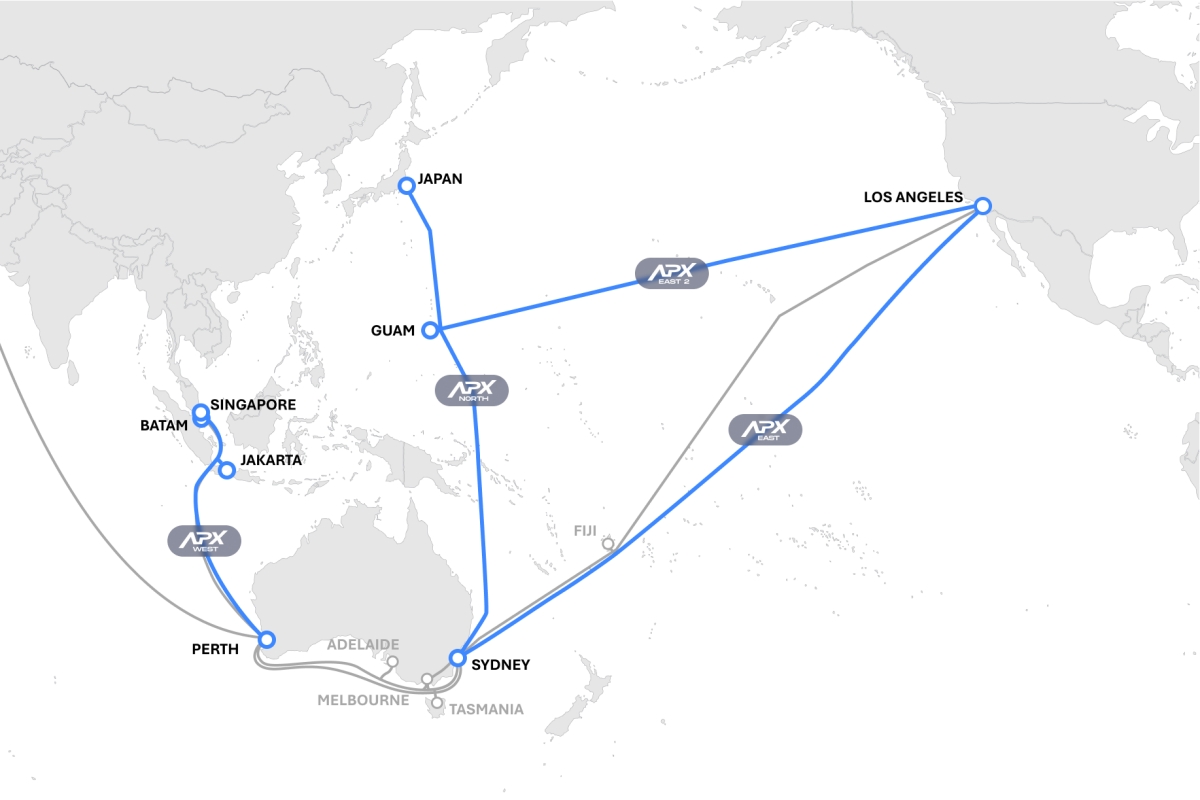
SUBCO, an Australian developer of undersea fibre optic cable networks, has announced that its 5,000km Sydney–Melbourne–Adelaide–Perth (SMAP) subsea cable system is now ready for service. The company says the system is the largest transcontinental capacity upgrade in Australia for almost 25 years, connecting the country's four largest cities through a single, fully armoured subsea cable. SMAP comprises 16 fibre pairs and uses space division multiplexing (SDM) technology to provide more than 400Tbps of capacity. According to SUBCO, it is Australia's first 'hypercable' and the first submarine cable system to land in both Melbourne and Adelaide, providing an additional route between Sydney and Perth. Bevan Slattery, founder and Co-CEO of SUBCO, comments, "SMAP going live is the culmination of more than three years of hard work, and a landmark moment for Australia's digital future. "For the first time, the nation's four major cities are connected by a single, fully armoured, high-capacity subsea system, delivering the resilience and scale that Australia's digital economy, and its role as a connectivity hub for the Indo-Pacific, demands." Foundation customers begin using new network The system's foundation customers include 5GN, Swoop, Aussie Broadband, Cloudflare, GSL, Host Universal, Kinetix, Leaptel, Megaport, Telair, and Virtutel. Brad Parker, CTO at Aussie Broadband, notes, "By coming on board early as a foundational customer of SMAP, we're locking in the capacity, performance, and resilience our customers will need for the next decade and beyond. "The hyperscale capacity and added redundancy allows us to move massive volumes of traffic between our capital city points of presence with lower latency, higher availability, and far more headroom for growth." Damian Matacz, Director, Network Strategy at Cloudflare, adds, "A better internet is built on resilient infrastructure. SMAP gives Cloudflare diverse new domestic paths across Australia, strengthening our network and elevating the experience for everyone our customers serve." Brendan Halley of Host Universal concludes, "SUBCO have always been forward thinking in how they design and operate their cable systems. SMAP is a standout example of that, delivering the resilient, sovereign infrastructure Australia needs. We're proud to continue our relationship as a foundation partner." For more from SUBCO, click here.

Huawei announces Wi-Fi 7 patent licensing rates
Chinese multinational technology company Huawei has announced that its patent licensing royalty rate for WiFi 7 technologies would be set at $0.5 (£0.38) per unit for Wi Fi 7 compliant devices. This announcement, Huawei says, underscores its dedication to fostering a healthy innovation ecosystem through fair, transparent, and predictable licensing practices. As the latest generation of Wi-Fi technologies, Wi-Fi 7 delivers dramatically higher throughput, lower latency, and greater reliability. Serving as much more than just a connectivity upgrade, it lays the groundwork for the next wave of digital transformation and opens up new possibilities for interactions between people and intelligent systems. As a leading contributor to the IEEE 802.11 standards family, Huawei has played a pivotal role in shaping WiFi 7 (802.11be) technologies and holds one of the largest portfolios of declared essential patents for WiFi 7. The company has invested a decade of research and substantial resources into developing the core technologies that make Wi-Fi 7 truly next generation. Huawei has thus emerged as a leader in the global Wi-Fi licensing landscape, and its patent license agreements had covered over 1.2 billion consumer electronic devices worldwide by the end of 2024. With today's announcement, Huawei provides clear advance notice of its Wi‑Fi 7 royalty rate, which is $0.5 (£0.38) per unit for consumer‑grade Wi‑Fi 7 devices. Implementers may obtain licenses either through bilateral agreements or via patent pools, on FRAND (Fair, Reasonable, and Non-Discriminatory) terms. Support for both Wi-Fi 6 and 7 In July 2022, Huawei joined the Sisvel WiFi 6 patent pool as a founding member, concurrently becoming both a licensor and a licensee of the pool. The patent pool is a valuable option for the industry which in large provides a "one-stop" licensing solution under a transparent and fair framework with lower transactions costs. Huawei also maintains a strong and proven Wi-Fi 6 patent portfolio, which has been widely recognised and licensed across the industry. This legacy of innovation across successive generations further demonstrates Huawei's long-term commitment to advancing wireless connectivity. Building on this success, Huawei has extended its participation to the Sisvel WiFi Multimode pool as a founding member, offering licensees a single, streamlined platform for accessing essential patents across both WiFi 6 and WiFi 7 generations. Alan Fan, Huawei's Chief Intellectual Property Officer, comments, "Through these initiatives, Huawei continues to facilitate collaborative licensing models that balance the interests of innovators and implementers, further reinforcing its leadership in shaping a transparent and efficient global Wi-Fi licensing environment." For more information on Huawei's WiFi 7 licensing program, click here to visit the webpage. For more from Huawei, click here.

Oriole, AMD to advance photonic AI networking
Oriole Networks, a London-based photonic networking startup, has announced further progress in its collaboration with AMD, an American multinational semiconductor company, as part of the UK's Advanced Research and Invention Agency (ARIA) Scaling Inference Lab programme, including plans to deploy what the company describes as the "world's first" large-scale AI system based on a pure photonic network. The project combines Oriole's PRISM photonic networking technology with AMD Instinct GPUs and AMD EPYC CPUs to explore new approaches to AI infrastructure that aim to reduce latency, improve performance, and lower energy consumption. According to the companies, the collaboration has been underway for more than a year and is focused on addressing networking challenges associated with increasingly large AI deployments. Oriole's PRISM platform replaces traditional electronic switches within the network core with optical circuit-switching technology, enabling data to be transmitted using photons rather than electrical signals. The company says this approach is intended to reduce network power consumption and minimise latency between computing resources, helping to improve the efficiency of AI inference workloads. AMD is providing processor and accelerator hardware for the project, alongside technical support to develop and evaluate large-scale AI networking models. James Regan, CEO of Oriole, notes, "A year ago, we were proving the physics. Today, we’re proving the business. "Our collaboration with AMD has moved from concept to deployment to a system an order of magnitude larger, and the data proves this is already driving performance increases at pace. "This is what it looks like when photonic networking stops being a research curiosity and starts being the foundation of how serious AI infrastructure gets built." Exploring alternatives to traditional networking Oriole says PRISM has been designed to operate independently of specific processor or accelerator vendors, allowing it to be deployed across different AI hardware platforms. The company states that the technology can reduce the reliance on conventional electronic networking equipment while also lowering cooling requirements and associated water consumption. Madhu Rangarajan, Corporate Vice President, Compute and Enterprise AI Business at AMD, says, "AMD is excited to collaborate with Oriole on the ARIA Scaling Inference Lab cluster. "Oriole’s AI backend networking with nanosecond optical circuit switching represents a fundamentally different way to connect accelerators at scale. We are helping to validate how photonic fabrics can work alongside AMD compute to deliver the low-latency, high-bandwidth connectivity that AI inference workloads demand." The deployment also represents the first commercial implementation of Oriole's technology, which the company says has progressed from research and development to production readiness within three years. Suraj Bramhavar, Programme Director at ARIA, comments, "Meeting the demands for modern AI requires rapidly identifying ways to improve the performance and cost-efficiency of large-scale AI clusters. "ARIA is thrilled to collaborate with Oriole and AMD to demonstrate the benefits of this new technology, and it’s exactly the type of collaboration, between innovative startups and industry leaders, that the Scaling Inference Lab was designed to foster." Oriole says wider deployment of its photonic networking technology is planned from 2027 as demand grows for infrastructure capable of supporting large-scale AI workloads.

GNM expands network presence into North America
GNM, a Dutch internet exchange (IX) and backbone operator, has expanded its network into North America with the launch of new points of presence (PoPs) in Miami and Ashburn, Virginia. The company has deployed its first US infrastructure at Equinix MI1 in Miami and Equinix DC1–DC15 and DC21 in Ashburn, creating a dedicated transatlantic platform linking North America with GNM's European backbone network. According to the company, the new sites are configured as a protected East Coast ring and are fully integrated with its existing infrastructure, allowing customers to exchange traffic across a single operational environment. The expansion marks GNM's first infrastructure deployment in the United States and is intended to support organisations seeking connectivity between North American and European markets. New PoPs strengthen transatlantic connectivity The Miami PoP is located within Equinix MI1, a major connectivity hub for subsea cable systems linking North America, Latin America, and Europe. Meanwhile, the Ashburn deployment places GNM within Northern Virginia, one of the world's largest data centre and interconnection markets. Both facilities connect directly to GNM-IX, the company's IX platform, which supports more than 700 connected networks and peak traffic exceeding 10.95Tbps. GNM says the new locations will allow network operators, carriers, cloud providers, and content platforms to access its interconnection and transport services through a single provider, while simplifying traffic exchange between continents. For North American organisations, the expansion provides direct access to European connectivity opportunities without requiring infrastructure deployments in Europe. European operators, meanwhile, gain direct access to two major US interconnection markets. Alex Surkov, Head of Business Development at GNM, says, "Launching in Miami and Ashburn is a defining milestone for GNM. "We have created our first North American platform and directly connected it to our European backbone. This gives customers on both sides of the Atlantic something genuinely valuable: simpler interconnection, direct access to new traffic flows, and the ability to grow internationally through one integrated network ecosystem." GNM now operates more than 90 PoPs globally, with infrastructure spanning Europe, Asia, and North America. For more from GNM, click here.

AFL: Why AI infrastructure planning is changing
In recent years, AI infrastructure discussions centred predominantly on training clusters. Industry attention focused on larger models, sizeable GPU estates, dense scale-out fabrics, and the synchronisation demands created by collective communication across thousands of accelerators. In 2026, however, deployment patterns point to inference as the dominant operational AI workload. This transition introduces infrastructure behaviours that extend beyond the assumptions of traditional training environments. While much of the industry conversation still focuses on accelerators and compute scale, less attention is given to the implications for network architecture, optical connectivity, and physical infrastructure design. In response, AFL, a manufacturer of fibre optic cables and connectivity equipment, has developed a whitepaper series to help address that gap. The first paper, Architecting AI at Scale: From Training Clusters to Inference-Driven Infrastructure, introduces six workload categories representing the evolving AI deployment landscape. These include synchronous training fabrics, throughput inference systems, disaggregated reasoning architectures, heterogeneous decode environments, context-centric infrastructure, and workflow orchestration platforms. The paper provides practical insight into evolving network behaviours, optical requirements, and multi-domain infrastructure planning. Future instalments will examine the engineering implications in greater depth. Click here to register to receive email notifications as soon as each paper in the series becomes available. For more from AFL, click here.


Translate »